Alibaba Stock Price Forecast - BABA Jumps 3.22% to $136.95; The $200 Case Is Getting Harder to Ignore
Cloud Intelligence grew 34% YoY, quick commerce losses were cut 50% in three months, Qwen hit 203 million users, and the CFO already told you the September quarter is the peak investment point | That's TradingNEWS
Alibaba Stock (NYSE: BABA) at $136.95: Up 3.22% Today While Sitting 29% Below Its $192 High — Is This the Entry Point Before the Biggest EPS Inflection in Chinese Tech?
BABA Surges 3.59% at the Open — Here Is Exactly What Moved It
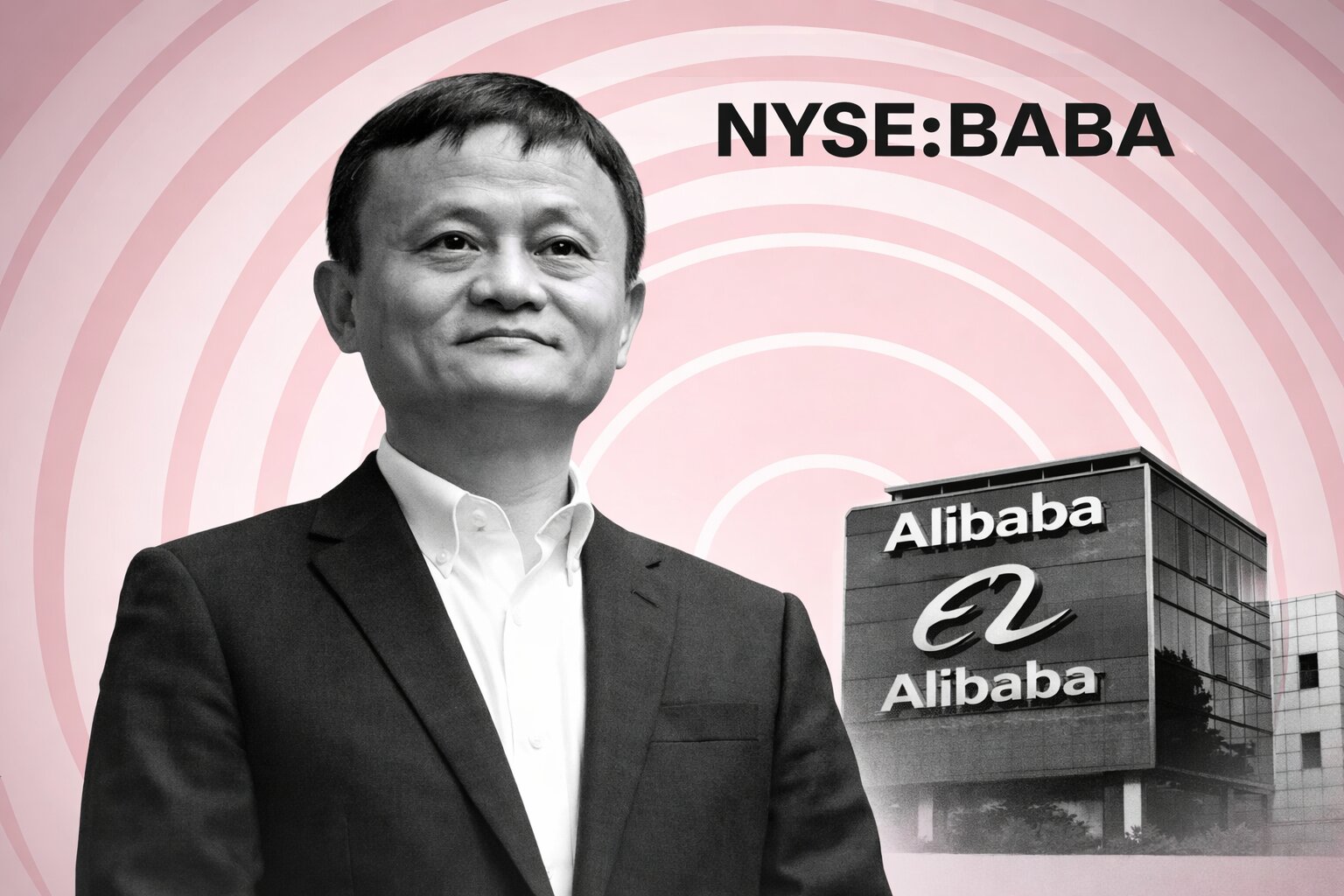
Alibaba stock (NYSE: BABA) is trading at $136.95 on Tuesday, March 10, 2026, up 3.22% on the session after opening higher by 3.59% — outperforming the broader Software & IT Services sector, which gained only 2.31% on the same day. The day range ran from $134.56 to $139.22, with the previous close sitting at $132.64. Three specific catalysts are driving the session's move, and none of them are noise. First, Alibaba Cloud signed a strategic cooperation agreement with the Jinshan District People's Government of Shanghai to develop a hyperscale computing power center powered by Alibaba's proprietary "Zhenwu" chips — a deal that directly validates the company's AI infrastructure buildout as something beyond internal deployment. Second, Goldman Sachs added BABA to its APAC Conviction List, which carries institutional weight that retail price moves alone cannot replicate. Third, Alibaba addressed and clarified the leadership departures within its Qwen AI unit that had spooked the market in prior weeks, specifically the exits of the tech lead and post-training head — an uncertainty overhang that had been compressing the multiple. The Software & IT Services sector names that were moving alongside BABA on Tuesday included MSFT (-0.41%), META (+1.18%), and GOOGL (+0.36%), making BABA's 3.59% open one of the strongest single-session performances in the peer group. The stock's market cap sits at approximately $328.29 billion at current prices, the P/E ratio at 18.06, and the dividend yield at 0.77% — a rare combination for a Chinese tech company that has historically been valued on growth rather than income.
From $192.67 to $132 and Back to $136.95 — The 52-Week Range That Tells the Whole Story
BABA's 52-week range of $95.73 to $192.67 is not just a data point — it is a complete psychological map of what this stock has been through in twelve months. The low of $95.73 represents the point of maximum despair, when US-China trade war fears, regulatory overhang, and CAPEX-driven FCF compression all hit simultaneously. The high of $192.67 represents the peak enthusiasm from the Qwen AI launch and the DeepSeek-driven Chinese AI euphoria that briefly made BABA look like the most undervalued major tech company on the planet. The current price of $136.95 sits exactly in the middle of that emotional range — which is precisely where the analytical debate is most intense. Since the November 2025 earnings update, BABA has declined over 18% despite a "Buy" rating from multiple institutional analysts, reflecting the market's anxiety about the CAPEX cycle and its impact on free cash flow. That 18% decline from the $155-$166 zone is the entry point that serious long-term positions are built at — not because the near-term earnings trajectory is clean, but because the structural AI and cloud monetization story is compressing into a valuation that is pricing in failure rather than the inflection that the numbers themselves are setting up.
The $52.4 Billion CAPEX Bet — Why the Market Is Punishing BABA and Why It Is Wrong to Do So
The single most important number in the BABA story right now is RMB 380 billion — approximately $52.4 billion — in capital expenditures committed across three years toward AI infrastructure and cloud expansion. That number is the source of every bear argument, every EPS downgrade, and every FCF concern that has weighed on the stock since management first announced the scale of investment. Free cash flow went negative in the last reported quarter, with FCF per share closing in on $0 after the prior year showed significantly positive generation. Operating income dropped 85% YoY in Q2, and core commerce adjusted EBITDA fell 76% — numbers that look catastrophic in isolation but make complete structural sense when you understand that Alibaba is deliberately front-loading infrastructure investment in the same way Amazon Web Services was built before it became the most profitable cloud business in history. The CFO was explicit about the investment timeline: the September 2026 quarter will likely represent the peak scale of investments, after which efficiency improvements, unit economics optimization in quick commerce, and the transition from API calls to complex post-training workloads in cloud will begin compressing the CAPEX drag on consolidated results. The stock is being sold by shareholders who bought BABA for buybacks and dividends — and those shareholders are right that FCF will be constrained for several more quarters. But they are wrong if they think the investment is destroying value rather than building it.
Cloud Intelligence Group at +34% YoY — The Business Inside BABA That the Market Is Ignoring
BABA's Cloud Intelligence Group revenue grew 34% year-over-year in the most recent quarter, with AI-related products delivering triple-digit growth for the ninth consecutive quarter. AI-related revenue now accounts for over 20% of total cloud sales, and external customer revenue — the highest-margin, highest-quality revenue stream in the entire cloud business — is accelerating rapidly. The external customer mix is critical because it signals that BABA is no longer just an internal compute provider for its own e-commerce operations but is genuinely winning enterprise cloud workloads in competition against Huawei Cloud, Tencent Cloud, and Baidu AI Cloud. The transition from simple API calls to complex post-training workloads is the monetization step that converts cloud from a commodity infrastructure business into a high-margin software business — exactly the transition that drove AWS margins from the single digits to 30%+ over several years. The Qwen AI application, which recently surpassed 203 million monthly active users, is now the third most popular AI assistant globally according to NxCode — a ranking that places BABA's AI product ahead of every Chinese competitor and competitive with the leading Western platforms. That user base is not just a vanity metric. It is the customer funnel through which Alibaba converts AI interest into cloud spending, enterprise contracts, and MaaS (Model-as-a-Service) revenue.
E-Commerce Stabilization — 88VIP at 50 Million Users and Quick Commerce Losses Cut 50%
The core e-commerce business, which still represents the majority of BABA's consolidated revenue, has shown meaningful signs of stabilization after several quarters of competitive pressure from PDD Holdings and ByteDance's Douyin commerce. China e-commerce revenue grew +16% YoY in Q2, with customer management revenue up 10%. More importantly, the 88VIP premium membership program has surpassed 50 million users — a cohort of China's highest-value consumers with demonstrably superior retention rates and significantly higher spend per transaction. The competitive context matters: BABA's share of China's online retail market has compressed from approximately 72% to 62% over the past year, which is a real loss of dominance that cannot be dismissed. But 62% share of China's e-commerce market is still an enormous structural position, and the shift toward high-value user retention rather than pure market share maximization is a strategic pivot that mirrors what Amazon did when it built Prime — accepting lower total addressable market penetration in exchange for dramatically higher lifetime value per customer.
The quick commerce unit is where the most dramatic operational improvement is visible. According to Alibaba E-commerce CEO Jiang Fan, quick commerce per-order losses were cut by 50% between August and November 2025 — a pace of unit economic improvement that, if sustained, will eliminate the EBITDA drag from the segment by late 2026 or early 2027. Management's stated goal for quick commerce is RMB 1 trillion in GMV within three years, and the path to that target runs through UE optimization, high-value user focus, and expansion of retail categories. When that EBITDA drag disappears from the consolidated results, the EPS math becomes completely different — which is exactly why FY2027 bottom-line growth is projected at over 40% YoY while FY2026 remains under pressure.
Q3 Consensus Estimates — Revenue at $41.93 Billion, EPS at $1.58, and Why Both Numbers Are Set to Disappoint the Bears
Wall Street consensus for BABA's Q3 earnings has revenue growing to approximately $41.93 billion — up 8.62% YoY — while EPS is projected to decline to $1.58, a -46.29% YoY decrease. That EPS number reflects the full weight of the CAPEX cycle and investment phase flowing through the income statement. There have been 26 EPS downgrades in the past 90 days against just 3 upgrades — a revision ratio that would normally be catastrophically bearish but in this case reflects the known, planned, management-guided investment peak rather than unexpected operational deterioration. The key distinction is that BABA's management has explicitly telegraphed this earnings trough. The CFO's comments from the Q2 call identified the September quarter as the likely peak investment point, which means the Q3 print — while likely showing continued pressure — should be accompanied by management commentary that positions Q4 and FY2027 as the inflection. That commentary is the catalyst. If management confirms the quick commerce unit economic trajectory, reiterates the cloud acceleration, and provides any forward guidance that suggests the investment peak is near or past, Wall Street analysts who have spent three months downgrading estimates will need to revise upward — and upward revisions to forward estimates are one of the most reliable short-term price catalysts in equity markets.
Valuation — Forward P/E of 21.37x, FY2027 EPS at $8.40-$9.00, and a Price Target Math That Points to $153-$200
BABA trades at a forward P/E of 21.37x at current prices of $136.95, with a market cap of $296-328 billion depending on the share count and ADR conversion used. The annual revenue base is $138.07 billion, net profit $17.94 billion, and revenue growth 5.21% YoY on a trailing basis. Compared to peers, PDD Holdings and Tencent both trade at lower forward multiples — but the critical distinction is that neither is projecting 40%+ EPS growth in FY2027. Tencent's FY2027 EPS growth is forecast at 12.46% and PDD at 13.86% — both respectable but nowhere near the inflection magnitude that BABA's investment cycle unwinding implies. The valuation math from the most detailed projection: assuming $8.40 in FY2027 EPS, a 7.5% upward revision from earnings beat and positive commentary, and a 17x multiple (conservative given the growth rate), the price target lands at $153.51 — 15-16% above current levels. The more optimistic scenario — if BABA achieves $11 in non-GAAP EPS by FY2028 and the market re-rates it at 18-19.5x — produces a fair value of $176-$200. The average 12-month analyst price target across all coverage is $198.13, with a high of $271.45 and a low of $120.00. Wall Street's "Strong Buy" consensus (score 4.54) conflicts with the quantitative model's "Hold" (score 3.16) and SA analysts' "Hold" (score 3.46) — a three-way divergence that reflects exactly the tension between the fundamental long-term case and the near-term FCF pressure.
Technical Picture — RSI at 25.33, MACD at -7.85, and What Oversold Really Means for BABA
The technical setup for BABA going into earnings is uncomfortable and clarifying at the same time. RSI sits at 25.33 — deeply into oversold territory, well below the 30 threshold that typically signals excessive selling pressure relative to buying interest. The MACD reads -7.85 against a signal line, confirming that downside momentum has been dominant for an extended period. The Williams %R at -85.87 reinforces the oversold reading across multiple indicators simultaneously. The Bollinger lower band sits near $143.07 with the middle band at $156.63 — a spread that implies the current price of $136.95 is trading below even the lower volatility boundary, a condition that historically precedes mean reversion moves when the fundamental catalyst arrives. The Average True Range of approximately $4.94 means daily swings of $4-6 are the normal range rather than exception — position sizing into earnings needs to account for that volatility budget explicitly. The ADX at 33.98 confirms that the prevailing trend has been strong, which is the one technical warning in an otherwise oversold picture: strong trends do not reverse on oversold readings alone — they reverse when a fundamental catalyst changes the supply-demand balance at the margin. That catalyst is the Q3 earnings print and management commentary. The 200-day moving average was rising on the longer-term chart through the February analysis at $156.63 — which has since converted from support to near-term resistance. A close back above $156.63 would represent the first meaningful technical confirmation that the correction has run its course. The $145-$149 zone identified in prior technical analysis as critical support has been breached, which is why the stock is trading at $136.95 rather than $148.
Read More
-
Yen Stalls at 160 Despite a 3% JGB and Tokyo Core CPI at 2.0% — Intervention Sits at 164, Friday's Payrolls Decide
02.09.2026 · TradingNEWS ArchiveEnergy
-
QQQ ETF ($739) Fades From an Early Tech Rally as a 77.9 ISM Prices Index Meets Micron's $61.5B Guide — $760 Record Test Ahead
01.10.2026 · TradingNEWS ArchiveStocks
-
XRPR and XRPI Follow XRP's $1.49 Test as Spot Funds Hold 1.16B XRP and a 1 Billion Token Escrow Release Lands — $1.70 in Play
01.10.2026 · TradingNEWS ArchiveCrypto
-
November NG Slips Below $3 as Decade-High Storage Meets Capped LNG Exports — $2.75 in Sight
01.10.2026 · TradingNEWS ArchiveCommodities
-
Dollar-Yen at 158 Presses Toward 160 as a 363 bp Carry Gap Meets Katayama-Bessent Intervention Risk — 159 in Sight
01.10.2026 · TradingNEWS ArchiveForex
The Hang Seng Session That Preceded Tuesday's Recovery — HSI -518 Points and BABA -3% Before the Bounce
The context for Tuesday's 3.59% recovery in BABA's US ADR requires understanding what happened in Hong Kong just before it. The Hang Seng Index fell 518 points on March 5, with financials leading the decline — AIA dropped 4.7% and weakness spread broadly through tech and consumer names. BABA's Hong Kong shares fell over 3% in that session, with turnover rising versus the prior day — a combination that signals institutional de-risking rather than retail panic. When both volume and price decline simultaneously, it typically reflects funds reducing exposure rather than ordinary market fluctuation. That session brought the ADR to levels where RSI hit 28.29 — at the time nearly identical to Tuesday's reading of 25.33 — and the MACD had reached -4.46 versus a -2.69 signal line. The fact that those oversold conditions were then followed by Tuesday's 3.22% recovery on Goldman Sachs' APAC Conviction List addition and the Alibaba Cloud-Shanghai government partnership announcement is precisely how mean reversion works in practice: oversold technicals create the compressed spring, and the fundamental catalyst releases it. The debt-to-equity ratio of 0.27x and ROE of 12.16% — solid metrics for a company in a peak investment cycle — provided the fundamental floor that prevented the oversold condition from becoming a genuine valuation breakdown. Price-to-book of 2.10x on a company with $138 billion in revenue and the third-largest AI assistant globally is not a number that justifies panic selling.
The Qwen AI Leadership Disruption — What the Departures Actually Mean and Why the Market Overreacted
The departure of the Qwen tech lead and post-training head generated significant concern across institutional and retail holders alike, and the concern was not unreasonable — leadership continuity in AI research is critical during the period when a model is transitioning from research to commercialization. But the market's reaction — using it as an additional sell catalyst on top of the FCF concerns — likely overstated the structural risk. Alibaba's response was to form a dedicated AI task force to accelerate Qwen development and to bring in additional research talent, which is the correct operational response and which management made public to reduce uncertainty. The 203 million monthly active users on the Qwen application did not evaporate when the leadership transition occurred. The triple-digit AI-related cloud revenue growth did not decelerate in the quarter that followed. The Alibaba Cloud-Shanghai partnership announced Tuesday — featuring Alibaba's proprietary "Zhenwu" chips in a hyperscale computing center — would not have been signed by a local government if there were credible doubts about Alibaba's AI execution capability. The leadership noise was real but manageable, and the market's decision to price it as a structural rather than transitional risk created the entry point that the Goldman Sachs conviction list addition is now partially closing. Short interest at only 1.76% confirms that the professional short community was never deeply positioned against BABA despite the negative sentiment — a signal that even bears found the risk-reward unattractive at these levels.
The US-China Risk That Never Goes Away — Why It Is Priced In and Why It Shouldn't Be Fully Discounted
US-China trade war tensions are the permanent background radiation of any BABA position, and pretending otherwise would be intellectually dishonest. US export controls on advanced compute — the Nvidia H100 and A100 GPUs that Alibaba would otherwise use to train frontier AI models — force the company to rely on domestically produced alternatives like Huawei's Ascend chips and its own "Zhenwu" silicon, which carry meaningful performance disadvantages versus the best Western hardware. That compute ceiling is a real constraint on how competitive BABA's AI models can be against GPT-4o-class systems trained on unrestricted hardware. Additionally, Alibaba's ADR structure — the NYSE-listed shares represent interests in a Cayman Islands holding company that holds economic interests in the Chinese operating entities through a VIE structure — carries legal uncertainty that is inherent to the investment and cannot be hedged away. The assumption that the US-China trade relationship deteriorates rather than normalizes over the next decade is not a non-consensus view anymore — it has become the working assumption of most institutional frameworks. At a $328 billion market cap and 18.06x earnings, BABA is not priced for a US-China geopolitical resolution. It is priced for continued friction with a discount applied. The question is whether the discount is sufficient — and at $136.95 with FY2027 EPS growth projected at 40%+, the discount appears excessive relative to the operational delivery being demonstrated.
Chinese Government Policy Tailwind — Ministry of Commerce 2026 Priorities and What They Mean for BABA's Core Business
The Chinese Ministry of Commerce has outlined 2026 priorities explicitly focused on stimulating service consumption, e-commerce, and AI-driven consumption models — a policy backdrop that is directly aligned with BABA's business mix. Beijing's broader macro target of 4.5-5% GDP growth for 2026 requires a functioning, growing domestic consumption economy, and Alibaba's platforms — Taobao, Tmall, and the quick commerce overlay — are the primary digital infrastructure through which Chinese consumers access that consumption. Government policy in China is not the invisible hand of free markets — it is a direct and material input to the revenue trajectories of companies like BABA that sit at the intersection of digital commerce, cloud computing, and AI. When Beijing signals it wants to expand e-commerce and AI consumption models, BABA is not just a beneficiary at the margin — it is the primary implementation vehicle. The announcement of the Alibaba Cloud partnership with Shanghai's Jinshan District for a hyperscale AI computing center is exactly the kind of government-private sector collaboration that those Ministry of Commerce priorities translate into at the operational level. That partnership would not exist without explicit government interest in making it happen.
BABA Stock Rating: BUY — Entry at $136.95, Target $153-$176, Stop Below $128
Alibaba (NYSE: BABA) at $136.95 is a BUY for positions sized appropriately to the binary earnings risk that the upcoming Q3 print represents. The technical setup — RSI 25.33, MACD -7.85, Williams %R -85.87, Bollinger lower at $143.07 with the stock trading below it — is as oversold as it gets for a $300+ billion market cap company. The fundamental setup — 40%+ FY2027 EPS growth, Cloud Intelligence at +34% YoY, Qwen at 203 million MAU and third globally, quick commerce losses cut 50% in three months, and Goldman Sachs' APAC Conviction List addition — provides the catalyst framework that is necessary to resolve the oversold condition into actual price recovery rather than just continued compression. The price target of $153.51 using $8.40 FY2027 EPS × 7.5% revision × 17x represents the base case and 15-16% upside from current levels. The bull case at $176-$200 requires either a faster-than-expected quick commerce EBITDA breakeven or the market assigning a 19.5x multiple to the FY2027 earnings power — both plausible but not certain. The stop is below $128, which represents a breakdown below the prior oversold support levels and would signal that the Q3 print was significantly worse than the conservative consensus rather than better. At $136.95, the asymmetry favors the long side by a meaningful margin. The September quarter peak investment inflection is not a rumor — it came from the CFO directly. The market has priced this stock as though that inflection will never arrive. It will