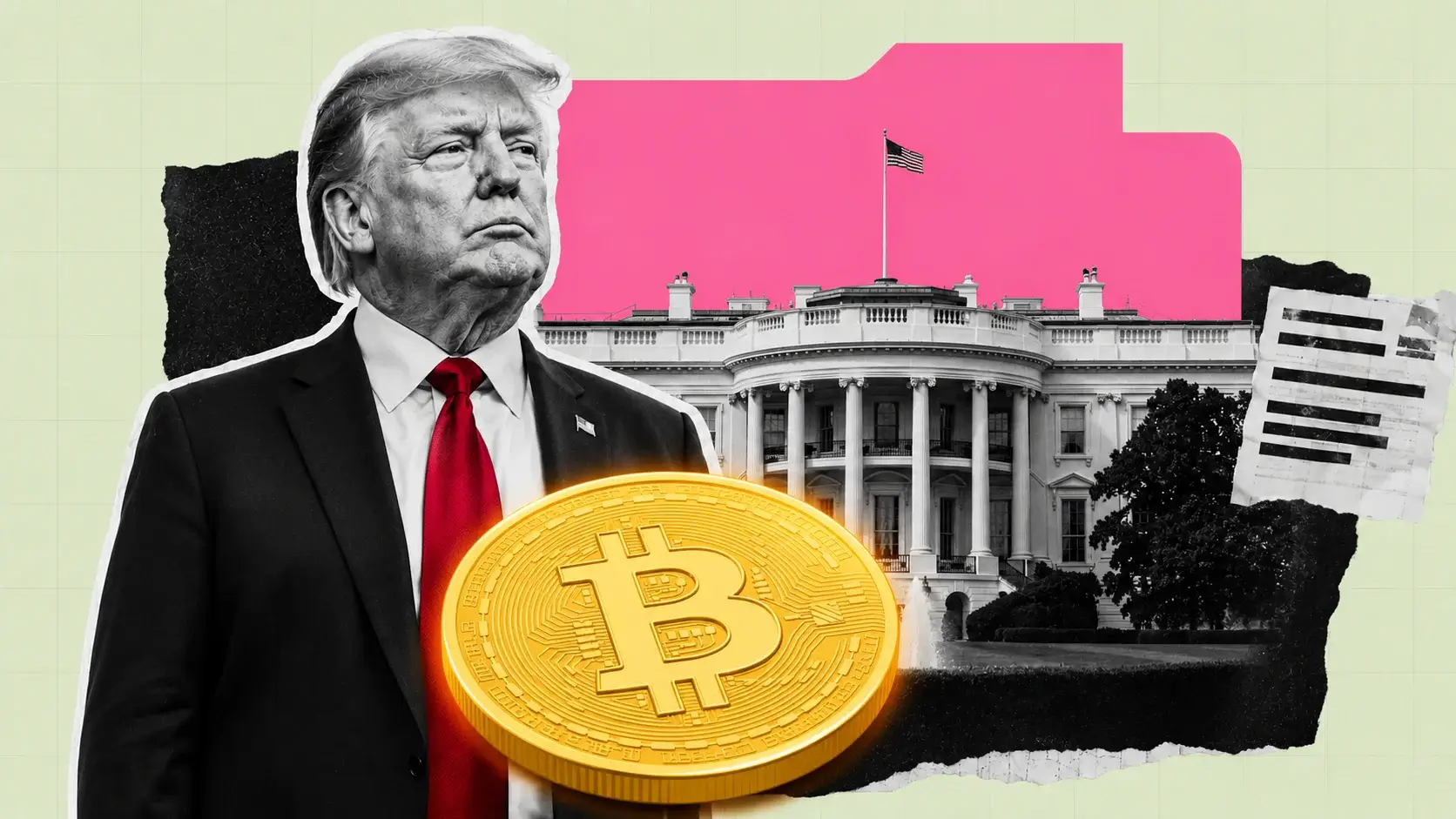
Bitcoin (BTC-USD) ETF Inflows Rebound as Institutional Demand Returns and IBIT Faces $112.9M Outflow Shock
Bitcoin Price Holds $90,218 as ETF Flows Turn Positive After Weeks of Volatility
Bitcoin (BTC-USD) trades at $90,218.35, down 1.30% on the session, yet the underlying data reveals a powerful structural shift in institutional sentiment. After a turbulent November, marked by $200 million in total ETF outflows on December 5, capital rotation has begun to reverse. U.S. spot Bitcoin ETFs collectively posted $54.79 million in inflows on the same day, signaling a return of risk appetite from asset managers and pension-linked portfolios. The rebound was led by ARK & 21Shares’ ARKB, which attracted $42.79 million, followed by Fidelity’s FBTC, adding $27.29 million. Smaller but steady flows also entered VanEck’s HODL (+$11.39M) and Bitwise’s BITB (+$4.86M), while WisdomTree’s BTCW contributed a modest $947K. Despite a $32.49 million outflow from iShares Bitcoin Trust ETF (NASDAQ:IBIT), total Bitcoin-linked ETF exposure rebounded to $117.11 billion AUM, maintaining sector stability after the late-November liquidation wave.
IBIT ETF Faces Outflows but Maintains $164.71B Market Cap Amid Broad Rotation
The iShares Bitcoin Trust ETF (IBIT), trading at $51.19 per share with a 0.98% daily gain, remains the benchmark for institutional Bitcoin exposure. Its market capitalization of $164.71 billion and average daily volume of 69.17 million shares reflect sustained engagement despite temporary withdrawals. IBIT experienced $112.9 million in outflows during the week ending December 5, the sharpest single-day capital exit since September. This came amid a broader $200 million sector withdrawal, reducing IBIT’s one-month return by 14% and pushing its year-to-date performance to -4.5%.
However, IBIT’s tracking efficiency remains intact — with a tracking error below 0.15% relative to the spot BTC-USD market — highlighting robust liquidity and precise price alignment. Institutional traders rotated temporarily toward higher-beta funds like ARKB and FBTC, seeking tactical exposure with lower basis premiums. Yet, IBIT’s structural role as a liquidity anchor remains unchallenged, providing daily NAV correlation unmatched by smaller issuers.
Bitcoin ETF Flows Highlight Institutional Rotation Across Major Issuers
Aggregate Bitcoin ETF data for early December reveals a clear bifurcation in capital behavior. BlackRock’s IBIT posted negative flows of -48.99 million USD for the week, while Fidelity’s FBTC saw inflows of +61.96 million USD, the highest among U.S. issuers. Bitwise’s BITB remained net positive at +9.3 million USD, while VanEck’s HODL added +2.95 million USD. The ARKB ETF, issued jointly by ARK and 21Shares, recorded the steepest decline, -77.86 million USD, suggesting a partial rotation out of speculative positions following the October peak above $120,000 per Bitcoin.
The Grayscale Bitcoin Trust (GBTC) registered additional -29.77 million USD in outflows, continuing its slow bleed as capital migrates to lower-fee spot ETFs. Despite these mixed flows, total weekly trading volume across Bitcoin ETFs stood at $22.57 billion, confirming persistent institutional engagement even through corrective phases.
Macro Drivers and Market Mechanics: From Rate-Cut Bets to Institutional Rebalancing
ETF dynamics mirror macroeconomic conditions. With inflation data cooling and Fed officials signaling a 70–90% probability of a rate cut in Q1 2026, institutional allocators are rebalancing portfolios toward digital assets as an inflation hedge. The rotation follows Bitcoin’s 6.6% weekly rebound to $90,259, recovering from a midweek dip below $88,000. The recovery coincided with $348.32 million in leveraged liquidations, including $78.48 million in Bitcoin long and short positions, as whales accumulated near the $87,000 zone.
Heavy inflows into short-liquidation events revealed a renewed wave of large buyers — likely institutional desks and macro hedge funds — entering the market through ETF vehicles rather than direct spot markets. Analysts note that these inflows are tracking similar patterns to early 2024’s accumulation cycle, which preceded a 40% BTC rally.
BTC-USD Technicals: Consolidation Between $89K Support and $92.3K Resistance
Technical indicators confirm stabilization. The 10-day EMA at $90,481 and 20-day SMA at $89,370 form strong near-term support levels, while the 30-day SMA at $92,387 acts as immediate resistance. The 100-day SMA at $106,506 and 200-day SMA at $109,093 remain distant, suggesting room for medium-term recovery.
Oscillator readings are neutral to mildly bullish — RSI at 46, Stochastic at 62, and Momentum at 224 — reflecting gradual rebuilding of buying pressure. The MACD remains at -2,051, but histogram compression indicates fading downside momentum. A daily close above $92,387 could trigger algorithmic buy programs targeting $95,000–$97,000, while sustained trade below $89,000 would invite tests of the $85,500 support zone.
Institutional Sentiment and ETF Fund Composition: Long Exposure Expands
Despite IBIT’s short-term withdrawals, institutional exposure across all Bitcoin ETF products remains structurally bullish. Combined inflows for the week reached $352 million, representing 49% of total crypto ETF inflows, while short-Bitcoin ETFs saw $18.7 million in outflows, the largest since March 2025. This divergence underscores renewed conviction in Bitcoin’s upside trajectory.
The sector’s composition is diversifying: while BlackRock and Fidelity dominate with over 70% of total AUM, newer issuers such as Bitwise (BITB) and WisdomTree (BTCW) have grown their market share by catering to smaller family offices and European institutional buyers seeking low-tracking-error exposure. The aggregate net assets across all Bitcoin spot ETFs now exceed $117 billion, despite volatility-driven withdrawals earlier in the quarter.
Volatility Cycle and ETF Market Liquidity Correlation
Volatility in Bitcoin ETFs has narrowed since mid-November. Average daily turnover fell from $5.1 billion to $3.1 billion, consistent with consolidation around the $90,000–$92,000 range. This moderation signals maturity in ETF market microstructure as liquidity providers hedge exposure directly through CME futures and OTC desks rather than spot arbitrage. IBIT’s bid-ask spread remains under 0.12%, while FBTC’s spread averages 0.15%, reflecting excellent execution quality for institutional orders above $5 million.
The reduction in implied volatility has stabilized NAV premiums, with most spot ETFs trading within 0.2% of spot BTC, eliminating inefficiencies that plagued early 2024’s launch phase.
Bitcoin’s Institutional Momentum: Reaccumulation Underway
Large buyers, including MicroStrategy (NASDAQ:MSTR) and hedge fund allocators, are reportedly increasing exposure during pullbacks. Market chatter surrounding another MicroStrategy accumulation event — hinted at by CEO Michael Saylor’s social media activity — suggests that corporate treasury demand is returning. Concurrently, several U.S. pension-linked funds have resumed small allocations through Bitcoin ETFs after pausing in October, signaling renewed trust in regulated vehicles like IBIT and FBTC.
Off-exchange data from CoinShares indicate that cumulative Bitcoin ETF holdings are again approaching 880,000 BTC, a level last seen before the Q3 correction. This reaccumulation phase supports BTC’s base formation near $90K, mirroring previous consolidation zones that preceded major breakouts.
Buy/Sell/Hold Verdict
The structural rebound in ETF inflows, combined with renewed institutional positioning and a neutral technical setup, gives Bitcoin (BTC-USD) a Buy rating. Near-term volatility may persist between $89,000–$92,000, but the data indicate deep accumulation. IBIT’s short-term outflows are cyclical, not systemic — the fund remains a cornerstone for regulated Bitcoin exposure with superior liquidity and negligible tracking error.
With $352 million in net weekly inflows, $117 billion AUM, and macro tailwinds from Fed policy easing, Bitcoin ETFs are reasserting dominance across digital assets. If this trajectory sustains, BTC-USD could test the $97,000–$100,000 zone before Q2 2026.
Verdict: Strong Buy — Target $97,000–$100,000 Short-Term, $120,000 Medium-Term
That's TradingNEWS