
Bitcoin Price Forecast – BTC-USD Tests $65K as Bears Target $62K–$58K Zone
BTC-USD hovers near $66K after a drop below $65K as Trump’s 15% global tariffs, heavy whale deposits to exchanges and weaker ETF flows drive a bearish setup | That's TradingNEWS
Bitcoin (BTC-USD) under pressure after tariff shock
Six-week slump, deep drawdown from the $126,200 peak
Bitcoin (BTC-USD) is now trading around $65,800–$66,100, having briefly broken down to the $64,200–$64,400 zone in the last 24 hours. The latest slide wiped out more than 5% in a couple of hours on Sunday evening, taking price from the $67,000 region to below $65,000 before an intraday bounce. From the October peak near $126,200, the drawdown is close to 50%, and the structure is no longer a shallow correction. BTC has just logged six consecutive negative weekly closes, six straight closes below its 100-week moving average, and three weekly closes under the 2021 high. The market has moved from euphoria to repair mode.
Short-term volatility confirms that shift. Day ranges are wide: one session saw a high near $67,656 and a low around $64,299, a move similar to a 14-day ATR near $3,778. Market cap still sits near $1.35 trillion, but price action is now dominated by liquidity pockets. When bids thin out, price gaps lower quickly and then chops around $65,000–$66,000 instead of trending cleanly.
Whale flows, ETF rotation and “insider-style” accumulation
On-chain data shows large BTC-USD holders pressing the sell button. The exchange whale ratio has risen to about 0.64, the highest reading since 2015, meaning big wallets drive most deposits. The average bitcoin deposit size has climbed to roughly 1.58 BTC, the largest since June 2022. Even though seven-day average inflows have dropped about 60% from the early-February spike to around 23,000 BTC, the mix of high whale share and still-elevated absolute inflow is classic distribution: major holders are sending coins to exchanges to offload into weakness.
At the same time, ETF flows are sending a split signal. Spot Bitcoin funds saw a one-day outflow near $315 million, taking the monthly bleed close to $993 million and recent cumulative outflows above $6 billion. Even after that, net inflows since launch sit around $54 billion, ETF assets hover near $85 billion, and IBIT alone carries more than $51 billion. Under the surface, hedge-fund allocations to bitcoin ETFs have already shrunk: one dataset shows a 28% drop in holdings by the biggest fast-money players between Q3 and Q4 2025, with one flagship fund slashing its IBIT stake by about 86% from roughly $2.4 billion to $275 million. That is not long-term conviction; that is profit-taking and de-risking.
Offsetting that, deep-pocket “insider-style” capital is still leaning the other way. Abu Dhabi’s Mubadala Investment Company raised its IBIT stake 46% to about 12.7 million shares, worth roughly $630 million at year-end 2025. Al Warda Investments lifted its position to around 8.22 million shares. Together, the two funds hold more than 20 million IBIT shares with exposure above $1.1 billion. On the corporate side, MicroStrategy (MSTR) – labelled “Strategy” in some filings – disclosed a purchase of 592 BTC for about $39.8 million last week at an average cost near $67,286. A separate report cited a 2,486 BTC addition for roughly $168.4 million. Total holdings are now in the 717,000+ BTC area, bought for around $54.56 billion, which implies an average entry near $76,020 per coin. At current BTC-USD levels, that stack carries an unrealised loss around $5.8 billion, yet management is signalling a potential 100th purchase and has kept a 13-week accumulation streak intact. The message from that camp is long-horizon conviction, even while leveraged funds head for the exit.
Altcoin tape and the collapse of the hedge narrative
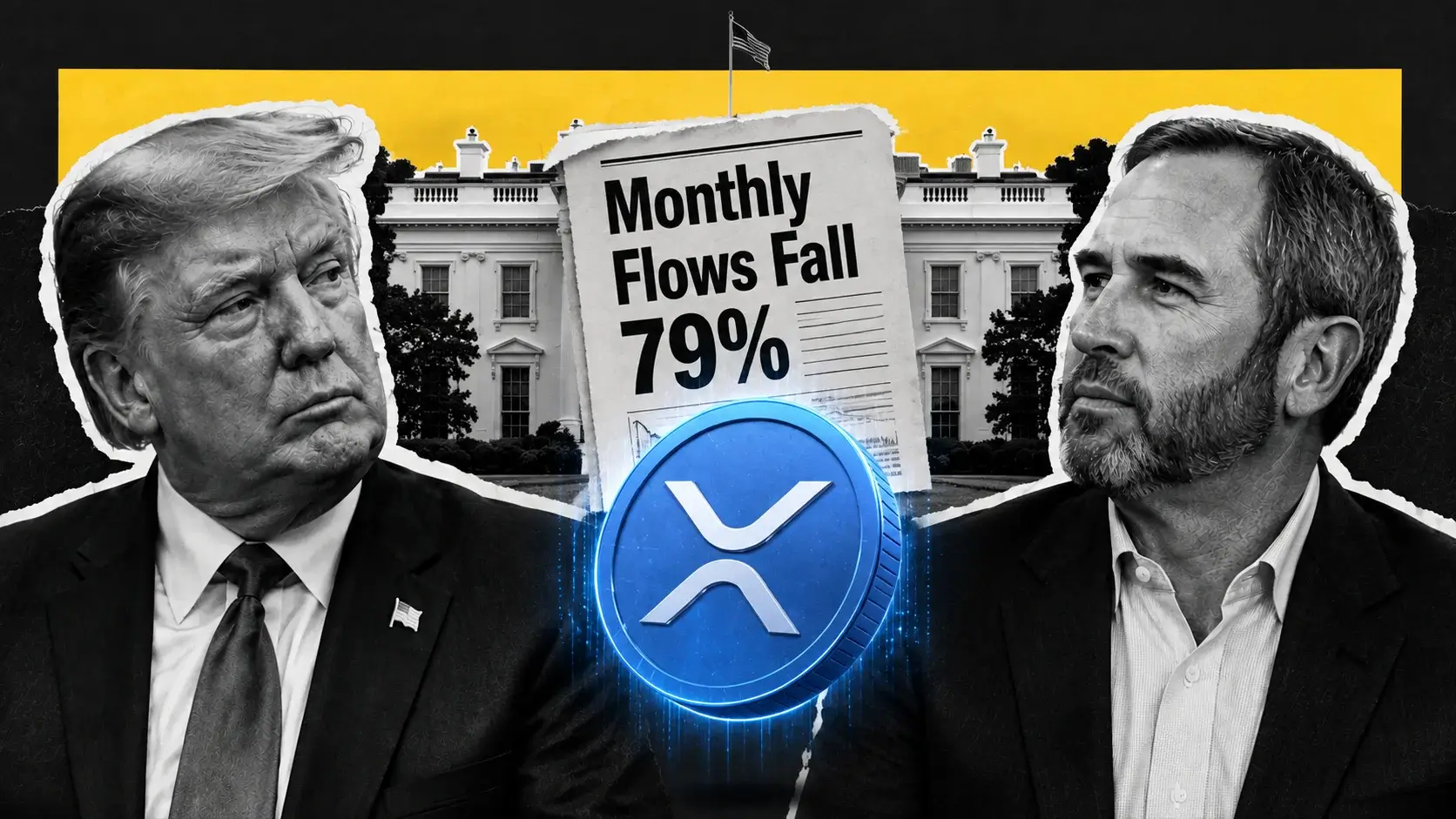
The broader crypto complex confirms that the risk premium is rising. Ethereum (ETH-USD) dropped to about $1,878.63 before stabilising around $1,908.18, after Vitalik Buterin moved at least 1,694 ETH worth around $3.3 million. The notional size is small relative to his total holdings, but with sentiment already fragile it reinforced fears of another whale-driven leg lower. Other majors, including XRP, Solana (SOL-USD), Cardano (ADA-USD) and BNB, are down roughly 0.3% to 5% on the session.
At the same time, some speculative corners still show pockets of resilience: Dogecoin (DOGE-USD) is marginally higher and the $TRUMP token has gained around 1.3%. That pattern – majors heavy, meme names floating – is typical of late-cycle rotations where retail flows chase noise while institutional capital reduces exposure.
The bigger issue is the narrative. Bitcoin was pitched as a hedge against tariffs, inflation and currency debasement. Yet during this latest macro shock, gold is printing fresh records while BTC is logging its first stretch of six negative weeks and sits roughly half off its peak. The safe-haven role is being filled by gold and silver, not BTC-USD. The inflation-hedge story is under pressure as well, with gold and silver rallying while BTC trades below the $70,000 zone that previously marked strength.
Macro backdrop: tariffs, 1.4% GDP, 2.9% PCE, gold at $5,180
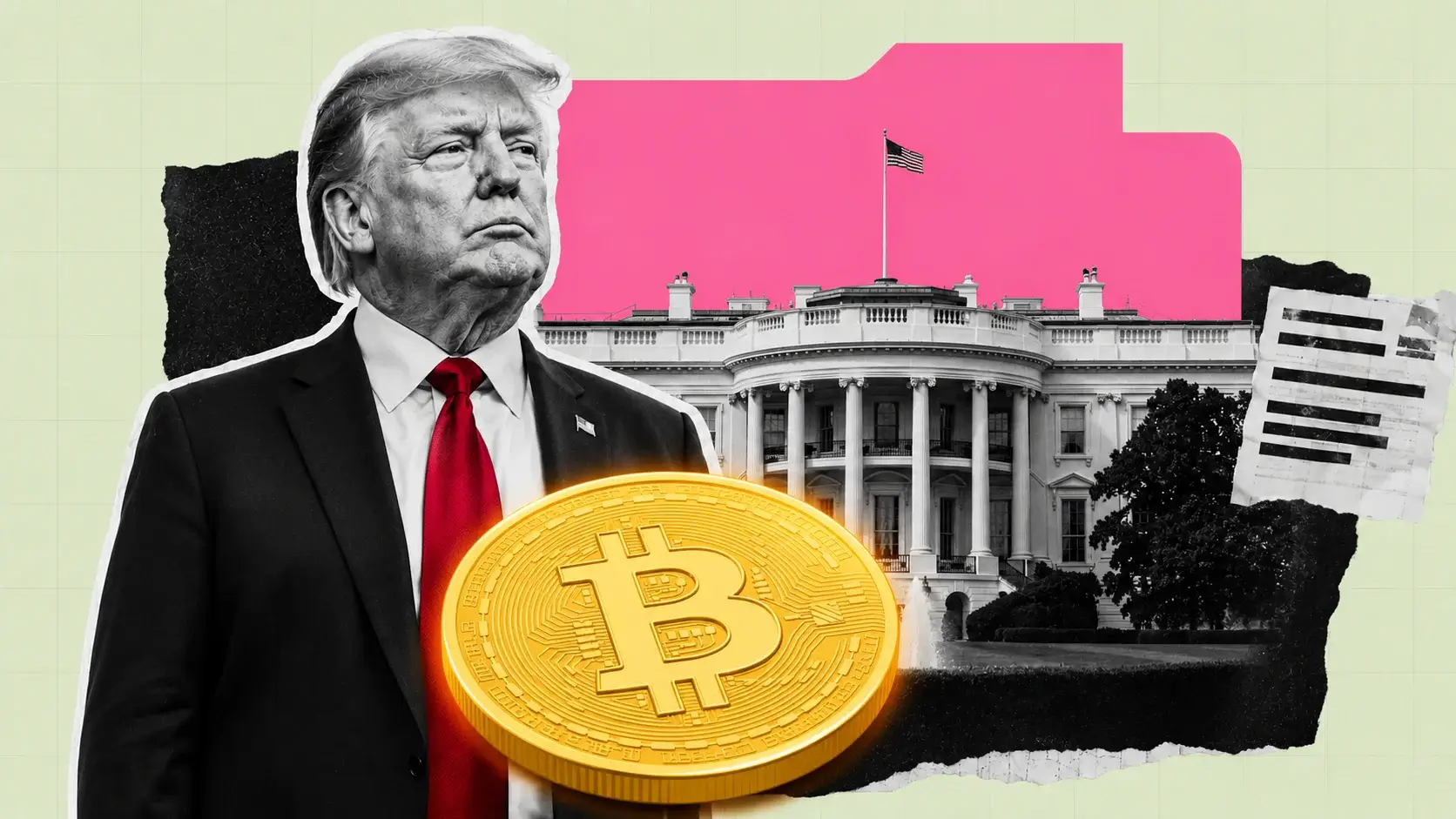
The tariff story is the immediate macro driver. After the Supreme Court ruled that earlier emergency tariffs were illegal, Donald Trump moved to a 10% global tariff, then escalated to a 15% worldwide rate for 150 days under Section 122. That framework raises trade costs, increases inflation risk and compresses policy predictability.
Risk assets have reacted across markets. US Q4 GDP expanded at about 1.4% annualised, a clear slowdown, while the PCE price index remains around 2.9% year-on-year. That combination – softer growth with still-elevated inflation – makes rapid Fed cuts less likely. Fed governor Waller is anchoring his next move on labour data, but tariffs add a fresh layer of uncertainty that already shows up in positioning.
Equities are weaker with controlled volatility. US 30 / Dow Jones trades near 49,096–49,121, down around 1.0–1.1%. The US 500 / S&P 500 is close to 6,869–6,872, lower by about 0.55–0.60%. The Nasdaq sits near 22,747, down roughly 0.6%, while the S&P 500 VIX hovers around 20.6, up nearly 8%. The Dollar Index is around 97.49–97.66, down about 0.1–0.24%, indicating mild pressure on the dollar, not a currency crisis.
The real winners are metals. Gold futures (GC=F) trade near $5,183–$5,193, up roughly 2% on the day and extending a run of three weekly gains. Silver (SI=F) has spiked to about $86–$87, gaining between 4% and almost 6%. In contrast, BTC-USD has fallen to the $64,000–$66,000 band and is negative on a six-week horizon. The risk-off bid is flowing to metals rather than crypto.
Read More
-
Amazon Gives Back the Entire $3T Breakout at $265.13
14.08.2026 · TradingNEWS ArchiveStocks
-
Bitcoin Slides to $62,603 As Spot ETFs Bleed $192M And MSCI Puts Strategy's $23.93B On The Chopping Block
14.08.2026 · TradingNEWS ArchiveCrypto
-
Gold Holds $4,370 After Failing Twice At $4,500 — Central Banks Bought 289 Tonnes Into a 22% Drawdown
14.08.2026 · TradingNEWS ArchiveCommodities
-
S&P 500 Holds 7,798.99 Record After Retail Sales Crater 0.6% — Rips 12%, Applied Materials Sinks to $508.30
14.08.2026 · TradingNEWS ArchiveMarkets
-
Euro Stalls at 1.1550 Despite 87% ECB Hike Pricing — 100-Day SMA at 1.1567 Caps the Rally
14.08.2026 · TradingNEWS ArchiveForex
Derivatives, open interest and liquidity risk in BTC-USD
The derivatives curve shows a similar transition from leverage-chase to deleveraging. Futures open interest on BTC-USD has dropped sharply from last year’s high near $95 billion to about $40 billion. That is a reduction of more than 50%. Some of that is healthy; speculative froth has been cut. But it also means the marginal buyer is less aggressive, so it takes less volume to push price around.
Volatility data from one source highlights that most of Sunday’s 5% drop happened in roughly two hours, with trading activity spiking aggressively during the move. That pattern – volume rising into a fast leg lower – signals active distribution rather than passive drift. With open interest lighter, short-term sellers can force sharp flushes through key levels like $67,000, $65,000 and $64,000, triggering stops and liquidations.
On the options side, implied volatility has risen as traders price in wider ranges around tariff headlines and the potential for deeper macro stress. Even without exact strike data here, the message from the futures and on-chain flows is consistent: structural leverage is lower, directional conviction is weaker, and liquidity gaps are larger.
Chart structure: bearish pennant, bands and volatility metrics
From a technical perspective, BTC-USD is clearly under pressure. The daily chart shows price sliding from the $126,300 all-time high to the $68,300 area and now into the mid-$60,000s, while staying below the 50-day EMA, below the Ichimoku cloud and under the Supertrend line. Momentum indicators are aligned with that trend. RSI sits near 34, close to but not yet at textbook oversold levels. ADX around 49 points to a strong trend rather than a sideways range. MACD remains negative, and stochastic oscillators around 34 show weak follow-through on bounces.
Pattern-wise, the structure resembles a bearish pennant: a sharp vertical selloff from above $70,000 down toward the mid-$60,000s, followed by a tightening triangle as price chops between roughly $67,600 and $64,300. That kind of consolidation after a drop usually resolves lower, not higher, unless there is a clear shift in news or flows.
Volatility is high but ordered. The 14-day ATR near $3,778 tells you that day moves of $3,000–$4,000 are part of the normal noise, not black swans. The Keltner Channel lower band sits around $65,520, which aligns with the recent breakdown zone and serves as a pivot. Below that, the Bollinger Band lower edge is near $56,800, marking a deeper oversold pocket if selling accelerates. Overhead, the 50-day moving average around $82,615 and the 200-day near $99,631 are now distant targets, not immediate resistance.
Short-term scenarios: $62,000–$68,000 range, $50,000 tail risk
Near-term, BTC-USD is boxed into a broad band. On the downside, the $65,000 handle is no longer firm support; it is a pivot. The session low near $64,299–$64,435 and the immediate floor around $64,200–$64,400 are the first defence. A clean break beneath that area brings the $63,500 zone into play, then the more important $62,000 region that several desks highlight as the main medium-term support.
Below $62,000, risk opens toward the high-$50,000s – around $58,000–$56,800 – which lines up with the Bollinger lower band and earlier congestion. One quant model referenced in the material prints a monthly projection near $54,427 and a yearly estimate around $98,201, showing how wide the distribution is. A deeper stress scenario points to $50,000 as a potential washout target if macro conditions worsen, ETF outflows continue and whale selling stays in control.
On the upside, short-term resistance sits near $65,250, with a heavier band around $66,000–$66,400, roughly the 50% retracement of the $68,653 swing high to the $64,203 low. A daily close above $66,400–$67,000 would signal that pressure is easing, but the more important trigger is still $70,000. As long as BTC-USD trades below that round number, rallies are suspect and the bias remains to fade strength. A strong reclaim of $70,000 would aim at the $72,000 region and only then turn attention to the $82,615 50-day average.
Base case right now is a wide trading corridor between about $62,000 and $68,000, with whipsaws around policy headlines. Bear case is a decisive break under $62,000 that opens $58,000–$56,800, and then possibly $50,000 if liquidity thins further. Bull case over the next few weeks requires a stabilisation of tariff rhetoric, calmer moves in the dollar, and a weekly close back above $70,000 that pulls BTC out of the pennant and back into an upward channel.
Medium-term stance on BTC-USD: verdict, bias and risk markers
Given the mix of macro risk, whale distribution, ETF outflows and a clearly bearish technical structure, BTC-USD does not justify an aggressive long stance at current levels. At the same time, structural buyers such as MSTR, Mubadala and other large holders are still accumulating, which argues against a simple capitulation call.
The rational medium-term rating here is Hold with a bearish short-term bias. That means the priority is capital preservation, not chasing upside. BTC-USD is vulnerable to a retest of $62,000 and a possible extension toward $58,000–$56,800, with $50,000 functioning as a realistic stress target if policy shocks escalate and liquidity remains thin. Upside attempts into the $68,000–$70,000 band are better suited for trimming exposure or rotating into safer assets until the chart reclaims higher ground.
For fresh exposure, the risk-reward improves materially only on deeper weakness or after a clear technical reset. A daily and then weekly close back above $70,000, coupled with stabilising ETF flows and a drop in the exchange whale ratio from 0.64 toward more normal levels, would open the door to re-rating BTC-USD closer to a Buy. Until that happens, the stance stays disciplined: Hold existing positions with tight risk markers, treat short-term bounces as opportunities to reduce, and wait for either $62,000–$58,000 support to be tested or $70,000 to be reclaimed before turning constructive again.