Dollar-Yen Glued to 160 as Strong US Payrolls and a 4.54% 10-Year Battle Tokyo's ¥11.7T Intervention Threat
USD/JPY sits at 159.93, jammed against the 160.00 intervention threshold in a three-way standoff: a 172,000-job US print and a 4.54% 10-year push the dollar up | That's TradingNEWS
Key Points
- USD/JPY traded at 159.93 on June 5, pinned against the 160.00 intervention threshold; the yen is down 2.27% on the month and 10.40% over the year.
- A 172,000 May jobs print, double the 85,000 forecast, drove the dollar back to 160.00 and lifted the 10-year yield to 4.54%.
- Tokyo spent ¥11.7 trillion on intervention last month (now erased), and reserves plunged $77.11B to $1.31T, hinting it may have stepped in again; 160.50 is the critical red line.
USD/JPY is glued to the most dangerous level on the board. The pair sits at 159.93, jammed right against the 160.00 line that Japanese authorities have drawn as the limit of tolerable yen weakness, caught in a three-way standoff. A blowout 172,000-job U.S. report, a 10-year yield at 4.54%, and a Middle East haven bid are pushing the dollar up. A near-certain Bank of Japan rate hike on June 16 and an intervention threat backed by a ¥11.7 trillion strike last month are pushing the yen back. The chart says bullish; the policy calendar says the ceiling holds. The June central-bank double-header decides whether the wall breaks or the pair finally rolls over.
Jammed Against The Wall
Every force in this market is converging on 160.00. On the dollar side, the fundamentals scream higher — strong U.S. data, elevated yields, a hawkish new Fed chair, and a geopolitical risk premium that keeps haven demand for the greenback elevated. On the yen side, two heavyweight forces push back: an imminent BoJ hike and a Ministry of Finance that has made clear it will not let the yen blow through 160 without a fight. The result is a pair pinned at the threshold, unable to break out or break down.
That standoff is what makes USD/JPY a coiled, two-way trade rather than a clean trend. The 160.00 level isn't just a round number — it's a policy line, the level that triggered intervention before and the point where Tokyo's tolerance runs out. So even though the dollar's fundamentals argue for a push higher, the pair keeps stalling at the wall because traders know what sits on the other side of it. The next major move depends on which force blinks first: the dollar's momentum, or Japan's willingness to spend reserves defending the line.
Where USD/JPY Trades Now
Put numbers on it. USD/JPY traded at 159.93 on June 5, down a marginal 0.05% on the session but holding within a hair of the 160.00 threshold, with the intraday range running a tight 159.90 to 160.03. The yen has weakened about 2.27% over the past month and is down 10.40% over the past year, a steady erosion that has carried the pair to the top of its ranges. The six-month band runs roughly 152.50 to 160.50, and the 52-week range spans 142.68 to 160.74 — so the pair is sitting at the very top of both, pressing the upper boundary.
The technical posture is bullish but stretched against the ceiling. USD/JPY holds above its 20-day exponential moving average at 159.23, which keeps the near-term uptrend intact, and the 14-day RSI around 61 sits in positive territory without flashing overbought. The pair is working on a fourth consecutive weekly advance, having rallied more than 3% off its monthly low, and technical scorecards rate it a strong buy. But all that bullish momentum is running headlong into the 160.00 intervention wall, which is why the pair consolidates rather than breaks out. The chart wants higher; the policy line says not so fast.
The Jobs Print Pushed It Back To 160
The catalyst that drove the pair back to the wall was the U.S. jobs report. May nonfarm payrolls came in at 172,000, beating the 85,000 forecast by a wide margin, with April revised up to 179,000. The dollar rebounded sharply after the release, helping USD/JPY recover from its intraday lows back toward 160.00. A labor market this strong makes it hard for the Fed to lean dovish, especially with U.S. inflation still buoyant on energy prices, and that repricing toward higher-for-longer is pure fuel for the dollar against the low-yielding yen.
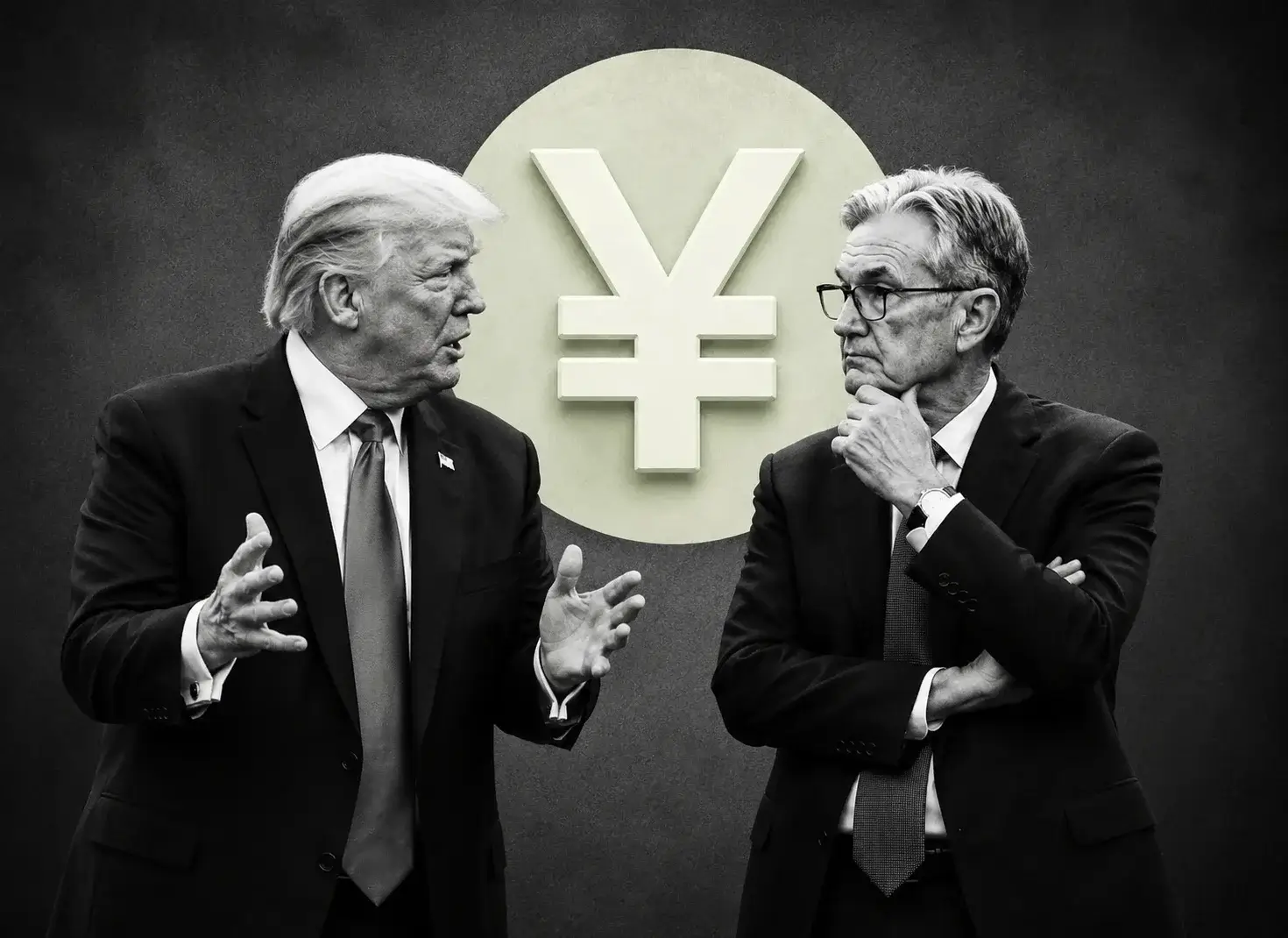
The timing matters because it lands right before the new Fed chair's first meeting. A resilient labor market with payrolls well above 100,000 makes it difficult for Kevin Warsh to signal any dovish tilt at his debut, particularly with energy-driven inflation running hot. The market reads Warsh as hawkish, and the jobs print hands him the cover to stay that way. For USD/JPY, that means the rate differential — the gap between U.S. and Japanese yields that drives the entire pair — stays wide in the dollar's favor heading into the policy meetings. The print pushed the pair back to 160 and dared Tokyo to defend it.
The 160.00 Intervention Wall
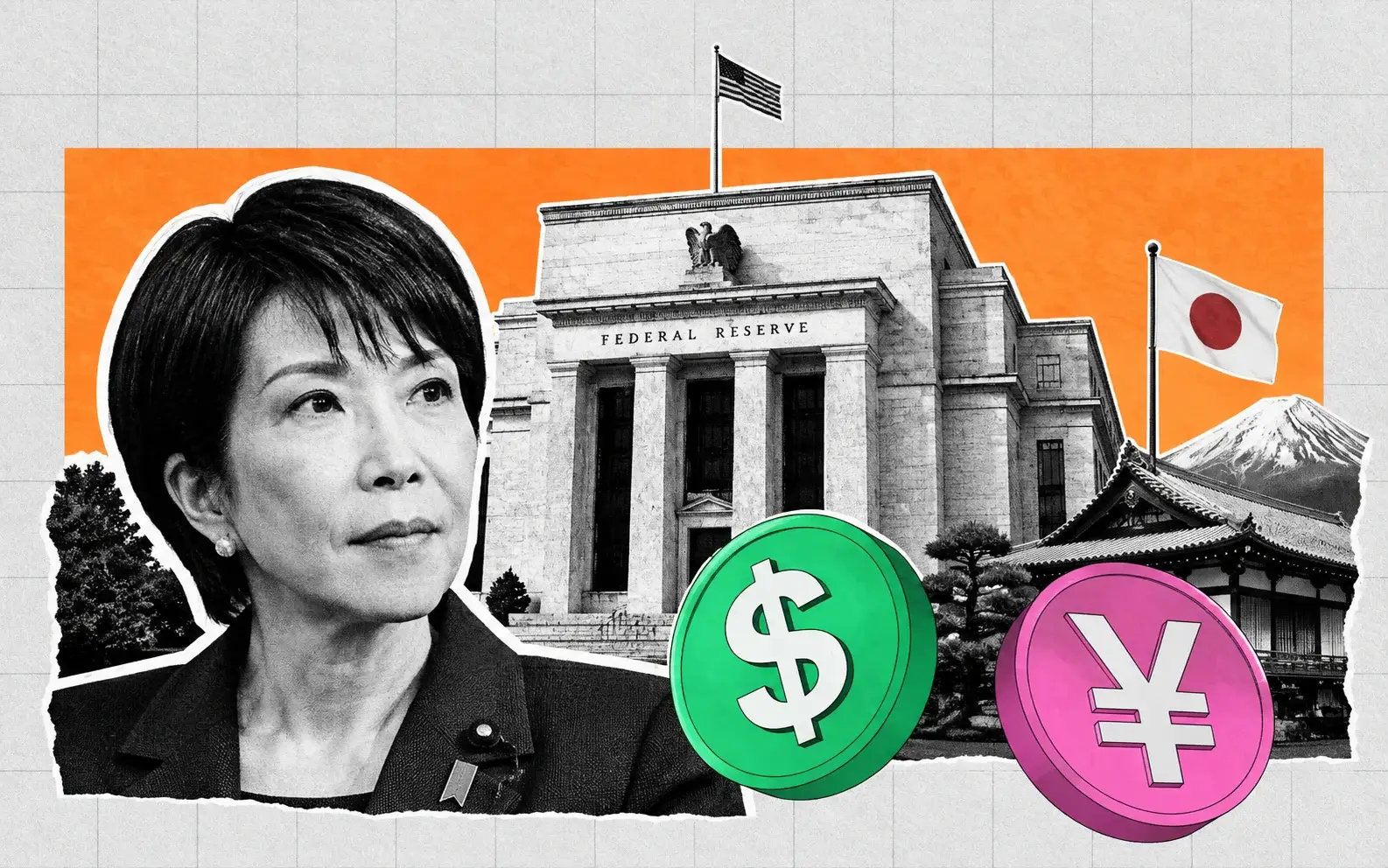
The ceiling is real, and it's expensive to defend. Japanese authorities spent ¥11.7 trillion on intervention last month to support the struggling yen, and the pair has now erased all the gains that intervention bought — meaning the MOF's firepower delivered only a temporary reprieve. The warnings have intensified accordingly: Finance Minister Katayama has reiterated the government stands ready to take "decisive action" against excessive volatility, and Prime Minister Takaichi has said authorities will respond to disorderly moves when necessary. The market views 160.00 as the trigger and 160.50 as the critical red line.
The reserves data suggests Tokyo may already be back in the market. Japan's foreign reserves plummeted by $77.11 billion in May to $1.31 trillion, their lowest level in nearly a year, a sharp drawdown that fuels speculation the MOF has been quietly intervening to slow the yen's slide. That's the bear's problem with chasing USD/JPY higher here: every push toward 160 invites a response, and a credible intervention threat — let alone an actual strike — can snap the pair lower in seconds. Intervention doesn't usually reverse a trend driven by fundamentals, but it absolutely caps the upside and makes the air above 160 treacherous. The wall is why long positions get nervous at these levels.
The BoJ Hike Is The Yen's Catalyst
The yen's structural support is the Bank of Japan, which is on the verge of tightening again. A rate hike at the June 16 meeting is firmly expected after Governor Ueda's recent speech cemented expectations, and the data backs it: Japanese wage growth accelerated to 3.5% year-on-year in April, reinforcing the case for normalization. The summary of opinions from the April meeting showed most policymakers expressed the need to raise rates in the near term. The BoJ tightening while the Fed holds is the cleanest policy catalyst the yen could ask for, because it directly narrows the rate differential that has driven USD/JPY higher for years.
There's a wrinkle, though: some uncertainty lingers over whether the BoJ pulls the trigger in June or waits. The yen has remained under pressure despite the hike expectations, weighed down by elevated oil prices and fiscal concerns, which tells you the market isn't fully pricing the hike as a done deal. That hesitation is part of why the pair sits at 160 rather than rolling over — if the hike were certain and aggressive, the yen would already be stronger. The BoJ is the yen's catalyst, but it's a catalyst the market wants confirmed before it commits. June 16 is when it gets confirmed or denied.
The June Double-Header
The deadlock has a clear breaking point: the central-bank double-header in mid-June. The Bank of Japan meets June 15 to 16, immediately followed by the Federal Reserve on June 16 to 17. That sequencing sets up the cleanest possible policy catalyst — if the BoJ hikes while the Fed holds, the yen gets a genuine fundamental driver rather than relying on intervention alone to cap the pair. Two opposing policy moves landing within 24 hours of each other is the kind of event that breaks a range that's been compressing for weeks.
The combination is what matters. Intervention can hold the line temporarily, but a durable yen move requires several pieces lining up together: a credible intervention threat, some easing in geopolitical stress, and a BoJ hike while the Fed stays on hold. The June calendar can deliver the policy half of that equation directly. If the BoJ hikes and the Fed signals a pause, USD/JPY could finally crack lower off the 160 wall as the rate differential narrows. If the BoJ disappoints — holds, or hikes with dovish guidance — while the Fed stays hawkish on the jobs and inflation data, the pair tests 160.50 and the intervention threat becomes the only thing standing between it and a breakout. The double-header is the trade.
Oil Is The Hidden Variable
The variable that ties USD/JPY back to the broader market is oil, and it cuts in the yen's favor right now. Japan imports virtually all of its energy, so when oil rises, its trade balance deteriorates and the yen weakens — high crude prices have been a persistent headwind for the import-heavy economy, putting a floor under USD/JPY around 148 to 152. Brent above $90 widens Japan's deficit and supports the pair; Brent in the $70s to $80s narrows it and lets BoJ tightening strengthen the yen. Oil is a direct input into the yen's fundamental value.
Here's the connection to the rest of the energy complex: oil just dropped 20% from its highs on U.S.-Iran ceasefire hopes, with Brent sliding toward $95 and WTI near $92. If that decline continues — if the ceasefire gets signed and the Strait of Hormuz reopens — Japan's energy import bill shrinks, its trade deficit narrows, and the yen gets a tailwind that hasn't fully shown up yet. That's a subtle but real yen-positive force layered under the price. The same falling-oil dynamic that's bearish for Chevron and the crude bulls is quietly supportive for the yen. If oil keeps dropping while the BoJ hikes, the yen has more going for it than the chart at 160 suggests.
Read More
-
Yen Stalls at 160 Despite a 3% JGB and Tokyo Core CPI at 2.0% — Intervention Sits at 164, Friday's Payrolls Decide
02.09.2026 · TradingNEWS ArchiveEnergy
-
GLD ETF Sheds Value With Bullion as North American Funds Stay $7.7B in the Red
10.09.2026 · TradingNEWS ArchiveStocks
-
XRP ETF Flows: 7 Funds Split $1.682B With the Complex at Just 1.68% of Market Cap
10.09.2026 · TradingNEWS ArchiveCrypto
-
NG Breaks $2.90 With Production at 113 Bcf/d and LNG Feedgas Capped at 18.3 Bcf/d
10.09.2026 · TradingNEWS ArchiveCommodities
-
USD/JPY Holds Below the 157.23 Average as 2 Central Banks Tighten in 48 Hours
10.09.2026 · TradingNEWS ArchiveForex
Japan's Fiscal Drag
Pulling against the BoJ's tightening is Japan's fiscal expansion, and it's a genuine yen-negative. The Takaichi government's economic program — built around a large stimulus package reported near ¥21.3 trillion — is designed to support growth and cushion the impact of rising living costs, but fiscal expansion of that scale works against the currency. When a government floods the economy with spending while the central bank tightens, the two policies pull in opposite directions, muddying the yen's outlook and capping how much the BoJ hike can strengthen it.
This fiscal-monetary tension is a recurring theme for the yen in 2026. The BoJ is trying to normalize policy and defend the currency, while the government is running expansionary fiscal policy that adds yen supply and stokes the deficit concerns weighing on the currency. Layer on Japan's structural trade deficit — a long-term yen-negative rooted in its energy import dependence since the Fukushima nuclear shutdowns — and you have persistent downward pressure that partially offsets the BoJ's tightening. The fiscal drag is why the yen has stayed weak near 160 even with a hike looming; the monetary support is real, but it's fighting a fiscal and structural headwind.
The Carry Trade
The yen's role as the world's funding currency is the wildcard that can turn an orderly move into a violent one. With Japanese rates still near the bottom of the global stack, investors borrow yen cheaply to fund higher-yielding positions elsewhere — the classic carry trade — and that persistent selling of yen has been a structural weight on the currency. A low-volatility environment keeps the carry trade attractive, and as long as it's on, the yen stays pressured regardless of intervention warnings.
The risk is the unwind. If the BoJ hikes aggressively, or if a market shock spikes volatility, the carry trade can reverse fast — traders rush to buy back the yen they borrowed, and the currency rips higher in a disorderly squeeze. That's the tail scenario that makes shorting the yen near 160 dangerous: the same crowded carry positioning that suppresses the yen day to day can amplify any reversal into a stampede. For now the carry trade is intact and yen-negative, but a June BoJ hike combined with an intervention strike is exactly the kind of catalyst that could trigger a partial unwind. The funding-currency dynamic is the reason yen moves tend to be slow on the way up and fast on the way down.
The Chart: Bullish But Capped
Technically, USD/JPY is bullish right up until it hits the wall. The pair holds above its 20-day EMA at 159.23, keeping the uptrend structure intact, with the RSI around 61 confirming positive momentum that isn't yet overbought. It's working on a fourth straight weekly advance after rallying more than 3% off the monthly low, and the technical rating sits at strong buy. On pure price action, the path of least resistance points up — buyers remain in control above the 20-day EMA.
But the chart runs into a brick wall at 160. The April 30 high at 160.73 and the yearly highs near 160.29 to 160.74 mark the resistance zone, and a close above 160.74 would be needed to fuel the next major leg of the advance. The problem is that this exact zone is where intervention risk peaks — the technical resistance and the policy red line sit in the same place. So even though the chart wants to break higher, the breakout level is precisely where Tokyo is most likely to strike. That collision between bullish technicals and intervention risk is what keeps the pair consolidating just below 160 rather than ripping through it. The chart is bullish; the ceiling is concrete.
The Levels That Matter
Map the battlefield. On the downside, initial support is the 20-day EMA at 159.23 — a daily close below it would signal waning bullish pressure and open a deeper correction toward the May 25 low at 158.76, then 157.70. Below that, the broader six-month range floor at 152.50 is the structural support, and the deeper 148 to 152 zone is where Japan's energy-import dynamics put a longer-term floor under the pair. Those are the levels a BoJ hike or a successful intervention would target.
On the upside, the 160.00 psychological and intervention threshold is the immediate barrier, followed by the 160.29 to 160.74 resistance cluster defined by the yearly and 52-week highs, with 160.50 flagged as the critical red line. A daily close above 160.74 would fuel the next major advance toward the 162 to 166 zone that the dollar bulls target if strength persists. But getting there means breaking through the intervention wall, which is the hardest level on the chart to clear. The pair is trading the top of its range at 159.93, pinned between 159.23 support and the 160.00/160.74 ceiling, and that narrow band is the cage until the June meetings break it.
The Forecast
The base case is continued consolidation just below 160.00, a range-driven two-way trade between the 20-day EMA at 159.23 and the intervention wall, as the strong dollar pushes up while the BoJ hike expectations and intervention threat push back. With the pair bullish on the chart but capped by policy risk, expect choppy grinding near 159.50 to 160.00 into the mid-June central-bank double-header, with sharp but reversible spikes on every headline. Intervention risk keeps a lid on the upside without, on its own, forcing a sustained breakdown.
The bearish path for the pair triggers on the June double-header delivering a BoJ hike alongside a Fed hold, which narrows the rate differential and — combined with falling oil easing Japan's deficit and a credible intervention threat — cracks USD/JPY lower off 160 toward 158.76, 157.70, and the 152.50 range floor. The bullish path needs the BoJ to disappoint, holding or hiking with dovish guidance, while the Fed stays hawkish on the jobs and inflation data and the dollar's haven bid persists; that tests 160.50 and a close above 160.74 opens the run toward 162 to 166 — though every step higher invites another intervention strike. The catalysts to watch are the BoJ on June 16, the Fed on June 17, U.S. CPI next week, the oil price, and any sign Tokyo has stepped back into the market. For now, USD/JPY is jammed against the 160.00 wall in a three-way standoff — strong dollar up, BoJ hike and ¥11.7 trillion intervention threat down — and the trade is to respect the 160 ceiling and the 159.23 floor until the June meetings decide which way it breaks.