EUR/USD Price Forecast: Euro Drops to Seven-Month Lows at 1.1468 — Dollar Hits 99.35
TTF natural gas up 50%, Qatar LNG under force majeure, and the Strait of Hormuz effectively closed | That's TradingNEWS
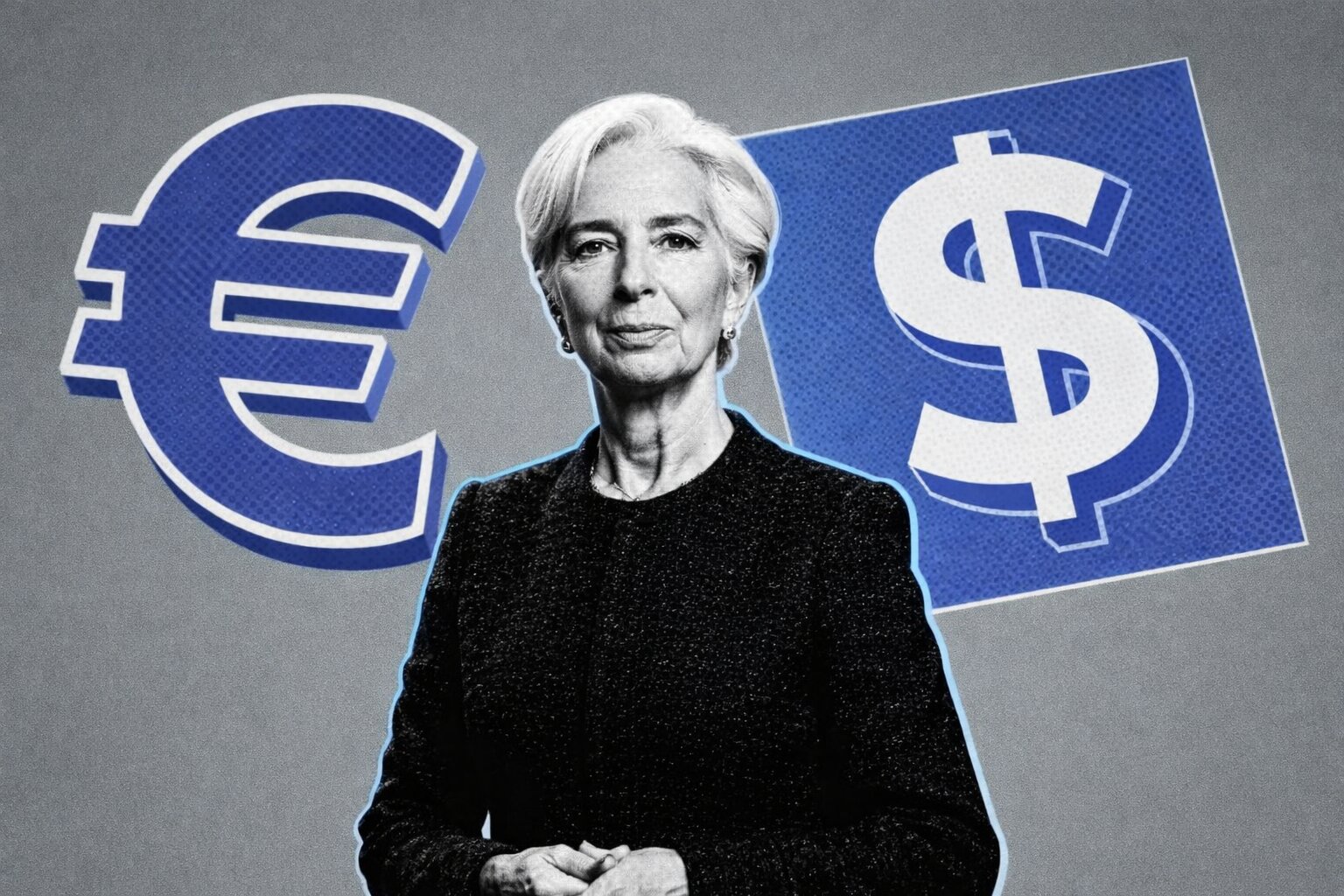
EUR/USD Collapses to Seven-Month Lows at 1.1468 — Europe's Energy Dependence Is Costing the Euro in Real Time
The Euro is getting punished for a structural vulnerability that has been known for years but ignored during calmer periods. EUR/USD dropped to seven-month lows near 1.1468 Monday, with the pair trading around 1.1520 to 1.1550 through the session after hitting those depths in Asian hours. The DXY — the U.S. Dollar Index — was last quoted at 99.25 to 99.35, up 0.26% on the day and sitting at a more than three-month high. That 0.76% gap between the dollar and the euro in Monday's currency heat map is not noise. It is the market pricing in a fundamental asymmetry between an energy-independent United States and an energy-dependent Europe staring down $100-plus oil, disrupted LNG shipments from Qatar, and a Strait of Hormuz that has effectively ceased functioning as a shipping corridor.
The DXY at 99.35 — Why USD Is Winning While EUR Gets Crushed
The dollar's safe-haven bid is being supercharged by two simultaneous forces that are both rooted in the same oil shock. The first is inflation fear. WTI crude hit $119 per barrel Sunday night and remains above $96 after partially pulling back. Oil up 25% in a single week compresses the Fed's ability to cut rates and raises U.S. inflation expectations, which forces a repricing of rate differentials in favor of the dollar. The second force is pure capital preservation — when the world panics, it buys dollars. Both forces are running simultaneously right now, and the DXY's channel structure on the 2-hour chart confirms it. Price tested 99.68 resistance — the 0 Fibonacci level and a prior swing high — before pulling back. The 50-EMA provides channel support near 98.90, with the 0.382 and 0.5 Fibonacci retracement levels at 98.87 and 98.62 acting as layered support below that. The DXY is in a rising channel with higher highs and higher lows. Until oil retreats decisively below $80, that structure does not break.
The Euro, meanwhile, lost 0.76% against the dollar Monday. It lost 0.96% against the Canadian dollar — making EUR the weakest major currency of the session across the board. Against the yen it was down 0.18%. Against the Swiss franc it dropped 0.21%. Against the pound it was roughly flat, down just 0.05% — which reflects the fact that the UK faces essentially the same energy import vulnerability as the eurozone, just with a somewhat different monetary policy trajectory. The heat map is unambiguous: the Euro is the weakest major currency in this environment, and the reasons are structural, not temporary.
Read More
-
Yen Stalls at 160 Despite a 3% JGB and Tokyo Core CPI at 2.0% — Intervention Sits at 164, Friday's Payrolls Decide
02.09.2026 · TradingNEWS ArchiveEnergy
-
QQQ ETF ($706.22) Slides 7.4% Below Its High as the Market Reprices the AI Capex Bill — $686.57 Target if $700 Breaks
22.10.2026 · TradingNEWS ArchiveStocks
-
XRPI ($7.00) and XRPR ($10.74) Slide Toward 52-Week Lows as Spot XRP ETF Flows Stall at $708,510
22.10.2026 · TradingNEWS ArchiveCrypto
-
NG ($2.775) Decoupled From Europe’s €88 Gas Crisis as LNG Feedgas Hits 18.9 Bcf/d — $3.30 Upside on Cold Weather
22.10.2026 · TradingNEWS ArchiveCommodities
-
Dollar-Yen (157.35) Loses 157.65 as the Yen Rallies on Haven Demand — 155 Target if 156 Breaks
22.10.2026 · TradingNEWS ArchiveForex
Europe's Energy Trap — LNG Disruption, TTF Surge 50%, and the Ghost of 2022
The specific mechanism destroying EUR/USD is Europe's dependence on imported energy. Qatar's Ras Laffan LNG complex has declared force majeure. Bahrain's Bapco Energies refinery has done the same. Saudi Arabia's Ras Tanura refinery is offline. The Strait of Hormuz — through which roughly 20% of global seaborne oil and LNG flows — is operating at near-zero throughput. For the United States, which is a net energy exporter, $100 oil is a terms-of-trade improvement. For Europe, which imports the overwhelming majority of its energy, $100 oil is a direct hit to the current account. TTF natural gas prices have already surged nearly 50% in response to the crisis. MUFG flagged this explicitly, drawing the direct comparison to February 2022 when Russia invaded Ukraine: EUR/USD initially sold off modestly, then accelerated from 1.1200 all the way down to 0.9500 over the following months as European energy costs compounded. That 2022 precedent is the tail risk sitting beneath this pair right now.
ING quantified what that looked like in trade account terms: during the 2022 energy crisis, the eurozone's monthly trade account swung to a near €50 billion deficit by late summer as energy import costs exploded. The United States collected the other side of that trade. The same dynamic is in play now, and it is significantly more acute — WTI started this year below $60 per barrel and is now touching $96 to $119. The percentage move is more severe than anything 2022 produced in its first ten days.
EUR/USD Technical Structure — Bears in Full Control Below 1.1600
The technical picture for EUR/USD is as clean a bearish setup as you will see on any major pair. The pair is trading inside a descending channel on the daily chart. Price is below both the 9-day EMA, which is now tracking well above spot near 1.1650, and the 50-day EMA at 1.1742. Both moving averages are sloping downward, confirming that sellers are running this market at every timeframe. The 14-day RSI has dropped below 30 — technically oversold, but the persistent deterioration from mid-range readings says this is not an exhaustion bottom. It is sellers remaining in control through oversold conditions, which is a significantly more bearish signal than a single RSI dip below 30 from elevated levels.
On the 2-hour chart, EUR/USD is hovering around 1.1547, having just broken below the 1.1600 level — the 0.236 Fibonacci mark — and is now targeting the swing low near 1.1530 as immediate support. The candle structure at 1.1600 to 1.1640 shows tiny upticks with bars stuck at that range — classic seller presence at rallies. Every attempt to recover stalls at that zone and gets knocked back. The 50-EMA and 200-EMA on the 2-hour are both trending downward.
Primary support: 1.1468 — the seven-month low. A break below 1.1468 opens the descending channel's lower boundary at approximately 1.1430, followed by the nine-month low at 1.1391. Those are not distant targets. At the pace this pair is moving, 1.1430 is a few bad sessions away. On the upside, the first meaningful resistance is the 9-day EMA at 1.1650. A recovery above 1.1650 gets you toward the 50-day EMA at 1.1742 and the upper channel boundary near 1.1790 — but neither of those levels becomes realistic without a material change in the oil situation or a clear signal that the ECB is diverging from its current trajectory.
ECB Hike Probability Returns — 60% Odds of Two Rate Increases in 2026
Here is the knife-edge problem for the Euro. Swaps are now pricing a 60% probability that the European Central Bank hikes rates twice in 2026. Under normal circumstances, higher rates would support a currency. But rate hikes driven by an oil-induced inflation shock — not by strong economic growth — are stagflationary rate hikes. They compress economic growth while raising the cost of money. Europe hiking rates to fight oil-driven inflation is not a EUR-positive story. It is a growth-negative story that strips away the rate-cut catalyst that had been supporting the Euro earlier in the year while simultaneously signaling that the ECB's economic outlook has deteriorated. The Bank of England faces nearly 50% odds of its own rate increase — which is why GBP/USD is also struggling, down 0.5% to near 1.3350, trapped in its own bearish channel below 1.3400.
Credit Agricole captured the core problem: it is premature to expect a quick resolution to the U.S.-Iran conflict, and EUR/USD remains vulnerable to any re-escalation or positive U.S. data surprises that further burnish the dollar's appeal as a high-yielding safe haven. The dollar has both the geopolitical safe-haven bid and the yield advantage working simultaneously. That is an extremely difficult combination for EUR to fight against.
Bank Forecasts — ING Sees 1.15, Natixis 1.14 Downside, MUFG Warns of Sub-1.15
The institutional forecast range tells you how serious the sell-side considers this move. ING expects EUR/USD to end March somewhere near 1.15 to 1.16. Their base case assumes conditions calm, eurozone growth comes in as planned, and the Fed cuts rates twice in the second half of 2026 — in that scenario, ING targets EUR/USD pushing back up to the 1.22 area by year-end. But that base case requires the war to resolve, which is not happening. Iran named a hardline new supreme leader Monday. The conflict is in day ten with no off-ramp visible.
Natixis sees EUR/USD trading between 1.15 and 1.17 in coming weeks, with a downside risk to 1.14 if Brent stays at $100 per barrel or above. With Brent currently above $98, that 1.14 scenario is already the base case risk, not a tail. MUFG sees the risk of a break below 1.15 explicitly, citing the TTF natural gas surge of nearly 50% as a compounding factor. If sustained, MUFG argues, that adds directly to Euro downside pressure — and it draws the 2022 Ukraine precedent of EUR/USD collapsing from 1.1200 to 0.9500 as the reference case for what happens when European energy costs spiral without resolution.
UBS adds a USD-specific dimension that complicates the picture: ambiguity around U.S. trade policy — including the recent Supreme Court ruling deeming IEEPA-based tariffs unlawful — and uncertainty around the next Federal Reserve chair have created headwinds for the dollar's fundamental case even as its safe-haven bid strengthens. With global investors already holding elevated USD allocations after years of outperformance, UBS argues the appetite to add further dollar exposure is constrained by the political backdrop. That is the one piece of the puzzle that could limit DXY upside and provide EUR/USD with a partial cushion — but it requires the geopolitical shock to stabilize first.
GBP/USD Trading at 1.3340 — Same Bearish Channel, Different Energy Story
GBP/USD at 1.3340 is navigating its own bearish channel, bouncing from the 1.3280 to 1.3300 support zone but failing — like every prior attempt — to clear channel resistance and the 50-EMA near 1.3370 to 1.3400. A break above 1.3400 targets 1.3490. A breakdown through 1.3300 opens 1.3250 and the channel base. The pound faces the same oil-driven inflation headache as the euro, with the Bank of England now facing near-50% odds of a rate hike rather than a cut. GBP/USD is a sell near 1.3390 resistance, targeting 1.3300, with a stop above 1.3430.
The EUR/USD Recovery Scenario — What Needs to Happen for 1.22 to Come Back
The year-end bull case for EUR/USD back to 1.22 is entirely conditional on three things happening in sequence. First, the Iran conflict needs to de-escalate materially — a ceasefire or credible negotiating framework that allows the Strait of Hormuz to reopen and LNG shipments from Qatar to resume. Second, the Fed needs to cut rates twice in the second half of 2026, which requires both the oil shock to fade and inflation expectations to cool. Third, eurozone growth needs to deliver as planned, which is undermined by every week that energy costs remain elevated. None of those three conditions are present right now. Spain's Finance Minister Carlos Cuerpo used Monday's Eurogroup meeting to argue that the crisis creates an opportunity to accelerate European energy market integration — interconnecting national grids and deepening cross-border energy infrastructure. That is a multi-year policy response to a crisis that is affecting EUR/USD in real time this week. It is strategically sound and tactically irrelevant to Monday's price action.
Verdict on EUR/USD — Sell Rallies, Target 1.1430, Stop Above 1.1640
EUR/USD at 1.1547 is a sell on any rally into resistance. The 9-day EMA at 1.1650 is the first meaningful ceiling. Any recovery attempt toward 1.1600 to 1.1640 should be treated as a selling opportunity, not a trend reversal. The technical structure — descending channel, price below both the 9-day and 50-day EMAs, RSI below 30 but with sellers still in control — argues for continuation toward the seven-month low at 1.1468. A clean break below 1.1468 targets the channel's lower boundary at 1.1430, followed by the nine-month low at 1.1391. The macro argument supports every bit of that technical setup: Europe is the world's largest energy importer facing its worst supply shock since 2022, the ECB is being pushed toward stagflationary rate hikes, LNG infrastructure from Qatar is under force majeure, and the dollar has both yield advantage and safe-haven demand running simultaneously. Sell EUR/USD below 1.1530, target 1.1486 initially and 1.1430 on continuation, stop above 1.1600. Until the Strait of Hormuz reopens and oil retreats toward $80, the path of least resistance for this pair is lower.