Euro Slides Under 1.16 to Lowest Since April 6 as 4.57% Yields Power the Dollar Ahead of US CPI and the ECB Hike
EUR/USD lost the 1.16 handle and fell to its lowest since April 6, down ~0.7% on the week, after a 172,000 May US jobs print pushed the Fed toward a year-end hike | That's TradingNEWS
EUR/USD has buckled. The pair erased its early gains to trade below the 1.16 handle Monday, sinking to its lowest level since April 6 and heading for a roughly 0.7% weekly loss, as money flooded into the US dollar following Friday's blowout jobs report. The euro is the mirror image of the risk-on bounce playing out in equities — while stocks rebounded and chip names ripped higher, the single currency got run over by a dollar that the market suddenly wants again. The catalyst is brutally simple: a US labor market that refuses to crack has flipped the Federal Reserve narrative from rate cuts to a possible rate hike, and that repricing is rocket fuel for the greenback. EUR/USD spent late May grinding around 1.1668; it has now lost the 1.16 floor and broken the structure that bulls had been defending. The pair sits at the soft end of its range, and the near-term path of least resistance points lower until the dollar story changes.
The Paradox: ECB About to Hike, Yet the Euro Is Falling
Here's what surprises most people: the European Central Bank is about to raise interest rates, and the euro is sinking anyway. Markets now see a near-certain 25-basis-point ECB hike at the June 11 meeting — priced at roughly 90% — with two or possibly three increases expected across 2026. A central bank tightening policy should, in theory, support its currency. So why is the euro at a six-week low? Because the hike is already fully baked into the price, and currency markets trade on what's next, not what's known. The June 11 increase carries no surprise value, which strips it of the power to lift the euro. What matters now is the relative story, and on that front the dollar is winning decisively. The US is pricing a hike of its own off a far hotter economy, and the rate differential — the gap that drives currency flows — is moving against the euro despite the ECB's tightening. A priced-in hike is a non-event; the dollar's strength is the event.
The Jobs Report That Flipped the Dollar
The damage traces straight to Friday's May employment report. The US economy added 172,000 jobs, nearly double the forecast near 85,000, while the unemployment rate held at 4.3%. That number didn't just dent expectations for Fed easing — it forced markets to fully price in a Fed rate hike by year-end, a stunning reversal from the cut-focused narrative that dominated most of 2026. The dollar responded exactly as you'd expect, with the US Dollar Index firming toward the 100 level. When the world's reserve currency starts offering higher yields with a stronger economy behind it, capital rotates in, and everything priced against it — the euro included — gets sold. The jobs print reset the entire FX landscape in a single session, and EUR/USD was on the wrong side of it. A labor market this strong gives the Fed cover to stay restrictive, and a restrictive Fed is the single biggest weight on this pair right now.
The Rate-Differential Story
Currencies are, at their core, a bet on relative interest rates, and the math has turned against the euro. The US is now pricing a Fed hike by December, with the 10-year Treasury yield pushing to around 4.57% and the 2-year jumping to 4.162%. The ECB is hiking too, but from a deposit rate of just 2.00% — a far lower base than the Fed's, and a gap that the European tightening barely dents. As long as US yields sit well above their eurozone equivalents and the US economy out-runs Europe's, the carry advantage favors holding dollars over euros. That's the structural anchor under EUR/USD's weakness. For the differential to compress in the euro's favor, the market would need to see the Fed back away from its hawkish stance — and Friday's jobs data did the opposite. Until US data softens enough to reopen the easing conversation, the yield gap keeps a lid on the euro and a bid under the dollar.
Eurozone's Awkward Backdrop: Inflation Up, Growth Down
The ECB is hiking into an uncomfortable setup. Euro-area inflation rose to 3.2% in May, its highest in more than two and a half years, driven in part by the surge in energy prices tied to the Middle East conflict. That hot reading is what's forcing the ECB's hand and justifying the June 11 hike. But the growth side of the ledger is flashing red: eurozone GDP for the first quarter of 2026 was revised to show a contraction — the first since late 2022 and the steepest since mid-2020. That's the worst possible combination for a central bank, inflation running hot while the economy shrinks, and it's the worst possible backdrop for a currency. A central bank tightening into a contracting economy risks choking off growth further, and markets know it. The euro can't draw lasting strength from rate hikes when those hikes are landing on an economy that's already going backwards. The growth problem caps the euro's upside even on days when the rate story might otherwise help.
The Break of 1.1635 and the Technical Map
The chart confirms what the fundamentals are saying. By losing the 1.16 handle, EUR/USD has broken below 1.1635 — a level that flipped from resistance to support back on April 8 and has now flipped back to resistance. That break opens the downside. The first meaningful support sits at 1.1476, the March 2026 swing low; a decisive break below it would shift sentiment firmly bearish and target 1.1400, the round number that aligns with the 23.6% Fibonacci retracement of the entire 2022-2026 rally. Below that, the next floor is 1.1200, the August 2025 pullback low. On the upside, the pair needs to reclaim 1.1635 just to stabilize, then push back through the 1.17 area it lost in late May. Beyond there, resistance stacks at 1.1837 (the September 2025 high), 1.1974 (the January 2026 high), and the 1.2000 psychological barrier that doubles as a heavy option level. The technical message is clean: below 1.16, the sellers are in control, and 1.1476 is the line that decides whether this becomes a deeper slide.
The Dollar Index Holds the Key
What happens to EUR/USD from here is, more than anything, a function of the dollar. The US Dollar Index has firmed toward 100, riding the post-jobs yield surge, and the euro's fate is inversely tied to it. A decisive push higher in the index would confirm the dollar has built a floor and could drive EUR/USD toward the low-1.15s, with scope to test 1.1476 if the move extends. The flip side: a clean reversal lower in the dollar would reopen the path for the euro to reclaim 1.16 and attack the 1.1635-1.17 resistance zone. For now, the index structure argues for the dollar staying firm, given the hawkish Fed repricing and the safe-haven flows that geopolitical risk keeps generating. The single currency is essentially a hostage to dollar direction this week, and the dollar has the wind at its back. Euro bulls need the greenback to roll over, and nothing in Friday's data suggests it's about to.
Lagarde's Guidance Is the Real Event
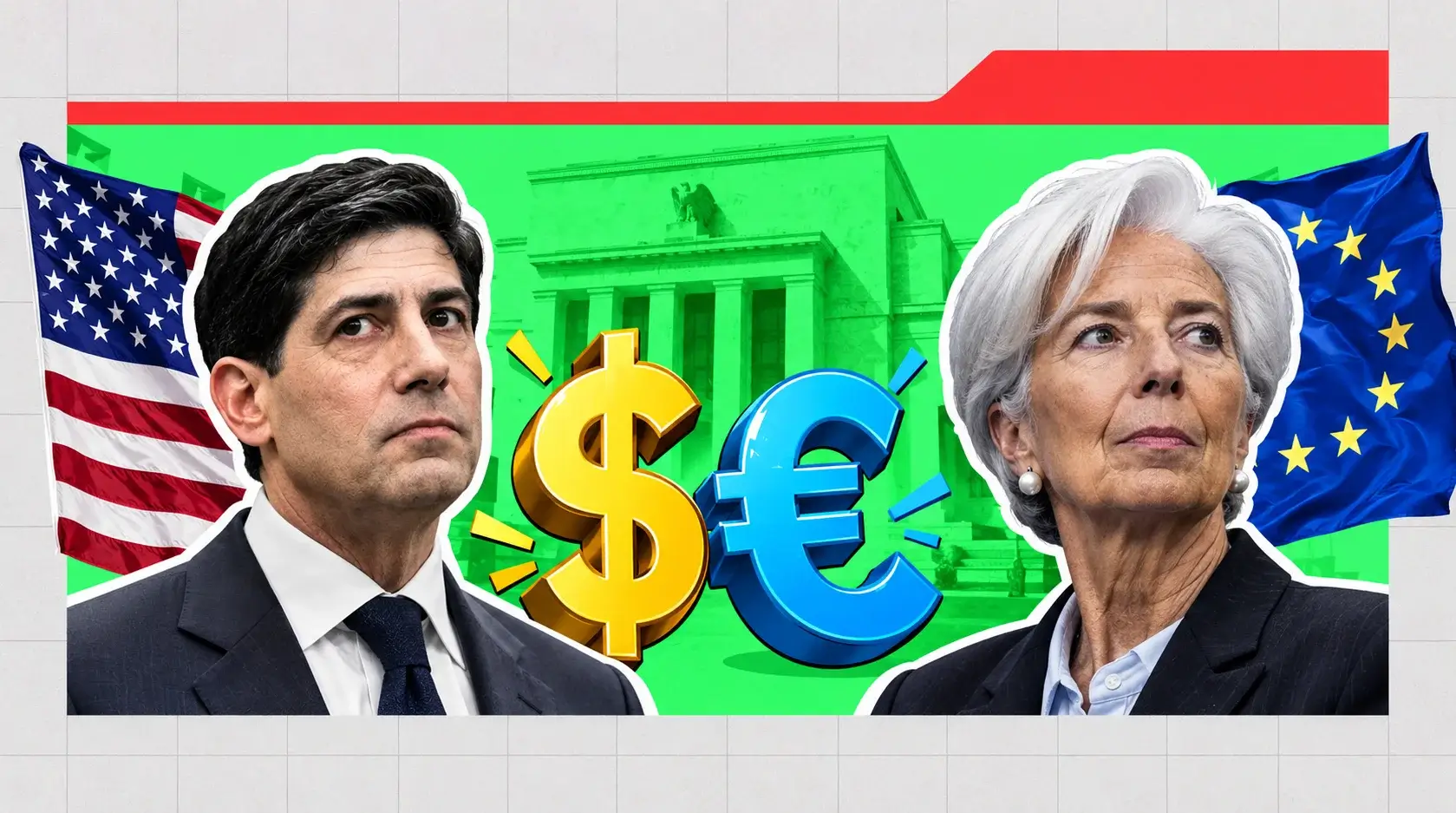
The June 11 ECB meeting is a near-foregone conclusion on the rate decision itself — the 25-basis-point hike is priced. The actual market-mover will be President Christine Lagarde's guidance on what comes after June. If Lagarde delivers the hike with hawkish guidance — signaling that more increases are coming to fight the 3.2% inflation print — the euro could find a bid, because that would extend the ECB tightening cycle and start to close the rate gap with the US. If instead she strikes a cautious tone, emphasizing the GDP contraction and downside growth risks, the market will read it as a dovish hike, and the euro could extend its decline. The two-or-three-hikes-this-year expectation is doing a lot of work in current pricing; any signal that the ECB is less committed than that would hit the euro hard. Lagarde's tone, not the rate move, is the event that matters Thursday.
Read More
-
Yen Stalls at 160 Despite a 3% JGB and Tokyo Core CPI at 2.0% — Intervention Sits at 164, Friday's Payrolls Decide
02.09.2026 · TradingNEWS ArchiveEnergy
-
GLD ETF Sheds Value With Bullion as North American Funds Stay $7.7B in the Red
10.09.2026 · TradingNEWS ArchiveStocks
-
XRP ETF Flows: 7 Funds Split $1.682B With the Complex at Just 1.68% of Market Cap
10.09.2026 · TradingNEWS ArchiveCrypto
-
NG Breaks $2.90 With Production at 113 Bcf/d and LNG Feedgas Capped at 18.3 Bcf/d
10.09.2026 · TradingNEWS ArchiveCommodities
-
USD/JPY Holds Below the 157.23 Average as 2 Central Banks Tighten in 48 Hours
10.09.2026 · TradingNEWS ArchiveForex
US CPI Wednesday: The Other Hinge
Before the ECB even meets, the US delivers its own catalyst. The May Consumer Price Index lands Wednesday, and it's expected to accelerate to around 4.2% year-over-year, up from 3.8% in April, reflecting the energy-price surge. A reading at or above that consensus would reinforce expectations that the Fed needs to keep policy restrictive — or hike — and extend the dollar's recent gains, pressuring EUR/USD toward 1.1476. A downside surprise would do the opposite, prompting investors to scale back the hawkish pricing that emerged after the payrolls report and handing the euro some relief. With US inflation running this hot and energy prices elevated, the risk skews toward a firm print that keeps the dollar bid. The one-two punch of US CPI Wednesday and the ECB Thursday makes this a binary, high-volatility week for the pair, and the sequencing matters: a hot CPI followed by a dovish ECB tone would be the worst-case scenario for the euro.
Price Forecast: The Range and the Triggers
The base case is a 1.15-1.20 range over the next six months, firm but capped, with a near-term bearish tilt given the break of 1.16. The bearish path: a hot US CPI and a dovish ECB hike drive EUR/USD through 1.1476 toward 1.1400, with 1.1200 the deeper target if the dollar's strength compounds. The bullish path requires two things to line up — the ECB delivering its hike with genuinely hawkish guidance, and clear signs that US inflation is cooling enough to revive Fed easing bets later in the year. If both happen, the euro can reclaim 1.16, then 1.17, and the longer-term bias toward 1.20 re-engages. Longer term, the structural case for a modestly higher euro remains intact if the rate gap eventually narrows — a 50-basis-point compression in the differential has historically added several hundred pips to the pair. But that's a second-half-2026 story. For the next two weeks, the dollar holds the cards, and the triggers are CPI and Lagarde.
The Verdict
Bearish near-term, range-bound longer-term, with the dollar firmly in control. EUR/USD's break below 1.16 to its lowest since April 6, a hawkish Fed repricing off the 172,000 jobs print, a 10-year yield at 4.57%, and a dollar index back at 100 all point to continued pressure and a likely test of 1.1476. The fact that the ECB is about to hike doesn't rescue the euro, because the hike is priced and the eurozone is carrying a Q1 GDP contraction alongside its 3.2% inflation. The line is clean: below 1.16, the path of least resistance is lower toward 1.1476 and 1.1400; only a reclaim of 1.1635 with a dovish-dollar shift turns the near-term bias constructive again. This week's CPI and ECB meeting are the catalysts that decide which way it breaks — and with US inflation expected to run hot, the burden of proof sits with the euro bulls. Range-bound between 1.15 and 1.20 remains the medium-term frame, but right now the pair is testing the floor of that band, not the ceiling.