GBP/USD Fails at the 1.3400 200-Day Line and Drifts Toward 1.3325 as Dollar Strength and UK Political Turmoil Cap the Pound
The market prices at least one Bank of England hike by year-end, but the UK government's shaken authority and a dollar index near 100 leave sterling unable to capitalize | That's TradingNEWS
Key Points
- GBP/USD below 1.3350 after failing at the 1.3400 200-day SMA, pressured by a 6.5% US PPI and risk-off dollar bid.
- A BoE hike is priced by year-end, but UK political turmoil and a dollar near 100 cancel out the pound's rate support.
- 1.3400 is the wall, 1.3325 the June low, 1.3182 the floor; banks target 1.36–1.40 only if the dollar weakens.
The pound is losing a fight it should be competitive in. GBP/USD slipped below 1.3350 in the American session Thursday, drifting toward the lower end of its recent range after failing to hold above the 1.3400 mark earlier in the day. The decline came as the dollar firmed across the board, powered by a scorching wholesale inflation print that pushed U.S. producer prices to 6.5% over the year and by safe-haven demand as President Donald Trump renewed his threat to strike Iran hard. Cable opened near 1.3423, traded as high as 1.3463, then rolled over as the dollar reasserted control.
This is the thesis: sterling has a hawkish central bank behind it, with the market pricing at least one Bank of England rate increase by year-end, and it still cannot make headway, because two forces are overpowering that support. The first is a U.S. dollar that refuses to weaken, bid on hot inflation, a hawkish Fed, and risk-off war flows. The second is a domestic political problem unique to the pound, with the UK government's authority visibly shaken. The combination leaves cable pinned below its 200-day moving average near 1.3400 and slipping toward the June lows.
The pattern mirrors what happened to the euro after the ECB hiked: a currency with genuine rate support that the dollar simply will not let rally. The pound, like the euro, is trading a dollar-dominated tape where the greenback holds the whip hand. Year-end forecasts that cluster between 1.36 and 1.40 require the dollar to roll over, and the data flowing through Thursday's session offered no reason to expect that.
The Tape: Cable Fails at 1.3400 and Drifts Toward the June Lows
Thursday's price action was a study in failed recovery. GBP/USD pushed up toward 1.3463 in the European morning, ran into resistance at the technically significant 200-day moving average near 1.3400, and reversed lower through the American session to slip beneath 1.3350. The overnight failure near 1.3400 is the level chartists are watching, because a sustained break above it would signal the pound had wrestled momentum back from the dollar. The pair could not hold it.
The slide brought cable back toward the June lows, with the pair having touched 1.3325 earlier in the month and the broader range bounded below by the late-March low near 1.3182. The 52-week range runs from 1.3009 at the bottom to 1.3869 at the top, and over the past year the pound has actually slipped about 1% against the dollar, a reminder that for all the talk of sterling resilience, the pair has gone nowhere on a 12-month view. The recent trend higher off the March low has stalled at the moving-average cluster.
The intraday reversal told the story of the session. The pound's early strength faded the moment U.S. data and Mideast headlines firmed the dollar, which is the defining dynamic for cable right now: any sterling rally is contingent on dollar weakness, and dollar weakness keeps failing to materialize. A pair that opens at 1.3423, tags 1.3463, and closes below 1.3350 is a pair where the selling pressure builds through the day, and that pressure is coming from the dollar side of the equation.
The Dollar Side: a 6.5% PPI and a Greenback That Won't Quit
The dominant force on cable is the dollar, and the dollar is strong for reasons that have nothing to do with the UK. U.S. consumer inflation hit 4.2% in May, the fastest in more than three years, and Thursday's wholesale print ran at 1.1% on the month and 6.5% over the year, a scorching reading that cemented the case for the Federal Reserve to stay hawkish. The market now fully prices a quarter-point Fed rate increase in December, and with the 10-year Treasury yield at 4.52% and the dollar index near 100 at a 10-week high, the greenback has every fundamental tailwind.
The hot data did exactly what hot data does for the dollar in a hawkish regime: it firmed the currency and pressured everything priced against it. Sterling, the euro, and the broad basket all gave ground as the wholesale print crossed and reinforced the higher-for-longer narrative. The dollar shrugging off a three-year inflation high to trade firmer captures the dynamic precisely, because in the current environment hot inflation is dollar-positive, since it pushes the Fed toward tightening rather than easing.
Layered on top is the safe-haven bid. The renewed threat to strike Iran and the second day of U.S. military action drove risk-off flows into the dollar as the world's primary haven, a flow that directly pressures cable regardless of anything happening in the UK. The pound is caught between a dollar bid on hawkish monetary policy and a dollar bid on geopolitical fear, a double tailwind for the greenback that no amount of BoE hawkishness can fully offset. The dollar holds the whip hand, and Thursday's data only tightened its grip.
The BoE Turns Hawkish — and It Isn't Enough
The pound's would-be support is a Bank of England that has turned hawkish under the same energy-inflation pressure squeezing every major central bank. The market now prices at least one 25-basis-point BoE rate increase by year-end 2026, a meaningful shift driven by the inflationary impact of the energy shock rippling through the UK economy. In a normal environment, a central bank moving toward tightening is a clear positive for its currency, attracting capital seeking higher yields and signaling confidence in the inflation fight.
The problem is that the hawkish tilt is being overwhelmed on both sides. On the external side, the dollar's own hawkish bid and safe-haven status simply outweigh the pound's rate support, so the relative trade still favors the greenback. On the domestic side, UK political uncertainty is offsetting the rate optimism, undermining the confidence that would normally accompany a tightening cycle. The result is a hawkish BoE that has failed to lift the pound, because the support it provides is being canceled out by stronger forces pulling the other way.
This is the same dynamic that played out with the euro after the ECB hiked to 2.25%: a central bank delivering or signaling tightening, and a currency that cannot capitalize because the dollar is stronger and the domestic backdrop is shaky. The BoE hawkishness puts a floor under sterling and prevents a deeper collapse, but it cannot generate a rally on its own. For the pound to climb, it needs the dollar to weaken, not just the BoE to hike. The rate support is necessary but not sufficient.
UK Political Risk: the Government's Authority Cracks
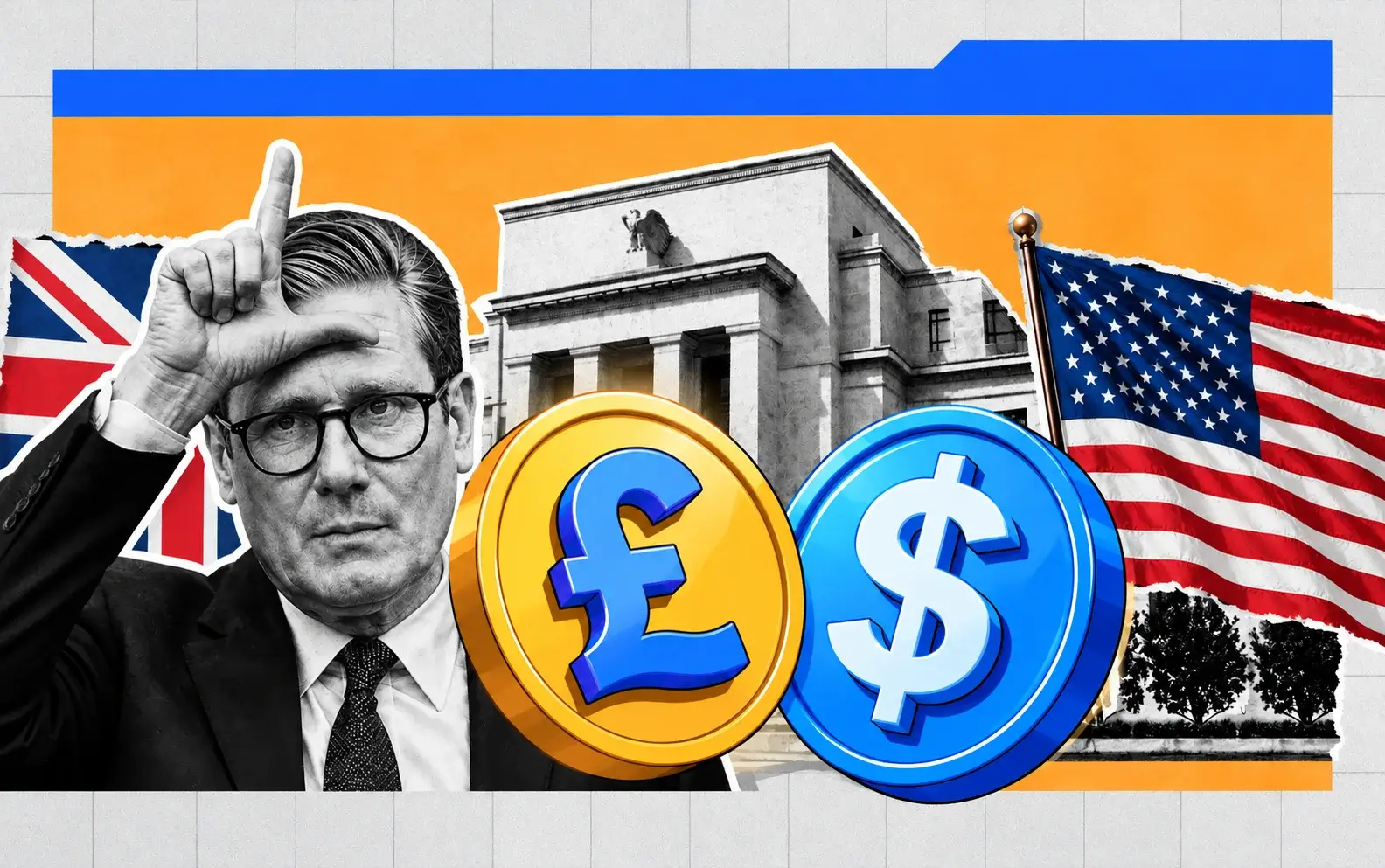
The pound carries a domestic drag the euro and dollar do not, and it is political. UK Prime Minister Keir Starmer's authority has been severely shaken following the resignations of junior ministers, a development that has injected fresh uncertainty into the British political picture at exactly the wrong moment. Political instability is poison for a currency, because it raises questions about policy continuity, fiscal direction, and the government's ability to manage the economy through a difficult period.
The timing compounds the damage. The political wobble lands just as the BoE is turning hawkish and the energy shock is squeezing the UK economy, which means the pound is absorbing a confidence hit precisely when it needs stability to capitalize on its rate support. The resignations and the questions about the government's standing offset the expectations for BoE tightening, neutralizing what should be a tailwind. A market that might otherwise bid the pound on the prospect of higher rates instead hesitates, wary of the political risk.
This domestic overhang is why sterling has struggled to attract buyers even on days when the dollar pauses. The pound needs both external help, in the form of a weaker dollar, and internal stability, in the form of a settled political picture, to mount a sustained advance. Right now it has neither. The political uncertainty is a sterling-specific weight that keeps cable from participating fully in any broad dollar pullback, and it is a wildcard that could deepen the pressure if the government's troubles escalate.
The Synchronized Hawkish Cycle: Fed, ECB, BoE
The macro backdrop this cycle is unusual because all three major Western central banks are tightening into the same shock. The Fed is leaning toward a December hike, the ECB raised its deposit rate to 2.25% on Thursday in its first increase since 2023, and the BoE is expected to deliver at least one hike by year-end. The common thread is the energy-driven inflation born of the Middle East conflict, which has pushed prices higher across the U.S., the eurozone, and the UK simultaneously and forced a synchronized hawkish response.
For the currency pairs, synchronized hawkishness is roughly neutral in theory, because it pushes all the central banks the same direction and the relative differentials matter more than the absolute moves. In practice, it has favored the dollar, because the U.S. carries the hottest inflation, the highest yields, and the safe-haven status that the pound and euro lack. When everyone is hiking, the currency that wins is the one with the best combination of rate support and haven demand, and that is the dollar.
The implication for cable is that the BoE hiking does not differentiate the pound the way it would in an environment where the Fed was cutting. If the Fed were easing while the BoE tightened, the rate differential would compress sharply in sterling's favor and lift the pair. Instead, with both central banks hawkish and the Fed carrying the safe-haven crown, the differential offers the pound little edge. The synchronized cycle has muted the pound's rate support, leaving the dollar's structural advantages to dominate the pair.
Risk-Off and the Cable Beta
Sterling carries a risk-sensitive character that works against it in a risk-off environment, and the current backdrop is firmly risk-off. The pound tends to trade as a higher-beta currency than the dollar, performing well when global risk appetite is strong and capital is flowing toward growth, and underperforming when fear dominates and money retreats to havens. The escalating conflict in the Middle East, with the second day of U.S. strikes and the threat of more, has driven exactly the kind of risk-off flows that pressure cable.
The mechanism is the safe-haven rotation. When geopolitical fear spikes, capital flows out of risk-sensitive currencies like the pound and into the dollar, the yen, and the franc. That rotation pressures GBP/USD on the cross directly, independent of the rate picture or the UK political situation. The pound is being sold not because of anything specific to Britain in those flows, but because it sits on the wrong side of the risk-on, risk-off divide when fear is rising.
The war premium therefore hits cable from the same direction as the hawkish dollar, compounding the pressure. The energy shock driving the inflation that is making the Fed hawkish is the same shock driving the risk-off flows into the dollar, so the pound faces a coordinated headwind. For sterling to catch a bid on the risk channel, the conflict would need to de-escalate, draining the safe-haven premium from the dollar and reopening the risk-on flows that favor higher-beta currencies. Until then, the risk environment works against the pound.
The Energy Shock Hitting a Net Importer
Beneath the rate and political stories sits a terms-of-trade problem. The UK is a net energy importer, which means the surge in oil and gas prices driven by the conflict is a direct hit to the country's trade balance and a drag on the pound's fundamental value. When energy prices spike, an importing nation has to spend more of its currency to buy the same energy, which worsens the trade deficit and pressures the exchange rate. The crude price near $90 a barrel and the disruption to Gulf supply are a fundamental negative for sterling.
The terms-of-trade drag operates separately from the rate and risk channels, and it reinforces them. A higher energy import bill weakens the pound's underlying support even as it stokes the domestic inflation that is pushing the BoE toward hiking. The same energy shock that creates the hawkish rate pressure also creates the terms-of-trade pressure, and the two pull the pound in opposite directions: the rate channel argues for a stronger pound through higher yields, while the terms-of-trade channel argues for a weaker one through the worsening trade balance.
This tension helps explain why the BoE's hawkish tilt has not lifted sterling. The energy shock that is forcing the central bank to consider hiking is simultaneously damaging the pound's fundamental value through the import bill, so the net effect on the currency is muted. A net energy importer facing an energy price spike is structurally disadvantaged in the currency market, and the UK's position on the wrong side of the energy trade is a quiet but persistent weight on cable that the rate support struggles to offset.
The Technical Map: 1.3350 Pivot, 1.3400 Wall, 1.3182 Floor
The chart frames the battle precisely. The immediate pivot is the 1.3350 area, the level cable slipped below in the American session. Above it sits the critical resistance at the 200-day moving average near 1.3400, the line the pound failed at overnight and the barrier that separates the current range-bound regime from any genuine bullish breakout. A sustained move above 1.3400 would be the first technical signal that sterling has regained momentum; the repeated failures there keep the burden on the bulls.
On the downside, the support structure steps down from the June low near 1.3325 toward the more significant late-March low at 1.3182, with the 1.3182 to 1.3237 zone marking the key demand area. Below that, the 52-week low at 1.3009 looms as the ultimate floor. The 50-day moving average near 1.35 and the 200-day near 1.34 have acted as the pivot markers, and with cable trading beneath both in the American session, the short-term technical bias has turned cautious.
The structure is a pair capped at 1.3400 and probing toward its June lows, with the broad range bounded by 1.3182 support and the 1.36 to 1.38 resistance zone higher up. The recovery off the March low has stalled at the moving-average cluster, and a market that fails repeatedly at resistance while drifting toward support is a market under distribution. The technicals will follow the dollar, and the dollar is strong, which tilts the near-term chart bias lower until the 1.3400 wall is cleared.
Read More
-
Yen Stalls at 160 Despite a 3% JGB and Tokyo Core CPI at 2.0% — Intervention Sits at 164, Friday's Payrolls Decide
02.09.2026 · TradingNEWS ArchiveEnergy
-
GLD ETF Sheds Value With Bullion as North American Funds Stay $7.7B in the Red
10.09.2026 · TradingNEWS ArchiveStocks
-
XRP ETF Flows: 7 Funds Split $1.682B With the Complex at Just 1.68% of Market Cap
10.09.2026 · TradingNEWS ArchiveCrypto
-
NG Breaks $2.90 With Production at 113 Bcf/d and LNG Feedgas Capped at 18.3 Bcf/d
10.09.2026 · TradingNEWS ArchiveCommodities
-
USD/JPY Holds Below the 157.23 Average as 2 Central Banks Tighten in 48 Hours
10.09.2026 · TradingNEWS ArchiveForex
The Forecasts: Banks See 1.36 to 1.40, the Tape Says Lower
The forecasting community remains broadly constructive on the pound over the medium term, which sits awkwardly against the current tape. Aggregated bank research points to cable reaching roughly 1.3392 by mid-2026, 1.3442 by September, and 1.3572 by year-end, with the broader consensus for end-2026 spanning a wide 1.3339 to 1.4750 range and most major banks clustering around 1.36 to 1.40. Those targets imply a pound that grinds higher from current levels as the year progresses.
The bull case behind those forecasts rests on the BoE's hawkish tilt eventually winning out, the dollar gradually losing momentum as its hawkish premium fades, and the UK political situation stabilizing. If the Fed's tightening proves to be the peak of its cycle while the BoE keeps hiking, the rate differential would compress in sterling's favor and lift cable toward the bank targets. The technical setup, with the pair having formed higher lows off the March bottom, lends some support to the constructive medium-term view.
The bear rebuttal is that the tape says lower, and the tape is winning. Cable below 1.3350, failing at the 200-day moving average, with a strong dollar, a risk-off war premium, and a shaky UK government, describes a pair under near-term pressure regardless of where the year-end forecasts sit. The gap between the bullish 1.36 to 1.40 targets and the current 1.3350 reflects the difference between a medium-term thesis that requires the dollar to weaken and a near-term reality where it will not. The forecasts may prove right by December; they offer little comfort for June.
The Forecast: What Decides Cable From 1.3350
The path runs through the dollar and the 1.3400 line. The bullish scenario requires cable to reclaim and hold above the 200-day moving average near 1.3400, which would signal the pound has regained momentum and open a move toward the 1.36 to 1.38 resistance zone and the bank targets beyond. That outcome depends on the dollar weakening, which requires U.S. inflation to cool enough to soften the Fed or the war to de-escalate enough to drain the safe-haven bid, alongside a stabilization of the UK political picture. None of those catalysts is present right now.
The bearish scenario is the one the near-term tape supports. Continued failure at 1.3400 keeps the pound under pressure, and a break of the June low near 1.3325 would expose the late-March low at 1.3182 and the broader support zone below. The catalysts for that move are all live: another hot U.S. data print, a hawkish Fed surprise, an escalation in the Middle East that deepens the risk-off dollar bid, or a worsening of the UK political situation that adds to the domestic drag. In that case, cable grinds toward the lower end of its range.
The variable that decides it is the dollar, and the dollar answers to U.S. inflation and the war, not to the BoE. Sterling has its rate support, but it cannot win while the greenback holds near 100 with the Fed hawkish, the conflict driving haven flows, and the UK government's authority in question. The verdict is range-bound with a bearish near-term tilt: GBP/USD near 1.3350 is a pair where the Bank of England's hawkish turn has been overpowered by a stronger dollar and a weaker domestic backdrop, pinned below a 1.3400 ceiling it failed to clear and drifting toward a 1.3182 floor. The BoE sets a soft floor. The dollar sets the price.