GBP/USD Price Forecast — GBPUSD ($1.3429) Outlasts the Euro but Stays Capped as UK Political Risk Cloud the Outlook
The pound holds above its 200-day average near 1.34 yet struggles below the 50-day at 1.35 as a hawkish Fed | That's TradingNEWS
Key Points
- GBP/USD trades near 1.3429, down ~0.15%, holding up better than the euro but capped below the 50-day SMA at 1.35.
- A firm dollar, rising Fed hike odds, and UK political turmoil form a double headwind; a rising wedge warns of downside.
- Support sits at 1.337 then 1.3300; a break risks 1.3173/1.3050, while reclaiming 1.35 targets the 1.3605 year-end view.
The British pound (GBP/USD), known to traders as "Cable," traded around 1.3429 on Thursday, slipping a marginal 0.15% on the session as it dipped intraday toward the 1.337 area before stabilizing. The pair has proven notably more resilient than the euro, which languishes near six-week lows, but it remains hemmed in by a broadly firm U.S. dollar that continues to draw support from elevated yields and the energy-driven inflation backdrop. Over the past week, Cable has been relatively stable, fluctuating between a high of roughly 1.351 on May 25 and a low near 1.3406 on May 21, a tight range that reflects a market in a holding pattern as it awaits fresh catalysts. The pound sits above its 200-day simple moving average around 1.34 but below its 50-day average near 1.35, with the 14-day Relative Strength Index around 53 signaling neutral momentum that captures the indecisive character of the tape. Beneath the surface, however, the technical picture has developed a cautious tilt, with intraday analysis pointing to a short-term rising wedge formation — a typically bearish pattern — as the pair entered a profit-taking phase following recent gains. The combination of a resilient but capped pound, a firm dollar, and brewing domestic political uncertainty leaves Cable navigating a delicate balance, with the broad consolidation of recent weeks showing few signs of resolving decisively in either direction.
The Dollar Side: Yields and Hawkish Inflation Provide a Floor
The primary force restraining Cable's upside is the resilience of the U.S. dollar, which has drawn strength from the same factors propping up the greenback against all its major peers. The dollar has benefited from surging oil prices tied to the Iran conflict and a series of hawkish inflation readings that have shifted the entire conversation around Federal Reserve policy, with markets now pricing a substantial probability — by some estimates as high as 70% — of a Fed rate hike by December. This represents an extraordinary reversal from the rate-cut expectations that prevailed at the start of the year, and it directly supports the dollar by keeping U.S. yields elevated and the carry advantage tilted in the greenback's favor. April's headline PCE inflation at 3.8% year-over-year reinforced the narrative that the Fed under Chair Kevin Warsh may need to tighten rather than ease, a dynamic that drains support from currencies like the pound and provides a floor beneath the dollar. The greenback's strength has been broad-based, with the U.S. currency rallying across multiple sessions on the combination of energy-driven inflation risk and safe-haven demand stemming from the geopolitical turmoil. For Cable, the implication is that any rally attempt faces a persistent headwind from dollar strength, and the pound's ability to advance hinges in part on whether the Fed's hawkish tilt eventually softens or whether U.S. yields remain elevated enough to keep the carry trade favoring the dollar.
UK Political Turmoil Clouds the Pound's Outlook
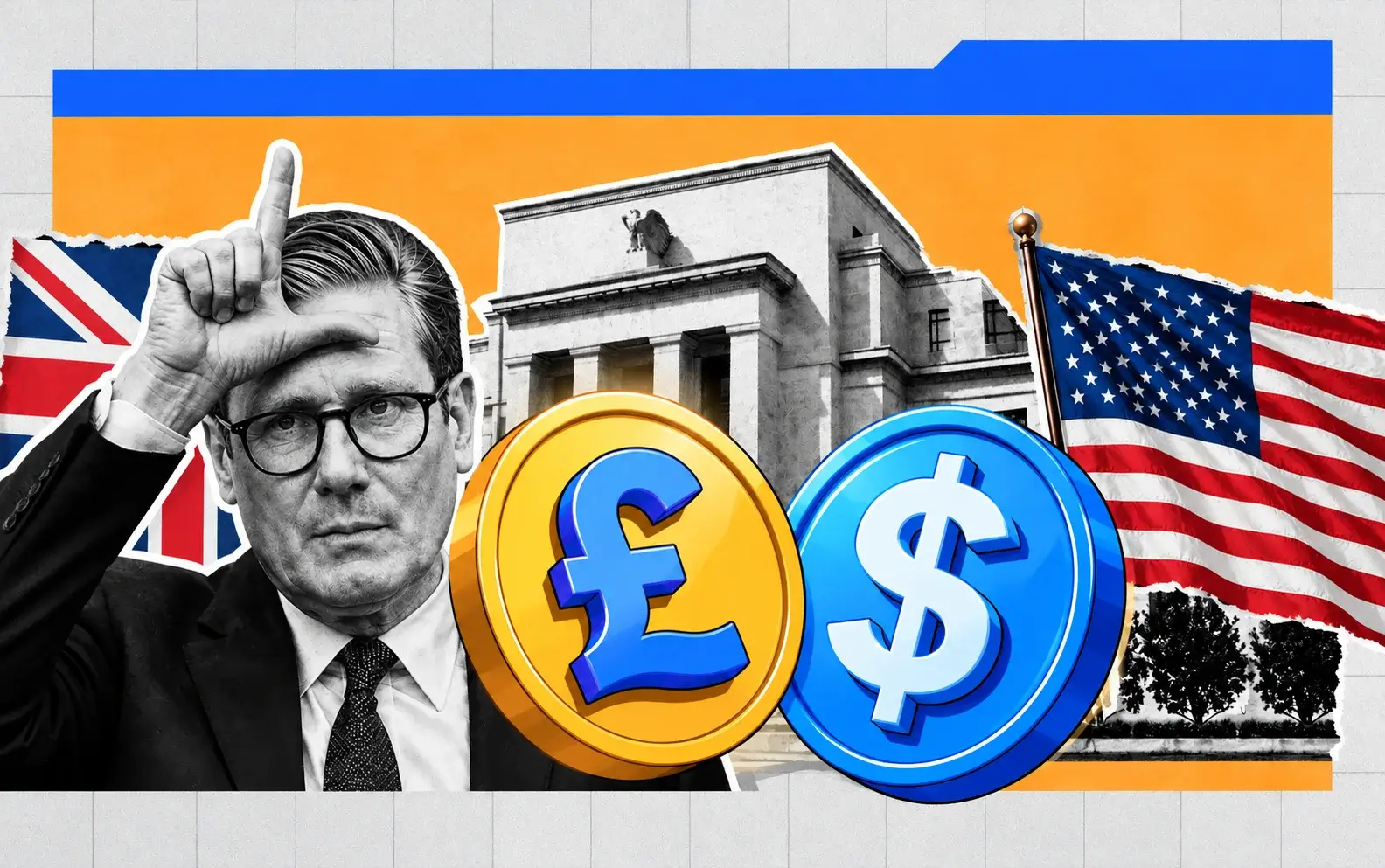
A distinctly domestic risk weighing on sterling is the growing political turmoil in the United Kingdom, where mounting pressure on the government has introduced a risk premium that warrants caution before positioning for further pound appreciation. Growing calls for Prime Minister Keir Starmer to step down have created an atmosphere of political uncertainty, compounded by the announcement from a prominent figure of plans to return to Parliament — a move widely interpreted as a direct leadership challenge to the sitting Prime Minister. The associated by-election has become a key political hurdle and a focal point for markets gauging the stability of the government, and the broader leadership speculation has at times dealt the pound a double blow when combined with a stronger dollar. Political instability is a classic source of currency weakness, as it introduces uncertainty around fiscal policy, governance, and the broader economic direction of the country, prompting investors to demand compensation for the elevated risk. The UK political situation distinguishes Cable's outlook from a clean interest-rate story, adding a domestic layer of risk that can cap rallies and amplify selloffs independent of the macro backdrop. While the pound has shown resilience in recent sessions, the political overhang remains a persistent concern that traders are monitoring closely, particularly for any escalation that could trigger a more pronounced bout of sterling weakness or a broader crisis of confidence in the government.
The Bank of England Side: Cooler Inflation Reshapes Rate Bets
On the monetary policy front, the Bank of England's calculus has been reshaped by a notable cooling in UK inflation that has pushed back expectations for the timing of the central bank's next interest-rate move. UK Consumer Price Inflation unexpectedly slowed to 2.8% year-over-year in April, down from 3.3% in the previous month, a meaningful deceleration that prompted traders to push back their expectations for the likely timing of the next Bank of England rate hike. This dynamic is important because it positions the BoE in a more cautious stance, with the cooler inflation reducing the urgency to tighten policy even as the energy-driven price pressures from the Iran conflict complicate the picture. At the same time, sterling has found some support from expectations that the Bank of England will tread cautiously on any further rate cuts, suggesting the central bank is in a wait-and-see mode rather than committing to a clear easing or tightening path. The BoE's measured posture reflects the genuine uncertainty facing UK policymakers, who must balance the disinflationary signal from the April CPI against the inflationary impulse from elevated energy costs and the broader global backdrop. For Cable, the BoE's policy trajectory is a critical variable, as any shift toward a more hawkish stance would support the pound by narrowing the rate differential with the U.S., while a dovish pivot would pressure sterling. The cooler inflation has, for now, tilted the balance toward caution, leaving the pound's monetary support somewhat ambiguous.
The Interest-Rate Differential in Focus
At the core of the GBP/USD outlook lies the interest-rate differential between the Bank of England and the Federal Reserve, a relationship that has grown more complex as both central banks navigate the inflationary fallout from the global energy shock. The pound's fate depends heavily on the relative paths of the two central banks: with the Fed leaning increasingly hawkish and markets pricing a meaningful chance of a U.S. rate hike, the dollar enjoys a yield advantage that pressures Cable. Meanwhile, the BoE's more cautious stance following the cooler April inflation reading has muddied the picture for sterling, as the reduced urgency to hike removes a potential source of pound support. The interplay between these two policy trajectories is the master variable for the pair, and the current configuration — a hawkish Fed against a cautious BoE — modestly favors the dollar, helping explain why Cable has struggled to break decisively higher despite its relative resilience. Should the BoE surprise with a more hawkish turn, or should the Fed's tightening bias soften, the differential could shift in the pound's favor and provide the fundamental fuel for a sustained advance. Conversely, a further widening of the rate gap in the dollar's favor would pressure Cable toward the lower end of its range. The market is essentially waiting for clarity on which central bank proves more aggressive, and until that resolves, the pair is likely to remain range-bound with a modest downside tilt reflecting the dollar's current edge.
Technical Structure: A Rising Wedge Signals Caution
From a technical standpoint, Cable presents a mixed picture, trading above its long-term 200-day moving average but capped below its 50-day average, with intraday analysis flagging a cautionary pattern. The pair sits above the 200-day simple moving average around 1.34, which provides longer-term support, but it has struggled to reclaim the 50-day average near 1.35, leaving it in a no-man's-land between these key references. The 14-day RSI around 53 reflects neutral momentum, neither overbought nor oversold, consistent with the pair's range-bound behavior. More concerning for the bulls is the development of a short-term rising wedge formation, a pattern that typically resolves to the downside, with recent intraday trading showing the pair deepening its losses as it entered a profit-taking phase following earlier gains. On the downside, immediate support lies near the intraday low around 1.337, followed by the more significant 1.3300 zone that marked six-week lows, with a deeper break exposing the 2026 low near 1.3173 and the 1.3050 level that some analysts flag as a risk if the Fed hike story gathers traction. On the upside, resistance sits at the recent range high near 1.351, with sellers having lurked above the 1.3450 region, and a decisive break above 1.35 would be needed to revive bullish momentum toward the year's high. The technical setup, with its bearish rising wedge and the pair's inability to reclaim the 50-day average, argues for near-term caution despite Cable's relative resilience.
The 2026 Range in Context
To appreciate where Cable trades today, it helps to consider its journey through 2026, which has been characterized by a wide but ultimately range-bound pattern. The pound began the year strongly, reaching a 2026 high of 1.3826 on January 28 amid expectations of economic recovery, before correcting sharply to a low of 1.3173 on March 31 as the U.S. dollar strengthened on the back of the emerging inflation and geopolitical dynamics. From that March trough, Cable staged a recovery back into the 1.35–1.36 range by May, demonstrating the pound's resilience, before settling into its current consolidation around 1.3429. This price action underscores the sensitivity of the GBP/USD rate to the shifting balance of UK and US economic developments, domestic political dynamics, and global market sentiment. The roughly 650-pip range between the January high and the March low frames the boundaries within which the pair has oscillated, and the current level sits comfortably in the middle of that band, neither testing the extremes nor breaking out. This range-bound context is informative because it suggests the pair lacks a decisive directional catalyst, with the competing forces of a firm dollar, UK political risk, cautious BoE policy, and the broader geopolitical backdrop roughly balancing each other out. The eventual breakout from this range, whether triggered by a central bank surprise, a UK political resolution, or a shift in the geopolitical situation, will likely set the tone for the pound's trajectory into the second half of the year.
Read More
-
Yen Stalls at 160 Despite a 3% JGB and Tokyo Core CPI at 2.0% — Intervention Sits at 164, Friday's Payrolls Decide
02.09.2026 · TradingNEWS ArchiveEnergy
-
GLD ETF Sheds Value With Bullion as North American Funds Stay $7.7B in the Red
10.09.2026 · TradingNEWS ArchiveStocks
-
XRP ETF Flows: 7 Funds Split $1.682B With the Complex at Just 1.68% of Market Cap
10.09.2026 · TradingNEWS ArchiveCrypto
-
NG Breaks $2.90 With Production at 113 Bcf/d and LNG Feedgas Capped at 18.3 Bcf/d
10.09.2026 · TradingNEWS ArchiveCommodities
-
USD/JPY Holds Below the 157.23 Average as 2 Central Banks Tighten in 48 Hours
10.09.2026 · TradingNEWS ArchiveForex
Cable's Relative Resilience Against the Euro
A noteworthy feature of the current foreign exchange landscape is the pound's relative outperformance against the euro, with Cable holding up considerably better than EUR/USD, which has slumped to six-week lows. This divergence reflects several factors working in sterling's favor relative to the single currency. The eurozone's heavier dependence on imported energy makes it more vulnerable to the elevated oil and gas prices stemming from the Strait of Hormuz crisis, with Germany's industrial sector particularly exposed, whereas the UK economy, while not immune, is somewhat less directly impacted through this specific channel. Additionally, the BoE's cautious-but-not-dovish stance, supported by expectations that the central bank will tread carefully on rate cuts, has provided sterling with a degree of monetary support that the euro has at times lacked. The pound's resilience is reflected in the BoE's trade-weighted sterling effective exchange rate index, which has held steady near 104.88, indicating that the currency remains broadly stable on a basket basis despite the various headwinds. This relative strength against the euro is significant because it suggests that sterling's challenges are more about dollar strength than pound weakness per se, and that the currency retains underlying support from its own fundamentals. For traders, the EUR/GBP cross dynamics offer an additional lens on sterling's positioning, and the pound's outperformance hints that any broad dollar reversal could see Cable rally more vigorously than the euro.
The Iran Conflict's Indirect Transmission
While the UK is less directly exposed to the Strait of Hormuz crisis than the energy-dependent eurozone, the Iran conflict nonetheless transmits to the pound through several indirect channels that traders cannot ignore. The most significant is the impact on global risk sentiment, as the renewed hostilities and the uncertainty surrounding the U.S.-Iran negotiations have driven a broad risk-off environment that tends to favor the safe-haven dollar over risk-sensitive currencies like the pound. The elevated oil prices stemming from the conflict also feed into the UK's inflation outlook, complicating the Bank of England's policy calculus even as domestic inflation cooled in April, and adding a layer of imported price pressure that could influence the central bank's decisions. Furthermore, the conflict's impact on the dollar — through both safe-haven demand and the hawkish repricing of Fed policy it has driven — represents the primary indirect channel through which the geopolitical turmoil pressures Cable, since a stronger dollar mechanically weighs on the pair. Any escalation in the Persian Gulf that intensifies the risk-off mood or further boosts the dollar would likely pressure sterling, while a genuine de-escalation and peace deal would relieve the global risk premium and could support the pound through improved risk appetite and a softer dollar. The geopolitical situation thus remains a key external variable for Cable, operating largely through its effects on the dollar and broad risk sentiment rather than through direct UK exposure.
The Forecast Landscape: Broadly Steady With Downside Risks
The professional forecasting community generally views Cable as broadly steady over the medium term, though with meaningful downside risks tied to the dollar and UK politics. Aggregated bank research and market expectations point to the pound-to-dollar rate hovering around 1.3377 by mid-2026 and rising modestly toward 1.3605 by year-end 2026, suggesting a gradual appreciation path that reflects expectations of an eventual softening in the dollar. Some model-based forecasts are more conservative, projecting Cable around 1.34 over a one-month horizon, 1.33 over three months, and ending 2026 near 1.33, with longer-term estimates drifting toward 1.24 by 2030. On the cautionary side, analysts have warned of potential downside, with one noting that GBP/USD risks falling toward 1.3050 if the Fed rate hike narrative gathers traction, a scenario that some see as plausible given the inflation backdrop. Other strategists have offered nuanced views, with one suggesting the dollar's bounce has a ceiling that could limit sterling's downside, while another cautioned of a challenging summer ahead for the pound. The dispersion in these forecasts — from gradual appreciation toward 1.36 to downside risks near 1.3050 — captures the genuine uncertainty surrounding Cable's trajectory, which hinges on the interplay of Fed and BoE policy, the resolution of UK political turmoil, and the evolution of the geopolitical situation. The consensus leans toward a broadly stable-to-modestly-higher pound over the medium term, but with clear acknowledgment of the near-term risks that could push the pair lower.
The Bull Case: A Path Back Toward 1.35 and Beyond
The bullish scenario for Cable rests on the convergence of a softer dollar, resilient UK fundamentals, and a resolution of the domestic political uncertainty, any combination of which could lift the pair back toward the upper end of its range. The most powerful catalyst would be a softening of the Fed's hawkish stance or a genuine de-escalation in the Iran conflict, either of which would weaken the dollar and relieve the primary headwind facing the pound. On the domestic front, a resolution of the political turmoil — whether through a stabilization of the government or a clear outcome to the leadership questions — would remove the risk premium currently weighing on sterling. The Bank of England's cautious stance on rate cuts provides underlying support, and any hawkish shift from the central bank, perhaps if energy-driven inflation reasserts itself, would narrow the rate differential in the pound's favor. Technically, a decisive break above the 50-day average near 1.35 and the recent range high around 1.351 would revive bullish momentum and open the path toward the medium-term forecast of 1.3605 and potentially the 2026 high near 1.3826. The pound's demonstrated resilience against the euro suggests that sterling retains underlying strength that could be unleashed in a broad dollar reversal. For bulls, the combination of a potential dollar peak, the BoE's measured policy, and Cable's relative outperformance creates a credible case for a recovery, provided the UK political situation stabilizes and the global risk environment improves.
The Bear Case: Politics and a Hawkish Fed Pressure Sterling
The bearish scenario for Cable is equally coherent and currently holds a modest near-term edge given the technical and fundamental backdrop. The most immediate risk is the combination of a hawkish Fed and persistent UK political turmoil delivering a double blow to the pound, a dynamic that has already pressured sterling in recent weeks. Should the Fed hike narrative gather momentum — with markets pricing a meaningful chance of a December rate increase — the dollar's yield advantage would widen, pushing Cable lower toward the 1.3300 support and potentially the 1.3050 level that analysts flag as a downside risk. The bearish rising wedge formation identified in the technical analysis reinforces the case for near-term weakness, suggesting the pair could resolve lower from its current consolidation. On the domestic front, any escalation of the political crisis, such as a successful leadership challenge or a destabilizing by-election outcome, would amplify the risk premium and weigh heavily on sterling. The cooler UK inflation that pushed back BoE hike expectations removes a potential source of pound support, leaving the currency more dependent on external factors. Additionally, any further escalation in the Iran conflict would intensify the risk-off environment and boost the safe-haven dollar, pressuring the risk-sensitive pound. For bears, Cable's combination of a bearish technical pattern, UK political vulnerability, a cautious BoE, and a firm dollar argues that the path of least resistance is lower, with the 2026 low near 1.3173 and the 1.3050 risk level as potential targets.
The Catalysts on the Horizon
The near-term path for Cable will be shaped by a combination of UK and US data releases alongside the ongoing political and geopolitical developments that traders are monitoring closely. On the US side, the evolution of the Federal Reserve's rate path remains paramount, with the inflation trajectory following the 3.8% PCE reading and any signals about a potential December hike serving as the most consequential drivers for the dollar and, by extension, Cable. US growth data, including GDP figures and labor market readings, will provide further insight into the health of the American economy and the Fed's likely course. On the UK side, the focus is on the Bank of England's policy stance and any fresh inflation or growth data that could shift expectations for the central bank's next move, particularly given the recent cooling in CPI to 2.8%. The domestic political situation, including the leadership questions surrounding the Prime Minister and the key by-election, represents a significant wildcard that could move sterling sharply in either direction. Layered on top is the ever-present geopolitical risk from the Iran conflict, where any development affecting global risk sentiment or the dollar would transmit to the pound. The confluence of these catalysts means Cable could see elevated volatility, with the pair's eventual break from its consolidation likely triggered by one of these events. Traders should brace for two-way risk as the data, political developments, and geopolitical headlines unfold in the coming sessions.
Forecast Verdict: Range-Bound With a Cautious Tilt
Synthesizing the analysis, Cable enters the end of May in a resilient but capped position, consolidating around 1.3429 with the near-term bias tilted modestly to the downside but the medium-term outlook broadly steady. The actionable framework centers on the key technical levels and the competing fundamental forces. On the downside, support lies near the intraday low around 1.337, followed by the 1.3300 six-week-low zone, with a deeper break exposing the 2026 low near 1.3173 and the 1.3050 risk level if the Fed hike story intensifies. On the upside, the pair must reclaim the 50-day average near 1.35 and the range high around 1.351 to revive bullish momentum toward the 1.3605 year-end forecast and potentially the 2026 high near 1.3826. The master variables remain the Fed-BoE rate differential — where a hawkish Fed pressures the pound and a hawkish BoE supports it — the resolution of UK political turmoil, and the evolution of the Iran conflict through its effects on the dollar and risk sentiment. In the immediate term, with the dollar firm, a bearish rising wedge in play, and UK political uncertainty lingering, the base case is continued range-bound trading with a cautious downside tilt, though the pound's notable resilience against the euro and the broadly steady medium-term forecasts suggest sterling retains underlying support. Cable's relative strength hints that any broad dollar reversal could see it outperform, but until the political and policy uncertainties resolve, patience and respect for the 1.33–1.35 range are the watchwords for navigating the pound's consolidation.