IBM Stock Price Forecast Today — Big Blue NYSE:IBM Holds $255 After 12% Anderon Quantum Foundry Award
A $1 billion CHIPS Act Letter of Intent to fund America's first pure-play quantum foundry under the new Anderon entity | That's TradingNEWS
Key Points
- IBM at $255.42 (+1.89%) after $1B Anderon CHIPS award; 200-DMA at $269.95 is the next decisive ceiling
- Q1 2026 EPS $1.91 beat, revenue +10% to $15.9B, record $2.2B FCF, FY guide reaffirmed >5% growth
International Business Machines (NYSE:IBM) is trading at $255.42 on Wednesday, May 27, up 1.89% on the session from the prior close at $250.69 and consolidating gains from the violent 12.4% single-session move on May 22 that took the stock from a close near $225 to $252.97 on the back of the announcement of a $1 billion CHIPS Act award for a new quantum chip foundry. The market capitalization sits at approximately $235.62 billion, the forward price-to-earnings ratio prints at 20.17 against an S&P 500 forward multiple closer to 22x, and the dividend yield of 2.68% provides meaningful carry inside a tape that continues to favor high-quality compounders with durable cash flow generation. The stock is now positioned 30.75% below the 52-week high at $324.90 and roughly 5.96% above the 52-week low at $212.34, a configuration that frames the current setup as a deep value re-engagement opportunity within a broader IT sector that has rallied 30% year-to-date on semiconductor and AI leadership. Short interest sits at a notably low 2.39%, indicating limited bearish positioning even after the violent earnings reaction that took shares 8.3% lower in the session following the Q1 release in April, and the trailing-twelve-month revenue growth of 9.68% confirms that the operating business is accelerating rather than decelerating into the back half of 2026. The structural read for traders sitting in front of the tape is that IBM has shifted from a legacy-IT consolidation play into a multi-vector story combining hybrid cloud, AI software, quantum-computing infrastructure, and the Confluent data-streaming franchise, with the cumulative narrative supporting a meaningful re-rating from the 18-19x forward multiple range that defined the stock for most of 2025. The decisive question for the next three months is whether the May 21 quantum announcement marks an inflection point that opens the path to the $280-$321 Street-high target band, or whether the stock continues to consolidate beneath the 200-day moving average at $269.95 as discretionary capital waits for the July 22 Q2 print to confirm the operating cadence.
Anderon Quantum Foundry — The $1 Billion Catalyst That Reframes the Narrative
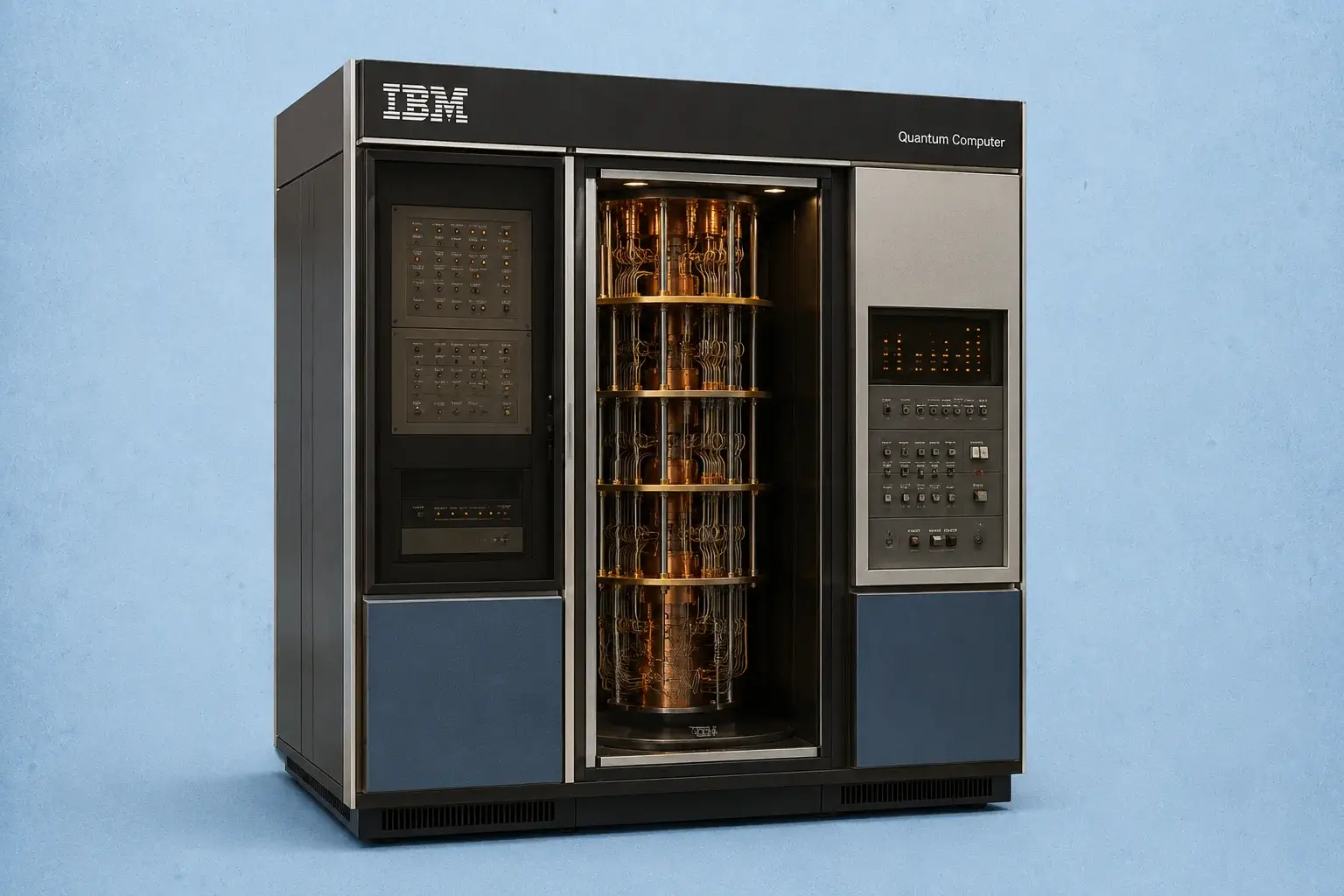
The single biggest structural development for IBM over the past two weeks is the May 21 announcement of a Letter of Intent with the U.S. Department of Commerce to build America's first pure-play quantum chip foundry under a new IBM-led entity called Anderon, with the federal government committing approximately $1 billion in CHIPS Act incentives in exchange for a minority equity stake in the new company. The deal sits inside a broader $2 billion federal quantum technology package that touches nine companies including GlobalFoundries, D-Wave Quantum, Rigetti Computing, PsiQuantum, Atom Computing, Diraq, Infleqtion, and Quantinuum, with IBM receiving the largest single allocation and effectively being positioned as the anchor tenant for U.S. quantum manufacturing infrastructure through the rest of the decade. The market reaction was decisive and tells the story of how investors are now thinking about the quantum opportunity: IBM shares jumped 7% in premarket trading on May 21, closed up 12.43% at $252.97 on May 22, and have held the bulk of those gains through the consolidation into Wednesday's session at $255.42, a 13.5% advance from the May 20 close near $225. The strategic logic underpinning Anderon is straightforward: fault-tolerant quantum computing remains a 2029 target rather than a 2026 commercial reality, but the federal commitment provides funded R&D capital, supply-chain visibility, and political durability that pre-positions IBM as the credible vendor when enterprise quantum workloads scale in the late decade. The company is also contributing roughly $1 billion of its own capital and resources to the project, making this a 50-50 capital partnership with the U.S. government rather than a pure subsidy, which adds execution risk but also strengthens IBM's economic interest in the long-term success of the foundry model. The bull case from here treats Anderon as a free option on the multi-trillion-dollar quantum opportunity at the back half of the decade, with the federal equity stake providing downside protection through political alignment, while the bear case warns that the $1 billion IBM contribution comes on top of the $11.59 billion Confluent acquisition and could pressure free cash flow execution if Software growth slows.
Q1 2026 Earnings — The Beat That Set the Stage for the Re-Rating
The Q1 2026 earnings release in late April delivered the operating proof point that has now combined with the Anderon catalyst to drive the recent re-rating, even though the immediate post-earnings reaction was negative with the stock cratering 8.3% in the session that followed the print. The headline numbers were strong: Q1 non-GAAP EPS came in at $1.91 versus the Street consensus near $1.81, marking a clean ten-cent beat, while revenue of $15.9 billion grew 10% year-over-year and represented a material $270 million beat against expectations. The segment breakdown was even more compelling than the headlines suggested, with Infrastructure revenue jumping 12% on the back of the z17 mainframe cycle, Software revenue growing 8% on continued Red Hat momentum and AI services traction, and Consulting holding its ground despite the broader pressure on enterprise IT services spending. The operational leverage was the most striking element of the print, with pre-tax operating margin expanding 140 basis points, adjusted EBITDA growing 17%, and diluted operating EPS rising 19%, all of which point to a business that is generating real fixed-cost absorption on incremental revenue rather than just buying growth through acquisitions and capital spending. Free cash flow reached $2.2 billion in Q1, a 13% year-on-year increase that marked the highest Q1 FCF margin in IBM's modern history, and the company returned $1.6 billion to shareholders through dividends and continued to position for the integration of the recently closed Confluent acquisition. The negative initial reaction was attributable to a combination of profit-taking after the run into earnings, concerns about the integration risk of Confluent, and broader software-sector weakness following the SaaS de-rating that began with a high-profile bearish research note earlier in the year. The Q1 print has since been validated by 15 sell-side EPS upgrades against just 5 downgrades in the past 90 days, a positive revision ratio that historically precedes sustained price outperformance and that has now combined with the Anderon catalyst to set up the next leg of the IBM re-rating story.
FY 2026 Guidance and Free Cash Flow Trajectory — The Compound Math
The forward guidance framework that IBM management reaffirmed at the Q1 print remains the structural anchor for the bull case and sets up multiple paths to fundamental upside through the back half of 2026. The full-year top-line guide calls for constant-currency revenue growth slightly above 5%, which against the trailing $66 billion revenue base implies $69-$70 billion in 2026 revenue with upside if the Software segment continues to accelerate through Red Hat AI services and the Confluent contribution adds incremental scale. The free cash flow guide is the more important number and arguably the most underappreciated element of the IBM thesis: management is targeting approximately $1 billion of annual FCF growth in 2026, which would push full-year FCF from roughly $12.7 billion in 2025 to approximately $13.7 billion in 2026, a 7-8% increase that translates into FCF per share of approximately $14.50-$15.00 against the current trailing twelve-month FCF per share of $16.24. The FCF yield at current spot pricing therefore prints at approximately 6.5%, a level that is roughly 300 to 400 basis points above the average S&P 500 stock and that provides a structural valuation cushion even if the multiple stops expanding. The EPS growth trajectory is the third leg of the compound math: management is guiding non-GAAP EPS growth of 7-8% in 2026 with explicit commentary that out-year EPS growth should accelerate into the mid-teens range as Software and Consulting compound on the higher revenue base, the Confluent contribution scales, and the operating leverage embedded in Infrastructure begins to flow through to net income. The compound mathematics produce a structural earnings power that justifies a market multiple by 2027, with $12.75 of operating EPS at 22x implying a $280 share price even before considering any incremental value attributed to the Anderon quantum optionality. The single most important guidance signal to monitor through the back half of 2026 is whether management raises the full-year top-line growth guide above 5% at the July 22 Q2 print, which would mechanically force EPS revisions higher and provide the catalyst for further multiple expansion.
Red Hat, Hybrid Cloud, and AI — The Software Engine Behind the Growth
The Red Hat franchise sits at the structural core of the IBM growth story and represents the single most important asset in determining whether the stock can sustain a market multiple over the next three years. Red Hat continues to deliver double-digit revenue growth supported by the broader enterprise migration to hybrid cloud architectures, with OpenShift growing at premium rates as enterprises modernize legacy workloads onto container-based infrastructure that allows portability between on-premise data centers and the major public clouds. The launch of new Red Hat AI services for regulated sectors on May 19 represents the strategic pivot that management has been signaling for two years: rather than competing head-on with Microsoft Azure, Amazon AWS, and Google Cloud for raw infrastructure workloads, IBM is positioning Red Hat as the trusted vendor for AI workloads in financial services, healthcare, government, and other regulated verticals where data sovereignty, model governance, and on-premise deployment requirements create durable competitive moats that the hyperscalers structurally cannot match. The strategic logic combines with CEO Arvind Krishna's heavy bet on the hybrid cloud model and the deepening partnership with Confluent for data streaming and AI-data integration, creating an end-to-end stack from infrastructure through data layer through AI services that few competitors can match. IBM's presence in 175 countries provides distribution leverage that scales the AI security solutions against AI-driven cyberattacks, and Project Glasswing represents the company's flagship AI security framework that has gained traction in the enterprise market over the past two quarters. The single most important Software segment metric to monitor through the back half of 2026 is Red Hat revenue growth, which needs to stay above 12% to justify the current valuation and which has historically accelerated when major mainframe refresh cycles drive parallel hybrid cloud workloads. The risk to the Red Hat thesis is competitive pressure from native Kubernetes solutions and from hyperscaler-managed services that increasingly offer cloud-native abstractions without requiring the OpenShift overlay, but IBM's enterprise customer base and consulting integration capabilities provide structural defense against direct competitive substitution.
Confluent Integration — The $11.59 Billion Bet on AI Data
The Confluent acquisition closed earlier this year at a total consideration of $11.59 billion and represents the largest software M&A transaction in IBM's recent history, layering a real-time data streaming franchise on top of the existing Red Hat hybrid cloud and AI services stack. The strategic logic is straightforward and aligned with the broader enterprise AI build-out: AI workloads require continuous, high-throughput data pipelines that connect transactional systems with model training and inference infrastructure, and Confluent's Apache Kafka-based platform is the industry standard for the real-time event streaming layer that powers the modern AI data architecture. The integration timeline is aggressive with the early close suggesting management saw an opportunity to accelerate the synergy capture, and the immediate impact on IBM's financials includes near-term earnings dilution from interest expense on the financing and integration costs, partially offset by the immediate accretion to Software segment revenue growth. The financial structure of the acquisition matters: IBM ended Q1 with total debt of $66.36 billion, up from $61.26 billion at the end of 2025, a meaningful increase that reflects both the Confluent financing and ongoing capital allocation flexibility, with the debt-to-equity ratio still well within the investment-grade range but worth monitoring as Anderon spending scales over the next two years. The cultural and operational integration of Confluent into the broader IBM/Red Hat organization is the more important risk than the financial structure: previous IBM acquisitions including SoftLayer and parts of the consulting roll-up have shown mixed results on customer retention and revenue synergy capture, and the Confluent deal needs to demonstrate clean integration of the streaming engineering culture into IBM's broader enterprise sales motion. The bull case treats Confluent as the missing piece of the AI data stack that immediately positions IBM to compete head-on with Snowflake, Databricks, and the hyperscaler-native data platforms for the enterprise AI workload, while the bear case warns that the $11.59 billion price tag plus integration costs creates a high bar for ROI capture that the stock will pay for through near-term margin pressure before the synergies emerge.
Technical Levels — 200-DMA at $269.95 Caps the Tape, $212 Defends the Bull Case
The technical structure on IBM going into Wednesday's session is genuinely complex and gives traders a precise framework for sizing positions around the next two major catalysts on the calendar. The current price of $255.42 sits below the 200-day moving average at $269.95, which has been downward-sloping for several months and acts as both a dynamic resistance level and a structural signal that the bears have controlled the primary trend since the post-Q1-earnings drop. The chart shows IBM trading below an uptrend resistance line that previously acted as support, a classical broken-trend configuration that historically implies continued consolidation until either the line is decisively reclaimed or the primary trend reverses on a major fundamental catalyst. The immediate resistance band sits at $263-$277 representing the cluster of prior pivot highs and the 200-day moving average confluence, with the next significant ceiling at $288-$296 marking the resistance zone that capped the early-2026 trading range before the SaaS de-rating triggered the broader software cohort decline. To the downside, the long-term support cluster sits at $210-$220 representing the 2025 consolidation base and the 52-week low at $212.34 from late April, a deep structural floor that would be tested only on a meaningful fundamental disappointment or a broader IT sector de-rating. The most important short-term technical signal is the bullish divergence on the daily Relative Strength Index that printed during the recent consolidation phase, where the price made lower lows while the RSI made higher lows, a configuration that historically precedes a tactical reversal even within a broader corrective trend. The Anderon-driven move on May 22 cleared the prior swing high near $240 and pushed price into the 21-day moving average band on heavy volume, and the consolidation since then through $250-$256 represents a healthy digestion pattern that could set up a continuation move toward the 200-day moving average at $269.95 if the broader tech sector cooperates through the back half of May. The cleanest technical takeaway is that IBM is mathematically pinned between the $269.95 dynamic resistance and the $245-$248 short-term support, with the next major directional move depending on whether the stock can clear the falling 200-day moving average on volume in the coming sessions.
Valuation — 20.17x Forward Earnings, 6.5% FCF Yield, Below-Market Multiple
The valuation framework supporting the bull case on IBM combines a below-market forward earnings multiple, a structurally high free cash flow yield, and a credible path to multiple expansion as the Anderon quantum optionality begins to attract incremental institutional capital. The forward price-to-earnings ratio at 20.17 sits roughly two turns below the broader S&P 500 forward multiple of approximately 22x, an unusual configuration for a company growing revenue at 10% year-over-year, expanding margins meaningfully, and generating record free cash flow at the highest Q1 margin in company history. The FCF per share of $16.24 against the spot price of $255.42 produces a free cash flow yield of approximately 6.5%, a level that is roughly 300 to 400 basis points above the average S&P 500 stock and that provides meaningful valuation support even in a flat-multiple scenario. The dividend yield of 2.68% adds another layer of yield support, with the $1.69 quarterly dividend payable on June 10 representing the next cash return event and continued evidence of management's commitment to shareholder distributions even as it funds the Anderon project and integrates Confluent. The base-case valuation framework assumes $12.75 of operating EPS in 2027 and applies a 22x market multiple, producing a $280 fundamental fair value that represents $33 of upside from current spot levels, a roughly 13% return that comes alongside the 2.68% dividend yield for a total annualized return potential approaching 16% over the next twelve months. The Street-high valuation scenarios push toward $321 driven by a combination of higher 2027 EPS assumptions, multiple expansion to 24x on the back of quantum re-rating, and incremental contribution from Confluent synergy capture, while the most aggressive quantum-bull cases reach toward $400 on the assumption that the Anderon optionality begins to attract incremental valuation premium as the broader quantum sector matures. The bear case from current levels assumes EPS disappointment in the back half of 2026 due to Confluent dilution and Infrastructure deceleration as the z17 cycle matures, with the stock potentially testing the $220 long-term support before stabilizing.
Sector Positioning — IT Sector +30% YTD, IBM Catching Up
The Information Technology sector has been the dominant performance pocket of the S&P 500 in 2026, with the cohort up roughly 30% year-to-date on the back of semiconductor leadership, AI infrastructure spending, and software re-rating after the early-2026 correction, and IBM's place within that broader sector picture is the determinant of how much room the stock has to compound from current levels. Technology Select Sector SPDR Fund (AMEX:XLK) has rallied alongside the AI capex thesis, with the iShares Expanded Tech-Software Sector ETF (NASDAQ:IGV) showing more variance after the SaaS de-rating that started with a high-profile bearish thesis published earlier in the year and that has continued to weigh on subscription-heavy software names through May. IBM has lagged the broader technology cohort meaningfully through the first four months of 2026, but the May 22 Anderon catalyst combined with the cumulative positive earnings revisions has narrowed the gap and positioned the stock to participate in any further sector strength through the back half of the year. The sector concentration matters because IBM is now sitting at the intersection of three of the most powerful 2026 themes: the AI infrastructure build-out through Red Hat AI services and the broader hybrid cloud thesis, the quantum-computing optionality through Anderon, and the data infrastructure trade through Confluent. The relative-value math against the broader sector is particularly compelling at current spot levels, with IBM trading at 20.17x forward earnings versus the broader IT sector at closer to 30x in some sub-categories, and the dividend yield of 2.68% providing meaningful carry inside a sector that generally pays minimal yield. The single most important sector signal to monitor through June is whether the broader software cohort continues to recover from the May Zscaler-driven de-rating that took down Palo Alto Networks, CrowdStrike, and the entire cybersecurity sub-sector by mid-to-high single-digit percentages, because any sustained software sector strength would mechanically pull IBM higher through correlation effects even before company-specific catalysts contribute additional upside. The risk to the sector positioning is that any meaningful AI capex pullback by hyperscalers would hit the entire technology cohort and IBM would not be exempt from that broader de-rating, although the diversified revenue mix across Software, Consulting, Infrastructure, and emerging quantum provides more defensive characteristics than pure-play AI infrastructure names.
Read More
-
Yen Stalls at 160 Despite a 3% JGB and Tokyo Core CPI at 2.0% — Intervention Sits at 164, Friday's Payrolls Decide
02.09.2026 · TradingNEWS ArchiveEnergy
-
CHAT Fund Holds $96.37 as Korean Memory and Chip Exposure Drive a 109.73% Year — Break of $98.02 Opens $105.20
18.09.2026 · TradingNEWS ArchiveStocks
-
First-Generation XRPR and XRPI Ride XRP's Rebound to $1.386 as Spot Funds Post First Outflow — Break of $1.40 Opens $1.54
18.09.2026 · TradingNEWS ArchiveCrypto
-
NG Holds $2.9255 as Storage Surplus Narrows From 5.5% to 3.7% in 3 Weeks — Break of $3.00 Opens $3.15
18.09.2026 · TradingNEWS ArchiveCommodities
-
Dollar Surges to 157.90 as BoJ's Divided Hike Fails to Lift the Yen — Break of 158.87 Opens 159
18.09.2026 · TradingNEWS ArchiveForex
Competition — Accenture, Microsoft, Oracle, GlobalFoundries, and the Quantum Cohort
The competitive landscape facing IBM is complex and multidimensional, with the company facing different competitor sets across each of its operating segments and the broader market having struggled to value the diversified portfolio against the more pure-play technology peers. In Consulting, the primary competitor set includes Accenture (NYSE:ACN) at +2.41% on a recent reference session, Infosys (NYSE:INFY) at +2.24%, Cognizant which announced a $500 million accelerated share repurchase, Tata Consultancy Services, and the global advisory arms of the Big Four accounting firms; this segment is facing genuine pressure from enterprise IT spending slowdowns and from the broader question of whether AI agents will displace traditional consulting work over the next decade. In Software, IBM competes with Microsoft (NASDAQ:MSFT), Oracle (NYSE:ORCL), Salesforce (NYSE:CRM), Snowflake, Databricks, and a cohort of more specialized vendors across data integration, security, and AI services; the Confluent acquisition repositions IBM more squarely against the modern data stack players that have dominated this category through the post-2020 cycle. In Infrastructure, the mainframe franchise faces relatively limited direct competition with HPE and Dell at the edges, but the broader trend toward cloud-native workloads creates structural competitive pressure that the z17 cycle has temporarily masked through strong refresh demand. In the emerging Quantum category, IBM is now competing with GlobalFoundries (NYSE:GFS) which received its own $1 billion CHIPS Act allocation, D-Wave Quantum (NYSE:QBTS) which rallied 16% on the May 21 announcement, Rigetti Computing (NASDAQ:RGTI) which climbed more than 14%, IonQ (NYSE:IONQ), PsiQuantum, Atom Computing, Diraq, Quantinuum, and Infleqtion which soared over 23% on the same news. The Anderon foundry model positions IBM uniquely as both a quantum technology developer and the manufacturing infrastructure for the broader U.S. quantum ecosystem, creating potential customer-vendor relationships with the smaller pure-play quantum companies that could ultimately depend on Anderon for chip fabrication. The competitive positioning is strongest in the hybrid cloud / AI services intersection where the combination of Red Hat OpenShift, the new AI services for regulated sectors, the Confluent data layer, and the IBM Consulting integration capability creates an end-to-end stack that few competitors can match, particularly for the regulated-industry verticals that face the highest barriers to adopting pure hyperscaler solutions.
Project Glasswing and AI Security — The Underappreciated Defensive Franchise
Project Glasswing represents IBM's flagship AI-powered security portfolio launched on May 19 and is one of the most underappreciated elements of the broader bull case heading into the back half of 2026. The strategic logic combines IBM's deep enterprise security heritage with the structural reality that AI-driven cyberattacks are scaling faster than traditional security architectures can defend against, creating a category-defining opportunity for vendors who can integrate AI threat detection, response, and prevention into a unified enterprise security platform. The 175-country distribution footprint provides immediate global scale for security solutions in a market where regional compliance requirements and data sovereignty rules create structural barriers to entry for pure cloud-native competitors. The Project Glasswing positioning sits inside the broader enterprise security market that has generated tens of billions of dollars of revenue growth across CrowdStrike, Palo Alto Networks, Zscaler, Fortinet, Cisco, and the Microsoft security franchise that has scaled past $37 billion in annual revenue, all of which combine to define a market opportunity meaningfully larger than IBM's current Software segment revenue. The most important signal to monitor on the security franchise through the back half of 2026 is whether IBM Software segment growth accelerates from the Q1 8% pace as Project Glasswing scales adoption, and whether the integration with Red Hat AI services creates a differentiated platform position in the regulated-industry verticals where customer switching costs are highest. The competitive risk is direct: Microsoft's security franchise is the dominant player by scale, and the bundling dynamic in Microsoft enterprise agreements creates a pricing umbrella that pure-play vendors structurally cannot defend; however, IBM's positioning in the consulting integration channel and the regulated-industry verticals provides specific defensive characteristics that the broader cybersecurity peer set does not share. The recent Zscaler-driven de-rating that took the cybersecurity ETF down more than 4% on Wednesday is actually a positive read-through for IBM's security positioning, because the market is clearly differentiating between expensive pure-play SaaS vendors and integrated platform plays with cleaner cash flow profiles and more defensive multiple structures.
Catalyst Calendar — June 10 Dividend, June 17 VivaTech, July 22 Q2 Earnings
The catalyst calendar for IBM through the back half of 2026 is unusually dense and provides multiple potential inflection points for the stock to either continue the Anderon-driven re-rating or to face meaningful headwinds that test the structural support cluster. The immediate event is the June 10 ex-dividend date and dividend payment of $1.69 per share, which represents the continued evidence of management's commitment to shareholder distributions and provides a small but meaningful technical anchor for institutional positioning around the dividend record date. The June 17 VivaTech 2026 presentation in Paris is the next material communication event where management is expected to provide additional color on the Red Hat AI services traction, the Anderon foundry timeline, and the Confluent integration progress, with any positive guidance commentary potentially serving as the catalyst to clear the 200-day moving average at $269.95. The July 22 after-market-close Q2 2026 earnings release is the dominant macro catalyst for the stock through the next two months, with the options market currently pricing approximately a 7.5% earnings-related stock price swing based on the at-the-money straddle expiring soonest after the release. The 40% implied volatility on IBM options reflects the genuine uncertainty around the Q2 print given the combination of Confluent integration impact, Infrastructure deceleration risk as the z17 cycle matures, and the broader enterprise IT spending environment heading into the back half of the year. The most important specific metrics to monitor at the Q2 print are Red Hat revenue growth (which needs to stay above 12% to support the multiple), Infrastructure revenue growth (which needs to slow gradually rather than crash as the z17 cycle digests), Software gross margin expansion (which signals operating leverage durability), and any incremental guidance commentary on Anderon spending timelines and the Confluent synergy capture trajectory. The combination of these three catalysts over a two-month window creates an unusual concentration of event risk that benefits patient long-duration positioning ahead of June 10 with tactical risk management around the July 22 print.
Risk Factors — Confluent Dilution, z17 Cycle Maturity, AI Agent Threat, European Macro
The risk factors that could derail the IBM bull case are well-defined and tradable, providing a clean framework for portfolio managers to size positions and hedge specific scenarios over the next twelve months. The most immediate risk is the integration dilution from the Confluent acquisition, which closed earlier than originally scheduled and which is expected to create near-term earnings drag from interest expense, integration costs, and the structural margin difference between Confluent's higher-growth lower-margin profile and IBM's more mature Software segment economics. The second risk is the deceleration of the Infrastructure segment as the z17 mainframe refresh cycle matures, with management explicitly noting that the 12% Q1 growth rate is unlikely to sustain at that level through the back half of the year as the company laps the highly robust initial launch quarters; the cleanest signal to monitor is the year-over-year comparison from late 2025, which begins to inflate the comparable base in Q3 2026. The third risk is the AI-agent disruption thesis that has been weighing on the Consulting and Software segments across the broader enterprise IT services cohort, with the structural question being whether AI agents replace traditional consulting deliverables and software implementation services over the next five years; IBM's positioning in the regulated-industry verticals provides some defense against this thesis, but the broader narrative will continue to act as a multiple cap until enterprise data clarifies the impact. The fourth risk is European macroeconomic pressure, which is a meaningful geographic exposure for IBM given the broad international presence and the current eurozone stagflation configuration with growth at just 0.1% quarter-over-quarter and inflation accelerating toward 4%; any further deterioration in the European economic picture would weigh on regional consulting and software revenue and could force currency translation headwinds that mute reported growth. The fifth risk is M&A execution, with the company already having absorbed Confluent and now committing $1 billion to the Anderon project, creating potential capital allocation pressure if additional acquisitions are required to fill out the AI data stack or the security portfolio.
Scenarios and Final Read — $280 Base Case, $321 Bull, $220 Bear
The directional resolution for IBM over the next twelve months will be determined by the interplay between the Anderon quantum re-rating, the operational execution on the FY 2026 guide, the Confluent integration impact, and the broader IT sector positioning relative to the AI infrastructure trade. The base case scenario assumes FY 2026 EPS lands at the upper end of the 7-8% growth guide, full-year FCF expands by the targeted $1 billion to $13.7 billion, Anderon makes credible early progress on the foundry construction timeline, and the broader IT sector holds the 30% year-to-date gain through year-end; under this scenario, IBM trades to the $280 fundamental fair value by mid-2027, representing roughly 10% upside from current spot levels plus the 2.68% dividend yield for a total return near 13%. The bull case scenario assumes EPS growth accelerates to the high end of management's mid-teens out-year guide on Confluent synergy capture, the Anderon optionality begins to attract incremental institutional valuation premium as fault-tolerant quantum timelines firm up toward 2029, and the broader software sector sustains its recovery from the May Zscaler-driven de-rating; under this scenario, IBM trades toward the $321 Street-high target by year-end 2026, representing roughly 26% upside from current spot levels. The bear case scenario assumes Confluent integration delivers materially below the synergy expectations, the Infrastructure segment decelerates faster than guided as the z17 cycle matures, and the broader IT sector faces a 10-15% correction on AI capex moderation; under this scenario, IBM tests the $220 long-term support and the 52-week low at $212.34, representing roughly 14-17% downside from current spot levels. The probability-weighted blend favors the base case with the bull case carrying slightly higher probability than the bear case given the positive earnings revision momentum, the structural FCF yield support at 6.5%, and the asymmetric Anderon optionality, which mathematically supports a tactical long position at current levels with a stop below the $245 short-term support and a target at the 200-day moving average at $269.95 with extended targets at $280 and ultimately $321. The single most actionable takeaway for portfolio construction is that IBM at $255.42 trades at a meaningful discount to the broader S&P 500 multiple while offering a 6.5% FCF yield, a 2.68% dividend yield, double-digit revenue growth, accelerating EPS expansion, and a fully-funded quantum optionality through Anderon, a combination that justifies a Buy rating with a base-case fair value of $280 and a structural bull case toward $321 over the next twelve months. The July 22 Q2 earnings print is the dominant near-term catalyst that will either confirm the operational cadence supporting the re-rating or force a tactical reassessment, and patient accumulation at the current consolidation range between $245 and $260 offers attractive asymmetric risk-reward for investors with a multi-quarter horizon.