Intel Rockets 10% on Apple Chip Pact as S&P 500 Reclaims 7,500 and Oil Sinks on Iran Peace Deal
Wall Street rebounded from its worst Fed day since 1994 as crude slid 3.6% and chipmakers rallied. Accenture cratered 15% on soft guidance while SpaceX dropped 6% in its first post-IPO stumble | That's TraidngNEWs
Key Points
- S&P 500 (SPX) rose 1.1% to ~7,500.72, Nasdaq (IXIC) +1.4% to ~26,387, Dow (DJI) +0.6% to ~51,807; VIX fell 7% to 17.1.
- Intel (INTC) jumped ~10.5% to $133.82 after Trump said Apple will design and build chips with it in the US.
- Accenture (ACN) sank ~15% to ~$132 on weak Q3 guidance of $18.08B and a $4.2B acquisition plan, despite a $3.80 EPS beat.
US equities pushed higher Thursday, clawing back most of the previous session's sharp losses as a triple shot of catalysts — a surprise Intel-Apple manufacturing announcement, a signed US-Iran peace memorandum, and a slide in crude oil — overpowered lingering anxiety about a Federal Reserve that has quietly pivoted toward raising interest rates. The advance came one day after Wall Street suffered its worst "Fed day" since the 1990s, and it sets up an early holiday weekend, with the market closed Friday for Juneteenth.
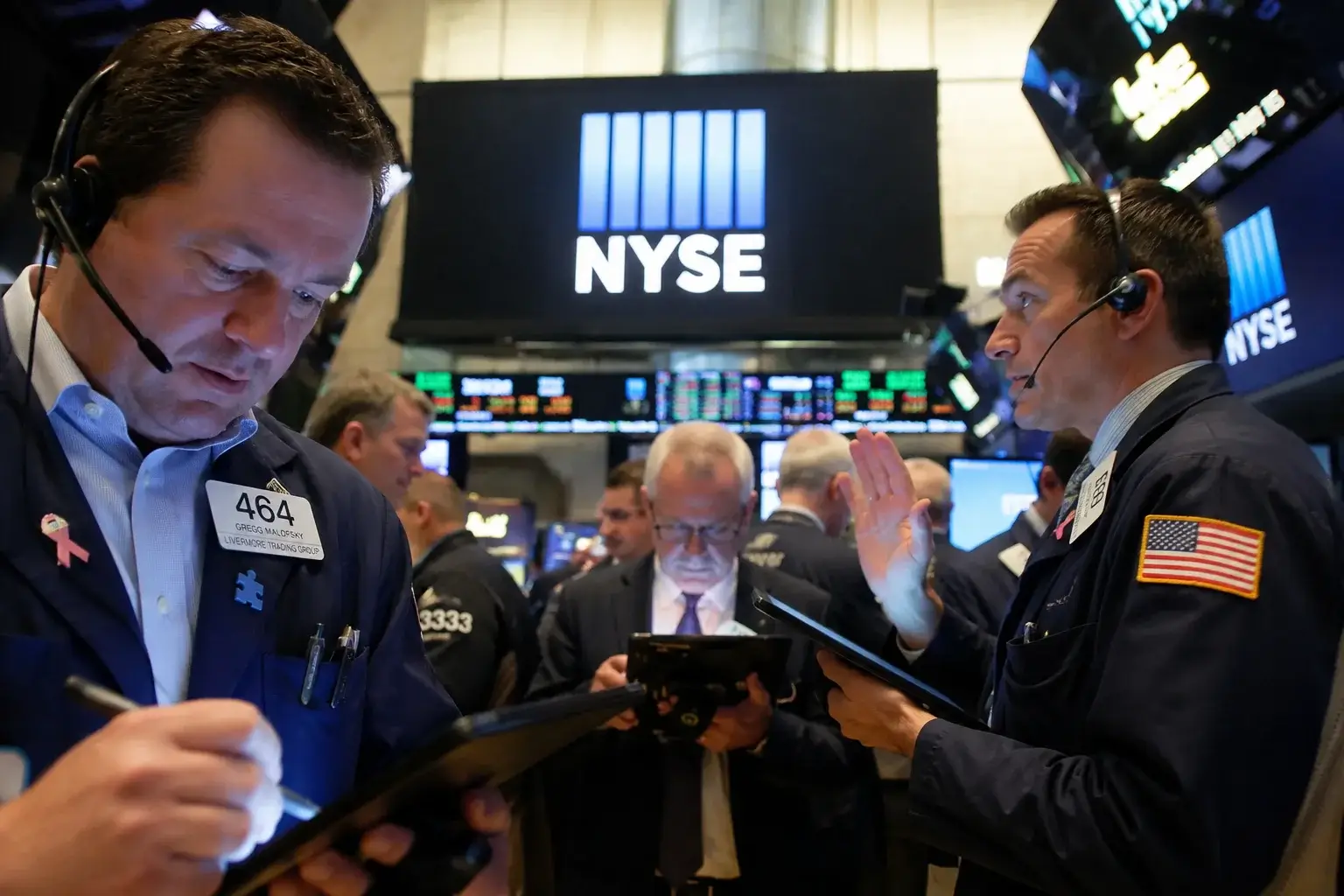
By late morning in New York, the S&P 500 (SPX) was up roughly 1.09% to about 7,500.72, the Nasdaq Composite (IXIC) had jumped near 1.4% to around 26,387, and the Dow Jones Industrial Average (DJI) added about 0.61% to near 51,807. The small-cap Russell 2000 rose about 1.27% to 2,955, while the Cboe Volatility Index fell more than 7% to near 17.1, signaling that the fear which gripped traders into Wednesday's close had eased considerably. The session's character was unmistakably risk-on: technology and growth names led, defensive havens lagged, and the bond market sat quietly as yields held roughly flat.
What makes the rebound notable is that it occurred despite, not because of, the central bank. The Fed gave equities no comfort this week. Instead, the rally rested on a single megacap headline and a geopolitical de-escalation that promises to drain some of the inflation premium out of energy markets. Intel alone accounted for a meaningful slice of the move, and the cooling of Middle East tensions handed airlines and rate-sensitive corners of the market a reason to bid. The result is a market reasserting its appetite for the highest-conviction stories even as the macro backdrop turns less friendly.
Wall Street Snapshot: Index Levels, Breadth, and the Juneteenth Setup
The headline numbers tell the recovery story, but the texture beneath them is worth examining. The Nasdaq's outperformance over the Dow reflects exactly what one would expect on a day driven by a chip-sector catalyst: semiconductors and large-cap technology dominated the leaderboard, while the more industrially weighted Dow advanced at a more measured pace. The Russell 2000's gain of more than a percentage point suggests the risk appetite extended down the market-cap spectrum rather than concentrating purely in megacaps.
Breadth had been a concern heading into the week. By Wednesday, the share of S&P 500 components trading above their 50-day moving averages sat near 58%, a recovery off the late-March lows but still well short of the 70%-to-80% readings that characterized earlier stretches of strength this year. That backdrop of a market climbing on narrower participation makes Thursday's broad bid encouraging for bulls, though one strong session does not resolve the longer question of whether leadership can widen.
Thursday carries added weight as the final trading day of the week. US markets close Friday in observance of the Juneteenth holiday, which compresses positioning and can amplify moves as traders square books ahead of a long weekend. With a hawkish Fed signal still fresh and a peace deal still being digested, the abbreviated week leaves little room for second-guessing. Investors who wanted to express a view on cheaper oil, a friendlier geopolitical map, or the Intel story had to do so now. That dynamic likely added fuel to the morning's advance, as short-term participants were reluctant to carry bearish exposure into a three-day gap with so many live storylines unresolved.
Intel Rockets Higher After Trump Touts Apple Chip Partnership
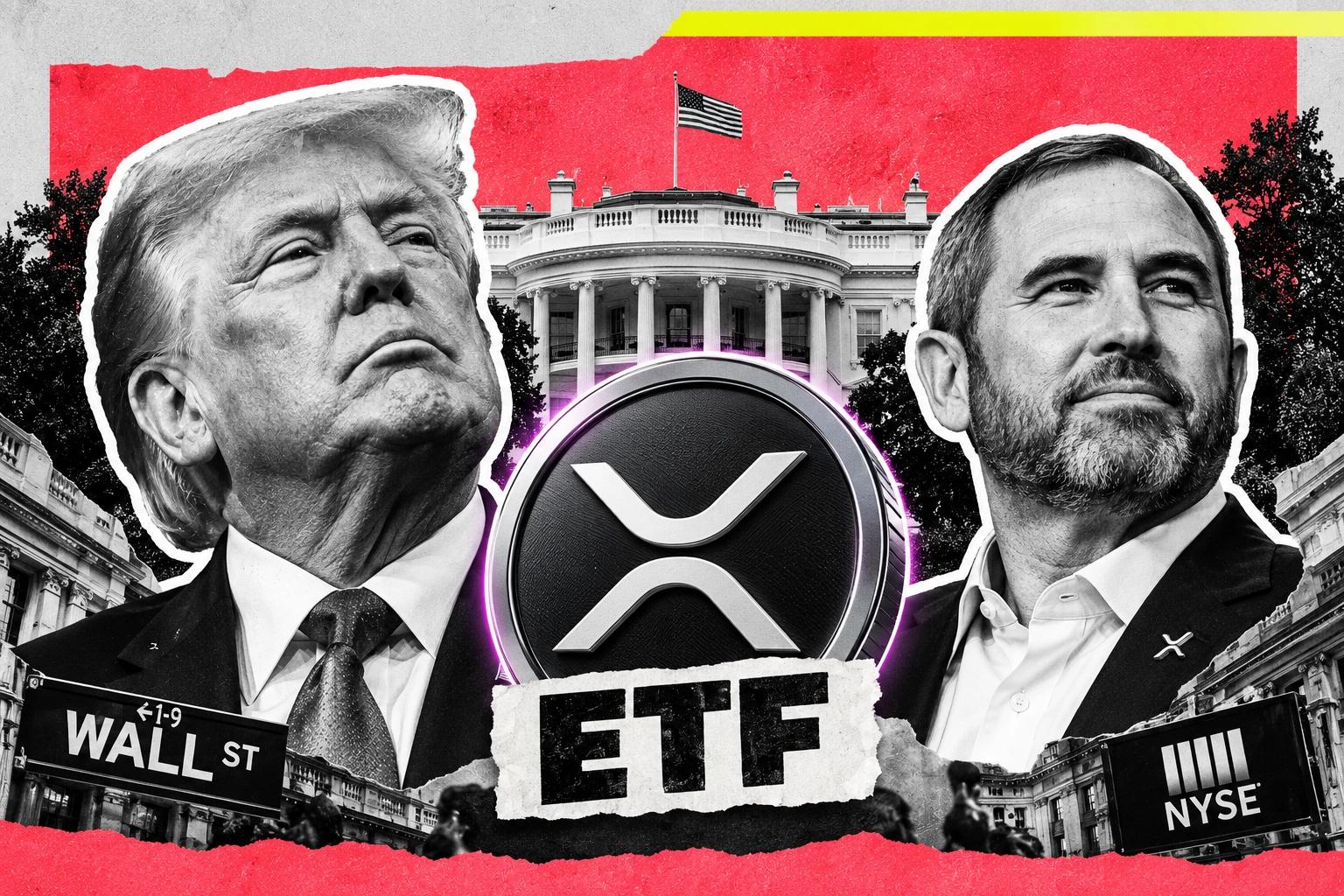
The single largest force behind Thursday's tone was Intel (INTC), which leapt as much as 10.5% to around $133.82 shortly after the opening bell, with the move beginning in premarket trading after President Trump posted on Truth Social that Apple had agreed to work with Intel to design and build chips inside the United States. The president framed the arrangement as part of a broader push to reclaim domestic semiconductor manufacturing, criticizing prior administrations for ceding ground to Taiwan and other overseas producers.
The announcement lit a fire under a stock that has spent years in the wilderness after losing its manufacturing edge. For Apple, a deal would diversify a supply chain heavily dependent on Taiwan Semiconductor for the processors inside iPhones, iPads, and Macs. The timing dovetailed with comments from Apple chief executive Tim Cook earlier in the week, who told the Wall Street Journal that price increases on the company's products had become difficult to avoid given rising costs.
There were caveats worth flagging. The president offered no specifics — no dollar figures, no timelines, no named products. Both companies declined to comment publicly, and reporting indicated that even some Intel executives were caught off guard by the late-night post. The two firms had reportedly been in talks for months, with the Wall Street Journal flagging a preliminary agreement back in May, so the substance is not pure invention. But the gap between a presidential social-media declaration and a signed, scoped commercial contract is wide. Traders chose to look past that ambiguity Thursday, treating the headline as confirmation of a strategic shift that, if realized, would reshape Intel's foundry ambitions and validate the heavy bets placed on its turnaround.
The Government's Intel Stake and the Politics of a $600 Billion Turnaround
Threaded through the Intel story is an unusual fact: the US government owns a chunk of the company. Last August, the administration brokered a deal for the federal government to take a roughly 10% passive stake, acquiring about 433.3 million shares at $20.47 apiece through an investment near $8.9 billion tied to chip-policy and security funding. At the time, critics called the arrangement an extraordinary case of government ownership in private enterprise, raising conflict-of-interest questions given Intel's other dealings with Washington and the potential for the company to benefit at competitors' expense.
The president leaned into the financial scoreboard on Thursday, noting that Intel's valuation had climbed from roughly $100 billion last August to near $600 billion today, and touting that the government's position had ballooned in value. Estimates of that stake's current worth ranged from about $52 billion to $67 billion depending on the intraday price used, implying a multiple of several times the original outlay. Framed that way, the bet looks like a triumph of industrial policy.
The market's enthusiasm, though, deserves a sober reading. A government-anchored equity position can cut both ways. It aligns Washington's incentives with Intel's success, which can translate into supportive policy, but it also entangles the company in political optics in a manner that pure private actors avoid. The Apple announcement, arriving via the president rather than the companies, illustrates the point: Intel's narrative is now partly a political narrative. For traders, that adds a layer of headline risk — the same channel that sent shares soaring can introduce volatility on a dime. Thursday rewarded the bulls, but the structure underneath the stock is more complicated than a clean corporate win.
Accenture Collapses as Soft Guidance and a $4.2 Billion Acquisition Spree Rattle Investors
If Intel was the day's hero, Accenture (ACN) was its cautionary tale. The consulting giant cratered roughly 15% to 16%, trading near $131 to $133, after reporting fiscal third-quarter results that, on the surface, were not disastrous. Revenue came in at $18.72 billion, up about 5.6% year over year and slightly above the midpoint of the company's guided range, while GAAP earnings of $3.80 per share topped analyst expectations of roughly $3.70. The trouble lay in the outlook and the strategy signaling beneath it.
Next-quarter revenue guidance landed near $18.08 billion at the midpoint, well short of the roughly $18.5 billion analysts had penciled in, a miss of more than 2%. The company also trimmed its full-year revenue growth forecast to a band of 3% to 4% in local currency, or 4% to 5% excluding an estimated drag from its US federal business. That federal headwind, combined with cautious client spending in Europe and parts of Asia, painted a picture of a consulting market where customers in sectors like financial services and healthcare are prioritizing cost efficiency over expansion projects.
Compounding the guidance concern was news that Accenture intends to plow nearly $4.2 billion into two acquisitions and a majority stake, with cybersecurity targets among them. Investors who had hoped for capital returns or steadier organic momentum balked at the scale of the spending against a softening demand backdrop. Some analysts argued the cybersecurity push could position the firm well for the long run, but the immediate verdict was harsh. Accenture's plunge served as a reminder that in the current tape, a guide-down — even alongside an earnings beat — gets punished without mercy, and that the artificial-intelligence consulting boom has not insulated the sector from broader spending caution.
SpaceX Suffers Its First Post-IPO Stumble
Another headline name moving against the tide was Space Exploration Technologies (SPCX), which fell roughly 6% to near $191 as the euphoria surrounding its record-setting public debut finally cooled. The stock had gone public on June 12 at $135 a share, opened near $160.95 for a roughly 19% first-day pop, and then ripped to an all-time high of $225.64 on June 16 before reversing. Thursday's decline extended a pullback that began earlier in the week, and it stood out precisely because it came on a strong day for the broader market — the kind of relative underperformance that signals fatigue rather than macro pressure.
Part of the cooling reflects a shift in attention toward fundamentals. The company's IPO filing disclosed a net loss of $4.9 billion in 2025 and another $4.28 billion in the first quarter of 2026, with Starlink standing as its only profitable segment. The stock's earlier melt-up owed much to a tiny free float — only around 4% to 5% of shares are publicly tradable — which exaggerated moves in both directions. With insider lockups set to ease later in the year, roughly doubling the available share count, some of the scarcity premium that fueled the rally is on borrowed time.
Analyst opinion remains split and extreme. One firm initiated coverage Thursday with a buy rating and a street-high target of $401, citing the broadband opportunity from next-generation Starlink satellites and the company's staged engineering progress across space, connectivity, and artificial intelligence. Others, including a former Nasdaq chief, have warned that the stock is trading on sentiment and float mechanics rather than business value. For now, the verdict is that a trillion-dollar narrative asset can swing by double digits in a single session, and Thursday's slide is a taste of the volatility likely to persist until the float normalizes and the first earnings report arrives.
Warsh's Hawkish Debut: The Fed Holds but the Dot Plot Turns
The macro shadow over the week was cast by the Federal Reserve, where Kevin Warsh presided over his first policy meeting as chair. The central bank held its benchmark overnight rate steady in the 3.50% to 3.75% range for a fourth consecutive meeting, a decision that surprised no one — futures had priced the hold at near-certainty. The shock came in the accompanying projections and the tone.
The vote to hold was unanimous at 12-0, a marked contrast to the divided 8-4 outcome at April's gathering, suggesting Warsh has, at least for now, consolidated the committee around a common stance. That stance turned distinctly hawkish in the so-called dot plot, the chart tracking officials' rate forecasts. Nine of the eighteen participating policymakers now anticipate at least one rate increase by the end of 2026, and of those, several pencil in multiple hikes. Warsh, a longtime critic of the dot plot as a communication device, declined to submit his own projection, leaving the published distribution to speak for the committee while he reserved his own hand.
The statement itself reflected Warsh's preference for brevity, running just 130 words. It described the economy as expanding at a solid pace, noted that job gains had kept pace with the workforce, and committed the committee to delivering price stability — while stripping out any language hinting at an easing bias. In his press conference, the new chair emphasized that the Fed had effectively dropped its forward guidance, declining to telegraph the next move. The combination of a hawkish dot plot and a deliberately uninformative posture rattled equities into Wednesday's close, producing what observers described as the worst session for stocks under a new Fed leader since 1994.
How Markets Repriced the Rate Path
The practical consequence of Wednesday's meeting was a wholesale repricing of expectations. Coming into 2026, investors had broadly assumed the Fed's next move would be a cut; as recently as March, the committee's own projections pointed to one rate reduction this year. That assumption has now flipped. Traders moved to fully price in a quarter-point hike by year-end, a remarkable swing in sentiment over a few months.
The reversal traces to two forces. First, the labor market has firmed rather than faded, with several consecutive months of solid job gains following a soft patch in 2025 and the unemployment rate holding at 4.3% for three straight months. A resilient jobs picture removes the urgency for rate cuts and gives a hawkish committee room to lean against inflation. Second, inflation has run hotter than expected, climbing to its highest level in three years, pressured in no small part by the energy spike that accompanied conflict in the Middle East. With prices stubbornly above the Fed's 2% target, the case for easing evaporated.
This is why Thursday's oil decline matters so much beyond the energy patch. If the geopolitical de-escalation drives crude lower and pulls energy-driven inflation down with it, the hawkish bias embedded in the dot plot could soften. Cheaper oil functions as a release valve on price pressures, which in turn reduces the Fed's motivation to hike. In that sense, the Iran memorandum and the rate path are intertwined: the same news that lifted airlines and depressed crude also offered equity bulls a counterargument to Wednesday's hawkish lean. The market's Thursday rebound was, in part, a wager that the inflation story is about to get friendlier.
The US-Iran Memorandum and the Race to Reopen the Strait of Hormuz
The geopolitical centerpiece of the week was the signing of a 14-point memorandum of understanding between the United States and Iran, an agreement that took effect Thursday after being formalized a day earlier than the Friday date markets had anticipated. The accord extends a ceasefire, including in Lebanon, and lays out a framework to defuse a conflict that had roiled energy markets and injected a war premium into crude prices for weeks.
The terms, as reported, are sweeping. The deal calls for reopening the strategically vital Strait of Hormuz — the chokepoint through which a large share of the world's seaborne oil passes — with reporting suggesting the waterway could be fully reopened within 30 days. It includes a roughly $300 billion reconstruction package for Iran and the removal of US sanctions, with both sides committing to continue negotiations toward a final agreement over the next 60 days, including the thornier matter of Tehran's nuclear program. The first vessel crossings of the strait reportedly began as the deal went live.
The president injected a note of unpredictability even as the ink dried, dismissing critics who argued the terms were too lenient and warning at the G7 summit that the arrangement was not final and that military action could resume if he found the outcome unsatisfactory. That posturing tempered some of the optimism, reminding traders that a memorandum is not a treaty and that the 60-day negotiating window leaves ample room for relapse. Still, the market's read was decisively positive: a reopening Hormuz means more oil flowing, which means lower energy prices, which means less inflationary pressure and a calmer geopolitical backdrop heading into summer.
Oil's Slide and the Inflation Relief Trade
Crude oil's reaction captured the market's hopes in real time. West Texas Intermediate for July delivery fell about 3.6% to near $73.30, while Brent crude dropped around 3% to roughly $78 a barrel, paring some of its earlier losses as the first ships transited the strait. The declines extended a multi-day retreat that has chipped away at the wartime gains accumulated during the Middle East conflict, with Brent having slipped below $80 for the first time since March earlier in the week.
The mechanics of the relief trade are straightforward. Energy is a major input to headline inflation, both directly through fuel prices and indirectly through transportation and production costs that ripple across the economy. A sustained drop in crude eases those pressures, which softens the inflation readings the Fed watches and, by extension, weakens the rationale for the rate hikes the dot plot now flags. Lower oil also acts as a tax cut for consumers and a margin tailwind for fuel-intensive industries.
Nowhere was that clearer than in the airline sector, where carriers such as United and Delta edged higher on expectations of cheaper jet fuel. The logic extends to a broader rotation that had taken shape earlier in the week, when falling oil and fading war fears made economically sensitive names — banks, industrials, transports — look more attractive relative to the chipmakers that had led the prior rally. Thursday muddied that rotation somewhat, since the Intel headline pulled semiconductors back into the spotlight, but the underlying theme of an inflation-relief trade powered by cheaper energy remained intact and continued to support sentiment.
Chip Stocks Catch a Bid as Marvell, Micron, and Western Digital Lead
The Intel announcement did not stay contained to a single ticker; it lifted the broader semiconductor complex, reversing some of the profit-taking that had bruised the group earlier in the week. Marvell Technology (MRVL) was among the standouts, climbing roughly 11.6% to near $323, helped along by a price-target increase from a major brokerage. The move marked a sharp turnaround for a chip sector that had endured a violent sell-off only weeks earlier and a bout of profit-locking after a strong rally.
Memory and equipment names joined the rally. Micron (MU) and Applied Materials (AMAT) each added more than 4% in premarket action, while Lam Research (LRCX) gained more than 5%. Western Digital (WDC) surged about 10.4% to near $786, and a string of smaller chip-adjacent names posted double-digit advances, including Vishay Intertechnology (VSH) up roughly 12% to 14% and Diodes (DIOD) up near 13%. The breadth of the semiconductor bid suggested investors were treating the Intel-Apple news as bullish for the entire domestic chip-manufacturing thesis rather than a zero-sum win for one company.
The rally is striking given how recently the group was the market's biggest pain point. A chip-led plunge had driven the Nasdaq to its worst single-day drop in over a year earlier in the month, with semiconductor heavyweights shedding meaningful value on unclear catalysts and a spike in Treasury yields. The speed of the reversal underscores how sentiment-driven the sector has become, swinging from indiscriminate selling to broad buying on the strength of a policy headline. With Micron set to report earnings next week, the group's momentum faces an early test, and Thursday's enthusiasm will need fundamental confirmation to hold.
Beyond Tech: Kroger, IBM, and the Day's Other Decliners
While technology dominated the gainers' list, the losers' column extended well beyond Accenture and SpaceX. Kroger (KR) slipped roughly 3% to nearly 7% after the grocery chain narrowly missed earnings expectations by a penny, even as it topped revenue estimates — a reminder that in the current environment, narrow misses on the bottom line draw disproportionate punishment. The grocer's stumble added to a sense that consumer-facing names face margin scrutiny as shoppers stay value-conscious.
IBM (IBM) declined about 5.7% to near $247, and Cognizant Technology Solutions (CTSH) fell roughly 5% to 6.6%, the latter caught in the downdraft from Accenture's guidance cut as investors extrapolated the consulting and IT-services slowdown across peers. The read-through is logical: if Accenture is seeing clients prioritize efficiency over expansion, the same caution likely afflicts its competitors, and the market priced that risk into the broader services group within hours.
The day's sharpest individual decliners came from the biotech and small-cap corners, where single-stock catalysts produced outsized swings. NovoCure (NVCR) tumbled nearly 19% at one point, and Legend Biotech (LEGN) dropped around 14%, illustrating the binary, news-driven nature of moves in clinical-stage names. These declines did little to dent the broader indices, given the modest weightings involved, but they reinforced a theme running through the session: dispersion was high, with winners and losers separated by clear, identifiable catalysts rather than a uniform macro tide. In a market repricing the rate path and digesting a geopolitical shift, stock selection mattered more than beta.
Jobless Claims, Wholesale Prices, and the Data Backdrop
The economic calendar offered its own quiet drama. Initial claims for unemployment benefits fell by 4,000 to a seasonally adjusted 226,000 for the week ended June 13, landing close to the 225,000 economists had forecast. The reading sits toward the upper end of the 190,000-to-230,000 band that has prevailed this year, but the broader labor picture has regained momentum, with three straight months of solid job gains following the weakness of 2025. Claims tend to drift higher at the start of summer as some states permit non-teaching school staff to file during the break, a seasonal quirk the government's adjustment models do not always fully capture.
More provocative was the wholesale inflation data. Producer prices surged, a development that complicates the Fed's task and validates the hawkish lean embedded in the week's projections. A hot wholesale reading suggests pipeline pressures that can eventually feed into consumer prices, precisely the dynamic the central bank is determined to head off. That the market rallied in the face of such a print speaks to the offsetting power of the oil decline and the Intel story, but it also leaves the inflation question unresolved.
The combination — a firm labor market and rising wholesale prices — is the empirical bedrock beneath the Fed's pivot. With unemployment anchored at 4.3% and price pressures building, the committee has both the latitude and the motivation to consider tightening rather than easing. The data backdrop explains why Wednesday's projections leaned the way they did and why the bar for rate cuts has risen so sharply. For equity investors, the message is that the macro environment has shifted from a tailwind of expected cuts to a headwind of possible hikes, and only a sustained drop in energy-driven inflation is likely to reverse that.
Read More
-
Yen Stalls at 160 Despite a 3% JGB and Tokyo Core CPI at 2.0% — Intervention Sits at 164, Friday's Payrolls Decide
02.09.2026 · TradingNEWS ArchiveEnergy
-
CHAT Fund Holds $96.37 as Korean Memory and Chip Exposure Drive a 109.73% Year — Break of $98.02 Opens $105.20
18.09.2026 · TradingNEWS ArchiveStocks
-
First-Generation XRPR and XRPI Ride XRP's Rebound to $1.386 as Spot Funds Post First Outflow — Break of $1.40 Opens $1.54
18.09.2026 · TradingNEWS ArchiveCrypto
-
NG Holds $2.9255 as Storage Surplus Narrows From 5.5% to 3.7% in 3 Weeks — Break of $3.00 Opens $3.15
18.09.2026 · TradingNEWS ArchiveCommodities
-
Dollar Surges to 157.90 as BoJ's Divided Hike Fails to Lift the Yen — Break of 158.87 Opens 159
18.09.2026 · TradingNEWS ArchiveForex
Gold, Bitcoin, and the Risk Rotation
The risk-on mood Thursday was visible across asset classes, not just in equities. Gold tumbled roughly 2.7% to near $4,262 an ounce, a sharp pullback for the haven metal that had benefited from war fears and uncertainty. The decline fits the broader pattern: with a peace deal signed, oil falling, and equities rallying, the safety premium that had supported bullion drained away. Investors who had crowded into gold as geopolitical insurance trimmed those positions as the threat receded.
Bitcoin also retreated, slipping roughly 1.9% to near $63,789, with intraday readings dipping toward the $63,000 to $64,000 zone. The cryptocurrency's pullback is notable on a day when risk appetite was otherwise robust, suggesting that digital assets traded more on their own technical and flow dynamics than on the equity tape. The divergence between a rallying stock market and a softer Bitcoin is a reminder that the correlation between the two is far from constant and tends to break down around idiosyncratic catalysts.
Taken together, the moves across gold, Bitcoin, and the volatility index sketch a coherent picture of rotation. The VIX's plunge below 17 confirms that hedging demand collapsed as the week's twin uncertainties — the Fed and the Middle East — resolved in ways the market could digest. Capital flowed out of defensive havens and into the highest-beta corners of equities, particularly semiconductors and growth. Whether that rotation has legs depends on the durability of the oil decline and the market's ability to make peace with a Fed that is no longer in its corner. For one session, at least, the risk trade won decisively.
Sector Rotation: Banks, Bulldozers, and the Cyclical Bid
Beneath the tech-led headline numbers, a subtler rotation has been unfolding all week, and Thursday added another chapter. The collapse in oil prices and the fading of war fears nudged investors toward economically sensitive sectors that benefit from a stable, growing economy and lower input costs. Financials, industrials, and transportation names — the banks and bulldozers of the cyclical trade — drew interest as the geopolitical risk premium melted away.
The logic is that a world with cheaper energy, a reopening Strait of Hormuz, and a contained Middle East conflict is a world more conducive to steady growth, which favors companies whose fortunes track the real economy rather than pure secular-growth narratives. Earlier in the week, that dynamic had pulled the Dow to record territory even as the tech-heavy Nasdaq wobbled, a divergence driven largely by the rotation out of chips and into value-oriented names. Airlines were the cleanest expression of the theme Thursday, with carriers rising on hopes for sustained fuel-cost relief.
The Intel headline scrambled this rotation somewhat by yanking semiconductors back to the front of the line, demonstrating that secular growth stories can reassert themselves whenever a powerful enough catalyst appears. But the underlying tension between the cyclical and growth trades remains a defining feature of the current market. A hawkish Fed typically favors value over growth, since higher rates compress the present value of distant earnings that growth stocks promise. If the rate path indeed turns higher, the rotation toward cyclicals could gather force, making sector positioning one of the more consequential decisions for investors in the weeks ahead.
What Comes Next: Micron, FedEx, GDP, and the PCE Print
With the Fed meeting behind it and a peace memorandum signed, the market now turns to a calendar that picks up after the holiday weekend. Earnings season offers early tests of the themes that drove Thursday's action. Micron (MU) reports next week, providing a fundamental read on the memory-chip cycle just as the semiconductor group has roared back to life. FedEx (FDX) also reports, offering a window into shipping volumes and the health of global trade flows — a useful gauge of economic momentum at a moment when the growth-versus-inflation debate is unresolved.
Later in the month, the data drumbeat intensifies with readings on first-quarter gross domestic product and the May Personal Consumption Expenditures price index, the Fed's preferred inflation measure. The PCE print carries particular weight given the week's hawkish turn. A cooler-than-expected reading, perhaps aided by the oil decline, would bolster the case that the inflation scare is easing and could take some steam out of the rate-hike pricing. A hot print would do the opposite, validating the dot plot and likely pressuring the rate-sensitive growth names that led Thursday.
The setup leaves the market balanced on a knife's edge between two narratives. On one side sits a friendlier geopolitical map and falling energy prices that argue for disinflation and continued equity gains. On the other sits a firm labor market, rising wholesale prices, and a Fed openly contemplating hikes. Thursday belonged to the optimists, who seized on the Intel story and the Iran deal to drive a broad rebound. Whether that optimism survives contact with the upcoming data will determine if this rally is the start of a new leg higher or merely a relief bounce within a more cautious regime. For now, with the indices green and volatility crushed, the bulls have the last word heading into the long weekend.