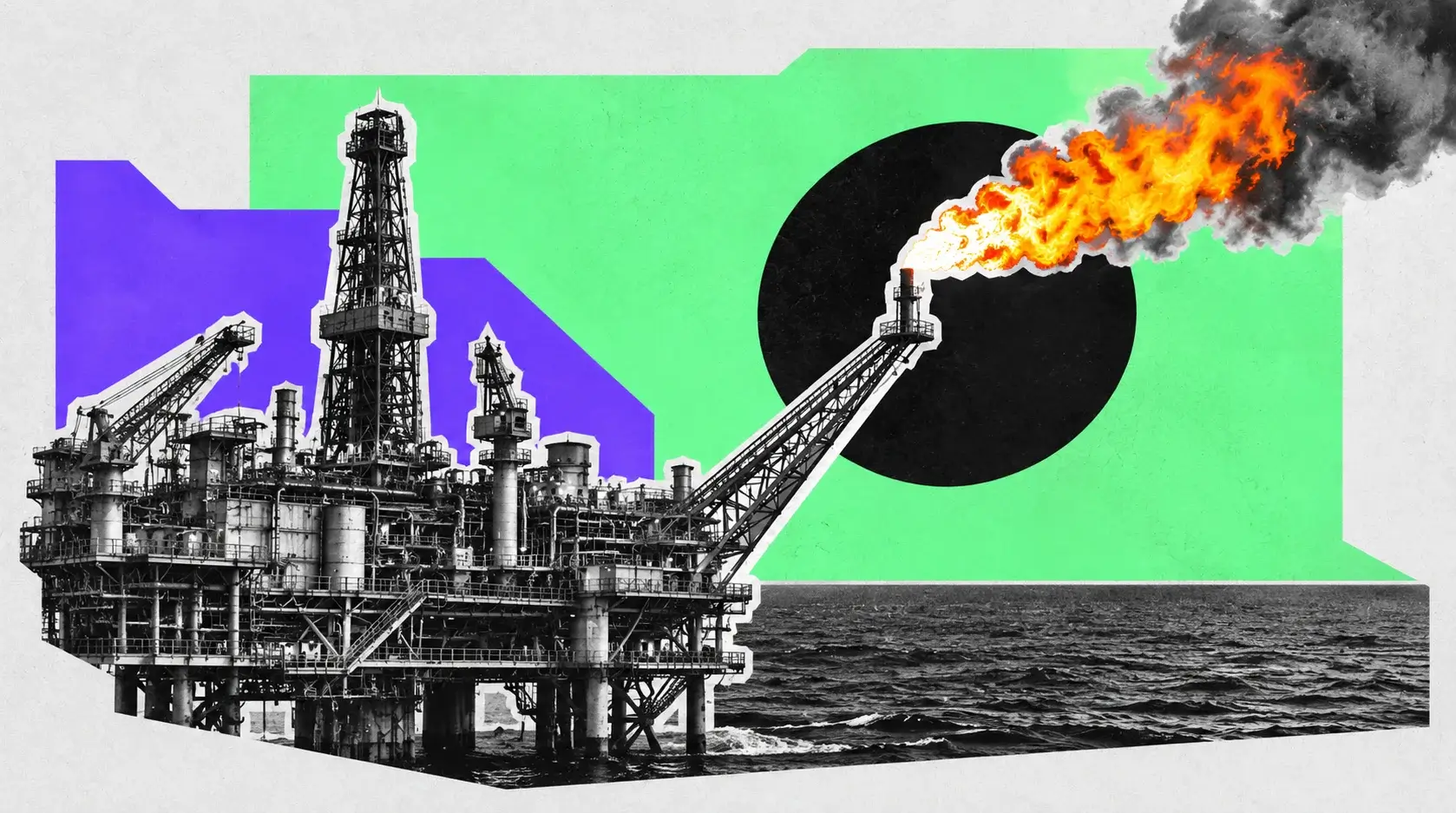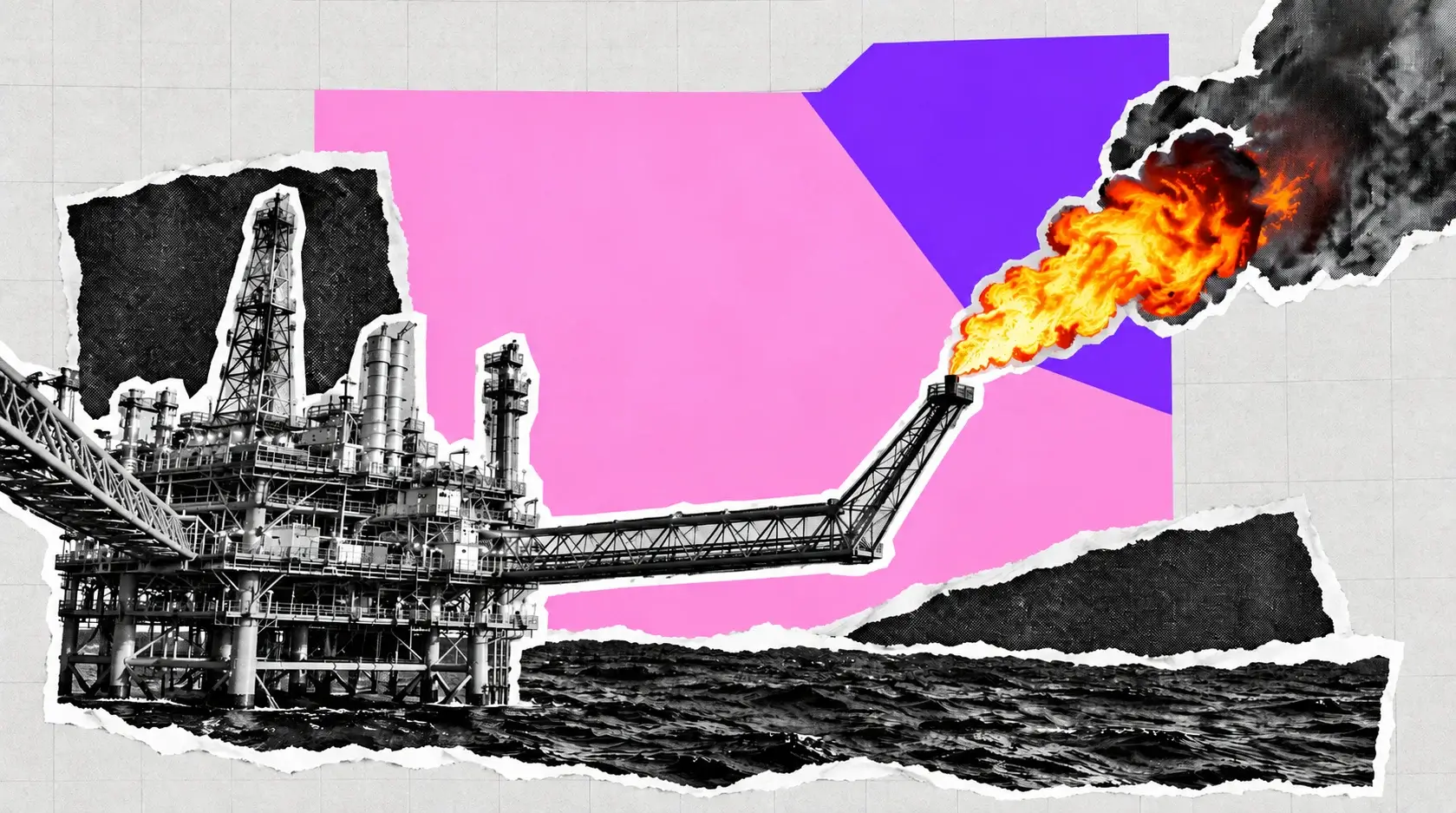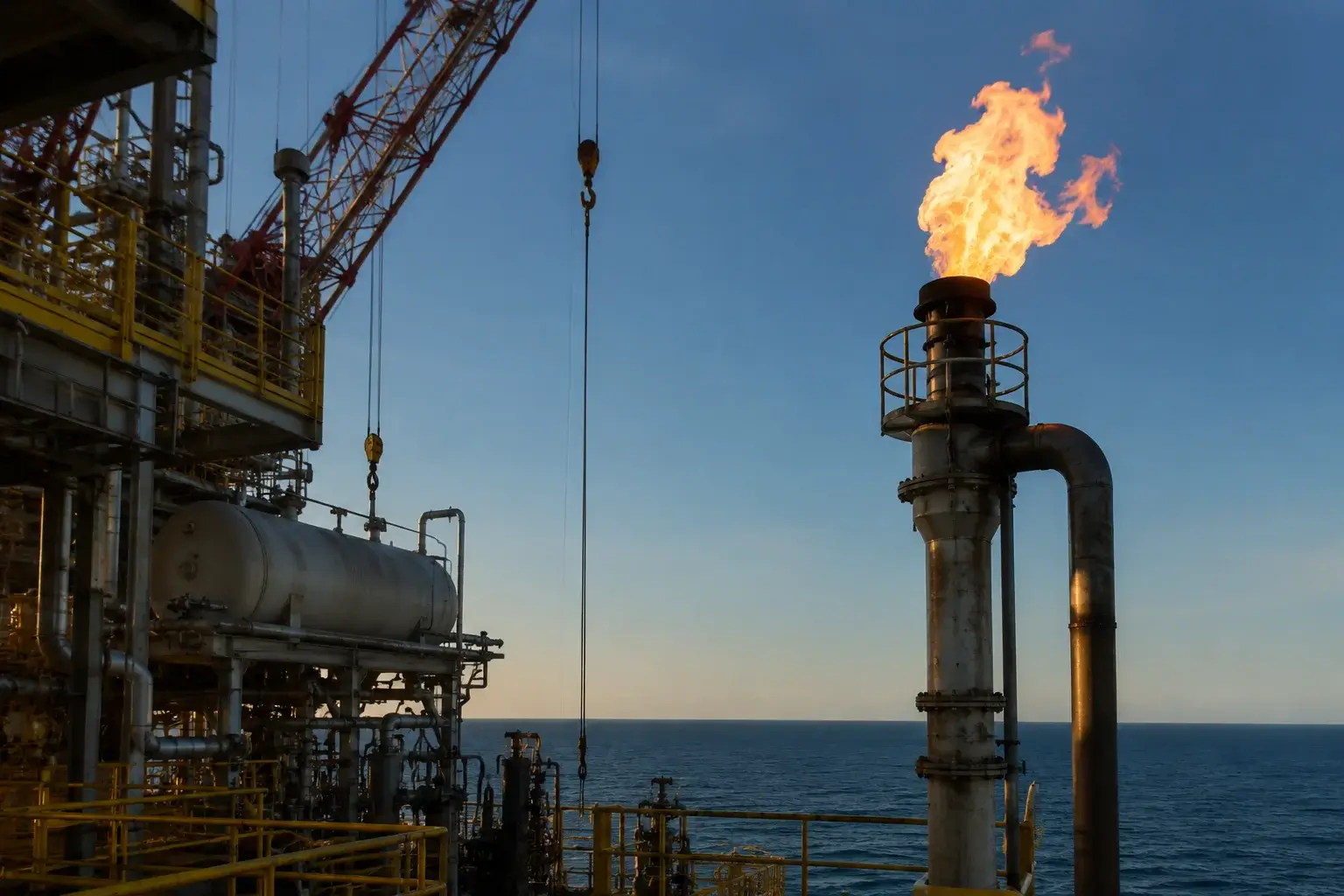
Natural Gas Futures Price Forecast: Henry Hub Grinds to $3.23 as the Middle East War Drives US LNG Exports to a Record 573.5 Bcf
Natural gas is the contrarian energy trade: the same Middle East war crushing oil on ceasefire hopes has driven US LNG exports to a record 573.5 Bcf | That's TradingNEWS
Key Points
- Natural gas futures held near $3.23 per MMBtu in early June, recovering from sub-$3 lows but still ~62% below January's $7.72 winter spike.
- US LNG exports hit a record 573.5 Bcf as the Middle East war slumped Persian Gulf supply and pushed Europe and Asia onto US gas.
- Above-normal temperatures through June 18 are lifting air-conditioning demand and gas-fired power burn, a key bullish driver.
Natural gas is doing the opposite of oil, and that's the whole story. While crude dumps 20% from its highs on U.S.-Iran ceasefire hopes, natural gas is grinding higher — because the same war that's choking off Persian Gulf LNG has driven U.S. LNG exports to a record 573.5 billion cubic feet, forcing Europe and Asia onto American supply. Layer on above-normal June heat firing up air-conditioning demand and slipping Lower 48 production, and the structural bull case is tightening. But a fat storage surplus and ongoing injection builds are capping the upside. NG futures sit near $3.23 per MMBtu, pinned between a bullish LNG-and-heat story and a bearish shoulder-season glut, with $3.00 as the floor and $3.50 as the ceiling.
The Contrarian Energy Trade
The energy complex has split in two. Oil is the war-premium-deflating trade — every ceasefire headline drains crude as the market prices the Strait of Hormuz reopening. Natural gas is the opposite. The conflict that's bearish for oil sentiment is structurally bullish for U.S. gas, because the war has slashed Persian Gulf LNG exports and redirected global demand toward American liquefaction terminals. Gas isn't pricing peace; it's pricing the supply disruption that peace would eventually unwind.
That makes natural gas the contrarian way to play the Middle East. Where Chevron and the crude bulls need the strait to stay shut to keep oil bid, U.S. gas benefits from the same dynamic through a different channel — not the price of the molecule trapped in the Gulf, but the surge in demand for the American molecule that replaces it. The catch is that gas has its own domestic ball-and-chain: a storage surplus that won't quit and a shoulder season that keeps injecting supply into a market that doesn't need it yet. The price reflects the tug-of-war — recovering off sub-$3 lows but unable to break $3.50.
Where NG Trades Now
Put numbers on it. Front-month natural gas futures traded around $3.23 per MMBtu in early June, recovering from a stretch where the prompt month sat under $3.00 through mid-May. The June contract broke back above $3.00 before rolling off, and the prompt has clawed back ground as summer demand expectations build. The 12-month strip of futures averages about $3.26, while the December 2026 contract trades above $4.00, reflecting the winter premium baked into the curve as the market prices heating-season tightness.
The recovery is real but modest. The prompt month is still roughly 62% below the near-term high set in late January, when a cold snap drove the Henry Hub monthly average to $7.72. That collapse from the winter spike to sub-$3 was the seasonal unwind of heating demand, and the bounce back to $3.23 is the market beginning to price summer cooling load and the LNG export surge. On an inflation-adjusted basis, prompt prices sit below both 2025 levels and the five-year median, which tells you gas remains cheap by recent standards even after the rebound. The price is climbing the wall of a storage surplus, and that wall is the resistance.
The War Made Natural Gas Bullish
The standout bullish driver is the LNG export surge, and it traces directly to the Middle East conflict. U.S. LNG exports rose to a record high of 573.5 billion cubic feet in gaseous equivalent, as exports from the Persian Gulf region slumped following the start of the war in March. With Gulf LNG cargoes disrupted, European and Asian consumers have increased their dependency on U.S. supplies, pulling American gas onto the water at a record pace. That's a demand shock that lands squarely in favor of Henry Hub.
The structural implication is bigger than one record print. Analysts note that prolonged disruptions could tighten the global LNG market further by redirecting Atlantic Basin cargoes toward Asia and complicating Europe's efforts to refill its storage ahead of winter. Europe is effectively pre-committing to high U.S. LNG usage as it phases out Russian supply, and the war has accelerated that dependence. Every cargo that leaves a U.S. terminal is a molecule pulled out of the domestic balance, which is exactly what the bulls want to see heading into the summer cooling season. The war premium that's leaking out of oil is, in a sense, accumulating in U.S. gas export demand.
Heat Is The Demand Engine
The second bullish leg is the weather. Forecasts point to mostly above-normal temperatures across the U.S. through June 18, which lifts gas-intensive air-conditioning demand and the gas-fired power generation that feeds it. Summer cooling load is to natural gas what winter heating load is on the other side of the calendar — the demand engine that burns through supply and draws down storage. Above-normal heat in June, right as the cooling season ramps, is a direct tailwind for the prompt price.
The power-burn channel matters most. When temperatures climb, electricity demand for air conditioning spikes, and gas-fired plants run harder to meet it, pulling gas out of the system. North America's grid looks better prepared for summer 2026 than a year ago, but reliability officials have flagged that extreme heat during peak cooling season could still tighten gas balances meaningfully. If the above-normal forecasts verify and the summer runs hot, power-burn demand becomes the swing factor that could break gas out of its range. Heat is the variable that turns a recovering price into a trending one, and the early-summer outlook leans warm.
Production Is Slipping
The supply side is quietly helping the bulls too. Average production in the Lower 48 states fell to 109.0 Bcf/d so far in June, down from 109.7 Bcf/d in May, as lower prices through the spring contributed to softer output. When the prompt sits under $3, some producers throttle back, and that discipline is starting to show in the production numbers. The decline in output over recent weeks has helped narrow the storage surplus, which is the mechanism that tightens the market over time.
The nuance is that production remains resilient year over year despite moderated drilling activity — U.S. dry gas output is still robust, and forecasters expect it to grow 3% this year, led by the Permian region pumping 29.2 Bcf/d. So the production dip is a near-term softening, not a structural decline. But for the current price, what matters is the direction: output is slipping at the margin just as cooling demand and LNG exports rise, and that combination narrows the surplus week by week. The supply response to low prices is doing exactly what it's supposed to — putting a floor under the market by reining in the glut.
But The Storage Glut Caps It
Here's the bear's anchor: storage is still heavy. U.S. working gas in underground storage sits roughly 5.9% above normal for the latest reporting week, down only modestly from 6.2% the prior week. The market is still injecting gas into storage at a healthy clip during the shoulder season, with the latest weekly build coming in at 95 Bcf. That surplus is the weight that keeps the prompt from running, because a market carrying more gas than it needs has no urgency to bid up the price.
The storage picture traces back to a winter that ended with inventories in good shape. More than 2,020 Bcf was withdrawn over the November-to-March heating season, about 4% more than the five-year average, but the season ended with storage at 1,908 Bcf — still 4% above the five-year norm. Mild shoulder-season demand and steady injections since then have kept the cushion intact. As long as that surplus sits near 6% above normal, it acts as a ceiling on rallies, forcing gas to prove the bullish LNG-and-heat case before it can sustain a move above $3.50. The glut is the reason the price is grinding rather than ripping.
LNG Feedgas Maintenance Is The Near-Term Drag
The bullish LNG export story has a near-term asterisk: seasonal maintenance. Average feedgas flows to major U.S. LNG export terminals have fallen from 17.1 Bcf/d in May to 16.3 Bcf/d so far in June, as several facilities undergo scheduled seasonal maintenance. Lower feedgas demand means less gas being pulled into the terminals for liquefaction, which partially offsets the bullish pull of the record export figure. It's a temporary drag, but it's real, and it's part of why gas hasn't broken out despite the supportive backdrop.
This is the kind of detail that separates the structural story from the prompt-price action. The record 573.5 Bcf export figure reflects what's already left the country, but the day-to-day feedgas flows are what move the front-month contract, and those have softened on maintenance. The drag is seasonal and should reverse as terminals return to full operation through the summer, at which point feedgas demand climbs back toward and above 17 Bcf/d. For now, the maintenance dip is a counterweight to the heat and the export surge, keeping gas pinned in its range rather than letting it run.
The LNG Capacity Wave
Beyond the war-driven export spike, a structural capacity wave is reshaping U.S. gas demand. A series of new liquefaction terminals is ramping: Golden Pass LNG exported its first cargo from Train 1 in April, adding roughly 0.7 Bcf/d and becoming the ninth operational U.S. export terminal, while Corpus Christi Stage 3 brought Train 5 online and is commissioning Train 6 for another 0.2 Bcf/d this summer. Plaquemines LNG continues ramping toward full operations. These additions push forecast U.S. LNG exports to average 17.0 Bcf/d this year and 18.2 Bcf/d in 2027 — a 9% jump this year and another 11% next.
That capacity wave is the multi-year bull case independent of the war. Each new train is a permanent new source of demand that pulls domestic gas onto the export market, structurally tightening the U.S. balance over time. The forecast has LNG export growth as the primary driver of rising demand, outpacing supply growth in 2027 and reducing gas in storage. The war accelerated the timeline by spiking near-term export demand, but the trains were always coming. For the price, this means the bearish storage glut is fighting a demand base that grows every quarter as another train fires up. The structural arrow points higher even when the prompt sits in a range.
The Hormuz Wildcard
The variable that ties gas back to the oil story is the Strait of Hormuz. As long as the strait stays effectively closed and Persian Gulf LNG exports remain disrupted, U.S. LNG stays in record demand and Henry Hub keeps the export tailwind. The continued strikes between Israel and Lebanon and the stalled U.S.-Iran negotiations have kept an imminent ceasefire out of reach, which has sustained the disruption that drove the 573.5 Bcf export record. For gas bulls, a war that drags on is a price-supportive war.
The flip side mirrors the oil trade in reverse. If the 60-day ceasefire gets signed and the strait reopens, Gulf LNG cargoes flow back onto the global market, Europe and Asia ease their dependence on U.S. supply, and the export premium that's been propping up Henry Hub fades. That's the bearish resolution scenario for gas — the same event that would crater oil prices would also remove a key pillar from the gas bull case. So natural gas carries the opposite Hormuz exposure to crude: oil wants the strait open, gas wants it shut. The binary that decides the oil forecast also tilts the gas one, just in the other direction.
The EIA Cut The Number
The official forecast leans cautious, and it's the bear's headline support. In the May Short-Term Energy Outlook, the EIA lowered its 2026 Henry Hub spot price forecast to $3.50 per MMBtu, cutting it 4.4%, and reduced its 2027 projection by 11.5%. The rationale is that annual supply growth keeps pace with demand growth through 2026, with supply outpacing demand by 0.5 Bcf/d this year — a balanced-to-loose setup that argues against a sustained price spike. The agency also revised its supply and demand outlook upward, raising expected 2026 production by 0.9% and consumption by 0.7%.
But the same forecast contains the bull's ammunition for next year. In 2027, the EIA expects demand growth to outrun supply growth by 1.6 Bcf/d, driven mainly by the ramp in LNG feed gas demand, which draws down storage and puts upward pressure on prices. The agency forecasts the annual average spot price falling 2% in 2026 before surging 33% in 2027 to just under $4.60. That's the shape of the whole trade: balanced and range-bound now, structurally tight later as the LNG trains fully ramp. The 2026 cut reflects the near-term glut; the 2027 surge reflects the demand wave. Gas is cheap now precisely because the tightness is a story about next year.
Read More
-
Yen Stalls at 160 Despite a 3% JGB and Tokyo Core CPI at 2.0% — Intervention Sits at 164, Friday's Payrolls Decide
02.09.2026 · TradingNEWS ArchiveEnergy
-
T-Rex 2X Inverse MSTR ($4.39) Rips 10.44% as Strategy Pauses Bitcoin Buys for a 2nd Week — $4.63 Close Opens $5.27
15.09.2026 · TradingNEWS ArchiveStocks
-
XRPR ($10.59) and XRPI ($7.04) Open at Highs and Close at Lows After Senate Kills CLARITY Act
15.09.2026 · TradingNEWS ArchiveCrypto
-
NG ($2.908) Holds Above $2.80 Low as LNG Feedgas Hits 18.8 Bcf and TTF Trades 9.2x Henry Hub
15.09.2026 · TradingNEWS ArchiveCommodities
-
USD/JPY (155.09) Faces 275bp Policy Gap as BOJ Prepares 31-Year-High Rate — Close Below 154 Opens 153.40
15.09.2026 · TradingNEWS ArchiveForex
The Levels That Matter
Map the range. On the downside, the round $3.00 level is the critical psychological and technical floor — the June contract broke back above it, and the mid-May low near $2.86 sits just beneath as the next support. A sell-off below $3.00 is widely seen as unlikely or temporary given the tightening structural backdrop, so the bulls will defend that zone hard. Below $2.86, the air thins, but the LNG-and-heat case makes a sustained break lower a tough sell.
On the upside, the resistance is stacked. The first hurdle is the $3.50 zone, which aligns with the EIA's full-year forecast and the round number. Above that, the 200-day moving average near $3.75 is the key trend line — what was dynamic support flipped to overhead resistance during the spring decline. Beyond $3.75 sit a cluster of resistance levels at $3.93, then $4.09 to $4.15, and around $4.24, with the broader channel pointing to a $4.00 to $4.20 mid-range and an upper band above $5.00 that aligns with the most bullish forecasts. The December contract already trades above $4, so the curve is pricing winter strength. The prompt is trading the lower-middle of its channel near $3.23, with $3.50 the line that separates range-bound chop from a genuine breakout.
The Forecast
The base case is range-bound trade between the $3.00 floor and $3.50 resistance, as the bullish LNG export surge and above-normal June heat fight the bearish storage surplus and shoulder-season injections to a draw. With production slipping, exports at a record, and the surplus narrowing week by week, the bias tilts slightly higher, but the 5.9% storage overhang and the seasonal feedgas maintenance dip cap the upside until summer demand proves itself. Expect choppy grinding near $3.20 to $3.40 until a catalyst breaks the deadlock.
The bullish path triggers on a hot summer verifying the above-normal forecasts, LNG feedgas returning from maintenance toward 17-plus Bcf/d, and the Strait of Hormuz staying shut to keep U.S. exports bid — that combination breaks $3.50, challenges the 200-day at $3.75, and opens the $3.93 to $4.24 resistance band, with the winter curve already above $4 pulling the prompt higher. The bearish path is a signed Iran ceasefire that reopens the strait and unwinds the LNG export premium, paired with mild summer weather and continued fat storage builds, which drags gas back toward $3.00 and tests $2.86. The catalysts to watch are the weekly EIA storage report, the June temperature outlook, the pace of LNG feedgas recovery, and the Hormuz headlines that tie gas to the broader energy complex. For now, natural gas is the contrarian energy trade — bullish where oil is bearish — pinned near $3.23, and the trade is to respect the $3.00–$3.50 range until the summer heat and the LNG balance tell you which way it breaks.