Oil Price Forecast - Oil Holds $71 Brent, $65 WTI While Geneva Talks Cap Upside
US–Iran negotiations, a 16M-barrel US inventory surge and OPEC+ plans to lift output by 137,000 bpd keep WTI (CL=F) and Brent (BZ=F) pinned between mid-$60s support and low-$70s resistance | That's TradingNEWS
Oil Market Balances $10 Risk Premium Against 16M-Barrel Inventory Shock
Spot crude trades in a tight band with a heavy narrative behind it. Benchmark CL=F sits in the mid-$60s, pivoting around 64–66.5 dollars. BZ=F holds just below and above 70 dollars, with recent prints from 69.9 to 72.2 dollars. Futures have already rallied roughly 15% this year, yet the move is not driven by a clean demand story. Pricing reflects a geopolitical premium layered on top of a soft physical tape and a very large US stock build. Market pricing implies as much as about 10 dollars per barrel in risk premium on BZ=F linked to US–Iran tension. Without that layer, curves would sit much closer to the low-60s than to 70 dollars.
US–Iran Talks Put Strait Of Hormuz And $70 Brent In The Same Trade
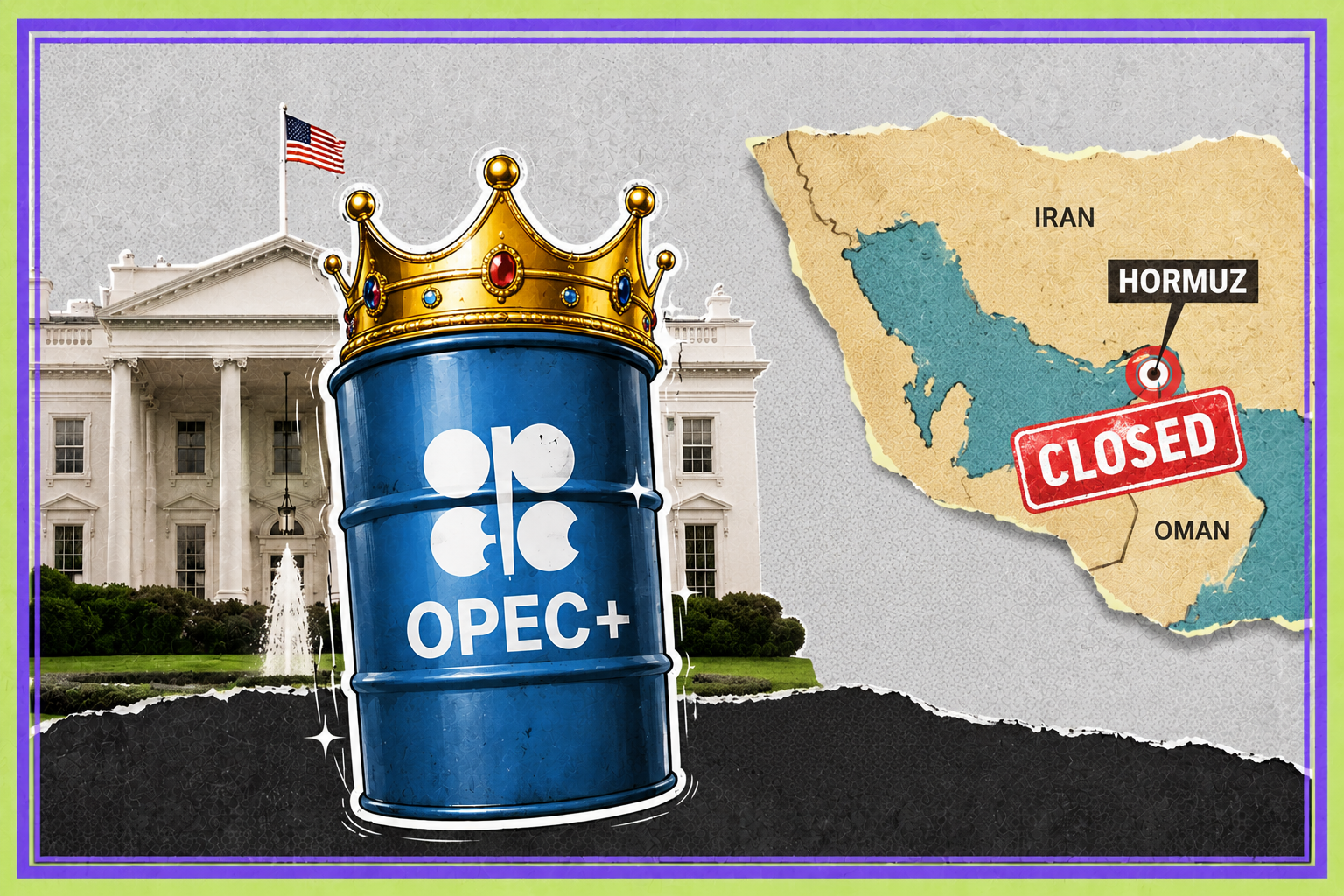
Negotiations between Washington and Tehran in Geneva are the main macro driver for CL=F and BZ=F. Delegations are meeting for a third round, with mediators reporting “positive and creative ideas” and describing the talks as “serious”. At the same time, the US is moving additional forces into the region and making clear it is prepared to execute orders if diplomacy fails. Iran remains the third-largest crude producer in its group, and the Strait of Hormuz carries about 20% of global crude flows each day. Any strike that hits infrastructure or shipping lanes would tighten supply fast. That scenario supports upside targets above 70 dollars for CL=F and pushes BZ=F toward the high-70s and beyond. A constructive outcome does the opposite. A durable deal would allow the market to roll off a roughly 10-dollar risk premium and refocus on supply growth elsewhere. In that case, flat price for BZ=F moves back toward the low-60s as the premium bleeds out.
Saudi Supply, OPEC+ Policy And The 137,000-Barrel Question
Gulf producers are not waiting passively for the talks to end. Saudi Arabia is already increasing production and exports as a contingency in case any strike on Iran disrupts regional flows. Inside the wider OPEC+ group, the base case on the table is an output increase of around 137,000 barrels per day from April. That decision is being weighed against peak summer demand, a 15% year-to-date rally in BZ=F, and the risk that geopolitical tension fades and leaves the market with too much crude. If de-escalation arrives and OPEC+ still adds that 137,000-barrel increment, the supply side leans clearly heavy into the second half of the year. If talks fail and shipping risk spikes, the same 137,000-barrel step looks too small to offset a serious disruption and would simply slow, not stop, an upside break.
US Inventories: 16 Million Barrels Is Not A Footnote
The biggest single bearish fact on the tape is US crude storage. The latest Energy Information Administration report showed a 16-million-barrel weekly build, the largest in about three years and more than ten times a typical 1.5-million-barrel consensus increase. That surge follows weather disruptions and the subsequent snap-back in supply, but the net effect is simple. The US now carries much more prompt-delivery crude than the market expected just a week ago. A build of that size, in the context of a 64–66-dollar CL=F, means the futures curve is not being supported by tight physical balances. Instead, the structure is being held up by fear of disruption, not by barrels being scarce at Cushing. At the same time, gasoline and distillate stocks slipped modestly, signalling that end-use demand is not collapsing. The imbalance is skewed toward crude, not products. That setup caps rallies and creates downside vulnerability if the geopolitical bid fades even slightly.
North Sea Weakness Undercuts The Brent Narrative
The physical market underlying BZ=F is also flashing caution. North Sea grades that anchor the benchmark are trading soft, with differentials struggling despite the futures rally. That weakness is feeding back into sentiment because it contradicts the idea of a structurally tight Atlantic Basin. When the forward BZ=F strip pushes toward 70–72 dollars and physical barrels in the North Sea still need discounts to clear, the message is that speculative and hedging flows are ahead of fundamentals. This divergence increases the risk of a sharp repricing if US–Iran risk moderates or if more weak spot cargo prints hit the screens.
Options Positioning: Call Surge As A Possible Contrarian Signal
The derivatives market has seen an aggressive build in call exposure. Crude call open interest jumped by about 67,000 contracts in the latest reading, lifting total calls to around 156,600. Puts rose only slightly, to some 52,500 contracts. That skew shows strong interest in upside insurance and leveraged bullish structures around CL=F. In a clean uptrend, that confirmation would be constructive. In the current context, with heavy inventories and a fragile macro backdrop, it can also be read as contrarian. When too many market participants crowd into one direction, payoffs often flip the other way. If Geneva produces even a partial breakthrough and shipping lanes remain open, those calls will sit on top of a 16-million-barrel stock cushion and soft North Sea differentials. That combination favors premium decay and pressure on CL=F back toward the low-60s.
Technical Picture For WTI CL=F: Head-And-Shoulders At The Neckline
From a technical standpoint, CL=F is not in a clean breakout. On the four-hour chart, price has broken above a two-and-a-half-year downtrend channel but is now moving sideways just above it. The pattern forming around current levels resembles a head-and-shoulders top. The neckline sits close to 65.20 dollars. A sustained break below that neckline exposes about 63.90 dollars, which aligns with the 0.618 retracement of the 61.70 to 67.30 upswing seen earlier in February. Below 63.90, the next supports sit near 62.90 and then 61.70. That 61.70 print is the key low for the latest leg and marks the line between a corrective pullback and a renewed trend toward the low-50s. On the upside, bulls need to defend 65–66 dollars and then force closes above 66.60 and 67.20. Regaining those levels would reopen the path toward 70, then 74, and ultimately 78 dollars, which capped the previous conflict-driven spike in 2025. Until 67.20 is reclaimed and held, the head-and-shoulders risk carries weight.
Weekly Structure: CL=F Still Living Inside A Long Downtrend
The weekly log chart keeps the bigger picture honest. The downtrend from the September 2023 high remains intact. Price is now testing the upper boundary of that declining channel for the second time in less than a year. A similar push in mid-2025 broke slightly above the channel but failed, with CL=F closing back inside and sliding lower. Right now, the pattern looks like another potential false break. Weekly momentum has improved from the 2024 lows but does not yet show a decisive shift. A clear weekly close above the channel and above roughly 78 dollars would be required to declare a structural trend change toward a higher inflation regime. Anything short of that can still resolve as a rejection, especially given the current option skew and the heavy US stock backdrop. A failure here sends CL=F back into the channel, with room to revisit the mid-50s if US supply continues to build and OPEC+ does not over-cut.
Read More
-
S&P 500 Adds 31 Points, Nasdaq Hits 26,202, Dow Stalls — Marvell +7.2%
25.08.2026 · TradingNEWS ArchiveStocks
-
Bitcoin Tests $81,257 as IBIT Absorbs $208.9M — Can Bulls Break the $82,000 Ceiling?
25.08.2026 · TradingNEWS ArchiveCrypto
-
Henry Hub Rolls Over to $2.73 With Storage Above the 5-Year Average Since March
24.08.2026 · TradingNEWS ArchiveCommodities
-
Dollar-Yen Grinds Back to 159.08 Against a 250 Basis Point Rate Gap
24.08.2026 · TradingNEWS ArchiveForex
Brent BZ=F: Risk Premium Holds 70 Dollars, But Floor Is Not Guaranteed
For BZ=F, the 70-dollar zone has become the pivot. Recent prints between 69.9 and 72.2 dollars define the key band. Monday’s rally to the highest level since late July shows how fast headline risk can move the market when US forces reposition and Iran is in the spotlight. At the same time, the combination of a 16-million-barrel US build and weak North Sea barrels shows that 70 dollars is not being driven by clean scarcity. A diplomatic breakthrough that removes most of the 10-dollar risk premium leaves BZ=F with little support in the high-60s. Large houses already model late-2026 scenarios with BZ=F around 60 dollars and CL=F near 56 dollars if tensions ease and supply growth continues. Those numbers are not forecasts for the next few weeks, but they show where valuation settles if risk premia disappear and OPEC+ executes a measured output increase.
Macro Backdrop: Risk Mood Improves, But Not Enough To Save Every Barrel
Broader risk sentiment has turned less hostile. Global equities in Asia have bounced, while US index futures are more restrained. Benchmark yields around 4.0% on the 10-year Treasury are not a fresh shock, but they still cap how far speculative assets can run without strong earnings or tight supply behind them. The dollar index sits in a neutral 97.6–97.7 band, offering neither a strong headwind nor a major tailwind for commodities priced in dollars. In that environment, CL=F and BZ=F trade as a pure blend of geopolitics and micro data. If US–Iran talks de-escalate risk, there is nothing in equities, bonds, or currencies that will automatically hold crude at current levels. If talks collapse and actual infrastructure is hit, the macro setting is loose enough for a fast spike.
Inflation And Policy: What A Breakout Or Breakdown Would Mean
A decisive upside break in CL=F toward 74–78 dollars reintroduces hard inflation questions for central banks that are already wary of loosening too fast. That scenario would revive the 2022–2023 pattern where every oil spike feeds into inflation expectations and forces policymakers to talk tougher. Conversely, a slide of CL=F back toward 60 dollars, with BZ=F closer to 65 and then 60 dollars, takes pressure off the inflation narrative and supports the case for easier policy later. The 16-million-barrel US build, the potential OPEC+ output hike, and softer physical differentials all fit the lower-inflation story. Only the US–Iran risk premium and the Gulf supply contingency plans stand on the other side.
Short-Term Scenarios: What Moves CL=F And BZ=F Next
Near-term price path for CL=F and BZ=F is defined by three concrete triggers. First, the Geneva talks outcome. A clear step toward a deal likely cuts a meaningful piece of the 10-dollar risk premium, pushes BZ=F back toward the mid-60s, and drags CL=F closer to 60–62 dollars. Second, any military strike that touches Iranian production, export infrastructure, or shipping lanes turns the call skew into fuel for an upside extension. In that case, CL=F can trade through 70 and test 74 and 78 dollars, while BZ=F moves toward the high-70s and potentially low-80s. Third, the next few EIA reports. If the 16-million-barrel build is a one-off that reverses, the bear story fades. If stocks add several more millions on top, the pressure for a pullback rises even if talks stay messy. Alongside that, the 65.20 neckline on CL=F is the technical line that separates a corrective pause from a more serious breakdown.
Verdict On CL=F And BZ=F: Hold With A Bearish Tilt At Mid-$60s To Low-$70s
Current levels do not offer a clean asymmetry either way. CL=F around 64–66 dollars and BZ=F near 70–72 dollars already price in a fat geopolitical premium while sitting on top of a 16-million-barrel US stock shock and a soft North Sea market. Options positioning leans heavily toward calls, which can flip into a contrarian signal if diplomacy advances. Technicals show CL=F testing a long-term downtrend and flirting with a head-and-shoulders breakdown. At the same time, the US–Iran file is volatile enough to trigger a sharp spike if talks collapse. The balance of evidence argues against chasing crude higher at this band. The stance is a hold with a clear downside bias. Upside risk to 74–78 dollars on CL=F exists if conflict breaks out, but the base case favors a pullback toward 60–63 dollars for CL=F and the mid-60s for BZ=F if negotiations deliver even a partial de-escalation and OPEC+ proceeds with the planned 137,000-barrel April hike.