Oil Price Forecast - Oil Holds in Low-$60s Amid Russian Disruptions and OPEC+ Output Freeze
With Brent at about $62.80 and WTI near $58.95 bbl, oil markets brace for volatility as Ukrainian drone strikes on Russian energy infrastructure | That's TradingNEWS
Oil Price Forecast - Oil Prices (CL=F, BZ=F) Face Pressure as Geopolitical Risks Offset Oversupply Fears
Crude oil benchmarks traded mixed on Tuesday, balancing renewed geopolitical disruptions against persistent oversupply anxiety. Brent (BZ=F) hovered near $62.79 per barrel, down 0.6%, while West Texas Intermediate (CL=F) eased to $58.96, shedding 0.6% after a two-day rally. The modest decline follows concerns about fresh drone strikes on Russian refineries, a tightening U.S.–Venezuela standoff, and shifting OPEC+ production strategies heading into 2026.
Geopolitical Tensions Reignite Premium as Ukraine Targets Russian Energy Infrastructure
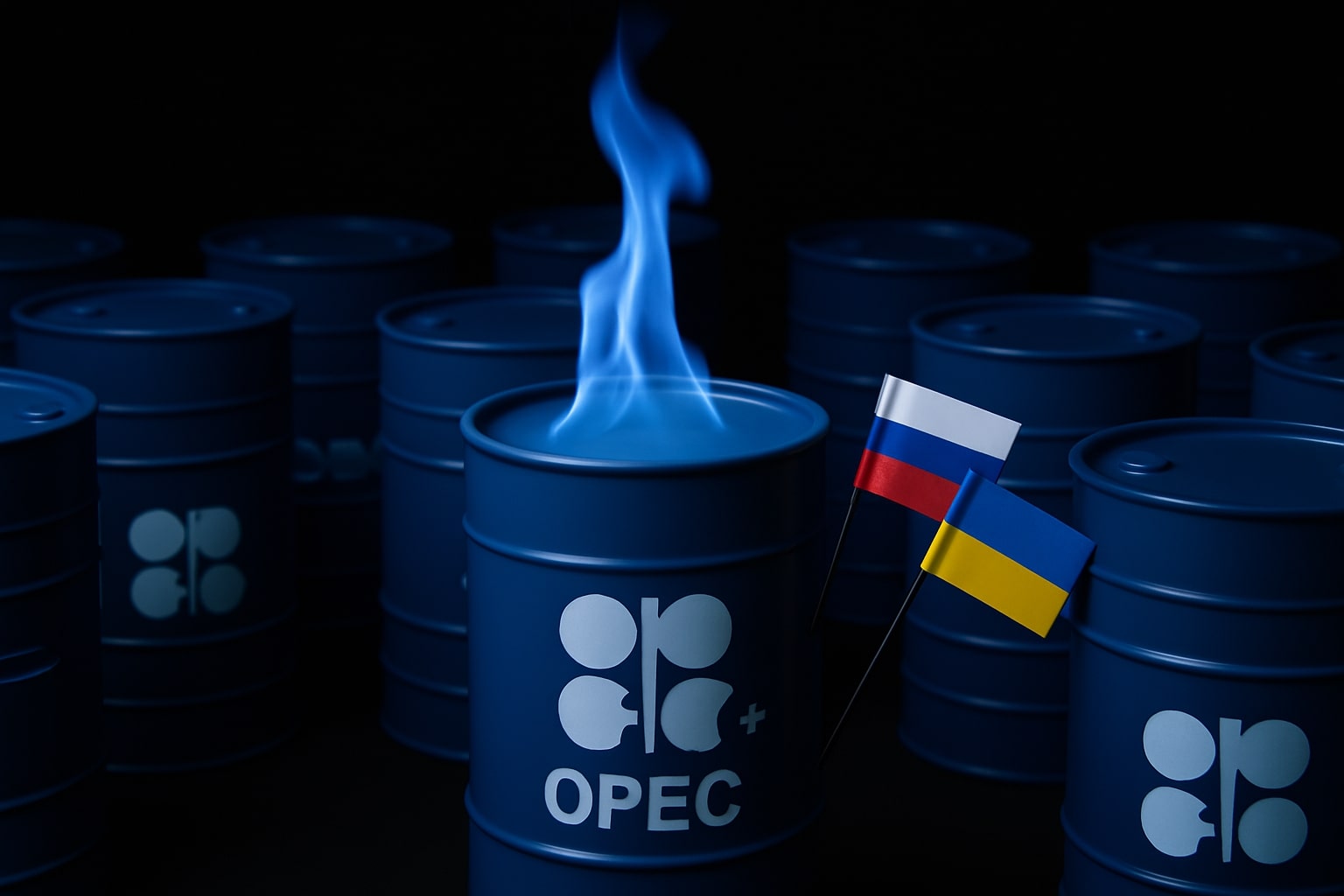
Drone attacks across multiple Russian energy hubs have reintroduced a geopolitical premium into oil markets. The Caspian Pipeline Consortium (CPC) resumed partial operations at its Black Sea terminal after sustaining heavy damage from a Ukrainian drone strike on November 29, which temporarily halted shipments of Kazakh crude. Analysts note that while flows have resumed, logistical fragility and retaliatory risks continue to support volatility. Meanwhile, the targeting of Russian-flagged vessels in African waters has further constrained transportation security, pushing insurers to raise war-risk premiums by nearly 12% week-over-week.
Russia and Vietnam’s $75 Oil Scheme Challenges Western Sanctions
A classified report from Ukraine’s defense intelligence revealed a sophisticated Russia–Vietnam partnership designed to circumvent the EU’s $47.6 price cap on Russian oil. Under the scheme, Russian state firm Zarubezhneft and Vietnam’s PetroVietnam collaborate through the joint venture Vietsovpetro, exporting crude disguised as Vietnamese origin oil at a minimum fixed sale price of $75 per barrel. This price floor, more than 50% above the EU-imposed ceiling, effectively neutralizes sanctions while ensuring Russian revenue stability through offshore subsidiaries. Licenses under the deal have been extended until 2050, embedding the mechanism deep into global energy flows. The move signals Moscow’s intent to institutionalize sanction evasion while maintaining critical funding for its war operations.
U.S.–Venezuela Tensions Cloud Supply Outlook
Uncertainty around Venezuelan oil exports intensified after President Donald Trump declared Venezuelan airspace “closed” over the weekend, complicating tanker navigation routes and sparking fears of retaliatory measures from Caracas. Venezuela, which contributes roughly 2.1 million barrels per day, remains a critical marginal supplier for Asian and European refiners. Analysts warn that any shipping disruptions could remove up to 300,000 barrels daily from global supply chains, eroding spare capacity just as inventories begin to normalize.
OPEC+ Holds Output Steady Amid Looming Supply Glut
During its recent session, OPEC+ decided to maintain Q1 2026 production quotas, a calculated pause to stabilize the market following weeks of bearish pressure. The group, led by Saudi Arabia and Russia, avoided deepening cuts to prevent losing market share to U.S. shale producers. Brent’s decline below $63 indicates skepticism that current production levels can absorb slowing demand from Europe and Asia. Still, insiders at PVM Oil Associates note that the cartel’s unified decision to freeze output could prevent a steeper slide below $60 in the short term, particularly if winter demand strengthens in the Northern Hemisphere.
Asian Market Activity and Emerging Trade Shifts
In Asia, demand indicators remain uneven. India’s imports of Russian Urals crude declined sharply in November, but Moscow labeled it a temporary adjustment. Conversely, China’s teapot refiners resumed elevated intake levels, signaling price sensitivity below $60 WTI-equivalent remains attractive. Meanwhile, Azeri Light crude traded at $66.22 per barrel, down 0.18%, reflecting regional exposure to broader price softening. Turkey, one of Russia’s major crude outlets, reported a sharp reduction in Urals imports under U.S. sanctions pressure, underscoring how geopolitical realignment continues to fragment traditional trade flows.
Technical Levels: Brent Holds $62 Support as WTI Eyes $57 Floor
Technically, Brent (BZ=F) remains capped by resistance at $64.20, while key support sits at $62.00. For WTI (CL=F), the first defense zone lies around $57.50, followed by secondary support at $55.80 — a break below which could trigger algorithmic selling toward $53.40. Momentum oscillators have entered neutral territory, suggesting the next directional impulse will likely stem from macro catalysts rather than speculative positioning. Volatility metrics show 3-month implied oil volatility at 29.4%, its highest since September, reflecting heightened uncertainty around sanctions, shipping risk, and inventory management.
Sanction Loopholes and the Shadow Fleet Factor
Despite price ceilings, Russian oil continues to flow via the “shadow fleet”, with over 60 tankers operating under opaque ownership through shell entities registered in Liberia and Panama. These vessels collectively moved $5.4 billion worth of Russian crude year-to-date, according to data compiled by maritime trackers. Analysts estimate that over 25% of Russia’s seaborne exports now bypass Western insurance channels entirely, reducing enforcement power. This opaque flow network — combined with the Russia–Vietnam export disguise — complicates efforts to constrain Moscow’s oil revenue and underscores the growing divergence between regulated and gray-market energy trade.
North Africa and Caspian Updates: Localized Impacts, Global Ripples
In the Libyan and Caspian regions, volatility remains constrained but influential. The Libya Update reported Brent-linked local benchmarks trading around $63.31, while production in Kazakhstan briefly halted after a November 29 drone strike on CPC’s Black Sea terminal. Exports resumed at reduced capacity, highlighting infrastructural fragility. In Azerbaijan, the steady slide in Azeri Light crude below $66.50 reflects softer regional demand and export dependency on Mediterranean refineries.
Broader Macro Context: Inflation, Demand, and Dollar Correlation
Oil’s pullback is reinforced by a marginally stronger U.S. dollar index (DXY 99.10) and weakening industrial activity in Europe and India. With global manufacturing PMIs averaging 49.2, demand recovery remains uneven. Energy traders expect central bank easing in early 2026 to inject liquidity, which could restore commodity appetite. Still, near-term supply abundance from OPEC+, U.S. shale, and sanctioned exports limits immediate upside momentum.
Read More
-
Yen Stalls at 160 Despite a 3% JGB and Tokyo Core CPI at 2.0% — Intervention Sits at 164, Friday's Payrolls Decide
02.09.2026 · TradingNEWS ArchiveEnergy
-
SOFI ($16.71) Posts Its Best Day of the Quarter as Profit Guidance Finally Rises — Holding $15.70 Unlocks $20
27.10.2026 · TradingNEWS ArchiveStocks
-
XRP-USD ($1.30) Defends a $1.27 Double Bottom as Whales Hold 68.5% of Supply — Break of $1.31 Opens $1.35 and $1.40
27.10.2026 · TradingNEWS ArchiveCrypto
-
Brent ($113.88) Trades a $2.35 Range as Houthi Strikes Meet Saudi-Iran Diplomacy — Break of $117 Unlocks $120
27.10.2026 · TradingNEWS ArchiveCommodities
-
Nasdaq Rips 1.3%, S&P 500 Hits 7,728, Dow Stalls as BA Drops to $171
27.10.2026 · TradingNEWS ArchiveMarkets
-
GBP/USD (1.3310) Can’t Cash In on 5.43% Gilt Yields as Budget Risk Meets a Firm Dollar — Break of 1.3274 Opens 1.3200
27.10.2026 · TradingNEWS ArchiveForex
Investment Outlook and Sentiment
Institutional positioning has turned defensive. Hedge fund net longs in Brent fell 9% week-over-week, marking the sharpest cut since July, while WTI speculative shorts increased 11% as investors priced in potential oversupply through early Q1 2026. Yet, the CME WTI forward curve remains mildly backwardated — with March 2026 contracts at $60.10 versus spot $58.96 — signaling residual tightness expectations once geopolitical dislocations ease.
Verdict: Oil (CL=F, BZ=F) — Hold Bias with Tactical Downside Risk
Oil’s structural support from geopolitical disruptions is countered by persistent oversupply and sanctions evasion that dilute OPEC+ control. Short-term trading remains range-bound between $57 and $64, with speculative bias toward softness unless winter demand spikes or further Russian disruptions occur.
Verdict — HOLD (Range: $57–$64; Upside trigger: escalation in Russia–Ukraine conflict; Downside trigger: extended OPEC+ production stagnation).