
Pound Pinned Near 1.34 as Strong US Payrolls and a Firm Dollar Overwhelm a Hawkish Bank of England — 1.33 Support, 1.3498 Resistance in Focus
Sterling slipped to 1.3398 on June 5 as a blowout 172,000-job US report drove the 10-year yield to 4.54% and firmed the dollar | That's TradingNEWS
Key Points
- GBP/USD slipped to 1.3398 on June 5, down 0.20% on the day and 1.43% over the past month, pinned below the $1.34 handle.
- A 172,000 May US jobs print, double the 85,000 forecast, drove the 10-year yield to 4.54% and firmed the dollar.
- The Bank of England held Bank Rate at 4.00% and flagged possible hikes on sticky 3.6% inflation, but the hawkish shift can't lift the pound against a stronger dollar.
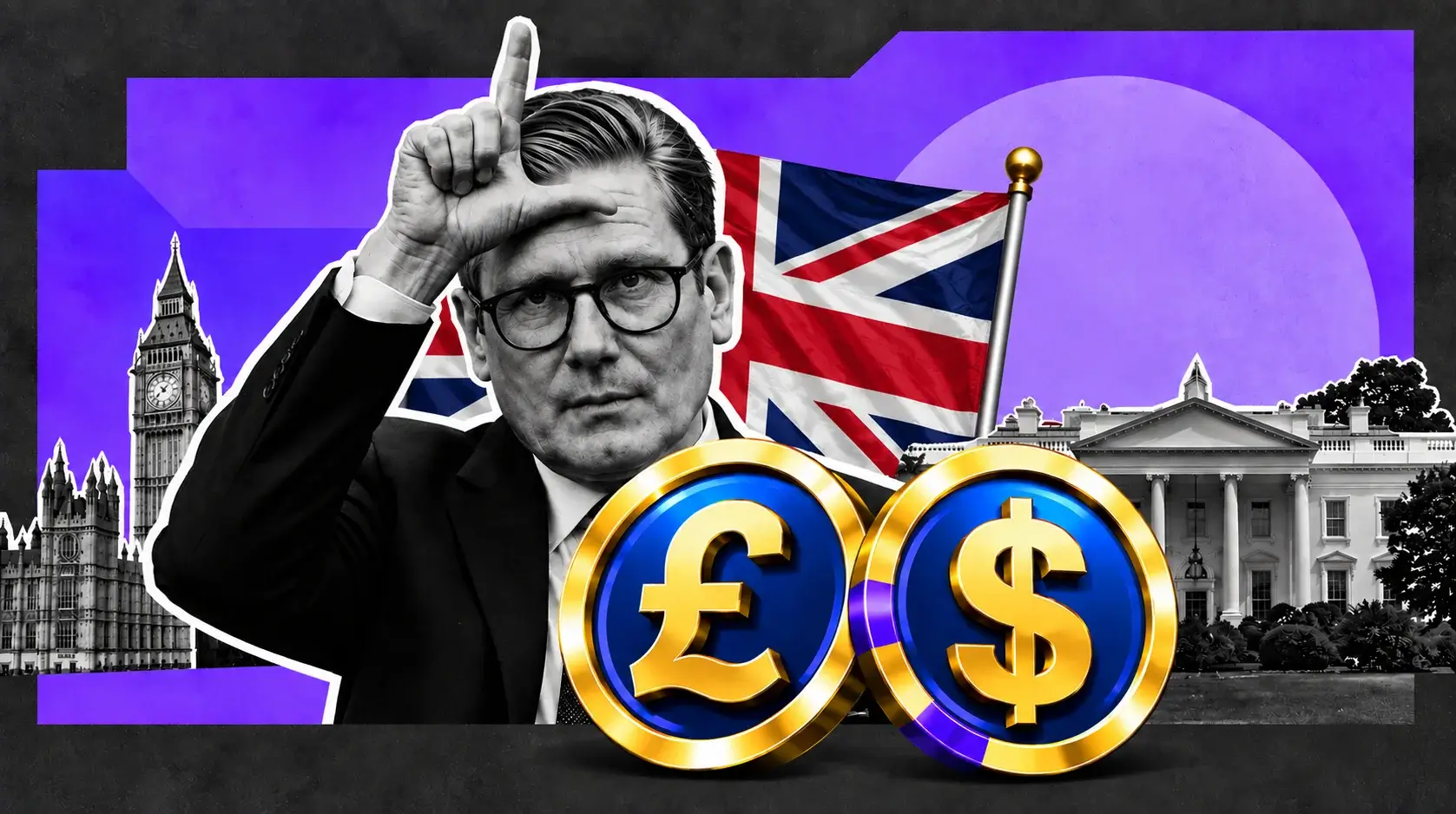
Sterling is stuck in a trap, and it's the same one pinning the euro: the central bank has turned hawkish, and the currency keeps slipping anyway. The Bank of England has pivoted toward flagging possible rate hikes on sticky inflation, which should support the pound. But a blowout U.S. jobs report fired the 10-year Treasury yield to 4.54%, put the dollar firmly in control, and overwhelmed whatever lift the BoE's stance offered. GBP/USD slid to 1.3398 on June 5, down about 0.20% on the session, pinned just below the $1.34 handle. The pound is floored by the BoE and capped by the dollar, and that vise holds until U.S. CPI and the BoE break it.
The Hawkish Trap
The logic that should be lifting cable is straightforward. The Bank of England held Bank Rate at 4.00% and signaled that persistent inflationary pressures could push it toward hikes later this year — a hawkish posture that, in a vacuum, makes the pound more attractive by widening or defending its yield advantage. UK inflation sitting elevated near 3.6% gives the BoE every reason to keep that hawkish tilt. On paper, that's a pound-positive setup.
Reality isn't cooperating. The dollar is stronger than the pound's hawkish central bank can offset, because the U.S. just delivered a labor print that doubled forecasts and drove yields up across the curve. When both central banks lean hawkish at once — as the BoE and the Fed are doing now — the rate story largely cancels out, and the currency pair trades on which side has the stronger momentum. Right now that's the dollar, full stop. The BoE's hawkish shift is real, but against a 4.54% U.S. 10-year and a firm greenback, it simply isn't enough to move the needle. Sterling slips while the BoE talks tough.
Where Cable Trades Now
Put numbers on it. GBP/USD slipped to 1.3398 on June 5, down roughly 0.20% from the prior session and back below the $1.34 handle it had been clinging to. The pound has weakened about 1.43% over the past month and sits down around 0.94% over the past year, a quiet erosion that masks how much two-way chop the pair has absorbed. In recent sessions cable had pushed up toward 1.3454, probing the $1.35 area, before the dollar's strength dragged it back toward 1.34 and below.
Zoom out and the structure is a broad sideways channel. The pair trades above its long-term moving averages but without a clear bullish or bearish trend — it's range-bound, not trending. The 2026 path has been a series of swings: a high near 1.38 in January on UK recovery hopes, a correction to around 1.32 in April on dollar strength, a recovery to the 1.35–1.36 zone in May, and now a slide back toward 1.34 as the dollar firms again. That's a market chopping inside a range, and June 5's move to 1.3398 puts it in the lower half of that band, leaning heavy.
The Jobs Print Powered The Dollar
The catalyst for the latest leg down was American, not British. May payrolls came in at 172,000 against forecasts near 85,000 — a print that doubled the high end of expectations, with unemployment holding at 4.3%. That strength drove the 10-year Treasury yield to 4.54% and repriced the Fed toward higher-for-longer, even reviving talk of a possible hike. A hot U.S. labor market means the Fed has no clean path to ease, and that keeps real yields elevated, pulling capital toward the dollar and away from the pound.
The dollar didn't need much help. It was already firm on the Middle East risk premium, with worsening U.S.-Iran tensions buoying the greenback as a haven and putting it on track for a positive week. Layer a blowout jobs print on top of that safe-haven bid and the dollar had two engines running at once. Sterling, like every major currency, got pushed lower against it. The pound's own hawkish central bank couldn't compete with a dollar drawing strength from both strong data and geopolitical fear. Cable's slide to 1.3398 is the direct fingerprint of that dollar dominance.
The BoE's Hawkish Shift
The Bank of England's pivot is the pound's anchor, even if it can't lift it right now. After cutting rates five times through 2025 to bring Bank Rate to 4.00%, the BoE shifted gears, holding at its recent meeting and signaling that persistent inflationary pressures could prompt hikes later this year rather than the further cuts markets had penciled in. That's a meaningful hawkish turn from an easing cycle, and it mirrors what the ECB is doing across the Channel — both European central banks fighting sticky inflation while the data complicates their dovish plans.
UK inflation near 3.6% is what forces the BoE's hand. Letting price expectations drift would be a bigger policy error than holding rates higher into weak growth, so the bank has parked its easing bias and flagged the possibility of tightening. That stance defines the floor under sterling. It's the reason the pound hasn't broken down through its range despite a firm dollar and a soft UK economy — traders know the BoE is no longer in a clean cutting cycle, and a central bank flirting with hikes keeps a currency from collapsing. The hawkish shift is the pound's backstop, just not its launchpad.
But It's Not Enough
Here's the crux: a hawkish BoE isn't enough to lift cable against a dollar this strong. The reason is the relative move. For GBP/USD to rally, the pound's central bank has to out-hawk the Fed, and right now it can't — the Fed just got a jobs print that lets it stay tight or hike, while the BoE is fighting that same hawkish battle from a position of far weaker domestic growth. When both banks are leaning the same direction, the currency with the stronger economy and the safe-haven status wins, and that's the dollar.
It's the identical trap the euro is in. The ECB is about to hike, yet the euro keeps slipping; the BoE has gone hawkish, yet the pound keeps sliding. In both cases the hawkish central bank provides a floor but not lift, because the dollar's strength is the dominant force and a hawkish counterpart abroad only neutralizes the rate story rather than winning it. The pound needs the dollar to weaken — on a soft U.S. inflation print or a Fed that blinks — before the BoE's hawkishness can translate into a sustained rally. Until then, hawkish-but-slipping is the pound's reality.
The UK's Growth Problem
The pound's bigger handicap is the economy underneath it. UK growth is weak and getting weaker — GDP contracted in late 2025, and the labor market has loosened materially. Unemployment has climbed to around 5.0% to 5.1%, near a five-year high, and the BoE forecasts it could rise to 5.5% by the second quarter. Wage growth has cooled toward 4.6%, with private-sector pay slipping below 4% for the first time since 2020. Those are the numbers of an economy stalling, not accelerating.
That growth problem is what makes the BoE's hawkish stance so awkward and the pound's position so fragile. The bank is being forced to keep policy tight to fight 3.6% inflation while the economy is visibly weakening — the textbook stagflation bind. A central bank holding rates high into rising unemployment is one bad data point away from being forced to abandon the hawkish tilt and cut to support growth, which would knock the floor out from under sterling. The pound is balancing on a BoE that can't ease because of inflation and can't tighten much because of growth, and that fragile equilibrium caps how far cable can rally even when the dollar does soften.
Fiscal And Political Baggage
Sterling carries baggage the dollar doesn't. UK fiscal credibility has been under scrutiny, and political uncertainty through the spring pushed gilt yields sharply higher before they eased. The benchmark 10-year gilt yield has drifted back toward 4.85%, retreating from the elevated levels that accompanied concerns over UK fiscal stability and political developments, which has helped ease financial conditions and relieve some pressure on the pound. But the relief is fragile, and fiscal scrutiny is likely to intensify ahead of future budget cycles, especially if debt dynamics worsen.
This is the pound's structural discount. A currency shadowed by fiscal worries and political instability trades with a risk premium that a hawkish central bank can't fully erase. When gilt yields spike on fiscal fears, sterling gets hit even if the rate-differential math should favor it, because investors demand compensation for the credibility risk. The recent retreat in gilt yields toward 4.85% has been a tailwind, but the moment fiscal or political headlines flare again, that tailwind reverses. The pound's domestic baggage is a persistent drag that keeps it from fully capitalizing on the BoE's hawkish shift.
The Dollar Side: Warsh And The Risk Premium
On the other side of the pair, the dollar has two things going for it. First, the Fed's leadership transition skews hawkish — Kevin Warsh took office as chair in May for a four-year term, and the market reads him as more hawkish than his predecessor, with the strong jobs print handing him every reason to keep the easing bias buried ahead of his first policy meeting later this month. A hawkish new Fed chair plus a hot labor market is a potent dollar cocktail.
Second, the Middle East risk premium. Worsening U.S.-Iran tensions have buoyed the dollar as a safe haven, with the greenback headed for a positive week on the geopolitical bid. That safe-haven flow is a wildcard that cuts in the dollar's favor whenever the conflict escalates — and against it whenever peace optimism breaks out, which is part of why cable has had brief pops toward 1.3454 on de-escalation headlines. But the net effect through this stretch has been dollar-supportive, because the conflict keeps flaring even as diplomats negotiate. Between Warsh's hawkish tilt and the risk premium, the dollar has the upper hand in the GBP/USD fight.
Read More
-
Yen Stalls at 160 Despite a 3% JGB and Tokyo Core CPI at 2.0% — Intervention Sits at 164, Friday's Payrolls Decide
02.09.2026 · TradingNEWS ArchiveEnergy
-
Semtech ($158) Holds $153 as Data Center Revenue Hits $100M and EPS Guide Jumps to $1.05 — 12% Path to Record High
16.09.2026 · TradingNEWS ArchiveStocks
-
XRP ($1.28) Tests $1.25 Support as Commodity Status Survives Senate Defeat — 16.4% Upside to $1.49
16.09.2026 · TradingNEWS ArchiveCrypto
-
WTI ($103.20), Brent ($107.60) Hold Above $100 as 10M Barrels a Day Stay Shut In — 9.7% Upside to $118
16.09.2026 · TradingNEWS ArchiveCommodities
-
S&P 500 SPX Rises to 7,624, Nasdaq IXIC Gains 234 Points, Dow DJI Stalls as INTC Rips 4% Into Fed Decision
16.09.2026 · TradingNEWS ArchiveMarkets
-
GBP/USD (1.3480) Loses 1.3500 as Fed Hike Flips Rate Gap Against Bank Rate at 3.75% — 80 Pips to August Low at 1.3400
16.09.2026 · TradingNEWS ArchiveForex
The Chart: A Range, Not A Trend
Technically, cable is range-bound and going nowhere with conviction. The pair sits above its long-term moving averages but shows no clear directional trend — the hallmark of a market chopping sideways rather than trending. Support in the 1.33–1.34 zone has held repeatedly, while the broader 1.30–1.32 area has acted as a consistent floor across this cycle. On the upside, heavy resistance sits in the 1.38–1.42 zone, an area that capped rallies in prior cycles and that cable hasn't been able to crack.
That range structure tells you to fade extremes rather than chase breakouts until a catalyst forces a decisive move. The slide to 1.3398 puts the pair in the lower portion of its near-term band, with the $1.35 handle now acting as overhead resistance after cable failed to push through it. Momentum indicators have leaned lower without breaking down, consistent with a heavy-but-not-collapsing tape. The pair is coiling in the same way the euro is — compressing inside a range ahead of next week's twin catalysts, and the longer it compresses, the sharper the eventual break.
The Levels That Matter
Map the range. On the downside, the first support is the 1.33–1.34 zone where cable is currently wrestling, with 1.3398 already tested. Below that, the round 1.32 level held as a floor during April's correction, and the broader 1.30–1.32 band is the deeper support that has contained every selloff this cycle. A decisive break of 1.32 on a firm dollar would shift the structure bearish and open the lower 1.30s.
On the upside, the immediate hurdles cluster tightly: the 50% retracement near 1.3476, the 200-period moving average around 1.3498, the 61.8% level at 1.3517, then 1.3576 and 1.3650. The $1.35 handle sits right in that cluster and is the line cable needs to reclaim to neutralize the heavy near-term bias. Above all of it, the 1.38–1.42 zone is the ceiling that has capped sterling for cycles. The pair is trading the bottom of its range near 1.34, pinned between 1.33 support and the 1.3476–1.3498 resistance shelf, and that narrow band is the cage until the macro breaks it.
Next Week Breaks The Range
The deadlock has a catalyst calendar, and it's loaded for next week. First, U.S. CPI: May inflation is expected to have accelerated, and a hot print would cement the higher-for-longer Fed view, fire a fresh dollar rally, and press cable toward 1.33 and potentially below. A cooler print would take the heat out of the dollar and free the pound to test the 1.3476–1.3498 resistance and the $1.35 handle. The U.S. inflation number is the single biggest near-term driver, because it determines whether the dollar's strength extends or fades.
Second, the Bank of England and the run of UK data. Any UK inflation or labor readings that reinforce the BoE's hawkish tilt give sterling a reason to hold its floor, while signs that the weakening economy is forcing the bank back toward cuts would knock the floor out. The interplay is the whole trade: a hawkish BoE plus a softening dollar lifts cable through 1.35; a hawkish Fed plus a stalling UK economy drives it toward 1.32. Between the U.S. CPI print and the UK's data flow, the pair has four paths out of its range, and the combination that lands sets the tone into the summer.
The Forecast
The base case is continued range-bound trade between 1.33 support and the 1.3476–1.3498 resistance shelf, with a heavy bias as long as the dollar stays firm on strong U.S. data and the Middle East risk premium. With both central banks hawkish, neither side has the ammunition to force a trend ahead of next week's catalysts, so expect cable to keep chopping near 1.34 — floored by the BoE, capped by the dollar, dragged by UK fiscal and growth concerns.
The bearish path triggers on a hot U.S. CPI paired with a break of 1.33, which opens 1.32 and the lower 1.30s if the dollar genuinely breaks out and UK growth data disappoints. The bullish path needs a cool U.S. CPI and a dollar that softens, letting the BoE's hawkish shift finally translate into lift — that flips cable through 1.3498 and the $1.35 handle toward 1.3576 and 1.3650, with the 1.38–1.42 zone as the longer-term ceiling. The single biggest driver is next week's U.S. inflation print, with UK data and the BoE's posture defining the floor. For now, GBP/USD is stuck in the hawkish trap — a tough-talking central bank that can't lift its own currency against a dollar this strong — pinned near 1.34, and the trade is to respect the 1.33–1.35 range until the macro tells you which way it snaps.
That's TradingNEWS