SK Hynix (SKHY) Storms the Nasdaq: Dow (DJI) Clings to 52,552, S&P 500 (SPX) Steadies at 7,543, Nasdaq (IXIC) Fades on Chip Profit-Taking
The largest foreign listing in Wall Street history priced at $149 and was indicated to open near $180 as memory names cooled | That's TradingNEWS
Key Points
- SK Hynix (SKHY) priced 177.9M ADSs at $149, raising $26.5B — the biggest-ever foreign US listing, indicated to open ~$180.
- Delta (DAL) beat with $1.56 EPS and $17.7B revenue but fell 2.2% to $87.09 as fuel hit $3.93/gal, up 75%.
- Costco (COST) snapped to a six-month low, down 4.21% near $912; Pepsi (PEP) dropped 4.45% despite a revenue beat.
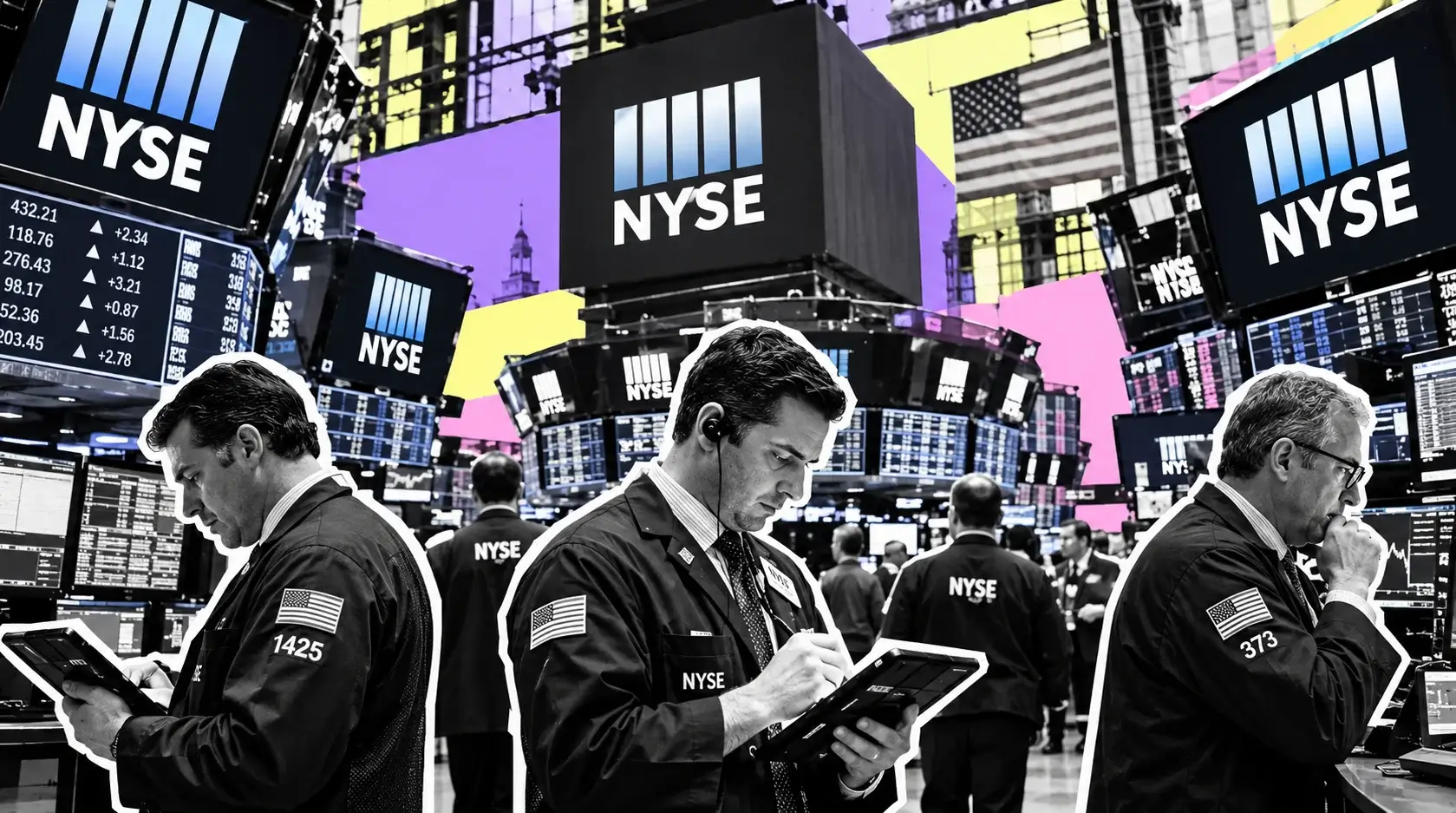
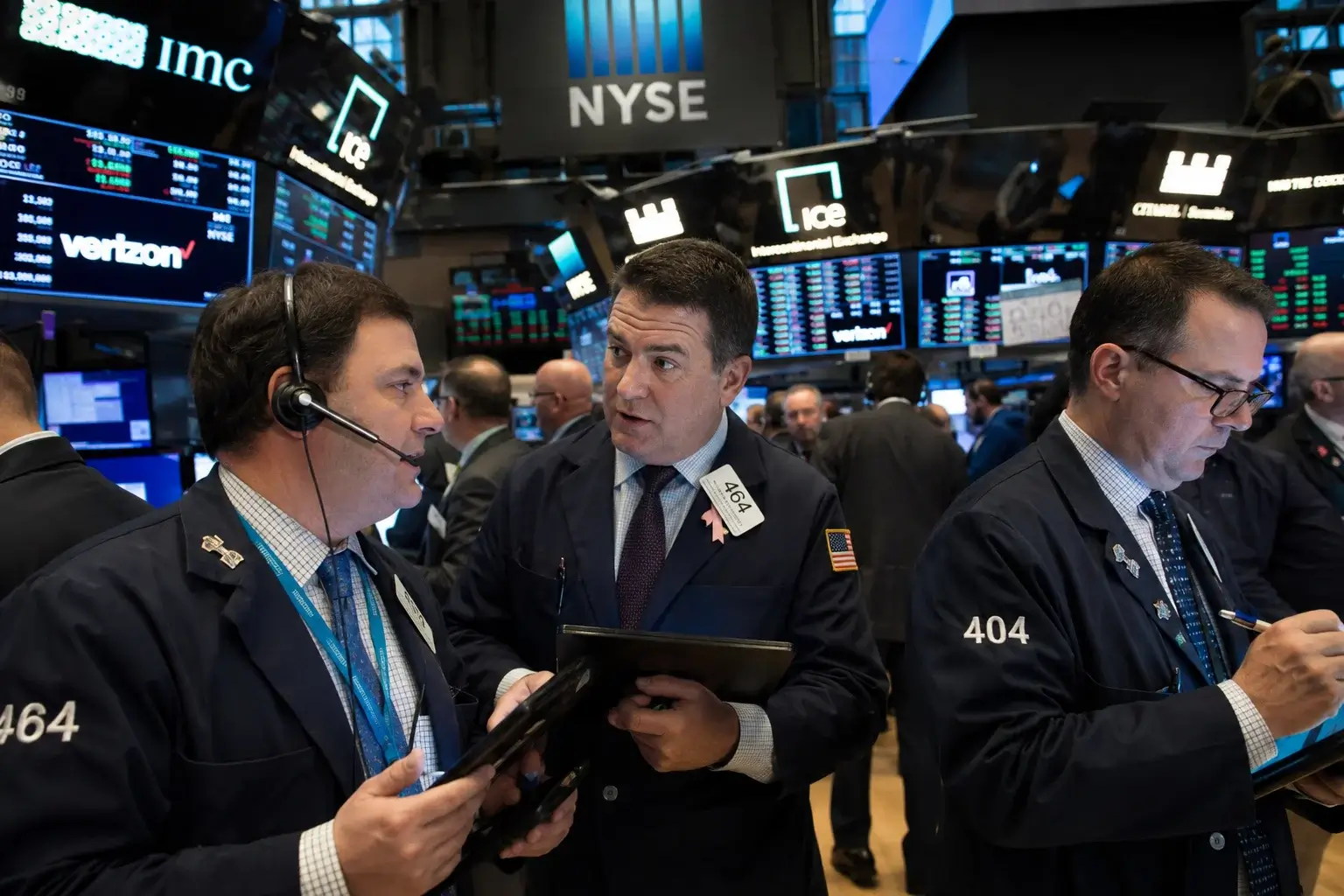
Wall Street opened Friday pulling in three directions at once, and the split told the whole story of where this market's conviction actually lives. The Dow Jones Industrial Average (DJI) held green, climbing 65.49 points to 52,552.90, a gain of 0.12% that leaned on financials and industrials. The S&P 500 (SPX) sat almost dead flat, hovering fractions below the line near 7,543 after Thursday's 7,543.64 close. The Nasdaq Composite (IXIC) took the hit, sliding 0.34% to 26,116.74 as semiconductor names gave back a slice of the rip that carried them Thursday. The Russell 2000 dropped 0.57% to 2,975.49, and the VIX drifted to 15.63, a fear gauge that refuses to price much fear even with a Middle East war grinding in the background.
That flat-to-lower open was not weakness so much as a market holding its breath. Every desk on the Street was waiting on one print: SK Hynix's Nasdaq debut, the $26.5 billion listing that lands as a live referendum on whether investors still want to underwrite the AI build-out at these prices. Chip stocks faded ahead of it, a classic sell-the-anticipation move after Thursday's semiconductor surge left the group extended. The rotation underneath was sharp. Money rolled toward the blue-chip Dow and out of the crowded Nasdaq megacaps, and the consumer complex kept bleeding.
Gold eased to 4,100.70, off 0.97%, as the safe-haven bid faded on signs oil could keep flowing through the Strait of Hormuz. West Texas Intermediate crude (CL=F) hovered near $72 a barrel while Brent (BZ=F) traded above $76, both firm but off the panic highs of the past week. The 10-year Treasury yield sat near 4.56%, a hair below the seven-week high it tapped when oil spiked, and that yield backdrop is exactly why the Dow's cyclical bid worked while long-duration tech struggled.
The one-line thesis for the session: the AI-memory trade is carrying the entire tape, and SK Hynix's first print is the market's chance to prove that trade still has legs. Everything else — Delta's earnings beat that got sold, Costco snapping to a six-month low, Pepsi getting smoked on soft North American demand — is the market quietly telling you the consumer is cracking while the AI names sprint.
SK Hynix Prices at $149 and Lands the Biggest Foreign Listing in Wall Street History
The main event delivered on scale before it ever printed a trade. SK Hynix priced 177.9 million American depositary shares at $149 each, raising $26.5 billion and stamping the largest-ever US listing by a foreign company. That number tops Alibaba's $25 billion 2014 New York debut and trails only SpaceX's record $85.7 billion raise from last month. The ADRs trade Friday under the temporary ticker SKHYV before converting to SKHY on Monday, July 13. Each set of ten ADRs represents one common share of the Seoul-listed stock.
The bookbuild ran red hot. Demand came in more than seven times oversubscribed, with institutional orders starting at $200 million and some topping $1 billion. A trio of cornerstone buyers — the marquee names in growth and AI-infrastructure investing — jointly indicated interest in up to a combined $7 billion of the ADRs. Ahead of the open, the shares were indicated to print near $180, a jump of roughly 21% above the $149 offer price, which would hand day-one buyers an instant premium and value the memory maker well above the $1 trillion mark it already cleared in Seoul.
This is not a company coming public for the first time. SK Hynix common shares have traded on the Korea Exchange for decades, and that stock has ripped 174% over the past six months and 634% over the past year as the AI-driven memory shortage sent HBM prices vertical. What Friday's listing does is hand US investors a dollar-denominated, New-York-hours way into the world's dominant high-bandwidth-memory supplier without wrestling the won, cross-border settlement, or Seoul trading hours.
The strategic logic behind choosing Nasdaq over the NYSE is index inclusion. The listing sets SK Hynix up as a candidate for the Nasdaq 100 at the December rebalance, which would force passive funds tracking QQQ to buy billions of dollars of stock to match benchmark weights. That structural buying is the quiet bull case underneath the debut-day fireworks. The company plans to funnel the entire raise into manufacturing capacity and next-generation EUV lithography hardware, including the $390 billion Yongin fabrication cluster in South Korea and a $4 billion advanced-packaging plant in Indiana. Second-quarter results land July 22, the first print as a dual-listed name.
Why This One Listing Is a Referendum on the Entire AI Trade
Strip away the ticker and the ceremony, and SK Hynix's debut is the cleanest read the market has gotten in months on a single question: will US institutions underwrite the AI-memory thesis at scale, at these prices? The answer prints in real time in the SKHYV premium or discount to the $149 issue level. A fat premium says the buy side still believes the memory shortage runs for years. A soft open — or worse, a break below issue — would signal the AI multiple has finally outrun the fundamentals.
The company sits at the choke point of the entire AI stack. High-bandwidth memory is the stacked-chip layer bolted to every serious AI accelerator, and SK Hynix holds an estimated 50% to 60% of the HBM market. When Nvidia ships a GPU, SK Hynix silicon is riding shotgun. If Nvidia is the engine of the AI boom, this company builds the fuel injectors. Its customer roster reads like the hyperscaler roll call — the chips land in data centers at the largest cloud and platform names on the planet. That is why the debut carries weight far beyond a single stock: it is a proxy vote on whether the memory-supply crunch is structural or a cycle top dressed up as a supermarket.
The setup is loaded with catalysts and traps in equal measure. On the bull side, Nasdaq 100 inclusion in December drags in passive flows that create a permanent liquidity floor. On the bear side, at least ten fund managers have filed to launch single-stock ETFs tracking the name, and two 2x leveraged products are slated to start trading Monday, July 13. Those leveraged wrappers use futures and swaps rather than shares, and the daily-reset volatility drag can turn a routine 10% slide in the underlying into a 20% loss in the fund before compounding even bites. That is retail risk stacked on ADR risk stacked on a debut that has traded for zero seconds.
There is also a capital-diversion angle that ripples straight into US memory names. SK Hynix's forward multiple in Seoul runs near 6x to 7x against a US memory peer trading closer to 13x. As institutional memory allocations get a second liquid vehicle, some of that capital may rotate out of the incumbent and into the newcomer, muddying the read for anyone long the American proxy.
Chip Stocks Fade Into the Print After Thursday's Blowout Rip
The semiconductor complex spent Friday morning giving back gains, and the mechanics were textbook. After a group runs hard into a marquee event, traders lock in profit before the event can go wrong. SK Hynix's debut was that event, and chips sold off ahead of it even as the broader tape held. It was not a thesis break — it was position management dressed as weakness.
To understand the pullback you have to see the launchpad it fell from. Thursday, the memory and AI-infrastructure names ripped. The VanEck Semiconductor group climbed 2.5%, led by a 4.5% pop in the largest US memory maker, whose stock had also drawn a $250 billion domestic-investment headline that lit a fire under the whole supply chain. A flash-storage peer popped 7.6%. An equipment leader tacked on 3.2%. That surge dragged the Nasdaq Composite up 1.30% to 26,206.89 and put the S&P 500 up 0.81% into Thursday's close. The rally leaned on revived faith in the AI trade after a bruising late-June slump in chip stocks that briefly dumped memory names into a bear market.
Friday reversed a sliver of that. The Technology sector had done the heavy lifting all week, and with the SK Hynix print looming, the path of least resistance was a breather. The rotation showed up in the sector tape: Technology stayed the leader on the week even as it cooled Friday, while Energy softened alongside crude and the defensive corners stayed sleepy. The move out of chips did not find a home in the consumer complex, which was busy getting hit on its own bad news, so it leaked into the Dow's cyclical and financial names instead — the reason the blue-chip index could hold green while the Nasdaq slipped.
The deeper tension is valuation. Bears have hammered the point for two weeks that expectations for AI infrastructure have raced ahead of what the fundamentals can deliver, and every wobble in the chip tape gets read as the first crack. Bulls counter that the memory shortage is real, HBM3E and HBM4 demand is booked out, and AI inference — running trained models for millions of users — opens a second demand leg beyond training that keeps DRAM and enterprise storage tight. Friday's fade did nothing to settle that fight. It just reminded everyone how thin the leadership has gotten, with the advance leaning on fewer and fewer big names.
Meta Rips on Its Own AI Chip Ambitions While Big Tech Splits
Meta Platforms (META) was the standout on the upside, ripping as much as 5.9% and trading in the $631 to $668 band after the company signaled it will push its own custom AI chip toward production by September. The stock had wobbled earlier in the month when a report surfaced that Meta was building a cloud business to sell excess AI compute — a plan that spooked the chip complex over capacity-glut fears — but the in-house silicon story flipped the narrative back to a cost-savings bull case.
The math is what moved the tape. Street estimates had modeled Meta's AI capacity build at roughly $45 billion per gigawatt for 2026. Chatter that the company may have engineered its capex down toward $22 billion per gigawatt — potentially below $30 billion per gigawatt on some capacity — implies a structural cost advantage that would drop straight to the bottom line. If Meta can stand up AI capacity at a fraction of the assumed cost, the economics of its build-out look far better than the consensus feared, and the stock rewarded that read. The debut of a new frontier AI model this week added to the tape's willingness to pay up for the name.
The rest of megacap tech was mixed rather than uniform. The AI-adjacent networking and connectivity names caught a bid — Broadcom (AVGO) climbed 2.21% to $397.28 and Arista Networks (ANET) added 2.67% to $185.89 — as the market kept paying for anything wired into data-center spend. But the broad megacap complex did not move as a bloc Friday. Some names leaked lower on the chip fade, others held, and the dispersion underscored how stock-specific this leg of the AI trade has become. The days of every hyperscaler ticking up together are gone; the market is now grading each name on its own capex discipline and its own line into the AI revenue story.
That selectivity matters for the tape's health. When leadership narrows to a handful of names printing new highs while the index churns, the rally gets fragile — one bad print from a crowded name can drag the whole benchmark. Friday, Meta's strength papered over the chip softness at the index level, but the internals showed a market riding a shrinking bench. The AI capex number for 2026 is now pegged near $700 billion across the hyperscalers, and every dollar of that is a bet the memory-and-compute demand curve keeps bending up.
Delta Beats, Guides Higher, and Still Gets Sold to Kick Off Earnings Season
Delta Air Lines (DAL) fired the starting gun on second-quarter earnings season Friday morning, and the reaction was a lesson in how high the bar sits. The carrier posted adjusted earnings of $1.56 a share against a Street range of $1.48 to $1.51, and adjusted revenue hit $17.7 billion versus the $17.53 billion consensus. It was a clean top- and bottom-line beat. The stock got sold anyway, sliding 2.2% to $87.09 in the morning session after opening near $88.50, reversing early gains.
The soft spot was buried below the beat, and it has one name: fuel. Delta's net profit fell 25% year over year to $1.6 billion, dragged by an average fuel price of $3.93 a gallon — a 75% jump from a year ago and the highest quarterly fuel bill in the airline's history. Higher ticket prices offset only about 60% of that fuel surge, which tells you the pricing power that carried the stock all year is running into a cost wall the airline can't fully pass through. That is the structural worry the tape latched onto, and it overrode the headline beat.
The forward guide was the part bulls will point to. Management called for third-quarter profit above analyst estimates and pegged all-in Q3 fuel at $3.15 a gallon, a meaningful step down from the Q2 blowout that would restore margin if crude cooperates. Gross leverage was framed near 2x. On paper, that is a company guiding into an acceleration, and the fact the stock reversed off its lows through the session suggests some buyers agreed the sell-off was an overreaction to a fuel line that is already improving.
Context sharpens the disappointment. Delta had ripped roughly 40% over the trailing twelve months and tapped a fresh record high of $95.68 on July 2, so it walked into the print priced for perfection with 22 of 23 covering brokerages carrying buy or strong-buy ratings. Short interest had been retreating, off 9.6% over the past two reporting periods and sitting near 3.8% of float. When a name is that loved and that extended, a beat that isn't a blowout gets sold — the good news was already in the tape. As the first major report of the season, Delta set an uncomfortable tone: beating isn't enough if the quality of the beat leans on price hikes fighting a fuel spike.
PepsiCo and Costco Flash the Clearest Consumer Warning of the Week
While the AI names sprinted, the consumer complex quietly cracked, and two blue-chip staples carried the message. PepsiCo (PEP) dropped as much as 4.45% to trade near $136 after topping second-quarter revenue estimates — a beat that the market ignored in favor of the softness underneath. Weak North American demand, a more cautious consumer, and lingering cost pressure did the damage. Analysts had already trimmed price targets into the print on worries about whether Frito-Lay North America volume growth could hold after a shaky recovery, and the report gave the skeptics enough to keep selling. A revenue beat that gets sold this hard is the market telling you it cares about the trajectory, not the quarter.
Costco (COST) was the sharper wound. The warehouse retailer snapped to a six-month low, sliding 4.21% to trade near $912 after June sales data showed solid but decelerating growth. Net sales rose 10.6% year over year to $29.24 billion for the five weeks ended July 5, and comparable sales climbed 8.8% — numbers that would thrill most retailers but fell short of the high bar a premium-valued name has to clear. The tell was the deceleration: comps cooled from May's 12.5% pace, and for a stock trading at a rich multiple, slowing momentum is the one thing the tape won't forgive.
Underneath Costco's headline sales, a cash-flow worry did real work. Free cash flow is modeled to drop sharply in the coming fiscal quarter, driven by roughly $6.5 billion in capital spending on new warehouse openings and delays in tariff refunds. In a market that has turned obsessive about capital efficiency, a 70%-plus projected free-cash-flow decline reads as a red flag even when the top line looks fine. Gasoline-price deflation and foreign-exchange drag added to the miss on the quality metrics investors now fixate on.
Put the two together and the signal is loud: consumer resilience is fraying at the exact moment the market is paying record multiples for AI growth. Both names beat or grew on the surface and both got hit, which means the selling wasn't about the print — it was about the direction. The divergence between a tech tape ripping to new highs and staples names rolling over is the kind of split that historically precedes a broadening problem. When defensive, everybody-shops-here names lead the downside, it says the marginal consumer dollar is getting stretched, and that eventually reaches the earnings the whole rally is priced on.
Single-Stock Damage and Narrowing Breadth Under the Surface
The churn beneath the indices was uglier than the flat headline numbers let on, and the breadth math is where the caution lives. On Thursday's up day, nine of the S&P 500's eleven sectors actually finished in the red even as the index rose 0.81% — the gain was manufactured by two sectors doing all the lifting while the rest sank. Materials got smoked, dropping 2.6%, financials fell 1.9%, and consumer discretionary lost 1.8%, offset only by Technology's 1.2% climb and Energy's 1.8% pop. An index that rises while most of its members fall is an index running on fumes from a handful of names, and that structure carried into Friday.
The single-stock wreckage added to the unease. A major biopharma name got hammered, falling nearly 8% after a late-stage heart-disease drug trial failed to hit its target — a binary event that vaporized a chunk of market cap in a session. A large mall-and-outlet REIT drew a downgrade to hold on a "fully valued" call, with the analyst math flagging that upside now hinges entirely on earnings growth that faces refinancing headwinds at higher rates through 2026 and 2027. Both are reminders that with the index priced for perfection, any stumble gets punished without mercy.
The rotation map tells the rest. Money left the crowded Nasdaq megacaps and the consumer complex and found its way into the Dow's financials and industrials, which is why the blue-chip index could tick green while the Nasdaq bled. Financials caught a specific bid Thursday as the AI-driven equity strength lifted the brokers and card names — the big investment banks and a marquee card issuer all climbed 1.9% to 3.1%. That kind of sector hand-off inside a flat tape is not the signature of a market adding fresh risk; it's the signature of a market reshuffling the chips it already holds.
Trading volume backs the picture. Roughly 14.7 billion shares changed hands Thursday, well under the 20-session average near 22.9 billion, meaning the move up came on thin participation. Low-volume rallies into a crowded leadership group are exactly the setup that reverses hard when the leaders stumble. The VIX sitting near 15.63 says the options market isn't hedging for that scenario, which is either complacency or conviction depending on which side of the AI trade you're on. Either way, the internals argue this tape is narrower and more fragile than the flat index prints suggest.
Oil, Hormuz, and the Middle East Overhang That Won't Clear
The geopolitical backdrop kept its grip on the tape, and crude was the transmission belt. West Texas Intermediate (CL=F) hovered near $72 a barrel Friday while Brent (BZ=F) traded above $76, both firm as traffic through the Strait of Hormuz slowed again after the US and Iran traded their heaviest attacks since the ceasefire was signed. Oil ticked slightly higher on the session, a reminder that the Gulf security premium has not been priced out even with the broader conflict notionally de-escalated. The market's read on this is binary and it knows it: if tankers keep moving, oil stays contained and the inflation scare fades; if the Strait chokes off, crude spikes and the whole disinflation narrative dies.
The recent history shows how fast this swings. When Hormuz traffic normalized in late June, Brent cratered more than 4% to $73.74 and WTI fell to $70.34, both hitting their lowest levels since before the conflict started, as more than 11,000 stranded seafarers began exiting the Gulf under safety guarantees. Then attacks resumed, oil rebounded, and the 10-year yield climbed back toward its highs on renewed inflation fear. Friday's session sat in that uneasy middle — crude firm but not spiking, the market watching every headline out of the region for the next directional cue.
The de-escalation hope has a name attached to it. The President said Iran called to make a deal, and officials from Qatar and Pakistan are working to drag Washington and Tehran back to the negotiating table. That diplomatic thread is what kept the safe-haven bid muted Friday — gold slipping 0.97% to 4,100.70 reflects a market leaning toward the resolution scenario rather than the escalation one. But the positioning is fragile. One tanker strike or a real chokepoint closure sends crude back toward the conflict highs and forces every desk to re-price inflation risk in an afternoon.
The stakes for equities run straight through the AI multiple. The market's willingness to pay record prices for growth rests on the assumption that inflation stays tame and the Fed doesn't have to grind rates higher. A sustained oil spike breaks that assumption. As one strategist framed the risk, duration is the key — the longer the fighting drags on, the easier it gets for a one-off oil jolt to harden into a genuine inflation and earnings problem. For now the market is betting the Strait stays open, but it's a bet that has to be re-underwritten with every news cycle.
Treasury Yields and the Fed Hike Debate Sit Right on the Edge
The bond market is where the AI trade's fate ultimately gets decided, and yields spent Friday parked at an uncomfortable level. The 10-year Treasury yield sat near 4.56%, a hair below the seven-week high it tapped when oil spiked, after climbing roughly 10 basis points over the prior two sessions. The 2-year, which tracks Fed policy most closely, hovered near 4.12%, and the 30-year traded above the key 5% mark. That yield structure — firm at the long end, sticky at the front — is exactly the environment that rewards the Dow's value and cyclical names while it punishes long-duration Nasdaq growth.
The rate-hike debate has become a genuine standoff, and the market keeps flip-flopping on it. Fed funds futures now price the odds of a September hike near 64%, up from the low-50s after June payrolls came in soft, with the rebound driven almost entirely by the oil-fueled inflation impulse. Nine of the eighteen policymakers who submitted projections in June signaled at least one hike this year. The minutes from that June meeting showed only a few officials actively favoring an increase, yet a growing chorus voicing concern about inflation pressures — a split committee staring at a data set pulling both ways.
Those two forces are the whole story. On one side, the labor market is softening: June payrolls added just 57,000 jobs against a 110,000 consensus, with the prior two months revised down by a combined 74,000, and the unemployment rate ticking to 4.2% as participation slipped to 61.5%. That data argues for lower yields and eventual easing. On the other side, the energy-driven inflation impulse from the Hormuz standoff argues for higher yields and continued restriction. The result is a market pricing a hike it doesn't fully expect to be delivered, which keeps the 10-year pinned in a well-defined 4.25% to 4.66% band.
The Fed's own posture adds fog. The central bank's leadership has leaned away from forward guidance, offering the market less of a roadmap and more discretion, and the chair has flagged that prices remain too high while declining to hand out a rate outlook. Year-end 10-year projections cluster near 4.70%, with a downside case near 4.20% if growth deteriorates and an upside near 4.80% if the labor market firms and the market prices more tightening. A decisive break above 4.66% would signal the market has started pricing hikes as probable — and that would put the AI multiple squarely in the crosshairs.
The Data Docket: Labor Holds, Housing Slips, Inflation Watch Intensifies
The economic prints landing around the session painted a picture of an economy that is cooling at the edges without rolling over, and the labor read was the anchor. Initial jobless claims totaled a seasonally adjusted 215,000 for the week ended July 4, down 4,000 from the prior period and the lowest total since late May, undershooting the 218,000 economists expected. Continuing claims, which run a week behind, rose 8,000 to 1.814 million. That combination — low new filings, a slight uptick in people staying on aid — describes a labor market that has stopped adding jobs at pace but isn't shedding them either. No rapid deterioration, but no reacceleration.
Housing flashed a softer signal. Existing home sales unexpectedly fell to 4.09 million units in June, missing the 4.19 million consensus, with the prior month revised up to 4.19 million. Mortgage rates stuck near 6.5% keep the resale market frozen, and a soft housing print feeds the growth-is-slowing side of the ledger that argues for lower yields. It's the kind of data that gives the doves ammunition even as the inflation hawks point at oil.
The inflation watch is where the whole macro debate converges next. The market is bracing for the coming inflation reads with the memory of the oil spike fresh, and the core question is whether the energy jolt bleeds into the broader price data or stays contained to the pump. The risk case is specific: strong economic growth, a consumer that keeps spending even as staples names warn, and a fresh wave of AI capex are all inflationary in the near term, even if the AI investment proves disinflationary over the long run. That framing — near-term inflationary, long-term disinflationary — is the tension the Fed has to navigate with a split committee and a war-driven oil market.
Earnings season is the other data stream now opening in force. Delta fired first, and the bar it set — beat the number but get sold on cost quality — is the template traders will watch as the banks and the megacaps report over the coming weeks. Second-quarter S&P 500 earnings are modeled to rise 23.4% year over year, a towering growth rate that leans heavily on the AI-infrastructure names delivering. If those companies hit and guide up, the rich multiple gets validated. If they beat but flag rising costs the way Delta did, the market's willingness to pay these prices gets tested one report at a time.
Read More
-
Yen Stalls at 160 Despite a 3% JGB and Tokyo Core CPI at 2.0% — Intervention Sits at 164, Friday's Payrolls Decide
02.09.2026 · TradingNEWS ArchiveEnergy
-
QQQ ETF ($706.22) Slides 7.4% Below Its High as the Market Reprices the AI Capex Bill — $686.57 Target if $700 Breaks
22.10.2026 · TradingNEWS ArchiveStocks
-
XRPI ($7.00) and XRPR ($10.74) Slide Toward 52-Week Lows as Spot XRP ETF Flows Stall at $708,510
22.10.2026 · TradingNEWS ArchiveCrypto
-
NG ($2.775) Decoupled From Europe’s €88 Gas Crisis as LNG Feedgas Hits 18.9 Bcf/d — $3.30 Upside on Cold Weather
22.10.2026 · TradingNEWS ArchiveCommodities
-
Dollar-Yen (157.35) Loses 157.65 as the Yen Rallies on Haven Demand — 155 Target if 156 Breaks
22.10.2026 · TradingNEWS ArchiveForex
Global Tape: Asia Rips on the Memory Trade, Europe Steadies
The overnight action set the tone, and Asia was the story. South Korea's Kospi jumped more than 4% Friday, capping one of the most volatile weeks the index has seen — a stretch that included a plunge to 7,060, its lowest since May 20, and left it nursing a 20% drawdown that briefly dumped it into bear-market territory. The SK Hynix debut was the obvious catalyst for the bounce, and it exposes a structural quirk of the Korean market: Samsung and SK Hynix together account for more than 40% of the Kospi's weight, so the memory trade doesn't just move two stocks — it moves the entire national benchmark. That concentration cuts both ways, and the week proved how violently.
Japan's Nikkei 225 closed 1.4% higher on Thursday, riding the same AI-and-memory enthusiasm that lifted chip supply-chain names across the region. The read-through from a stronger-than-expected sales print out of a major Nvidia supplier reinforced the sense that AI hardware demand is holding, which kept the bid under Asian tech into the SK Hynix event. The regional tape has become a leveraged play on the AI-memory thesis, and Friday it leaned bullish ahead of the Nasdaq listing.
China diverged, as it has for weeks. Mainland China's CSI 300 closed 2.5% higher on Thursday while Hong Kong's Hang Seng slipped 0.7%, a split that reflects the market's ongoing struggle to price the Chinese recovery. The constructive case runs on improving e-commerce earnings, progress in AI commercialization, and the expected absorption of July's IPO share-unlocking pressure, with late July and August flagged as the critical window for a more durable turn. For now, the China tape trades on its own idiosyncratic calendar rather than the global AI momentum.
Europe held its ground. The pan-European Stoxx 600 closed up 0.8% Thursday as investors monitored the Middle East, and the tone Friday stayed steady. A UK banking heavyweight ticked up 0.76% on a buyback and supportive rate commentary from the Bank of England's chief economist, who floated that more rate hikes remain possible — an echo of the same hawkish-central-bank theme running through the US bond market. The synchronized global message: central banks are leaning cautious on inflation, the AI-memory trade is the dominant equity driver, and the geopolitical tape can override all of it on any given headline.
Positioning Into the Close and the Road Into Next Week
Zoom out from the intraday noise and the week's shape is clear: the S&P 500 is pacing for a gain of nearly 1%, the Nasdaq Composite is tracking a rise of more than 1%, and the Dow has slipped less than 1% — a split that captures exactly where conviction lives and where it's draining. The AI-and-memory complex carried the tape higher, the consumer and cyclical corners lagged, and the whole advance rode on thin volume and narrow leadership. That's a market that's working, but working on a shrinking base.
The immediate swing factors into next week are the same three that ran the show Friday: Middle East headlines and what they do to oil, the direction of Treasury yields as the hike debate stays live, and whether the chip names can keep rallying after the SK Hynix debut clears. The listing itself hands the market a fresh data point on AI conviction, and the follow-through — does SKHYV hold its premium, does the memory trade broaden or narrow — will color sentiment into the back half of July. The leveraged single-stock ETFs launching Monday add a volatility wrinkle that could amplify moves in the name and the group.
The earnings calendar is the bigger test now open. Delta's beat-and-sell template raised the bar for everyone reporting into late July, and the banks and megacaps on deck will decide whether the 23.4% projected second-quarter S&P 500 earnings growth is real or aspirational. SK Hynix's own first print as a dual-listed name lands July 22, a report that will quickly tell the new US shareholder base whether it was right to bet this heavily on the AI build-out. The inflation reads on the docket will settle — or inflame — the September-hike argument.
The bottom line for the tape: this is a market priced for the AI story to keep delivering, with a consumer that's flashing warning lights and a Fed that can't commit to a direction. The Dow's cyclical bid, the Nasdaq's chip fade, and the staples wreckage all fit one frame — money rotating within a fully-valued market rather than fresh capital chasing new highs. SK Hynix's debut is the referendum, the oil tape is the wild card, and the yield curve is the referee. Until one of those breaks decisively, the range holds and the leadership stays dangerously thin.