Solana Is the Crypto That's Working — SOL Outperforms a Falling Market on Record On-Chain Activity and an RWA Adoption Wave
With SOL trading above every major moving average and usage near yearly highs | That's TradingNEWS
Key Points
- SOL near $80.50 is up 12.3% weekly, outperforming the market's 4.8% and diverging from a struggling Ethereum; $80 is the pivot to $120.
- SOL trades above its 20/50/100/200 EMAs with on-chain activity near yearly highs; ETF assets top $1B and Morgan Stanley filed a Solana Trust.
- Forward Industries holds 6.9M SOL and Galaxy tokenized its equity on Solana; support sits at $73, with $70-$72 the floor.
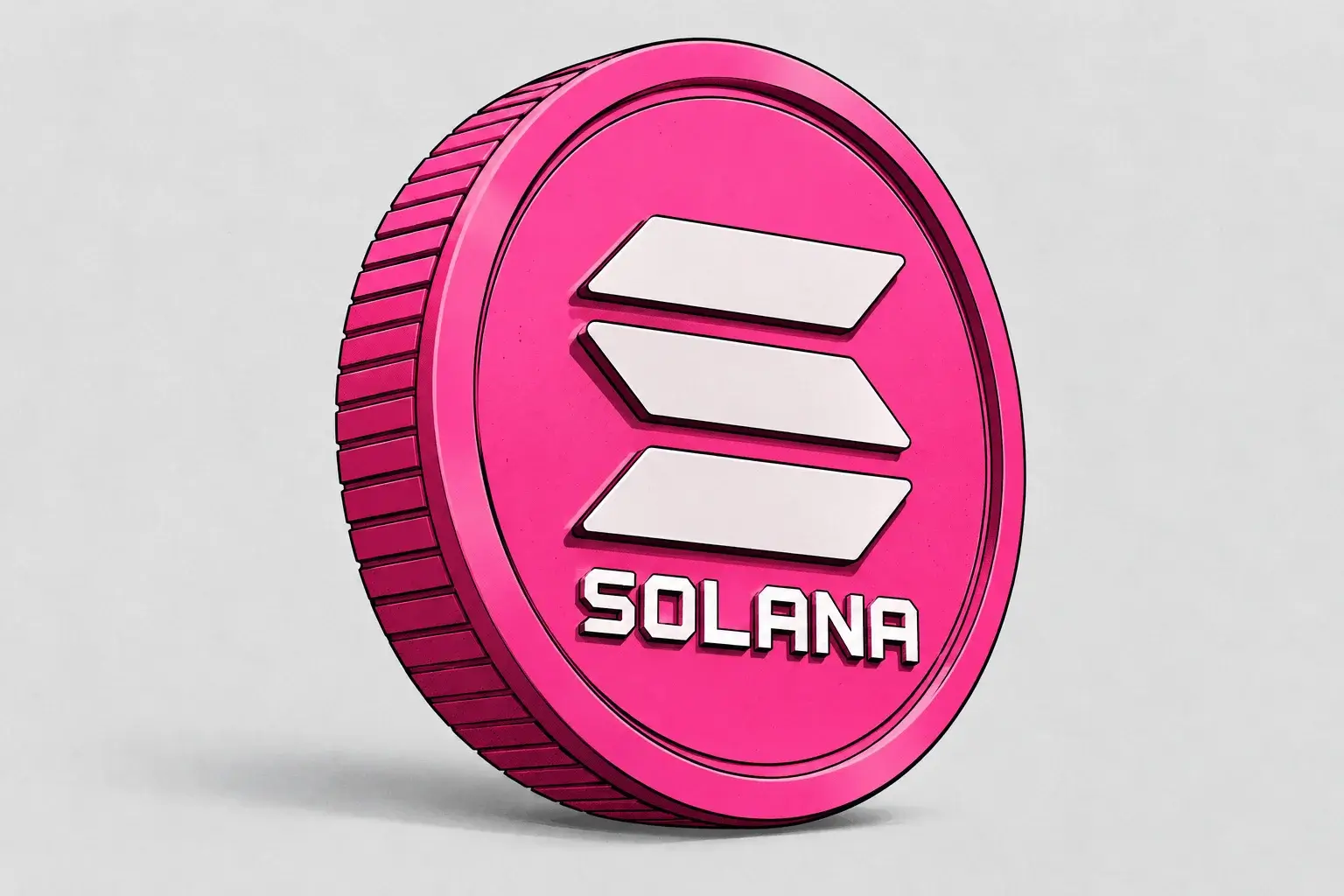
Solana changed hands near $80.50 into Monday, up a strong 12.3% over the past week — and, more tellingly, outperforming the broader crypto market, which gained just 4.8% over the same stretch. In a week of broad declines across the digital-asset space, SOL stood out, and that divergence is the story. Ranked seventh by market cap at around $47 billion, Solana is behaving differently from the rest of crypto, and it's behaving better. The outperformance is genuine. While Bitcoin fought to hold $60,000, Ethereum struggled below its moving averages, and XRP bounced only modestly, Solana ripped 12.3% and pulled users onto its network from two directions at once — real-world asset adoption and speculative activity. That's a token showing its own strength rather than just riding the broad macro bounce, and it's the clearest sign that Solana has something specific going for it. But the outperformance has to be kept in perspective. SOL trades roughly 72.6% below its cycle high near $294.82 and is down about 46.6% over the past year, sitting well inside a 52-week range of $60.20 to $294.82. This is still a token deep in a drawdown, bouncing off its lows — just bouncing harder and with better underlying support than its peers. The move to $80.50 is a recovery within a broader correction, but it's a recovery led by real network strength rather than pure macro. The key distinction is the technical and fundamental setup. Where Ethereum trades below its moving averages with active users at lows, Solana trades above its entire moving-average structure with on-chain activity near yearly highs. That's the divergence — Solana is the crypto that's actually working, gaining users and outperforming while the rest of the market bounces weakly. At $80.50, SOL is testing the pivotal $80 level, and a decisive close above it could open the path toward $120 in July. The burden of proof is lighter for Solana than for its peers, because the network strength is backing the price. The outperformance is real, the setup is bullish, and $80 is the line that decides whether the divergence extends. Solana is diverging from the market, and it's diverging higher.
The $80 pivot: a close above opens $120
Everything near-term for Solana runs through $80. That's the pivot the token is testing, and a decisive close above it could open the path toward $120 in July — a roughly 50% move that would confirm the outperformance is a genuine breakout rather than a bounce. The $80 level is the gateway. Solana has been holding above its support and pressing against $80, and clearing it decisively would signal that buyers have taken control and the on-chain strength is translating into price momentum. A close above $80 is the technical trigger that the bulls are watching, because it would break the token out of its recent range and open the upside toward the psychological $100 level and then $120. The resistance above $80 is layered. The first hurdle is the $82-to-$84 zone, followed by the $95-to-$96 area that some models flag as the near-term ceiling, then the psychological $100 level, and finally the $120 target that a July breakout could reach. Each level represents overhead supply from the descent, but Solana's bullish technical structure — trading above all its moving averages — gives it a better shot at clearing them than its peers have. The path from $80.50 to $120 is meaningful — roughly 49% — but it's the target analysts have set if SOL closes above $80 in July, reflecting the strength of the on-chain activity and the institutional adoption story. That's an aggressive but achievable move for a high-beta token with genuine catalysts and a bullish chart. For the forecast, $80 is the pivot that decides the near-term trajectory. Above it, the path opens toward $95, $100, and $120 as the outperformance extends. Below it, SOL falls back toward its support and the breakout stalls. The token is testing the level now, and the resolution likely depends on whether the on-chain strength and the ETF bid can push it through against the broad-market backdrop. The bull case needs a decisive close above $80 to confirm the move toward $120; the base case is a token consolidating just below or around $80 as it builds for the breakout. For the forecast, $80 is the line that matters most on the upside. A close above it opens $120 and confirms Solana's outperformance as a breakout; a rejection there keeps it range-bound near its support. Solana is at the pivot, and the network strength is backing the bulls' case for the break. $80 is the gateway to $120, and SOL is knocking.
$73 support and the $70-72 MA floor
The downside for Solana is anchored by a well-defined support structure. The first level is $73 — the support SOL held through the recent weakness, and the base the 12.3% weekly bounce built from. Holding $73 keeps the bullish structure intact. Below it, the $70-to-$72 zone is the critical floor, where the 50-day moving average around $72 and the 200-day around $71.62 converge. That moving-average cluster is the key support — a zone where both the medium-term and long-term trend lines sit, making it a strong technical floor. As long as Solana holds above $70-$72, the bullish structure survives and the token trades above its trend-defining averages. The support levels matter because they define the risk in the outperformance trade. Solana bounced from around $73 and the $70-80 support range, and the recovery to $80.50 built on that floor. A break below $73 would test the $70-$72 moving-average cluster, and a decisive loss of $70 would break the bullish structure and open deeper downside — the kind of move that would happen if the broad crypto market rolled over and dragged the high-beta SOL down with it. The floor is what separates the bullish breakout scenario from a return to the drawdown. Above $73, Solana is a token holding its support and pressing toward the $80 breakout. Between $73 and $70, it's testing the moving-average floor. Below $70, the bullish structure breaks and the outperformance reverses. Those levels frame the downside, and $70 is the line that would flip the technical picture from bullish to bearish. For the forecast, the support structure is the risk framework for the bullish thesis. Solana's on-chain strength and institutional catalysts make the bull case, but the token is still high-beta and exposed to a broad-market risk-off, so the $73 support and the $70-$72 moving-average floor are the levels that have to hold to keep the breakout scenario alive. The decisiveness of the bounce off $73 — a 12.3% move in a week — shows real buyers stepped in there, which makes the support credible. For the forecast, respecting $73 as near-term support and $70-$72 as the moving-average floor is the framework for the downside. Above those levels, the bullish structure holds and the $80 breakout stays alive. Below them, the outperformance reverses and SOL rejoins the broad drawdown. The floor is the safety net under the bull case, and it's held so far. $73 is the near-term line; $70 is the structure-breaker.
Solana looks more alive than Ethereum
The defining feature of Solana's setup is the divergence from Ethereum, and it's stark. Solana looks more alive and well than Ethereum — SOL is outperforming the broader crypto market with a 12.3% weekly gain, a divergence that's notable in a week of broad declines. Where Ethereum struggles, Solana thrives, and that contrast is the clearest expression of Solana's strength. The technical divergence is the sharpest tell. Ethereum trades below its 50-day, 100-day, and 200-day moving averages — a bearish structure — with its active users at new lows. Solana trades above its entire 20/50/100/200 moving-average structure, with on-chain activity near yearly highs. One network is losing users and trading below its trend lines; the other is gaining users and trading above them. That's a fundamental divergence, not just a price one. The reason for Solana's strength is the dual demand driver. SOL is gaining ground as two different kinds of trading activity — real-world assets and speculation — pull users onto the network at once. That combination of institutional RWA adoption and retail speculative activity is driving the on-chain usage that Ethereum lacks, and it's why Solana is outperforming while Ethereum bounces weakly. Solana's high-performance architecture — 50,000 transactions per second, low fees, single-layer scaling — makes it the venue of choice for both the high-frequency speculation and the RWA settlement that are pulling users in. For the forecast, the divergence from Ethereum is the evidence that Solana's strength is real and fundamental, not just macro-driven. Both tokens got the same soft-jobs macro tailwind, but Solana turned it into a 12.3% outperformance while Ethereum managed only a weak bounce below its moving averages — because Solana has the network activity and the institutional adoption that Ethereum's usage metrics are missing. That's a genuine competitive win for Solana in the ongoing battle for blockspace and users. The bull case is that Solana keeps taking share from Ethereum in the use cases where speed and cost matter — DeFi, prediction markets, RWA settlement — and that share gain drives sustained demand for SOL. The bear counterpoint is that Solana remains far smaller than Ethereum and that Ethereum's ecosystem depth is hard to displace. But in the current moment, the divergence is real: Solana is more alive than Ethereum, gaining users and outperforming, and that's the strongest argument for SOL. For the forecast, the Solana-Ethereum divergence is the fundamental case for the outperformance. Solana is winning users and trading above its averages; Ethereum is losing them and trading below. That contrast is why Solana is the crypto that's working.
On-chain activity near yearly highs
The engine behind Solana's outperformance is its on-chain activity, which is nearing yearly highs. While Ethereum's active users hit new lows, Solana's network usage climbed toward its yearly peak — a fundamental strength that's directly supporting the price. Usage is the truest measure of a blockchain's value, and Solana's is surging. The activity comes from two sources pulling in opposite corners of the market. On one side, real-world asset adoption — tokenized equities, institutional settlement — brings serious, high-value activity onto the network. On the other, speculation — prediction markets, DEX trading, memecoins — brings high-frequency retail activity. Both are pulling users onto Solana at once, and the combination is driving the on-chain activity toward yearly highs. That dual demand is unusual and powerful, because it means Solana isn't dependent on a single use case — it's capturing both the institutional and the speculative flow. The activity matters because it's the fundamental backing for the price. A token's value ultimately rests on demand for its blockspace, and on-chain activity near yearly highs means demand for Solana's blockspace is strong and growing. That's the opposite of Ethereum's situation, and it's why Solana's bounce has fundamental support while Ethereum's is macro-driven and fragile. The usage generates transaction fees, drives demand for SOL as gas, and validates the network's competitive position. For the forecast, the on-chain activity near yearly highs is the fundamental strength that separates Solana from its peers. It's the reason the outperformance is credible and the reason the $80 breakout toward $120 is achievable — the price is being backed by real, growing usage, not just speculation or macro. The activity is the substance beneath the bounce. The bull case is that the dual demand — RWA plus speculation — keeps driving usage higher, sustaining the demand for SOL and supporting the price through the drawdown. The bear counterpoint is that speculative activity can fade fast, and that some of the usage is low-value transactions that don't translate to durable demand. But the RWA side is durable and growing, and the combination of both is what's pushing activity to yearly highs. For the forecast, the on-chain activity is the core fundamental catalyst for Solana. Usage near yearly highs, driven by RWA and speculation, is the engine of the outperformance and the backing for the $80 breakout. Solana is gaining users while its peers lose them, and that usage is the reason it's the crypto that's working.
The technical structure: bullish across every timeframe
Solana's chart is the mirror image of the bearish setups plaguing the rest of crypto — it's bullish across every timeframe. SOL trades above its 20-day, 50-day, 100-day, and 200-day moving averages, indicating buyers have control across the short, medium, and long-term trends. That full-structure alignment above the moving averages is a genuinely bullish technical setup that few major cryptos can claim right now. The moving averages are rising, not just being held. The 50-day moving average near $72 and the 200-day near $71.62 are both sloping upward, and the 200-day has been rising since early July — a sign of a strengthening longer-term trend. When both the medium-term and long-term averages are rising and price trades above them, the trend is bullish by definition, and that's Solana's structure. The momentum indicators confirm it. The MACD is positive, supporting the possibility of further upside if volume continues, and the RSI sits in the moderately bullish 60s — strong but not overbought, leaving room for the rally to extend. That's a healthy technical picture: bullish momentum without the overbought conditions that would signal an imminent reversal. For the forecast, the technical structure is the strongest technical case among the major cryptos. Solana trading above its full moving-average structure with rising MAs, positive MACD, and a healthy RSI is the setup of a token in an uptrend, not a downtrend — and it's the technical backing for the $80 breakout toward $120. The chart says buyers are in control across every timeframe, which is exactly what the bulls need to see. The contrast with Ethereum, trading below its averages, and with the broad market's Extreme Fear sentiment, makes Solana's bullish structure stand out. For the forecast, the technicals argue for the upside as long as the structure holds. A close above $80 with the bullish moving-average alignment intact opens the path toward $95, $100, and $120. The support at the rising 50-day and 200-day near $70-$72 provides the floor. The risk is that a broad-market risk-off drags SOL below its moving averages despite the bullish structure, which is why the $70-$72 floor matters. But as long as Solana holds above its rising averages, the technical picture is bullish, and it's the cleanest bullish chart among the majors. For the forecast, the technical structure is the confirmation of the fundamental strength — a token trading above all its averages with rising MAs and positive momentum, backing the outperformance and the $80 breakout. The chart says higher, and Solana's structure is the bullish exception in a bearish market.
The ETF bid: $1B+ in assets, Morgan Stanley files
Solana's institutional adoption is real and growing, and the ETF story is the clearest expression of it. Issuers such as Bitwise, with its BSOL product, and Fidelity, with FSOL, have seen significant inflows, with total Solana ETF assets surpassing $1 billion. That's a genuine institutional bid that directly buys SOL, and it's a structural demand catalyst distinct from the on-chain activity. The ETF story is expanding. Morgan Stanley has entered the space by filing for its own Solana Trust — a signal that a major Wall Street institution sees enough demand to launch a Solana product. When a firm of Morgan Stanley's stature files for a Solana Trust, it validates the asset class and opens the door to more institutional capital, adding to the demand that's already surpassed $1 billion in ETF assets. The ETF bid matters because it's the channel that turns institutional interest into direct SOL demand. Like the spot Bitcoin and Ethereum ETFs, the Solana ETPs hold SOL directly, so every dollar of inflow buys the token on the open market. With total assets over $1 billion and growing, and Morgan Stanley filing to join, the ETF channel is a structural source of demand that supports the price and could accelerate if the inflows continue. For the forecast, the ETF bid is a key institutional catalyst for Solana. Where Bitcoin and Ethereum saw their ETF flows cool with recent outflows, Solana's ETF assets are growing and attracting new issuers — a divergence that mirrors the on-chain divergence and reinforces the outperformance story. The Solana ETF bid is building while the Bitcoin and Ethereum ETF bids fade, which is part of why SOL is outperforming. The bull case is that the ETF assets keep growing, Morgan Stanley's Trust launches, and the institutional demand accelerates, driving sustained buying that supports the $80 breakout and the path toward $120. The bear counterpoint is that ETF flows can reverse, and that Solana's ETF assets are still small relative to Bitcoin's and Ethereum's. But the direction is positive — growing assets and new filings — which is the opposite of the ETF outflows pressuring its peers. For the forecast, the ETF bid is the institutional demand catalyst that backs Solana's outperformance. Over $1 billion in assets, Bitwise's BSOL and Fidelity's FSOL seeing inflows, and Morgan Stanley filing a Solana Trust — that's a growing institutional bid that directly buys SOL and supports the bullish case. The ETF channel is working for Solana while it stalls for its peers, and that's another reason SOL is the crypto that's working.
Forward Industries and the Solana treasury play
Beyond the ETFs, Solana has a corporate treasury champion, and it's a big one. Forward Industries has transitioned into a Solana-focused treasury company, holding over 6.9 million SOL — valued at just under $1 billion — and to support the strategy, the firm launched a $1 billion share repurchase program and now operates its own validator node on the network. That's a public company making SOL its treasury reserve asset, and it's a durable, sticky source of demand. The treasury play is the Solana equivalent of the corporate Bitcoin and Ethereum accumulation stories. Forward Industries holding 6.9 million SOL — a significant chunk of the circulating supply worth nearly $1 billion — is price-insensitive, long-horizon capital that accumulates and holds regardless of short-term price swings. Every SOL Forward Industries holds is a SOL off the market, tightening the available supply and providing a structural floor. The validator node adds another dimension. By operating its own validator, Forward Industries isn't just holding SOL passively — it's actively participating in securing the network and earning staking rewards, deepening its commitment to the Solana ecosystem. That's a more integrated form of treasury strategy than simply holding the token, and it signals genuine conviction in Solana's long-term value. The $1 billion share repurchase program shows the company is putting real capital behind the strategy. For the forecast, the Forward Industries treasury play is a structural demand catalyst that firms the floor under SOL. A public company holding 6.9 million SOL and operating a validator is durable, conviction-driven capital that treats the drawdown as an accumulation opportunity — the same role the corporate treasuries play for Bitcoin and Ethereum, applied to Solana. It's the sticky bid that cushions the downside and supports the long-term case. The bull case is that Forward Industries is the first of more corporate treasuries adopting SOL, and that the trend expands as institutional adoption grows. The bear counterpoint is that a single treasury holder concentrates risk, and that a large holder could eventually sell. But the accumulation and the validator commitment signal long-term conviction, not short-term trading. For the forecast, the Forward Industries treasury play is the corporate accumulation story that backs Solana's structural demand. 6.9 million SOL, nearly $1 billion, a $1 billion buyback, and a validator node — that's a public company all-in on Solana, providing a sticky floor under the price. Combined with the ETF bid and the on-chain activity, it's another pillar of the case for SOL as the crypto that's working.
Read More
-
Yen Stalls at 160 Despite a 3% JGB and Tokyo Core CPI at 2.0% — Intervention Sits at 164, Friday's Payrolls Decide
02.09.2026 · TradingNEWS ArchiveEnergy
-
QQQ ETF ($706.22) Slides 7.4% Below Its High as the Market Reprices the AI Capex Bill — $686.57 Target if $700 Breaks
22.10.2026 · TradingNEWS ArchiveStocks
-
XRPI ($7.00) and XRPR ($10.74) Slide Toward 52-Week Lows as Spot XRP ETF Flows Stall at $708,510
22.10.2026 · TradingNEWS ArchiveCrypto
-
NG ($2.775) Decoupled From Europe’s €88 Gas Crisis as LNG Feedgas Hits 18.9 Bcf/d — $3.30 Upside on Cold Weather
22.10.2026 · TradingNEWS ArchiveCommodities
-
Dollar-Yen (157.35) Loses 157.65 as the Yen Rallies on Haven Demand — 155 Target if 156 Breaks
22.10.2026 · TradingNEWS ArchiveForex
RWA leadership: Galaxy tokenizes its equity on Solana
Solana's most significant fundamental achievement may be its leadership in real-world asset tokenization, and the marquee example is Galaxy Digital. In September 2025, Galaxy Digital partnered with Superstate to tokenize its SEC-registered Class A Common Stock directly on the Solana blockchain — marking the first time a major public company moved its legal equity records onto a public ledger for near-instant settlement. That's a landmark, and it's on Solana. The Galaxy tokenization is a proof point for the entire RWA thesis. Moving a public company's actual legal equity records onto a blockchain — not a synthetic representation, but the real SEC-registered stock — demonstrates that Solana can handle serious, regulated, institutional-grade financial infrastructure. Near-instant settlement of equity is a genuine improvement over the traditional multi-day settlement system, and Galaxy choosing Solana for it is a validation of the network's capabilities. RWA tokenization is one of the most important long-term growth vectors in crypto. As traditional financial assets — equities, bonds, real estate, funds — move onto blockchains for faster settlement and programmability, the networks that capture that flow stand to benefit enormously. Solana positioning itself as a leader in RWA, with the Galaxy equity tokenization as the flagship example, is a bet that it captures a meaningful share of the trillions in traditional assets that could eventually be tokenized. For the forecast, Solana's RWA leadership is the long-term bull case that the current price doesn't fully credit. The Galaxy tokenization is a concrete achievement — the first major public company moving its legal equity onto a public ledger — and it's on Solana, not Ethereum. That's a competitive win in the highest-value use case in crypto, and it's part of the RWA activity driving Solana's on-chain usage toward yearly highs. The bull case is that Solana becomes the settlement layer for tokenized real-world assets at scale, driving durable, institutional demand for SOL as the network captures the RWA wave. The bear counterpoint is that RWA tokenization is still early, and that competitors including Ethereum are also pursuing it. But Solana's speed and low cost make it well-suited for RWA settlement, and the Galaxy tokenization is a real, first-mover proof point. For the forecast, the RWA leadership is the long-term structural catalyst that underpins Solana's investment case. The Galaxy equity tokenization is the flagship achievement, demonstrating Solana's institutional-grade capabilities and its position in the most important long-term use case. It's the substance beneath the outperformance, and it's why Solana is the crypto that's working — it's winning the real-world asset battle.
Onchain governance, prediction markets, and the ecosystem
Solana's ecosystem is expanding on multiple fronts, and the breadth of development is part of what's driving the on-chain activity. The Solana Foundation launched onchain governance with stake-weighted voting for validators — letting validators with at least 100,000 SOL delegated open proposals that go to a stake-weighted vote once they clear 15% cluster support. That's a maturation of the network's decentralized decision-making, giving the community formal control over the protocol's direction. The prediction-market space is heating up on Solana. A prediction market called World went live inside the Phantom wallet, using Chainlink oracles as it takes on established players like Polymarket and Kalshi. Prediction markets have become one of crypto's hottest categories, and Solana capturing that activity inside the popular Phantom wallet brings high-frequency speculative volume onto the network — part of the speculation side of the dual demand driving usage. The DeFi ecosystem is evolving too. Drift Protocol, a Solana perpetuals exchange, rebranded to Velocity DEX ahead of a relaunch — a sign of the continued development and competition in Solana's decentralized derivatives space. Combined with Solana's developer activity ranking second globally in 2025, the ecosystem shows the kind of vibrant, growing development that underpins a healthy blockchain. For the forecast, the ecosystem breadth is the fundamental depth beneath Solana's outperformance. Onchain governance signals maturation, prediction markets like World bring speculative volume, DEXs like Velocity drive DeFi activity, and the second-ranked developer activity shows the builders are choosing Solana. That breadth is what generates the on-chain activity near yearly highs and validates the network's competitive position. The bull case is that the expanding ecosystem — governance, prediction markets, DeFi, RWA — keeps pulling users and developers onto Solana, sustaining the usage and the demand for SOL. The bear counterpoint is that some of the activity is speculative and could fade, and that the network has faced outages in the past. But the breadth of development across governance, prediction markets, DeFi, and RWA shows a maturing ecosystem, not a fragile one. For the forecast, the ecosystem expansion is the fundamental depth that supports Solana's outperformance. Onchain governance, the World prediction market, Velocity DEX, and second-ranked developer activity are the signs of a vibrant, growing network — the substance driving the on-chain activity toward yearly highs. Solana's ecosystem is alive and building, and that's the foundation of the bull case.
The high-beta risk and the broad drawdown
For all its strength, Solana carries real risk, and it starts with the broad drawdown. SOL trades roughly 72.6% below its cycle high near $294.82 and is down about 46.6% over the past year — a deep correction that the 12.3% weekly bounce has barely dented. The token is still far below its peak, and the recovery is a bounce within a major drawdown, not a return to the highs. The sentiment backdrop is fearful. The Fear & Greed Index sits at 23 — Extreme Fear territory — reflecting the broad crypto market's anxiety over interest rates and the Fed. That fearful sentiment is the environment Solana is outperforming in, but it's also a risk, because Extreme Fear can deepen into a broader sell-off that drags even the strongest tokens down. The high-beta risk is the critical caveat. Solana is one of the highest-beta major cryptos, meaning it moves more than the market in both directions — it outperforms on the way up, as it's doing now, but it falls harder on the way down. If the broad crypto market rolls over on a hot inflation print or a Fed scare, SOL's high beta means it could drop sharply despite its strong fundamentals, breaking below its $73 support and the $70-$72 moving-average floor. The bullish structure is real, but it's vulnerable to a market-wide risk-off. There are specific warning signs too. A whale moved over 526,000 SOL — worth more than $100 million — to Binance, the kind of large exchange deposit that can signal selling pressure. And the technical models remain divided, with some flagging a bearish 2026 forecast despite the bullish short-term structure. For the forecast, the high-beta risk and the broad drawdown are the caveats to the bullish thesis. Solana's outperformance and strong fundamentals make the bull case, but the token is still deep in a drawdown, sentiment is at Extreme Fear, and SOL's high beta means it's exposed to a broad-market sell-off. The strong network activity and institutional adoption don't insulate SOL from a macro-driven risk-off — they just mean it should outperform on the recovery. The bear case is that the broad crypto downturn resumes, the Extreme Fear deepens, and SOL's high beta drags it below its support despite the fundamentals. For the forecast, the high-beta risk is the reason to respect the downside even in a bullish setup. Solana is the crypto that's working, but it's working within a fearful, drawdown-stricken market, and its high beta means a market-wide reversal would hit it hard. The $73 support and $70-$72 floor are the levels that have to hold, and the broad market's mood is the risk that could break them. Strong fundamentals, high-beta vulnerability — that's the two-sided nature of Solana at $80.50.
Scenarios: where SOL goes from $80.50
Three paths run out from $80.50, and the $80 pivot plus the broad market define each. The bull case: Solana closes decisively above $80, the on-chain activity and ETF inflows keep building, and the token breaks out toward $95, $100, and the $120 July target as the outperformance extends and the RWA and institutional adoption stories drive demand. A continued broad-market recovery would accelerate the move. This path implies roughly 49% upside to $120 and needs SOL to clear $80 and hold above its rising moving averages. The base case: Solana consolidates between $73 support and the $80-$84 resistance as it builds for a breakout, with the bullish technical structure and strong fundamentals providing a floor while the broad-market Extreme Fear caps the upside. The token trades in the $73-$84 range, holding above its moving averages, waiting for a decisive catalyst — a close above $80 or a broad-market turn — to trigger the move toward $120. This is a probable near-term outcome given the strong setup fighting the fearful macro. The bear case: the broad crypto market rolls over on a hot inflation print or a Fed scare, and SOL's high beta drags it below $73 and the $70-$72 moving-average floor, breaking the bullish structure and reversing the outperformance toward the $60 cycle low. This path needs a market-wide risk-off to overwhelm Solana's fundamentals. The distances frame the setup: SOL needs to clear $80 to open the path toward $120 (about 49% upside), holds $73 support (about 9% cushion), and the $70-$72 moving-average floor is the structure-breaker below that. The near-term asymmetry favors the bulls more than for any other major crypto — Solana has the bullish technical structure, the on-chain activity near yearly highs, the growing ETF bid, the corporate treasury, and the RWA leadership, all backing the $80 breakout. But the high-beta risk and the broad drawdown are the caveats. That's a constructive setup to trade with defined levels: a close above $80 targets $120, $73 is the support to respect, and the broad market's mood is the swing factor. Solana at $80.50 is the most bullish major crypto near-term, with the strongest fundamentals and the cleanest chart — but its high beta means it's tied to the broad market's fate. The bull case is genuinely strong; the macro is the risk.
The forecast: the crypto that's working, watch $80 and $73
Put it together and Solana is the most constructive major crypto near-term — bullish fundamentals, bullish technicals, and real outperformance. SOL at $80.50 bounced 12.3% on the week, outperforming the broader market's 4.8% gain in a week of broad declines, and diverging sharply from a struggling Ethereum. The token trades above its entire 20/50/100/200 moving-average structure with rising MAs and positive MACD — the cleanest bullish chart among the majors — with on-chain activity near yearly highs, pulled up by both real-world asset adoption and speculation. The institutional story is real and Solana-specific: over $1 billion in Solana ETF assets across Bitwise's BSOL and Fidelity's FSOL, Morgan Stanley filing a Solana Trust, Forward Industries holding 6.9 million SOL as a treasury company with a validator node, Galaxy Digital tokenizing its SEC-registered equity on Solana, onchain governance launching, and developer activity ranked second globally. That's a network that's alive and building while its peers struggle. The levels are clean. $80 is the pivot — a decisive close above it opens the path toward $95, $100, and the $120 July target, a roughly 49% move. $73 is the near-term support, and the $70-$72 zone, where the rising 50-day and 200-day moving averages converge, is the floor that has to hold to keep the bullish structure intact. The caveats are the broad drawdown — SOL is still 72.6% below its $294.82 cycle high and down 46.6% year-over-year — and the high-beta risk, which means a market-wide risk-off on a hot inflation print or Fed scare would hit SOL hard despite its fundamentals, with the Fear & Greed Index at Extreme Fear (23) and a whale moving $100 million to Binance as warning signs. The verdict into the week: Solana is the crypto that's working — the strongest fundamentals, the cleanest chart, and genuine outperformance backed by RWA leadership, growing ETF assets, and on-chain activity near yearly highs. Watch $80 for the breakout toward $120 and respect $73 as the support that keeps the bullish structure alive. Constructive near-term on the outperformance and the Solana-specific catalysts, but respect the high-beta risk if the broad market rolls over. A close above $80 confirms the move toward $120; a loss of $70 reverses it. Solana is diverging higher while the market struggles — the crypto that's working. Watch $80, respect $73, and let the on-chain strength lead.