Stock Market Today — Dow Jones DJI Surges Nearly 300 Points to New Record on NYSE:PG +3%
WTI crude under $90 and the 10-year yield back to 4.47% cool the inflation panic, but a 30% Zscaler implosion | That's TradingNEWS
Key Points
- Dow DJI rips ~300 points to fresh record on PG +3% and HD +2%; S&P 500 -0.07%, Nasdaq -0.25%
- Zscaler ZS crashes 30% on weak guide, drags Palo Alto PANW -2% and CrowdStrike CRWD -4%
- WTI crude breaks below $90/bbl on US-Iran framework optimism; 10-year yield eases to 4.47%
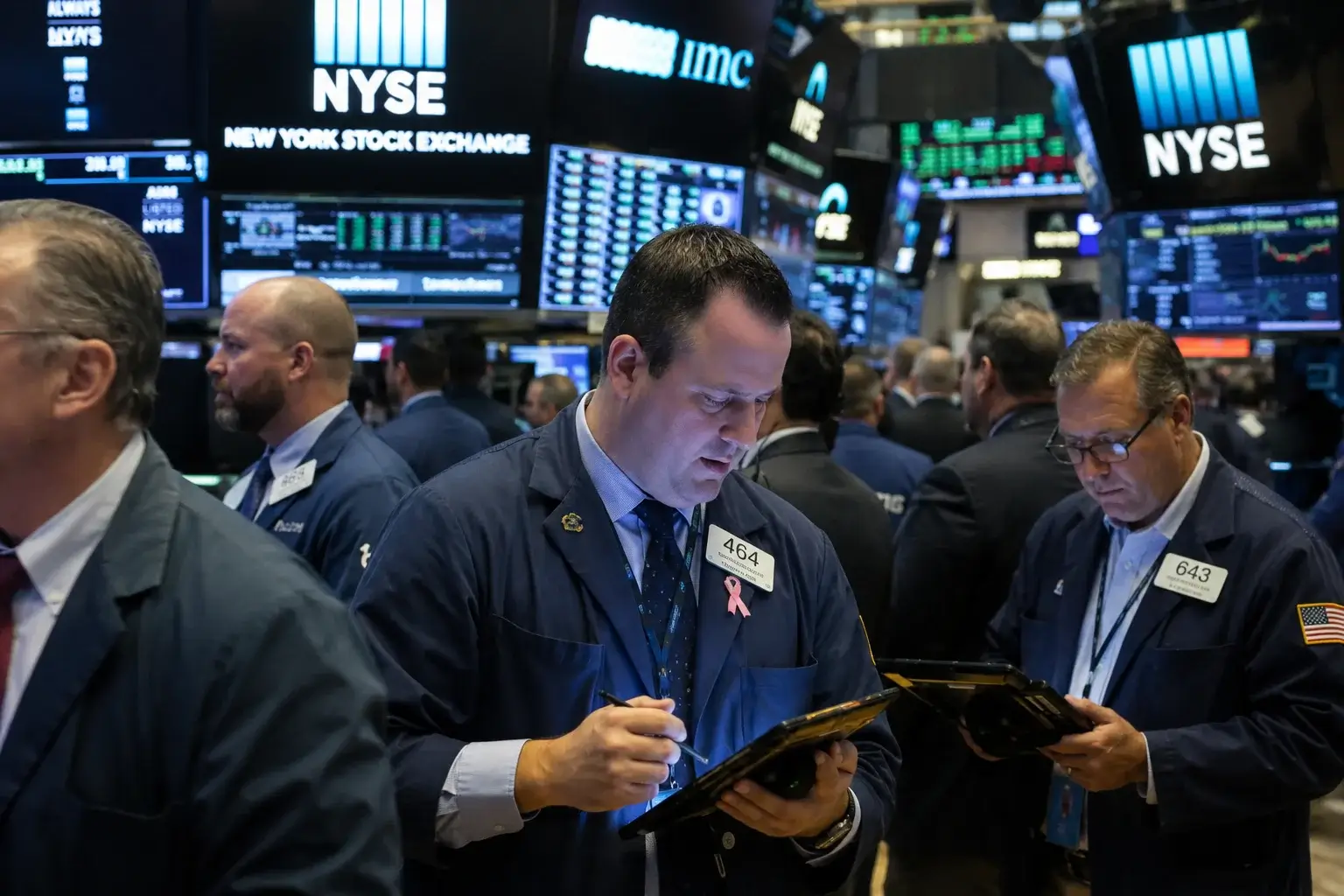
The Dow Jones Industrial Average (^DJI) is the clear standout on Wednesday, May 27, advancing roughly 300 points into fresh all-time-high territory as Procter & Gamble jumps more than 3% and Home Depot adds another 2% to lead a powerful old-economy rotation, while the S&P 500 (^GSPC) is down 0.07% from Tuesday's record close at 7,519.12 and the Nasdaq Composite (^IXIC) is down 0.25% from its own record at 26,656.18 as cybersecurity stocks collapse and broader AI-software exposure gets repriced lower in sympathy. The Russell 2000 (^RUT) is holding near 2,869 after Tuesday's 1.70% surge, confirming that the small-cap participation narrative is intact even on a day when the cap-weighted leaders take a breather, and the CBOE Volatility Index (^VIX) is parked at 16.90, down marginally and signaling no underlying panic despite the violent dislocation in the security-software cohort. The juxtaposition is the entire story of this session and arguably of the whole month: Tuesday was an AI semiconductor blowoff that pushed Micron above a $1 trillion market capitalization for the first time and lifted the entire chip complex by mid-single-digit percentages, while Wednesday is a textbook mean-reversion day in which staples, industrials, and old-economy compounders are picking up the leadership baton from a stretched semiconductor rally that ran nearly 80% year-to-date in the SOXX and more than 60% in the second quarter alone. The structural read is that breadth is improving meaningfully even on a session where the headline percentage moves on the S&P 500 and Nasdaq look soft, because the constituents driving the Dow higher today are precisely the cohort that institutional value managers have been waiting to rotate into for six straight months, and the Dow's outperformance versus the Nasdaq on a session like this is a leading indicator that the rotation is finally starting to fire rather than just being talked about on television.
Cybersecurity Implosion — Zscaler Guidance Triggers a Sector-Wide De-Rate
The single most important story under the surface of the indices is the cybersecurity collapse led by Zscaler (NASDAQ:ZS), which is cratering roughly 30% on Wednesday after a guidance miss that exposed how dangerously stretched the entire security-software cohort had become heading into the print, and the violence of the move reflects positioning that had become aggressively one-sided after the First Trust Nasdaq Cybersecurity ETF (CIBR) rallied roughly 25% in May alone with seven consecutive intraday record highs before today. The damage is brutal and broad: Palo Alto Networks (PANW) is down more than 2%, CrowdStrike (CRWD) is off close to 4%, the Global X Cybersecurity ETF (BUG) is down more than 4%, and the read-through to adjacent identity, observability, and SaaS names including Okta, SentinelOne, Datadog, and Dynatrace is brutal because cybersecurity had been the single best-performing tech sub-sector this month, outpacing even the red-hot semiconductor complex that has anchored the entire bull market. The headline number behind the Zscaler implosion is a current-quarter revenue guide of $875 million to $878 million against a Street expectation closer to $879 million, a miss measured in single-digit millions on a quarterly base of more than $850 million, which on any historical metric would be considered a marginal disappointment but in the context of a stock that had priced in flawless execution at a forward valuation of roughly 35 times earnings, the asymmetric reaction is exactly what should be expected when a consensus long meets a guidance miss inside a hot sector. The more troubling element is the simultaneous reduction in free cash flow guidance for the remainder of the fiscal year on the back of accelerating capital expenditure, which is the precise variable that institutional portfolios are watching most closely across the entire AI-adjacent software cohort, because the market has finally lost patience with companies that fund AI capex by compressing free cash flow rather than by demonstrating clear monetization. The structural overhang on the entire sub-sector is Microsoft, whose security business has quietly scaled past $37 billion in revenue and is now larger than CrowdStrike, Palo Alto, and Zscaler combined, with the bundling dynamic in enterprise agreements creating a pricing umbrella that pure-play vendors structurally cannot defend, and that competitive reality is the deeper reason the multiple on CrowdStrike at 90 times forward and Palo Alto at 55 times forward looks increasingly indefensible at any sign of growth deceleration.
Procter & Gamble and Home Depot Anchor the Dow — Staples Mean-Reversion Begins
Procter & Gamble (NYSE:PG) jumping more than 3% and Home Depot (NYSE:HD) adding another 2% are the twin engines of the Dow's record-setting move on Wednesday, and the combination is the cleanest possible signal that the long-dormant old-economy mean-reversion trade is finally igniting after months of being faded by a tape obsessed with AI semiconductors. The setup in PG specifically had become extraordinary heading into this session: the stock had been re-rated all the way down to roughly 20 times forward earnings in mid-April after touching a 52-week low near $144.27, a stunning fall from a 2024 peak near $180 that had generated just 6.4% of price return over five years excluding dividends, and compounded earnings per share growth of approximately 7.5% over that same period, a textbook valuation-versus-fundamentals dislocation that institutional value managers wait years for. The catalyst is collapsing oil — WTI crude has now broken below $90 a barrel and Brent has slid from a March high above $144 to barely above $99 today, a move that translates directly into roughly $1 billion of pre-tax annualized margin relief for PG alone at current crude levels, with similar mechanics across the entire consumer-staples cohort because energy and energy-derived feedstocks drive packaging, formulation, and transportation costs from the bottom of the cost stack upward. The Home Depot move is a parallel story in a different vertical — housing-related discretionary has been pinned for months by sticky mortgage rates and a frozen existing-home turnover market, and any sign that the 10-year yield is stabilizing in a range that allows mortgage rates to drift lower combined with the disinflationary pulse from collapsing oil is enough to ignite the catch-up trade in HD, Lowe's, and the broader home-improvement complex. The bigger structural read is that with the Dow finally breaking out of its multi-week range on the back of staples and housing names rather than tech, the index relative-strength picture is starting to look very different from the consensus narrative — the Dow can outperform the S&P 500 and Nasdaq on a sustained basis only if rotation broadens meaningfully, and this session is the first evidence that the rotation is happening on substance rather than just on noise.
Marvell Earnings Tonight — The AI Custom-Silicon Test That Holds the Tape Hostage
The single most important after-bell event of the week lands tonight when Marvell Technology (NASDAQ:MRVL) reports first-quarter fiscal 2027 results, and the stakes are extraordinarily elevated given the stock has more than doubled year-to-date and now trades roughly 24% above the consensus mean analyst price target, an unusual situation in which the equity market has fully lapped its own sell-side framework and pre-priced an outcome that the sell-side has yet to validate in numbers. The setup is loaded with optionality in both directions: Marvell closed a $1.3 billion cash plus 24.5 million share acquisition of Celestial AI on February 2, integrating proprietary photonic-fabric interconnect technology into a portfolio that already generated $8.195 billion in fiscal 2026 revenue with data center contributing $6.1 billion or 74% of total revenue, up from just 40% two fiscal years earlier, a structural mix shift that is itself worth multiple turns of valuation. The Nvidia partnership is the other anchor — Marvell sits inside NVLink Fusion as a custom-silicon partner for hyperscalers building semi-custom AI racks fully compatible with Nvidia's software stack, and management has explicitly guided that year-over-year revenue growth will accelerate each quarter through fiscal 2027, with the non-GAAP operating margin already having expanded 640 basis points year-over-year to 35.3% in fiscal 2026, demonstrating the operating leverage that justifies a continued multiple expansion if execution stays on rails. Tonight's print needs to do three specific things to prevent a Zscaler-style accident: deliver a clean material beat on data center revenue against a consensus that is already aggressive at roughly $1.9 billion for the segment, raise the full-year revenue guide enough to push the consensus target above where the stock already trades and resolve the lap-your-target paradox, and provide a credible bridge on the fiscal 2028 custom-XPU pipeline that justifies the operating-margin trajectory. The primary risk is customer concentration, with data center revenue anchored to the top four U.S. hyperscalers and custom silicon tied tightly to a single lead XPU program where any slower-than-guided second-customer ramp would be punished severely, and the secondary risk is that any commentary that even hints at hyperscaler capex moderation in 2027 would not just hit MRVL but cascade through Nvidia, Broadcom, AMD, Micron, and the entire AI-infrastructure cohort.
AI, Quantum, and Space Baskets — Yesterday's Heroes, Today's Hangover
Tuesday's tape was a master class in how concentrated the AI-quantum-space leadership cohort has become inside the index machinery, and Wednesday is providing the first real stress test of whether those gains stick when the marginal incremental buyer steps aside. Micron Technology (NASDAQ:MU) jumped more than 19% on Tuesday and topped a $1 trillion market capitalization for the first time after an aggressive Street upgrade that priced in more than 100% additional upside, with the call structured around the long-term agreement framework that locks hyperscalers into multi-year high-bandwidth memory commitments at prices that transform memory from a notoriously cyclical commodity into a recurring-revenue franchise with software-like visibility. Advanced Micro Devices, Qualcomm, and Alphabet all participated in Tuesday's chip-driven rally, while the space basket — Rocket Lab (RKLB) up 5.48%, Firefly Aerospace, Intuitive Machines (LUNR), AST SpaceMobile, and Planet Labs — was aggressively repriced higher in anticipation of the SpaceX IPO filing that landed on May 20, with the read-through being that public-market investors finally have a path to play a launch and satellite economy that has been gated to private capital for the better part of a decade, and the comparable valuation math implied by the SpaceX filing is forcing real upward revisions to every public-market peer. Nvidia (NASDAQ:NVDA) itself is trading more cautiously on Wednesday, with shares hovering between $212 and $218 at roughly $213.95 and marking a third consecutive day of modest declines, a typical post-blowoff pattern where leadership pauses while broader breadth absorbs new gains. The VanEck Semiconductor ETF advanced 0.90% in early trading as the SOXX has now added nearly 80% year-to-date and more than 60% in the second quarter alone, the kind of vertical move that historically demands a 10-15% digestion period before the next sustainable leg materializes. The under-discussed risk to the entire AI complex is the growing chorus of pushback on AI capital expenditure sustainability, with multiple high-profile enterprise CEOs publicly warning about the cost trajectory and a quiet but real trend of enterprise customers pulling back on AI licensing decisions on cost grounds, both of which suggest end-customer scrutiny of AI spend is finally beginning to harden and that the late-cycle dynamics of every prior tech build-out are starting to assert themselves.
Cross-Asset Read — Yields, Oil, Gold, the Dollar, and Bitcoin
The cross-asset picture on Wednesday is the most important macro signal of the week and it is screaming disinflation even as the Iran war continues to grind in the background. The 10-year U.S. Treasury yield is at 4.47%, down 2 basis points from Tuesday and down roughly 6 basis points from the late-week peak near 4.53%, while the 2-year is well anchored in the high-3% range and the front of the curve is now pricing a substantially different rate path than it was two weeks ago when the December hike probability briefly spiked to 80% on inflation fears tied to the Iran war. The 30-year U.S. Treasury bond is also stabilizing after a recent run that briefly pushed long-end yields to one-year highs, and crucially the global duration picture has eased too, with the U.K. 30-year Gilt that had scaled to levels not seen since the late 1990s and the parallel surge in long-dated Japanese government bond yields both having pulled back, removing the global-duration tail risk that was a genuine concern just two weeks ago. The driver of the bond rally is overwhelmingly oil — WTI crude has cracked decisively below $90 a barrel and Brent is hovering just above $99, both down dramatically from the March-April peaks above $118 and $144 respectively, on aggressive market optimism that the framework with Tehran will extend the ceasefire by roughly two months while Washington eases its blockade and Tehran reopens the Strait of Hormuz to navigation. Gold (XAUUSD) is trading at $4,478.70, off 1.24% as the safe-haven bid unwinds with the oil-driven inflation panic, and the U.S. dollar index is steady to slightly weaker as the rate-hike probability for December gets walked back. Bitcoin (BTC-USD) is at $75,796, down 1.69%, behaving more like a risk asset than a hedge today, which is exactly what should be expected on a session where equities are mixed and the volatility complex is calm at a 16.90 VIX. The 10-year minus 3-month spread is the technical instrument to watch into Friday's PCE — a steeper curve into a softer inflation print is the macro setup that argues for a continued melt-up into mid-year, while a hot PCE that re-prices December hike odds back toward 50% would hit the long-duration AI and software names hardest precisely because those are the cohorts whose valuations depend most acutely on the terminal rate assumption.
Fed Outlook Under Warsh — Hike Probability, PCE Risk, and the New Reaction Function
The Federal Reserve transition is the under-discussed macro variable that is going to drive the next six months of price action and shape every duration-sensitive trade in the equity book. Kevin Warsh has been sworn in as Fed Chair, replacing Jerome Powell after a fraught confirmation process, and his historically hawkish reputation collides head-on with a rates market that had been positioned for two 25-basis-point cuts before the late-February Iran war scrambled the inflation outlook and forced a violent repositioning across the curve. Traders are now pricing in roughly an 80% probability of a rate hike by December, the highest level it has reached all year, and that figure reflects how much the front of the curve has whip-sawed since February — the market has essentially priced in a full 50-basis-point swing in the wrong direction over the course of three months, and that mispricing risk cuts both directions in a way that creates genuine optionality for any rates-sensitive equity book. The asymmetry is critical: if Friday's PCE comes in soft because the oil pass-through is fading faster than the FOMC anticipated, the December hike trade unwinds violently, yields drop another 15-25 basis points across the curve, and the high-multiple AI software names that just got punished today get a powerful tailwind to recover into June. If PCE prints hot, Warsh has the political cover to formally signal a hike in his first dot plot at the June meeting, and the equity market will have to digest the realization that the easy-money tailwind is structurally gone for at least another two quarters, with the most violent damage falling on the longest-duration assets including unprofitable growth, biotech, REITs, and high-multiple SaaS. The under-priced scenario in either direction is that Warsh attempts to assert visible independence from the Trump administration's overt pressure for rate cuts, in which case the policy uncertainty premium across the curve actually widens rather than narrows, with implications for the dollar, gold, and the curve shape that have not yet been fully priced into any rates-sensitive trade. The bond market is pricing one outcome with high confidence, and history says high-confidence rate calls under regime changes are precisely the moments when the consensus gets the path wrong.
Earnings Dispersion — Salesforce, Marvell, Synopsys, HP, Snowflake After the Bell
Wednesday is one of the heaviest after-bell earnings sessions of the entire quarter, with Salesforce, Marvell, Synopsys, Snowflake, HP Inc., Agilent, and Dick's Sporting Goods all set to report and collectively providing a near-comprehensive read on AI demand, enterprise spending, and the health of the PC market. Salesforce (NYSE:CRM) is the most loaded of the night, with the stock down roughly 32% year-to-date and bottoming near $164 in mid-May before a partial recovery to just below $180 heading into the print, against Street expectations near $11.05 billion in revenue and $3.12 in adjusted earnings per share, with the entire bull case riding on Agentforce monetization where annual recurring revenue reached roughly $800 million in the prior quarter on 169% year-over-year growth and Data 360 combined to push AI-related ARR over 200% year-over-year. The bear case on CRM is that AI capex is compressing margins faster than the AI revenue is scaling, the same dynamic that just hit Zscaler today, and the management commentary on free cash flow and operating margin guidance will matter more than the headline beat or miss. Marvell is the other anchor of the session and the more important macro read, given the stock's lap-your-target dynamic and the role of custom AI silicon in the broader hyperscaler narrative. Synopsys (NASDAQ:SNPS) reports with the entire EDA cohort watching, given its central role in semiconductor design tooling for the AI-infrastructure expansion, with guidance for revenue between $2.225 billion and $2.275 billion and earnings per share between $3.11 and $3.17 implying healthy growth even as the comparable base inflates. Snowflake and HP Inc. round out the print with very different lenses on AI demand and enterprise spending, while Dick's Sporting Goods (NYSE:DKS) is the consumer read of the morning and trimmed full-year 2026 GAAP earnings guidance to a $13.27 to $14.27 range from $13.70 to $14.70 prior, even as it maintained the adjusted range and raised the operating-income guide, a complicated print that says the Foot Locker integration is working better than the headline number suggests.
Consumer Bifurcation — Dollar General Pain Versus Bath & Body Works Strength
The consumer thread running through this market is brutal underneath the surface even as the indices print fresh records, and the dispersion between the bottom and top of the income distribution is now the single most important micro-structure story in the entire equity tape. Dollar General (NYSE:DG) is the clean signal on the low-end consumer — the stock is down more than 30% since the U.S.-Iran war began on February 27, even as management has executed on same-store-sales recovery and margin discipline, and the failure of the stock to bounce as oil now slides back below $90 strongly suggests the demand destruction at the bottom of the income distribution has lagged effects that will run through the second and third quarter earnings cycle rather than reverse immediately on commodity normalization. The contrast with Bath & Body Works (NYSE:BBWI) popping 15% on Wednesday morning after a guidance raise is the dispersion thesis crystallized — the middle and upper-middle consumer is still spending on discretionary categories with brand pricing power and absorbing modest price increases on differentiated products, but the lower-end traffic story is structurally broken in a way that will not heal in a single quarter no matter what oil does. This is the bifurcation that institutional allocators are now sizing trades around: long brand-equity discretionary and premium consumer, short low-end traffic-dependent retail and value-tier discretionary, with the staples comeback led by PG sitting in the middle as the relative-value trade and the dollar-store cohort acting as the canary. Dick's Sporting Goods is the more nuanced read inside the consumer thread today, with a guidance trim on the GAAP number but a raise on the adjusted operating income range and a maintained adjusted EPS range, plus the strategic logic of the Foot Locker acquisition starting to show in store-level metrics from the eleven-store Fast Break pilot program. The read-through to the credit-card names, consumer-finance lenders, and the buy-now-pay-later complex is the second-order trade that most institutional books have not yet sized up properly, and any sign of accelerating consumer-credit delinquencies on Friday's PCE-adjacent data would force a violent rethink of the entire consumer-discretionary positioning.
Sector Composition Today — Staples and Housing In, Software and Energy Mixed Out
The sector breakdown on Wednesday is the cleanest single-session illustration of the rotation thesis in recent memory and tells the story with unusual clarity for a single-day move. Consumer staples is the day's clear leader on the back of PG and the broader margin-relief theme from collapsing oil, with Colgate-Palmolive, Kimberly-Clark, Church & Dwight, and Clorox all participating in sympathy as the sub-sector finally catches a sustained bid after months of being the worst-performing pocket in the S&P 500. Consumer discretionary is bifurcated, with Home Depot leading the housing-related cohort higher while Dollar General and low-end retail continue to bleed, the precise pattern that the bifurcation thesis predicts. Industrials are catching a bid as the ceasefire optimism reduces the risk premium on global trade flows, with airlines and freight names particularly responsive to the WTI move below $90, and the Dow industrials components benefiting disproportionately because of their global supply-chain exposure. Energy is a mess of cross-currents — the integrated supermajors are caught between two opposing forces, with lower commodity prices weighing on upstream cash flow while lower geopolitical risk premium supports terminal multiples, and the BP-specific governance damage from the surprise removal of the chairman is still rippling through the European integrated names. Financials are quietly grinding higher as the curve steepens and bank net-interest-margin math improves, with regional banks finally breaking out of multi-month ranges. The losers are concentrated almost entirely in technology software — cybersecurity is obviously the worst on the Zscaler print, but adjacent SaaS names including identity, observability, and devops are getting hit on the read-through that any expensive software stock can be next, and the SOXX is paring early gains as the Marvell-print hedging dynamic kicks in across the entire semiconductor complex. The XLY-XLP relative ratio is starting to roll over from the highs, which historically is one of the cleaner late-cycle signals that defensiveness is being added at the margin, and the XLU outperformance into a steepening curve is the other tell that institutional positioning is quietly shifting.
Short Positioning and Crowding — Cybersecurity Squeeze in Reverse, Energy Covers, Chips Crowded
The positioning data going into today told you exactly why the Zscaler reaction was so violent and why the broader cybersecurity de-rate is happening with this much intensity. Cybersecurity had become one of the most crowded longs in the growth-tech book — the CIBR ETF was up roughly 25% in May before today, the sector had registered seven consecutive intraday records, and the gross long exposure across hedge fund books in CRWD, PANW, ZS, FTNT, and NET was at multi-year highs. When the marginal buyer is already long and the catalyst disappoints, the move is not a clean 10% — it is 30%, because there is no incremental bid and forced de-risking accelerates the slide as systematic strategies cut exposure into the falling tape. The mirror image is happening in energy, where short interest had built up materially through April on the assumption that the Iran war would push oil to $150 and crush global demand — now with WTI below $90 and the ceasefire framework holding, those shorts are being covered into producer and integrated names, though the BP-specific governance damage is muddying the clean short-cover read. The AI semiconductor cohort sits in the middle of the crowding picture: Micron's 19% rip on Tuesday squeezed a meaningful short book, but Nvidia, Broadcom, and AMD all carry crowded long positioning that makes them vulnerable to any earnings disappointment in the next two weeks, with Broadcom reporting on June 3 as the next major test. The smart-money read on positioning is that the easy money has been made in the consensus longs and the next leg of alpha is going to come from the dispersion trades — long staples versus short discretionary, long energy producers versus short utilities, long old-economy industrials versus short overvalued SaaS, with the long-Russell-2000 versus short-Nasdaq-100 pair trade increasingly attractive on a multi-week horizon as breadth finally starts to broaden.
International Read — Europe Mixed, Japan Holds the Bull Trend, Hong Kong Weak
The international tape was a study in calm overnight, with European and Asian markets digesting the Iran ceasefire framework without taking strong directional bets. The Nikkei 225 closed essentially flat at 64,999, holding onto a year-to-date gain that puts Japan at the top of the developed-market leaderboard with a stunning 29.1% advance in 2026, supported by what technical analysts describe as a clean rising trend channel with no overhead resistance and underpinning a structural narrative around the end of Japanese deflation, the Bank of Japan's careful normalization path, and the corporate-governance reforms that have unlocked balance-sheet value across the Nikkei constituents. The Hang Seng was weaker by 1.06% at 25,328, a function of profit-taking after a strong May run, with the index still capped below the long-watched 27,500 resistance that has defined the Hong Kong range for most of the year, and the broader China deflation picture is now stabilizing on the back of easing core CPI which could extend the multi-month Hong Kong uptrend if the index can clear the resistance. The Shanghai Composite slipped 0.17% to 4,145 and the Shenzhen added 0.12%, both showing the kind of muted price action that suggests Chinese investors are waiting for clearer policy signals from Beijing before committing fresh capital. In Europe, the FTSE 100 added 0.13% to 10,505 supported by energy and defensives, the DAX gave back 0.80% to 25,184 on weakness in German autos and chemicals, the CAC 40 fell 1.03% to 8,173 as French luxury names cooled off after a strong stretch, and the Euro Stoxx 50 was off 1.18% at 6,064. The broader narrative — capital rotation out of expensive U.S. mega-cap tech into cheaper European and Asian opportunities, with Hong Kong and Japan benefiting from supportive liquidity and easing China deflation risks — is intact, but the rotation has been muted in the last two weeks as the U.S. tape has re-asserted leadership through the semiconductor complex. The key catalyst for European markets going into June is whether the ECB confirms a July cut at the next meeting, and for Asia it is whether the PBoC moves on the reserve requirement ratio before the next round of Politburo signaling.
Read More
-
Yen Stalls at 160 Despite a 3% JGB and Tokyo Core CPI at 2.0% — Intervention Sits at 164, Friday's Payrolls Decide
02.09.2026 · TradingNEWS ArchiveEnergy
-
CHAT Fund Holds $96.37 as Korean Memory and Chip Exposure Drive a 109.73% Year — Break of $98.02 Opens $105.20
18.09.2026 · TradingNEWS ArchiveStocks
-
First-Generation XRPR and XRPI Ride XRP's Rebound to $1.386 as Spot Funds Post First Outflow — Break of $1.40 Opens $1.54
18.09.2026 · TradingNEWS ArchiveCrypto
-
NG Holds $2.9255 as Storage Surplus Narrows From 5.5% to 3.7% in 3 Weeks — Break of $3.00 Opens $3.15
18.09.2026 · TradingNEWS ArchiveCommodities
-
Dollar Surges to 157.90 as BoJ's Divided Hike Fails to Lift the Yen — Break of 158.87 Opens 159
18.09.2026 · TradingNEWS ArchiveForex
Deals, IPOs, and Capital Markets — SpaceX Filing, the AI Roll-Up, Foot Locker Inside DKS
Capital-markets activity has been a defining feature of the May tape and is providing real fundamental support for the equity leadership underneath the surface of the index moves. The SpaceX IPO filing on May 20 is the single largest deal-flow event of the year so far and is reshaping how the entire space and defense-tech complex trades — Rocket Lab, Intuitive Machines, AST SpaceMobile, Planet Labs, and a handful of smaller satellite names have all caught a sustained bid because the SpaceX valuation will set the comparable framework for every public name in the cohort, and the IPO pricing dynamics will define the institutional appetite for the next round of space-tech listings expected later this year. On the strategic M&A side, the Marvell roll-up of Celestial AI for $1.3 billion in cash plus 24.5 million shares on February 2, followed by the XConn Technologies deal on February 10, are textbook examples of how the AI-infrastructure consolidation is happening at the silicon level — fabless designers consolidating photonic-interconnect and switch-fabric intellectual property to build out the rack-scale architecture that hyperscalers need for next-generation training clusters. The Nvidia capital injection of $2 billion into Marvell on March 31 alongside the NVLink Fusion integration is a powerful signal that the AI-silicon ecosystem is consolidating around two clear anchors — Nvidia and Marvell on the custom-XPU and interconnect side, with a handful of memory and packaging partners including Micron, SK Hynix, and TSMC filling out the supply chain. The Dick's Sporting Goods Foot Locker acquisition is the other deal narrative that matters today, with the integration narrative now visible in store-level Fast Break pilot data and the company maintaining adjusted full-year guidance even after a GAAP trim, demonstrating the kind of execution that distinguishes real platform consolidators from speculative deal-making. The IPO calendar from here is heavy with at least three more AI-infrastructure names expected to file before Labor Day, and the secondary supply backdrop from selling shareholders monetizing post-acquisition stakes is providing a quiet but real source of incremental float that has so far been absorbed without difficulty.
Final Read — Records on the Dow, Cracks in Software, Marvell Holds the Card
Wednesday is the kind of session that rewards careful sector positioning and punishes lazy index exposure, which has been the defining feature of this tape for six straight weeks and looks increasingly like the dominant regime for the back half of 2026. The Dow is at a new record on broadening leadership from PG, Home Depot, Caterpillar, Honeywell, and 3M, the S&P 500 and Nasdaq are digesting Tuesday's chip-led blowoff, and the cybersecurity wreck under the surface is a reminder that valuation matters again when guidance disappoints in a sector trading at 50 to 90 times forward earnings. The bull case from here is straightforward: oil staying below $90 anchors the disinflation pulse, Friday's PCE confirms the trajectory, Warsh stays patient at the June meeting, Marvell tonight delivers the AI custom-silicon raise that re-rates the semiconductor complex higher, Salesforce shows that Agentforce monetization can scale without further margin compression, and the rotation broadens with staples, industrials, and housing-related names picking up the leadership baton from the increasingly stretched AI cohort. The bear case is equally clean and equally credible: PCE comes in hot, December hike odds rip back above 80%, the Iran ceasefire framework cracks on any single tanker incident in Hormuz, Marvell prints a number that fails to lap its own price target, and the cybersecurity wreck spreads to adjacent software cohorts that have been holding up only on AI-spending optimism. The tape today is telling investors something specific and important: the market is willing to pay for breadth and pay for actual delivery on earnings, but it is no longer willing to pay for hope, and that single shift in psychology is the most important development for portfolio construction as June begins. Marvell's print after the bell is the catalyst that decides whether the AI trade keeps leading or whether the rotation into Dow names becomes the new dominant theme into the back half of the year, and Friday's PCE is the macro pivot that determines whether the entire long-duration complex gets a tailwind or a headwind into the June FOMC meeting. The single highest-conviction takeaway from this session is that dispersion is finally back as the dominant alpha driver, and the index-level numbers — whether the S&P 500 prints another record or slips a few basis points — are now far less informative than the relative-strength signals coming from within the sector and factor structure.