Stock Market Today: Dow Plunges 1,100 Points, S&P 500 and Nasdaq Sell Off as Iran War Sends Oil Past $85
Strait of Hormuz shutdown drives crude to highest since 2024, Treasury yields spike to 4.1%, and VIX surges past 25 | That's TradingNEWS
Stock Market Today: Dow Plunges 1,100 Points as Iran War Spirals, Oil Rockets Past $85, and Treasury Yields Flash Inflation Warning
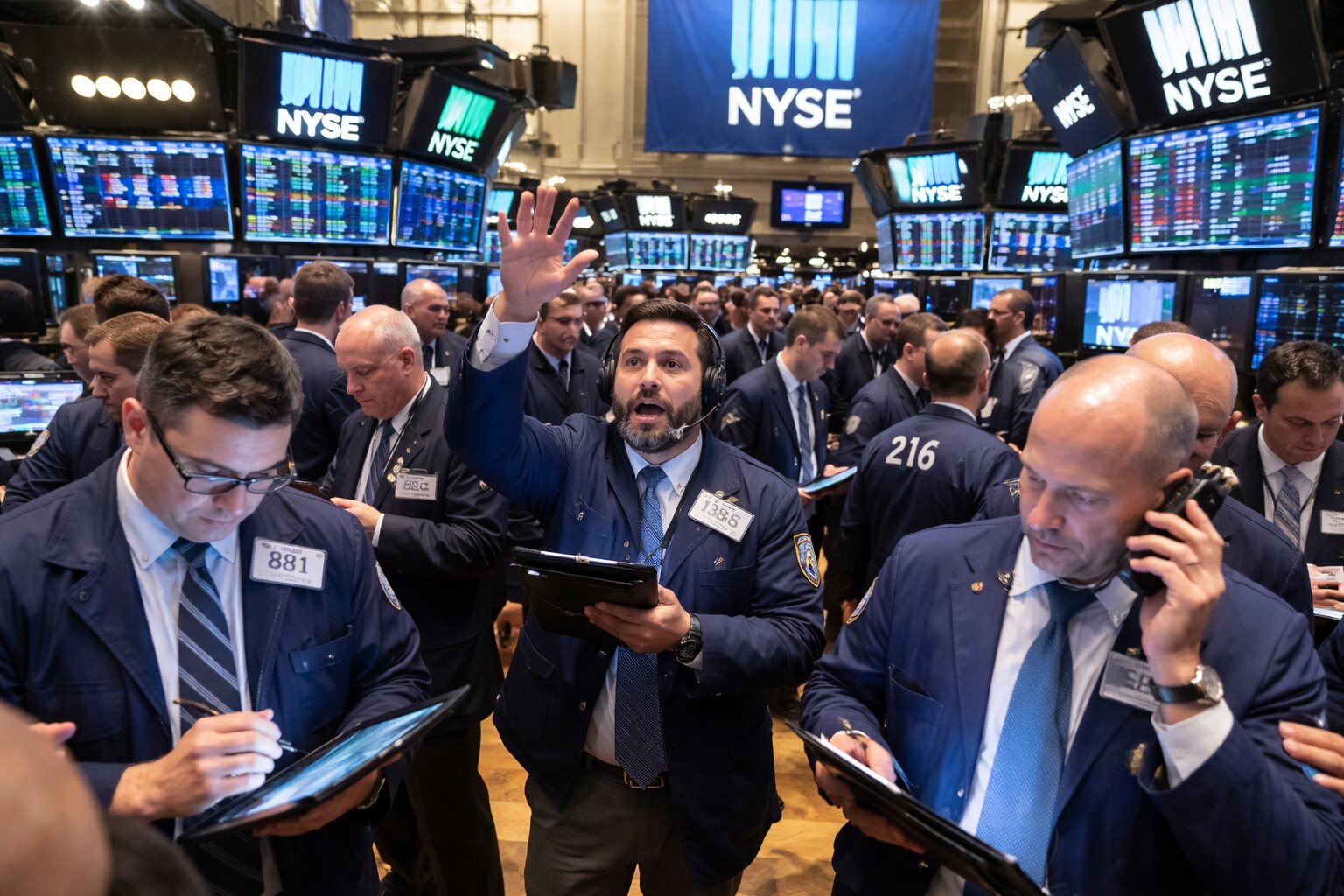
The sell-the-everything trade returned with full force on Tuesday. What began as a cautious Monday dip-buy morphed into wholesale capitulation across equities, bonds, crypto, and even gold as the U.S.-Iran military conflict entered its fourth day with zero signs of a ceasefire. The Dow Jones Industrial Average (DJIA) cratered 1,098 points — a 2.25% wipeout to 47,805 — marking the blue-chip index's deepest single-session slide since April 2025, when liberation-day tariffs threw markets into chaos. The S&P 500 (SPX) shed 143 points, or 2.08%, landing at 6,738, while the Nasdaq Composite (COMP) gave back 498 points, falling 2.19% to 22,250. Small caps bore the worst of it: the Russell 2000 collapsed 3.34% to 2,567, underscoring how risk appetite has evaporated from the most speculative corners of the equity market.
Monday's dramatic intraday recovery — when the S&P 500 and Nasdaq clawed back steep losses to close marginally green — now looks like nothing more than a head-fake. Traders who bought that dip, leaning on the historical playbook that geopolitical conflicts rarely derail bull markets for long, woke up Tuesday to an entirely different reality: a conflict that is widening, not winding down.
Strait of Hormuz Shutdown Sends Crude and Natural Gas Into Overdrive
The catalyst for Tuesday's collapse was unmistakable. An Iranian Revolutionary Guard commander declared the Strait of Hormuz — the narrow passage through which roughly one-third of all seaborne crude exports flow — effectively closed, threatening to incinerate any vessel attempting passage. That escalation pushed Brent crude futures briefly above $85 a barrel for the first time since July 2024, settling around $83.81, an increase of $6.07, or 7.81%, on the session. West Texas Intermediate (CL) surged 8.24% to $77.10, touching levels unseen since mid-2025. These moves came on top of Monday's 6% spike in both benchmarks, meaning crude has exploded roughly 14% in just 48 hours.
But the energy shock extends well beyond oil. European natural-gas futures absolutely detonated. Dutch TTF contracts — the continental benchmark — rocketed more than 40% on Tuesday alone, topping €62 per megawatt-hour, after Qatar's state-owned energy giant suspended production at the Ras Laffan complex, the world's largest LNG export facility, following an Iranian drone strike. QatarEnergy subsequently announced a further halt on downstream products including aluminum, urea, polymers, and methanol. Combined with Monday's 30% surge, European gas futures have now skyrocketed more than 70% in just two sessions. The Strait of Hormuz handles over one-fifth of global LNG supply, and with tanker traffic at a standstill as ship owners refuse the risk, Europe — far more dependent on Middle Eastern gas flows than the U.S. — is staring at a genuine energy crisis.
Domestically, GasBuddy's head of petroleum analysis projected American motorists should brace for pump prices to climb 10 to 30 cents per gallon over the coming week, erasing one of the few remaining consumer-friendly inflation offsets.
Bond Market Flashes Red: 10-Year Yield Tops 4.1%, Rate Cut Bets Collapse
Surging energy costs are doing exactly what the Federal Reserve does not need right now: re-igniting inflation expectations just as markets had been pricing in a dovish pivot. The 10-year Treasury yield jumped to 4.095% on Tuesday — up 5.5 basis points on the day and nearly 15 basis points above Friday's 3.95% close. This two-day surge represents the bond market's most aggressive selloff in nine months.
The five-year breakeven rate, a closely watched proxy for annualized inflation expectations derived from the spread between TIPS and nominal Treasurys, climbed to 2.535% from 2.458% on Friday. Interest-rate futures repriced aggressively: the probability of two or more quarter-point Fed cuts this year collapsed to 57%, down sharply from 79% just three days ago. The message is clear — if energy prices remain elevated or climb further, the Fed's rate-cutting cycle is effectively on hold.
JPMorgan Chase CEO Jamie Dimon acknowledged on Monday that a brief conflict probably wouldn't cause major inflationary damage, but flagged a less obvious risk: retaliatory cyberattacks from Iran targeting U.S. financial institutions. That warning adds yet another layer of uncertainty that markets are being forced to digest.
Volatility Erupts: VIX Hits 10-Month Highs, Fear Gauge Screams Caution
The CBOE Volatility Index (VIX) exploded 20.9% to 25.92, punching through 25 for the first time since the tariff-driven upheaval of April 2025. At one point it touched 26.56. For context, the VIX spent most of the past year range-bound in the mid-to-upper teens. The spike signals that options traders are paying dramatically elevated premiums for downside protection — a textbook signal of institutional hedging ahead of anticipated further losses. This is not the kind of environment where dip-buying strategies tend to reward participants.
Oil and Defense Stocks Buck the Carnage — Almost Everything Else Bleeds
In a session where the S&P 500 saw virtually all sectors painted red, the energy and defense pockets of the market stood in stark contrast. Exxon Mobil (XOM), Chevron (CVX), Marathon Petroleum (MPC), Occidental Petroleum (OXY), and Phillips 66 (PSX) all posted gains for a second consecutive day as crude's surge directly inflated their earnings outlook. Cheniere Energy (LNG), positioned to benefit from surging natural-gas prices, jumped nearly 9%.
Defense contractors Lockheed Martin (LMT), RTX (RTX), and Northrop Grumman (NOC) advanced for a second straight session as the prospect of a multi-week military campaign — Trump himself warned operations could continue four to five weeks or longer — signals sustained defense spending. Palantir Technologies (PLTR), which had surged 5.8% on Monday to rank among the top S&P 500 gainers, reversed course and slipped 2% as its premium valuation made it a target for profit-taking in a broadly defensive tape.
The biggest winners globally were South Korean defense names, which traded for the first time since a public holiday. Hanwha Aerospace — the country's largest defense manufacturer — rocketed 22%. Korea Aerospace Industries gained more than 7%. Lignex1, maker of South Korean air defense systems, soared 30%. Electronic warfare specialists Victek and Firstec surged more than 20%.
Tech Rally Fizzles: Magnificent Seven Retreat, Memory Chips Hammered
Monday's tech-led recovery proved fleeting. Nvidia (NVDA), which had bounced nearly 3% on Monday after two sessions of sharp losses, dropped 2% on Tuesday. Broadcom (AVGO) mirrored the decline. Every member of the Magnificent Seven traded lower. The State Street Technology Select Sector SPDR ETF (XLK) fell 2.53% to $136.01 after eking out a sub-1% gain the day before.
Memory semiconductor stocks took an outsized beating, tracking a massacre in South Korean chip names. SK Hynix plummeted 11.5% in Seoul while Samsung Electronics shed nearly 10%, dragging the KOSPI index down 7.24% — its worst session in 19 months. Stateside, Micron Technology (MU) dropped nearly 6% and SanDisk (SNDK) fell 6.55%. The iShares MSCI South Korea ETF (EWY) was off 10% in premarket, and the triple-leveraged Direxion MSCI Daily South Korea ETF (KORU) — which had gained an astonishing 1,300% over the past 12 months — collapsed more than 42% to $337.
Global Equity Rout: Europe, Asia, and Emerging Markets All Crumble
This was not a U.S.-contained event. Europe's Stoxx 600 plunged 3.34%, extending Monday's 1.6% decline. Frankfurt's DAX cratered 3.8%, the Paris CAC 40 lost 3%, and London's FTSE 100 fell 2.7%. European bank shares dropped 3.8%, insurers slid 4.2%, and miners gave back 3.9%. Even defense stocks on the Stoxx Aerospace and Defense index, which had closed Monday in the green, reversed to shed 2.5%. The energy price shock is far more existential for Europe than for the U.S., which is now a net energy exporter.
In Asia, Japan's Nikkei 225 dropped 3.06% to 56,279, weighed heavily by consumer cyclicals. The Topix fell 3.24%. Hong Kong's Hang Seng slipped 1.25%, mainland China's CSI 300 lost 1.54% to 4,655.9, and Australia's ASX 200 gave back 1.34% after being among the very few markets to post a marginal gain on Monday.
The IMF weighed in, acknowledging that the attacks add considerable uncertainty to the global economic outlook but cautioning it was too early to judge the full impact, which hinges on the conflict's scope and duration.
Airlines and Cruise Lines Face Structural Damage Beyond Fuel Costs
The travel sector's pain goes well beyond skyrocketing jet fuel. Delta Air Lines (DAL), United Airlines Holdings (UAL), and American Airlines Group (AAL) all dropped sharply for a second consecutive day. Thousands of flights have been canceled, and Dubai International Airport — one of the world's busiest hubs — operated just 20 aircraft on Monday. Airlines that depended on Middle Eastern corridor routing now face hours of added flight time for rerouting, destroying crew scheduling, fuel budgets, and connection logistics simultaneously.
Cruise operators Norwegian Cruise Line Holdings (NCLH), Carnival (CCL), and Royal Caribbean Group (RCL) also extended losses as Eastern Mediterranean and Gulf itineraries became effectively unviable for the foreseeable future.
Blackstone (BX) Hit by $1.7 Billion in Credit Fund Outflows
Adding insult to injury for the financial sector, Blackstone (BX) tumbled 7% after the Financial Times reported $1.7 billion in net outflows from its flagship $82 billion private credit fund, Bcred, during the first quarter. Withdrawal requests surged to 7.9% of fund assets — breaching the 5% threshold that allows Blackstone to gate redemptions. The outflows reflect a broader retreat from private credit as investors worry that higher interest rates and a slowing economy could spike default rates, compounded by the ongoing tech and software selloff driven by AI disruption fears.
Earnings Movers: Target (TGT) Surprises, Best Buy (BBY) Soars, MongoDB (MDB) Collapses
Despite the macro carnage, individual earnings stories demanded attention. Target (TGT) rose 3.83% to $117.51 after posting adjusted fourth-quarter earnings of $2.44 per share — well above the $2.16 consensus. Revenue of $30.45 billion narrowly missed estimates, but the real story was the trajectory: new CEO Michael Fiddelke noted that sales and traffic accelerated in the final two months of the holiday quarter, with year-over-year sales turning positive in January. After 13 consecutive quarters of weak or declining same-store performance, that inflection point represents a critical milestone for the turnaround. Fiddelke is expected to present his full strategic vision shortly. At $117, with improving momentum and depressed expectations, TGT looks like a cautious buy for patient holders willing to ride the macro volatility.
Best Buy (BBY) was the standout mover, surging 17.5% after reporting adjusted quarterly earnings of $2.61 per share — crushing the $2.46-$2.47 consensus — even as revenue of $13.81 billion missed the $13.88-$13.89 billion estimate and comparable sales declined 0.8% against expectations for essentially flat performance. CEO Corie Barry noted that market share held at least flat, pointing to industry softness rather than competitive loss. Fiscal 2027 guidance also disappointed on revenue, EPS, and comps, but the market rewarded the profitability beat in a stock that had already shed nearly 30% over the prior 12 months and 8% year-to-date. The magnitude of the rally signals extreme positioning wash-out. BBY is a hold here — the earnings quality is real, but the consumer electronics cycle hasn't turned yet.
MongoDB (MDB) was an outright disaster, plunging 26.36% to $239.34. The database software company issued first-quarter guidance of $1.15-$1.19 in adjusted EPS and $659-$664 million in revenue — below the $1.21 per share and $662 million consensus. In a software sector already battered by AI-disruption anxieties, any sign of deceleration is being punished without mercy. MDB is a sell — growth deceleration at this multiple leaves no margin for error, and the macro backdrop only compounds the risk.
Plug Power (PLUG) jumped 14-18% after reporting a narrower-than-expected adjusted loss of 6 cents per share (versus the 10-cent loss consensus) on revenue of $225 million that topped the $218 million estimate. The hydrogen play remains deeply speculative and cash-flow negative, but the quarter was a clear positive data point. It remains a speculative hold — the trajectory is improving, but profitability is still a distant aspiration.
On Holding dropped nearly 10% after its 2026 guidance disappointed. The Swiss sneaker maker projected net sales growth of at least 23% in constant currencies, implying spot-rate revenue of at least 3.44 billion Swiss francs — short of the 3.7 billion franc consensus. Record 2025 sales and improved profitability couldn't offset the forward guidance miss.
Asana slipped more than 1% despite beating fourth-quarter expectations on both lines, as first-quarter revenue guidance of $202.5-$204.5 million and full-year guidance of $850-$858 million both came in light of estimates.
Quantum Computing (QUBT) fell nearly 6% after fourth-quarter revenue came in at roughly half the prior quarter's level while operating expenses surged — a brutal combination for a speculative name.
Read More
-
Yen Stalls at 160 Despite a 3% JGB and Tokyo Core CPI at 2.0% — Intervention Sits at 164, Friday's Payrolls Decide
02.09.2026 · TradingNEWS ArchiveEnergy
-
QQQ ETF ($739) Fades From an Early Tech Rally as a 77.9 ISM Prices Index Meets Micron's $61.5B Guide — $760 Record Test Ahead
01.10.2026 · TradingNEWS ArchiveStocks
-
XRPR and XRPI Follow XRP's $1.49 Test as Spot Funds Hold 1.16B XRP and a 1 Billion Token Escrow Release Lands — $1.70 in Play
01.10.2026 · TradingNEWS ArchiveCrypto
-
November NG Slips Below $3 as Decade-High Storage Meets Capped LNG Exports — $2.75 in Sight
01.10.2026 · TradingNEWS ArchiveCommodities
-
Dollar-Yen at 158 Presses Toward 160 as a 363 bp Carry Gap Meets Katayama-Bessent Intervention Risk — 159 in Sight
01.10.2026 · TradingNEWS ArchiveForex
Pinterest (PINS) Pops on Elliott's $1 Billion Vote of Confidence
In a rare bright spot disconnected from the macro storm, Pinterest (PINS) surged 8% to $18.42 after Elliott Investment Management disclosed a $1 billion stake. The board simultaneously authorized a $3.5 billion buyback program, with approximately $2 billion in repurchases planned for the first half of 2026. CEO Bill Ready framed the investment as validation that the current share price — down roughly a third in 2026 entering Tuesday — materially undervalues the platform's business fundamentals and long-term growth potential. Elliott's activist involvement combined with aggressive capital return makes PINS a compelling buy at these levels. The downside is cushioned by the buyback, and Elliott's playbook historically involves operational improvements that drive re-rating.
CrowdStrike (CRWD) Earnings on Deck: Options Market Pricing a 7% Swing
CrowdStrike (CRWD) reports after the close Tuesday, with the options market pricing approximately a 7% move in either direction by week's end. That range would imply shares could recover toward $412 or slide toward $357. The stock has already fallen 18% year-to-date amid the broader software rout, but multiple analysts view the selloff as overdone, arguing that AI-driven security threats are expanding CrowdStrike's addressable market. This is a hold into earnings — the risk/reward is balanced, but conviction requires seeing the guidance.
Dollar Strengthens as Safe-Haven Flows Override De-Dollarization Narrative
The U.S. Dollar Index (DXY) rose nearly 1.07% to 99.42, its strongest session in weeks, as the de-dollarization trade that had driven a 7%-plus decline over the past year abruptly reversed. Mizuho strategists nailed the dynamic: stress moments force the world back to dollar liquidity because settlements, hedging, energy purchases, and funding all still denominate in USD. The U.S. being a net energy exporter only reinforces the greenback's relative advantage during oil-supply shocks.
Gold and Silver Break Down Despite Classic Risk-Off Backdrop
In a counterintuitive move, gold futures retreated 4.59% to $5,067.90 an ounce, while silver was absolutely hammered, plunging 9.88% to $80.08. The selloff reflects forced liquidation dynamics: when correlations spike to 1.0 and margin calls cascade, even traditional safe havens get sold to meet cash needs. Gold had rallied Monday, but the sheer breadth of Tuesday's de-risking overwhelmed any haven bid. The precious metals complex is signaling that this is a liquidity event, not a garden-variety risk-off rotation.
Bitcoin Slides to $66,562 as Crypto Haven Thesis Crumbles
Bitcoin dropped 3.75% to $66,562, extending a volatile stretch. Prices had initially fallen over the weekend when strikes were launched, recovered on Monday, then broke down again after Trump warned the campaign could last four to five weeks or longer. The cryptocurrency's failure to hold gains during a genuine geopolitical crisis further erodes the digital-gold narrative. Bitcoin is trading like a high-beta risk asset, not a store of value. At current levels, with the VIX above 25 and energy prices rising, crypto faces sustained headwinds from risk-appetite compression.
Market Verdict: Bearish Until the Strait of Hormuz Reopens
The picture here is unambiguously bearish in the near term. The Dow just posted its worst day in 11 months. Treasury yields are surging in the wrong direction. Rate-cut expectations have been gutted. The VIX is at 10-month highs. European gas prices have doubled in two days. The Strait of Hormuz — through which one-third of the world's seaborne crude flows — is functionally blockaded. And the President of the United States has said military operations could last five weeks or more.
Every asset class except oil, defense stocks, and the dollar is being sold. The Monday dip-buy playbook has been discredited for this cycle. Until there is concrete evidence that the Strait of Hormuz will reopen, that Iranian retaliation is subsiding, or that a diplomatic off-ramp exists, risk assets face continued pressure.
Positioning should be defensive: overweight energy (XOM, CVX, LNG), hold defense exposure (LMT, RTX, NOC), reduce or hedge tech and high-beta positions, and keep elevated cash balances. The bond market's inflation repricing is the single most important variable to watch — if the 10-year yield pushes through 4.25%, the equity damage will deepen considerably. This is not a moment for heroics. Capital preservation takes priority until the fog of war lifts.