Stock Market Today: S&P 500 Tops 7,600, Nasdaq Clears 27K, Dow 51,078.88 Print Fresh Highs — MRVL Stock Rips 20%
Nvidia (NVDA) led tech up 6% on a new PC chip, Marvell (MRVL) jumped 20%+ on Jensen Huang's trillion-dollar call | That's TradingNEWS
Key Points
- S&P 500 closed at a record 7,599.96 (+0.26%); Nasdaq cleared 27K for the first time at 27,086.81 (+0.42%).
- HPE ripped ~28% premarket after Q2 revenue hit $10.68B (+40%) and EPS landed at $0.79 vs $0.53 expected.
- June 2 futures faded — Dow -0.47%, S&P -0.17% — as WTI cooled to $91 and the JOLTS report loomed.
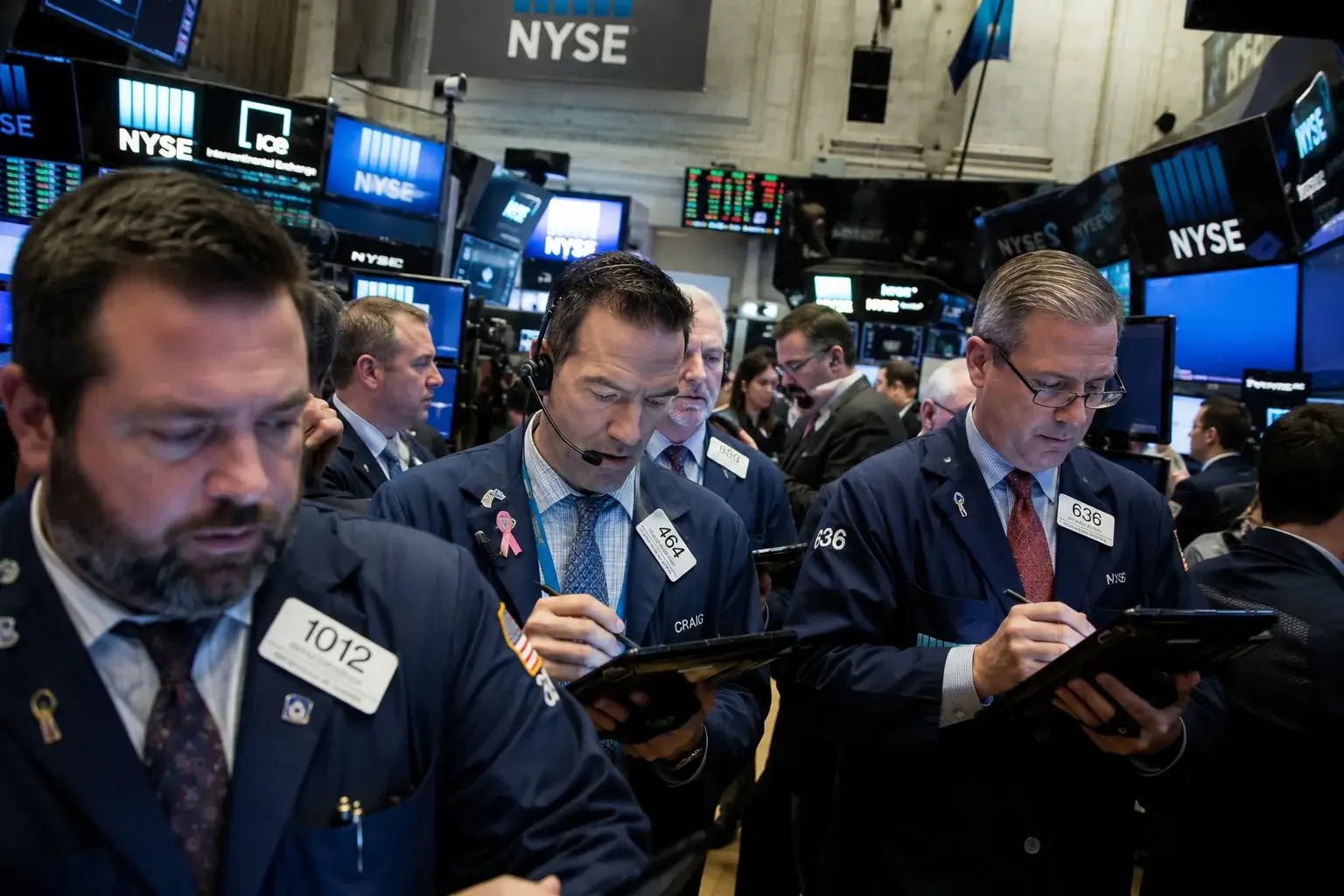
Three records on day one of June, and the tape didn't even break a sweat. The S&P 500 (SPX) closed Monday at 7,599.96, up 0.26%, kissing 7,600 on the bell after tagging a fresh intraday all-time high. The Nasdaq Composite (IXIC) added 0.42% to 27,086.81 — its first close ever above 27,000, a level that didn't exist on a chart until last week. The Dow Jones Industrial Average (DJI) tacked on 46.42 points, 0.09%, to 51,078.88, grinding to its own record in the back half of the session after spending most of the morning pinned near the flat line.
All three majors closed at records on the same day. That's the headline number. The story underneath it is narrower, and it's the same story the tape has been telling for months: AI infrastructure is doing the heavy lifting, and everything else is along for the ride. Nvidia (NVDA) ripped more than 6% on a new PC chip. Marvell (MRVL) jumped better than 20%. And after the bell, Hewlett Packard Enterprise (HPE) blew the doors off its quarter and lit up the premarket for June 2. One thesis runs through the entire session: the money is chasing the buildout, and it's not slowing down for oil, for Iran, or for the small caps getting left behind.
Index by Index — Where the Levels Landed
Start with the SPX. 7,599.96 at the close, +0.26%, a fresh record after the broad index briefly poked through 7,600 intraday. That's a clean follow-through on the May 28 record of 7,563.63 and the late-May grind higher. The S&P is now up roughly 10% off its late-February base — a double-digit move that masks how few names actually built it.
The Nasdaq is the cleaner read on what's working. IXIC closed at 27,086.81, +0.42%, blowing through 27,000 for the first close on record above that mark. The Computex chip headlines out of Taipei did the work, with semis and the AI complex carrying the index while pockets of the broader market sagged. The tech-heavy benchmark has been the leadership horse the entire run, and Monday it stretched the lead.
The Dow lagged the other two for most of the day before the bid showed up late. DJI finished at 51,078.88, up 46.42 points, +0.09% — a record, but the thinnest of the three, which tracks with the index's lighter tech weighting and heavier exposure to the rate-sensitive and industrial names that didn't catch the AI tailwind.
Then there's the Russell 2000 (RUT), and that's where the split shows. Small caps rolled over, off 0.89% at midday and staying red into the close while the megacaps printed records above them. Futures on the RTY were the lone green contract early Tuesday at 2,911.60 (+0.07%), but Monday's cash session told the real story: when the tape narrows to AI enablers, the small-cap crowd gets left at the gate. Breadth and the Russell are saying the same thing — this rally is top-heavy.
HPE Blew the Doors Off
Hewlett Packard Enterprise is the marquee print of the cycle, and it came after Monday's bell. HPE reported Q2 FY26 revenue of $10.68 billion, up 40% year over year, against the roughly $9.77 billion the Street had penciled in. Non-GAAP EPS landed at $0.79 — versus the $0.53 expected and more than double the $0.38 from the year-ago quarter. Free cash flow swung to $915 million, a $1.8 billion turnaround from the same period last year. GAAP EPS came in at $0.44. Operating profit hit $1.4 billion, a 13.3% operating margin.
The stock had already closed Monday's cash session up 9.2% at $47 heading into the print. Then it ripped. Shares jumped 23% to 28% after hours and held the gains into Tuesday's premarket, with some quotes flashing as high as 30%+ on the biggest earnings beat HPE has put up since 2018. The server and networking maker was set to open more than 23% higher.
The guidance is what snapped the shorts. HPE raised its FY26 non-GAAP EPS outlook to $3.35–$3.45, against a prior range near $2.30–$2.50 and consensus around $2.43. That new target clears the bar the company had set for fiscal 2028 at its October analyst meeting — it pulled a three-year plan forward by two years in eight months. For Q3, HPE guided revenue to $11.5–$12.1 billion versus the $10.88 billion Street view, with non-GAAP EPS of $0.88–$0.93. Free cash flow guidance sits at $3.5 billion or better for the year.
The engine is AI infrastructure. HPE entered Q3 with $5.9 billion in AI systems backlog, and orders more than doubled year over year — outpacing revenue, which means the pipeline is refilling faster than it drains. Sequential revenue grew 15%, helped by higher server selling prices as DRAM and NAND costs ran hot and supply stayed tight. The networking sales pipeline is running at multiples of backlog. The New York Stock Exchange is lined up to run Nvidia's newest chips on HPE's new ProLiant servers to process north of a trillion messages a day. That's the demand story in one customer.
Marvell and the Trillion-Dollar Call
Marvell Technology (MRVL) was the other semi that ran. Shares jumped better than 20% on the session after the company rolled out the Teralynx T100, which it pitched as the industry's first 102.4 Tbps AI-optimized switch chip — a part built to let AI data centers move bigger workloads while pulling less power. Networking has become the choke point in AI buildouts, and Marvell just planted a flag in it.
The fuel on top of the launch was Jensen Huang. The Nvidia CEO stood on stage at Computex and called Marvell "the next trillion-dollar company." That endorsement, from the man whose chips define the AI stack, sent the bid through MRVL all day. Premarket Tuesday the stock was still adding 7% at $219.43 on top of Monday's run. Marvell guided to roughly $11.5 billion in FY27 revenue, about 40% growth, after posting 42% growth in FY26 — the AI data-center demand showing up in the print, not just the slide deck. The sell-side is all-in: 26 Buys, 4 Holds, a Strong Buy consensus.
Nvidia Still Runs the Tape
None of this happens without Nvidia, and Monday Nvidia reminded everyone why. NVDA ripped more than 6% to $224.36 premarket Tuesday after unveiling a new processor aimed squarely at the PC market — Huang's bid to win every layer of the AI stack, not just the data center. The launch landed at Computex alongside a new server rack built around Nvidia's Vera CPUs, now in full production, with Huang calling the Vera line the company's next major growth driver and millions of units already in the pipeline for a fall availability.
The chip news pulled the whole hardware complex up. Dell Technologies (DELL) ripped more than 10% and HP Inc (HPQ) added better than 8%, both riding Nvidia's coattails into the PC refresh trade. Intel (INTC) got smoked — down over 4% Monday and off another 4.67% to $109.33 premarket Tuesday — as the new Nvidia PC silicon hit the one company that spent two decades owning that socket. The split inside the chip space was brutal and clean: the AI winners ripped, the legacy incumbent rolled over.
Where the Money Went — Sectors
The sector tape was a tech-and-energy story Monday. Technology carried the indexes on the Computex chip headlines, with semis the obvious leadership. Energy caught a bid as crude spiked on the Iran headlines, giving the Dow and the broader value names a second leg to lean on. That's the combination that printed the records — AI hardware up front, oil names along for the ride on the geopolitical pop.
The laggards were the rate-sensitive and growth-light corners that don't benefit from either trade. Small caps got left behind, the Russell red while the megacaps printed highs. Software was a mixed bag until Huang pushed back on stage against the idea that agentic AI would put software companies out of business — that comment swung the software group higher into the close after a soft start. The rotation, such as it was, ran toward anything with an AI or energy tag and away from everything that didn't.
The Breadth Problem Nobody Wants to Talk About
Here's the part that matters more than the record headlines. Strip the AI enablers out and the rally barely exists. A Goldman Sachs index that excludes AI infrastructure names is slightly lower since late February — while the S&P 500 is up about 10% over the same stretch and the AI winners have surged better than 45%. That gap is the whole game. This isn't a broad bull market; it's a concentration trade wearing a bull market's clothes.
Market breadth has been thin the entire grind. Just 52% of S&P 500 names traded above their 50-day moving average at Friday's close — barely half the index participating in a tape sitting at all-time highs. When the leadership is this narrow, the index can keep printing records right up until the handful of names carrying it stop, and then the air pocket underneath gets exposed fast. Records on narrow breadth aren't a sign of strength across the board. They're a sign that a small group of AI names is doing the lifting for everyone.
Macro — Yields, Oil, Iran, and the VIX
The macro tape was all about Iran and crude. WTI futures jumped 5.93% Monday to close at $92.54 a barrel, the biggest one-day pop in about a month, while Brent climbed 4.24% to $97.79. The spike came on a report that Tehran was halting talks with Washington in protest of Israel's strikes in Lebanon — a headline that put the Strait of Hormuz back in play. Iran's semi-official Tasnim agency floated the complete closure of Hormuz and the Bab el-Mandeb Strait as items on Tehran's agenda, the kind of line that puts a bid under oil instantly.
Then Trump stepped on the bearish narrative. The president posted that Israel and Hezbollah had agreed to stop attacks and that talks with Iran were continuing "at a rapid pace," and told ABC News a memorandum of understanding to reopen Hormuz could land within a week. That cooled the panic. By Tuesday's premarket, Brent had faded 1% back to $93 and WTI slid to $91 — oil giving back a chunk of Monday's surge as the de-escalation read took hold.
Rates ticked up. The 10-year Treasury yield rose more than 2 basis points Monday to 4.48% on the Iran tension, dragging 30-year mortgage rates up 4 basis points to 6.6%. The bond market's message has been consistent: even with a real de-escalation, long-end yields aren't falling far given sticky inflation, fiscal worry, and upward pressure on the term premium. The Fed's preferred gauge, core PCE, ran at 3.8% year over year in April — the highest in nearly three years — which keeps the rate-cut case on ice.
The VIX stayed calm through all of it, hanging at 16.17 (+0.75%) premarket Tuesday after barely budging Monday. Gold ripped to $4,555.40 (+1.09%), the haven bid alive and well even as stocks printed records — a tell that the smart money is hedging the AI concentration trade even while it rides it. Bitcoin (BTC-USD) got hit, off 4.38% to $68,969, the risk-off read in crypto running counter to the equity highs.
Movers Beyond the Headliners
The single-name tape outside the AI leaders had its own action. On the downside, Intuit (INTU) got smoked, down 6.3% after Goldman Sachs cut it from Neutral to Sell. Atlassian (TEAM) fell 6.5% in the same software shakeout. Nu Holdings (NU) dropped nearly 7% after announcing CFO Guilherme Lago will move to a special advisor role effective July 13, with Rob Livingston stepping in — a leadership-change discount the market applied fast.
On the upside outside the chips, Generac (GNRC) gained 9% after locking in a deal to supply backup generators for a hyperscale data-center network — the AI buildout reaching all the way down into the power-equipment names. Dollar General (DG) popped more than 5% premarket Tuesday after raising its 2026 profit outlook to $7.45 EPS from $7.35, holding its comp-sales growth target at 2.7% ahead of its earnings print. Victoria's Secret (VSCO) ripped premarket after beating Q1 estimates and lifting full-year guidance.
The live Tuesday premarket movers ran hot and wide. Fluence Energy (FLNC) led the gainers up 43.80%, with Taylor Morrison (TMHC) +22.31%, MongoDB (MDB) +20.36%, Twilio (TWLO) +19.36%, and SK Telecom (SKM) +18.99%. The downside was just as violent — Polestar (PSNY) -17.11%, Redwire (RDW) -15.83%, Nuvalent (NUVL) -15.74%, and Rocket Lab (RKLB) -14.70%. Most active by volume: NVDA (+6.26%), Nokia (NOK) +9.50%, Intel (INTC) -4.67%, SoFi (SOFI) +1.98%, and Ford (F) -4.64%.
Read More
-
Yen Stalls at 160 Despite a 3% JGB and Tokyo Core CPI at 2.0% — Intervention Sits at 164, Friday's Payrolls Decide
02.09.2026 · TradingNEWS ArchiveEnergy
-
CHAT Fund Holds $96.37 as Korean Memory and Chip Exposure Drive a 109.73% Year — Break of $98.02 Opens $105.20
18.09.2026 · TradingNEWS ArchiveStocks
-
First-Generation XRPR and XRPI Ride XRP's Rebound to $1.386 as Spot Funds Post First Outflow — Break of $1.40 Opens $1.54
18.09.2026 · TradingNEWS ArchiveCrypto
-
NG Holds $2.9255 as Storage Surplus Narrows From 5.5% to 3.7% in 3 Weeks — Break of $3.00 Opens $3.15
18.09.2026 · TradingNEWS ArchiveCommodities
-
Dollar Surges to 157.90 as BoJ's Divided Hike Fails to Lift the Yen — Break of 158.87 Opens 159
18.09.2026 · TradingNEWS ArchiveForex
Day Structure — Premarket to the Bell
Monday's session followed a now-familiar arc. Premarket set up cautious as oil popped 3.5% early on the weekend Iran strikes and the Hormuz threat, with stocks closely correlated to crude and the war headlines weighing on sentiment. The open was uneven — the Nasdaq and S&P pushed to new intraday highs on the Computex chip headlines while the Dow hovered near flat and the Russell sagged. Midday had the Nasdaq up 0.29% and the S&P up 0.09%, both at records, against a Dow off 0.32% and a Russell down 0.89% — the split fully visible by lunchtime.
Into the afternoon the Dow found its footing and clawed back to a record alongside the other two, helped by Huang's stage comments steadying the software group and the energy bid holding firm. The close stamped all three majors at records — SPX 7,599.96, IXIC 27,086.81, DJI 51,078.88 — with the small caps the only major group left in the red. The bid never faded; it just stayed concentrated in the names that were already working.
June 2 Setup — Futures Fade, JOLTS on Deck
Tuesday opened defensive in the futures. With the cash session set to open around 9:30 ET, S&P futures (ES) sat at 7,600.50, off 0.17%, Dow futures (YM) fell 0.47% to 50,894, and Nasdaq futures (NQ) hovered just below flat — the indexes catching their breath after the record run as the Iran read stayed murky. Russell futures (RTY) were the lone green contract at +0.07%.
The catalyst on deck is data. The Job Openings and Labor Turnover Survey (JOLTS) hits Tuesday — the first in a string of labor releases that runs through the May jobs report Friday. Traders are hunting for any sign of economic strain as prices stay sticky, the kind of read that would box the Fed in on rate policy. Alphabet (GOOGL) edged lower premarket after saying it aims to raise $80 billion to fund its AI infrastructure plans — the capex arms race showing up on the balance sheet now, not just the income statement.
The earnings calendar is thick for a tape that's supposedly winding down. Palo Alto Networks (PANW), Dollar General (DG), Ulta Beauty (ULTA), and Victoria's Secret (VSCO) all report Tuesday, with Broadcom (AVGO) — premarket +2.95% to $459.97 — set to deliver its Q2 read after the bell as the next major AI-and-networking tell. CrowdStrike (CRWD) follows Wednesday. Each one is another vote on whether the AI demand story HPE and Marvell just confirmed holds across the rest of the complex.
The Verdict
The session reads bullish on the scoreboard and narrow under the hood — three indexes at records, carried by a shrinking list of AI names while the Russell, breadth, and everything outside the buildout lag behind. HPE and Marvell didn't just beat; they confirmed that the AI infrastructure spend is accelerating, with HPE pulling a three-year plan forward by two years and orders doubling faster than revenue can keep up. That's the proof the bulls wanted, and the tape took it.
But records on 52% breadth, with a Goldman AI-ex index flat since February while the headline S&P is up 10%, is a concentration trade, not a broad expansion. Gold ripping to $4,555 next to the equity highs says the hedges are on even as the money chases the chips. Iran and oil are the swing factor — a Hormuz deal inside a week takes crude pressure off and clears the runway; a breakdown puts it right back. Into June 2, the setup is simple: the AI complex is running the show, the data and Broadcom's print are the next test, and the question isn't whether the leaders can keep going — it's how long the rest of the tape can keep lagging before something has to give.