Stock Market Today: S&P 500 Climbs 0.63% as Chip Rebound Builds Ahead of Hot 4.2% CPI Print
The S&P 500 gained 0.63%, the Dow rose 0.67%, and the Nasdaq added 0.69% Tuesday as Micron | That's TradingNEWS
Key Points
- S&P 500 +0.63%, Dow +0.67%, Nasdaq +0.69%, Russell 2000 +0.77%.
- semiconductors led the rebound.
- May CPI is expected at 4.2% year over year Wednesday, the highest since April 2023, with rate-hike odds at 72%.
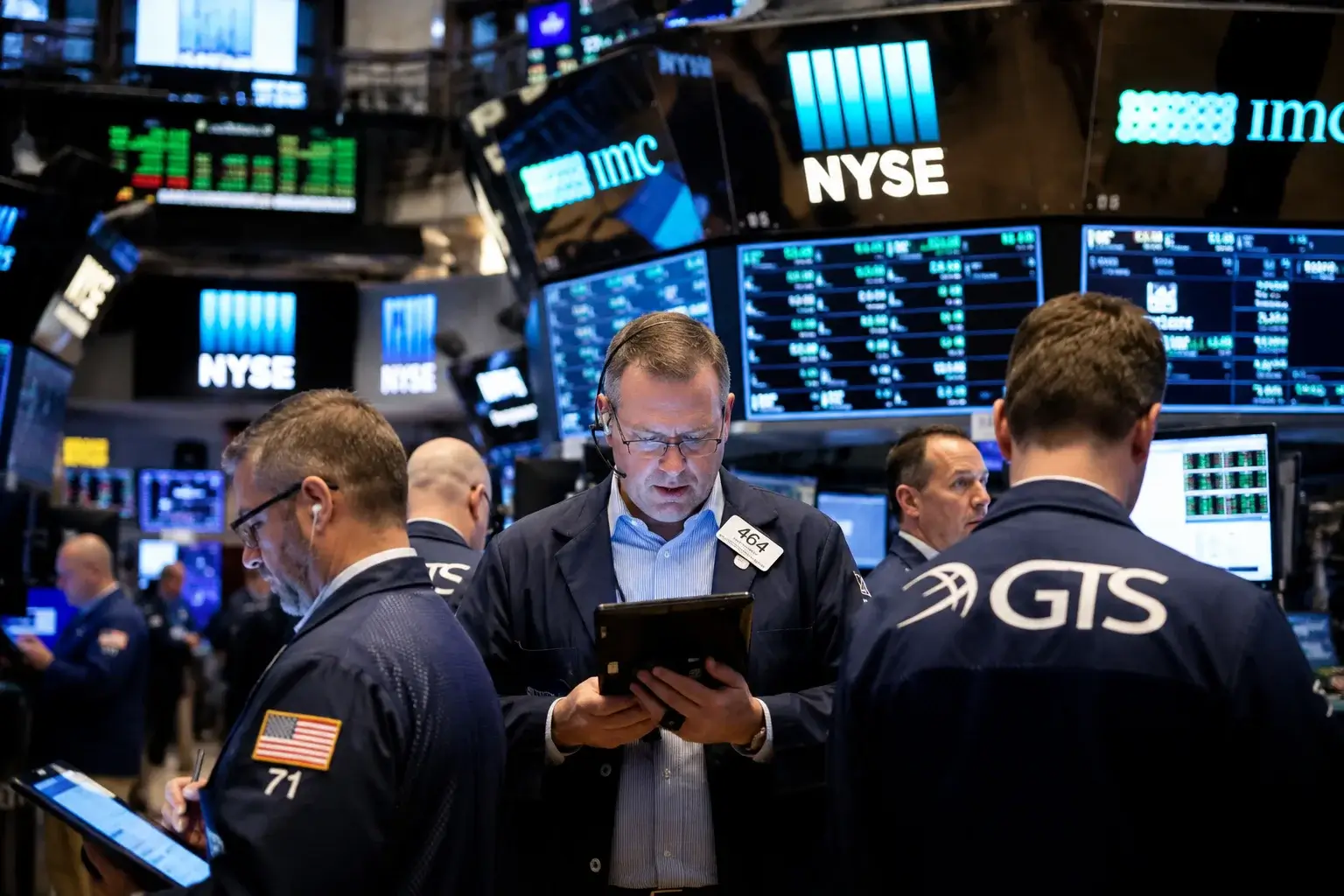
U.S. equities pushed higher Tuesday morning, June 9, as the same chip stocks that triggered last week's violent unwind led the tape back in the other direction. The S&P 500 added 0.63%, the Dow Jones Industrial Average advanced 0.67%, and the Nasdaq Composite rose 0.69% in early trading, while the small-cap Russell 2000 outpaced all three with a 0.77% gain. The advance extended Monday's tentative stabilization and marked a second straight session of dip-buying after Friday's rout erased roughly a trillion dollars of market value across the semiconductor complex.
The move higher arrived with oil prices retreating, Treasury yields easing off their post-payrolls spike, and traders positioning ahead of Wednesday's Consumer Price Index report. The Roundhill Magnificent Seven ETF (MAGS) traded up 0.47% to $66.80 in premarket dealings, a sign that the mega-cap engine of the 2026 bull market was firming rather than breaking. Yet the rebound sits on fragile ground: the index that closed at a record 7,599.96 on June 1 is still trading below that mark, having dropped to 7,383.74 by Friday's close before recovering to 7,405.73 on Monday. Tuesday's gains lift the S&P back toward 7,450, but the broader market remains caught between an AI-driven momentum trade that has run hot for months and a macro backdrop that has turned decisively less friendly.
Micron Leads the Memory Recovery After a 17% Two-Day Wipeout
The clearest tell of Tuesday's risk appetite came from the memory names. Micron Technology (MU), the chipmaker that has carried the latest leg of the bull market, surged close to 10% on Monday after collapsing 13.3% on Friday, and the stock held its gains into Tuesday's session. Over the two-day stretch spanning Thursday and Friday, Micron had shed roughly 17% of its value, Intel had fallen about 9%, and Advanced Micro Devices (AMD) had dropped 12.6%, a coordinated de-rating that stripped the highest-flying corner of the market of its recent gains in a matter of hours.
The rebound was not confined to memory. Nvidia (NVDA) and Broadcom (AVGO) both traded higher Monday and built on those gains Tuesday, with the Philadelphia Semiconductor Index recovering a meaningful share of last week's losses. Nvidia, which fell 6.2% on Friday and dragged the major averages down with it, has been the single most important stock in the market this year, and its stabilization near recent levels is the difference between a routine pullback and something more dangerous for the broad index. The semiconductor group entered June riding extraordinary momentum, with Citigroup analysts having previously lifted their 2026 DRAM average-selling-price growth forecast to 88% from 53% and their NAND forecast to 74% from 44% on expectations that AI infrastructure demand would drive memory pricing into a multi-year super cycle. That thesis has not changed in a week, which is precisely why dip-buyers returned so quickly once the forced selling exhausted itself.
Reconstructing Friday's Rout: The Worst Session Since April 2025
To understand Tuesday's bounce, the damage of June 5 has to be measured precisely. The Nasdaq Composite lost 4.18% that session to close at 25,709.43, its steepest single-day decline since the April 2025 tariff shock. The S&P 500 sank 2.64% to 7,383.74, its largest one-day drop since the prior October and a move that snapped the index's nine-week winning streak while handing it its first losing week in ten. The Dow Jones Industrial Average fell 695.15 points, or 1.35%, to settle at 50,866.78.
The selloff was a two-stage event. The trigger came Wednesday evening, June 3, when Broadcom reported quarterly results and chose to reiterate rather than raise its 2026 guidance, with an AI chip outlook that fell short of the market's elevated expectations. Broadcom shares plunged as much as 15% before trimming losses, closing down more than 12%, and the disappointment radiated outward through the entire semiconductor group on Thursday. By the time Friday arrived, the selling had taken on a momentum of its own, with profit-taking accelerating into a market that had grown accustomed to one-directional gains. What turned a chip-specific air pocket into a broad-market drawdown was the macro data that landed Friday morning.
The 172,000 Payroll Shock That Doubled Consensus
The May employment report was the accelerant. Nonfarm payrolls rose by 172,000 for the month, more than doubling the consensus estimate of roughly 80,000 and defying expectations of a cooling labor market. Several Wall Street firms flagged an unusual driver behind the upside surprise: the FIFA World Cup, which kicks off in the United States on June 11, appears to have pulled forward hiring in hospitality and related sectors, with the gain heavily concentrated in just two areas of the economy.
The market's interpretation was immediate and unforgiving for rate-sensitive assets. A labor market adding jobs at twice the expected pace, against a backdrop of inflation already running hot from tariffs and energy costs, removed the Federal Reserve's room to ease. Ronald Temple, chief market strategist at Lazard, captured the consensus shift, noting that the strong report effectively eliminated any remaining hope of a rate cut. The debate on Wall Street pivoted in a single morning from when the Fed might cut to whether it would be forced to hike, a profound repricing for a market valued on the assumption of falling discount rates.
Rate-Hike Odds Reach 72% as the Fed's Easing Path Closes
The most consequential number for the next several weeks may be the one coming out of the CME FedWatch Tool, which showed the probability of at least one Fed rate hike this year sitting at 72% early Monday. That figure represents a near-complete inversion of the market's posture from earlier in the spring, when the prevailing view assumed the Fed would deliver roughly one cut as inflation gradually normalized. The fed funds target range stands at 3.50% to 3.75%, and the central bank has been holding steady while it gauges the combined impact of tariff-driven goods inflation and the energy shock tied to the conflict in the Middle East.
Not every strategist is convinced a hike is coming. Christopher Hodge, chief U.S. economist at Natixis CIB Americas, argued that the bar to raising rates remains high, pointing to subdued wage gains, strong productivity, and inflation expectations that remain anchored. His view is that the absence of any re-acceleration in wage growth signals a labor market that is stable rather than overheating, a distinction he considers decisive. That tension between a hot headline payroll number and softer underlying wage data is the crux of the current market argument, and it is why a single CPI print now carries outsized weight.
Treasury Yields Ease After the Post-Payrolls Spike to 4.53%
The bond market did the heavy lifting in Friday's equity decline. The yield on the 10-year Treasury jumped 5.5 basis points on Friday to 4.532%, climbing even as oil prices fell, which broke the usual relationship in which softer crude pulls yields lower. In the moments around the jobs report, the 10-year moved to 4.54% from 4.50%, while the more policy-sensitive 2-year yield jumped to 4.16% from 4.04%, a sharp repricing of near-term Fed expectations.
Tuesday brought relief on this front. Yields eased back as some of the panic faded and as traders looked to position ahead of inflation data, and the combination of a softer dollar and lower yields gave equities room to rally. For a market in which the entire mega-cap technology cohort is valued on long-duration cash flows, the direction of the 10-year is the single most important macro variable, and even a modest retreat from 4.53% is enough to support multiple expansion in the highest-growth names. The risk is that Wednesday's CPI reverses that move entirely.
Wednesday's CPI Looms: A 4.2% Print Would Be the Hottest Since 2023
The defining event of the week arrives Wednesday morning. Economists surveyed by Reuters expect the Consumer Price Index to show prices rose 4.2% year over year in May, which would mark the largest annual increase since April 2023 and a clear acceleration from the 3.8% reading in April. A print at or above that level would validate the market's rate-hike fears and likely send yields back toward and through Friday's 4.53% high on the 10-year.
Two forces are pushing inflation higher. Tariffs continue to feed into goods prices, a dynamic that has been building for months and shows no sign of reversing. Layered on top is the energy channel: the conflict with Iran, now in its fourth month, has disrupted shipments through the Strait of Hormuz and pushed up the cost of crude and goods tied to that chokepoint. The interaction of those two pressures is what threatens to lift headline inflation back above 4%, a level the market had assumed was behind it. A cooler-than-feared number would offer enormous relief and likely extend the chip rebound; a hotter print would put the 72% hike probability under serious pressure and could end the two-day equity recovery before it matures.
The Magnificent Seven Steadies as the Index's Center of Gravity
The mega-cap technology complex remains the fulcrum of the entire market, and its behavior this week tells the real story. The Roundhill Magnificent Seven ETF (MAGS), which holds an equal-weight basket of Alphabet (GOOG), Amazon (AMZN), Apple (AAPL), Meta Platforms (META), Microsoft (MSFT), Nvidia (NVDA), and Tesla (TSLA), traded up 0.47% to $66.80 in premarket action Tuesday. During Friday's selloff, the hyperscalers held up considerably better than the pure-play chipmakers: Meta, Amazon, and Microsoft posted only modest declines even as Nvidia fell 6.2% and Broadcom dropped 7.9%, a divergence that reflects the difference between companies spending on AI and companies selling the silicon.
That distinction matters for how the rebound plays out. The hyperscalers continue to signal enormous capital commitments to AI infrastructure, with reports that Meta intends to plow billions more into the buildout. As long as that spending holds, the demand backdrop for Nvidia, Broadcom, and the memory makers stays intact regardless of any single quarter's guidance. The market's willingness to buy the chip dip on Monday and Tuesday is, at its core, a bet that the AI capital expenditure cycle has years left to run and that Broadcom's cautious outlook was a company-specific stumble rather than a sector-wide inflection.
Stock-Specific Movers: SailPoint Sinks 12% While Corning and Marvell Surge
Beneath the index moves, individual names produced sharp dislocations. SailPoint (SAIL) shares tumbled 12.2% after the cybersecurity firm missed first-quarter earnings expectations badly, reporting a loss of 13 cents per share against analyst forecasts for a profit of 4 cents. The miss stands out in a market that has rewarded software and security names through much of the year, and it serves as a reminder that earnings execution still matters even amid macro-driven volatility.
On the upside, Corning (GLW) surged 9.31% to $194.16 after Amazon (AMZN) announced a multibillion-dollar agreement for the materials-science company to supply optical fiber for its rapidly expanding U.S. data center footprint, with Amazon shares themselves up 1.2% to $249.02 on the news. The deal is a direct read-through on the scale of hyperscaler infrastructure spending and a tangible example of AI capital flowing into the physical supply chain. Index reconstitution also drove gains: Marvell Technology (MRVL) jumped 9% to $287.05 after S&P Global confirmed the AI chipmaker will join the S&P 500 on June 22, while Flex (FLEX), also joining the benchmark, rose 4.3% to $158.50. On the losing side beyond SailPoint, Roivant Sciences (ROIV) slipped 3.8%, Grocery Outlet Holding (GO) fell 3.3%, and Progressive (PGR) declined 2%.
Geopolitics and Crude: Trump Signals an Iran Deal Within Days
The Middle East remains a live wire running through every asset class. The U.S.-Israeli conflict with Iran has entered its fourth month, and the disruption to the Strait of Hormuz has kept a geopolitical premium embedded in oil and a layer of uncertainty over inflation. Tuesday brought a meaningful headline on this front: President Donald Trump told reporters that an agreement to end the conflict could come within two or three days and that the critical Strait of Hormuz would reopen immediately once a deal is signed, describing negotiations as being in their final stages and structured to prevent any path to nuclear weapons. He made the remarks after attending the NBA Finals in New York.
The market took the comments as a positive, and crude prices fell on Tuesday as the prospect of restored shipping flows eased supply fears. Lower oil is a double-edged tailwind for equities: it reduces the energy contribution to inflation, which helps the Fed's case for staying on hold, while also relieving cost pressure on energy-intensive sectors. The risk is that the conflict has proven unpredictable, with recent strikes between Iran and Israel and warnings from Tehran about renewed hostilities, so any de-escalation premium can reverse on a single headline. For now, the combination of a possible diplomatic breakthrough and falling crude is one of the clearer supports under Tuesday's rally.
Small Business Confidence Slips as Uncertainty Climbs
The data calendar offered a softer signal beneath the headline strength of the labor market. The National Federation of Independent Business reported Tuesday that its Small Business Optimism Index slipped 0.6 point to 95.3 in May, falling further below its 52-year average of 98.0. More telling was the survey's uncertainty index, which rose three points to 91, far above its historical average of 68, reflecting how sharply the macro environment has clouded for the firms that drive much of U.S. hiring.
The reading complicates the clean narrative of an overheating economy. A 172,000 payroll gain points to strength, but small business owners pulling back on optimism and citing elevated uncertainty point to caution that may show up in future hiring and investment decisions. The juxtaposition feeds directly into the Natixis argument that the labor market is stable rather than hot, and it is the kind of soft data that doves on the Fed and in the market will lean on to argue against any near-term hike. For traders, it adds another variable to a week already dense with cross-currents.
Sector Rotation: Defensives, Financials, and the Hunt for Shelter
The past week has been as much a story of rotation as of direction. When the chip trade cracked on Thursday and Friday, capital did not simply leave the market; it moved. The June 4 session saw the Dow rise more than 875 points to a record high even as the Nasdaq struggled, driven by investors rotating into healthcare and financial stocks as a refuge from the semiconductor unwind. That divergence, with the blue-chip index hitting records while the tech-heavy Nasdaq sold off, illustrated how concentrated the market's risk had become in a handful of AI names.
The rotation has not been uniformly rewarding. Consumer staples have been among the weakest sectors in 2026, ranking as the second-worst performing group year to date and only marginally ahead of financials, as the AI trade pulled capital away from defensive corners of the market through the spring. The question now is whether Tuesday's chip-led rebound signals a return to the familiar leadership of 2026 or merely a tradable bounce within a broader regime shift toward value and defensives. The Russell 2000's outperformance Tuesday, up 0.77% against the large-cap indexes, hints that breadth may be improving, which would be a healthier foundation for any sustained advance than another narrow mega-cap melt-up.
Read More
-
Yen Stalls at 160 Despite a 3% JGB and Tokyo Core CPI at 2.0% — Intervention Sits at 164, Friday's Payrolls Decide
02.09.2026 · TradingNEWS ArchiveEnergy
-
CHAT Fund Holds $96.37 as Korean Memory and Chip Exposure Drive a 109.73% Year — Break of $98.02 Opens $105.20
18.09.2026 · TradingNEWS ArchiveStocks
-
First-Generation XRPR and XRPI Ride XRP's Rebound to $1.386 as Spot Funds Post First Outflow — Break of $1.40 Opens $1.54
18.09.2026 · TradingNEWS ArchiveCrypto
-
NG Holds $2.9255 as Storage Surplus Narrows From 5.5% to 3.7% in 3 Weeks — Break of $3.00 Opens $3.15
18.09.2026 · TradingNEWS ArchiveCommodities
-
Dollar Surges to 157.90 as BoJ's Divided Hike Fails to Lift the Yen — Break of 158.87 Opens 159
18.09.2026 · TradingNEWS ArchiveForex
Bitcoin's Slide Adds a Risk-Off Undertone Beneath the Equity Bid
While equities recovered, the crypto market told a more cautious story. Bitcoin (BTC) fell 2% in premarket trading Tuesday to $62,533.89, extending a slide that took the largest cryptocurrency below the psychologically critical $60,000 level on Friday for the first time since October 2024. Bitcoin has now lost roughly 27% of its value in 2026 and trades about 50% below its all-time high, a brutal drawdown for an asset class that had been a leading indicator of risk appetite during the bull run.
Part of the selling traces to a shift in the corporate-treasury narrative. Michael Saylor's Strategy Inc. tumbled 24.29% last week, its worst weekly performance since November 2022 around the FTX collapse, after reports that the company sold a small portion of its holdings, challenging the long-standing market belief that it would never sell. The firm reported acquiring 1,550 BTC for $101 million during the most recent reporting week, but that purchase came after it had sold 32 coins in late May, the first such sale since 2022, a small but symbolically significant move that helped trigger broader weakness across crypto and crypto-linked equities. The divergence between recovering stocks and a still-falling Bitcoin is worth watching, as it suggests the equity rebound may be more about chip-specific dip-buying than a wholesale return of risk appetite across markets.
What to Watch: CPI Wednesday, Yields, and Whether the Bounce Holds
The setup into the back half of the week is unusually binary. The S&P 500 sits near 7,450 after Tuesday's 0.63% gain, having traveled from a 7,599.96 record on June 1 down to 7,383.74 on June 5 and back up over two sessions. The Nasdaq has clawed back from 25,709.43 to above 25,929.66, and the Dow hovers near 51,000 after closing Monday at 50,786.01. Those levels are now hostage to a single data point.
Wednesday's CPI is the fulcrum. A reading near the expected 4.2% confirms the inflation re-acceleration, hardens the 72% rate-hike probability, and threatens to send the 10-year yield back above 4.53%, which would pressure exactly the long-duration tech names leading the current bounce. A softer print would relieve yields, weaken the hike case, and likely extend the chip rebound with conviction. Beyond CPI, the path of crude on any Iran headlines, the 2-year yield as the cleanest read on Fed expectations, and whether the Magnificent Seven can sustain Tuesday's firmer tone all bear close watching. Earnings season begins later in the week, raising the stakes for individual execution after SailPoint's 12.2% miss showed how unforgiving the tape has become. The two-day rebound has repaired some of Friday's damage, but with the market still below its June 1 record and a hot inflation print on the calendar, the durability of this recovery will be decided by Wednesday morning.