Stock Market Today - Stocks Slide as CPI Hits 4.2%: Nasdaq Falls 1.6% to 25,518, S&P 500 Eases to 7,353
Headline inflation hit its fastest pace since April 2023 even as core prices cooled to 0.2% monthly | That's TradingNEWS
Key Points
- Headline CPI hit a three-year-high 4.2% in May, but core cooled to 0.2% monthly, easing the panic.
- The Nasdaq led losses, down 1.6% to 25,518, as chips and Super Micro's $7B raise weighed.
- Oil fell near $88 despite fresh U.S.-Iran strikes; the market now fully prices a December Fed hike.
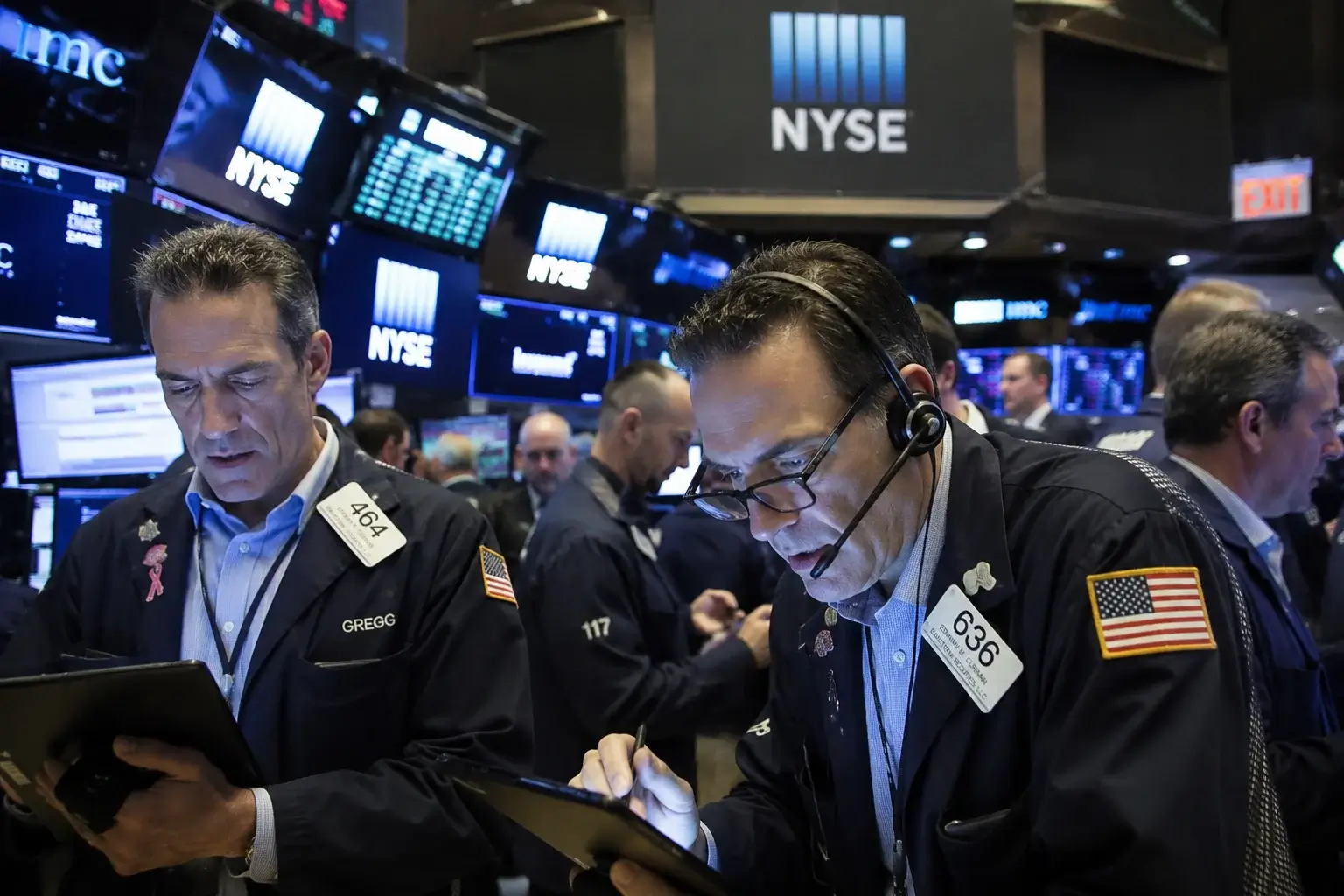
The S&P 500 (SPX) traded near 7,353 by midday Wednesday, down about 0.7%, or roughly 52 points, after the hottest headline inflation reading in three years landed on the same morning that U.S.-Iran hostilities reignited. The Nasdaq Composite (IXIC) bore the brunt of the selling, sliding about 1.6%, or near 411 points, to roughly 25,518 as technology and semiconductor names extended a losing streak that has defined the first ten sessions of June. The Dow Jones Industrial Average (DJI) held up better, easing around 0.45%, or near 230 points, to about 50,640, cushioned by a defensive bid in consumer staples, telecom and energy. The Russell 2000 stood out as the lone green index, up about 0.4%, a small-cap reversal of the leadership that had carried the tape for most of the past two years.
The session captured a market trying to price two opposing forces at once. The May Consumer Price Index showed annual inflation accelerating to 4.2%, the fastest pace since April 2023, a number that on its surface argued for higher rates and lower equity multiples. Yet the composition of that report was far calmer than the headline, and crude oil fell rather than spiked even as the United States and Iran exchanged fresh strikes. The result was an orderly retreat instead of a rout, with the Cboe Volatility Index (VIX) climbing about 6.5% to near 20.15 — elevated, but well short of the panic readings that accompanied the chip-led selloff that wiped roughly $1 trillion from equity values in early June.
Inflation Hits 4.2%, but the Core Reading Tells a Calmer Story
The Bureau of Labor Statistics reported that the Consumer Price Index rose 0.5% in May on a seasonally adjusted basis, lifting the annual rate to 4.2% from 3.8% in April. That marked the third consecutive monthly acceleration in headline inflation and the highest yearly print since April 2023. Both the 0.5% monthly gain and the 4.2% annual figure landed in line with consensus forecasts, removing some of the surprise risk that typically triggers sharp intraday reversals around the release.
The more consequential detail sat beneath the headline. Core CPI, which strips out volatile food and energy categories, rose just 0.2% on the month, cooler than the 0.3% the market had penciled in, and held at 2.9% on an annual basis, matching expectations. That 2.9% is still the highest core reading since September 2025, but the monthly deceleration from April's 0.4% pace mattered more to the tape than the year-over-year level. The April core figure had been distorted by a one-off adjustment to the rent calculation tied to last autumn's government shutdown, a quirk that was never going to repeat. With that noise removed, shelter costs appeared to drift back toward a more moderate cadence in May.
The gap between the two measures defined the day's narrative. Headline inflation running at 4.2% against core at 2.9% leaves a spread of roughly 130 basis points, an unusually wide divergence. That gap is doing useful work as a barometer: if it narrows because core prices begin climbing, the inflation problem becomes structural and genuinely worrying. If it narrows because energy prices cool, that is close to the best-case outcome for risk assets. For now, the spread is wide precisely because the inflation impulse is concentrated in a single, externally driven category rather than spreading through the broader economy.
Energy Did the Damage — and That Could Be the Reassuring Part
The May inflation surge was overwhelmingly an energy story. Energy prices jumped 3.9% on the month and stood 23.5% higher than a year earlier, accounting for more than 60% of the entire monthly increase in the all-items index. Gasoline carried most of that weight, doing what gasoline reliably does during a supply shock — making the entire price basket look worse than the underlying trend justifies.
Crucially, the categories that would signal a deeper, demand-driven inflation problem behaved well. Core commodities prices actually fell 0.1% on the month, a signal that tariff-related cost pressures remain muted rather than feeding through to store shelves. That detail offered a measure of relief to the market, suggesting that the energy-driven shock from the Middle East conflict has not yet meaningfully bled into the broader price structure. The read across trading desks was that if oil stabilizes or retreats, inflation likely peaks this quarter and begins easing in the back half of the year, an outcome that would let the Federal Reserve hold its current stance rather than tighten further.
That framing explains why equity futures pared their losses after the 8:30 a.m. ET release and why Treasury yields barely moved on the print. A hot headline with a soft core and a benign goods component is the kind of report a nervous market can absorb. The danger lies in duration: the longer energy stays elevated, the greater the risk that businesses begin passing higher input costs into services and wages, at which point the core number stops cooperating.
Oil Slides Below $88 Even as Strikes Resume
The most counterintuitive move of the session unfolded in the energy complex. Despite the United States launching what officials described as self-defense strikes against Iran — a response to the reported downing of an American Apache helicopter by an Iranian drone over the Strait of Hormuz — crude prices fell hard. West Texas Intermediate dropped about 3.6% toward $88 a barrel, while Brent eased toward $91, both extending a pullback from the levels above $95 that the benchmarks touched earlier in the conflict.
Several forces overwhelmed the geopolitical premium. The market increasingly read the latest hostilities as measured rather than escalatory, with peace-deal expectations between Washington and Tehran remaining intact even as missiles flew. President Donald Trump's warning that Iran "will have to pay the price" raised the temperature rhetorically, but positioning suggested the energy market is betting that a negotiated path remains the base case. On the supply side, OPEC+ approved another increase in July output quotas of 188,000 barrels per day, adding to the bearish pressure, while fresh data showed an aggressive pullback in crude imports by China — Asia's largest consumer has leaned on inventory rather than overseas supply since the conflict began, with May imports falling to their lowest since October 2017.
The fact that oil could not hold a bid on a day of active strikes carried a deeper message. A conflict that fails to lift crude is a conflict the market believes is contained, and contained energy prices are precisely what the inflation outlook needs. The Strait of Hormuz remains effectively constrained under a dual blockade, keeping a structural risk premium in place, but the immediate fear of a runaway price spike has faded for now.
Technology Stays the Market's Pressure Point
The epicenter of the weakness sat where it has sat all month: large-cap technology and semiconductors. The Nasdaq's 1.6% slide to roughly 25,518 left the index nursing the aftermath of a brutal stretch that included a 4.18% single-day plunge on June 5, its worst session since the tariff turmoil of early 2025, when a chip selloff erased about $1 trillion in market value in a matter of hours.
The pain extended into Wednesday. In premarket and early trading, Nvidia (NVDA) fell about 1.4%, Broadcom (AVGO) lost roughly 1.3%, and Micron Technology (MU) dropped about 2%, the latter still digesting a roughly 20% two-day collapse late last week that included a 13% rout in a single Friday session. The iShares Semiconductor ETF (SMH) had shed 1% on Tuesday following a 6% rebound on Monday, the kind of violent two-way action that signals a group struggling to find footing after a parabolic run.
The standout decliner was Super Micro Computer (SMCI), which tumbled about 12%, or near $4.66 a share, to roughly $34 after the company announced about $7 billion in equity-financing-related deals. The slide reflected a recurring theme of 2026: capital-hungry artificial intelligence infrastructure plays repeatedly tapping equity markets to fund operations, diluting existing holders in the process. Super Micro joined a list that includes Alphabet, which moved to sell $85 billion in stock, and Meta Platforms, which weakened on reports it could raise tens of billions in a stock offering to fund its own AI ambitions. The pattern has begun to unsettle the market, raising questions about how much of the AI capital-expenditure boom is being financed by selling shares into a richly valued tape.
That valuation concern is the thread running through the technology weakness. The market spent much of 2026 reacting not to bad news but to uncertainty, and the AI narrative has become crowded, capital-intensive and aggressively priced. Even committed believers in the theme have grown more cautious as the scale of the financing required becomes clear. With multiples stretched and yields refusing to fall, the bar for technology leadership to reassert itself has risen.
Defensives and Small Caps Cushion the Tape
Beneath the technology weakness, the session showed clear evidence of rotation rather than wholesale liquidation. The Dow's relative resilience came directly from a defensive bid. Among the blue-chip gainers, Coca-Cola (KO) rose about 1.5%, Verizon Communications (VZ) added roughly 1.5%, and Chevron (CVX) climbed about 1.2%, with the energy major benefiting from the structural risk premium still embedded in oil even as spot crude fell. The drag on the index came from Salesforce (CRM), down about 2.1%, 3M (MMM), off roughly 2.1%, and Honeywell International (HON), lower by about 1.9%.
The Russell 2000's gain of roughly 0.4% reinforced the rotation read. Small-cap strength on a day when megacap technology bleeds is the signature of capital moving down the market-capitalization ladder and toward value rather than fleeing equities altogether. Money that had crowded into a handful of AI winners appeared to seek shelter in domestically focused, less rate-sensitive names and in the defensive sectors that hold up when growth leadership wobbles. Breadth, in other words, was healthier than the index-level numbers suggested — a market thinning at the top but finding support across a wider base.
Outside the screens, one of the day's most-watched headlines had nothing to do with prices. Microsoft (MSFT) co-founder Bill Gates arrived on Capitol Hill to be questioned by a House committee about his past association with Jeffrey Epstein, a high-profile appearance that drew heavy coverage even as it carried no direct market consequence. The episode underscored a session in which the financial story competed with a crowded political and geopolitical backdrop for attention.
Treasury Yields Hold the Line; the Dollar Hovers at 100
The bond market delivered the clearest verdict on the inflation report by barely reacting to it. The benchmark 10-year Treasury yield held near 4.55%, essentially flat after the CPI release, having traded in a tight band that has defined the past several weeks. The 2-year note, most sensitive to near-term Fed policy, sat near 3.5%, while the 30-year bond hovered around 4.7%. That stability after a three-year-high headline inflation print was itself a statement: the market had already absorbed the energy-driven inflation impulse and saw little in the data to force a repricing of the rate path.
The behavior of yields throughout the Iran conflict has been instructive. In a typical geopolitical crisis, money floods into Treasurys for safety, pushing prices up and yields down. The opposite has occurred repeatedly this spring, with prices falling and yields rising as the market fixated on the inflationary consequences of higher energy costs rather than the flight-to-quality impulse. That dynamic kept the 10-year pinned in a 4% to 4.5%-plus range, with the upper end giving way during the worst of the oil spikes.
The U.S. Dollar Index (DXY) traded near 99.93, hovering just below the psychologically important 100 mark and slightly lower on the day. The greenback had surged toward 99.73 during the recent gold selloff, its strongest since early April, as the combination of a hawkish Fed repricing and elevated yields drew capital toward dollar assets. A dollar near 100 with yields anchored at 4.55% forms a backdrop that pressures both rate-sensitive equities and non-yielding stores of value, and that pressure showed up vividly in the precious-metals complex.
Gold and Silver Extend a Sharp Retreat
Precious metals, the assets that should theoretically thrive amid war and inflation, instead suffered one of their worst stretches in months. Spot gold traded near $4,146 an ounce by mid-morning, down sharply from Tuesday's $4,340 level and extending a slide that has carried the metal down roughly 8% from its peak earlier in the year. The recent low near $4,339 had already marked the weakest reading since late March, and Wednesday's move pushed bullion well below that mark.
Silver fared worse on a percentage basis during the recent washout, having dropped more than 7% in a single session to near $68.57, its lowest since late March, before stabilizing around $68. The gold-to-silver ratio held near 63, and central-bank buying — which resumed net accumulation in April — continued to provide a structural floor that speculative selling has struggled to fully erode.
The selloff in metals was the mirror image of the strength in the dollar and the firmness in yields. With the 10-year holding above 4.5% and the dollar pressing toward 100, the opportunity cost of holding a non-yielding asset rose just as the inflation hedge thesis ran into a cooler core CPI print. The result was a market unwinding crowded long positions in the very assets that geopolitical risk would normally support, a dislocation that captured how thoroughly the rate outlook has come to dominate every other consideration.
The Fed Enters Its Window With a December Hike Priced In
All roads led back to the Federal Reserve, which holds its next policy decision on June 17 — the first under new Chair Kevin Warsh. The market sees a 96.3% probability that the benchmark federal funds rate stays at its current 3.5% to 3.75% target after that meeting, leaving the immediate decision close to a foregone conclusion. The more telling shift sat further out the curve: the market is now fully pricing a 25-basis-point rate hike by December, and the futures complex sees additional hikes as more likely than cuts heading into the autumn.
That repricing toward tightening, rather than easing, represents a significant turn from the consensus that prevailed at the start of the year. The catalyst was last week's blowout May jobs report, which showed payrolls rising 172,000 against forecasts near 80,000, a figure that defied expectations and reinforced the case for the central bank to lean against inflation rather than support growth. The CPI report added a layer of nuance: the cooler core reading gave the Fed what some strategists described as breathing room to remain patient as the energy shock plays out, while the hot headline kept the option of a hike firmly on the table.
The internal debate is well documented. Many officials at the March meeting argued that higher inflation sustained for longer could justify rate increases, even as the central bank conventionally discounts energy-price fluctuations in setting policy. The judgment hinges on duration — an oil-price shock that fades is one the Fed can look through, while one that embeds itself in expectations is one it must confront. With a fresh chair at the helm and a market braced for tightening, the June 17 communication will be parsed less for the rate decision itself than for any signal of how concerned policymakers have become about the inflation surge.
Read More
-
Yen Stalls at 160 Despite a 3% JGB and Tokyo Core CPI at 2.0% — Intervention Sits at 164, Friday's Payrolls Decide
02.09.2026 · TradingNEWS ArchiveEnergy
-
CHAT Fund Holds $96.37 as Korean Memory and Chip Exposure Drive a 109.73% Year — Break of $98.02 Opens $105.20
18.09.2026 · TradingNEWS ArchiveStocks
-
First-Generation XRPR and XRPI Ride XRP's Rebound to $1.386 as Spot Funds Post First Outflow — Break of $1.40 Opens $1.54
18.09.2026 · TradingNEWS ArchiveCrypto
-
NG Holds $2.9255 as Storage Surplus Narrows From 5.5% to 3.7% in 3 Weeks — Break of $3.00 Opens $3.15
18.09.2026 · TradingNEWS ArchiveCommodities
-
Dollar Surges to 157.90 as BoJ's Divided Hike Fails to Lift the Yen — Break of 158.87 Opens 159
18.09.2026 · TradingNEWS ArchiveForex
What the Levels Say Now
For the major averages, the technical picture frames the near-term battle. The S&P 500 near 7,353 sits below the 7,600 level it cleared earlier this month, with the recent low near 7,383.74 from the June 5 plunge now acting as a reference point that buyers will want to defend. A close back above 7,400 would suggest the CPI-and-conflict combination has been absorbed; a break beneath the early-June lows would signal that the technology-led derating has further to run.
The Nasdaq's path is the most consequential for overall sentiment. After closing as low as 25,709 on June 5 and 25,678 on Tuesday, the index near 25,518 is probing fresh territory for this pullback, and the 25,500 zone becomes the line that defines whether the chip-led selloff stabilizes or accelerates. The Dow near 50,640, holding above its early-June close near 50,866 only by the slimmest defensive margin, leans on staples and energy to keep the damage contained. The Russell 2000's green session offers a tentative signal that capital is rotating rather than retreating, the single most encouraging breadth development on an otherwise heavy tape.
The next catalyst is fixed on the calendar. Between a contained but unresolved Middle East conflict, an energy market that refuses to spike, an inflation print that ran hot at the headline and cool at the core, and a Federal Reserve decision one week away under new leadership, the market is navigating a narrow corridor. The 10-year at 4.55%, the dollar at 100, oil near $88 and gold near $4,146 form the four corners of that corridor, and the path the S&P 500 takes from 7,353 will be set by which of those anchors moves first.