XRP Price Forecast: XRP-USD Pins $1.37 With ETF Inflows Holding $1.44B; $1.32 Support or $1.70 Cup-And-Handle Target
EC case closure, XRPR and XRPI ETFs, and 71M whale accumulation collide with weakening EMA structure and BTC's $76K drag for a $1.32-$1.70 May range | That's TradingNEWS
Key Points
- XRP trades $1.37, -26% YTD; cycle high $3.66 July 2025; below all key EMAs (20/50/100/200), RSI at 43.
- Spot XRPR ETF launched Sep 2025, XRPI followed; cumulative ETF inflows $1.44B+; 71M tokens accumulated by whales.
- Standard Chartered $2.80 base case; FXEmpire $5+; CoinCodex $1.70-$2.00 bear case; $0.44 worst-case.
XRP (XRP-USD) is trading at $1.37 in midday Tuesday action, with parallel feeds showing the asset at $1.33-$1.35 on the LiteFinance and Bitget aggregates and $1.42 on the ByDFi reading earlier in the cycle. The asset sits roughly 26% down year-to-date in 2026, a striking drawdown given that XRP entered the year on the back of an $1.90 close in December 2025 and climbed to $2.34 in January before the broader crypto correction triggered the multi-month consolidation. The longer arc is the more important context: XRP reached a cycle high of $3.65703 on July 18, 2025, when the SEC case resolution and the anticipation of spot ETF approval combined to produce one of the strongest single-week rallies in the asset's history. From that peak, XRP is now down roughly 62%, even as the spot XRPR ETF launched in September 2025 and cumulative ETF inflows have exceeded $1.44 billion. The 24-hour volume is tracking near $3-4 billion against a market cap of roughly $77 billion (based on ~56 billion circulating tokens), placing XRP as the fourth-largest cryptocurrency by market cap. The asset trades below all key exponential moving averages (20/50/100/200-day), and the RSI at 43 confirms the bearish-leaning short-term momentum that has defined the May tape.
Today's Driver: Iran Risk-Off Plus ETF Flow Bifurcation
Tuesday's XRP price action is the product of two parallel pressures that mirror the broader crypto setup. First, the Iran-de-escalation narrative reversed sharply when U.S. forces conducted overnight self-defense strikes on Iranian vessels in the Strait of Hormuz and Trump told negotiators "not to rush" — pushing the dollar to a one-month high (DXY 99.27) and broadly compressing risk assets. Bitcoin sagged to $76,000-$77,200, Ethereum slipped to $2,114, and XRP gave back the morning's earlier strength. Second, the ETF flow signal for XRP has continued to bifurcate from Bitcoin and Ethereum — Coinbase's editorial desk noted "XRP ETFs attract inflows amid wallet surge. Bitcoin, ether funds struggle. Fresh inflows into XRP-linked funds and a spike in newly created wallets suggest some traders may be rotating into the token while trimming exposure to crypto's largest assets." The combination is informative: XRP is structurally outperforming on the flow side (rotating institutional and retail money in) while the macro overhang and the BTC drag suppress price action. The asset's 84%+ correlation with Bitcoin means that even with XRP-specific positive catalysts, the price ceiling remains pinned until the broader crypto complex catches a bid. A separate headline noted "Bitcoin, ether, XRP rebound as Senate curbs Trump's Iran war powers" — confirming XRP's beta to macro de-escalation when it materializes.
Technical Framework: $1.32 Floor, $1.45 Cap, $1.70 Cup-And-Handle Target
The chart structure for XRP defines a clear tactical map. Immediate support sits at $1.32 (the cluster low that has held through multiple May tests), then $1.30 (round-number), then the structural floor at $1.27-$1.28 (April 2026 low). On the upside, resistance sits at $1.45 (the ceiling of the May consolidation range), then $1.50 (round number), then $1.70 (the cup-and-handle target that ByDFi's pattern-recognition framework has flagged as the proximate upside trigger). The asset is trading below all four key EMAs — 20-day, 50-day, 100-day, and 200-day — which is a structurally bearish signature, but the alignment also creates the conditions for a sharp short-cover rally if a single catalyst breaks the trend. RSI at 43 reads neutral-bearish but not deeply oversold, leaving room for a further leg lower if support breaks. The May 2026 range is constrained to $1.32-$1.45 unless broader crypto sentiment improves significantly, per the CoinDCX technical framework. The asset rejected the 50-day EMA on the last attempt to break out, and the failure has reinforced the tight consolidation pattern. A clean reclaim of the 50-day EMA (currently in the $1.45-$1.50 zone) would be the first credible breakout signal.
The ETF Story: $1.44B Inflows Since Launch, XRPR And XRPI
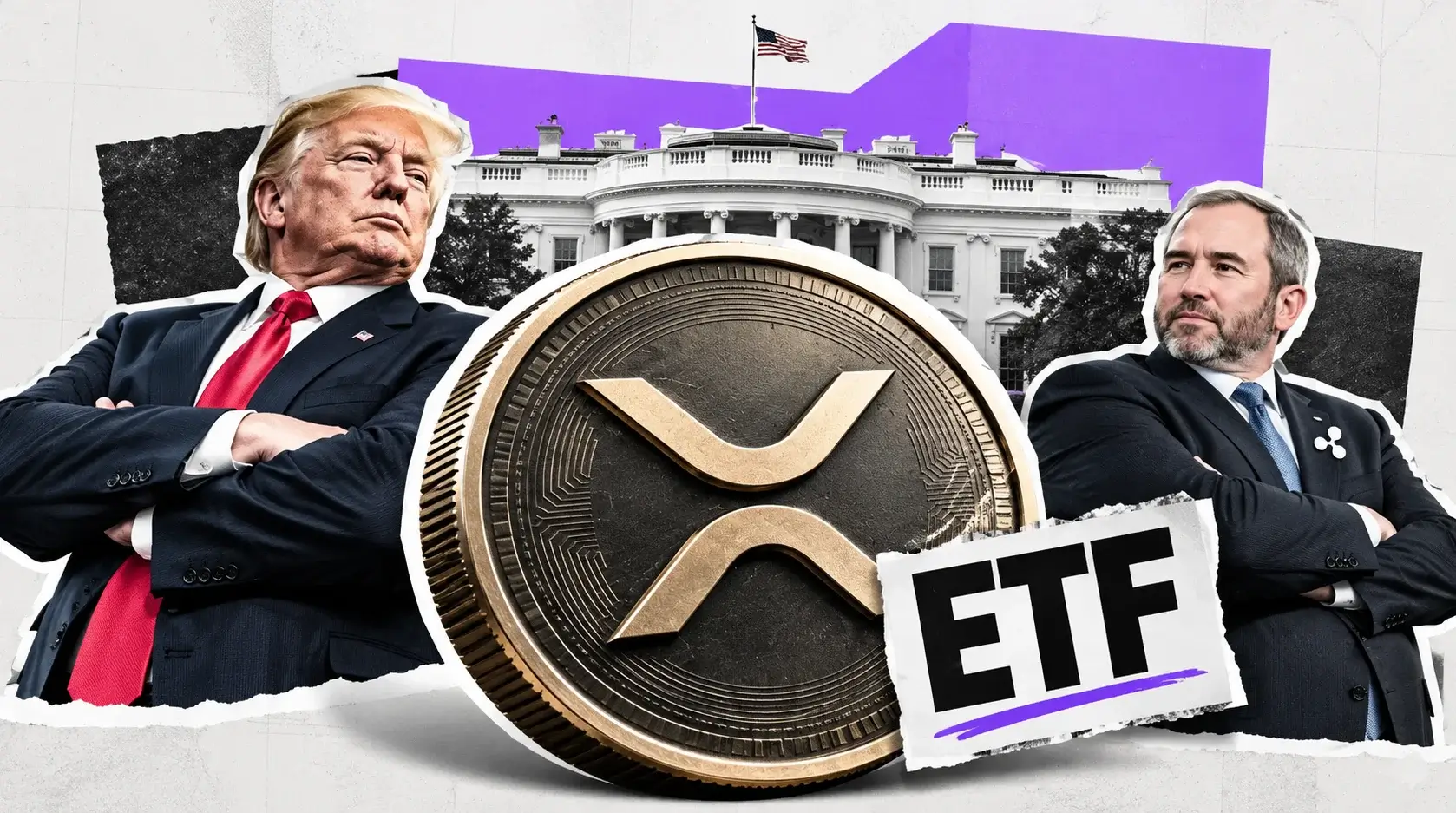
The single most important structural development in XRP's investment thesis in the past 12 months was the launch of spot XRP ETFs in the U.S. market. The first U.S. spot XRP ETF — XRPR — launched on September 18, 2025, and additional XRP ETFs (including XRPI) followed through November 2025. Cumulative net inflows since launch have exceeded $1.44 billion across the spot XRP ETF complex, with Changelly's analysis confirming "over $1 billion in net inflows since inception." The structural significance: XRP is now investable through regulated U.S. brokerage infrastructure for the first time, and the institutional access has translated into a measurable demand pillar that did not exist during the 2017-2021 cycles. Recent flow patterns show "XRP ETFs attract inflows amid wallet surge" while "Bitcoin, ether funds struggle" — the kind of relative-rotation signal that historically precedes sustained outperformance. The cumulative ETF AUM math: $1.44B represents roughly 1.9% of XRP's total market capitalization, meaningfully smaller than the spot Bitcoin ETF complex (6.5% of BTC market cap) but materially larger than what most altcoin ETF analogs have achieved. The structural channel for further upside: if XRP ETF flows continue to attract incremental capital while BTC and ETH ETF flows remain negative, XRP can outperform Bitcoin on the spot price even in a broadly weak crypto environment.
The SEC Resolution: A $125M Penalty And The End Of A Five-Year Overhang
The single largest structural change for XRP-the-asset over the past 12 months was the formal resolution of the SEC enforcement action that had hung over the project since December 2020. The sequence: June 2025 saw appeals paused under new SEC leadership and negotiations on the $125M fine and injunction terms; August 6, 2025 Ripple and the SEC jointly moved to dismiss all appeals; August 7, 2025 the SEC officially ended its lawsuit with Ripple agreeing to a $125 million penalty (institutional sales injunction remained); August 8, 2025 XRP price surged over 23% following the announcement; August 22, 2025 the court approved the dismissal, formally closing the case and removing the regulatory uncertainty that had suppressed institutional participation for years. The implications are mechanical and ongoing. First, XRP is now unambiguously a "non-security" under U.S. securities law for retail and secondary-market transactions — the regulatory question that had blocked U.S. exchange listings for years. Second, the spot ETF approvals followed almost immediately, with XRPR launching in September. Third, institutional partners (banks, payment processors, fintech firms) can now integrate XRP without facing the headline risk of being indirectly involved in an SEC enforcement matter. The $125M penalty was meaningful but small relative to Ripple's $25B+ private valuation, and the injunction limiting institutional sales was a structural concession but not a business-model breaker. The cycle's first leg higher post-SEC ($1.90 to $3.66) captured the relief rally; the subsequent consolidation has been about realizing the next stage of utility-driven demand.
Whale Accumulation And Options Positioning: 71M Tokens And A $224K Bet
The on-chain and derivatives data for XRP tells the same bifurcated story as Bitcoin and Ethereum — whales accumulating while retail and short-term flow remains cautious. XRP whales accumulated 71 million tokens last week alone, even as the broader crypto market dropped more than 5% — the kind of pattern that historically marks accumulation lows. Ledger activity surged sharply, with daily transaction counts and new wallet creation both moving higher even as price action chopped sideways. Options positioning carries an interesting signal: a crypto whale made a $224,000 bet that XRP's price stays perfectly flat through June, collecting approximately $224,500 in premiums on the bet that XRP remains close to $1.40 through expiry. The trade structure (likely a sold straddle or strangle centered on $1.40) reflects the whale's read that the asset is genuinely range-bound and that the implied-volatility surface is too rich for the realized range — a structural view that, if proven correct, captures the next 30-60 days. The broader options-positioning signal is that institutional and quasi-institutional traders are positioning for continued consolidation rather than directional resolution, which limits the speculation premium that could otherwise drive XRP higher on a clean catalyst.
RippleNet And Institutional Adoption: 300+ Financial Institutions
The fundamental case for XRP rests on Ripple Labs' institutional infrastructure adoption, and the network depth is now meaningful enough to define the asset's utility floor. RippleNet — the payments network that Ripple Labs built on top of the XRP Ledger — connects over 300 financial institutions globally, including major banks, payment processors, and remittance firms. The competitive position relative to Stellar (XLM) and SWIFT alternatives places XRP at the top of the institutional cross-border payments stack for entities that want a regulated, decentralized settlement layer. CEO Brad Garlinghouse has emphasized that the post-Trump-election regulatory environment has accelerated Ripple's U.S. business: "We signed more U.S. deals in the last six weeks of 2024 (since the election) than the previous six months." The 2026 partnership pipeline includes several large bank and payment-processor deals that, if they materialize with On-Demand Liquidity (ODL) activation, would translate into incremental XRP utility demand and a stronger fundamental floor under the price. The risk to this thesis: Ripple's institutional partnerships have increasingly routed settlement through RLUSD (Ripple's stablecoin) rather than XRP, which would undermine the utility-driven demand case if it becomes the dominant pattern.
The RLUSD Threat: A Stablecoin Routing Risk For XRP Utility
The single most credible structural risk to XRP's medium-term price thesis is RLUSD — Ripple's USD-backed stablecoin — and the possibility that institutional partners route settlement through RLUSD rather than XRP. ByDFi's analysis captured the risk precisely: "The most credible risk is that Ripple's institutional partnerships continue routing settlement through RLUSD rather than XRP. If ODL activations do not materialize across the new 2026 partnership pipeline, the utility-driven demand case weakens." The mechanics: RLUSD provides the same cross-border settlement utility as XRP but without the volatility risk that has historically deterred treasury teams from using XRP for working-capital purposes. If Ripple's 300+ institutional partners increasingly opt for RLUSD-based settlements, the XRP-the-asset demand story compresses to speculation and ETF flows rather than utility. The counterargument: RLUSD and XRP serve different functions — RLUSD for stablecoin-denominated transfers, XRP for the bridge-currency function between any two fiat or asset pairs — and the two products can grow together rather than substitute. The activation of ODL contracts on the new 2026 partnership pipeline will be the cleanest data point: meaningful ODL flow gives XRP utility a fresh tailwind; an RLUSD-only adoption pattern undermines the bull case meaningfully.
Read More
-
Yen Stalls at 160 Despite a 3% JGB and Tokyo Core CPI at 2.0% — Intervention Sits at 164, Friday's Payrolls Decide
02.09.2026 · TradingNEWS ArchiveEnergy
-
QQQ ETF ($706.22) Slides 7.4% Below Its High as the Market Reprices the AI Capex Bill — $686.57 Target if $700 Breaks
22.10.2026 · TradingNEWS ArchiveStocks
-
XRPI ($7.00) and XRPR ($10.74) Slide Toward 52-Week Lows as Spot XRP ETF Flows Stall at $708,510
22.10.2026 · TradingNEWS ArchiveCrypto
-
NG ($2.775) Decoupled From Europe’s €88 Gas Crisis as LNG Feedgas Hits 18.9 Bcf/d — $3.30 Upside on Cold Weather
22.10.2026 · TradingNEWS ArchiveCommodities
-
Dollar-Yen (157.35) Loses 157.65 as the Yen Rallies on Haven Demand — 155 Target if 156 Breaks
22.10.2026 · TradingNEWS ArchiveForex
Escrow Unlocks: The 1 Billion XRP Monthly Supply Headwind
The structural supply-side overhang on XRP that warrants explicit acknowledgment is the monthly escrow unlock. Ripple Labs releases approximately 1 billion XRP from escrow each month under a pre-established schedule that has been operating since 2017. While a substantial portion of each monthly tranche is typically re-escrowed (Ripple has historically returned 700-900 million of each 1 billion-token release back to escrow), the predictable supply addition creates a low-level downward pressure that BTC and ETH do not face in the same form. The math: 1 billion XRP at $1.37 represents $1.37 billion in nominal monthly supply, against trading volume of $3-4 billion daily — a manageable absorption rate but not negligible. The market has historically absorbed the unlocks without significant price impact during bull cycles, but in consolidation or bear-trend regimes the supply pressure becomes more visible. This is one structural reason XRP has historically underperformed Bitcoin on relative-price metrics during sideways markets, and it informs the current $1.32-$1.45 May range being narrower than the BTC and ETH equivalent ranges.
Bitcoin Correlation And The Macro Drag
The single most important price-action driver for XRP in the short term is its high correlation to Bitcoin, and the BTC-driven downside currently visible across the crypto complex is the proximate cap on XRP's upside. ByDFi's analysis was blunt: "Traders who run pure XRP technical analysis without accounting for Bitcoin's directional trend are managing risk on an incomplete picture." Bitcoin trades at $76,700-$77,200, down 1.07% on the day and 11% YTD, with the spot ETF redemption regime (1.26 billion of outflows in the May 18-22 window) continuing to weigh on the asset. Until BTC reclaims $80,000 and breaks the ETF-outflow regime, the entire crypto complex faces a structural ceiling that XRP cannot decouple from regardless of its own bullish micro-drivers. The flip side: if BTC catches a clean catalyst (Iran de-escalation, Fed pivot, ETF flow reversal) and rallies toward $85,000-$90,000, XRP carries higher beta than BTC and can outperform meaningfully — a 25-35% move in BTC has historically translated to 50-100% moves in XRP given the lower market cap and the structural under-positioning. The asymmetry favors holders patient enough to wait for the macro shift.
Forecast Targets: $1.70 Cup-And-Handle To $5.13 Bull, $0.44 Worst-Case
The institutional and analyst forecast landscape for XRP captures one of the widest wedges across major cryptocurrencies. The 2026 base-case cluster sits at $2.50-$5.00 with a midpoint near $3.50-$4.00 — a target zone that would require XRP to roughly double or triple from current spot. Standard Chartered revised its earlier bullish projection and now places XRP around $2.80 under moderate conditions — a 2x from spot that captures the "ETF flows accelerate + utility demand modest" scenario. FXEmpire and Coinfomania models extend toward $5.00-$5.13 in stronger bull cases predicated on aggressive ETF inflow acceleration and a meaningful Bitcoin rally. CoinCodex's algorithmic model is more conservative at $1.70-$2.00, near-term consolidation continuation. LiteFinance's aggregated bear case extends to $0.44 (a deep capitulation scenario) with the optimistic side at $1.90-$2.21. Cryptonews projects $3.00 retracement in 2026 and $10+ by 2030. Fencer at Crypto Basic targeted $8.50-$9 by Q4 2025 (did not materialize, an instructive miss for thinking about bull-case timing). Michael Saylor, head of Strategy and a known Bitcoin maximalist, has predicted XRP would go to $0 on the PBD Podcast — the maximalist-bear extreme. The trade-weighted consensus: $2.80 as the modal 2026 target, $1.70-$2.00 as the conservative path, $5.00+ as the upside extension if multiple catalysts land together.
Risks: RLUSD Cannibalization, BTC Bear Cycle, Escrow Pressure
The risks to the XRP bull case fall into four distinct buckets. First, the RLUSD cannibalization risk: if Ripple's 2026 partnership pipeline routes through RLUSD rather than activating ODL flows with XRP, the utility demand case weakens materially and XRP becomes purely an ETF-flow and speculation asset. Second, a sustained Bitcoin bear cycle would drag XRP lower regardless of XRP-specific fundamentals — the 84%+ correlation means BTC at $60,000 likely takes XRP to $0.80-$1.00 territory. Third, the monthly escrow unlock continues to add 1 billion tokens of supply, and any meaningful change in Ripple's re-escrow practices (selling more, holding less in escrow) would compress price further. Fourth, regulatory risk re-emerging — while the SEC case is closed, a new enforcement action under a different administration or a new classification under future legislation would trigger sharp downside. The bull path requires at least three of: BTC rally, ETF flow acceleration, ODL activation, RLUSD remains complementary not substitutive. The bear path needs only one major risk to land cleanly.
The Final Read: $1.32-$1.70 Range Until BTC Or A Single Catalyst Breaks It
XRP's $1.37 print Tuesday sits inside a $1.32-$1.45 May consolidation that has been the dominant pattern for the past four weeks, and the resolution of that range comes down to three sequential factors: a clean Bitcoin breakout above $80,000, the next major ODL activation announcement from Ripple, and any meaningful continuation of the $1.44B ETF inflow trajectory into Q3. A daily close above $1.45 opens $1.50 immediately and $1.70 as the cup-and-handle target that ByDFi's pattern framework has flagged, with $2.00 (CoinCodex bear case top) and $2.80 (Standard Chartered moderate case) as the major upside extensions for 2026. A daily close below $1.30 opens $1.27 and below that the structural test toward $1.00 — a 27% drawdown that would trigger meaningful retail capitulation and likely mark the cycle low. The whale accumulation (71M tokens last week) and the ETF flow bifurcation (XRP attracting while BTC and ETH bleed) argue for asymmetric upside if the macro tape shifts, but the BTC drag and the RLUSD cannibalization risk define the structural cap. The trade that defines XRP through Q3 is exactly whether the marginal flow continues to rotate into XRP at the expense of BTC and ETH, or whether the broader crypto complex catches a renewed bid that lifts all three together. Tuesday's tape suggests neither side has the marginal dollar yet, and the $1.32-$1.45 range remains the path of least resistance until a catalyst — Camp David, Fed pivot, ETF inflow acceleration, or an ODL activation announcement — moves the needle.