XRP Price Forecast: XRP-USD Is Sitting on Its Strongest On-Chain Bottom Signal Since $0.50
With 36.8 billion tokens at a $50.8B unrealized loss, $1.44B in ETF custody, and a Bollinger squeeze pointing to imminent breakout, XRP at $1.38 is either the best risk-reward entry of 2026 | That's TradingNEWS
XRP Price Forecast — March 12, 2026: $1.38, 62% Off Its Peak, and Every On-Chain Signal That Has Ever Preceded a Major Recovery Is Flashing Simultaneously
XRP-USD at $1.38 — The Mildest Major Correction in XRP's Entire History, and the Most Institutionally Fortified Bottom It Has Ever Built
XRP is trading at $1.38 on March 12, 2026, locked inside a tightening symmetrical triangle on the 2-hour chart, coiling between converging trendlines that have been compressing since early February. The intraday range has been surgical: a midday surge pushed price briefly to $1.41 before sellers rejected it cleanly back into consolidation, reinforcing the $1.40 to $1.42 zone as the immediate ceiling. Support near $1.37 has held through multiple tests during the session, with buyers forming a sequence of higher lows on shorter timeframes that confirms dip demand is active even as momentum has stalled. The 52-week range tells the full story of where XRP has been: from a July 2025 high of $3.65 to a drawdown low near $1.11, the token has shed approximately 62% of its peak value over nine months. XRP started 2026 with a 25% surge to $2.40, then reversed sharply in February, losing approximately 30% to retrace back toward the $1.30 to $1.50 consolidation band where it has spent the past several weeks building a base.
The 62% drawdown number sounds severe until it is placed in historical context. In 2018, XRP fell 95% from its $3.84 cycle peak all the way to $0.17 — a complete destruction of value that lasted years. In 2021 to 2022, XRP dropped approximately 84% from its $1.96 cycle high to $0.31, with the SEC lawsuit freezing U.S. exchange access and removing the institutional pathway that currently exists. At 62% from $3.65, this is statistically the most restrained major drawdown XRP has ever experienced. Bitcoin is simultaneously down approximately 47% from its October 2025 peak of $124,700, which matters because XRP tracks Bitcoin with a 0.84 correlation and tends to amplify BTC moves by approximately 1.8x in both directions. Every 40 to 50% Bitcoin correction since 2014 has recovered to a new all-time high, with recovery timelines averaging 9 to 14 months. XRP has participated in every single one of those recoveries. The historical framework establishes the range of outcomes. What makes the current setup genuinely different — structurally, not rhetorically — is what XRP brought into this drawdown that it has never had before.
The Fundamental Infrastructure Behind XRP-USD That Didn't Exist in 2018 or 2022 — Seven ETFs, $1.44 Billion in Institutional Custody, and a Settled SEC Lawsuit
Every prior XRP major drawdown occurred against a backdrop of fundamental vulnerability. The 2018 crash hit a token with zero regulatory clarity, no institutional product infrastructure, and no meaningful adoption beyond speculative trading. The 2022 collapse happened with a live SEC enforcement action that froze XRP from major U.S. exchanges for years, eliminating any institutional pathway and creating existential legal uncertainty around whether XRP would ever achieve compliant status in the most important capital market in the world. Neither of those conditions applies to XRP on March 12, 2026.
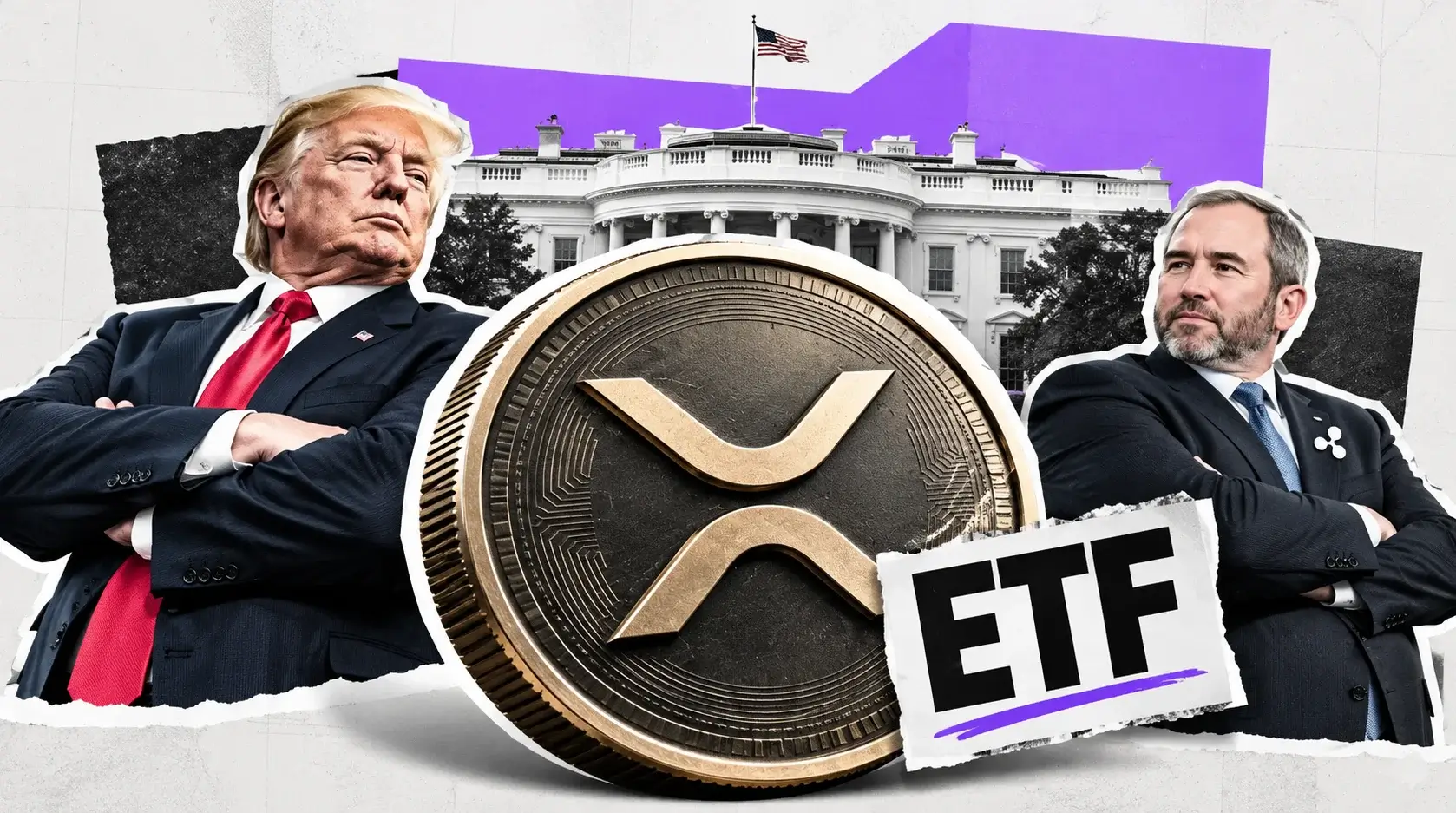
The SEC lawsuit is settled. Seven spot XRP ETFs are live and operational in the United States. Those ETFs have accumulated $1.44 billion in cumulative inflows since launching in November 2025 — locking approximately 785 million XRP into institutional custody, removing that supply from the accessible float and building a demand floor beneath the price that is structurally new in XRP's history. The fastest accumulation phase for any crypto ETF product after Bitcoin played out in XRP's first weeks of availability. XRP was named to the U.S. strategic cryptocurrency reserve — a political and institutional legitimization that changes the probability distribution of regulatory hostility going forward. Ripple, the blockchain firm central to XRP's institutional adoption story, has begun a $750 million share buyback that would value the company at approximately $50 billion, following a $500 million funding round at a $40 billion valuation in November 2025 backed by major hedge funds and crypto investment firms. These are not speculative signals — they are hard capital commitments from sophisticated institutions that have done the legal and financial diligence required to make nine and ten-figure commitments to the XRP ecosystem.
36.8 Billion XRP Sitting at an Unrealized Loss — The On-Chain Capitulation Signal That Has Historically Marked XRP's Most Reliable Recovery Launchpads
The on-chain configuration around XRP right now is one of the most important facts for understanding the current risk-reward structure, and it is almost entirely absent from the price discussion happening in real time. Approximately 36.8 billion XRP — representing roughly 60% of the total circulating supply — is currently sitting at an unrealized loss. The aggregate unrealized loss across those positions totals approximately $50.8 billion. XRP's Net Unrealized Profit and Loss (NUPL) indicator has dropped into capitulation territory that is actually more extreme than where it registered during the July 2024 bottom when XRP was trading near $0.50. When the majority of circulating supply is underwater and NUPL is at capitulation readings, the holders who were going to sell at a loss have already sold. The supply that remains is controlled by long-term conviction holders, institutional custody accounts, and ETF products — not by weak hands looking for the next opportunity to exit.
The MVRV Z-Score — one of the more statistically reliable on-chain valuation metrics in the asset class — is showing XRP trading below its fair value threshold. That means current market price is below realized value, the aggregate average cost basis of all tokens that have changed hands. Every time this signal has appeared in XRP's history, it has preceded meaningful recoveries rather than continued deterioration. The realized profit/loss ratio is approaching the critical 1.0 mark, where loss-realizing transactions nearly match profitable ones. When that ratio crosses below 1.0 on a 90-day moving average basis and confirms a sustained reading in that zone, XRP has historically produced its most durable recovery moves — not bounces, but directional shifts that sustained for months. The symmetrical triangle forming on the chart, converging tighter with every passing session, adds the technical confirmation layer to what the on-chain data is already signaling. The apex of the triangle is approaching, which means the directional resolution is a timing question, not a structural question.
Read More
-
Yen Stalls at 160 Despite a 3% JGB and Tokyo Core CPI at 2.0% — Intervention Sits at 164, Friday's Payrolls Decide
02.09.2026 · TradingNEWS ArchiveEnergy
-
QQQ ETF ($706.22) Slides 7.4% Below Its High as the Market Reprices the AI Capex Bill — $686.57 Target if $700 Breaks
22.10.2026 · TradingNEWS ArchiveStocks
-
XRPI ($7.00) and XRPR ($10.74) Slide Toward 52-Week Lows as Spot XRP ETF Flows Stall at $708,510
22.10.2026 · TradingNEWS ArchiveCrypto
-
NG ($2.775) Decoupled From Europe’s €88 Gas Crisis as LNG Feedgas Hits 18.9 Bcf/d — $3.30 Upside on Cold Weather
22.10.2026 · TradingNEWS ArchiveCommodities
-
Dollar-Yen (157.35) Loses 157.65 as the Yen Rallies on Haven Demand — 155 Target if 156 Breaks
22.10.2026 · TradingNEWS ArchiveForex
The Whale Problem — $652 Million Worth of XRP Hitting Binance in One Week and the 2 Billion Token Sell Wall at $1.58–$1.60
The bullish on-chain capitulation signals do not exist in isolation. There is a real and specific impediment to XRP recovery that needs honest examination, and it is the behavior of large holders. Whales control approximately 48 billion XRP — roughly 70% of total supply — which means their decision to accumulate or distribute is the single most dominant variable in XRP's medium-term price trajectory. No ETF inflow, no on-chain signal, and no chart pattern can overcome coordinated whale distribution at scale. Since XRP's $3.65 peak in July 2025, large holders have sold an estimated $6 billion worth of XRP into the market. The most acute recent episode was the week of late February 2026, when approximately $652 million worth of XRP — roughly 472 million tokens — flowed into Binance in a single week. That was the largest single-week exchange inflow reading of 2026, and it directly reversed months of declining Binance reserve balances that analysts had been citing as a bullish supply-reduction signal.
The technical resistance structure that whale activity has created is also specific and well-defined. Approximately 2 billion XRP was accumulated in the $1.58 to $1.60 price zone, representing a massive breakeven cluster where holders who bought at those levels will look to exit the moment price recovers there. That wall rejected every significant rally attempt in 2026 so far and continues to act as the immediate ceiling above the current consolidation. Above that, approximately 1.85 billion XRP accumulated at $1.76 to $1.80 creates the second resistance band. Then $2.20 to $2.30, where Fibonacci resistance and psychological resistance converge — the same zone that rejected XRP's January 2026 rally at $2.40. These are not arbitrary chart levels; they are specific concentrations of supply held by specific participants who entered at those prices and will sell when given the opportunity to break even. Any sustainable recovery requires volume strong enough to absorb each of those supply clusters with sustained daily closes rather than intraday wicks. A wick above resistance that closes back below means nothing in terms of technical structure.
The picture for whale activity in early March offers a mixed but slightly more constructive read: some large wallets added 1.3 billion XRP in early March, representing fresh accumulation at current levels. If this pattern continues and exchange inflows from the February surge do not re-intensify, the balance tips toward distribution having peaked — but confirmation requires weeks of consistent data, not a single week of reduced selling.
XRP-USD and the Kevin Warsh Risk — Why the New Fed Chair Nominee Is the Most Dangerous Macro Variable Facing XRP in 2026
The single biggest macro risk hanging over XRP's price trajectory in 2026 is not anything happening inside Ripple's network, the XRP Ledger, or the competitive landscape for digital payments. It is the Federal Reserve chairmanship transition that is in motion. Kevin Warsh's nomination was formally sent to the U.S. Senate on March 4, 2026, putting him on track to replace Jerome Powell when Powell's term expires on May 15. The market's initial reaction to Warsh's nomination on January 30 was sharp and immediate: Bitcoin dropped 6% and XRP fell over 15% in the same week. That reaction was not irrational or mispriced — it was a precise read of what Warsh has historically represented as a monetary policy actor.
Warsh's policy record is specifically hostile to the conditions that drive crypto market expansions. He was the only Federal Reserve official to oppose the central bank's $600 billion Treasury bond purchase program in 2011. He resigned from the Fed that year, joined Stanford's Hoover Institution, and spent the following decade criticizing quantitative easing, low rates, and balance sheet expansion under every subsequent Fed chair. He negotiated the emergency acquisition of Bear Stearns by JPMorgan in March 2008 and was central to structuring the $85 billion AIG rescue six months later — experiences that defined his belief that financial system interventions create moral hazard and that the Fed's balance sheet should be far smaller than it has become. The current Fed balance sheet sits at approximately $6.5 trillion, and Warsh has expressed interest in actively selling mortgage-backed securities to shrink it — a liquidity withdrawal from the financial system at precisely the moment when crypto needs expanding liquidity rather than contracting.
XRP carries a 94% correlation with the S&P 500 — remarkably high for a digital asset — which means that any Warsh-driven shift in equity risk appetite directly transmits to XRP's price with nearly 1:1 sensitivity. Rate cuts drive capital toward riskier assets as bond yields fall and the return premium from equities, commodities, and crypto expands relative to fixed income alternatives. Goldman Sachs projects two additional rate cuts in 2026, bringing the Fed funds rate to approximately 3.0% to 3.25%. If Warsh reverses that trajectory — either by delaying cuts, pausing mid-cycle, or actively indicating balance sheet reduction — XRP's $3 recovery scenario faces a macro headwind that cannot be overcome by ETF inflows or on-chain improvements alone. The confirmation hearings, not the current price action, will be the event that defines XRP's direction for the remainder of 2026. What Warsh says about rate trajectory and balance sheet management in front of the Senate is the market signal that every XRP position needs to be sized around. XRP has a 94% S&P 500 correlation. The S&P is already pricing the Iran war's inflation impact. Add Warsh's hawkish confirmation testimony and XRP faces a compounding headwind from two separate channels simultaneously.
XRP ETF Flows — $1.44 Billion in Cumulative Inflows, But Weekly Pace Collapsed 45% and the Largest Single-Day Outflow of 2026 Hit on March 6
The XRP ETF flow data tells a story of strong structural demand coexisting with immediate momentum deceleration, and both parts of that story matter. Since launching in November 2025, spot XRP ETFs have accumulated $1.44 billion in cumulative inflows, locking approximately 785 million XRP into institutional custody. The launch period produced the fastest ETF accumulation pace for any cryptocurrency product after Bitcoin — a comparison that validates the underlying institutional demand thesis and explains why XRP held above $1.30 through a period when its on-chain NUPL hit deeper capitulation readings than the July 2024 $0.50 low. The 785 million XRP in institutional custody represents a genuine and growing supply removal mechanism that did not exist during any prior XRP drawdown.
But the momentum has stalled. Weekly inflows collapsed by 45% to just $1.9 million in the week ending March 1 — a near-complete deceleration from the $20 to $40 million weekly pace that the first months produced. March 6 saw XRP's largest single-day ETF outflow of 2026, at $16.62 million. That is a one-day outflow exceeding the entire weekly inflow pace of the prior week. Total XRP assets under management have drifted to approximately $1.06 billion from the peak cumulative inflow figure, reflecting some redemptions. The supply-removal mechanism that ETFs represent at $1.44 billion in inflows is structural and real — at $1 billion in ETF assets, approximately 500 to 700 million XRP is locked in custody at current prices; at $3 billion, that figure rises to approximately 1.5 billion XRP representing roughly 2.3% of circulating supply. At $5 billion, ETFs would control more XRP than is available on all exchanges combined, creating the supply squeeze dynamic that would force price discovery meaningfully above current levels.
Getting to $3 billion requires sustained weekly inflows of $20 to $40 million per week. At $1.9 million per week, the current pace covers approximately 5% of the required run rate. Canary Capital's CEO has indicated that BlackRock would likely consider filing its own XRP ETF once existing products demonstrate demand at the $3 billion AUM threshold — and a BlackRock entry would replicate the institutional capital catalyst that supercharged Bitcoin after BlackRock's IBIT launch. The XRP ETF market is currently providing a price floor, not a price catalyst. For that to change, inflows need to reaccelerate by roughly 10x from current rates and sustain for multiple consecutive months.
XRP Ledger Activity and Ripple's $750 Million Buyback — The Operational Metrics That Confirm Infrastructure Demand Beyond Price
While the price consolidates between $1.35 and $1.42, the underlying network infrastructure is generating data that is inconsistent with a dying ecosystem. Daily XRP Ledger transactions recently exceeded 2.7 million — one of the highest monthly readings in the network's history — which confirms that real economic activity flowing through the ledger is expanding while price languishes. This divergence between on-chain activity growth and price stagnation is a textbook setup in crypto market history: network usage grows because developers and payment processors are building on and using the infrastructure, while price consolidates as speculative momentum exits and a new base of holders at lower cost basis accumulates.
Ripple's $750 million share buyback program, which implies a company valuation of approximately $50 billion, is the most direct signal of management's confidence in the fundamental trajectory. A company undertaking a $750 million repurchase does not do so when it anticipates existential business deterioration. The valuation anchor of $50 billion for Ripple at a time when XRP trades at $1.38 creates an interesting structural context: if Ripple's equity is worth $50 billion and XRP is the functional currency of Ripple's payment network, the implied valuation of XRP's utility as network infrastructure may be severely underpriced at current market cap levels. The $500 million funding round at $40 billion in November 2025 was backed by major hedge funds and crypto investment firms — not retail buyers — which confirms that sophisticated capital with access to due diligence on Ripple's actual business metrics concluded the company was worth $40 billion nine months after XRP peaked at $3.65.
The Five-Catalyst Recovery Framework — Bitcoin at $100K, $3-5 Billion ETF AUM, Whale Accumulation Resuming, $2.30 Technical Clearance, and Fed Cuts Without Recession
XRP's path from $1.38 to $3.00 is not a single-catalyst story — it requires a specific combination of macro, institutional, technical, and on-chain conditions aligning within a finite time window. Bitcoin's position is the most fundamental prerequisite. XRP tracks Bitcoin at 0.84 correlation and amplifies BTC moves by approximately 1.8x. At current Bitcoin levels around $70,000, XRP is range-bound at $1.38 to $1.40. A Bitcoin move to $80,000 might push XRP toward $2.00 but not to $3.00. The full $3.00 target requires Bitcoin reclaiming and holding above $100,000 — the level at which altcoin rotation historically accelerates as traders move capital from BTC into higher-beta assets like XRP in search of multiplicative returns. Without Bitcoin cooperation above $100,000, no combination of the other catalysts is sufficient to get XRP to $3.
ETF AUM crossing $3 billion is the second catalyst, and it carries a mechanical supply-squeeze implication at that level. The $3 billion threshold is also the signaling event that Canary Capital's CEO has specifically identified as the trigger for BlackRock's likely entry. A BlackRock XRP ETF filing changes the institutional access landscape in ways that extend well beyond the immediate inflow volume — it signals to pension funds, endowments, and sovereign wealth allocators that XRP has cleared the de-facto quality threshold that BlackRock's entry represents. Whale distribution stopping and accumulation resuming is the third catalyst, requiring Binance reserve balances to reverse back lower from the spike seen in late February. The $652 million single-week inflow to Binance needs to not become a pattern. The 1.3 billion XRP accumulated by large wallets in early March is the early indication that some whale behavior is shifting, but it needs confirmation across multiple weeks.
Technical clearance of $2.30 is the fourth catalyst and the most mechanically precise requirement. The resistance sequence — $1.58 to $1.60, $1.76 to $1.80, $2.20 to $2.30 — needs to be absorbed in stages, with sustained daily closes above each level rather than intraday spikes. A falling wedge has formed on XRP's chart, and the historical precedent for this specific pattern on XRP is remarkable: the 2017 version broke upward before XRP ran from under $0.01 to $3.84, a 38,000% gain. The late 2024 version formed around $0.50 before XRP rallied to $3.65, delivering over 600% in gains. The current pattern sits at a materially higher base than either prior formation. Finally, the Fed delivering at least two rate cuts driven by economic health rather than recession emergency is the fifth catalyst — the macro lubricant that loosens the correlation-driven suppression that XRP's 94% S&P 500 sensitivity creates. Goldman Sachs projects two cuts bringing the Fed funds rate to 3.0% to 3.25% — but that projection now sits in direct tension with Warsh's hawkish Fed confirmation, and the Iran war's $100 oil pushing PCE inflation projections to 2.9% to 3.3% by year end.
The Bollinger Band Compression, the Falling Wedge, and Why Volatility Resolution Is Imminent in Either Direction
The technical picture for XRP-USD at $1.38 on March 12 is one of extreme compression followed by an inevitable expansion. Bollinger Bands on the daily chart have tightened noticeably over the past several weeks — a pattern that in technical analysis reliably precedes a significant directional move once liquidity re-enters the market. The symmetrical triangle on the 2-hour chart has been tightening since early February, with the apex approaching in the near term. These two compression signals appearing simultaneously across different timeframes create a high-probability setup for a large move — the only question is direction. Resistance near $1.40 to $1.42 held with precision during the session's midday rally attempt. Support at $1.35 to $1.37 has now been tested multiple times and held, building structural significance at that zone. A break below $1.35 with a daily close shifts momentum decisively toward the $1.30 to $1.32 support zone, and a breach of $1.30 targets the structural $1.12 floor. A breakout above $1.42 on meaningful volume signals the beginning of the resistance absorption sequence toward $1.60.
The first wall is $1.50, which has acted as sticky resistance throughout the consolidation period. Above that, $1.61 is the specific level where a daily close confirms that the 2 billion XRP supply cluster at $1.58 to $1.60 has been absorbed and buyers are genuinely in control rather than testing the zone intraday. The roadmap to $3.00 then runs: $1.61 close, $1.80 close, $2.30 close, and the path to $3.00 and potentially $3.65 re-test opens. The falling wedge that has formed at a higher base than the 2017 and 2024 versions of the same pattern — with ETF buyers providing institutional demand underneath and 60% of circulating supply already at an unrealized loss — is a genuinely constructive structural setup for an eventual recovery. The timing, given the macro headwinds from Warsh and the Iran war, remains uncertain.
XRP-USD Verdict — Cautious Accumulation at $1.37–$1.40, Hard Stop Below $1.30, Full Conviction Requires Bitcoin Above $80K and a Daily Close Above $1.61
XRP at $1.38 is a cautious accumulation opportunity for positions sized appropriately for the macro uncertainty that surrounds it. The on-chain setup is the strongest capitulation signal XRP has produced since the July 2024 bottom at $0.50 — 36.8 billion tokens underwater, NUPL in deep capitulation, MVRV Z-Score below fair value, and the realized profit/loss ratio approaching the 1.0 crossover that historically marks XRP's most reliable recovery launchpads. The institutional infrastructure — $1.44 billion in ETF cumulative inflows, 785 million XRP in custody, a settled SEC lawsuit, strategic crypto reserve inclusion, and Ripple's $750 million buyback at a $50 billion implied valuation — represents a fundamental foundation that is categorically stronger than anything that existed during XRP's prior two major drawdowns. The technical compression from converging Bollinger Bands and a tightening symmetrical triangle means the directional resolution is approaching regardless of what macro conditions dictate.
The risks are real and must be weighted with precision. Kevin Warsh's Fed confirmation hearings are the single most important external event for XRP in the next 60 days. His balance sheet reduction agenda, if confirmed with hawkish specificity, pulls liquidity from financial markets at a time when risk assets need expansion. The Iran war has added a $100 oil inflation premium to the macro environment that makes rate cuts harder to deliver without credibility loss — XRP dropped sharply when the U.S.-Israel strikes on Iran began in late February and has not recovered those losses. Weekly ETF inflows at $1.9 million versus the $20 to $40 million required to move toward BlackRock territory represents a 10x gap that does not close quickly. And the $652 million whale distribution spike to Binance in late February needs multiple weeks of reversal data before distribution can be declared over.
Accumulate XRP between $1.37 and $1.40. Place stops on a daily close below $1.30 — that level's breach structurally weakens the setup and targets $1.12. Hold positions through macro volatility if the thesis is 12-month or longer duration. The $3.00 target requires Bitcoin above $100,000, ETF AUM crossing $3 billion, sustained daily closes through $1.61, $1.80, and $2.30 in sequence, whale distribution reversing, and Fed cuts delivering without recession. None of those conditions exist simultaneously on March 12, 2026. But the probability that two or three of them converge before year end is high enough — given the on-chain capitulation depth, the ETF institutional floor, and the historical BTC recovery pattern — to justify a measured long position at current levels with defined downside management below $1.30.