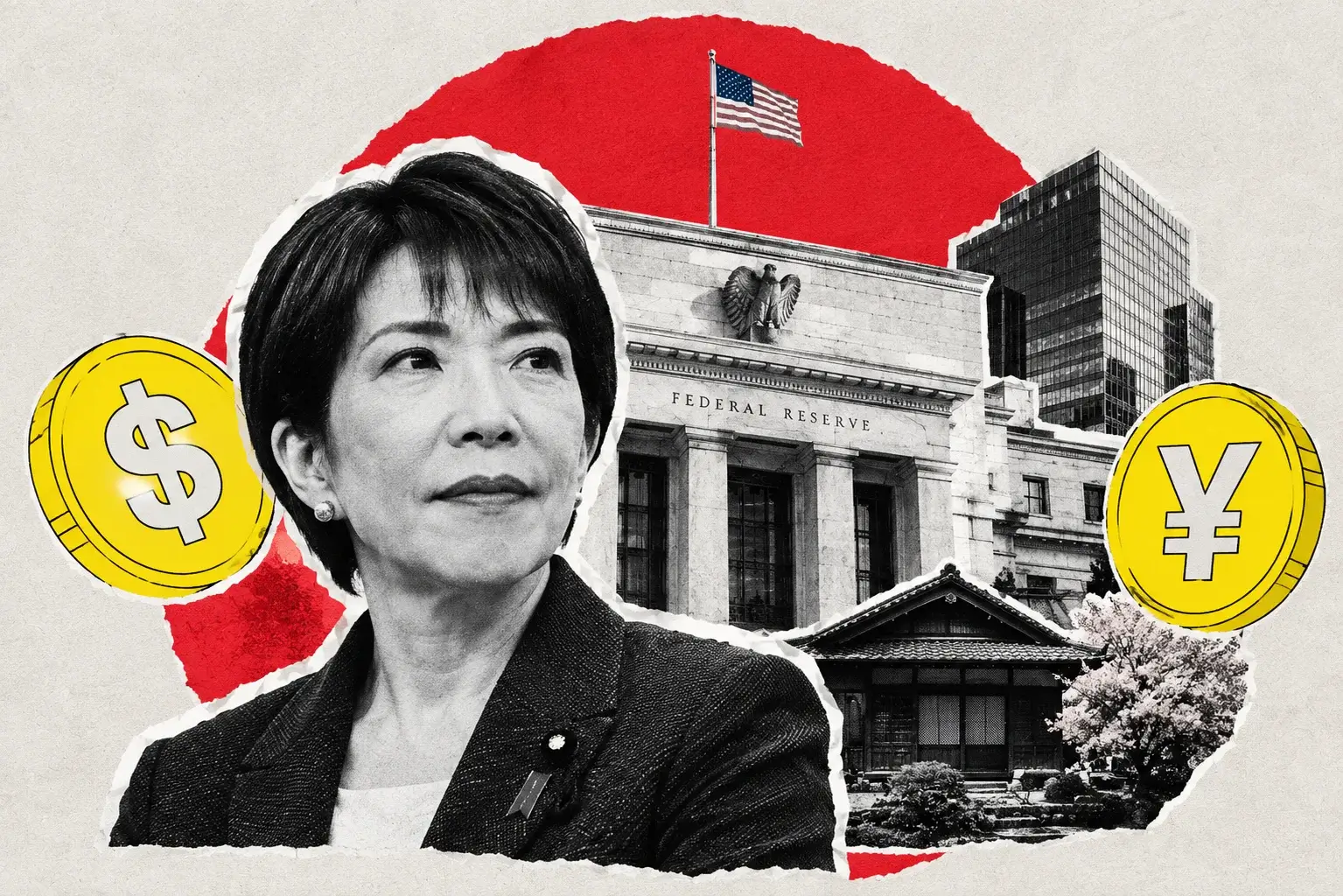
Yen Stalls at 160 Despite a 3% JGB and Tokyo Core CPI at 2.0% — Intervention Sits at 164, Friday's Payrolls Decide
The US Treasury is publicly urging Governor Ueda toward decisive action | That's TradingNEWS
Key Points
- USD/JPY traded 160.2710, up 0.17%, with the yen down 1.97% on the month and 8.31% on the year.
- A BoJ hike to 1.25% and a Fed hike to 4.00% leave the differential unchanged at 262.5 basis points.
- Tokyo core CPI hit 2.0% in August, a third straight monthly acceleration, as the 10-year JGB crossed 3%.
USD/JPY traded 160.2710 on Wednesday, September 2, up 0.06% from the previous session, after a 159.90 to 160.38 band against a 159.92 prior close for a gain of 0.27 yen, or 0.17%. The pair sat around 160.08 on Tuesday and has spent three sessions pinned to the 160 handle.
The yen has weakened 1.97% over the past month and 8.31% over the past twelve months.
That 160 print is not an arbitrary number. Japanese authorities have treated it as the operative threshold all year, and the pair remaining at a key psychological level has heightened concerns over possible follow-up intervention.
The recent path explains the tension. USD/JPY peaked near 164 in July. A joint U.S.-Japan intervention drove the pair as low as 155.27 at the end of that month — a 5.3% yen recovery achieved through official action rather than market forces. Much of that recovery has since disappeared. The pair closed a recent Friday at 158.98, almost five yen below the July peak but still uncomfortably high for Tokyo after the policy response.
From 155.27 to 160.27 is a 3.22% retracement of the intervention. The market has taken back roughly 60% of what the authorities bought.
The thesis of this forecast is the same structural problem that governs EUR/USD and GBP/USD this week, in its most extreme form. The Bank of Japan meets September 17-18 with a 25-basis-point hike to 1.25% close to fully priced. The Federal Reserve meets September 15-16 with roughly 70% odds of a 25-basis-point hike to 3.75%-4.00%. If both deliver, the policy differential ends the month at 262.5 basis points — exactly where it started.
Two central banks tightening two days apart, and the carry gap that drives this pair does not move a single basis point.
That is why USD/JPY is at 160 despite the 10-year Japanese government bond crossing 3% to a 30-year high, and it is why a hike alone does not fix this.
The Rate Gap Is 262.5 Basis Points And It Is Not Closing
The arithmetic that most USD/JPY commentary skips this week is the one that determines the trade.
The Bank of Japan's policy rate sits at 1.00%. The federal funds target range is 3.50%-3.75%, a 3.625% midpoint. The differential is 262.5 basis points in the dollar's favour.
Market pricing has the BoJ hiking 25 basis points to 1.25% on September 18 and the Fed hiking 25 basis points to a 3.75%-4.00% range on September 16. Post-meeting, the differential reads 3.875% minus 1.25% — 262.5 basis points. Identical.
That is the reason a hawkish BoJ narrative has produced almost no yen appreciation. Traders remain focused on the continuing U.S.-Japan yield gap, and the stubbornness of the pair around 160.08 despite an increasingly hawkish September narrative says quite a lot.
The persistent wide differential keeps the yen carry trade active and supports the case for further near-term USD/JPY appreciation. Borrowing at 1.00% to fund assets yielding 3.625% remains profitable, and a symmetric 25-basis-point adjustment on both sides changes nothing about that calculation.
The path from here is the variable that matters. Forecasts extending beyond September see additional BoJ hikes in January and July 2027 taking the policy rate to 1.75%. If the Fed stops after one move, that trajectory compresses the differential to 212.5 basis points by mid-2027 — a 50-basis-point narrowing over ten months.
Fifty basis points of compression across three quarters is not fast enough to break a carry trade. It is fast enough to cap the upside.
The longer-run history frames what a real divergence looks like. The Fed, ECB and Bank of England all tightened aggressively through 2022-2023 while Japan did not, and that divergence pushed USD/JPY to 161 in July 2024 — a level not seen since 1986. The BoJ has been catching up since: yield curve control ended in March 2024, rates moved from -0.1% to 0.25% by July 2024, to 0.50% in January 2025, and to 1.00% since.
Four years of normalization has produced 110 basis points of tightening. The Fed cut and is now hiking again inside a single year.
Washington Is Publicly Lobbying The Bank Of Japan
The most unusual feature of this cycle is that the pressure for a BoJ hike is coming from outside Japan, and it is being applied in public.
Treasury Secretary Scott Bessent met with Finance Minister Satsuki Katayama this week, where the two agreed to continue coordinating efforts to achieve orderly yen moves. Bessent separately urged BoJ Governor Kazuo Ueda to take decisive monetary steps to combat yen weakness, reinforcing expectations for a rate hike this month.
A U.S. Treasury Secretary publicly instructing a foreign central bank on its policy rate is not routine. It signals that Washington regards yen weakness as a bilateral trade and inflation problem rather than a purely Japanese one, and that the joint intervention from July is viewed as insufficient on its own.
The follow-on question is why the pressure is needed at all, since Japan already has ample domestic justification to act. August Tokyo core CPI came in at 2.0% year over year, the third straight month of acceleration. Tight labour market conditions, a resilient economy, elevated oil prices and a weak yen all raise the risk of second-order price effects.
Those are good reasons for the BoJ to raise rates without any encouragement from Washington.
The implication of external pressure is therefore about magnitude and forward guidance rather than about whether a hike happens. A 25-basis-point move that arrives without a hawkish signal about what follows would almost certainly weigh heavily on the yen. Even with a hike this month, the yen is unlikely to be out of the woods.
Getting the policy rate to 1.25% is one thing. Convincing markets that Japan has entered a durable tightening cycle is another, and decades of dovishness mean traders need convincing that each hike is not the last.
The government's own calculus points the same direction. With USD/JPY back around 160 after an intervention that cost real reserves, policymakers have little reason to assume currency operations alone have solved the problem. A bolder central bank is what would prop the yen back to reasonable levels and limit the pass-through to inflation.
Ueda said Tuesday the BoJ will continue raising rates. The market moved 0.06%.
Tokyo Core At 2.0% And The Oil Problem Underneath It
Japan's inflation picture has turned, and the driver is the same one hitting every energy importer this week.
August Tokyo core CPI printed 2.0% year over year — the third consecutive month of acceleration. Tokyo core is the highest-frequency read on national inflation and typically leads the national series by two to three weeks.
Three straight months of acceleration ends the argument that Japan's inflation was transitory. Governor Ueda had already warned about upside inflation risks at the July meeting, and that risk has now materialized.
The energy channel is doing the work. Brent crude for November delivery ran as high as $96.59 on Wednesday, up over 2%, and has gained roughly 7% on the week. West Texas Intermediate for October reached $91.78. Iran's Revolutionary Guards said two oil tankers struck naval mines in the Strait of Hormuz. U.S. forces struck IRGC targets near Bandar Abbas and Chabahar.
Japan imports essentially all of its crude and liquefied natural gas. It is the most energy-import-dependent major economy on earth, and a substantial share of its supply transits the Strait of Hormuz. Crude and petroleum liquids through Hormuz have collapsed to an average of 4.9 million barrels per day in the second quarter from 21.6 million in the fourth quarter of 2025.
The compounding problem is that Japan pays for those barrels in dollars. Brent at $96.59 with USD/JPY at 160.27 means the yen cost of a barrel is 15,477 yen. At 155.27 — the intervention low — the same barrel cost 15,000 yen. The currency has added 3.2% to an import bill that has already risen 7% on the week in dollar terms.
That is the second-order price effect that makes a September hike close to unavoidable. A weak currency and expensive energy together produce imported inflation that monetary policy can only address through the exchange rate.
Which is precisely the circularity Tokyo is trapped in. The BoJ hikes to defend the yen, the hike does not close a 262.5-basis-point gap, the yen stays at 160, and the import bill keeps rising.
A 3% JGB Should Be Yen-Positive And Is Not
The bond market development this week is historic, and its failure to move the currency is the most diagnostic fact in this forecast.
The 10-year Japanese government bond yield crossed 3% to hit a 30-year high. Japan has not seen a 3-handle on its 10-year since the mid-1990s.
Under the framework that has governed this pair for three decades, that should be decisively yen-positive. For thirty years Japanese institutions exported savings into foreign bonds because domestic yields were pinned near zero. Life insurers, pension funds and banks bought Treasuries, Bunds and gilts, selling yen to do it. At 3% on the JGB, that trade reverses — capital repatriates, yen gets bought.
USD/JPY rose 0.06%.
The explanation is the same one that broke the gilt-sterling relationship this week. These yields are not carry. They are a fiscal risk premium.
The yen continues to underperform on fiscal concerns stemming from a surge in bond yields, which increases the cost of servicing Japan's massive debt pile. Markets have become increasingly sensitive to JGB supply and the 2027 budget discussions.
Japan carries the highest debt-to-GDP ratio in the developed world. Every basis point of yield increase compounds against a debt stock that has been financed at near-zero cost for a generation. A 300-basis-point 10-year yield against a debt load built assuming zero is a solvency conversation, not a carry conversation.
That is why capital is not repatriating on the yield move. Buying a 3% JGB requires believing the issuer can service the stock at that level, and the market has not made that judgment.
The global context makes it worse rather than better. The German Bund reached 3.364%, unseen since 2011. The 10-year gilt hit 5.294%, the highest since June 2008, with the 30-year at 5.904%. The U.S. 10-year advanced for a sixth consecutive session to 4.814%. Every developed curve is repricing higher simultaneously on the same energy shock.
Japan's 10-year at 3.00% against the U.S. at 4.814% leaves a 181-basis-point spread — historically narrow, and still not enough.
The Dollar Is Catching A Double Bid Into The FOMC
The other side of this pair explains most of the recent move, and it is being bought for two independent reasons.
The Dollar Index traded 0.1% higher near 99.75 on Wednesday, its highest level in over two weeks, described as a nearly three-week top. EUR/USD fell to 1.1575, a two-week low. GBP/USD declined toward 1.3500. AUD/USD dropped 0.1% to 0.7135.
The monetary leg came from Federal Reserve Chairman Kevin Warsh's Jackson Hole keynote on August 28, where he stated the Fed's preferred inflation gauge sits at 3.7% — nearly double target — and that the central bank would have work to do without clearer evidence of improvement. CME FedWatch odds of a 25-basis-point September hike moved from roughly 35% before the speech to approximately 70% by Wednesday. Forward pricing implies 17 basis points of tightening for September 16.
The 2-year Treasury yield climbed to 4.369%, a 19-month high, enhancing the appeal of dollar-denominated assets directly.
The geopolitical leg came from the Gulf. Oil-driven inflation fears reaffirmed bets for a September Fed hike amid escalating U.S.-Iran tensions, and safe-haven demand added a second layer.
Both channels point the same way, which is unusual. In a typical risk-off episode, the safe-haven dollar bid coincides with falling Treasury yields — the currency gains but the carry deteriorates. Here the shock is inflationary, so the two reinforce.
U.S. data has been soft and has not mattered. ADP private payrolls printed 38,000 against a 47,000 consensus, the slowest month since January, with manufacturing shedding 17,000 jobs and professional and business services losing 16,000. The ISM Manufacturing PMI fell to 54.6 from 55.6, missing 55.2. Neither release dented the dollar.
Friday's nonfarm payrolls carries a +53,000 consensus after July's -23,000, with unemployment projected at 4.1%. Traders await that release before committing, which is why USD/JPY has traded a 48-pip range around 160.
That report, not the BoJ meeting, is the first real test.
Intervention Risk Is The Ceiling And It Sits Near 164
The authorities have already shown their hand this year, and the record establishes where they act.
USD/JPY peaked near 164 in July. A joint U.S.-Japan intervention drove the pair as low as 155.27 at the end of that month — a move of roughly 8.7 yen, or 5.3%.
Joint intervention is materially different from unilateral Japanese action. When the U.S. Treasury participates, the market cannot assume the operation will be faded, because the deepest-pocketed counterparty in currency markets is on the same side. That is why 155.27 was reached rather than a token two-yen move.
Bessent and Katayama agreeing this week to continue coordinating efforts toward orderly yen moves is a direct signal that the joint framework remains active. The phrase "orderly" is the operative word — authorities historically intervene against speed rather than level, targeting disorderly moves rather than defending a specific number.
That framing sets the practical ceiling. A grind from 160 to 163 over three weeks is orderly. A gap from 160 to 163 in two sessions on a hawkish FOMC is not, and it invites action.
The efficacy question is unresolved. USD/JPY has retraced from 155.27 to 160.27 — recovering 3.22% and giving back roughly 60% of the intervention gain — which tells the market that official selling moves the level but does not change the trend. Policymakers have little reason to assume currency intervention on its own has solved the problem.
That is exactly the argument for a bolder BoJ. Intervention buys time. Rate differentials set direction.
The asymmetry for a trader is straightforward. Long USD/JPY at 160.27 carries defined tail risk from an intervention that has historically delivered 5% moves in days. Short USD/JPY carries the cost of paying 262.5 basis points of negative carry while waiting for a differential that will not compress meaningfully before 2027.
Neither side is comfortable. That is why the pair has compressed into a 48-pip daily range.
Technicals: 159.90 To 164 Is The Operative Band
The chart structure is defined by round numbers and by the two intervention reference points, which makes the levels unusually clean.
USD/JPY at 160.27 has established 160.38 as the session high and 159.90 as the session low against a 159.92 prior close. That is a 48-pip range, which is compressed for this pair and consistent with a market waiting on Friday's payrolls.
The 160 handle is the immediate structural pivot. A confirmed daily close above it opens the door toward 162 to 165, while rejection triggers a pullback toward 155 to 156 support. The pair has been consolidating within a 155 to 165 range, and a sustained breakout above 160 on a weekly closing basis would be required to confirm the next leg higher.
Wednesday's close is the test.
Resistance above runs 160.38 (session high, +0.07%), 161 (+0.46%), 162 (+1.08%), 164 (the July peak, +2.33%) and 165 (+2.95%). The 164 level is where intervention arrived last time and where it is most likely to arrive again.
Support runs 159.92 (prior close, -0.22%), 159.90 (session low, -0.23%), 159.19 (the consensus one-month projection, -0.67%), 158.98 (recent weekly close, -0.80%), 158 (-1.42%), 157 (-2.04%), 156 (-2.66%) and 155.27 (the intervention low, -3.12%).
Reclaiming 158 on a daily close would be the first evidence the September BoJ hike is being priced with conviction rather than dismissed.
Monthly projections put September beginning at 161 with a 157 to 161 range, a 160 average and a 159 month-end close for a 1.2% decline. October is projected to begin at 159 with a 159 to 164 range, a 161 average and a 162 close for a 1.9% gain. November runs 161 to 165 averaging 163.
That shape — down in September on the BoJ hike, back up in October and November as the differential fails to close — is the most honest read of the setup available.
Forecast Dispersion Runs From 150 To 164
The disagreement among forecasters on this pair is wider than on any other major, and it maps directly onto the same question.
Year-end 2026 forecasts range from 150 to 164 — a 14-point spread reflecting genuine disagreement over whether the yen finally strengthens or the dollar stays dominant. On a 160.27 spot, that band represents a 6.4% decline at one end and a 2.3% advance at the other.
Nearer-term calls cluster tighter and lean yen-positive. One projection sees 157 to 158 in a three-to-six-month timeframe. Another puts the pair at 158 in the third quarter of 2026 and 156 in the fourth. Aggregate consensus reads 159.19 for the immediate horizon, a 0.67% decline from spot.
The policy-path assumption behind the constructive calls is a BoJ hiking 25 basis points to 1.25% in September — earlier than a prior October call — followed by additional moves in January and July 2027 that take the policy rate to 1.75%.
Under that path, the differential narrows from 262.5 basis points to 212.5 basis points by mid-2027, assuming the Fed hikes once in September and stops. That is the scenario producing 150 to 156.
The bearish yen scenario requires the Fed to hike more than once. Deutsche-style forecasts of 50 basis points of total tightening across September and December meetings would take the funds midpoint to 4.125% and widen the differential to 287.5 basis points even with the BoJ at 1.25%. That is the scenario producing 164 and above.
Longer-dated projections show the pair moving into a phase of narrower ranges after an initial period of elevated volatility, consistent with policy convergence eventually damping the pair.
For a September trade, the dispersion says the same thing the technicals do: the market has no conviction and is waiting for two central bank meetings 48 hours apart to resolve it.
The historical range provides perspective. USD/JPY swung between 139 and 158 during 2025 as the BoJ moved away from ultra-loose policy while the Fed cut. The pair is now above the top of that entire prior-year range, and the Fed has stopped cutting.
Read More
-
QQQ Tests Its $715 Floor as a $4.18B Exodus Meets Burry’s Nasdaq-100 Puts — Upside to $746
16.10.2026 · TradingNEWS ArchiveStocks
-
Spot Bitcoin ETFs Post a $5.06M Trickle After a $261M Exit as IBIT ETF Carries the Category — October Redemptions Near $535M
16.10.2026 · TradingNEWS ArchiveCrypto
-
Henry Hub ($3.19) Caught Between a Shrinking Storage Surplus and Mild Late-October Weather — $3.10 to $3.35 Range
16.10.2026 · TradingNEWS ArchiveCommodities
-
USD/JPY Price Forecast — Dollar-Yen (157.79) Caught Between a 216-Basis-Point Yield Gap and Tokyo’s 160 Intervention Line
16.10.2026 · TradingNEWS ArchiveForex
The Carry Trade Is The Structural Bid Nobody Can Kill
The mechanism keeping this pair elevated is not sentiment. It is arithmetic that has functioned for two decades.
The persistent wide U.S.-Japan interest rate differential keeps the yen carry trade active and backs the case for further near-term USD/JPY appreciation. Borrowing yen at 1.00% and deploying into dollar assets yielding 3.625% at the front end and 4.814% at the ten-year point generates 262 to 381 basis points of gross carry before any currency move.
Every 25-basis-point BoJ hike carries outsized impact precisely because the starting point is so low — a move from 1.00% to 1.25% raises funding costs 25%. But in absolute terms it removes 25 basis points from a 262.5-basis-point spread, and if the Fed matches it, it removes nothing.
The carry trade unwinds when either the differential compresses sharply or when volatility spikes enough to make the position's risk-adjusted return unattractive. Neither is happening. The differential is static. Realized volatility in the pair is low, with a 48-pip session range.
That combination — wide carry, low volatility — is the textbook environment for the trade to accumulate. It also means the eventual unwind is violent, because positioning builds quietly and exits all at once.
The two triggers to watch are a genuine BoJ hawkish surprise on September 18 and a dovish Fed on September 16. Either alone compresses the differential 25 basis points. Both together compress it 50 and would take USD/JPY through 156 quickly.
The absence of a hawkish stance from the BoJ at the September meeting would almost certainly weigh heavily on the yen. The reverse is equally true — a hike paired with explicit forward guidance about January and beyond would force a repricing of the carry trade's forward economics.
Fiscal policy remains the other loose end. Markets are increasingly sensitive to JGB supply and the 2027 budget discussions, and a fiscal expansion announced into a 3% 10-year would undermine any hawkish monetary signal immediately.
Tokyo has to deliver both a hike and a credible fiscal message. It has never had to do both at once before.
Japan Versus Europe: The Same Trap, Different Depth
Comparing this pair to the other majors this week clarifies what is actually driving currency markets.
Every major central bank is being pushed to tighten by the same imported energy shock. Eurozone inflation accelerated to 3.3% in August from 2.9%, with energy inflation jumping to 14.3% from 10.3%, and markets price a 25-basis-point ECB hike to 2.50% on September 10 at 98.9%. UK markets price 32 basis points of Bank of England tightening by year-end with a November move almost 70% likely. Tokyo core CPI accelerated for a third month to 2.0%.
Three central banks, one shock, and none of the three currencies is strengthening. EUR/USD fell to 1.1575, a two-week low. GBP/USD declined toward 1.3500. USD/JPY sits at 160.27.
The common factor is that all three economies import the energy and the United States exports it. Brent at $96.59 and WTI at $89.58 transfer real income from Frankfurt, London and Tokyo to Houston and Riyadh. A hiking central bank cannot reverse a terms-of-trade shock; it can only suppress the domestic demand that the shock has already damaged.
Japan's version is the most extreme. Its energy import dependence exceeds Europe's, its debt-to-GDP ratio exceeds Britain's, and its policy rate at 1.00% is 125 basis points below the ECB and 275 below the Bank of England. It has the least room to respond and the most exposure to the shock.
The counterweight is that Japan's starting point is also the most extreme in the other direction. A 3% 10-year in a country that spent thirty years near zero represents a larger relative repricing than anything happening in Europe. If Japanese capital genuinely begins repatriating at scale, the flow is measured in trillions of dollars and it would move USD/JPY far below 150.
That repatriation has not started. It is the single largest tail risk in global currency markets, and it sits behind a 3% JGB that the market is currently treating as a credit signal rather than a yield opportunity.
Which reading is correct determines whether 164 or 150 comes first.
USD/JPY Price Forecast: Levels Into September 16 And 18
USD/JPY trades 160.2710 after a 159.90 to 160.38 session band against a 159.92 close, up 0.17% on the day and 1.97% on the month, with the yen down 8.31% over twelve months. The Dollar Index sits near 99.75, a nearly three-week high.
The near-term bias is neutral with an upward drift, capped by intervention risk. The critical arithmetic is that a BoJ hike to 1.25% on September 18 and a Fed hike to 3.75%-4.00% on September 16 leave the policy differential at 262.5 basis points — unchanged. That is why a 30-year high on the 10-year JGB at 3.00%, a third consecutive month of Tokyo core CPI acceleration to 2.0%, and public pressure from the U.S. Treasury on Governor Ueda have collectively produced a 0.06% move in the pair.
Supporting the dollar: 70% September hike odds, a 4.369% two-year Treasury at a 19-month high, a 4.814% ten-year, oil-driven inflation fears, and an active carry trade paying 262.5 basis points. Supporting the yen: a September hike that is close to fully priced, a projected path to 1.75% by mid-2027, joint intervention capability demonstrated at 155.27, and Japanese fiscal stress that could eventually force repatriation.
Downside targets: 159.92 (-0.22%), 159.19 (consensus, -0.67%), 158.98 (-0.80%), 158 (-1.42%), 157 (-2.04%), 156 (-2.66%) and 155.27 (the intervention low, -3.12%). Below that, the 150 handle sits 6.41% lower and represents the bull-case yen scenario requiring genuine differential compression.
Upside targets: 160.38 (session high, +0.07%), 161 (+0.46%), 162 (+1.08%), 164 (the July peak and intervention zone, +2.33%) and 165 (+2.95%).
The base case into the two central bank meetings is a 158 to 162 range, with Friday's payrolls setting the direction before either committee convenes. A print materially below +53,000 pulls Fed hike odds under 50%, compresses the differential 25 basis points on its own, and takes USD/JPY toward 157. A print at or above consensus confirms the hike and pressures 162 with 164 as the intervention line.
The verdict is that USD/JPY at 160.27 is fairly priced for a symmetric outcome and vulnerable to an asymmetric one in either direction. A hawkish BoJ paired with a dovish Fed is worth five yen. A dovish BoJ paired with a hawkish Fed is worth four yen the other way, and it walks straight into an intervention that has already delivered 5% once this year. Own the volatility, not the level.