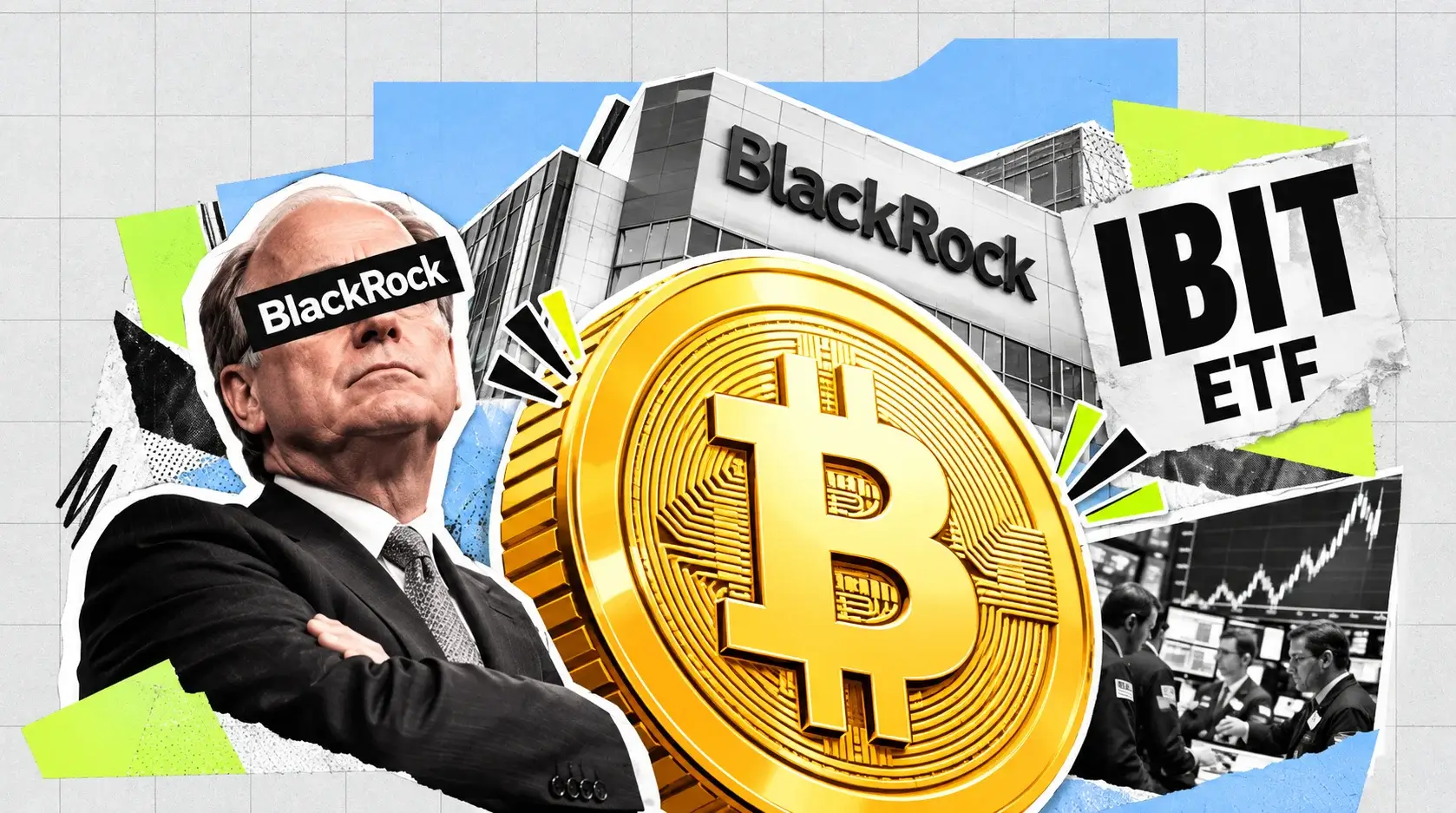
Bitcoin ETF Flows Whipsaw: $697M In, $243M Out as BTC-USD Defends $91K
IBIT ETF leads with massive inflows while rivals bleed capital, leaving Bitcoin pinned around $91K–$94K as institutions tactically rotate across BTC, Ethereum and Solana ETFs | That's TradingNEWS
Bitcoin ETF Regime And BTC-USD Price Context
Bitcoin ETF flow and price action describe a market that is resetting, not collapsing. After entering 2026 with strong risk appetite, Bitcoin (BTC-USD) spiked from about 92,500 to above 94,000 and then slipped back toward 91,000–92,000 while ETF flows flipped from large net inflows to meaningful redemptions. That pivot defines the current phase: aggressive capital still exists, but allocations are tactical, issuer-selective and tightly linked to macro and positioning rather than blind bullishness.
BTC-USD Between $91,000 And $94,000 As Flows Flip From +$697M To −$243M
On 5 January 2026, U.S. spot Bitcoin ETFs recorded roughly 697 million dollars of net inflows, the largest single-day intake in about three months, with BTC-USD jumping toward 92,500–94,000 immediately afterward. BlackRock’s iShares Bitcoin Trust (IBIT) absorbed about 287 million dollars of that day’s flow, while other major issuers such as Fidelity and Ark together added around 471 million dollars, signalling renewed institutional demand after a weak late 2025. Shortly after, that optimism flipped into a shake-out: one highlighted session showed about 243 million dollars of net outflows from U.S. spot Bitcoin ETFs. In that move IBIT still attracted around 228 million dollars of inflows, while Fidelity’s FBTC saw roughly 312 million dollars of redemptions, Grayscale’s GBTC lost about 83 million dollars and smaller issuers such as VanEck and Ark/21Shares also faced outflows. At the same time BTC-USD pulled back from over 94,000 to just above 92,000, roughly a 1.7 percent daily drop and around three percent off the intraday high, confirming that flows and price are tightly coupled in this regime.
Bitcoin ETF Flow Timeline: From 2025 Outflows To The 697M-Dollar Spike
The 2026 flow pattern sits on top of a complex 2025 base. In early January 2025, spot Bitcoin ETFs experienced a net outflow of around 240 million dollars on a single day, even as IBIT alone attracted about 231.89 million dollars of inflows, meaning the rest of the complex collectively lost more than 471 million dollars. That outflow happened against a backdrop of late 2025 tax-loss selling, investors de-risking around Federal Reserve policy, and rotation into other assets after previous rallies. Despite that noise, the complex scaled up to roughly 120 billion dollars in total assets by the end of 2025, with year-to-date inflows already near 1.1 billion dollars by early 2026 as the new year opened. The sequence is clear: 2025 delivered heavy, macro-driven outflows and switching between issuers, while early 2026 is defined by large but alternating flow bursts such as the 697 million dollars inflow day followed quickly by a 243 million dollars outflow day. The direction is not one-way, but depth and liquidity are entrenched.
IBIT’s Dominance Inside The Bitcoin ETF Complex
Across both the 2025 and 2026 episodes, IBIT consistently behaves as the core “quality” vehicle for large accounts. On the early 2025 day with a 240 million dollars net outflow, IBIT received about 231.89 million dollars of inflows while the rest of the spot products were collectively sold. On the 2026 day with 243 million dollars of net outflows, IBIT again posted around 228 million dollars of inflows, offset by large redemptions in FBTC, GBTC and others. The pattern is straightforward: when investors rotate, they often exit higher-fee or lower-liquidity ETFs and park exposure in IBIT rather than leaving the asset class. IBIT’s fee structure, secondary-market liquidity and BlackRock’s risk framework make it the default core allocation for pensions, wealth platforms and institutions that want Bitcoin exposure without idiosyncratic issuer risk. That is why you can simultaneously observe complex-wide net outflows and positive flow into IBIT.
IBIT Trading Map: 51–52 Dollar Support Versus 60–68 Dollar Resistance
The IBIT price grid from the quantitative analysis paints a clear trading map. IBIT trades around 51.5 dollars, close to the 51.38 dollars current-price reference, after a previous close at 52.45 dollars, a daily range between 51.37 and 52.23 dollars and a twelve-month range between 42.98 and 71.82 dollars. With a reported market capitalization of about 167.88 billion dollars and an average daily volume near 60.10 million shares, liquidity is institutional grade. The AI model suggests a position-trading long setup with an entry around 51.38 dollars, a target at 59.93 dollars and a tight stop close to 51.23 dollars, implying about 16.6 percent upside for roughly 0.3 percent defined risk and a headline risk–reward ratio of 57 to 1. A momentum breakout profile uses a trigger near 53.59 dollars and the same 59.93 dollars objective, while a hedge short strategy becomes relevant around 59.93 dollars with a target near 56.93 dollars and a stop around 60.11 dollars. On a multi-timeframe basis, short-term sentiment is described as strong with support near 51.90 dollars and resistance around 53.59 dollars, while mid-term and long-term readings are neutral with reference zones in the low 50s on the downside and the high 50s to high 60s on the upside. Translating that into BTC-USD, the 51–52 dollar accumulation area in IBIT broadly corresponds to Bitcoin in the 90,000–92,000 range, the 59.93 dollar target corresponds to a push back toward and above 100,000, and the 68.38 dollar resistance region aligns with retests of the 120,000–126,000 zone mentioned in the carbon-market article as recent Bitcoin peaks.
BTC-USD Derivatives Structure: Options Reset, Volatility And Short Gamma Between 95,000 And 104,000
Derivatives positioning explains why ETF inflows have not produced a clean breakout. The options market has just gone through the largest reset on record, with more than 45 percent of outstanding positions cleared, removing a heavy hedging overhang and giving a more accurate picture of current risk appetite. Implied volatility has likely bottomed and is now drifting higher from historically low levels as early-year demand for options builds, while skew and flow composition show a shift away from expensive downside insurance and toward call buying and upside exposure. At the same time dealers are reported to be short gamma in the 95,000–104,000 dollars band on BTC-USD. That means when the price enters this range, hedging flows can mechanically accelerate moves, yet the same zone has been a ceiling because profit-taking remains aggressive around 95,000. Even the largest ETF inflows since October 2025 have not forced a sustained close above that gamma corridor because trapped supply at higher levels and fast profit realization by active players keep flipping the market back into consolidation.
On-Chain Cost Basis, EMA50 At 93,000 Dollars And Why The Breakout Stalled
On-chain and technical context from the XTB and Decrypt material show BTC-USD trading between the true mean price band and the short-term holder cost basis. As long as spot stays between these curves, the market sits in a neutrality zone: short-term holders are not in deep pain, long-term holders are not yet pressured to distribute aggressively and marginal flows dominate direction. Bitcoin has now slipped back below the 50-session exponential moving average around 93,000 dollars, a level that had been reclaimed during the early-2026 push and that was central to the bullish narrative. Losing that moving average while failing to crack the 95,000–104,000 gamma band explains the current sideways-to-lower trade with 91,000–92,000 acting as immediate support. Overhead supply from investors who bought at higher levels after prior peaks continues to sell into strength, which means ETF inflows often finance exits rather than extend the trend. Until BTC-USD can retake the EMA50 decisively, work through the trapped supply and close multiple sessions above 95,000, the ETF complex will remain in a choppy, range-bound regime rather than a one-directional bull.
Competition From Ethereum, Solana And XRP ETFs For Crypto Allocation
Capital is not just rotating between Bitcoin issuers; it is also shifting across different spot crypto ETFs. On the same day that Bitcoin ETFs recorded about 243 million dollars in net outflows, spot Ethereum ETFs attracted roughly 114.74 million dollars of inflows and spot Solana ETFs drew about 19.12 million dollars, demonstrating selective strength in alternative large-cap plays even as BTC products bled capital. In parallel, XRP has been the standout large token at the start of 2026. Since the first of January XRP has climbed about 25 percent to around 2.24 dollars, while BTC-USD is up about 6 percent to roughly 91,900 dollars and ETH-USD about 10 percent to near 3,210 dollars. Spot XRP ETFs have received nearly 100 million dollars of inflows this year, taking aggregate inflows to about 1.15 billion dollars, with no outflow days recorded and the largest daily inflow in more than five weeks arriving in the latest session. Exchange reserves of XRP on Binance are at a two-year low, on-chain activity is up more than 50 percent in two weeks and institutional participation via ETFs is persistent. For Bitcoin ETFs, that landscape means they are competing for risk budget not only with each other but also with Ethereum, Solana and XRP products that offer different narratives such as staking yield, smart-contract activity and catch-up beta. This competition again reinforces the tendency for capital to consolidate into the strongest and most liquid Bitcoin wrapper, namely IBIT, whenever the broader complex is under pressure.
Macro, MSCI Reporting Rules And Bitcoin’s High-Beta Role
Macroeconomic dynamics and index-provider rules frame the risk narrative behind Bitcoin ETF flows. MSCI has clarified that merely holding cryptocurrency reserves will not by itself threaten a company’s inclusion in its indices, but it is imposing enhanced disclosure and reporting for firms that hold digital assets on balance sheet. That outcome removes the most extreme tail risk of automatic exclusion but raises the compliance friction and may slow the pace at which listed corporates adopt Bitcoin as a treasury asset. It keeps corporate demand episodic instead of turning it into a continuous, structural buyer. On the macro side, the late-2025 rate cuts did not translate into a clean parabolic move for BTC-USD. Instead, Bitcoin traded as a high-beta risk asset sensitive to Federal Reserve path, equity performance and broader risk sentiment. Flows into and out of spot ETFs around the 697 million dollars inflow day and the 243 million dollars outflow day are better understood as reactions to shifting risk appetite and portfolio rebalancing rather than as a simple vote on Bitcoin’s long-term viability. The forward path of rate cuts in 2026 remains supportive in principle, but ETF inflows will only resume a steady trend when liquidity conditions improve and investors are ready to add risk systematically, not just tactically.
Read More
-
Yen Stalls at 160 Despite a 3% JGB and Tokyo Core CPI at 2.0% — Intervention Sits at 164, Friday's Payrolls Decide
02.09.2026 · TradingNEWS ArchiveEnergy
-
QQQI ($53.80) Turns Nasdaq Volatility Into a 14.2% Monthly Yield as Assets Top $15B — Big Tech Earnings Set November
27.10.2026 · TradingNEWS ArchiveStocks
-
XRPI ($7.09) Rises 2.46% as Spot XRP Funds Hold $1.47B but Flows Stall Near Zero — $1.35 Breakout Sets the Next Leg
27.10.2026 · TradingNEWS ArchiveCrypto
-
NG($3.002) Takes the Front Month Near a Multi-Month Low as Record Production Meets Mild Weather — Break of $2.945 Opens $2.80
27.10.2026 · TradingNEWS ArchiveCommodities
-
USD/JPY (157.86) Squeezed Between a 2.8-Point Carry Edge and Tokyo’s 160 Line — BoJ Hawkish Hold Friday Sets the Break
27.10.2026 · TradingNEWS ArchiveForex
Digital Asset Trusts, SMEs, Crypto Payroll And The Second Layer Of Demand
Beyond ETFs, other institutional and corporate channels shape the demand base that ultimately supports Bitcoin. Digital Asset Trusts accumulated about 2.159 billion dollars of inflows by the end of December and then slowed to around 296 million and 559 million dollars in the last two weekly windows, a pace that signals caution rather than capitulation. Many trust vehicles trade near or below net asset value, which encourages investors to be patient and selective about adding exposure. At the same time, small and medium-sized enterprises are gradually integrating Bitcoin and stablecoins into treasury and payment workflows. Strategies highlighted include diversifying treasury allocations into BTC and stablecoins, using dollar-cost averaging into Bitcoin to smooth volatility and adopting crypto payroll services such as Bitwage to compensate employees in BTC or stablecoins, especially for cross-border payments where settlement costs matter. These behaviours do not always translate directly into ETF flow prints, but they expand the universe of end users, normalize Bitcoin as a treasury asset and create a pipeline where, over time, more of that structural demand is likely to be implemented through regulated vehicles like IBIT and other spot ETFs.
Blockchain, Carbon Markets And The Trust Premium Behind Bitcoin ETFs
The carbon-market study illustrates why infrastructure that guarantees integrity and transparency attracts flows, and the same logic underlies demand for spot Bitcoin ETFs. In regulated carbon trading, compliance markets reached around 900 billion dollars in 2025, contributing about 95 percent of total value under mandatory schemes such as the EU Emissions Trading System, while voluntary markets contributed roughly 2 billion dollars and more than 70 countries used some form of carbon pricing. Researchers Wang and Peng applied a blockchain-based system to more than 5,000 records on energy use, emissions and prices. Their framework achieved roughly 97.5 percent data integrity, about 79-millisecond transaction times, visibility of around 96 percent of trades to regulators, emission reductions improved by about 21.34 percent, trading profits higher by roughly 15.72 percent and energy efficiency near 92.41 percent. They simulated real-world chaos with carbon prices between 20 and 35 dollars per ton and mid-sized trades in the 50–200 ton range, and their DCSLSO algorithm outperformed alternatives with about 26.8 percent cost savings and 710 dollars in additional emission-related savings versus the next-best competitor. The pilots from Toucan Protocol and KlimaDAO, which tokenized tens of millions of tons of CO2 and traded them on-chain, reinforce that trust, auditability and speed attract capital in carbon markets. Bitcoin ETFs follow the same principle on the financial side: they combine Bitcoin’s underlying scarcity and programmability with the legal protection, custody frameworks and reporting standards of traditional finance. That combination of blockchain-secured asset and regulated wrapper explains why long-term allocators prefer ETFs like IBIT over unregulated custody solutions, even when short-term flow prints look volatile.
BTC-USD And IBIT: Buy, Sell Or Hold Based On The Current Flow And Price Setup
Putting the full data set together, the risk–reward profile at current levels argues for a measured bullish stance, not a capitulation or blind chase. On the downside, BTC-USD has already absorbed a sharp late-2025 correction, leverage has been reduced, profit-taking pressure has eased and the market now trades around 91,000–92,000, between key on-chain cost-basis bands and only slightly below the 50-day EMA near 93,000. The ETF complex has proven resilient, with early-2026 flows including a 697 million dollars surge and IBIT repeatedly capturing 200-million-plus dollar inflows even on days when the broader complex loses more than 200 million dollars. Ethereum, Solana and XRP ETFs are attracting selective inflows, which confirms that institutions are not abandoning the asset class but are rotating risk, and XRP’s roughly 25 percent year-to-date gain versus about 6 percent for BTC-USD shows that alternative narratives can temporarily dominate without undermining Bitcoin’s core role. On the upside, IBIT’s AI-based map targets 59.93 dollars from about 51.5 dollars, implying around 16.6 percent upside for the ETF and a return of BTC-USD toward and beyond the 100,000 level, with a higher resistance band around 68.38 dollars corresponding to a potential test of the 120,000–126,000 zone in the underlying. The main cap remains the 95,000–104,000 short-gamma region and heavy overhead supply from higher price zones, which means breakouts will likely be volatile and prone to fast reversals. Based strictly on the figures, flows and structural signals you provided, the position is: BTC-USD and IBIT are a Buy on weakness in the low 90,000s with a medium-term target near 100,000 and a secondary upside scenario toward 120,000, while recognizing that failure to reclaim 93,000–95,000 and a sustained break below the current cost-basis band would downgrade the stance to Hold.