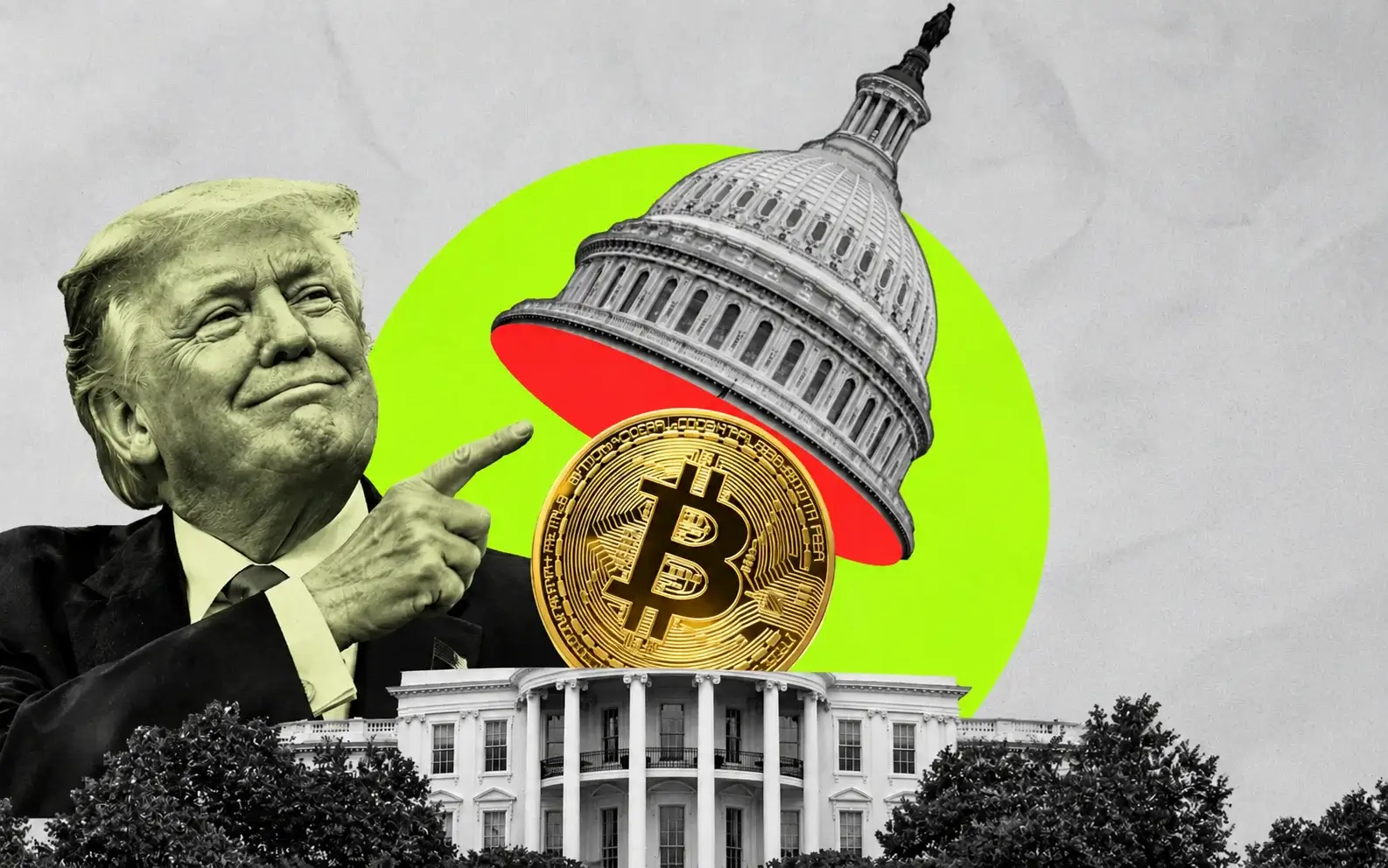

Bitcoin Price Forecast: BTC-USD Bounces to $71,000 After $243M Liquidation Wipeout — But the Chart Is Sending a Serious Warning
BTC recovers from a $67,363 low after Trump pauses Iran strikes for 5 days, yet the MACD histogram turns negative for the third time since October's $126,000 peak | That's TradingNEWS
Bitcoin (BTC-USD) Plunges to $67,363, Liquidates $243 Million, Then Explodes Past $71,000 — The Most Violent Single Session of 2026
Monday, March 23, 2026 handed Bitcoin (BTC-USD) one of the most technically significant sessions in recent memory — not because of where it closed, but because of the full round-trip it completed between Asian hours and the New York open. BTC tagged $67,363 at its session low, a level not visited since March 9, with $243 million in long positions being forcibly liquidated across futures markets as geopolitical fear drove a systematic unwind of leveraged crypto exposure. Then, in the span of minutes, a single Truth Social post from President Trump announcing a five-day pause on planned strikes against Iranian power plants reversed the entire move. Bitcoin crossed back through $70,000, punched through $71,000, and at its session high briefly touched $71,646 before settling around $70,995 — a round-trip of more than $4,200 from trough to peak, all within a few hours. The sequence exposed exactly how fragile the current market structure is: deep enough institutional participation to provide a floor, but enough residual leverage to create violent air pockets on the way down whenever macro conditions deteriorate without warning. If the session proved anything, it's that BTC-USD in 2026 is not trading on fundamentals alone — it's trading on geopolitical newsflow, oil prices, Fed expectations, and the positioning of derivatives traders who can move the market $4,000 in a morning with no change in on-chain reality whatsoever.
The Liquidation Cascade: How $243 Million Disappeared Before the Reversal
The drop to $67,363 was not organic selling from long-term holders deciding to exit. It was a mechanical cascade — overleveraged long positions hitting forced liquidation thresholds as BTC broke below $70,000 during Asian trading hours, a window notorious for thin order books and amplified price impact. Approximately $243 million in Bitcoin long positions were wiped out in the move lower, and when you include the broader crypto market across all pairs, total leveraged liquidations for the session hit approximately $415 million. These are not trivial numbers. A $415 million liquidation event in a market with a total 24-hour trading volume of $51,057,487,446 represents meaningful forced selling concentrated into a narrow time window. The mechanics are straightforward but destructive: as price falls and approaches liquidation thresholds, exchanges automatically close positions, which adds more sell pressure, which pushes price lower, which triggers more liquidations. The cascade feeds itself until either all leveraged longs are flushed or spot buyers step in with enough size to absorb the selling. On Monday, spot buyers found their level around $68,000, stabilizing flows before Trump's announcement gave the market the catalyst it needed to reverse aggressively. Funding rates cooled sharply through the session as leverage was forcibly removed — a technical signal that the structural pressure had been released, creating a cleaner base from which the recovery could launch. The post-liquidation funding rate normalization is one of the most reliable short-term recovery setups in crypto markets, and Monday executed it by the textbook.
Seven Days of Deterioration: From $74,858 to $68,734 Before the Bounce
Before Monday's drama, the 7-day price trajectory for BTC-USD was a remarkably clean downtrend that the market was largely choosing to ignore. Bitcoin hit $74,858 on Tuesday, March 17 — a level that in hindsight represented the last meaningful rally attempt before the macro environment deteriorated further. From that Tuesday high, BTC lost ground every single session through Sunday. Wednesday saw a decline of $931 to $73,926. Thursday delivered the sharpest single-day move of the stretch, a 3.6% decline of $2,670 that brought BTC to $71,256. Friday added another $1,384 of losses, closing at $69,871. Saturday and Sunday completed the sequence, with BTC falling to $70,553 and then $68,734 respectively. By Sunday's close, Bitcoin had shed approximately 8.2% from its Tuesday high in six consecutive sessions. Monday's 3.1% recovery to $70,995 interrupts that sequence but does not reverse it — a single session bounce after six down days is not trend change, it's noise. The question is whether the Iran ceasefire narrative provides enough sustained positive momentum to actually shift the 7-day trend, or whether Monday becomes yet another "weak bounce" in the bearish MACD pattern that has dominated BTC's price structure since October 2025.
The MACD Signal That Has Called Every Major Bitcoin Selloff Since October — And It's Flashing Red Again
A Track Record So Accurate It's Almost Uncomfortable to Ignore
Strip away everything — the Iran war, the Trump posts, the liquidation numbers, the ETF flows — and focus on the single most important technical signal for BTC-USD right now: the Moving Average Convergence Divergence histogram has just crossed below zero for the third time since Bitcoin peaked above $126,000 in October 2025. The MACD works by measuring the gap between the 12-day and 26-day exponential moving averages through the MACD line, then plotting the difference between that line and its own 9-day EMA as a histogram. When the histogram turns positive, bullish momentum is building. When it turns negative — as it just did — bearish momentum is taking control. The slope of that histogram determines how strong the momentum is. Right now it's pointing down, and the track record of this specific signal since Bitcoin's all-time high is damning enough that dismissing it requires extraordinary justification. The first bearish MACD cross came on November 3, with BTC trading around $106,000. Within three weeks, Bitcoin had collapsed to $80,000 — a 24.5% decline with no meaningful bounce along the way. A brief MACD-positive period followed, producing a recovery that barely registered before fading. Then on January 20, the histogram crossed below zero for the second time, with BTC around $90,000. The result was a 33% freefall to nearly $60,000 by February 6, again with no sustained recovery until the indicator reset. Every single bullish MACD cross since October has produced a weak, short-lived bounce that quickly faded and paved the way for lower lows. The sellers have been firmly in control of every recovery attempt for five months. Now the MACD is flashing red for a third time, with Bitcoin at $71,000, and Monday's bounce from $67,363 fits exactly the profile of the "weak bounce" that preceded both prior major selloffs. Past performance does not guarantee future results — but when a signal has been right twice in a row with declines of 24.5% and 33%, the third occurrence deserves serious respect.
The Structure of the MACD Pattern: Why Bulls Keep Getting Trapped
What makes the current MACD pattern particularly dangerous for Bitcoin bulls is not just the bearish cross — it's the structure of the recoveries between crosses. Each bullish MACD flip since October has generated a rally that looked promising in the first 48-72 hours and then systematically failed to attract follow-through buying. The November bounce after the $80,000 low recovered to around $90,000 before rolling over again. The February recovery after the $60,000 low peaked around $75,000 before the third bearish cross triggered. The pattern is one of lower highs — each recovery tops out below the prior peak, confirming that sellers are controlling the distribution process. Monday's $71,000 level sits well below the $75,000 ceiling that capped the last recovery attempt. For BTC-USD to break the pattern, it needs a decisive close above $75,000 with expanding volume and positive ETF inflows — none of which are confirmed as of Monday's session. The MACD histogram turning negative while price is already below its 30-day high is a technically unfavorable setup that warrants caution regardless of how bullish the macro news cycle feels in the moment.
Bitcoin vs. Gold vs. Equities: The Relative Performance Story Nobody Is Telling Correctly
BTC Up 9% in a Month Where Gold Lost 12% and the S&P Fell 5% — Context Matters
The relative performance data for Bitcoin over the past month is genuinely remarkable, and it deserves to be stated plainly without qualification: BTC-USD is up approximately 9% over the past 30 days. Gold, the asset that every portfolio manager in the world has spent decades marketing as the definitive crisis hedge, is down roughly 12% over the same period. The S&P 500 is down 4-5% this month. The Nasdaq Composite has shed similar territory. The Russell 2000 officially entered correction territory last week, falling more than 10% from its highs. In this environment — with Brent crude surging toward $115 a barrel, headline CPI expectations being revised toward 3.8-3.9% for April and May, the Strait of Hormuz effectively closed since February 28, and Treasury yields spiking to multi-month highs — Bitcoin has outperformed virtually every major asset class except crude oil itself. The reason for this outperformance is not sentiment or narrative. It's structural. Bitcoin underwent multiple brutal rounds of deleveraging between October 2025 and February 2026, shedding approximately 52% from its all-time high of $126,000 to its February low near $60,000. By the time the Iran war began on February 28, the most vulnerable and most leveraged long positions had already been force-closed. The holders who remained were either long-term conviction buyers, institutional allocators through spot ETFs, or short-term traders with tight enough stops that they weren't caught on the wrong side of the war-driven selloff. Gold, by contrast, hit its all-time high in late January 2026 — carrying maximum embedded leverage and maximum speculative positioning — and has been in steady distribution since. Monday's bear market confirmation for gold, falling more than 20% from its all-time high in a single session, was the violent unwinding of that overextended positioning. Bitcoin already went through its version of that pain months earlier.
The Year-to-Date Reality Is Still Ugly: BTC Down 19%, Gold Flat, Oil Up 31%
Monthly outperformance does not erase the year-to-date scorecard, and the YTD numbers for BTC-USD are still deeply negative. Bitcoin is down approximately 19% since January 1, 2026 — a significant drawdown that reflects the brutal start to the year as post-election speculative excess was unwound. Gold, despite Monday's bear market entry, remains roughly flat on the year. Crude oil, through the XLE energy sector as a proxy, is up a staggering 31.8% year-to-date — the only major asset class in positive territory for 2026 by a wide margin. The YTD underperformance of Bitcoin relative to gold is meaningful because it reflects the reality that BTC entered 2026 as the most aggressively priced asset in the world after a 150%+ run from its 2024 lows to its $126,000 October peak. The unwinding of that excess was always going to be painful, and at minus 19% on the year, the market has made significant progress in resetting those expectations. The question for the second quarter of 2026 is whether the macro environment stabilizes enough — through either genuine Iran ceasefire progress or Fed rate cut signals — to give Bitcoin the tailwind it needs to reclaim lost ground.
Strategy's $42 Billion War Chest: The Institutional Anchor Beneath BTC-USD
$21 Billion in Common Stock, $21 Billion in STRC Preferred — The Scale of the Bid Is Unprecedented
The single most important structural support for Bitcoin's price over the next 6-12 months has nothing to do with retail traders or geopolitical sentiment. It sits in Tysons Corner, Virginia, at the headquarters of Strategy — the company formerly known as MicroStrategy, trading under MSTR — which just announced a new $42 billion capital-raising program split equally between $21 billion in common stock and $21 billion in STRC preferred stock. An additional $2.1 billion remains available through the STRK preferred series. The company still had approximately $30 billion of capacity available under existing programs heading into this week, and last week it deployed approximately $76.6 million to purchase an additional 1,019 Bitcoin. Strategy's total treasury holdings now stand at approximately 1,805,411 BTC. To understand the magnitude of that position, consider that the entire circulating supply of Bitcoin is 20,003,043 coins, approaching the hard-coded maximum of 21,000,000. Strategy alone controls approximately 9% of the entire circulating supply of the world's largest cryptocurrency. When a single entity controls 9% of a finite asset and announces a $42 billion capital-raising program with the explicit mandate to buy more of that asset, the structural floor beneath the market is not theoretical — it's mathematical. Every time Strategy deploys capital, it absorbs spot supply that would otherwise be available to sellers, tightening the float and creating upward price pressure on a net basis. The $42 billion figure dwarfs anything Strategy has committed to previously and signals that Michael Saylor's conviction in Bitcoin as a long-term treasury asset has not wavered despite the 19% YTD decline.
Tom Lee's Bitmine Drops $138 Million on Ethereum — Institutional Accumulation Across the Crypto Complex
Strategy's Bitcoin buying wasn't the only major institutional move in crypto on Monday. Tom Lee's Bitmine announced a $138 million Ethereum (ETH-USD) purchase, extending its buying streak and making an explicit institutional bet that the crypto market correction is nearing its end. Ethereum gained 4.29% on the session to $2,172, while the broader altcoin complex staged a significant recovery across the board. XRP added 4.79% to $1.46. Solana (SOL) surged 5.31% to $91.96. Avalanche (AVAX) jumped 6.06%. Chainlink (LINK) gained 5.34%. Shiba Inu (SHIB) popped 5.98%. PEPE led the memecoin segment with a 7.33% move. The breadth of the altcoin recovery alongside Bitcoin's bounce from $67,363 suggests the $415 million liquidation event cleared enough weak-handed positioning to allow a genuine relief rally — at least temporarily. The $138 million Bitmine purchase is notable for its timing: buying $138 million of Ethereum when the MACD is bearish, macro conditions are deteriorating, and Iran's parliamentary speaker is threatening U.S. Treasury investors on social media is either brilliant contrarian accumulation or a catastrophically mistimed entry. Given Tom Lee's long-term track record and the structural support arguments around institutional ETF inflows, the contrarian case is more credible than it might appear on a day when ETH is trading at $2,172.
The Iran War's Fingerprints Are All Over Bitcoin's Current Trading Range
The Strait of Hormuz Has Been Closed Since February 28 — And BTC Has Felt Every Day of It
Bitcoin's price action since February 28 cannot be understood without understanding the Strait of Hormuz. The closure of this critical shipping route — through which approximately 20% of the world's oil supply transits — has been the dominant macro event of 2026, and its effects have rippled through every risk asset on the planet. For BTC-USD specifically, the war's impact has operated through three distinct channels. First, rising oil prices have directly elevated inflation expectations, which pushes the Federal Reserve toward a more hawkish posture and reduces the appeal of non-yielding assets like Bitcoin. When inflation derivatives are pricing headline CPI at 3.9% for May 2026 — levels not seen since 2023 — the likelihood of imminent Fed rate cuts, which have historically been one of the most powerful catalysts for Bitcoin bull runs, collapses. Second, the war has created episodic risk-off selling in which institutional allocators reduce exposure to all speculative assets simultaneously — and BTC, despite its improving relative performance, still occupies the speculative end of most institutional asset allocation frameworks. Third, the war has kept the VIX elevated — Monday's session saw the fear gauge top 30 before pulling back to 24.52 — and high volatility environments systematically reduce risk appetite across the market. The five-day pause Trump announced on Monday addressed all three channels simultaneously: oil fell 10%, VIX retreated sharply, and rate hike expectations in October futures dropped from near-certainty to roughly 42%. That's why BTC jumped from $67,363 to $71,000 in hours. The war gave it the problem; the ceasefire signal gave it the release.
Iran's Parliamentary Speaker Threatened U.S. Treasury Investors on Sunday — The Five-Day Clock Is Real
The geopolitical backdrop underpinning Bitcoin's price recovery is significantly less stable than Monday's market reaction implies. While Trump was announcing "very good and productive conversations" with Iran on Truth Social, Iran's parliamentary speaker Mohammad Bagher Ghailbaf was posting on X on Sunday that "US treasury bonds are soaked in Iranians' blood. Purchase them, and you purchase a strike on your HQ and assets." He explicitly warned that Iran was monitoring investor portfolios. Furthermore, Iran's state media agency Fars denied that any direct or indirect communications with the United States had taken place, directly contradicting Trump's announcement. The contradiction between Trump's optimistic framing and Iran's official denials is not a minor discrepancy — it's the entire risk to Monday's rally. The five-day postponement window runs through approximately Friday, March 28. If that window produces no concrete progress on Hormuz reopening and no formal ceasefire framework, the market faces an immediate re-escalation scenario in which everything Monday's rally accomplished gets reversed in hours. Bitcoin at $71,000 is pricing a meaningful probability of genuine ceasefire progress. Bitcoin at $67,363 was pricing near-certain escalation. The truth is somewhere between those two prices, and the spread between them will be determined entirely by what emerges from talks — or the lack thereof — over the next five days. Positioning accordingly means maintaining enough exposure to participate if the ceasefire holds, while keeping enough defensive capacity to respond if Iran's denial proves accurate and oil spikes back above $100.
Spot ETF Flows: The Structural Support That Will Determine Whether $70,000 Holds
Inflows Create Demand That Cannot Be Forced Out — And Outflows Kill Rallies Instantly
Every meaningful Bitcoin recovery since the launch of U.S. spot ETFs in January 2024 has been preceded or accompanied by sustained positive inflow data. The mechanism is straightforward: when daily ETF creations exceed redemptions, new demand is entering the market through regulated institutional vehicles, absorbing the spot supply that leveraged sellers are offloading and tightening the float at current prices. When outflows appear — even modest ones of a few hundred million dollars — rallies above $70,000 have historically stalled within 24-48 hours because the marginal buyer disappears and the sellers regain pricing power. John O'Loghlen, managing director for APAC at Coinbase Institutional, noted Monday that institutional inflows into U.S. Bitcoin ETFs have been rising as the Iran war makes oil "an active transmission channel for global inflation." The framing is crucial — as oil-driven inflation erodes the real returns of fixed income, some institutional allocators are treating Bitcoin as an inflation hedge in rotation out of Treasury bonds. This is the same thesis that drove BTC's 2024-2025 bull run, but it's operating under far more hostile macro conditions. Whether that institutional rotation is large enough to counteract the bearish MACD signal, the 19% YTD decline, and the five-day geopolitical uncertainty window is the central question for BTC-USD over the next two weeks. Watch daily ETF creation and redemption data as the single most reliable leading indicator of whether the current bounce has institutional backing or is purely a short-covering event that fades within days.
VanEck ChainCheck: Long-Term Holders Slowing Distribution — The Smart Money Is Not Selling
A mid-March ChainCheck report from VanEck provided one of the most constructive on-chain data points for Bitcoin's medium-term outlook: long-term holder selling has materially slowed, with transfer volume declining across older coin cohorts. In the on-chain analysis framework, "older coins" refers to Bitcoin that has not moved in 6 months or more — the wallets most likely to belong to conviction holders, early institutional buyers, or long-term accumulators rather than short-term speculators. When these coins stop moving, it means the holders who weathered the 52% decline from $126,000 to $60,000 are not using the current price levels as an exit opportunity. That's a meaningful structural signal. Distribution pressure in the Bitcoin market comes from two primary sources: forced selling from leveraged futures traders — which Monday's $243 million liquidation event addressed by forcibly removing — and voluntary selling by long-term holders who decide current prices offer an attractive exit. The VanEck data suggests the second source of selling pressure is diminishing even as the macro environment remains challenging. Combined with Strategy's $42 billion capital commitment and Bitmine's $138 million Ethereum purchase, the institutional and long-term holder behavior is pointing toward accumulation rather than distribution at current price levels. The conflict between that fundamental picture and the MACD's technical warning is the defining tension for BTC-USD heading into April.
Read More
-
Yen Stalls at 160 Despite a 3% JGB and Tokyo Core CPI at 2.0% — Intervention Sits at 164, Friday's Payrolls Decide
02.09.2026 · TradingNEWS ArchiveEnergy
-
Dell Rebounds to $565.86 as a $95 Billion AI Backlog Meets 22x Forward Earnings — $595 High in Sight
25.09.2026 · TradingNEWS ArchiveStocks
-
XRP-USD ($1.53) Outperforms as ETF Inflows Return, but August Buyers Guard $1.60 — $1.70 Upside vs. $1.25 Floor
25.09.2026 · TradingNEWS ArchiveCrypto
-
Brent Holds $105 While WTI Heads for a 7% Weekly Loss as a 3M-Barrel Build and a Diesel Ban Threat Split the Market
25.09.2026 · TradingNEWS ArchiveCommodities
-
S&P 500 Gains 0.22%, Nasdaq Tops 27,000, Dow Up 0.40% on MSFT Launch and AKAM Deal
25.09.2026 · TradingNEWS ArchiveMarkets
-
Sterling Slides to 1.3216 as a Divided Bank of England Trails the Fed — 1.3424 Upside vs. 1.3000 Risk
25.09.2026 · TradingNEWS ArchiveForex
Altcoins, $TRUMP, and the Broader Crypto Market Recovery
Ether +4.29%, XRP +4.79%, SOL +5.31% — The Entire Complex Moved Together
When Bitcoin recovers sharply, the altcoin market typically amplifies the move — and Monday was no exception. Ethereum (ETH-USD) gained 4.29% to $2,172. XRP added 4.79% to $1.46. Solana (SOL) surged 5.31% to $91.96 on volume that reflected genuine buying rather than just short-covering. Further down the cap scale, the moves were even more dramatic — Avalanche (AVAX) jumped 6.06% to $9.65, Chainlink (LINK) gained 5.34% to $9.26, and PEPE led the memecoin complex with a 7.33% surge. Even $TRUMP — the politically themed memecoin that has traded in direct correlation with sentiment around the Trump administration's policy moves — rose 3.69% to $3.31, a fitting footnote to a session driven entirely by a Trump social media post. BNB, Solana, and Cardano were among the few names that underperformed the broader recovery, falling between 2% and 3.5% — a notable divergence from the rest of the complex that warrants monitoring as a potential sign of rotation away from certain Layer-1 alternatives. Dogecoin (DOGE) gained 2.2%, participating in the recovery but lagging behind pure-play Bitcoin correlates, while $TRUMP climbed 3.3%. The CoinDesk 20 index — a broad measure of crypto market performance — gained 4.02% on the session, with Bitcoin Cash (BCH) contributing a 2.3% gain to lead the index components. The total crypto market cap sits at approximately $2.51 trillion, with Bitcoin dominance at 56.6% and Ethereum representing 10.4% of total market cap.
Brazil Delays Crypto Tax Plan, H100 Eyes 3,500 BTC in Europe — Regulatory Tailwinds Still Building
Away from the price action, two regulatory developments on Monday added constructive longer-term context for the crypto market. Brazil's finance minister delayed a divisive crypto tax plan that had been generating significant concern among Brazilian digital asset holders — the postponement removes a near-term headwind for one of the largest emerging market crypto user bases in the world. Separately, H100 — a European Bitcoin treasury company — announced plans to acquire 3,500 BTC as part of an effort to establish Europe's largest corporate Bitcoin treasury. The proposed 3,500 BTC acquisition at current prices would be worth approximately $248 million, adding to the growing roster of corporate entities following Strategy's playbook of treating Bitcoin as a primary treasury reserve asset. These regulatory and corporate treasury developments operate on a multi-month timeline but contribute to the structural demand picture that provides a floor under BTC-USD at levels that would have seemed absurd as recently as 2022. The combination of U.S. spot ETF institutional flows, Strategy's $42 billion capital commitment, Bitmine's active Ethereum accumulation, and now European corporate treasury formation creates a demand architecture beneath Bitcoin that is qualitatively different from any prior market cycle.
The PMI Data This Week Could Reset Everything — Macro Calendars Override Iran Narratives
Flash PMI Readings and Import Price Index Are the Week's Defining Catalysts Beyond Geopolitics
While the Iran war dominates the headlines and the five-day ceasefire window drives short-term sentiment, the macro calendar this week contains data releases that could independently reshape Bitcoin's trajectory regardless of what happens in Middle East negotiations. Flash PMI readings from major economies are scheduled for release later this week and will provide the most current real-time reading on whether the oil price shock has begun to transmit into broader economic activity contraction. A PMI reading below 50 — indicating economic contraction — would simultaneously be bearish for risk assets in the short term but potentially dovish for Fed policy expectations, which is bullish for Bitcoin on a medium-term basis. The import price index will offer the first hard data on how tariffs and energy costs are combining to push input prices higher across the U.S. economy — a reading that could either validate or challenge the 3.8-3.9% headline CPI expectations that inflation derivatives are currently pricing for April and May. Additionally, GameStop (GME) reports quarterly earnings Tuesday evening — an event that, while not directly relevant to Bitcoin, has historically correlated with a surge in retail trading activity across speculative assets including crypto. When meme-stock energy is high, speculative appetite for BTC at the margin also tends to firm. Consumer sentiment data on Friday will provide insight into how American households are processing the combination of higher gas prices, Middle East war anxiety, and equity market volatility — a composite reading that feeds directly into the retail demand side of the Bitcoin market.
The Final Verdict: Cautious Hold With Stops at $68,000 — The Data Does Not Support Aggressive Long Exposure at $71,000
Bitcoin at $71,000 on Monday afternoon is sitting in a technically and fundamentally ambiguous position that rewards discipline over conviction. The bull case is real and well-supported: Strategy's $42 billion capital commitment creates structural demand that cannot be quickly reversed. Long-term holder distribution has slowed according to VanEck's on-chain data. Monthly relative performance of plus 9% versus gold's minus 12% confirms that the worst of the forced deleveraging has been completed. Institutional inflows through U.S. spot ETFs have been rising as oil becomes an inflation transmission mechanism. The Iran ceasefire window, if it holds through Friday, removes the most acute macro headwind BTC has faced in 2026. The bear case is equally real: the MACD histogram has turned negative for the third consecutive time, and the prior two occurrences produced declines of 24.5% and 33% respectively. Bitcoin has not closed above $75,000 in over a week. The seven trading days before Monday were a straight sequence of lower closes. The five-day ceasefire is already being denied by Iranian state media. Headline CPI is on track for 3.9% in May, the highest since 2023, keeping the Fed hawkish. The $243 million in liquidations Monday cleared short-term leverage but did not resolve the MACD divergence or the macro headwinds. Holding existing positions with a hard stop below $68,000 — the level where Monday's bounce stabilized — is the most defensible approach. Adding new long exposure at $71,000 into a third bearish MACD cross, with a five-day geopolitical clock running and Iranian officials denying the talks happened, does not offer a favorable risk-reward profile. The zone between $60,000 and $63,000 represents the genuinely attractive accumulation level where the downside from prior cycle support structures and the MACD pattern's implied targets converge, and where the risk-reward for new long positioning shifts decisively in the buyer's favor. Until BTC-USD produces a confirmed daily close above $75,000 with expanding ETF inflow confirmation and a MACD histogram that has turned positive and held, the most profitable posture is patience.