USD/JPY Price Forecast: Dollar Jumps to ¥157.60 as 3.8% CPI Drives Yen Toward ¥158 Ceiling
Tokyo's JPY 10T intervention slows but cannot reverse the rate differential | That's TradingNEWS
Key Points
- USD/JPY climbs to ¥157.60 as April CPI hits 3.8%, the hottest print in three years, lifting the DXY to 98.30
- Tokyo has deployed approximately JPY 10 trillion in yen-buying intervention since the May 6 episode
- BoJ June rate hike probability rises to 60% from 55% as 10-year JGB yields hit highest levels in 29 years
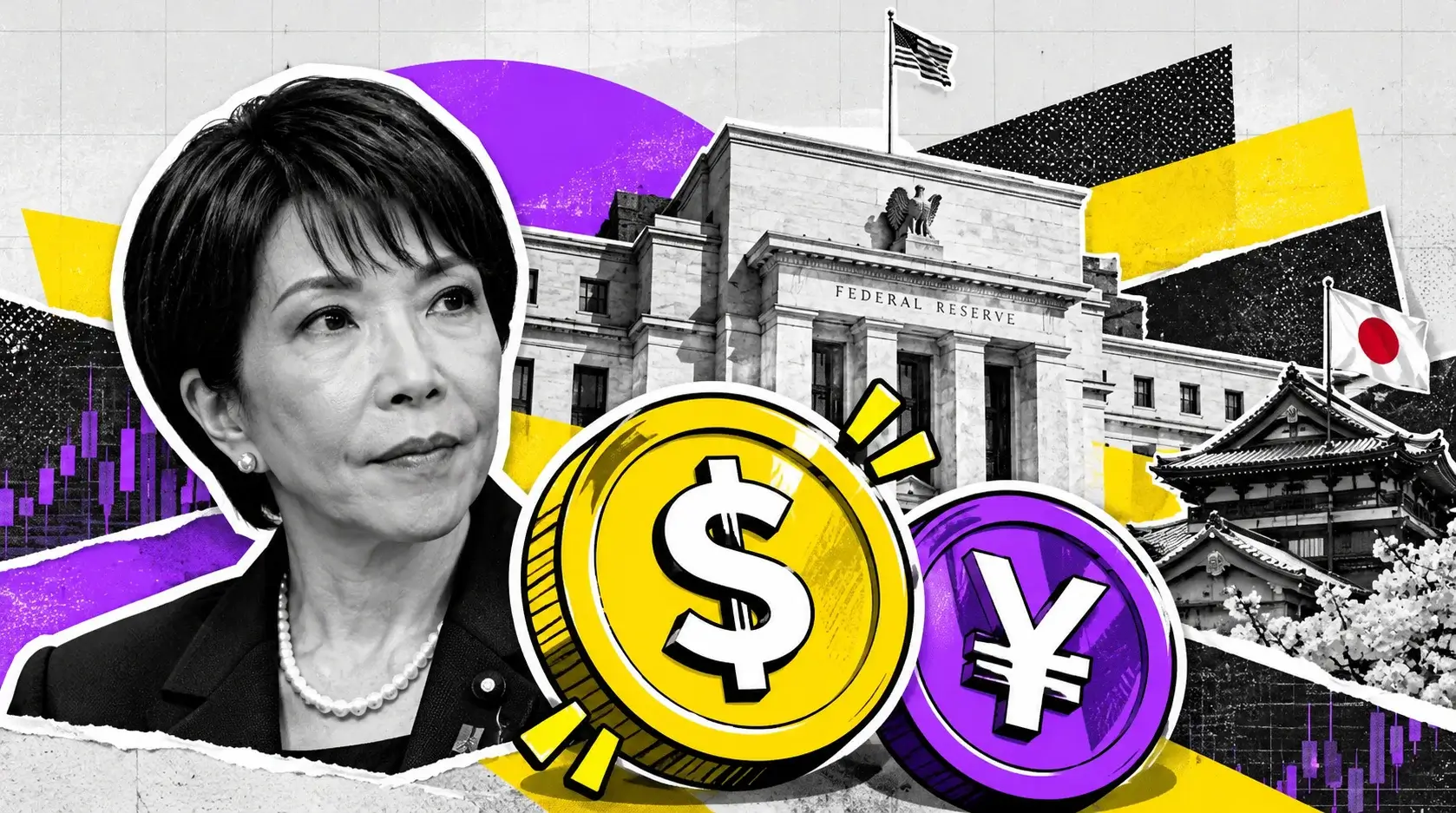
USD/JPY is changing hands at ¥157.60 on Tuesday after the cross extended its second consecutive session of gains and pushed the dollar back toward the ¥158 psychological threshold that has defined the recent recovery cycle. The session opened at ¥157.14 and rallied through the European hours to peak near ¥157.65, recovering meaningfully from the intraday low of ¥157.08 as the combination of renewed Middle East tensions, a firmer Dollar Index, and the hottest U.S. CPI print since May 2023 reignited the carry-trade reset that had been temporarily disrupted by suspected Tokyo intervention earlier in May. The U.S. Dollar Index (DXY) has firmed 0.4% to approximately 98.30, with the greenback strengthening against every major G10 counterpart as the 3.8% April CPI print — exceeding both the prior 3.3% reading and the 3.7% consensus forecast — effectively closed the Federal Reserve's rate-cut path through the immediate horizon. The yen remains caught in the cross-fire between persistently elevated oil prices that pressure Japan's terms of trade, widening interest-rate differentials that favor the dollar structurally, and active intervention pressure from Tokyo authorities who have reportedly spent JPY 10 trillion attempting to stabilize the currency without changing the underlying directional bias.
Why The Yen Cracked Through The Trendline Defense
The mechanical driver of today's USD/JPY advance is the collapse of the bullish yen thesis that had been temporarily supported by the May 6 suspected intervention episode. Tokyo authorities entered the FX market with massive force less than a week ago, with estimates pointing to roughly JPY 10 trillion deployed in coordinated yen-buying operations that briefly drove the cross down to a three-month low at ¥155.03. The intervention worked tactically — it generated a sharp dollar correction — but the macroeconomic fundamentals that had been pushing the yen lower have not changed in any meaningful way. Yields on 10-year Japanese government bonds have surged to their highest levels in 29 years, but that yield expansion has been matched and exceeded by the parallel move in U.S. Treasury yields as the April CPI print forced a hawkish Fed repricing. The persistent interest-rate differential that favors the dollar over the yen remains the dominant structural force, and Tokyo intervention can mechanically slow the trajectory but cannot reverse it without coordinated central bank action that the U.S. Treasury has explicitly ruled out beyond general "volatility management" language.
Trump's Iran Ceasefire Comments Reignited The Carry Trade
The geopolitical layer driving the immediate session move came from President Trump's brutal rejection of Iran's latest peace counterproposal, branding the response as "a piece of garbage" that he did not believe was worth reading fully and declaring the U.S.-Iran ceasefire on "massive life support." The diplomatic framework that markets had partially priced into yen positioning over recent weeks has effectively collapsed, with Trump now reportedly considering relaunching "Project Freedom" as the operational designation for renewed combat operations against Iranian targets. The implications for USD/JPY are unambiguous and run through multiple channels simultaneously. Higher oil prices mechanically damage Japan's terms of trade because the country imports nearly all of its energy needs, the dollar attracts safe-haven flows during geopolitical stress, and the broader risk-off rotation favors the higher-yielding dollar over the structurally low-yielding yen. Iranian Parliament Speaker Mohammad Bagher Ghalibaf has stated that there is no alternative to accepting Iran's proposal while warning that Tehran is prepared to respond immediately to any military action — language that explicitly forecloses any near-term diplomatic resolution and locks the energy-price premium into the macro backdrop.
The Bank Of Japan Is Quietly Preparing For The Next Hike
A piece of the USD/JPY puzzle that deserves precise articulation is the increasingly hawkish posture emerging from the Bank of Japan. The summary of opinions from the April BoJ meeting revealed that policymakers are now openly debating accelerating the tightening timeline, with calls emerging internally for an immediate hike from the current 0.75% to 1.0% rather than waiting for the data dependency cycle to play out fully. The central bank has been forced to raise its inflation forecast to 2.8% while simultaneously lowering economic growth projections — the classic stagflation configuration that creates impossible policy choices for any central bank attempting to balance price stability against growth concerns. Market pricing for a 25-basis-point hike at the June BoJ meeting has expanded from 55% to 60% as oil prices continue rising, and additional Japanese data on inflation, unemployment, and wage growth will determine whether that probability extends further toward certainty as the meeting approaches. The structural takeaway is that even an aggressive BoJ tightening cycle would only narrow the rate differential rather than close it, leaving the dollar with a structural advantage that supports continued USD/JPY upside on any rate-differential-driven framework.
The Coordination Signal From The Bessent-Katayama Meeting
A specific institutional development that deserves close attention is the meeting between Japanese Finance Minister Satsuki Katayama and U.S. Treasury Secretary Scott Bessent that took place over the past several days. Bessent confirmed joint efforts with Japan against excessive volatility in currency markets, with the operative phrasing from the meeting being "We both believe forex volatility is undesirable." Katayama subsequently posted publicly that she was "pleased to reaffirm the strong economic partnership between the US and Japan," specifically noting that the "level of communication and coordination between our teams in addressing undesirable, excess volatility in currency markets continues to be constant and robust." The implication runs deeper than the diplomatic language suggests. The U.S. Treasury statement creates the framework that supports continued Japanese intervention to defend the yen during periods of extreme volatility while explicitly stopping short of endorsing coordinated dollar-selling operations that would actually reverse the structural trend. Tokyo has therefore been given operational permission to slow the yen's decline through tactical intervention but has not been given the green light to reverse the macro setup that drives the broader directional bias.
Intervention Risk Stays Elevated But Cannot Change The Trajectory
The intervention risk picture is genuinely consequential for tactical positioning but should not be confused with structural reversal potential. MUFG's Lee Hardman has noted that USD/JPY rebounding back toward ¥158.00 — close to the levels seen just before the May 6 intervention episode — is making market participants nervous that Japan will step back into the market to support the yen again. The Japan authorities have already deployed approximately JPY 10 trillion to support the yen through the recent intervention cycle, and further intervention will likely be required if the fundamental drivers do not change soon. The Middle East conflict has triggered higher energy prices that hurt Japan's terms of trade structurally, and yield spreads have moved against the yen recently as rate hikes have been priced in for other major central banks across the developed world. The historical pattern with FX intervention is consistent and worth internalizing — central banks intervening against a structural trend generally do not change the direction, they simply slow the pace of progress. Tokyo intervention can deliver tactical pullbacks of meaningful magnitude, but the underlying directional setup will reassert itself once the intervention pulse fades.
The Critical Technical Architecture Below And Above Current Price
The technical map captures the operative resolution levels with notable precision. The 20-day Exponential Moving Average at ¥157.99 marks the immediate resistance ceiling that defines the short-term bullish-versus-bearish bias. A confirmed daily close above the 20-day EMA would credibly target the ¥158.75 50-day SMA as the next major resistance level, with a sustained break above ¥158.75 projecting the path back toward the ¥160.00 psychological threshold that has acted as the operative ceiling for the broader consolidation pattern through recent months. The April 28 low at ¥159.00 sits within that band and represents the intermediate target for any sustained recovery. The upside scenario extends further to the ¥160.50 cluster that represents a swing high dating back to 1990 — a level that has been functionally untouched for more than three decades and would represent the breakdown of long-term structural resistance if breached on a closing basis. On the downside, immediate support sits at the ¥156.50 May 11 low, followed by the ¥156.00 May 7 low that aligns with the rising trendline support originating from April 2025. A confirmed break below ¥156.00 would mechanically expose the ¥155.00 May low, with deeper structural support sitting at the ¥154.30 200-day SMA that bulls would need to defend for the broader uptrend to remain operative.
The Momentum Picture Is Genuinely Mixed
The momentum readings across timeframes are producing the kind of conflicting signal architecture that typically precedes pivot moments rather than trending environments. The RSI at approximately 47 is positioned in neutral territory but skewing modestly toward bearish, suggesting fading bullish momentum rather than outright oversold conditions that would warrant aggressive counter-trend buying. The MACD configuration remains mixed across the daily timeframe, while the price action holding beneath the 20-day EMA at ¥157.99 confirms that the near-term bias remains tilted bearish until a confirmed daily close above that level forces a reassessment. The divergence between the bullish fundamental backdrop (rate differentials, energy prices, intervention exhaustion) and the cautious technical setup (failed retest of 20-day EMA, neutral momentum readings) captures the genuine complexity of the current configuration. The resolution is most likely to be triggered by either the U.S. CPI follow-through into Fed expectations or the next BoJ communication around the June meeting probability, with both event drivers carrying genuine asymmetric risk distributions.
The DAX Cross-Asset Picture Reinforces The Risk-Off Pattern
The cross-asset response to the same set of macro drivers tells a story of broad risk-off rotation that supports continued USD/JPY upside. The DAX has slipped 1.54% to 23,974.67 while the CAC 40 has declined 0.95% to 7,979.92, the IBEX 35 has dropped 1.56% to 17,573.60, and the broader STOXX 50 has fallen 1.42% to 5,811.57. The European equity weakness reflects the dual hit of higher oil prices and elevated inflation pressure that mechanically tightens monetary policy expectations across the continent. Markets are now pricing in two 25-basis-point rate hikes from the European Central Bank this year, with approximately 75% probability of a third increase by year-end — a hawkish repricing that should theoretically support the euro against the dollar but is being completely overwhelmed by the broader safe-haven dollar bid. The DAX recovery from the 21,860 low has stalled near the 25,150 peak before easing back to the 24,170 zone, with the next critical support sitting at the 24,150 break level that would expose the 50-day SMA near 23,700 if breached on a closing basis. Below that, the 23,450 zone marks the April 13 swing low and the April 1 breakout level that would represent more meaningful structural damage to the German index.
The Oil Price Channel Amplifies The Yen Weakness
A structural variable that deserves explicit articulation in any USD/JPY framework is the energy-import channel through which Japan absorbs persistent damage from elevated oil prices. Brent crude is trading around $107.84 with a 3.20% session gain, while WTI has surged 4.33% to $102.13. Both benchmarks have rallied more than 40% since the U.S.- and Israel-led war against Iran began on February 28, a magnitude of energy price appreciation that fundamentally damages Japan's terms-of-trade calculation because the country imports virtually all of its crude oil requirements. Saudi Aramco officials have warned that even if the Strait of Hormuz blockade ended immediately, global energy markets may not fully normalize until 2027 — a timeline that mechanically locks the energy-price premium into the macro backdrop through multiple quarters and removes any near-term path back to the pre-war yen valuation framework. The implication is that the BoJ would need to deliver an aggressive multi-hike cycle to offset the energy-driven inflation pulse, and even that response would not address the underlying terms-of-trade damage that drives the structural yen weakness.
The Citigroup Forecast Captures The Forward Pricing Setup
Citigroup analysts have framed the oil price risks as remaining skewed to the upside given Iran's significant control over the timing and conditions of any potential agreement to reopen the Strait of Hormuz. The bank's base case assumes the Iranian regime reaches an agreement to reopen the strait by the end of May, but the explicit risk-distribution language points toward delays and/or only a partial reopening, meaning disruptions could last longer than the central-tendency forecast. The implication for USD/JPY is that any extended Hormuz disruption beyond the end-May Citigroup baseline mechanically reinforces the energy-price premium and extends the structural yen weakness through the third quarter and potentially into the fourth quarter of 2026. Felipe Elink Schuurman of Sparta Commodities has framed the supply destruction in terms of the 2020 COVID demand collapse — "we lost an average of 9 million barrels per day in demand compared to 2019, which is roughly equivalent to what we are now losing on the supply side" — confirming that the magnitude of the current supply shock matches the scale of the most severe demand shock in modern energy market history.
The Long-Term Resistance Battle At ¥160 That Defines The Forward Setup
The single most consequential technical question facing USD/JPY across the multi-month horizon is whether the cross can break decisively above the ¥160.00 to ¥160.50 zone that has functioned as the operative ceiling on the broader uptrend cycle. The level represents a swing high originating from 1990 — making any breach of that zone the breakdown of three decades of structural resistance and projecting genuinely outsized follow-through if the breakout materializes with conviction. The interest-rate differential continues to favor the dollar structurally even as the BoJ moves toward tightening, and the energy-driven inflation pulse that hits Japan disproportionately ensures that the terms-of-trade dynamic remains weighted against the yen through the remainder of the year. The eventual breakout above ¥160.50 would mechanically project meaningful additional upside, but the path to that resolution will likely require continued patience as Tokyo intervention episodes deliver tactical pullbacks that prevent any clean directional breakout pattern from developing on the conventional timeframe.
Read More
-
Yen Stalls at 160 Despite a 3% JGB and Tokyo Core CPI at 2.0% — Intervention Sits at 164, Friday's Payrolls Decide
02.09.2026 · TradingNEWS ArchiveEnergy
-
QQQ ETF ($706.22) Slides 7.4% Below Its High as the Market Reprices the AI Capex Bill — $686.57 Target if $700 Breaks
22.10.2026 · TradingNEWS ArchiveStocks
-
XRPI ($7.00) and XRPR ($10.74) Slide Toward 52-Week Lows as Spot XRP ETF Flows Stall at $708,510
22.10.2026 · TradingNEWS ArchiveCrypto
-
NG ($2.775) Decoupled From Europe’s €88 Gas Crisis as LNG Feedgas Hits 18.9 Bcf/d — $3.30 Upside on Cold Weather
22.10.2026 · TradingNEWS ArchiveCommodities
-
Dollar-Yen (157.35) Loses 157.65 as the Yen Rallies on Haven Demand — 155 Target if 156 Breaks
22.10.2026 · TradingNEWS ArchiveForex
The Wall Street Backdrop Tells The Macro Story
The broader U.S. equity complex picture provides essential context for the USD/JPY positioning framework. The S&P 500 sits at 7,383.64 with a 0.39% session decline, the Dow Jones Industrial Average has slipped 0.43% to 49,540.00, the Nasdaq Composite has dropped 1.57% to 25,861.80, and the Russell 2000 has declined 2.32% to 2,806.33. The S&P 500 VIX has firmed 1.80% to 18.71, capturing the volatility expansion that accompanies the macro shock from the CPI release. Earlier in the week, both the S&P 500 and Nasdaq had touched fresh record highs Friday and again on Monday, supported by strong corporate earnings, semiconductor optimism, and a robust monthly jobs report — but the resilience has now been tested by the inflation data and the deteriorating Middle East diplomatic framework. The market-leaders pattern shows Intel (INTC) down 8.81% to $118.09 under heavy volume of 100.96 million shares, Qualcomm (QCOM) crashing 11.80% to $209.49, and Micron (MU) down 5.31% to $753.07 as the AI-tax-scare narrative ripples through the chip complex. The deteriorating equity backdrop reinforces the safe-haven dollar bid that supports USD/JPY upside through the indirect channel of broader risk repricing.
The Probability Distribution For The June BoJ Meeting
Compressing the fundamental and technical inputs into a forward framework points to a probability-weighted scenario where USD/JPY trades within a ¥156.00 to ¥160.00 band through the back half of May and into early June, with the central tendency tilting modestly higher on continued dollar strength and persistent energy-price pressure. The June BoJ meeting probability of a 25-basis-point hike has expanded to 60% from 55%, and continued upside in that probability toward 75% or higher would mechanically support a tactical yen recovery that could push USD/JPY back toward the ¥154.30 200-day SMA in a deeper retracement scenario. The base case from the Citigroup oil framework projects Strait of Hormuz reopening by end-May, but the explicit risk skew toward delays and partial reopening supports continued energy-price elevation that mechanically supports continued USD/JPY upside through the third quarter. The volatility profile around the BoJ meeting is genuinely binary — a hike delivery would force a sharp yen recovery, while a hold decision would unleash another leg of dollar strength toward the ¥160 zone.
The Coordination Risk That Bulls Need To Respect
Worth articulating carefully is the asymmetric tail risk from coordinated central bank action that could reshape the entire setup. The Bessent-Katayama coordination framework has been carefully calibrated to permit Japanese intervention to slow the yen's decline without endorsing coordinated dollar-selling operations, but that framework could shift if the energy-driven inflation pulse forces broader policy responses across the G7. A coordinated intervention scenario where the U.S. actively sells dollars against multiple G10 counterparts simultaneously would represent the kind of macro shock that could trigger a 5-10% USD/JPY decline within days, although the probability of such coordination remains low given the explicit U.S. preference for managed volatility rather than directional reversal. The tactical implication for dollar bulls is that position sizing should reflect the genuine intervention risk even when the structural setup favors continued upside, with disciplined stop-loss management more critical than would be the case in a typical trending environment.
The Position Framework — Long With Disciplined Intervention Awareness
The framework here resolves to a structurally bullish posture on USD/JPY with tactical patience required around entry timing given the elevated intervention risk. The fundamental case combines multiple converging supports — the 3.8% April CPI print that mechanically closes the Fed rate-cut path, the persistent interest-rate differential favoring the dollar that intervention cannot mechanically reverse, the 40%-plus oil rally since February 28 that fundamentally damages Japan's terms of trade, the Strait of Hormuz disruption extending production restoration timelines into 2027 per Saudi Aramco, the Trump rejection of the Iran peace proposal that locks the geopolitical premium into the macro backdrop, and the U.S. Treasury coordination framework with Tokyo that permits intervention but does not endorse coordinated reversal. The technical case is supported by the persistent test of the ¥157.99 20-day EMA that bulls need to reclaim for the immediate bullish thesis to extend, the ¥154.30 200-day SMA that defines the structural floor on any meaningful pullback, and the ¥160.00 to ¥160.50 resistance band that defines the major upside target across the multi-quarter horizon. The risks deserve respect — Japanese intervention with JPY 10 trillion already deployed can deliver sharp tactical pullbacks even within a structurally bullish setup, the 60% June BoJ hike probability could expand toward certainty and trigger a yen rally, the ¥154.30 200-day SMA break would mechanically end the medium-term bullish thesis, and any breakthrough in U.S.-Iran negotiations that reopens Hormuz cleanly would unwind a meaningful portion of the energy-driven yen weakness. The base-case positioning is tactical long on USD/JPY pullbacks toward the ¥156.00 to ¥156.50 support cluster, with defined invalidation on a confirmed daily close beneath ¥155.00 that would expose the ¥154.30 200-day SMA and force structural reassessment. Aggressive long entries make sense only on deeper retracements toward ¥155 with disciplined stops, while pyramid additions become justified on any confirmed daily close above ¥158.00 that breaks the 20-day EMA and projects the path toward the ¥159.00 April 28 low and ultimately the ¥160 psychological threshold. The major upside target sits at the ¥160.50 swing high from 1990, with a sustained breach of that level projecting meaningful additional follow-through that could push USD/JPY into uncharted territory above ¥162. The conviction read on USD/JPY is Buy on dips with tactical patience, transitioning to outright aggressive long positioning only on confirmed defense of the ¥156 zone with stops disciplined beneath ¥155.50 — the structural setup favors continued upside through the back half of 2026, but the intervention risk demands position-sizing discipline that respects the magnitude of Tokyo's demonstrated commitment to defending against disorderly yen depreciation.