Dollar at 159.638 Tests 160 as Intervention Fades and Carry Pays 432 Basis Points
The August 1 US-Japan intervention took USD/JPY from a 40-year high of 163.73 to 155.20 | That's TradingNEWS
Key Points
- USD/JPY trades 159.638 (+0.20%), a two-week high, halfway back from the 155.20 low.
- The BoJ-Fed policy differential stands at 262.5 basis points with one 25bp hike priced by year-end.
- Japan's Q2 GDP expanded just 1.1% annualized against a 2% consensus forecast.
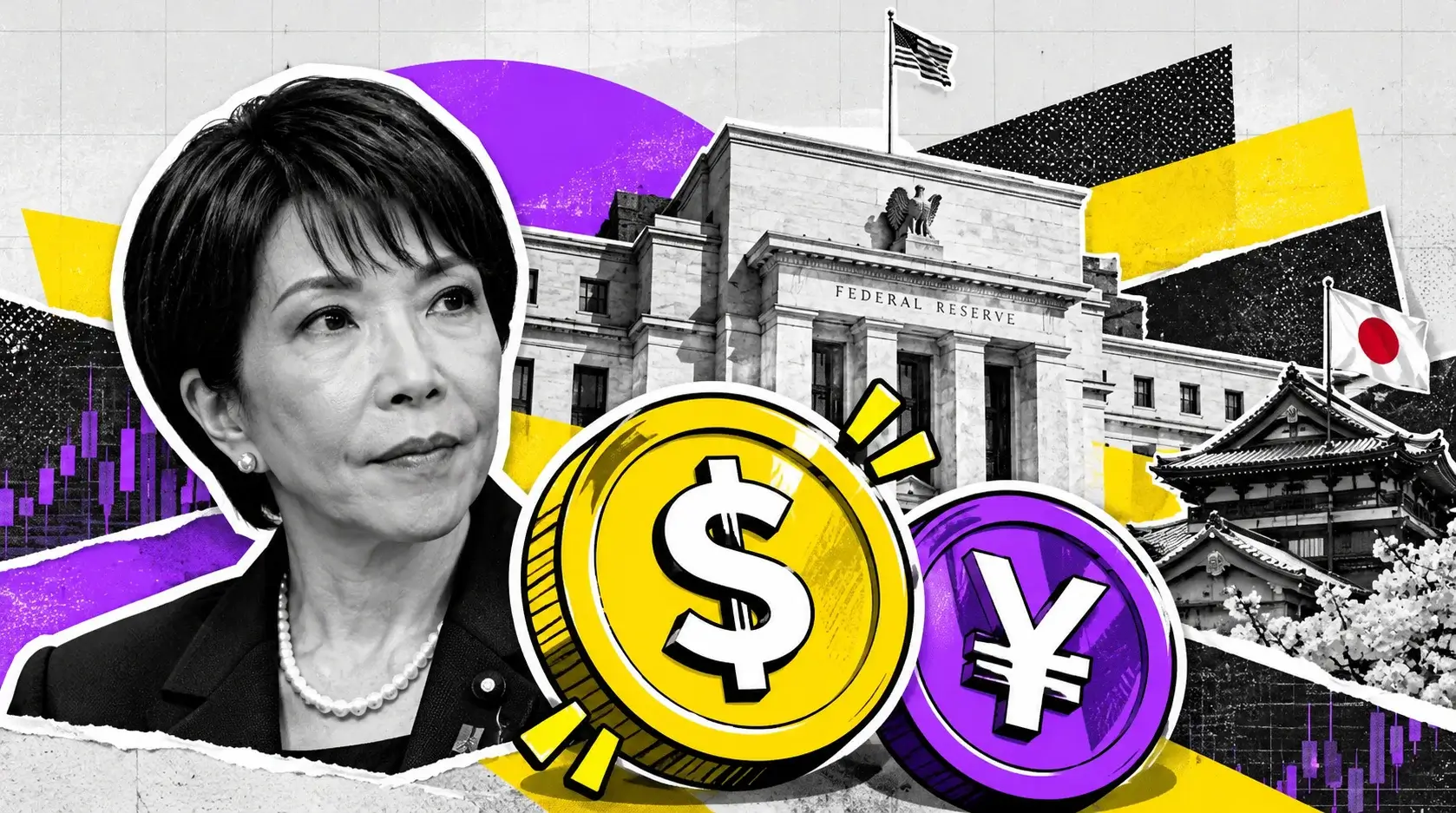
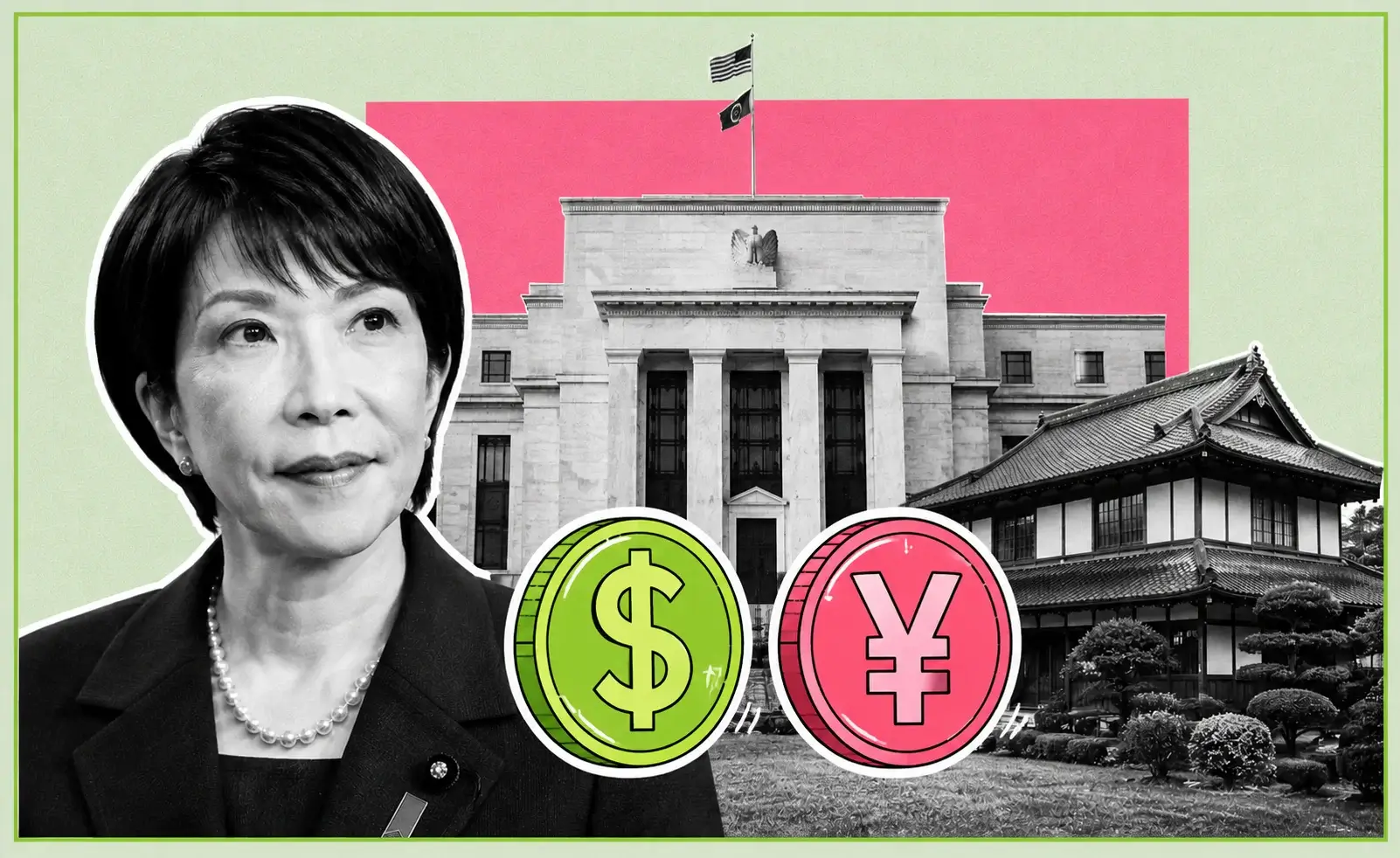
The dollar rose 0.20% against the yen to 159.638 in Tuesday's Asian session, trading above 159.60 and reaching its highest level in more than two weeks. The pair has now recovered roughly half of everything the largest coordinated intervention in fifteen years took away.
Monday closed near 159.10 after the yen climbed to around 159 per dollar, recovering some of the prior week's losses as softer US data eased concerns about an imminent Federal Reserve rate increase. That recovery lasted one session.
Friday, August 14 saw the yen trading around 159.4 and on track to lose approximately 1% for the week, as the absence of follow-up intervention from authorities encouraged speculators to resume betting against the currency.
Cross-rate behaviour confirmed the direction. Sterling rose 0.07% against the yen to 216.05 while falling 0.18% against the dollar. The euro traded $1.15745, down 0.06%. The Australian dollar slipped 0.06% to 0.71024. USD/CAD climbed above 1.3800. The dollar gained against every major Tuesday, and the yen lost the most among them.
The macro trigger sat outside Japan entirely. Brent crude reached approximately $91.76 per barrel after the US-Iran memorandum expired Monday with no replacement, and the 30-year Treasury yield printed 5.323% — the highest since 2007. Both restore the dollar's carry and hit the yen twice over, since Japan imports nearly all of its energy.
The intervention that briefly reset this market happened on August 1. Since then: silence. No follow-up action has landed, and the pair has ground higher for two weeks.
That silence is the entire trade. Speculators short the yen against a 262.5 basis point rate differential need only one thing — the absence of official selling — and they have had it for seventeen days.
Japan's monetary authorities remain publicly prepared to act. The market has stopped believing the threat.
From 163.73 to 155.20 and Halfway Back
The 2026 arc in this pair is the most consequential move in developed-market FX and the levels deserve precision.
USD/JPY climbed to 163.73 in late July — a 40-year high and the weakest yen level since 1986. The pair traded near 164 at the extreme. That advance came after breaking above the 2024 highs near 162, returning the currency to territory it had not occupied since the Plaza Accord era.
The August 1 coordinated intervention broke it. USD/JPY dropped sharply, briefly trading in the mid-156 area, with the dollar falling to about 157.6 just before 5 p.m. EDT from roughly 158.9 around 4:14 p.m. The subsequent slump carried the pair to the 155.25 to 155.20 area — the lowest since early May.
That is a peak-to-trough move of 853 pips, or 5.2%, inside days.
The recovery from 155.20 has retraced roughly half of the intervention-led slump and stalled near the 50% Fibonacci retracement level. At 159.638, the pair sits 4.09 yen above the low and 4.09 yen below the high — almost exactly at the midpoint.
The 2026 path leading in was one-directional. The pair entered the year pressing against the 160 resistance level after rallying strongly through the final quarter of 2025. January and February oscillated in a 152 to 160 range with a sharp dip to 152–153 in late January before recovering. March brought renewed buying at 155–159. By late May the pair traded near 159.46, approaching the upper boundary of the projected annual range.
Then July took it to 163.73.
Japan sold just over $70 billion in late April and early May at levels just above 160, and that action produced a temporary retreat before the advance resumed. The April/May intervention at 160.209 sent the pair briefly below 152 before it retraced to the 159 handle.
The pattern has repeated three times. Each intervention buys weeks, not quarters.
The August 1 Intervention: First Joint Action Since 2011
On August 1, Japan and the United States confirmed a coordinated intervention — the first joint action since 2011 and the biggest yen intervention in fifteen years.
The mechanics were unusual. The Federal Reserve Bank of New York sold euros for yen on behalf of the US Treasury, executed through Goldman Sachs and Morgan Stanley. Earlier that day the Treasury informed a number of banks it might intervene and instructed them to stand ready for future action.
The scale was telegraphed in an image that circulated widely. A photograph of Treasury Secretary Scott Bessent's notepad during a cabinet meeting at Camp David showed the words "To Do," followed by "Buy Japanese Yen (JPY) $5-10 bil."
President Trump characterised the action as giving Japan "a little bit of help."
Japan's Finance Ministry moved to address market concerns about the limits of its firepower, posting that Japanese monetary authorities have a broad range of tools to address market liquidity needs and remain prepared to use them to support orderly market functioning. That statement specifically referenced potential access to the Federal Reserve's standing Foreign and International Monetary Authorities Repo Facility.
The FIMA repo facility, introduced in 2020, allows Japan to raise dollar liquidity without outright sales of US Treasuries — a mechanism that eases the funding constraint on large-scale intervention without forcing Tokyo to liquidate its Treasury holdings.
That reference is the most important detail in the entire episode. It signals that Japan can fund further intervention at scale without triggering the Treasury market disruption that has historically capped how far it would go.
The market has not priced it. Less than two weeks after the intervention, the yen had erased about half the gains, and no follow-up has arrived.
US Treasury Secretary Scott Bessent stated Japan should reinforce currency intervention with policies and economic fundamentals — a direct statement that Washington views intervention alone as insufficient.
That is the correct read. Intervention changes the price for days. Rate differentials set it for years.
Washington Sold Euros, Not Dollars — and Why That Matters
The most analytically interesting feature of the August 1 action was the funding currency, and it surprised the market.
Coordinated intervention has traditionally been funded with dollar assets. Reports that the United States sold euros rather than dollars to buy yen broke that convention, and the implication cuts against the intended signal.
If Washington sold euros instead of dollars, investors may infer that US officials were trying to spare Japan from selling US Treasuries to finance the operation. That inference converts a show of strength into evidence of a constraint: the coordinated action was structured to avoid the Treasury market rather than to demonstrate unlimited capacity.
The argument runs further. A joint intervention designed around protecting the US bond market could ultimately weaken rather than strengthen confidence in the yen, because it reveals that the scale of any sustainable operation is bounded by what the Treasury market can absorb.
The market's behaviour since supports that reading. Seventeen days without follow-up, with USD/JPY grinding from 155.20 back to 159.638, is speculators testing whether the authorities have another round available and concluding they do not — or that the threshold has moved higher.
The structural view is that confidence in a sustained downtrend requires three things Japan has not delivered: materially faster Bank of Japan rate hikes, a clearer government stance on the yen rather than the current framing that weakness carries both positive and negative implications, and a scaling back of fiscal expansion ambitions.
None of those conditions is met.
The intervention did establish one thing. It marked a level. The market now knows officials will act somewhere between 163 and 164, which caps the topside and creates an asymmetric setup: limited upside above 163, unlimited downside if the Bank of Japan actually accelerates.
That asymmetry is why the pair has settled into a range rather than resuming a trend.
The yen's weakness remains a domestic political issue in Japan, dampening real incomes and boosting inflation, and the ministry's interventions check the box on being seen to act.
The 262.5 Basis Point Differential That Nothing Has Closed
Japan's official policy rate stands at 1.00%. The Federal Reserve holds its target range at 3.50% to 3.75%. At the midpoint of 3.625%, the differential is 262.5 basis points in the dollar's favour.
That gap is the entire structural explanation for a 40-year low in the yen, and no intervention addresses it.
The longer-term spread between US and Japanese rates surged after the pandemic and has been declining since. It remains wide. The Bank of Japan owns roughly half of all Japanese government bonds outstanding, which mechanically suppresses the long end of the JGB curve and prevents Japanese yields from rising to compete for capital.
Meanwhile US long-term rates moved higher through 2026, with the 30-year Treasury at 5.323% and the 10-year at 4.72%. The carry available from borrowing yen and holding dollar assets has widened at the long end even as the policy-rate gap narrows at the front.
That is why intervention fails. A trader funded in yen at 1.00% holding a 30-year Treasury at 5.323% earns 432 basis points of carry annually before any currency move. A 5% intervention-driven drop in USD/JPY costs roughly fourteen months of that carry. The position survives it.
Closing the differential requires either the Bank of Japan hiking faster than the market expects or the Federal Reserve cutting. The market currently prices one 25 basis point BoJ increase to 1.25% by year-end, which would narrow the gap to 237.5 basis points — a 25 basis point improvement against a 262.5 basis point starting point.
On the US side, September Fed hike odds have collapsed to roughly 35% with hold probability near 67% to 69.9%, up from below 50% a month ago. Year-end tightening is no longer fully priced. That is dollar-negative at the margin and is the reason the pair has not retested 163.
Market pricing has also suggested the Fed may hike again this year, which would widen the gap rather than close it.
The differential does the work. Everything else is noise around it.
BoJ at 1.00% With One Hike Priced by Year-End
The Bank of Japan's Summary of Opinions from its July meeting flagged rising inflation risk, with one board member suggesting future hikes could quicken. That is the most hawkish signal Tokyo has produced this cycle, and it moved nothing.
Markets are speculating about a possible rate increase at the September or October meeting, driven by concern that a weaker yen will fuel inflation. That is the correct causal chain: the currency is now driving policy rather than policy driving the currency.
The constraint is political and it is explicit. The market suspects government pressure will not permit a rapid tightening cycle from the Bank of Japan this year, and pricing reflects that — just one 25 basis point hike to 1.25% by year-end.
A single quarter-point move against a 262.5 basis point differential provides minimal support to the currency.
The bind is genuine. Japan's economy expanded at an annualised 1.1% in the second quarter, well below expectations of 2%, with weak domestic demand outweighing robust exports. A central bank facing sub-target growth cannot hike aggressively without risking contraction, and a soft GDP print complicates the normalization path directly.
The inflation side pushes the other way. Yen weakness raises import costs across an economy dependent on foreign energy and food, and with Brent at $91.76 that channel is running hot. The cost-of-living pressure has been a key topic for the electorate, and the government has been addressing it through subsidies — which themselves create concern for the bond market.
The Bank has been clear about the mechanism. Exchange-rate fluctuations affect inflation in a broad-based and sustained way, beyond the direct impact on import prices.
The circularity is the problem. A weak yen forces the Bank toward hikes. Weak GDP prevents them. Failure to hike weakens the yen further.
Traders have been unwilling to place aggressive bullish bets on the yen because of the growth data, which lends support to USD/JPY and warrants caution before positioning for deeper losses.
September's meeting is the test.
Japan's Q2 GDP Grew 1.1% Against a 2% Forecast
Preliminary data showed Japan's economy expanded at an annualised 1.1% in the second quarter, below market expectations of 2%, as weak domestic demand outweighed robust exports.
That miss is the single most important Japanese data point for this pair, and it landed in the same week the yen was giving back its intervention gains.
The composition matters more than the headline. Exports performing well while domestic demand lags describes an economy where the weak currency is doing its job on the trade side and destroying purchasing power on the household side. That is the textbook consequence of a currency at 40-year lows in an import-dependent economy.
It also creates the policy trap. A Bank of Japan looking at 1.1% annualised growth cannot justify the hiking pace required to support the currency, and a government watching real incomes erode cannot tolerate the currency level that produces the export strength.
The yen advanced on Monday despite the soft GDP print, which says the market is trading the Federal Reserve rather than Japanese fundamentals. That relationship holds until Tokyo does something structural.
The fiscal position adds another layer. Japanese fiscal deficits relative to GDP have decreased in recent years, but the debt stock remains among the highest in the developed world. Prime Minister Sanae Takaichi's administration wants to expand spending on technology, defence and boosting consumption.
Fiscal expansion into a weak-currency, rising-inflation environment is the configuration that most reliably produces further currency weakness, because it forces the central bank to monetise or forces yields higher in a market where the central bank owns half the float.
Energy dependence compounds every part of it. The Iran conflict and Brent at $91.76 raise Japan's import bill in dollars while the yen buys fewer dollars — a double squeeze on the trade balance that shows up directly in currency demand.
The yen is not helped by that war in any dimension.
Japan's monetary authorities have a range of tools. None of them addresses a 1.1% growth rate.
Brent at $91.76 Is a Direct Tax on the Yen
The crude market is the most underweighted input in USD/JPY analysis, and it is working entirely against the currency.
Brent reached approximately $91.76 per barrel Tuesday, its third consecutive session of gains, after President Trump rejected extending the 60-day memorandum of understanding with Iran that expired Monday. West Texas Intermediate traded $84.39. Only five commodity vessels transited the Strait of Hormuz on Saturday and none on Sunday, against 31 the previous weekend.
Japan imports nearly all of its energy. Every dollar on the barrel raises the import bill, and every yen of currency weakness raises it again in domestic terms. At 159.638, a $91.76 barrel costs 14,648 yen. At 155.20 — the post-intervention low — the same barrel cost 14,241 yen. The currency move alone added 407 yen per barrel in three weeks.
That flows through two channels simultaneously. The trade balance deteriorates as import values rise, which generates structural yen selling from importers hedging their exposure. And domestic inflation rises through energy costs, which pressures the Bank of Japan toward hikes it cannot deliver given 1.1% growth.
The LNG dimension is specific. Vessel traffic through the Strait of Hormuz slowed considerably after strikes on vessels resumed on July 7, and Qatari cargoes represent a meaningful share of Japanese gas supply. International LNG prices rose in July to levels last reached in early April.
Japan's cost of living crisis has been a key electoral topic, and the government has been addressing it through subsidies rather than through the currency. Those subsidies expand the fiscal deficit, which brings its own concern for the bond market.
The circular structure closes here. Higher oil weakens the yen, a weaker yen makes oil more expensive in yen terms, the government subsidises the difference, the subsidy widens the deficit, and the deficit pressures the currency.
There is no exit from that loop that does not involve either lower crude or materially higher Japanese rates.
Neither is currently available.
The Takaichi Fiscal Expansion and the JGB Problem
The fiscal trajectory under the current administration is the medium-term argument against the yen, and it is structural rather than cyclical.
The Takaichi administration wants to expand spending on technology, defence and boosting consumption. Japanese fiscal deficits relative to GDP have decreased in recent years, but the debt stock remains extreme, and the direction of policy is toward more issuance rather than less.
The financing mechanism is what makes it a currency problem. The Bank of Japan owns roughly half of all Japanese government bonds outstanding. That holding suppresses JGB yields well below where a free market would price them, which is precisely why the rate differential against the dollar is 262.5 basis points.
Unwinding that position to let yields rise would support the yen and destroy the government's financing cost simultaneously. Maintaining it keeps yields suppressed and the currency weak.
The global context makes the constraint sharper. Long-dated sovereign yields rose across every major market Tuesday. The US 30-year printed 5.323%, the highest since 2007. The German 10-year Bund reached 3.21%, a fifteen-year high. Every developed sovereign curve is repricing term premium upward.
Japan cannot participate in that repricing without triggering a fiscal crisis, which means the JGB-Treasury spread widens every time global yields rise. Rising global term premium is mechanically yen-negative.
The cost-of-living subsidies compound it. Addressing energy-driven inflation through fiscal transfers rather than through monetary tightening adds issuance to a market the central bank is already dominating.
The stated conditions for confidence in a sustained USD/JPY downtrend are explicit: materially faster BoJ rate hikes, a clearer government position on the currency rather than the current both-sides framing, and reduced fiscal expansion ambition. None is in evidence.
Bessent's statement that Japan should reinforce intervention with policies and economic fundamentals is Washington making the same point publicly.
Intervention without policy change is a transfer of reserves to speculators.
Read More
-
Yen Stalls at 160 Despite a 3% JGB and Tokyo Core CPI at 2.0% — Intervention Sits at 164, Friday's Payrolls Decide
02.09.2026 · TradingNEWS ArchiveEnergy
-
QQQ ETF ($706.22) Slides 7.4% Below Its High as the Market Reprices the AI Capex Bill — $686.57 Target if $700 Breaks
22.10.2026 · TradingNEWS ArchiveStocks
-
XRPI ($7.00) and XRPR ($10.74) Slide Toward 52-Week Lows as Spot XRP ETF Flows Stall at $708,510
22.10.2026 · TradingNEWS ArchiveCrypto
-
NG ($2.775) Decoupled From Europe’s €88 Gas Crisis as LNG Feedgas Hits 18.9 Bcf/d — $3.30 Upside on Cold Weather
22.10.2026 · TradingNEWS ArchiveCommodities
-
Dollar-Yen (157.35) Loses 157.65 as the Yen Rallies on Haven Demand — 155 Target if 156 Breaks
22.10.2026 · TradingNEWS ArchiveForex
The Dollar Side: Fed Hold Odds at 67% and DXY at 99.29
This pair is a two-currency story, and the dollar side softened materially over the past week.
The University of Michigan preliminary Consumer Sentiment Index for August fell to 51.0 from July's final 55.2, missing the 54.5 consensus. July retail sales dropped 0.6% against expectations for a 0.1% gain. July housing starts collapsed 12.4% to a 1.239 million annualised rate against a 1.35 million forecast, with single-family starts down 9.9% to 808,000.
That sequence collapsed Fed tightening expectations. Markets now see roughly a 67% probability the Fed holds rates in September, up from below 50% a month ago, with some measures putting hold odds at 69.9% and hike probability near 35%.
The Dollar Index fell to 99.29 early Monday, its lowest level since June 5, breaking the bullish trendline that defined its ascent from the January low at 95.55.
That should have produced a clean yen rally. It did not.
USD/JPY holding above 159 through a genuine dollar breakdown is the clearest evidence available that the yen's weakness is idiosyncratic rather than dollar-driven. The euro rallied to 1.16 on the same repricing. Sterling reached a three-month high at 1.3571. The yen went nowhere.
The reason is that dollar weakness driven by term-premium expansion rather than by policy easing does not help a funding currency. DXY at 99.29 with the 30-year at 5.323% means capital is demanding higher compensation for US duration while reducing currency exposure — a configuration that leaves the carry trade intact.
Tuesday reversed part of the dollar decline as crude and yields rose together, and the yen was the worst performer among the majors on that reversal.
The FOMC minutes release Wednesday. The July statement was unusually brief, and Fed Chair Kevin Warsh has consistently argued for leaner central bank communication, which makes the minutes the only detailed view of the internal balance of opinion.
A hawkish reveal takes USD/JPY back toward 161.
The 30-Year Treasury at 5.323% Cuts Against the Yen
The most consequential number for this pair is not the policy rate differential. It is the long end.
The 30-year Treasury yield printed 5.323% Tuesday, the highest since 2007 and a nineteen-year high. The 10-year hit 4.72%. Long-dated sovereign yields rose across every major market simultaneously — a global term-premium event driven by oil-linked inflation expectations, AI-related corporate issuance and sovereign deficit financing.
For a carry trade funded in yen, the long end is where the return lives. Borrowing at Japan's 1.00% policy rate and holding 30-year Treasuries at 5.323% generates 432 basis points of annual carry, and that spread has widened through 2026 even as front-end expectations converged.
Japan cannot match the move. The Bank of Japan owns half the JGB market and the fiscal position cannot absorb higher financing costs, which means every basis point of US long-end expansion widens the gap mechanically.
That is why intervention keeps failing. Selling dollars to buy yen removes speculative positioning temporarily. It does nothing to the 432 basis point incentive that rebuilds the position within weeks.
The August 1 action bought seventeen days.
The counterargument is that a global term-premium shock eventually hits risk assets hard enough to trigger genuine yen repatriation. Japanese institutions hold enormous foreign asset portfolios, and a sustained equity drawdown historically produces hedging flows that strengthen the yen faster than any intervention.
Tuesday offered a preview. S&P 500 futures fell 0.51% and Nasdaq-100 futures dropped 1.31% as the 30-year printed its high, and the yen still weakened. Risk-off has not yet reached the threshold that triggers repatriation.
That threshold is the tail risk in a crowded short position.
Japanese energy dependence and the Iran conflict work against the currency in the meantime, and market pricing has at points suggested the Fed may hike again this year rather than cut.
Carry survives on both.
Technical Structure: RSI 48, MACD Negative, 159.50 Overhead
The daily chart describes a market in balance after a violent repricing, with momentum indicators offering no directional conviction.
The recovery from the 155.25 to 155.20 area — the lowest since early May — stalled near the 50% Fibonacci retracement of the intervention-led slump from the four-decade peak. That level sits close to where the pair currently trades and represents the technical midpoint of the entire August move.
The 14-period Relative Strength Index sits near a neutral 48. The Moving Average Convergence Divergence has slipped into negative territory, indicating that upside momentum is fading as the pair consolidates below clustered resistance.
Resistance is layered and well-defined. The 159.45 to 159.50 band has already turned the pair back on multiple attempts, and Tuesday's 159.638 print represents a marginal break above it rather than a decisive one. Above that, 160.00 is the psychological level that has capped the pair through most of 2026 and the zone where intervention risk begins to price. Beyond 160, the path runs toward 162 — the 2024 highs — and then 163.73.
Support starts at 158.60, established during the August 14 drop. Beneath it, 157.60 marks the intervention-day level. The 155.20 to 155.25 area is the post-intervention floor and the lowest print since early May.
The band between 158.60 and 159.50 is 90 pips, and the pair has spent most of two weeks inside it.
A neutral RSI with a negative MACD in a compressed range is the technical definition of a market waiting for a catalyst. Two land within ten days: FOMC minutes Wednesday and the Bank of Japan's September policy decision.
The forecast consensus sits near 159.19 for the near term, with a year-end 2026 view around 158 carrying downside risks if Fed hawkishness abates on lower US inflation and softer activity.
The structural view is that the pair can trade near the 160 area for several more months, possibly nearing 165 before intervention, and as low as 155 to 157 depending on the size and timing of official action.
That range describes the past three months precisely.
Jackson Hole and the September BoJ Meeting
Two scheduled events carry the balance of the near-term risk, and they sit on opposite sides of the pair.
Fed Chair Kevin Warsh is widely expected to deliver his first Jackson Hole keynote in the role at the Kansas City Fed's symposium, which runs August 27 to 29. The Fed has not formally confirmed the speaker list. This year's theme addresses financial innovation and its implications for payments and policy.
That address is the primary dollar-side catalyst. With Brent at $91.76, the Strategic Petroleum Reserve at 1982 lows and the 30-year at 5.323%, any acknowledgment that energy-driven inflation requires a policy response reprices September hike odds from 35% back toward 50% and takes USD/JPY through 160.
The dovish outcome is largely in the price. Hold odds at 67% to 69.9% mean the market has already discounted a pause, and further downside for the dollar requires cuts to come into view rather than hikes to be removed.
Wednesday's FOMC minutes arrive first and matter more than usual. The July statement ran unusually short, and the minutes provide the only detailed view of the internal balance of opinion under a chair who favours lean communication.
On the Japanese side, the Bank of Japan meets in September, with markets speculating about a hike at that meeting or in October. A quarter-point move to 1.25% is roughly what is priced. Delivering it changes little arithmetically but would confirm that the July Summary of Opinions signalling a quickening pace was genuine.
Failing to deliver removes the last support under the yen and opens 162 to 163.
Intervention remains the wildcard and cannot be scheduled. Traders remain alert for further action amid persistent yen weakness, and the FIMA repo facility reference in Japan's August statement establishes that funding capacity exists without Treasury sales.
The market has priced intervention risk down to near zero after seventeen days of silence.
That is when it usually arrives.
USD/JPY Price Forecast: 158.60 and 160.00 Decide the Range
The forecast reduces to two levels and one absence.
Upside case. USD/JPY at 159.638 has broken marginally above the 159.45 to 159.50 band that turned it back repeatedly and needs a daily close above it to confirm. Clearing that opens 160.00, the psychological level and the zone where intervention risk begins pricing. Above 160, the path runs to 162 — the 2024 highs — and then to the 163.73 four-decade peak that triggered the August 1 action. The required inputs: hawkish FOMC minutes Wednesday pushing September hike odds back above 45%, a Bank of Japan that declines to signal a September move, and continued official silence from Tokyo.
Base case target for August: 160.50. Bullish target on hawkish Fed minutes: 162.
Downside case. Losing 158.60 — the support established during the August 14 drop — puts 157.60 under test, the level the dollar touched on intervention day. Beneath that, the 155.25 to 155.20 area is the post-intervention floor and the lowest print since early May. Reaching it requires either a second coordinated intervention or a Bank of Japan that hikes and signals more, and consensus year-end forecasts near 158 imply the market expects the pair to drift lower without either.
Downside target on renewed intervention: 157.60 initially, 155.20 on confirmation.
The variable that decides it is the 262.5 basis point rate differential, and nothing scheduled closes it. Japan at 1.00% against a Fed at 3.50% to 3.75%, with the 30-year Treasury at 5.323% and the Bank of Japan owning half the JGB market, produces 432 basis points of annual carry for anyone short the yen. One 25 basis point hike to 1.25% by year-end narrows that by less than 6%.
Verdict: the August 1 intervention was the largest joint action in fifteen years and bought seventeen days. USD/JPY has retraced half of it, Japan's Q2 GDP printed 1.1% against a 2% forecast, Brent at $91.76 is taxing an import-dependent economy, and the Takaichi administration is expanding fiscal spending. Every fundamental input points the same way. The pair holds 158.60 and grinds toward 160 unless Tokyo acts again — and the FIMA repo reference says it can.