Dollar-Yen Grinds to 40-Year Highs as the Hormuz Shock Hits the Yen — But Intervention and Carry-Unwind Risk Loom at 165
USD/JPY hit 162.41 at fresh 40-year lows for the yen as Japan's oil-import vulnerability and the dollar's haven bid overwhelmed Friday's pension-fund rally | That's TradingNEWS
Key Points
- USD/JPY rose to 162.41 at 40-year highs as the Hormuz oil shock hit the import-dependent yen and lifted the dollar.
- A 275bp rate gap (Fed 3.75% vs BoJ 1.00%) fuels the carry trade; Japan's PPI hit 7.1%, raising September hike bets.
- Intervention risk and a crowded carry trade cap the upside; 165 is the target, 160 the line, 150 the unwind risk.
USD/JPY rose to 162.41 Monday, up 0.44%, as the yen gave back the prior session's gains and pressed fresh 40-year lows against the dollar, driven higher by the weekend Hormuz escalation that spiked oil, lifted Fed rate-hike bets, and drew safe-haven flows into the greenback. The pair had whipsawed hard: the yen surged toward 161 on Friday after Finance Minister Satsuki Katayama floated a plan to steer domestic pension funds into Japanese assets, only to reverse Monday as the Middle East crisis reasserted the dollar's dominance. Japan's heavy reliance on Middle Eastern crude imports makes its economy and currency acutely vulnerable to higher oil prices, and the Hormuz closure hit the yen on two fronts — worsening the trade balance and stoking the import-cost inflation that has already pushed the pair to four-decade extremes.
The forecast turns on a pair melting up into a minefield. The dominant force keeping USD/JPY elevated is the still-wide 275 basis-point rate gap between a hawkish Fed at 3.75% and a Bank of Japan that has only crept to 1.00% — a differential that keeps the yen as the world's premier funding currency and the dollar attractive to hold. But at 40-year lows, the yen sits in the 160-165 policy-risk zone where the downside risks stack dangerously: Ministry of Finance intervention threat, Katayama's novel pension-repatriation gambit, Japan's 7.1% producer-price inflation raising September BoJ-hike bets, and a perilously crowded short-yen carry trade that could unwind in a violent, self-reinforcing snap. The trend is up toward 162.70 and 165 on the rate gap and the oil shock, but the reversal risk is asymmetric and growing — any intervention, BoJ hawkishness, or soft US CPI could trigger a 300-to-1,000 pip drop toward 160, 155, and 150. This is a melt-up into a minefield, and the burden of caution sits on the dollar bulls at these extremes.
The 275 Basis-Point Rate Gap Is the Carry Engine
The dominant force behind USD/JPY's ascent is the interest-rate differential, and it remains punishingly wide for the yen. The Federal Reserve holds its target at 3.50%-3.75% with a hawkish, rate-hike bias, while the Bank of Japan's policy rate has reached only 1.00% after its June hike — a gap of roughly 275 basis points that keeps the dollar attractive to hold and the yen useful as funding. The chain is simple and mechanical: higher US rates support Treasury yields and the dollar, while cheap yen funding lets the desk borrow or sell yen to buy higher-yielding assets. That constant yen selling pressure from the carry trade keeps USD/JPY elevated near its multi-decade highs.
The rate gap is the gravitational center of the pair, and its direction of travel matters as much as its level. The differential has been compressing from roughly 325 basis points in early 2026 toward the 250-275 range as the BoJ tightens and the market debates whether the Fed's hawkishness holds — and the pace of that compression determines whether the yen bulls or dollar bulls prevail. For now, 275 basis points is still an enormous carry advantage that overwhelms the yen's undervaluation and keeps the funding-currency dynamic intact. The dollar bulls argue that as long as the Fed leans toward hikes and the BoJ tightens only gradually, the gap stays wide enough to hold USD/JPY near 40-year highs and push it toward 165. The yen bulls counter that the gap is narrowing for the first time in years, and that continued BoJ tightening combined with any Fed softening would compress it enough to trigger a yen recovery. The rate gap is the battleground: every basis point of compression pulls USD/JPY lower, and every reaffirmation of the Fed's hawkishness pushes it higher. Right now, 275 basis points keeps the carry engine running and the yen pinned at its lows.
The Hormuz Oil Shock Hits the Yen Twice
The weekend Hormuz escalation delivered a double blow to the yen, and it explains Monday's reversal higher in USD/JPY. Japan imports the overwhelming majority of its crude, much of it from the Middle East, which makes the economy and currency uniquely vulnerable to a Hormuz supply shock. The first blow is the trade balance: higher oil prices inflate Japan's import bill, worsening the trade deficit and requiring more yen to be sold to pay for dollar-denominated crude — a direct, mechanical source of yen weakness. The second blow is the safe-haven flow: the geopolitical crisis drew capital into the dollar as the premier haven, and a stronger dollar mechanically lifts USD/JPY.
The oil shock also reinforces the Fed-hawkishness channel that supports the dollar. The Hormuz closure spiked crude and revived inflation fears, reinforcing expectations of Fed rate hikes to curb inflation — and higher US rates widen the dollar's yield advantage over the yen, pushing USD/JPY higher still. So the oil shock hits the yen through three reinforcing channels: the trade balance, the safe-haven bid, and the Fed-hawkishness read-through. That triple hit is why the yen gave back Friday's gains and USD/JPY pressed 162.41 Monday. The one offsetting consideration is that the same oil-driven inflation raises Japan's own price pressures, which strengthens the case for BoJ tightening and could eventually support the yen — but that is a slower-moving, second-order effect that the immediate risk-off flows overwhelm. The forecast reads the Hormuz shock as decisively yen-negative in the near term: Japan's import vulnerability and the dollar's haven bid push USD/JPY higher, and any further escalation toward a sustained Hormuz closure would intensify the pressure. The oil shock is the proximate driver of Monday's melt-up, and it cuts against the yen on every front except the distant BoJ-hawkishness channel. The crude spike is the yen's enemy.
Japan's 7.1% PPI Raises the BoJ Hike Bets
Beneath the currency weakness, Japan's inflation has become a serious problem, and it is the yen's potential savior. Japan's producer prices rose 7.1% in June, the fastest annual increase since March 2023, reflecting persistent cost pressures from the Middle East conflict and the yen's sharp depreciation. That is a striking inflation print for an economy that spent decades fighting deflation, and it reflects the vicious cycle the weak yen has created: a depreciating currency raises import costs, which feeds inflation, which should force the BoJ to tighten — the very policy that would strengthen the yen and break the cycle. Consumer inflation has risen toward 3% annually, confirming the pressure has become entrenched.
The inflation surge is the fundamental case for a more aggressive BoJ, and it fuels September-hike speculation. The BoJ raised its policy rate to 1.00% at the June meeting and signaled a hawkish stance, and the 7.1% PPI print strengthens the argument for further tightening — speculation about an additional BoJ rate hike in September is one of the key factors that could support the yen. The mechanism is that stronger BoJ signaling can move the market long before an actual hike: if the BoJ signals faster tightening, the market reprices Japanese yields higher in advance, shrinking the rate differential from the Japanese side and lifting the yen. The forecast reads Japan's inflation as the yen's strongest fundamental support: the 7.1% PPI and rising CPI make the case for continued BoJ tightening, and September-hike bets provide a floor under the currency. The catch is credibility — markets are not yet convinced of the BoJ's commitment to sustained tightening, so curbing yen weakness will take time even with the hawkish signals. Until the BoJ demonstrates a durable tightening path, the inflation-driven hike bets support the yen at the margin without reversing its weakness. The inflation is the yen's ammunition, but the BoJ has to fire it convincingly to matter.
The Intervention Threat Looms at 40-Year Lows
With the yen at fresh 40-year lows, the single largest wildcard is the threat of direct Ministry of Finance intervention, and it hangs over every tick higher in USD/JPY. The 160-165 area is not merely technical resistance — it is a policy-risk zone where yen weakness affects import costs, household purchasing power, corporate margins, and the chance of official intervention. Japanese authorities have a documented history of stepping in to defend the currency: the Ministry of Finance spent $62 billion defending the yen in 2024, and the intervention threshold based on that precedent sits around the 155-160 zone on the upside. At 162.41, USD/JPY is trading deep inside the intervention danger zone.
The intervention risk is what makes holding heavy long positions near these levels dangerous. Official intervention tends to hit during thin liquidity and can move USD/JPY several hundred pips within minutes — a 300-to-500 pip snap in a single session is possible — so a position that is too large or a stop that is too tight can mean instant liquidation. The sharp but short-lived yen rallies seen in recent weeks have already prompted speculation that Japanese authorities were behind them, with intervention data due later this month set to confirm whether the MoF was active. The forecast reads the intervention threat as the primary cap on USD/JPY's upside: the deeper the pair pushes into the 160-165 zone, the higher the probability of official action, and any intervention could trigger a violent reversal. The caveat is that intervention rebounds tend to be temporary unless backed by fundamental shifts — the MoF can slow the yen's decline but cannot reverse it without the rate gap compressing. Still, the intervention risk introduces a sharp, unpredictable downside that makes the melt-up treacherous. At 40-year lows, every push higher increases the odds of a policy-driven snap lower. Intervention is the minefield's biggest mine.
The Pension-Repatriation Gambit Is a Novel Yen Support
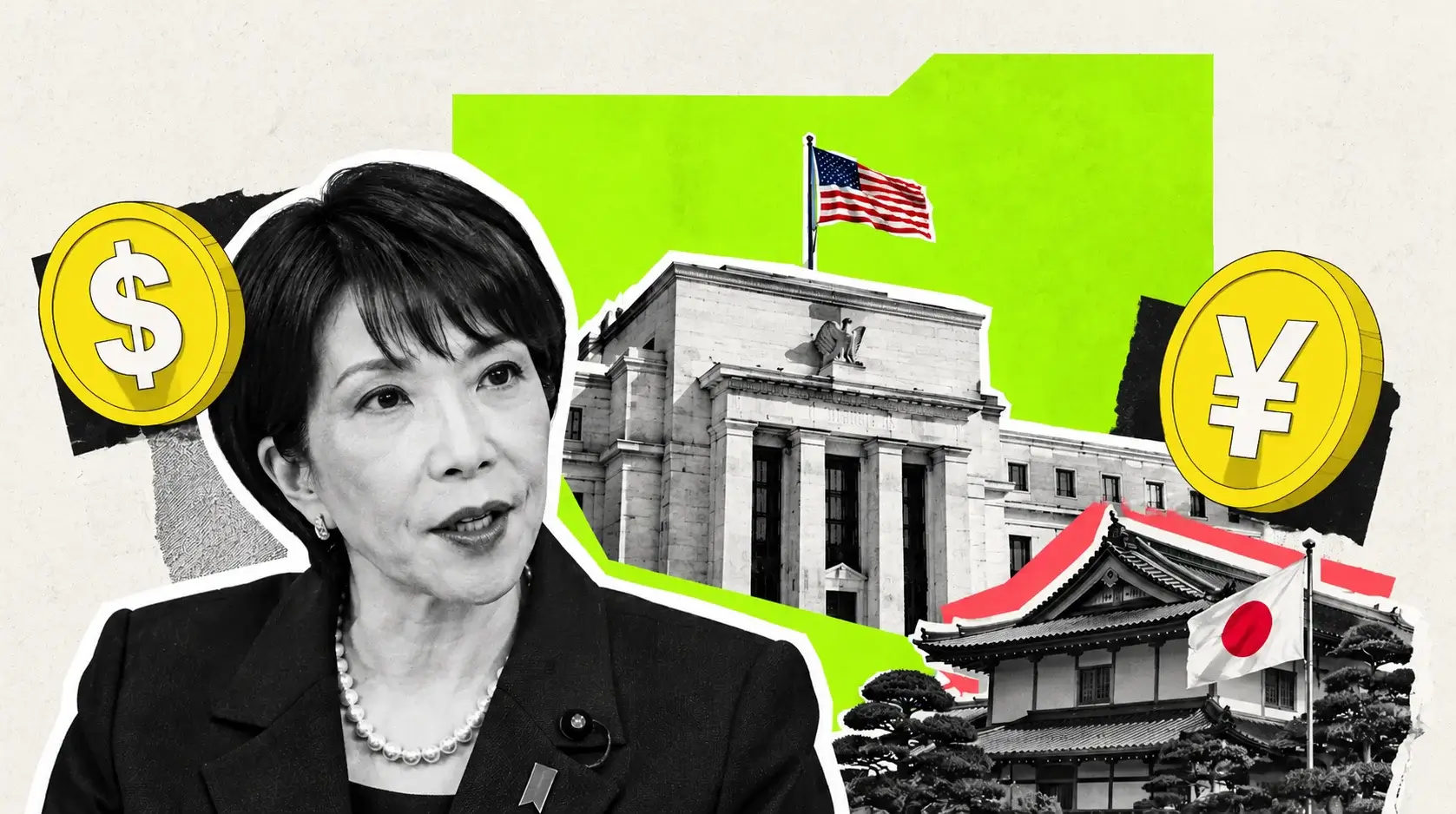
A new and potentially more durable yen-support tool emerged Friday, and it drove the yen's sharp rally before Monday's reversal. Finance Minister Satsuki Katayama said the government would encourage domestic pension funds, including the massive Government Pension Investment Fund, to make substantially greater investments in Japanese financial assets — a policy that could offer greater support to the battered currency than intervention itself. The logic is powerful: if Japan's enormous domestic pension pools shift allocations from foreign assets back to Japanese ones, the repatriation flows would generate sustained yen buying, a structural source of demand that direct intervention cannot replicate.
The distinction between repatriation flows and intervention matters for the forecast. Intervention is a one-off, temporary defense that markets often fade unless backed by fundamentals, whereas a durable reallocation of pension capital toward Japanese assets would create ongoing, structural yen demand that could genuinely arrest the currency's decline. That is why the yen surged on Katayama's announcement — the market recognized it as a potentially more effective tool than the MoF's dollar-selling. The forecast reads the pension-repatriation gambit as a significant new yen-support factor that raises the stakes for USD/JPY bulls: if the GPIF and other domestic funds follow through on the reallocation, the resulting repatriation flows could provide the sustained yen buying that intervention cannot, capping USD/JPY and potentially driving it lower over time. The uncertainty is execution and timing — the announcement is a policy intention, not a completed reallocation, and Monday's reversal showed that the Hormuz shock could overwhelm it in the near term. But the gambit signals Japanese authorities are escalating their yen-defense toolkit beyond intervention, and it adds a structural downside risk to USD/JPY that did not exist before. The pension gambit is a new weapon in the yen's arsenal, and its follow-through is a key variable to watch.
The Crowded Carry Trade Is the Unwind Amplifier
The most dangerous feature of USD/JPY at these levels is the crowded short-yen carry trade, and it is the amplifier that could turn a gradual pullback into a violent crash. The market is heavily positioned in short-yen carry trades — borrowing cheap yen to buy higher-yielding dollar assets — a strategy that keeps USD/JPY elevated through constant yen selling but creates enormous reversal risk. If weaker US data or BoJ hawkishness triggers an initial pullback, the exit becomes instantly congested, turning a gradual recovery into a violent, sharp drop as the crowd panic-buys yen to close out shorts. When carry trades unwind, USD/JPY can drop 500 to 1,000 pips in days as leveraged positions are liquidated.
The carry-unwind dynamic is why the reversal risk is so asymmetric. The 2024 precedent demonstrated how quickly a crowded carry trade can implode — a modest trigger cascaded into a sharp, correlated crash across all yen pairs and global equity markets. Carry unwinds create correlated selloffs across EUR/JPY, GBP/JPY, and AUD/JPY, and they spill into the Nikkei and the S&P 500, amplifying losses across entire portfolios. The forecast reads the crowded carry trade as the structural fragility beneath USD/JPY's melt-up: the same positioning that pushes the pair to 40-year highs makes it vulnerable to a violent unwind if any catalyst — intervention, BoJ hawkishness, weak US CPI, or a risk-off shock — forces the initial reversal. That is the core asymmetry of the trade: the upside from here is grinding and incremental toward 165, while the downside from a carry unwind is sudden and severe toward 155 or 150. The crowded positioning means the pair is priced for continued dollar strength, so any disappointment triggers a rush for the exits. The carry trade is the melt-up's fuel and its potential undoing — it keeps USD/JPY elevated until the moment it doesn't, and then the unwind is brutal. The positioning is the amplifier that makes the minefield explosive.
Resistance Runs From 162.70 to the 165 Policy Zone
The overhead structure frames the melt-up's remaining upside, and it is layered with both technical and policy barriers. The immediate resistance sits at the 162.70 area, the 2026 high and a supply zone where the pair faced strong profit-taking on prior tests — a level USD/JPY must clear to extend its advance. Above that, the 165 area represents the next major objective, the level some forecasts target as the cycle peak, and it sits at the upper edge of the 160-165 policy-risk-and-intervention zone. Since the 2012 low near 75.50, USD/JPY has risen roughly 115% to reach these multi-decade extremes, underscoring how stretched the yen's depreciation has become.
The resistance is as much about policy as price. The 160-165 zone is where intervention risk peaks, where yen weakness begins to inflict serious damage on Japan's import costs and household purchasing power, and where the political pressure to defend the currency intensifies. That makes every push toward 162.70 and 165 a test not just of technical supply but of Japanese authorities' tolerance for further yen weakness. The forecast reads the resistance zone as a policy minefield: USD/JPY can grind toward 162.70 and 165 on the rate gap and the oil shock, but each level higher raises the probability of intervention or a carry unwind that caps the advance. A clean break above 162.70 would open the path toward 165, but the pair would be pushing deeper into the danger zone where the downside risks are most acute. The dollar bulls target 165 on the rate differential and structural dollar demand, but they face escalating intervention and unwind risk at every step. The resistance is not a wall the bulls can casually clear — it is a zone where the higher the pair climbs, the more dangerous the position becomes. The melt-up has room to 165, but it is running into a minefield.
Support Runs From 161 Down to the 150 Unwind Target
The downside map is where the asymmetric risk lives, and the levels cascade quickly once the reversal begins. Immediate support sits at 161.00, followed by 160.50 and the psychological 160.00 mark that marks the lower boundary of the current policy zone. Below 160.00, the next support is 159.50, and a break there would expose the 50-day moving average and signal the melt-up has genuinely reversed. These near-term levels are the first line of defense for the uptrend, and holding above 160.00 keeps the bullish structure intact.
The deeper support levels are the carry-unwind targets, and they sit far below spot. Should a catalyst trigger the crowded short-yen positioning to unwind, USD/JPY could cascade toward the 155 zone — the 2024 intervention threshold — and then toward 150, the level some forecasts identify as the yen-recovery target if the BoJ delivers on tightening and the Fed softens. The sell-side's more yen-bullish projections cluster around 150-153 by year-end, reflecting the view that BoJ tightening and Fed easing compress the rate gap enough to strengthen the yen meaningfully. The forecast reads the support structure as the map of the asymmetric downside: the near-term levels at 161, 160, and 159.50 are the first tests, but the real risk is a carry-unwind or intervention-driven cascade toward 155 and 150 that could unfold in days rather than weeks. The distance from 162.41 to 150 represents the magnitude of the potential unwind — over 1,200 pips — which captures why holding long positions at these levels is so dangerous. The support levels are close on the way down initially, then thin out into the unwind targets. The downside is where the pair's fragility is concentrated, and the 150 level is the destination if the carry trade breaks. The support map is the minefield's blast radius.
The Technicals Show a Bullish Trend at a Reversal Zone
The technical structure confirms the melt-up while flashing warnings at the highs. USD/JPY maintains its upward trend, consistently forming higher lows and hugging the uptrend line established in mid-June, with the momentum indicators supporting the rally — the RSI has backed the advance rather than diverging from it, and from a pure trend perspective, the pair shows little that is outright bearish. The uptrend is intact, the higher-lows structure is holding, and the pair is pressing its multi-decade highs, which technically favors continuation toward 162.70 and 165.
The caution comes from the pair's position at a critical resistance-and-supply zone. USD/JPY is testing a significant supply zone after an extended bullish rally, an area where institutional selling interest may enter and where the pair has faced strong profit-taking on prior tests. Some technical reads flag a potential bearish rejection or a smart-money order block at these levels, suggesting buyers may be losing momentum and increasing the probability of a corrective move. The forecast reads the technicals as bullish-trend-meets-reversal-risk: the uptrend and the supportive RSI favor continuation, but the pair's position deep in the supply-and-intervention zone means the reversal risk is elevated, and a confirmed bearish rejection could begin a sharp correction. The technical picture aligns with the fundamental thesis — the trend is up, but the pair is at levels where the downside risks from intervention, carry unwind, and policy action are most acute. The bulls have the trend; the bears have the location. A break above 162.70 confirms the melt-up continues; a bearish rejection at the supply zone signals the reversal is beginning. The technicals say the trend is up but the altitude is dangerous. The chart is bullish, but it is bullish in a minefield.
US CPI and Warsh Set the Dollar's Direction
Every thread converges on Tuesday's June US CPI, the print that sets the dollar's tone and could tip USD/JPY in either direction. A hot CPI would reinforce the Fed's rate-hike bias, widen the dollar's yield advantage, and push USD/JPY higher toward 162.70 and 165 — the melt-up continuation scenario. Monday's Hormuz oil spike lands too late to appear in June's data, so a hot print would arrive with fresh energy inflation already loading into the July pipeline, cementing the Fed's hawkishness and the dollar's strength. That is the path that extends the pair deeper into the danger zone.
The reverse scenario is the more dangerous one for USD/JPY longs. A cooler CPI would undercut the Fed's hike bias, pull US yields lower, narrow the rate gap from the American side, and potentially trigger the initial pullback that sets off the crowded carry unwind. Weaker US data is precisely the catalyst that could turn the congested short-yen positioning into a violent yen rally toward 160, 155, and beyond. Fed Chair Warsh's two-day Congressional testimony beginning Tuesday stacks the second catalyst — a hawkish lean supports the dollar, while any softening feeds the yen. The forecast reads the US data as the dollar's binary trigger with asymmetric consequences for USD/JPY: a hot CPI extends the grinding melt-up toward 165, while a cool CPI risks igniting the carry unwind toward 150. The asymmetry is the key — the upside from a hot print is incremental, while the downside from a cool print could be a violent cascade. Layered on top is the intervention risk, which means even a hot CPI that pushes USD/JPY higher raises the odds of MoF action. The month-end Fed and BoJ meetings loom as the definitive catalysts. Tuesday's CPI is the near-term trigger, and it holds the power to either extend the melt-up or spring the minefield. The data decides the direction, and the risk is skewed toward a yen snap.
Read More
-
Yen Stalls at 160 Despite a 3% JGB and Tokyo Core CPI at 2.0% — Intervention Sits at 164, Friday's Payrolls Decide
02.09.2026 · TradingNEWS ArchiveEnergy
-
FDVV ETF ($61.42) Balances Nvidia, Apple and Microsoft Against Rate-Sensitive Income Holdings — $64.54 High in Reach if Yields Ease
19.10.2026 · TradingNEWS ArchiveStocks
-
XRPI ($6.98) and XRPR ($10.61) Trade 56% and 52% Below Their Highs as First-Mover Funds Lose the Fee Battle to 0.19% Spot Products
19.10.2026 · TradingNEWS ArchiveCrypto
-
NG Holds Its $3.00–$3.30 Range as Light Storage Builds Meet Record 112.2 Bcf/d Output — $3.50 Above $3.26
19.10.2026 · TradingNEWS ArchiveCommodities
-
Dollar-Yen (158.43) Stuck in a 1.39-Yen Box as Carry Meets the Intervention Line — 156.65 Below 157.55, Tokyo Waits at 160
19.10.2026 · TradingNEWS ArchiveForex
The Sell-Side Is Split From 150 to 165
The institutional forecasts for USD/JPY are deeply divided, and the dispersion reflects the fundamental tension in the pair. Year-end targets range from 150 on the yen-bullish end to 165 on the dollar-bullish end, with the split reflecting genuine disagreement over whether BoJ tightening and Fed easing will compress the rate differential enough to strengthen the yen. The dollar bulls, targeting 164-165, argue that US yield advantages and structural dollar demand persist despite BoJ tightening, and that Fed policy rather than the BoJ remains the dominant driver, supporting continued dollar strength near term. The yen bulls, targeting 150-153, project that the compressing rate gap and continued BoJ normalization drive a moderate yen recovery.
The split captures the two opposing forces that define the pair. One side focuses on the rate gap, dollar strength, and Japan's slow tightening path — the forces pushing USD/JPY toward 165. The other focuses on intervention risk, weaker US data, and the possibility that crowded yen shorts unwind quickly — the forces that could drive it toward 150. The most nuanced view flags two-way risks without a point forecast, recommending hedging rather than a directional bet, which captures the genuine uncertainty at these levels. One dollar-bullish outlook maintains a 165 upside target but has pushed back the timing of the peak, noting that Fed rate-hike expectations support the dollar near term but that support may not last given lower crude and gasoline prices further out and political pressure for eventual rate cuts. The forecast reads the sell-side split as confirmation that USD/JPY sits at a genuine inflection point: the dollar bulls have the near-term momentum and the rate gap, while the yen bulls have the intervention risk, the carry-unwind fragility, and the compressing differential. The dispersion from 150 to 165 is a 900-pip range that reflects how much hinges on the Fed, the BoJ, and intervention. The market is split because the pair is balanced on a knife's edge between a melt-up and an unwind.
Three Scenarios Into the Central-Bank Sequence
The forecast resolves into three concrete paths, each gated by the data, the central banks, and intervention. The dollar-bullish melt-up scenario requires the rate gap to hold and the catalysts to cooperate: a hot US CPI, a hawkish Warsh, continued Fed-hike expectations, and a sustained Hormuz oil shock would push USD/JPY through the 162.70 supply zone toward 165, extending the carry-driven advance. This path needs the Fed to reaffirm its hawkishness and Japanese authorities to stay on the sidelines — a melt-up deeper into the danger zone, with intervention risk rising at every step.
The base case is a volatile grind near 40-year highs, with USD/JPY oscillating in the 160-163 zone as the rate gap keeps it elevated but intervention risk, the pension-repatriation threat, and BoJ-hike speculation cap the upside. Under this scenario, the pair chops between 160 support and the 162.70-165 resistance, with sharp two-way volatility as the market balances the carry advantage against the accumulating downside risks. The yen-bullish unwind scenario triggers on a catalyst that breaks the carry trade: a cool US CPI, a hawkish BoJ signal, MoF intervention, or a risk-off shock would ignite the crowded short-yen positioning, cascading USD/JPY toward 160, 155, and potentially 150 in a violent unwind. The probability tilt near-term, given the rate gap, the oil shock, and the Fed's hawkishness, leans toward the melt-up and base-case paths — but the asymmetric fragility means the unwind scenario carries outsized consequences if triggered. The pair grinds higher until a catalyst breaks it, and then the reversal is sharp. The trend favors the dollar; the risk favors the yen.
The Verdict: A Melt-Up Into a Minefield
The forecast for USD/JPY at 162.41 is a melt-up with asymmetric downside risk, and the emphasis belongs on the minefield the pair is climbing into. The dominant force keeping USD/JPY at 40-year highs is the still-wide 275 basis-point rate gap between a hawkish Fed at 3.75% and a BoJ that has crept only to 1.00%, a differential that sustains the carry trade and the yen's role as the world's funding currency. The Hormuz oil shock reinforced the melt-up Monday, hitting the yen through Japan's import vulnerability, the dollar's safe-haven bid, and the Fed-hawkishness read-through, pushing the pair toward 162.70 and the 165 target. The trend is up, the RSI backs it, and the near-term momentum favors the dollar bulls.
The counterweight is a stack of downside risks that make the melt-up treacherous at these extremes. The yen sits deep in the 160-165 intervention zone where the MoF spent $62 billion defending it in 2024; Finance Minister Katayama's pension-repatriation gambit threatens sustained structural yen buying; Japan's 7.1% PPI raises September BoJ-hike bets; and a dangerously crowded short-yen carry trade could unwind in a violent 500-to-1,000 pip cascade if any catalyst forces the initial reversal. The decisive variable is Tuesday's US CPI, with asymmetric consequences: a hot print extends the grinding melt-up toward 165, while a cool print risks igniting the carry unwind toward 155 and 150. Warsh's testimony and the month-end Fed and BoJ meetings stack behind it. The sell-side split from 150 to 165 captures the knife's-edge balance. USD/JPY leans higher on the rate gap and the oil shock, but the reversal risk is asymmetric and growing — the upside is incremental toward 165, while the downside from an intervention or carry unwind is sudden and severe toward 150. This is a melt-up into a minefield: the trend is up, but every push higher increases the odds of a violent snap lower, and the burden of caution sits firmly on the dollar bulls at 40-year highs. Hold 160 and the melt-up continues; trigger the unwind and the yen rockets back. The pair is one catalyst away from either 165 or 150.