Dollar-Yen Presses 160 as a Record Rate Gap Battles Japan's Intervention Line
USD/JPY traded near 160.20 at multi-decade highs, back at the level Japan defended this spring | That's TradingNEWS
Key Points
- USD/JPY traded near 160.20 on June 12 at multi-decade highs, testing the 160 intervention threshold again.
- A roughly 300bp Fed-BoJ rate gap, with the BoJ at 0.75%, is the engine of yen weakness pulling the pair higher.
- The Iran oil crash could relieve the yen over time; support is 159.85, with resistance at 161 then 164.
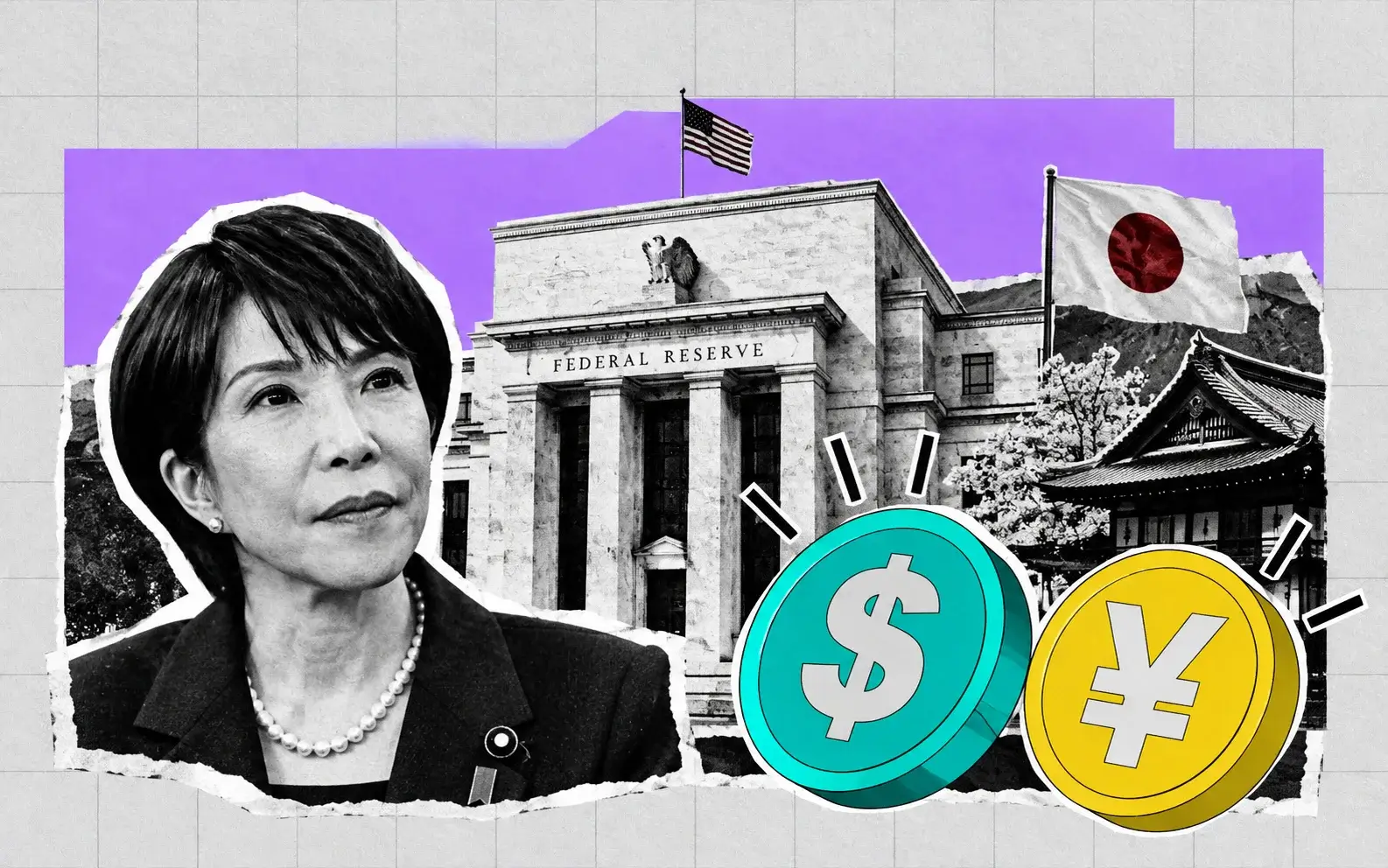
USD/JPY is doing its most dangerous dance on Friday, June 12, trading around 160.20 and pressing right against the 160 level that has become the single most important line in global currency markets. The pair sits at multi-decade highs, having climbed back to the zone where Japanese authorities intervened just weeks ago, and it is wedged in a standoff between two opposing forces: the powerful gravity of a record interest-rate gap pulling it higher, and the threat of official intervention capping it. The pair trades above its 50-day moving average at 159.94 and well above its 200-day average at 158.06, both of which are rising — a technical structure that confirms the dollar's dominant uptrend remains firmly intact.
The setup is exceptionally tense. On one side, the roughly 300-basis-point interest-rate differential between the Federal Reserve and the Bank of Japan, widened further by the Fed's hawkish turn on the 2026 inflation shock, continues to make holding the yen expensive and the dollar attractive. On the other side, Japan's Ministry of Finance has drawn a clear line near 160 and has already spent heavily defending it. The result is a pair pinned at the threshold, testing the limits of the market's patience against the central bank's resolve. And looming over it all is a potential game-changer: the same Iran de-escalation crashing oil prices today could, over time, become the catalyst that finally relieves the relentless pressure on the yen.
The price picture: pinned at the 160 intervention threshold
The pair's position is precarious by design. At around 160.20, USD/JPY is testing the 160 level for what feels like the umpteenth time, having repeatedly probed it in recent sessions. Earlier in the spring, the pair pushed to a 21-month intraday high above 160.67, clearing the prior intervention zone around 160.23 to 160.45 where Japanese authorities had stepped into the market. It then retreated on suspected intervention before grinding back toward the threshold — the classic pattern of a pair whose fundamentals point higher but whose ascent is repeatedly checked by official action.
The technical readings underscore the strength of the underlying trend. The pair trades above its 50-day moving average by roughly 0.62% and above its 100-day average by about 1.03%, with the 200-day average down near 158.06 and rising. Those are the hallmarks of a sustained uptrend, one that has been in place since May 2025 as the dollar rallied on the back of the widening rate gap. The market has been positioned for further upside, with momentum indicators pointing toward 161 and beyond, restrained only by the intervention overhang. This is a market that wants to go higher on the fundamentals but is being held at the door by the threat of the Ministry of Finance.
The rate gap: the engine of yen weakness
The fundamental driver of the yen's prolonged decline is the enormous interest-rate differential between the two economies, and that gap is the single most important variable for the pair. The spread between US and Japanese policy rates sits near 300 basis points, with the Bank of Japan's cash rate at just 0.75% against a far more restrictive Federal Reserve. That differential makes the yen a cheap funding currency and the dollar a high-yielding destination, a dynamic that powers the carry trades and corporate hedging flows that have driven USD/JPY to multi-decade highs.
Crucially, the gap has been widening rather than narrowing in 2026, contrary to what the market expected at the start of the year. The implied policy-rate spread between the two economies shifted up to around 2.74% from 2.46% three months earlier, reinforced by Federal Reserve officials leaning away from an easing bias as the inflation shock from the Iran conflict pushed US prices higher. The early-2026 consensus had assumed the Fed would keep cutting while the Bank of Japan tightened, narrowing the gap and strengthening the yen toward 150 to 155. Instead, the Fed turned hawkish, the gap widened, and the yen weakened toward 160. The statistical relationship is well established: the 10-year yield spread between the two countries carries dominant explanatory power over the exchange rate, with a 1% move in the spread typically driving a 0.167% move in the pair. Until that spread narrows, the fundamental pull on USD/JPY is upward.
Intervention: Japan's line in the sand
With the fundamentals pointing higher, the only thing standing between USD/JPY and a clean break above 160 is the threat of official intervention. Japan's Ministry of Finance, acting through the central bank as its agent, has a well-established history of stepping into the market to defend the yen when weakness becomes excessive. The authorities spent the equivalent of roughly $62 billion to $90 billion defending the currency in 2024 — the largest such campaign since 1998 — and intervened again near 160 earlier this spring, temporarily strengthening the yen before the rate-gap gravity reasserted itself.
The critical insight is that intervention is a tactic to buy time, not a solution to the trend. Each intervention provides only provisional support, because the underlying rate differential continues to encourage yen-funded carry trades that push the pair back up. The authorities care more about the speed of a move than its absolute level — a rapid, disorderly climb is far more likely to trigger action than a slow grind — and the intervention threshold on the upside is generally seen in the 155 to 160 zone. There is a further wrinkle: the US Treasury has signaled it prefers Japan support the yen through interest-rate hikes rather than by selling its US Treasury holdings, which means any future intervention would likely prioritize depleting Japan's dollar cash reserves over tapping its Treasury stockpile. With the pair back at 160.20, the market is once again testing whether and when the authorities will act — a high-stakes game of chicken between the central bank's patience and the market's momentum.
The oil connection: a double blow to the yen
One of the most underappreciated drivers of the yen's 2026 weakness has been oil, and it has hurt the currency through two separate channels. Japan is one of the world's largest energy importers, so the surge in crude prices during the Iran conflict directly widened the country's trade deficit, requiring more yen to be sold to pay for costlier energy imports. A wider deficit means structural selling pressure on the currency, and analysis suggests that elevated oil prices — particularly Brent above $90 a barrel — create a floor under USD/JPY around 148 to 152 by worsening that deficit.
The second channel runs through inflation and the Fed. The oil-driven inflation shock is precisely what pushed the Federal Reserve to abandon its easing bias and turn hawkish, widening the very rate gap that has been crushing the yen. So the Iran conflict delivered a double blow: it worsened Japan's trade balance directly, and it widened the US-Japan rate differential indirectly by keeping the Fed restrictive. Both forces pushed in the same direction, dragging the yen toward 160 and keeping it there. Understanding this dual mechanism is essential to understanding what happens next — because if oil reverses, both channels reverse with it.
The Iran de-escalation: a potential turning point
This brings us to the most important development for the yen's outlook. The sudden Iran de-escalation on Friday, with a deal potentially signed in Europe this weekend and crude prices crashing below $86 a barrel, has the potential to reverse both of the channels that have been weighing on the currency. Lower oil prices would narrow Japan's trade deficit, reducing the structural selling pressure on the yen. And over time, falling energy prices would ease the inflation impulse that has kept the Fed hawkish, potentially allowing the rate gap to narrow at last. For a currency that has been doubly punished by expensive oil, a sustained drop in crude is unambiguously good news.
The caveat is timing and the near-term cross-current. In the immediate term, a risk-on environment of the kind triggered by the de-escalation tends to weaken the yen, not strengthen it, because calmer markets and lower volatility make yen-funded carry trades more attractive. So the first reaction to the Iran relief could actually be modest yen weakness as carry positioning rebuilds, even as the longer-term implications of cheaper oil are yen-supportive. The pair is therefore caught between a near-term risk-on headwind for the yen and a developing fundamental tailwind from falling oil. Whether the Iran de-escalation marks the turning point that finally relieves the yen depends on the deal holding and on oil's decline proving durable enough to shift the Fed's trajectory — a process that will play out over weeks, not hours.
The Bank of Japan's dilemma and the path of hikes
The sustainable fix for yen weakness is not intervention but a narrowing of the rate gap, and that requires the Bank of Japan to keep raising rates. The central bank has been on a gradual tightening path, advocating a "hawkish hold" at its 0.75% cash rate at its most recent meeting, with three officials dissenting in favor of an immediate hike — the biggest divide under the current governor's tenure. Short-term rate markets have been pricing a meaningful probability, around two-thirds, of a further hike, and the policy rate is expected to grind toward 1% as the bank continues its cautious normalization.
But the central bank faces a genuine dilemma that constrains its options. It must weigh rising inflation — partly imported through the weak yen, which is estimated to add 0.3 to 0.5 percentage points to inflation over a 12-month period — against weak domestic growth, which argues for caution. Complicating the picture further is the fiscal backdrop: the government's large stimulus package and expansionary fiscal stance sit awkwardly alongside the central bank's tightening, creating a tension between fiscal expansion and monetary normalization that muddies the outlook. The market's focus has shifted decisively toward the bank's rate-hike trajectory as the only mechanism that can sustainably narrow the differential and reverse the yen's decline. The resolve of its rhetoric, the pace of its hikes, and its judgment on whether the wage-price spiral is sustainable are now the key variables for the pair.
Technical levels: 159.85 support, 161 and beyond
On the charts, the structure is bullish but capped. Immediate support sits at the 50-day moving average near 159.94, reinforced by rising channel support around 159.85; as long as the pair holds above that zone, the uptrend remains intact and momentum points higher. Below it, the 200-day average near 158.06 provides the next major support, followed by the lower end of the year's projected range around 157.83. A break beneath those levels — most likely triggered by intervention rather than organic selling — could open a sharp, fast move toward 155 and even 152, given how heavily the round numbers are respected by Japanese corporate hedging flows.
To the upside, the immediate hurdle is the prior intervention zone around 160.23 to 160.45, followed by the 21-month high near 160.67 to 160.85. A decisive break above that zone would expose 161.16 to 161.30, and in a fuller extension, the path opens toward 163.30 and the year's projected high around 164.73. The pair's tendency to respect round numbers like 160 means the battle at the current level is pivotal: a clean, sustained break above 160 that does not draw intervention would signal the authorities have stepped back, clearing the way for the next leg higher.
Forecast scenarios: 150 or 164?
The range of forecasts is unusually wide, reflecting genuine disagreement over whether the yen finally strengthens or the dollar stays dominant. Year-end 2026 projections span from 150 to 164 — a 14-point spread that captures the binary nature of the outlook. The bullish-dollar camp sees the pair averaging around 161 for the year and reaching as high as 164.73 by December, predicated on the rate gap staying wide as the Fed remains hawkish and the Bank of Japan tightens only gradually. In this scenario, intervention provides temporary dips that are bought, and the structural pull keeps USD/JPY elevated.
The bearish-dollar camp sees the pair softening to around 158 by mid-2026, 154 by year-end, and 151 by mid-2027, driven by the Bank of Japan's continued tightening and an eventual Fed pivot back to easing as inflation cools. The deciding variables are clear: the trajectory of oil, which feeds both Japan's trade deficit and US inflation; the pace of the Fed's policy, particularly whether the hot-inflation narrative gives way to easing; and the resolve of the Bank of Japan's hikes. The Iran de-escalation tilts the balance modestly toward the yen-strengthening scenario over time, by addressing both the oil and inflation channels — but only if it holds and only with a lag. The base case for the immediate term is continued tense range-trading near 160, with intervention capping the upside and the rate gap supporting the downside.
The carry trade and risk sentiment
A crucial dynamic layered over the fundamentals is the yen carry trade, which makes the pair highly sensitive to global risk sentiment. In calm, risk-on conditions — like those triggered by the Iran relief — the low-volatility environment makes borrowing in cheap yen to invest in higher-yielding assets attractive, which generates persistent yen selling and supports USD/JPY. This is why a risk-on tape tends to weaken the yen even when other factors are neutral. Conversely, sharp risk-off episodes can trigger violent unwinds of those carry positions, sending the yen surging as the borrowed positions are rapidly closed.
This sensitivity cuts both ways for the current setup. The Iran de-escalation's risk-on impulse is a near-term headwind for the yen via the carry channel, reinforcing the pair's grip on 160. But it also means the pair carries asymmetric downside risk: any renewed risk-off shock — a collapse of the Iran deal, a sudden equity sell-off, or aggressive intervention — could trigger a fast, sharp drop as carry positions unwind. The pair's strong correlation with global risk appetite makes it as much a barometer of sentiment as a reflection of rate differentials.
Read More
-
Yen Stalls at 160 Despite a 3% JGB and Tokyo Core CPI at 2.0% — Intervention Sits at 164, Friday's Payrolls Decide
02.09.2026 · TradingNEWS ArchiveEnergy
-
QQQI ETF Pays 13.96% While The Nasdaq-100 Rolls Over — Why Section 1256 Is Worth More Than The Yield
14.09.2026 · TradingNEWS ArchiveStocks
-
XRP ETFs Took $19M In A Week After A $110M Record — Why The Filings Tell A Different Story Than The Flows
14.09.2026 · TradingNEWS ArchiveCrypto
-
US Gas Holds $2.88 While Europe Pays $28 — Why Only A Tenth Of The War Premium Reaches Henry Hub
14.09.2026 · TradingNEWS ArchiveCommodities
-
Yen Holds Near February Highs As Tokyo Prepares Its Highest Rate Since 1995 — Why The Yield Gap Will Not Move
14.09.2026 · TradingNEWS ArchiveForex
The Fed and what to watch ahead
The dominant near-term catalyst is the Federal Reserve meeting on June 16 to 17, with the decision and press conference on June 17. The market overwhelmingly expects rates to be held, so the focus is on the guidance: any signal that the Fed is genuinely considering hikes would widen the rate gap further and push USD/JPY toward and through 160, while a dovish acknowledgment that cooling oil is easing inflation pressure could narrow the gap and finally give the yen room to strengthen. As the most rate-sensitive of the major pairs, USD/JPY would react sharply to either outcome.
Three signposts will shape the next move. First is the intervention question — whether Japanese authorities act as the pair tests 160, and how the market responds. Second is the Iran deal and the path of oil, which feeds both Japan's trade balance and the Fed's inflation calculus. Third is the Fed on June 17 and the Bank of Japan's own guidance on the pace of its hikes. Until those resolve, USD/JPY is likely to remain locked in a tense standoff near 160, with intervention capping the top and the rate gap underpinning the bottom.
Bottom line
USD/JPY is testing the most important level in global currency markets, sitting at 160.20 against the 160 line that Japanese authorities have already defended once this spring. The pair is at multi-decade highs, pulled upward by a record 300-basis-point rate gap that the Fed's hawkish turn has widened, and held back only by the threat of intervention. The technical trend is firmly higher, with support at 159.85 and the path toward 161 and beyond open if the authorities step aside. But the bigger story may be unfolding away from the chart: the Iran de-escalation crashing oil prices today could, over the coming weeks, reverse both the trade-deficit and inflation channels that have crushed the yen, marking a potential turning point. For now, the rate gap and the carry trade keep the pressure on, intervention keeps the lid on, and the pair trades in a tense standoff at 160 — waiting on the Fed, the Bank of Japan, and whether the oil-driven relief proves real.