Dollar-Yen Surges to 160, Highest Since April 30, as 4.57% Yields Revive the Carry Trade — Intervention Risk Spikes
USD/JPY climbed to the critical 160 level, its highest since April 30 and the threshold where the Bank of Japan intervened in April | That's TradingNEWS
Key Points
- USD/JPY surged to the 160 level, its highest since April 30 and the threshold where the BoJ intervened in April, as the dollar rallied on hawkish Fed repricing.
- The revived carry trade — borrow yen near 0.75%, buy Treasuries above 4% — is driving the pair, with the yen sliding despite strong Japanese Q1 GDP of 1.8%.
- 160 is a binary level: a clean break opens 162-166, while a BoJ intervention or soft US CPI Wednesday could snap the pair back toward the 154.7 May low and the 148-153 zone.
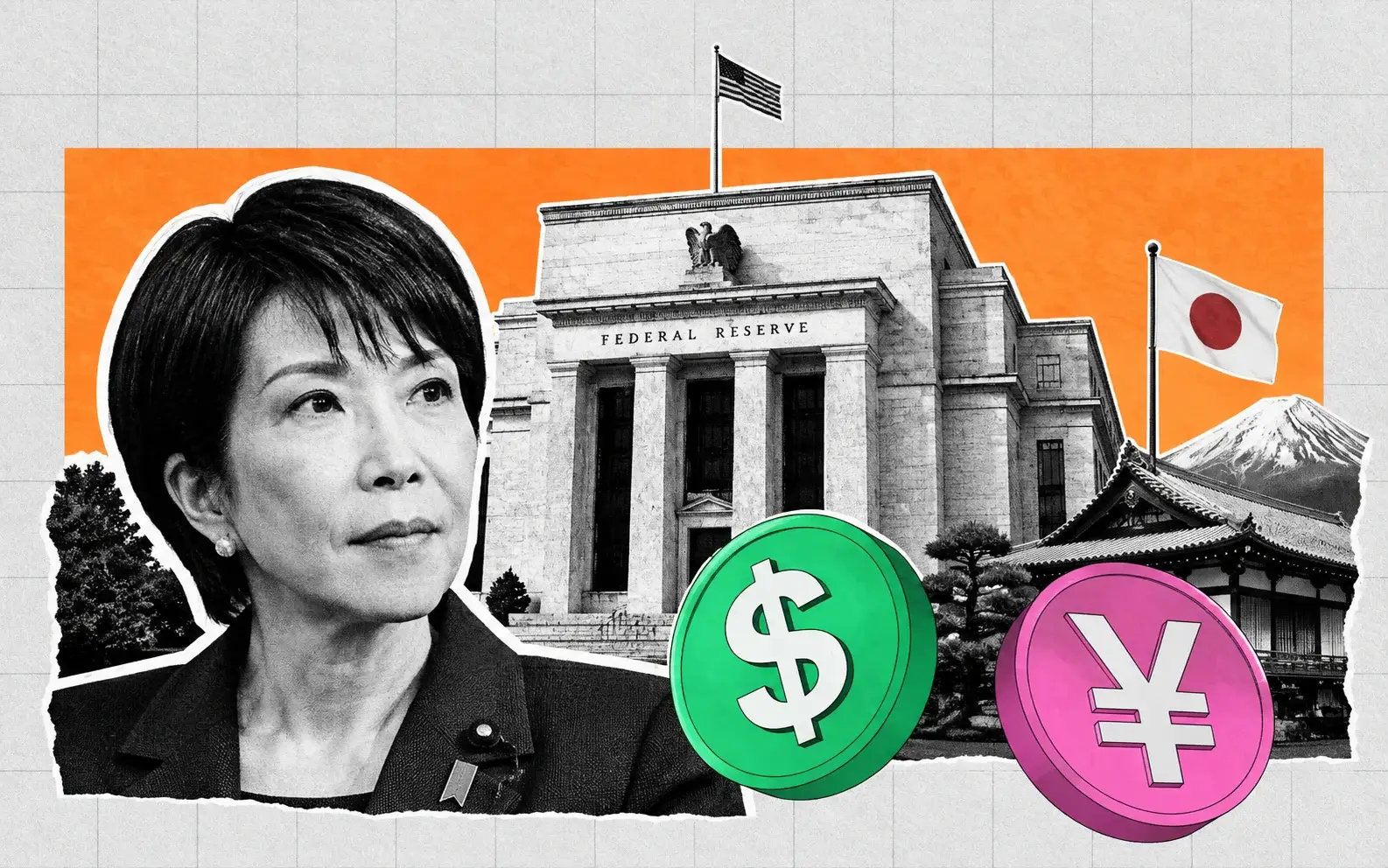
USD/JPY has surged to the most dangerous level on its chart. The pair climbed to the crucial 160 resistance Monday, its highest point since April 30 and roughly 3.40% above its May low, as a resurgent US dollar steamrolled the yen following Friday's blowout jobs report. The number 160 isn't just a round figure — it's the line in the sand where the Bank of Japan stepped in with a massive intervention in April, and the market is now on high alert for whether Japanese authorities will act again. The dollar's strength has overwhelmed everything in its path, including genuinely strong Japanese economic data, dragging the yen back to the brink. This is the same dollar story playing out across every major pair this week: a US labor market that refuses to crack has flipped the Federal Reserve from a cutting bias to a possible hike, and that repricing has reignited the carry trade and the dollar's dominance. USD/JPY at 160 is a high-stakes standoff — the dollar's momentum says higher, but the intervention threat says the move is living on borrowed time. The next few sessions are binary.
The Jobs Report That Powered the Dollar to 160
The catalyst was Friday's May employment report. The US economy added 172,000 jobs, nearly double the forecast near 85,000, with the unemployment rate holding at 4.3%. That number forced markets to fully price in a Fed rate hike by year-end, a dramatic reversal from the cut-focused narrative that dominated most of 2026, and the dollar responded by surging across the board. The US Dollar Index firmed toward 100, the 10-year Treasury yield pushed to around 4.57%, and the 2-year jumped to 4.162%. For USD/JPY, rising US yields are pure rocket fuel, because the pair trades almost mechanically on the US-Japan interest-rate differential. When US yields climb while Japanese yields stay anchored near zero, capital flows into dollars and out of yen, pushing the pair higher. The jobs print didn't just lift the dollar — it widened the rate gap that drives the entire dollar-yen relationship, sending the pair charging back to the 160 intervention level. A US labor market this strong keeps the Fed restrictive, and a restrictive Fed is the single biggest force pushing USD/JPY higher.
The Intervention Line: What Happens at 160
The 160 level is where this story gets dangerous. The yen crashed to this exact threshold in April, triggering a massive Bank of Japan intervention as authorities stepped into the market to defend the currency. Now, with USD/JPY back at 160, the market is bracing for a repeat. Japanese officials have repeatedly signaled they won't tolerate disorderly yen weakness, and 160 has become the unofficial red line. The Ministry of Finance and the BoJ monitor the pace of the move as much as the level itself — a sharp, rapid surge to 160 is more likely to provoke intervention than a slow grind. Traders pushing the pair higher are effectively betting against the Japanese authorities, and that's a risky game, because intervention can trigger violent reversals of several yen in minutes. The setup creates a natural ceiling: the dollar's fundamentals argue for a break above 160, but the intervention threat caps the upside and raises the risk of a sudden, sharp drop. This tension between dollar momentum and intervention risk is the dominant near-term theme, and it makes 160 the most important level in global FX right now.
Japan's Strong Data That Couldn't Stop the Yen's Slide
What makes the yen's weakness striking is that it's happening despite genuinely strong Japanese economic data. Japan's statistics agency reported that the economy expanded 1.8% in the first quarter, well above the 0.7% growth in the prior quarter and the 1.3% consensus estimate. The growth was driven by external demand and consumer spending, which rose 0.3% during the quarter, partially offset by a modest 0.7% decline in capital expenditure. Strong GDP would normally support a currency, yet the yen slumped anyway — a clear sign that the dollar's strength and the rate differential are overwhelming Japan's domestic fundamentals. This is the core problem for the yen: no matter how well Japan's economy performs, the gulf between near-zero Japanese yields and 4.57% US yields keeps capital flowing out of the currency. The strong Q1 print gives the BoJ more room to tighten, which is yen-supportive in theory, but in practice the carry trade and the dollar's momentum are dictating price. The yen can't draw lasting strength from good data while the rate gap remains this wide. Fundamentals matter; the differential matters more.
The Carry Trade Reasserts
The engine driving USD/JPY higher is the carry trade, and the Fed's hawkish flip has reignited it. The mechanics are simple: borrow yen at roughly 0.75%, buy US Treasuries yielding above 4%, and pocket the difference — a trade that pays every day the yen stays flat or weakens. At scale, hedge funds run billions in these positions, and the carry is the dominant speculative force in the pair. Through early 2026, the carry faced a structural headwind as the BoJ raised borrowing costs and the Fed was expected to cut, narrowing the differential from both sides. But Friday's jobs report flipped that dynamic — with the Fed now possibly hiking instead of cutting, the US side of the carry stays elevated, and the trade regains its appeal. Even a narrowing differential still pays handsomely in a leveraged position, and the renewed prospect of a wide, stable gap has pulled carry traders back in, adding fuel to the move toward 160. The carry trade is also the source of the pair's biggest risk: when it unwinds — as it does violently during intervention or risk-off shocks — USD/JPY can drop dozens of yen in days. For now, the carry is back on, and it's pushing the pair higher.
The BoJ Tightening Story
The Bank of Japan stands out as one of the only major central banks raising rates in 2026, and that's the structural yen-bullish counterweight to the dollar's dominance. The BoJ has been gradually moving away from its ultra-loose policy, with markets pricing further rate hikes as Japan balances reflation against currency strength. In theory, a tightening BoJ should narrow the rate gap and eventually support the yen — and that's the basis for the bullish-yen forecasts that see USD/JPY drifting lower over time. But the timing is the problem: the BoJ's tightening is slow and incremental, while the Fed's hawkish repricing was sudden and sharp. The result is that the dollar's momentum is overwhelming the BoJ's gradual normalization in the near term. The longer-term thesis remains that as the BoJ keeps hiking and the rate gap compresses, the yen finally strengthens — every 100 basis points of compression has historically correlated with a 5-8 yen move in the pair. But that's a multi-quarter story, and right now the Fed's flip has put it on hold. The BoJ is tightening into a dollar that just got stronger.
Sanaenomics and the ¥21.3 Trillion Stimulus
Japan's policy mix adds another layer to the yen outlook. The government's fiscal expansion — a ¥21.3 trillion stimulus package, part of the agenda some have dubbed "Sanaenomics" — is designed to support growth and combat the impact of rising living costs. This fiscal expansion interacts with the BoJ's monetary tightening in a complex way: the stimulus supports domestic demand, which is yen-supportive over time, but large-scale fiscal spending can also raise concerns about Japan's debt trajectory and add to the yen's structural weakness. The interaction between fiscal stimulus and monetary tightening remains a key theme for the yen, and investors are watching whether the combined effect eventually strengthens domestic demand enough to support the currency. For now, the stimulus is a longer-term factor that's overshadowed by the immediate rate-differential and intervention dynamics. The policy backdrop in Japan is genuinely shifting — a tightening central bank plus an expansionary fiscal stance is a notable change from years of pure easing — but the market is focused on the 160 level and the dollar's momentum, not the structural policy story. The fiscal-monetary mix matters for the medium term; the carry trade matters for today.
The Technical Map: 160 Is Everything
The chart is dominated by a single level. USD/JPY has traded within a broad sideways range between the upper boundary at 160 and the lower boundary near 140 since January 2024, and the pair is now pressing against the top of that range. The 160 level is both the psychological resistance and the intervention threshold, making it the most important line on the chart by a wide margin. A clean, sustained break above 160 — if the BoJ doesn't intervene — would open the door to the 162-166 zone that some analysts target for the summer, and potentially higher if dollar strength persists. On the downside, the May low near 154.7 is the first support, followed by the moving-average cluster in the 148-153 area, and ultimately the 140 range floor. The pair sits above its key moving averages, keeping the broader trend tilted higher, but the proximity to 160 caps the upside and raises the risk of a sharp reversal on intervention. The technical message is binary: 160 either breaks and the pair runs, or it holds — likely with official help — and the pair snaps back toward the mid-150s. There's little middle ground at the intervention line.
The Forecast Spread: 148 to 180
The analyst community can't agree on where USD/JPY is headed, and the spread is enormous. Year-end 2026 forecasts range from 148 on the bullish-yen end to 164 on the bullish-dollar end, a 16-point gap that reflects genuine disagreement over whether the yen finally strengthens or the dollar stays dominant. The bullish-yen camp, including some major banks, argues that the BoJ's tightening and the eventual compression of the rate differential will pull the pair lower toward 148-150. The bullish-dollar camp, including a prominent US bank targeting 164, counters that structural dollar demand from Japanese corporates and persistent carry flows will offset the rate-differential narrowing and keep the pair elevated. The most aggressive projections see USD/JPY climbing toward 162-166 through the summer and potentially 176-180 by year-end if dollar strength persists. The wide range captures the core uncertainty: the pair is at an inflection point where the dollar's near-term momentum collides with the yen's longer-term tightening story. The Fed's hawkish flip has tilted the near-term balance toward the dollar bulls, but the intervention threat and the BoJ's tightening keep the yen bulls in the game.
US CPI and the Macro Hinge
The next catalyst is Wednesday's US inflation data. The May Consumer Price Index is expected to show inflation accelerating, in part because of the energy-price surge tied to the Middle East conflict, and the print will be decisive for USD/JPY. A hot reading would reinforce the case for the Fed to stay restrictive or hike, extending the dollar's gains and pushing the pair harder against 160 — directly raising the intervention risk. A downside surprise would do the opposite, prompting investors to scale back the hawkish pricing that emerged after the jobs report, easing the pressure on the yen and pulling USD/JPY back from the brink. With US inflation running hot and energy prices elevated, the risk skews toward a firm print that keeps the dollar bid and the pair pinned at the intervention level. The interplay between the US data and the Japanese authorities is the central dynamic: a hot CPI pushes the pair toward a break of 160, which is precisely the scenario most likely to trigger BoJ action. Wednesday's print is the hinge that could either force the intervention or relieve the pressure.
Read More
-
Yen Stalls at 160 Despite a 3% JGB and Tokyo Core CPI at 2.0% — Intervention Sits at 164, Friday's Payrolls Decide
02.09.2026 · TradingNEWS ArchiveEnergy
-
GLD ETF Sheds Value With Bullion as North American Funds Stay $7.7B in the Red
10.09.2026 · TradingNEWS ArchiveStocks
-
XRP ETF Flows: 7 Funds Split $1.682B With the Complex at Just 1.68% of Market Cap
10.09.2026 · TradingNEWS ArchiveCrypto
-
NG Breaks $2.90 With Production at 113 Bcf/d and LNG Feedgas Capped at 18.3 Bcf/d
10.09.2026 · TradingNEWS ArchiveCommodities
-
USD/JPY Holds Below the 157.23 Average as 2 Central Banks Tighten in 48 Hours
10.09.2026 · TradingNEWS ArchiveForex
Price Forecast: The Range and the Triggers
The base case is a high-tension standoff at 160 with two sharply divergent paths. The bullish-dollar path: a hot US CPI extends the dollar's gains, USD/JPY breaks 160 cleanly without intervention, and the pair runs toward the 162-166 summer target, with the most aggressive forecasts eyeing 176-180 if dollar strength persists into year-end. The bearish path comes in two flavors — either the BoJ intervenes at 160, triggering a violent reversal of several yen back toward the mid-150s, or a soft US CPI eases the rate pressure and the pair drifts lower toward the 154.7 May low and the 148-153 moving-average cluster. The longer-term bullish-yen scenario, targeting 148-150, depends on the BoJ continuing to tighten and the rate differential compressing, which would gradually pull the pair lower over the coming quarters. The swing factors are Wednesday's US CPI, the BoJ's intervention decision, and the trajectory of US yields. The risk-reward at 160 is asymmetric: the upside is capped by intervention risk, while the downside on an intervention or a soft CPI could be sharp and fast. Trade the level with respect for the authorities.
The Verdict
At the intervention line, with the dollar in control but 160 acting as a hard ceiling. USD/JPY's surge to the 160 threshold — its highest since April 30 — reflects the same hawkish Fed repricing off the 172,000 jobs print, the 4.57% 10-year yield, and the revived carry trade that are driving dollar strength everywhere. The yen's weakness in the face of strong Japanese Q1 GDP of 1.8% underscores how completely the rate differential dominates the pair. But 160 is where the story gets binary: it's the level the Bank of Japan defended with a massive intervention in April, and the market is on high alert for a repeat. The line is clean: a clean break above 160 without intervention opens 162-166, while a BoJ intervention or a soft US CPI snaps the pair back toward the mid-150s. The longer-term thesis still favors eventual yen strength as the BoJ tightens and the rate gap compresses, but the Fed's flip has put that on hold. This week's US CPI is the catalyst that could force the intervention or relieve the pressure. The dollar's momentum says higher; the intervention threat says the move is on borrowed time. At 160, respect the Japanese authorities — they've drawn the line here before.