Dow Prints Fresh Record Near 52,800 as a 57,000 Payrolls Miss Reshapes the Fed Path
Cooling labor data collided with sticky 3.5% wages and a hawkish balance-sheet agenda | That's TradingNEWS
Key Points
- June payrolls rose just 57,000 versus ~113,000 expected; jobless rate slipped to 4.2% as the labor force shrank.
- September hike odds fell below 50% from ~67%, lifting the Dow to a record and gold above $4,100 an ounce.
- Bitcoin cleared $61,000 (+3–4%) and Ether neared $1,700 (+5–6%) as the dollar held near a 15-month high at 101.3.
The June employment report landed a day early ahead of the Independence Day closure, and it arrived soft. The economy added just 57,000 nonfarm payrolls last month, the weakest tally in four months and well beneath the consensus that had clustered near 113,000. The headline miss broke a three-month streak of hotter-than-expected prints and immediately took some of the pressure off the case for near-term tightening. Underneath the top line, the composition was murkier than a clean cooling. The unemployment rate slipped to 4.2% from 4.3%, but the move came for the wrong reason: people leaving the labor force rather than a surge in hiring. Average hourly earnings firmed to 3.5% year over year, a wage pace that still sits uncomfortably above what the central bank would call consistent with price stability. Leisure and hospitality shed roughly 61,000 positions despite the tourism lift tied to World Cup crowds, a sign that services demand may be losing momentum at the margin. The reading followed a private-sector ADP figure of 98,000 the prior day and a Challenger layoff count near 46,000, both pointing to a labor market that is decelerating rather than cracking. What changed most sharply was the rate math. Futures pricing for a September hike collapsed to below 50% from roughly 67% in the hours before the release, a swing that rippled through every corner of the tape. Equities firmed, the dollar held its ground, gold snapped higher, and the front end of the Treasury curve rallied as the market pulled forward the odds of a pause. The report did not settle the debate so much as reframe it. A cooling labor market with sticky wages and a falling participation-driven jobless rate is exactly the kind of ambiguous print that lets both camps claim vindication. The doves see slack building and a policy hold that can extend into the autumn. The hawks see wage growth near 3.5%, an unemployment rate that fell rather than rose, and inflation risks that have not been fully extinguished. For a session running into thin holiday conditions, the miss was enough to tilt sentiment toward risk, but not enough to erase the tightening bias that has defined the year. The market entered the shortened week leaning cautious and exited the payrolls print leaning relieved, though the relief rests on a foundation that a single upside surprise in the coming data could shake loose again.
Dow Prints A Fresh Record As Breadth Broadens
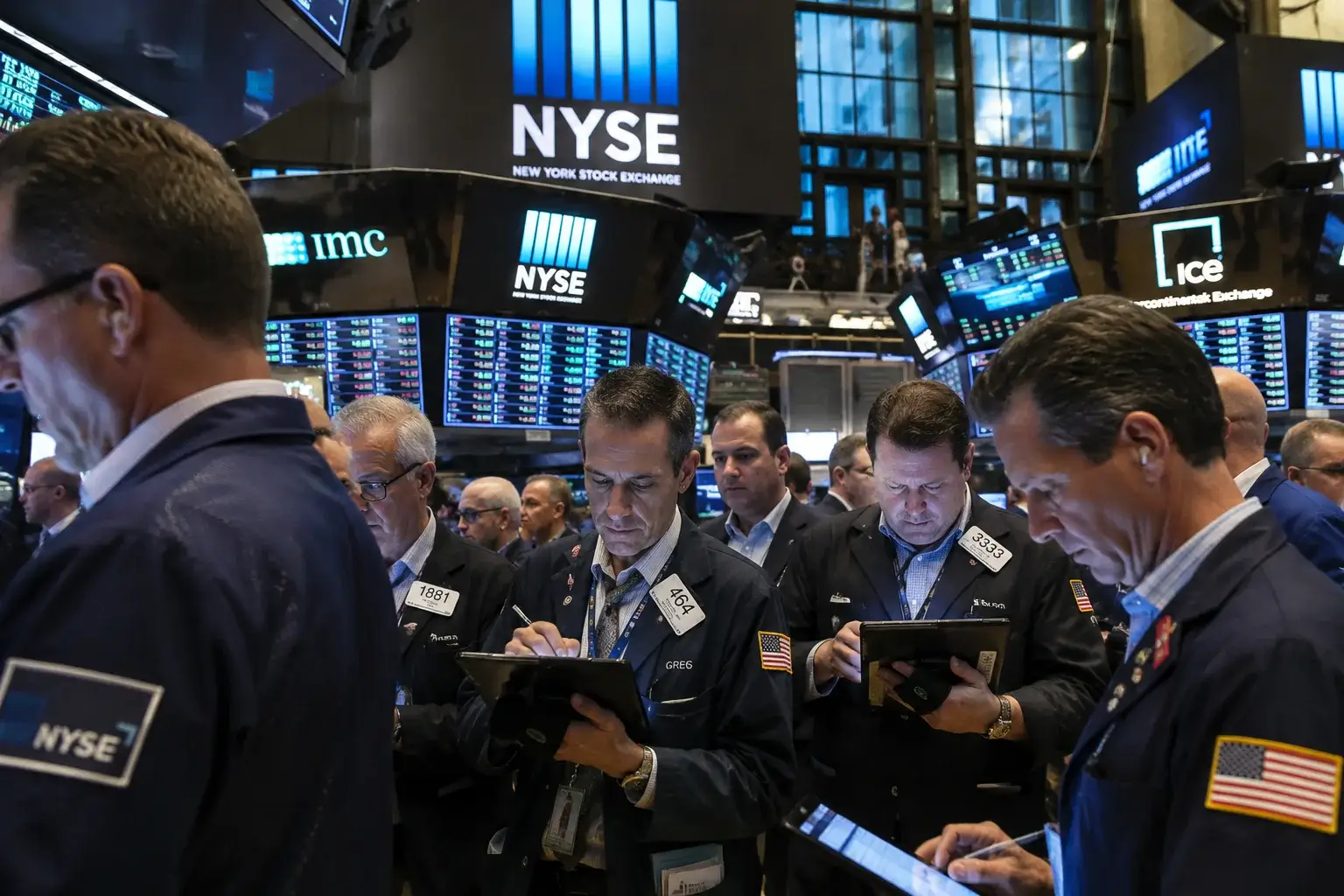
Blue chips led the response, with the Dow Jones Industrial Average (DJI) pushing to a fresh intraday record near 52,802.97 and holding gains of roughly 0.5% to 0.8% through the morning. The S&P 500 (SPX) advanced to around 7,508 to 7,520, up about 0.3% to 0.5%, while the Nasdaq Composite (IXIC) lagged with a gain near 0.2% as it worked to shake off the prior session's semiconductor-led slide. The leadership rotation mattered as much as the point moves. A record in the Dow alongside a heavier Nasdaq signaled that money was widening out of the megacap complex and into cyclical and value corners of the market, the kind of breadth improvement that bulls have wanted to see confirm the rally rather than a narrow handful of names carrying the index. The volatility backdrop reinforced the calm. The Cboe Volatility Index (VIX) eased toward 15.8 to 15.9, sliding more than 4% and hovering near the lower end of its recent range, a level that reflects little demand for downside protection heading into the holiday. On a weekly basis, the tone was constructive across the board: the S&P 500 was pacing for a gain of more than 2%, the Dow for more than 1%, and the Nasdaq for more than 3%, a spread that captured both the megacap rebound off midweek lows and the broadening participation beneath the surface. Beneath the indices, the story was one of dispersion. Defense technology names drew a bid, with one counter-drone specialist climbing about 4% after securing a $500 million Army contract. The new-issue market showed signs of life as well, with a high-profile software listing debuting on the Nasdaq the prior day, a reminder that risk appetite has recovered enough to reopen the initial public offering window that had been effectively shut for stretches of the spring. Megacap technology remained the swing factor for the composite. Nvidia, now valued near $5 trillion, continues to anchor sentiment for the group, and any wobble in the artificial-intelligence trade tends to set the tone for the Nasdaq's daily direction. The record in the Dow, set against a Nasdaq still repairing damage from the chip rout, framed the session's central tension: a market that wants to broaden out even as its largest weightings remain hostage to the AI capital-spending debate that has driven so much of the past year's returns.
The September Hike Debate Loses Its Anchor
Rate markets did the heaviest lifting on the day. Before the payrolls release, futures had priced better than a 60% probability of a September move, with a portion of the curve even flirting with the possibility of more than one hike by year-end. The 57,000 print knocked those odds under 50% in a matter of minutes, a repricing that reflected how much the hawkish narrative had leaned on a run of strong labor data. The loose consensus that survived the report was for a single hike by December rather than an imminent September action, with the market effectively pushing the next potential move further out on the calendar and reducing the total tightening it expects this cycle. That shift carries weight because the reaction function under the current chair has been explicitly data-dependent, with forward guidance deliberately withheld. When policy is set meeting to meeting off incoming prints rather than telegraphed in advance, each data point swings expectations more violently than it would in a guidance-heavy regime. The June miss was the first soft labor reading in months, and the market treated it as a meaningful marginal signal even though a single month rarely establishes a trend. The nuance the crowd may be underpricing is the wage and participation picture. A jobless rate that fell because workers exited the labor force is not the same as one that fell on robust hiring, and earnings growth near 3.5% keeps the inflation channel from wage pressure alive. That combination gives the hawks room to argue the report changes the timing but not the destination. Still, the immediate market message was clear: the probability of a summer hike faded, the front end of the curve rallied, and rate-sensitive corners of the equity market caught a bid. The next scheduled policy meeting on July 28 and 29 now looms as the pivotal event, with the market broadly expecting a hold at that gathering and looking for any shift in tone about the September setup. Between now and then, every inflation and labor print will be filtered through the question of whether the June softness was a one-off or the start of the cooling the doves have anticipated. For now, the anchor that held the hawkish case in place, a steady drumbeat of strong jobs data, has been loosened, and the rate market has moved to reflect a policy path with more patience baked in than it carried just twenty-four hours earlier.
Warsh Keeps The Hawkish Frame Intact
The policy backdrop into the report was shaped by remarks from the Fed chair at the European Central Bank's annual forum in Portugal, where he declined to hand the market forward guidance but reaffirmed a firm commitment to restoring price stability. His message carried a hawkish core wrapped in a modestly softer tone. He acknowledged that inflation expectations had eased over the prior month, a nod to cooling in survey-based and market-implied measures, while stressing that price levels remain too high and that the central bank's job is not finished. That balance, conceding progress on expectations while refusing to declare victory, is designed to keep financial conditions from loosening prematurely even as the hard data softens. Two structural themes ran through the commentary. The first was the balance sheet. The chair has made shrinking the central bank's holdings of notes and bonds a priority, arguing that an oversized portfolio hampers the clean transmission of policy through market rates. That campaign has a direct market consequence: reducing the balance sheet limits the supply of dollars and puts upward pressure on both the currency and longer-dated yields, which helps explain why the dollar has pressed toward multi-month highs even as hike odds have wobbled. The second theme was the deliberate absence of guidance. By refusing to pre-commit to a path, the chair has forced the market to trade the data rather than the dot plot, a regime shift that raises the stakes on every release and amplifies volatility around prints like the June payrolls figure. The alignment of his softer inflation-expectations comment with cooler price data added credibility to the dovish repricing. A pullback in the manufacturing survey's price gauge, aided by the retreat in energy costs to pre-conflict levels, gave the market a supply-side reason to believe inflation pressure is genuinely fading rather than merely being talked down. Yet the reaffirmation that prices remain too high acts as a floor under the hawkish case. The chair has been careful not to let the market run too far ahead toward cuts, and the balance-sheet reduction agenda provides a tightening lever that operates independently of the policy rate. The net effect is a policy stance that reads as patient on the rate path but unyielding on the inflation objective, a combination that leaves the door open to a hold in July while preserving the optionality to tighten again should the data reheat in the second half.
The Chip Selloff Still Casts A Shadow
The session unfolded against the backdrop of a brutal semiconductor rout the prior day that continued to color sentiment across the Nasdaq. Memory and processor names bore the brunt of the damage, with Micron plunging roughly 10.6%, Applied Materials sliding about 10%, Sandisk falling near 10.6%, Intel dropping around 9%, and Advanced Micro Devices shedding close to 6.9%. The scale of the single-session declines in names that had led the market higher for much of the year rattled the broader tape and reopened a debate that has simmered for months: whether the enormous capital being poured into artificial-intelligence infrastructure will generate the returns needed to justify current valuations. The selloff was less about any single earnings miss and more about a collective reassessment of the durability of the AI buildout. When the market begins to question whether spending on chips and data centers has run ahead of monetizable demand, the most richly valued corners of the semiconductor complex become vulnerable to sharp, sentiment-driven repricing. That is what appeared to unfold, with the memory segment, historically the most cyclical and capital-intensive part of the industry, leading the decline. The overhang matters for the composite because these names carry outsized index weight and outsized influence over risk appetite in growth and technology more broadly. A double-digit drop in a marquee memory maker does not stay contained; it bleeds into equipment suppliers, foundry names, and the software and hardware ecosystems that depend on continued AI capital expenditure. The concern is structural rather than fleeting. For much of the past two years, the market has extrapolated ever-rising AI infrastructure demand into ever-rising chip revenue, and any crack in that extrapolation forces a rethink of forward multiples. The prior session's damage suggested the crowd is now willing to entertain the possibility that the spending curve flattens or that returns on the investment disappoint. Even as the broader market steadied and the Dow printed a record, the chip complex remained the clearest expression of the market's ambivalence about the AI trade. The group's ability to stabilize will determine whether the Nasdaq can close the gap with the blue-chip index or whether the composite remains capped by lingering doubt about the sustainability of the theme that has powered its gains. Until the semiconductor names find a floor, the shadow of the midweek rout will hang over every attempt by technology to reclaim leadership.
Meta's Cloud Pivot Splits The AI Trade
If the chip rout captured the bearish read on artificial intelligence, the standout move in the megacap platform space captured the bullish counterpoint. Meta surged roughly 8.8% in the prior session after unveiling plans to build a cloud business aimed at monetizing its excess computing capacity, a strategic pivot that reframed the company's massive infrastructure spend as a revenue engine rather than a pure cost center. The announcement resonated because it spoke directly to the market's central AI anxiety. The bear case on the hyperscalers has always been that they are spending tens of billions on chips and data centers with an uncertain path to returns. By signaling that it can rent out spare capacity and turn its buildout into a monetizable cloud offering, the company offered a template for how the AI capital expenditure cycle might actually pay off, and the market rewarded it accordingly. The move rippled across the megacap group. Other members of the dominant platform cohort extended a rebound, with Microsoft climbing about 3%, Amazon adding roughly 1.4%, and Alphabet rising near 1.1%. The divergence between the surging platform names and the sinking chipmakers exposed a genuine split in how the market is now positioning around AI. The capital-light monetizers, the companies that own the demand and can convert compute into services, are being rewarded, while the capital-heavy suppliers, the chip and equipment makers whose fortunes hinge on continued spending, are being scrutinized. That bifurcation represents a maturation of the AI theme. In the early innings, everything connected to the technology moved together, with chips, hyperscalers, and infrastructure names rising in lockstep. Now the market is beginning to differentiate, rewarding proof of monetization and punishing perceived overbuild. Meta's cloud pivot sits at the center of that shift because it directly addresses the return-on-investment question that has dogged the group. The strategic logic is compelling. A company that has already sunk the capital into computing infrastructure can generate incremental high-margin revenue by leasing what it does not use, effectively subsidizing its own AI ambitions while creating a new business line. Whether the rest of the platform group can replicate that model will shape the next phase of the trade. For the session, the split was instructive: the same technology theme produced one of the market's biggest single-day gains and one of its steepest routs within forty-eight hours, a volatility that reflects a market still searching for conviction about which side of the AI buildout will prove the better bet.
Treasury Yields Ease But Stay Elevated
The Treasury market rallied on the payrolls miss, though the move looked more like a pause in a rising trend than a decisive reversal. The benchmark 10-year yield held around 4.47% to 4.48%, easing after testing 4.5% earlier and drifting back from the sharp rebound that had carried it up from a seven-week low near 4.36% at the start of the week. The front end responded more emphatically, with the 2-year yield falling as the market pulled back its bets on a September hike, a classic bull-steepening impulse in which shorter maturities rally harder than longer ones on a dovish data surprise. The context for the yield backdrop is a tug-of-war between softening data and structural upward pressure. On the softening side, the June jobs miss, the cooler ADP figure, and a pullback in the manufacturing survey's price gauge all argued for lower yields by reducing the perceived need for further tightening. Energy costs retreating toward pre-conflict levels added to the disinflationary read, easing the inflation premium embedded in longer-dated paper. On the structural side, the central bank's balance-sheet reduction campaign works against the rally. As the portfolio shrinks and the supply of dollars tightens, longer yields face persistent upward pressure that partly offsets the pull from softer data. That dynamic helps explain why the 10-year held above 4.4% even on a day when hike odds tumbled: the balance-sheet lever keeps a floor under yields that pure rate-cut expectations would otherwise push lower. The refined-fuel picture complicated the inflation narrative as well. While wholesale crude prices eased back to levels seen before the Middle East conflict, refined product costs remained sharply higher, keeping a portion of the market wary that inflation could reaccelerate and backing lingering expectations of a hike later in the year. That kept a bid under yields even as the growth data cooled. The net result was a curve that reflected the day's cross-currents rather than a clean directional statement. Shorter yields fell on the reduced odds of imminent tightening, longer yields eased modestly but stayed elevated on structural and inflation concerns, and the spread between them widened. For equities, the pullback in the front end was supportive, easing the discount-rate pressure on growth valuations that had built during the yield's midweek surge. But the failure of the 10-year to break meaningfully lower served as a reminder that the rate backdrop remains restrictive, and that the relief in the bond market rests on data that could just as easily reverse in the weeks ahead.
The Dollar Holds Near A Fifteen-Month High
The greenback's resilience was one of the more revealing features of the session. Even as the market slashed its September hike odds, the dollar index (DXY) held around 101.3 after testing 101.6 earlier in the week, a level that marked its strongest reading in roughly fifteen months. The currency's ability to stay firm in the face of a dovish repricing underscored that its strength is being driven by more than the near-term rate path. The dominant support came from the balance-sheet reduction campaign. By shrinking the central bank's holdings and limiting the supply of dollars, the policy has helped unwind the debasement trade that pressured the currency earlier in the year, providing a structural bid that operates independently of where the policy rate lands next. That mechanism has allowed the dollar to appreciate even as hike expectations have softened, a divergence that would be difficult to explain through rate differentials alone. Weakness in the major counterparts amplified the move. In the euro, which makes up more than half the dollar index basket, soft Eurozone inflation tempered expectations for multiple European Central Bank hikes, sapping support for the single currency. In the yen, a fiscally dovish stance in Japan kept the currency under pressure, with the dollar trading near 162.58 against it, a level that reflects the yawning policy gap between the two economies. Against that G10 backdrop of weakness, the dollar looked strong almost by default, gaining ground not on its own hawkish momentum but on the relative dovishness of its peers. The chair's comment that inflation risks had softened briefly pulled the index off its intraday high near 101.6 back toward 101.3, a reminder that the currency remains sensitive to shifts in the rate narrative even as the structural bid persists. But the pullback was shallow, and the index held comfortably within its recent elevated range. The dollar's firmness carries broad implications. A strong currency tightens financial conditions, pressures dollar-denominated commodities, and complicates the earnings translation for multinationals that generate revenue abroad. It also acts as a headwind for emerging markets and for risk assets that tend to perform better when the dollar is soft. The fact that the index held near multi-month highs on a day when the rate market turned more dovish suggests the currency's strength has a durability that a single soft data print will not easily undo, and that the balance-sheet lever will keep providing support regardless of the twists in the near-term rate debate.
Read More
-
Yen Stalls at 160 Despite a 3% JGB and Tokyo Core CPI at 2.0% — Intervention Sits at 164, Friday's Payrolls Decide
02.09.2026 · TradingNEWS ArchiveEnergy
-
QQQ ETF ($739) Fades From an Early Tech Rally as a 77.9 ISM Prices Index Meets Micron's $61.5B Guide — $760 Record Test Ahead
01.10.2026 · TradingNEWS ArchiveStocks
-
XRPR and XRPI Follow XRP's $1.49 Test as Spot Funds Hold 1.16B XRP and a 1 Billion Token Escrow Release Lands — $1.70 in Play
01.10.2026 · TradingNEWS ArchiveCrypto
-
November NG Slips Below $3 as Decade-High Storage Meets Capped LNG Exports — $2.75 in Sight
01.10.2026 · TradingNEWS ArchiveCommodities
-
Dollar-Yen at 158 Presses Toward 160 as a 363 bp Carry Gap Meets Katayama-Bessent Intervention Risk — 159 in Sight
01.10.2026 · TradingNEWS ArchiveForex
Gold Rebounds From An Eight-Month Low
Precious metals were among the clearest beneficiaries of the dovish repricing. Gold jumped above $4,100 per ounce and traded toward $4,137, a gain of roughly 1.3% that marked a sharp rebound from the eight-month low it had touched earlier in the week. The metal's recovery was a direct function of the shift in rate expectations. As the market scaled back its odds of a September hike from around 67% to below 50%, the opportunity cost of holding a non-yielding asset fell, and gold caught a strong bid. The rebound was notable precisely because it came off a depressed base. The metal had been beaten down to multi-month lows as the hawkish narrative built through late June, with rising yields and a firm dollar sapping demand for the traditional store of value. The June jobs miss reversed that pressure in a single session, illustrating how sensitive the metal has become to the rate path in an environment where the policy debate swings on each data point. Beyond the rate channel, gold drew support from the easing inflation backdrop. The retreat in energy costs, driven by rising oil shipments through the Strait of Hormuz and signs of progress in indirect talks between the United States and Iran, soothed the inflation concerns that had complicated the picture. Lower oil prices reduced the near-term inflation impulse, which in turn reinforced the market's willingness to price a more patient central bank, a combination that supported the metal on both the rate and inflation fronts. The structural case for gold has remained intact through the volatility. Elevated government spending, persistent central-bank demand, and lingering geopolitical stress have provided a floor under the metal across the year, even as short-term swings in the rate narrative have driven it up and down within a wide range. The eight-month low reached earlier in the week looked, in that light, like a correction within a longer structural uptrend rather than the start of a sustained decline. The firm dollar continued to act as a partial counterweight. With the greenback near fifteen-month highs, dollar-denominated gold faced a headwind that capped the size of the rebound, and the metal's ability to rally despite that pressure spoke to the strength of the underlying bid. For the session, gold's recovery captured the essence of the market's response to the payrolls miss: a dovish repricing that lifted rate-sensitive assets, eased the inflation premium, and restored the appeal of the classic hedge that had been left for dead just days earlier.
Oil Slides As Hormuz Flows Resume
Crude prices moved lower, extending a retreat that has helped reshape the inflation outlook. West Texas Intermediate traded near $68.32 on the front contract, down roughly 1.7%, as the supply picture eased and geopolitical tension in the Middle East showed signs of thawing. The catalysts were twofold: rising shipments through the Strait of Hormuz and signs of progress in indirect talks between the United States and Iran, both of which reduced the risk premium that had been embedded in the crude complex. The Strait of Hormuz remains the single most important chokepoint in global energy markets, and any signal that flows are resuming through it carries outsized influence on price. Earlier in the year, fears that the passage could be constrained had driven crude sharply higher and injected a significant risk premium into the market. The resumption of shipments through the waterway, combined with the diplomatic progress in the Doha-track discussions, drained that premium and allowed prices to drift back toward levels seen before the conflict escalated. The disinflationary implications extend well beyond the energy sector. Lower crude prices feed through to transport costs, manufacturing inputs, utility bills, and inflation expectations across the economy. The manufacturing survey's price gauge pulled back in part because wholesale energy costs returned to pre-conflict levels, a development that gave the central bank room to sound less urgent about inflation and that reinforced the market's dovish repricing on the day. Cheaper oil, in effect, did some of the disinflationary work that the policy rate would otherwise have to do. A complicating wrinkle remained in the refined-product market. While wholesale crude eased back to pre-conflict levels, refined fuel costs stayed sharply higher, keeping a floor under consumer-facing energy inflation and preserving some of the market's caution about a hike later in the year. That gap between falling wholesale crude and sticky refined prices meant the inflation relief was real but incomplete, and it kept the door open to renewed price pressure should the refining bottleneck persist. The structural backdrop for crude leans bearish into the second half. Supply growth from non-OPEC producers has been running well ahead of demand, and the group's own projections point to a well-supplied market, a combination that removes many of the bullish catalysts the market had leaned on earlier in the cycle. With the geopolitical premium draining and supply ample, the path of least resistance for crude appeared lower, a dynamic that offers ongoing support to the disinflation narrative even as refined products keep some upward pressure alive.
Crypto Catches A Dovish Bid After A Brutal Stretch
Digital assets rallied hard on the softer data, staging what looked like the first meaningful bounce after a punishing stretch. Bitcoin climbed above $61,000, trading toward $61,600 to $62,000 with a gain of roughly 3% to 4%, while Ether jumped near $1,700 to $1,713 for an advance of about 5% to 6% and Solana added around 4% to 5% to trade near $81. The move came as the reduced odds of a September hike lifted risk appetite across speculative corners of the market, with smaller and higher-beta tokens leading the charge in classic fashion for a relief rally. The rebound arrived against a backdrop of extreme pessimism. The Fear and Greed gauge for the asset class had been mired in extreme fear, registering a reading near 15, and the June stretch had been brutal, with spot exchange-traded product outflows reaching roughly $4.06 billion for the month as money rotated out of digital assets and into AI-themed equities. Bitcoin had tumbled to its lowest levels since 2024, briefly slipping below $60,000, as the combination of ETF redemptions, stalled regulatory progress, and a risk-off rotation weighed on the complex. The dovish repricing offered the first real catalyst for a turn. When the chair signaled that inflation risks had eased, and when the jobs miss reinforced the case for a policy pause, the reduced pressure on risk assets flowed straight into the most sentiment-driven part of the market. The bounce was led by the speculative fringe, with smaller tokens outperforming the majors, a pattern that typically marks the early stage of a relief move rather than a durable trend reversal. Whether the bounce holds depends on factors beyond the day's data. The flow picture remains the central question: the rally needs the ETF bleeding to stop and reverse into sustained net inflows before the market can rebuild conviction. The next policy meeting on July 28 and 29 looms as a pivotal event, with a hawkish surprise likely to pressure the complex and a softer tone likely to extend the bid. Regulatory clarity remains a persistent overhang, with delays around pending legislation having contributed to the cautious institutional stance that drove the June outflows. A heavy token-unlock schedule through the month, worth well over a billion dollars in fresh supply, adds another source of potential volatility. For the session, though, the message was one of relief. A market that had been left for dead near $60,000 found a dovish catalyst, and the resulting bounce lifted the entire complex off its lows, even if the structural questions that drove the selloff remain unresolved.
Tesla's Delivery Beat Lifts The EV Complex
Among individual names, the electric-vehicle maker delivered one of the more consequential prints of the day. Tesla reported second-quarter deliveries of 480,126 vehicles, comfortably ahead of the roughly 406,600 the market had penciled in and well above the 384,000 units delivered in the same quarter a year earlier. The beat sent the shares up about 1% in premarket action and offered a rare piece of unambiguously positive company-specific news in a session dominated by macro cross-currents. The magnitude of the beat mattered. Exceeding expectations by more than 70,000 units, and posting a year-over-year increase of nearly 100,000 vehicles, suggested that demand for the company's lineup had reaccelerated after a period of concern about slowing volumes and intensifying competition. Delivery figures serve as the market's cleanest real-time read on underlying demand, and a beat of this size pushed back against the narrative that the company's growth had stalled. The result carried implications beyond the single name. As the bellwether of the electric-vehicle space, the company's delivery trends shape sentiment across the broader complex, from established automakers pivoting toward electrification to the supply chain of battery and component makers that depend on volume growth. A strong print tends to lift the entire group by validating the demand thesis that underpins the sector's valuations. The timing was notable as well. The delivery beat landed alongside a soft jobs report and a dovish rate repricing, creating a supportive backdrop in which good company news could be amplified by an improving macro tone. A market already leaning risk-on after the payrolls miss was primed to reward a demand beat from one of its most closely watched names, and the premarket gain reflected that receptivity. The report also fit into a broader pattern of the market rewarding demonstrated results over promises. Just as the platform names were rewarded for showing a path to monetizing their AI spend, the electric-vehicle maker was rewarded for showing that its demand had held up in a competitive and uncertain environment. In both cases, the market signaled a preference for hard evidence of execution over narrative, a discipline that has become more pronounced as the cycle has matured. For the session, the delivery beat provided a concrete, company-specific catalyst that complemented the macro-driven risk-on tone, giving the tape a growth story to rally around at a moment when so much of the action was being dictated by the interplay of jobs data and rate expectations.
Thin Holiday Liquidity And The Setup Into The July Meeting
The session carried the distinctive character of a pre-holiday tape. With the Independence Day observance shuttering the market at the end of the week, the payrolls report was pulled forward a day, and volumes thinned as desks squared positions ahead of the long weekend. Thin liquidity cuts both ways: it can exaggerate moves in either direction, allowing a modest catalyst to produce an outsized swing, and it can just as easily leave the tape drifting on light participation. On a day with a market-moving jobs print, the reduced depth likely amplified the dovish reaction, helping the Dow reach its intraday record and lifting the rate-sensitive corners of the market with less resistance than a fully staffed session would have offered. The forward calendar now points squarely at the policy meeting on July 28 and 29. The market broadly expects a hold at that gathering, with the June jobs miss having reduced the odds of a summer hike, but the tone of the accompanying commentary will carry enormous weight. Any signal about the September setup, any shift in the language around inflation risks, and any update on the pace of balance-sheet reduction will move markets in a data-dependent regime where guidance is deliberately withheld. Between now and then, the data flow becomes the entire story. Each inflation and labor reading will be filtered through the question of whether June's softness was a genuine inflection or a one-month aberration. A hotter print could swiftly restore the September hike odds that just collapsed, reversing the relief that lifted equities, gold, and crypto into the holiday. A confirming soft reading would embolden the doves and extend the risk-on tone. The structural crosscurrents remain in place beneath the day-to-day noise. The balance-sheet reduction campaign continues to support the dollar and put a floor under yields, keeping financial conditions restrictive even as the rate market prices patience. The AI trade remains split between the rewarded monetizers and the scrutinized suppliers, a divide that will shape the Nasdaq's ability to keep pace with the broadening blue-chip rally. And the inflation picture, softened by falling crude but complicated by sticky refined-fuel costs, leaves the second-half path genuinely uncertain. The market exits the shortened week on a constructive note, with a record in the Dow and relief across risk assets, but the foundation of that optimism rests on a single data point in a regime where the next print could just as easily flip the narrative. The holiday offers a pause; the July meeting will demand an answer.