
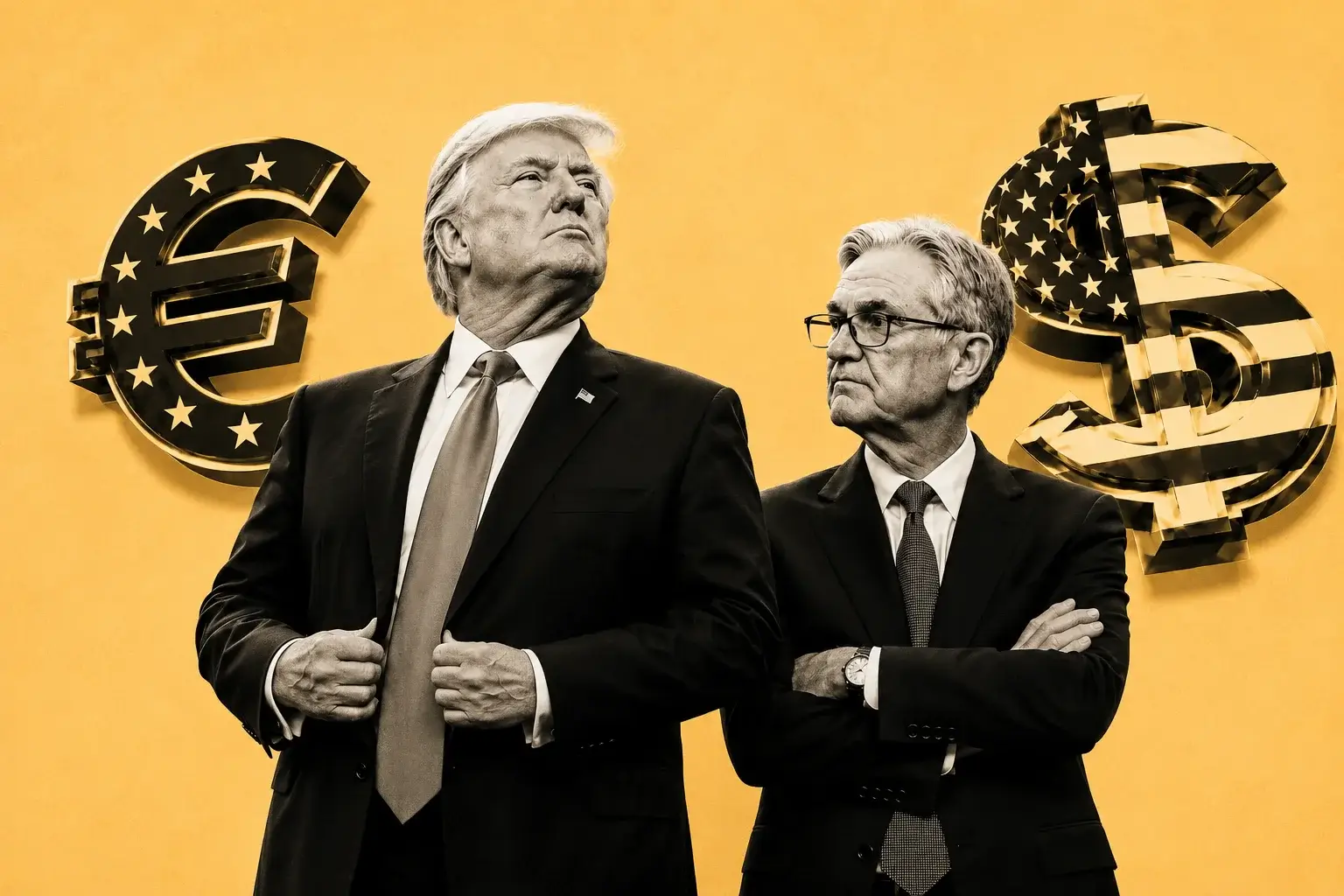
EUR/USD Price Forecast — EURUSD Firms Near DXY 99 to Pin Euro at 1.1637 as Iran Oil Shock Bites Eurozone
Eurozone inflation hit 3.0% headline and 2.2% core, pushing the ECB toward back-to-back hikes, but Brent's swings and an unsigned US-Iran ceasefire favor the dollar | That's TradingNEWS
Key Points
- EUR/USD trades near 1.1637, its weakest since April 7, down 0.47% on the month and up 2.33% on the year.
- Markets price a 25bp ECB hike to 2.25% at ~90% odds on June 11, with a second hike eyed by September.
- A firmer dollar near DXY 99 caps the euro; support holds 1.1600, resistance sits at 1.1780–1.1840.
EUR/USD is the cleanest puzzle on the board right now, and the answer to it is the whole trade. The euro trades near 1.1637 on June 2, up a rounding-error 0.05% on the session but sitting at its weakest level since April 7. Here's the part that breaks people's heads: the European Central Bank is about to do something almost no other major central bank is doing — hike rates on June 11, with the market pricing it at roughly 90% — and the euro fell into the meeting anyway. A currency whose central bank is tightening should be ripping. This one rolled over to a six-week low.
The thesis is the resolution of that contradiction: the euro's own story turned hawkish, but the other side of the pair turned more hawkish faster, and the energy math is brutally asymmetric. The dollar firmed through May instead of fading, with DXY near 99 on sticky US inflation and an unsigned Iran ceasefire. And the Iran oil shock — the thing pushing the ECB to hike — hammers the energy-importing eurozone's growth far harder than it touches the energy-producing US. So you get the strange tape in front of you: two hawkish central banks, one stronger currency, and it's not the euro. Until the dollar rolls over or the ECB out-hawks the Fed in deeds, not words, EUR/USD ranges, and 1.1600 is the floor getting tested.
Where EUR/USD Trades Right Now
The level is 1.1637, with the day's range pinned tight between 1.1630 and 1.1636 and the prior close at 1.1630 — a coiled, low-range tape. Over the past month the euro has weakened 0.47%, drifting from the mid-1.16s toward the 1.16 handle as the dollar firmed. Zoom out and the pair is still up 2.33% over the trailing 12 months, so this is a pullback inside a longer base, not a collapse — the euro is giving back recent ground, not breaking structure.
The reference point that matters is April 7. The euro is nosing right up against its weakest level since then, which makes 1.1600 the line every desk is watching. Hold it and the pair stays inside the multi-month range that's contained price all year. Lose it with conviction and the April lows come back into the conversation. The euro began June around 1.165, largely unchanged, with investors processing a stack of European data and watching the Middle East — a holding pattern that snapped lower as the Iran headlines turned.
The ECB Is About to Hike — and the Euro Fell Anyway
This is the centerpiece. Money markets now price a 25bp ECB hike to 2.25% at the June 11 meeting at roughly 90%, with a second hike priced by September and a third more likely than not by year-end — at least two increases this year. That's a genuine hike cycle from a central bank that spent 2025 cutting. The ECB held its deposit rate at 2.00% on April 30, but the move was unanimous only on the hold, not the bias: policymakers openly debated a hike, the published account shows some would have moved right then, and the Bank made clear it won't look through the inflation shock.
So why did the euro fall into a tightening cycle? Because the move was already priced, and because the dollar side of the pair did more work in the other direction. A 90%-priced hike isn't a catalyst when it lands — it's a catalyst only if the ECB out-delivers, signaling a faster path than the market carries. The risk into June 11 is asymmetric and not in the euro's favor: a hike-and-hawkish-guidance combo could finally give the euro a reason to rip toward 1.18, but a hike-and-cautious-tone — tightening grudgingly because of energy, not strength — gets sold as "one and done." The meeting is the binary event, and the bar is high because the easy part is in the price.
Why Eurozone Inflation Forced the ECB's Hand
The hike isn't a growth story — it's an inflation story, and a reluctant one. The energy spike pushed eurozone headline inflation to 3.0% in April with core at 2.2%, both above the ECB's 2% target. May flash readings showed prices still accelerating across France, Italy, and Spain even as Germany cooled — broad enough that the ECB can't dismiss it as a German base effect. That's what flipped a cutting central bank into a hiking one inside a quarter.
The uncomfortable backdrop is that the ECB is tightening into soft growth. The IMF trimmed its 2026 eurozone growth forecast to 1.1% in its April outlook, and German retail sales fell in April for the fourth straight month, even if the drop came in slightly better than feared. Hiking with growth that weak is a defensive move, not a confident one — the Bank is choosing to defend its inflation credibility over supporting activity. This week's eurozone flash CPI is the next read, and it matters more than usual: a hot print cements the June 11 hike and keeps the back-to-back path alive, while a cool one reopens the "one and done" debate that would cap the euro.
The Dollar Won the Month
The other side of the pair is where the euro's gains went to die. The dollar firmed through May rather than fading as most desks expected at the start of the quarter, with the US Dollar Index trading near 99, up roughly 1% on the month, and a recent swing high around 100.40 still in view. The fuel was sticky US inflation and an unsigned US-Iran ceasefire that kept a risk premium bid under the greenback. Kevin Warsh now sits as Fed Chair, and the market is no longer confidently pricing the cuts it carried into the year.
That's the whole asymmetry. The euro turned hawkish, but the dollar was already firm and getting firmer, so EUR/USD pressed lower even as the euro's domestic story improved. When both currencies have a hawkish lean, the pair trades on which side is more credible and which economy can absorb the shock better — and right now that's the dollar. The DXY structure is the tell: a decisive push through 98.74 confirms the dollar built a floor and drags EUR/USD toward the low 1.17s and the 1.16 handle, exactly where it sits. The dollar doesn't need to rip from here to keep the euro capped — it just needs to hold near 99.
The Iran Oil Asymmetry
Here's the mechanism most miss. The Iran conflict is a net negative for the euro precisely because it's a net positive for the ECB hike bets — and those two things hurt the currency at the same time. Brent fell roughly 19% in May to around $92, its worst month since the pandemic, as the US and Iran moved toward a 60-day ceasefire. Then the late-May and June 1 flare-up snapped oil back, with WTI jumping 5.93% to $92.54, after Iran's Tasnim agency reported Tehran would halt talks and move to fully close the Strait of Hormuz, accusing Washington of breaking the ceasefire.
For the euro, that's a double hit. The energy importer that is the eurozone wears higher oil as a growth tax and an inflation problem at once — which is why the oil pop both pressured the euro on growth fears and pushed up ECB hike bets. The US, an energy producer, absorbs the same shock far more easily, so the dollar takes the geopolitical bid while the euro takes the growth damage. The de-escalation read from Trump — Israel and Hezbollah halting attacks, Iran talks continuing, a possible Hormuz reopening inside a week — is the swing factor. A durable de-escalation that pulls oil lower is the cleanest bullish catalyst the euro has, because it removes the growth tax without removing the inflation the ECB is already hiking against.
The Rate-Differential Math
Strip it to the rate paths and the picture is unusually balanced, which is exactly why the pair ranges instead of trending. The ECB carries a hike bias into June 11 toward 2.25%, with more to come — rare among the majors. The Fed sits higher in absolute terms but with a path that's been repricing away from cuts on sticky inflation, and a year out the market even flirts with hike odds over cut odds. Two central banks both leaning hawkish is a recipe for a choppy, two-way pair, not a one-directional collapse in either currency.
The narrowing that matters is the differential's direction. If the ECB hikes June 11 and signals September, the euro-dollar rate gap compresses in the euro's favor — the structural case for a grind back toward 1.18-1.20 over the rest of 2026. The institutional base cases cluster there: a firm-but-capped 1.15-1.20 range, with the more bullish shops eyeing 1.20-plus by December and the most aggressive calls running toward 1.24-1.25 on a softer dollar. The bearish models lean the other way, projecting drift toward 1.13-1.15 if the dollar holds and the ECB proves "one and done." The June 11 guidance is the fork.
The Technicals — SMAs, RSI, and DXY Structure
The chart says coiled, not committed. EUR/USD sits just below its 50-day and 200-day simple moving averages, both clustered near 1.17 — overhead the euro has to reclaim to flip the short-term bias bullish. The 14-day RSI reads 49.62, dead neutral, and realized volatility is running near 1.08% with only 13 of the last 30 sessions closing green. That's a market with no momentum conviction either way, fading extremes rather than trending.
The DXY structure is the cleaner tell for the pair. The index near 99 with a swing high around 100.40 keeps the euro capped; a decisive DXY push through 98.74 confirms the dollar floor and points EUR/USD toward the low 1.17s and the 1.16 handle. A clean DXY break under 98.00 is the flip — that reopens the euro's path to attack the 1.1780-1.1840 resistance zone. The tactical playbook while the pair oscillates under multi-year resistance has been to sell spikes toward 1.1780 with a target near 1.1650 and a stop above 1.1830, while medium-term euro bulls wait for cleaner pullbacks into 1.1685-1.1705 to build longs aligned with the hawkish-ECB fundamental trend.
The Support and Resistance Map
The levels are tight. Immediate support is the 1.1600 handle the euro is pressing now — the April 7 reference and the floor that defines the whole range. Lose it with conviction and the April lows come into play, with the LongForecast-style downside scenarios pointing as low as the 1.13s in a deeper dollar-led leg. Below 1.1600 there's little structural support until the year's earlier base, so that handle is the line that decides whether this is a range pullback or a trend change.
To the upside, the first job is reclaiming the 1.17 SMA cluster. Above it, the real wall is the 1.1780-1.1840 resistance zone that's capped every rally this year — the euro hasn't sustained a break through it, and it won't without either a dovish dollar turn or an ECB that out-hawks expectations. Clear 1.1840 and the structural bull case toward 1.20 reopens. The map is symmetrical: 1.1600 is the floor, 1.17 is the gate, and 1.1840 is the ceiling that defines the entire 2026 range.
Read More
-
PSI ETF at $152.85, Down 19.2% From $189.24, After Returning 102.37% in 2026 Against SMH's 66.2% — AUM Reaches $3.82B
23.07.2026 · TradingNEWS ArchiveStocks
-
XRPI Falls 2.48% and XRPR Drops 2.59%, Both Underperforming XRP's 1.73% Decline
23.07.2026 · TradingNEWS ArchiveCrypto
-
August Futures Hold $2.957 With Production at 110.9 Bcf/d and LNG Feedgas at 17.9 Bcf/d — Bulls Need $2.974 Before $3.121
23.07.2026 · TradingNEWS ArchiveCommodities
-
Dollar Holds 163.06 After the Yen's 40-Year Low at 163.24 as Oil Breaks $100 and Tokyo Warns of Decisive Action — Bulls Eye 164 and 165, Bears Need 162.00
23.07.2026 · TradingNEWS ArchiveForex
The Forecast — June 11 and Beyond
Two scenarios, and June 11 plus the dollar decide. The base case is the range holds: the ECB hikes 25bp to 2.25% as priced, the euro stays pinned between 1.1600 and the 1.1780-1.1840 ceiling, and the pair chops through June while the dollar holds near 99. LongForecast pegs June with a 1.131-1.183 band and an end-month read near 1.153, a mild bearish lean that fits a capped euro grinding the lower half of the range. Most institutional base cases sit 1.15-1.20 — firm, but going nowhere fast until a catalyst breaks the standoff.
The bull path needs the dollar to crack or the ECB to over-deliver. A hawkish June 11 that confirms a September follow-up, paired with a durable Iran de-escalation that pulls oil lower and lifts the eurozone growth cloud, gets the euro back through 1.17 and aiming at 1.1840 — and a clean break there opens 1.20 with the more bullish shops eyeing 1.24-1.25 into year-end on broad dollar softness. The bear path is the mirror: a cautious "reluctant hike," sticky US inflation keeping DXY firm above 100, and a fresh oil spike on Iran would lose 1.1600 and drag the pair toward the April lows and the 1.13-1.15 zone.
The Data on Deck
The calendar is loaded and two-sided. On the euro side, this week's eurozone flash CPI is the print that sets the June 11 table — a hot read locks the hike and keeps the back-to-back path credible, a cool read reopens the "one and done" debate that caps the euro. On the dollar side, US JOLTS lands Tuesday and the May payrolls report hits Friday, the pair of labor reads that decide whether the Fed's hawkish lean firms or fades. A hot US jobs print keeps DXY near 99 and the euro capped; a soft one is the cleanest bearish-dollar catalyst the euro has.
Then it's June 11 itself — the single biggest event on the EUR/USD calendar. Everything before it is positioning; the meeting is the binary. With the hike 90% priced, the move is in the guidance and the path, not the decision. That's the trap: the euro can hike and still fall if Lagarde frames it as defensive rather than the start of a real cycle.
The Verdict
EUR/USD is the rare pair where the obvious read is the wrong one. The ECB is about to hike, the euro's inflation story turned hawkish, and the currency still sits at a six-week low near 1.1637 — because the dollar firmed to DXY 99 on sticky US inflation and an unsigned Iran ceasefire, and because the oil shock that's forcing the ECB's hand damages the energy-importing eurozone far more than the energy-producing US. Two hawkish central banks, and the dollar is still winning. That's the tape, and it ranges until something breaks it.
The line in the sand is 1.1600. Hold it and the euro stays in its 2026 range with the June 11 ECB as the catalyst to reclaim 1.17 and challenge the 1.1840 ceiling that's capped every rally this year. Lose it and the April lows and the 1.13s come back into play on a dollar-led leg. The euro doesn't need to be the stronger story to rally from here — it needs the dollar to roll over or the ECB to prove on June 11 that this is a cycle, not a one-off. Get either, and 1.1840 opens. Until then, this is a capped range trade with the dollar in control, and 1.1600 is the level that tells you whether the floor holds.