
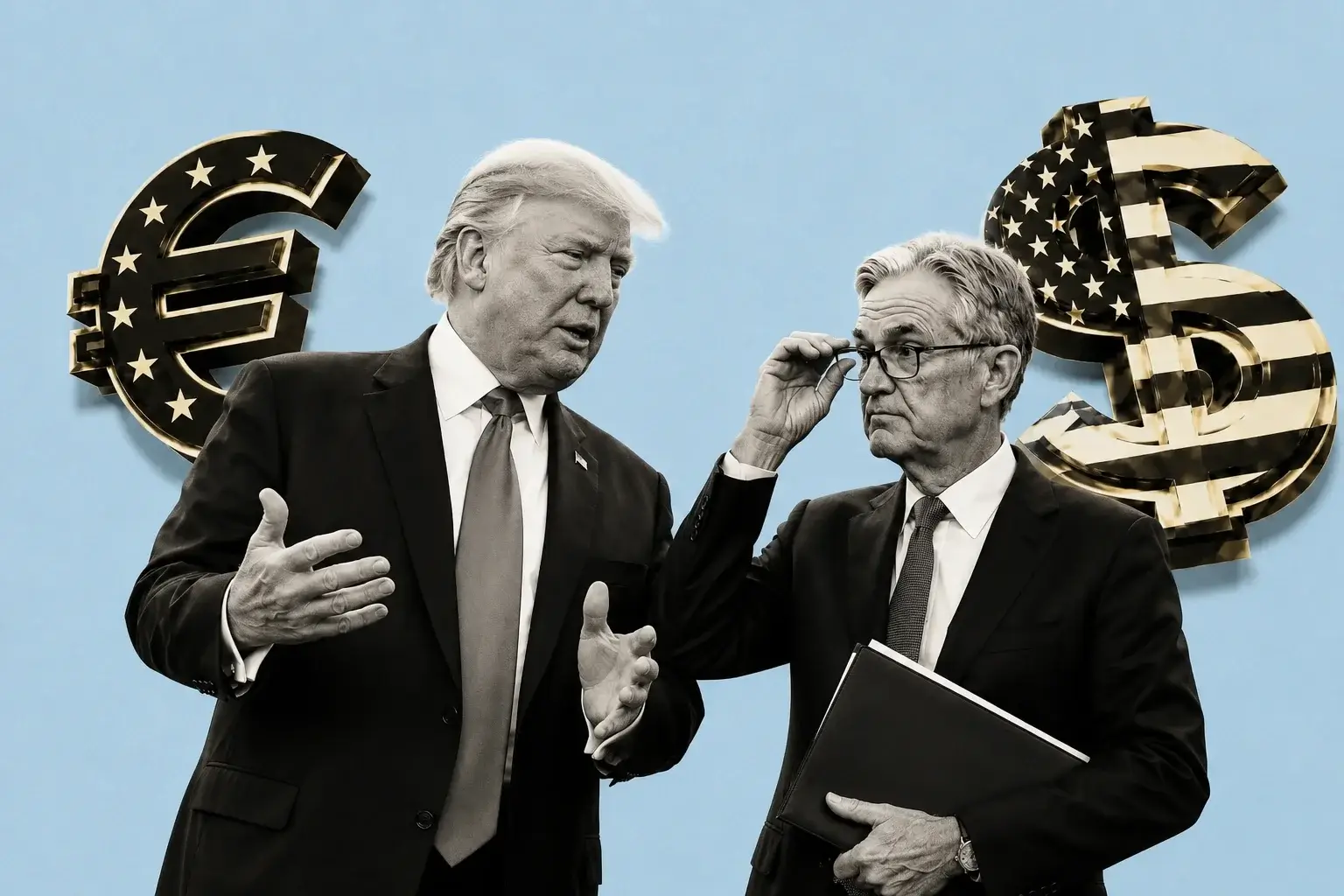
Euro ($1.1640) Can't Rally on Near-Certain ECB Hike to 2.25% as Firm Dollar Pins It — 1.1800 Needs Hawkish June 11 Guidance
EUR/USD is stuck near 1.1640 above its 1.1600 floor and far below its 1.1974 January high even as money markets price a 92% chance of a 25bp ECB hike to 2.25% on June 11 | That's TradingNEWS
The euro is staring down a near-certain interest rate hike and falling anyway. EUR/USD held above 1.1600 with moderate losses in European trading on Wednesday, drifting near 1.1640 after fixing at 1.1649 on Tuesday — and sitting well below its January high near 1.1974. That's the puzzle that has currency desks scratching their heads: the European Central Bank is about to tighten policy in eight days, money markets have it priced at better than 90%, and the single currency still can't get off the mat.
This is what a defensive hike looks like in the FX tape. Normally a central bank raising rates is rocket fuel for its currency — higher rates pull in capital, lift front-end yields, and reward holders. But the euro isn't trading the hike as a sign of strength. It's trading it as a sign the ECB is cornered, forced to tighten into an imported energy-inflation shock while eurozone growth crawls along the floor. Layer a firm dollar on top of that, and you get a pair pinned in the middle of its range. The whole forecast now hinges on one event — the ECB's June 11 decision — and more specifically on the staff projections that come with it, not the rate move itself.
The Hike Is Basically a Done Deal
Start with what the market already knows. Money markets price a 25-basis-point hike to a 2.25% deposit rate at the June 11 meeting at roughly 90% to 92% — about as close to a lock as the rates market ever gets. The ECB currently sits at 2.00%, and it's been telegraphing this move for weeks. When it held in late April, it explicitly refused to look through the inflation shock, warning that upside risks to prices and downside risks to growth had both intensified, and the published account of that meeting showed some policymakers would have supported pulling the trigger right then.
The market isn't stopping at one. A second 25-basis-point hike is priced by the September meeting, and a third by year-end is now seen as more likely than not. That's a genuine tightening path from a central bank that spent 2025 cutting — a hawkish pivot that, in any normal cycle, would have the euro ripping toward 1.20. The fact that it isn't tells you the FX market has decided the quality of this inflation, and the state of the economy underneath it, matter more than the direction of the policy rate. That's the heart of the setup.
The Wrong Kind of Inflation
Here's why the hike isn't bullish. Eurozone inflation accelerated to 3.2% in May on the flash estimate, up from 3.0% in April and the hottest reading since September 2023 — comfortably above the ECB's 2% target just days before the decision. But the composition is what spooks the currency. Energy prices ripped 10.9% year over year, core inflation climbed to 2.5%, and services inflation hit 3.5%. The initial shock is external, driven by the Middle East energy spike, but the risk is that it's burrowing into domestic wages, services, and expectations where it gets sticky.
This is textbook bad inflation for a currency. The eurozone is a massive net energy importer, so when oil and gas prices climb, the bloc's terms of trade deteriorate — it has to pay more for the energy it buys from abroad, which drains purchasing power out of the economy rather than reflecting strong internal demand. Inflation that comes from an external cost shock doesn't attract capital the way demand-driven inflation does; it signals an economy getting squeezed. The ECB has to respond to the price data, but the market sees a central bank tightening into a headwind, and it won't pay up for that.
Growth Is the Real Problem
The backdrop underneath the inflation makes it worse. Eurozone GDP grew a feeble 0.1% in the first quarter of 2026, decelerating from 0.2% in the fourth quarter of 2025 — an economy barely moving forward. The IMF trimmed its 2026 eurozone growth forecast to just 1.1% in its latest outlook, and the ECB's own March staff projections had growth averaging a soft 0.9% for the year. This is the stagflation-lite trap: prices accelerating while output stalls, the most uncomfortable combination a central bank can face.
That's the bind that's capping the euro. The ECB is being forced to hike to defend its credibility on inflation at exactly the moment the economy can least absorb tighter policy. Every hike that fights imported inflation also tightens the screws on fragile domestic demand, and the FX market understands that a central bank raising rates into a stalling economy isn't the same bullish signal as one tightening into a boom. The euro is effectively being penalized for the ECB doing the responsible thing. Until growth shows a pulse, the hike path reads as damage control rather than strength, and that keeps a ceiling overhead.
The Dollar Side of the Trade
The other half of the pair is doing the euro no favors. The dollar firmed through May rather than fading as most forecasters expected, holding the index near 99 on a cocktail of sticky US inflation, an unsigned Iran ceasefire, and a Federal Reserve that's turned less friendly. With Kevin Warsh now in the chair and his first meeting days away, the market is bracing for the Fed to strip its easing bias out of the June statement — a PCE reading near a three-year high and crude climbing back toward $97 have all but killed the case for near-term cuts.
That's the squeeze on EUR/USD from the right side of the equation. A currency pair is a relative game, and even as the euro's own rate story turned more hawkish, the dollar's turned hawkish faster and from a position of strength. ADP private payrolls already printed 122,000 for May, beating the prior month's revised 105,000 and feeding the higher-for-longer narrative. Friday's nonfarm payrolls report lands right into the Warsh Fed's decision window, and a hot number would firm the dollar further and press EUR/USD straight back toward 1.1500. The euro can't rally on its own hike when the dollar is matching it hawkish tone for hawkish tone.
The Real Catalyst Is the Projections, Not the Hike
Here's the part the headlines will miss. Because the 25-basis-point hike is already fully priced, the decision itself is close to a non-event for the euro — the market has long since baked it in. What actually moves EUR/USD on June 11 is the ECB's updated staff projections and the tone of Lagarde's guidance. In March, the ECB penciled inflation averaging 2.6% in 2026, 2.0% in 2027, and 2.1% in 2028. The new forecasts are the swing factor.
The asymmetry is everything. If the updated projections push 2027 inflation above the 2% target, the market will treat the June hike as the opening move of a genuine tightening phase rather than a one-off adjustment — and that hawkish read is the path that finally lets the euro rally toward 1.18 and then 1.20. If instead the projections frame this as a defensive, one-and-done move with inflation returning to target by 2027, the euro gets sold on the "buy the rumor, sell the fact" reaction and slides back toward 1.1500. The number to watch isn't the rate; it's the 2027 inflation line in the projection table. That single figure decides the next big move.
The Oil Wildcard Cuts Both Ways
Energy is the variable tying the whole thing together. Brent crude collapsed roughly 19% in May to around $92 — its worst month since the pandemic — as the US and Iran moved toward a 60-day ceasefire that would reopen the Strait of Hormuz. Then Iran fired missiles at Kuwait and Bahrain, US forces struck back, and Brent has pushed back toward $97. For the euro, oil isn't just a side story; it's the source of the inflation that's forcing the ECB's hand and the terms-of-trade drag that's weighing on growth.
That makes the Iran headlines a two-way risk for the pair. If the ceasefire holds and Hormuz reopens, oil rolls back toward and below $90, the energy-inflation shock fades, and the ECB's justification for an extended hiking cycle weakens — which paradoxically could support the euro by easing the terms-of-trade squeeze on growth even as it softens the rate path. If the conflict escalates and crude runs toward $100, the energy shock deepens, the ECB gets boxed into more defensive hikes, and the stagflation trap tightens. The euro is caught between two unattractive scenarios, and the oil tape will keep jerking it around until the geopolitics resolve one way or the other.
The Chart: 1.1600 Floor, 1.1974 Ceiling
Map the levels and the range comes into focus. EUR/USD is holding above the 1.1600 handle, the floor that's anchored the pair through this consolidation, while the January high near 1.1974 stands as the ceiling and the gateway to the psychologically heavy 1.20 mark. In between, the pair has spent 2026 boxed inside a band that's run from 1.1435 at the low to 1.2019 at the high — a roughly 5% spread that captures the entire tug-of-war between a hawkish ECB and a firm dollar.
Right now price sits in the lower middle of that range, which tells you the dollar side is winning the fight for the moment. The 1.1700 area is the first hurdle on the way up, and reclaiming it with conviction would signal the market is starting to price the ECB's hawkish path more seriously. On the downside, 1.1600 is the line that's holding the structure together — a clean break below it shifts the near-term bias bearish and puts the lower end of the range back in play. With a live central-bank decision eight days out, expect the pair to coil tighter into June 11 before it picks a direction.
Read More
-
PSI ETF at $152.85, Down 19.2% From $189.24, After Returning 102.37% in 2026 Against SMH's 66.2% — AUM Reaches $3.82B
23.07.2026 · TradingNEWS ArchiveStocks
-
XRPI Falls 2.48% and XRPR Drops 2.59%, Both Underperforming XRP's 1.73% Decline
23.07.2026 · TradingNEWS ArchiveCrypto
-
August Futures Hold $2.957 With Production at 110.9 Bcf/d and LNG Feedgas at 17.9 Bcf/d — Bulls Need $2.974 Before $3.121
23.07.2026 · TradingNEWS ArchiveCommodities
-
Dollar Holds 163.06 After the Yen's 40-Year Low at 163.24 as Oil Breaks $100 and Tokyo Warns of Decisive Action — Bulls Eye 164 and 165, Bears Need 162.00
23.07.2026 · TradingNEWS ArchiveForex
The Downside Map If 1.1600 Cracks
Here's what opens up if the floor gives way. A decisive break below 1.1600 — most likely triggered by a hot US jobs print, a hawkish Warsh Fed, or dovish ECB projections that frame the hike as one-and-done — points the pair toward 1.1500 as the first real support, then down toward the 2026 low at 1.1435. That's the scenario where the dollar's strength overwhelms the euro's rate story entirely, and the "sell the fact" reaction to a fully-priced ECB hike accelerates the move.
The downside catalyst stack is uncomfortably full. Friday's payrolls report is the immediate risk; a strong number firms the dollar and pressures 1.1600 directly. Beyond that, any escalation in the Middle East that deepens the eurozone's energy-import drag while simultaneously boosting the dollar's safe-haven appeal would hit the euro from both sides at once. And if the ECB's June 11 guidance disappoints the hawks, the euro loses the one tailwind it has left. Stack those together and a slide to 1.1435 isn't a tail risk — it's the base case if the dollar holds its bid and the ECB underwhelms.
The Upside Map Runs Through Hawkish Guidance
The bull case for the euro is real, but it needs two things to line up. First, the ECB has to deliver its hike with genuinely hawkish guidance — updated projections that keep 2027 inflation above target and signal more tightening to come, which would reframe the move as the start of a cycle rather than a defensive one-off. Second, US inflation needs to cool enough that the Warsh Fed's hawkish lean softens and the dollar finally fades. If both align, the path of least resistance flips to a stronger euro, with EUR/USD clearing 1.1700, then 1.1800, and taking aim at the 1.1974 January high and the 1.20 threshold beyond it.
That 1.20 level carries weight beyond the round number. It has historically marked the divide between negative and non-negative euro rate environments, and a sustained break above it would signal returning foreign inflows into European bonds and equities on the back of ECB policy stability. The structural pieces for that move exist — a hiking ECB, a recovering inflation backdrop, the potential for capital rotation back into Europe. What's missing is the dollar cooperating. The euro can't make the trip to 1.20 on its own hawkish story alone; it needs the greenback to step aside, and that requires the US data to crack first.
The Forecast: June 11 Is the Whole Game
Pull it together and the call writes itself. EUR/USD is trapped in the lower middle of its 2026 range, pinned near 1.1640 above the 1.1600 floor and well below its 1.1974 January high, because a near-certain ECB hike to 2.25% can't lift a currency when the market reads the move as defensive — tightening into an imported energy shock that drove May inflation to 3.2% while eurozone growth crawls at 0.1%. On the other side, a firm dollar near 99, backed by a hawkish Warsh Fed and sticky US inflation, keeps a hard ceiling overhead. The euro's own hawkish turn is being neutralized by the greenback's.
Trade the event and respect the levels. The June 11 ECB decision is fully priced, so the move lives in the staff projections and Lagarde's tone — hawkish 2027 inflation forecasts open the path to 1.1800 and then the 1.1974–1.20 zone, while one-and-done framing sends the pair back through 1.1600 toward 1.1500 and the 1.1435 range low. Friday's US jobs report is the near-term swing factor, and the Brent oil tape is the wildcard feeding both the inflation and growth sides of the euro's story. Hold 1.1600 into the decision and the bulls keep a foot in the door; lose it and the dollar takes control. Watch the 2027 inflation line on June 11, watch 1.1600, and don't chase the euro until the projections confirm the cycle is real.