GBP/USD: Fed Politics, Strong US Data And A Capped Sterling
GBP/USD Trading Range, Key Levels And Recent Tape
GBP/USD is locked inside a tight band, with price pinned between roughly 1.3390 and 1.3520 and struggling to hold anything above 1.3500. The pair has been oscillating around 1.3430–1.3470, stalling every time it gets close to the 1.3490–1.3500 zone and repeatedly finding buyers just above 1.3390. On the daily chart, the January 13 high at 1.3494 and the psychological 1.3500 level form the first hard ceiling, with 1.3567 from January 6 and then 1.3600 as the next upside checkpoints if a breakout finally sticks. On the downside, 1.3400 is the immediate pivot, backed by the 200-day moving average around 1.3392 and the January 12 low at 1.3375. As long as GBP/USD holds above 1.3390–1.3400 on a closing basis, price action is clearly that of a consolidation with a slight upward tilt rather than a trend reversal lower.
US CPI, Core Inflation And The Dollar Backdrop
US inflation data are the first pillar anchoring the USD side of GBP/USD. Headline CPI for December is running at 2.7% year-on-year, unchanged from November and exactly in line with consensus, while core CPI rose 0.2% month-on-month and sits at 2.6% year-on-year versus expectations of 2.7%. That 2.6% core reading is marginally softer than forecast, but not weak enough to force the Federal Reserve into early or aggressive cuts. The DXY reaction confirms this: the index dipped initially on the core downside surprise but then reversed, hovering around the 99.00 area and respecting resistance near 99.26. The broader picture is a dollar that is no longer in a runaway bull phase but still supported on dips because inflation is cooling, not collapsing. For GBP/USD, that translates into a market that is not prepared to aggressively sell USD below 1.34–1.35 unless the data break much more decisively to the downside.
US PPI, Retail Sales And The Case For A Firm USD
Producer prices and demand data backstop the same story. Headline US PPI has re-accelerated to 3.0% year-on-year from 2.8%, with core PPI also at 3.0% versus 2.9% previously and both prints beating the 2.7% consensus. At the same time, US retail sales jumped 0.6% month-on-month after a prior contraction of –0.1%, beating the 0.4% forecast and signalling that US consumers are still spending. This combination of 2.7% headline CPI, 2.6% core CPI, 3.0% PPI and 0.6% retail sales justifies a patient Fed and supports US yields. Futures now price around a 95% probability that the Fed holds rates unchanged in January and only about 52 basis points of total cuts by year-end, implying Fed funds near 3.23%. That path is shallow relative to what would be needed for a broad dollar capitulation, which is why GBP/USD keeps getting sold every time it approaches 1.3500–1.3520 rather than breaking through and running.
Fed Independence, Powell Probe And Political Premium In USD
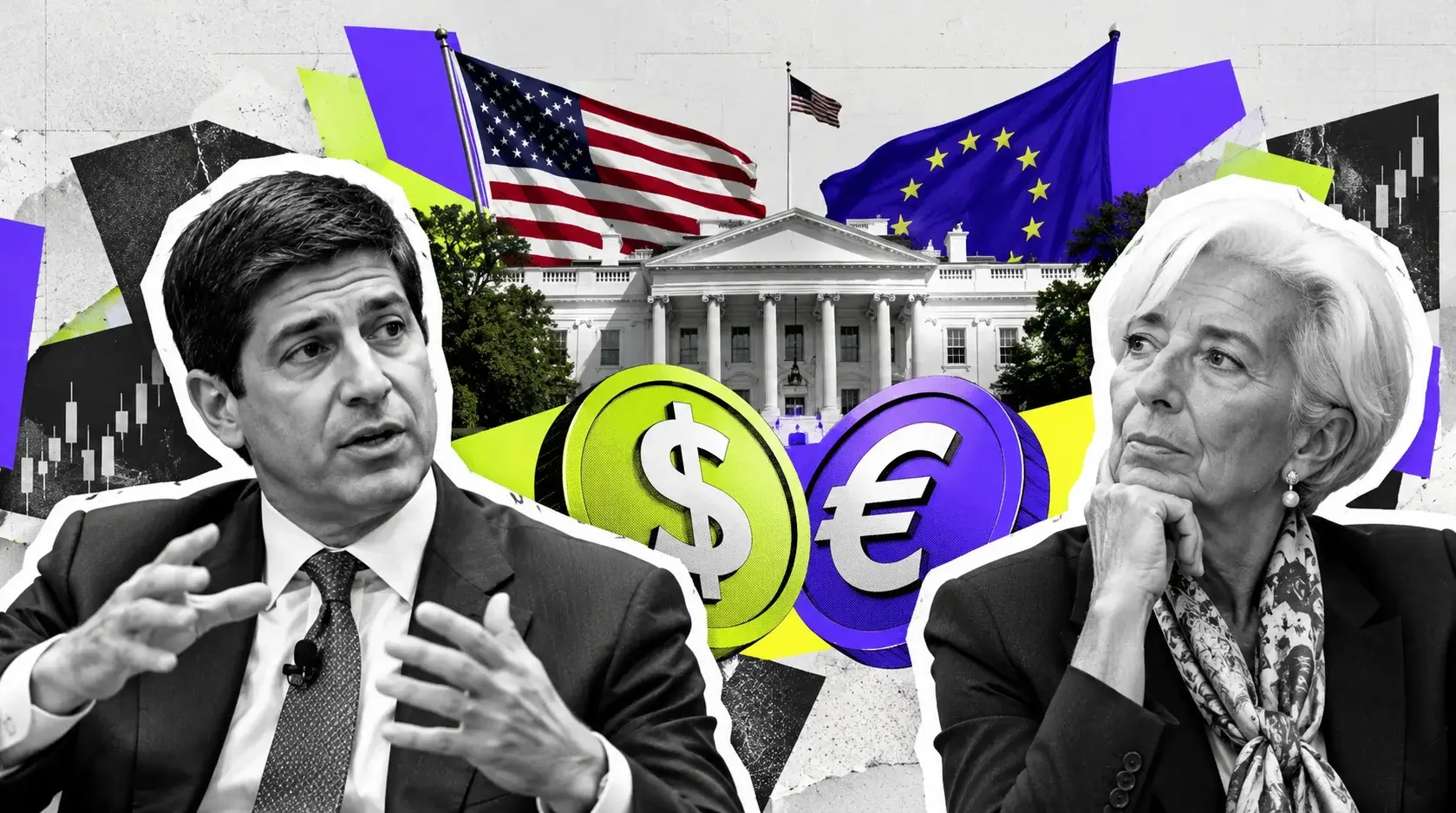
The political risk premium is the factor that stops the USD from simply trending higher. The criminal inquiry into Jerome Powell’s prior testimony about the Fed’s renovation program, the public clash between Powell and the White House, and open pressure on Fed independence have all hit the DXY on headlines. Powell has explicitly described the accusations as pretexts for attacking a central bank that sets rates “based on our best assessment of what will serve the public, rather than following the preferences of the President.” At the same time, Fed officials like Austan Goolsbee, Neel Kashkari and Ana Paulson are emphasising the importance of central bank independence while still signalling that modest cuts are likely later in the year if forecasts play out. The dollar index has reacted by whipsawing around 99.00, with the weekly chart showing defence of higher-low support and a ceiling near 100.22. For GBP/USD, this means every political shock gives sterling a short-term lift, but the underlying structure still favours the dollar as long as US data and yields stay firm.
Bank Of England Cuts, Forward Path And GBP Handbrake
On the UK side, the GBP story is not driving the daily tape but it constrains the upside. The Bank of England has already cut its policy rate to 3.75% and money markets are pricing another 25-basis-point cut by mid-2026, with nearly 50 basis points of easing priced by December. Some analysts see scope for fewer cuts than this if UK data stabilise, which would be mildly supportive for sterling later in the year. For now, though, the relative policy stance remains a drag on GBP/USD. The BoE is closer to the easing phase than the Fed, and Deputy Governor Ramsden and external member Taylor have both leaned dovish enough that markets expect further normalisation lower rather than a pivot back to hikes. That is why strategists talk about GBP/USD being a sell on rallies toward 1.35–1.36 unless US data dramatically underperform. UK GDP data due on Thursday will help decide whether markets can start to reduce the roughly 50 basis points of BoE cuts currently embedded in the curve.
Geopolitical Risk, Safe Haven Flows And Cross-Asset Signals
Global politics are adding volatility and price gaps across assets without generating a one-directional trend in GBP/USD. Protests in Iran, threats of US military action in support of demonstrators, and talk from the US President about 25% tariffs on countries trading with Iran are raising the geopolitical risk premium. That has helped push crude higher, with WTI punching through 60.50 dollars per barrel and eyeing the 66.00 region, and it has driven metals into record territory: gold has printed fresh highs above 4,600 dollars an ounce while silver is squeezing sharply higher. In normal conditions, this mix would give the USD a clearer safe-haven tailwind, but the Fed-independence drama undermines part of that bid. The result is cross-asset confirmation that risk is elevated, yet DXY is stuck between support near 98.80–99.00 and resistance near 99.26–100.22. For GBP/USD, that means no clean safe-haven or risk-on trade; instead, the pair is trading as a relative monetary-policy and politics spread within tight technical bounds.
Daily Chart Structure, Moving Averages And GBP/USD Bias
The daily GBP/USD chart confirms a neutral to slightly constructive bias rather than a trend in either direction. Price is holding above the 200-day moving average around 1.3392, which has become the key structural reference for medium-term traders. Every test of the 1.3390–1.3400 zone has attracted buyers so far, while attempts to lift above 1.3494–1.3500 have failed to generate follow-through. The Relative Strength Index on the daily time frame hovers close to the 50 line, signalling no extreme momentum condition. If GBP/USD can close above 1.3494 and then 1.3520, the upside path re-opens toward 1.3567 and 1.3600, with an extension target closer to 1.3800 later in the year if the BoE proves less dovish than priced. Conversely, a daily close below 1.3390 that is sustained and followed by a break of the 1.3375 low would shift the focus toward the 50-day moving average around 1.3305 and signal that the range has broken to the downside.
Four-Hour And Two-Hour Price Action, Intraday Bands And Momentum
On the four-hour chart, GBP/USD trades just above the 200-period moving average, with immediate support clustered around 1.3420 and deeper support once again at 1.3390. The 20-period average sits near 1.3445, the 50-period near 1.3460 and the 100-period around 1.3467, creating a band of moving-average resistance between roughly 1.3445 and 1.3470. Price has been trapped between 1.3420 on the downside and 1.3480 on the upside, with each excursion to the extremes being faded rather than extended. RSI on this time frame sits around 48, confirming the lack of strong directional momentum. On the two-hour chart, an ascending trendline from the December lows still holds, with multiple lower-wick candles printing around 1.3400–1.3410, showing that dip-buyers are active there. An intraday grid of levels is now well defined: 1.3448, 1.3420 and 1.3391 are being used by tactical bulls as entry zones on bullish reversal candles, while 1.3486, 1.3503 and 1.3531 are watched by bears for rejection patterns. This intraday structure reinforces the message that the market is balanced and responsive to levels rather than trending.
Market Positioning, Expectations And Trading Behaviour In GBP/USD
Signal frameworks across different providers all point to a congested market that favours range strategies over trend trades in GBP/USD at current levels. Short-term systems have been selling near 1.3449–1.3486 and buying around 1.3400–1.3420, with earlier shorts from 1.3449 delivering profits before the latest bounce. More discretionary setups now talk about buying above 1.35 with stops under 1.34 targeting 1.36, but that approach is conditional on a clear upside break that has not yet materialised. Other approaches recommend waiting for US CPI, PPI and retail sales shocks to push price to distant levels and then fading the spike back into the prior range. All of these behaviours confirm that traders see 1.3390–1.3520 as the active battlefield for now, with only a handful of participants willing to commit directional risk until one of the range edges is convincingly broken on a daily close.
GBP/USD Strategic Stance: Hold With Bias To Buy Dips, Not Chasing Breakouts
Taken together, the data, the politics and the charts define GBP/USD as a Hold with a mild bullish bias on dips, not a momentum long at current levels. Solid US numbers – 2.7% headline CPI, 2.6% core CPI, 3.0% PPI and 0.6% retail sales – justify the current pricing of only around 52 basis points of Fed cuts and limit the downside in the USD, while the probe into Powell and repeated attacks on Fed independence cap the DXY near 99.26–100.22. The BoE has already cut to 3.75% and is expected to ease further, which stops GBP/USD from exploding higher, but if the central bank ultimately delivers fewer cuts than the nearly 50 basis points currently implied, that later favours sterling. Until that repricing happens, the highest-quality risk-reward is on tactical longs into the 1.3390–1.3420 support zone, with upside targets at 1.3494–1.3520 and, if that band is finally cleared on a daily close, toward 1.3567–1.3600. Aggressively selling GBP/USD only becomes justified if price loses the 1.3390–1.3400 shelf and builds below 1.3375, opening a path down toward 1.3305 and possibly lower. In the current structure, chasing breakouts in the middle of the range around 1.3440–1.3460 is lower-quality; the market is paying traders who respect the range and punishing those who pretend a trend already exists before the levels confirm it.
That's TradingNEWS