GBP/USD Price Forecast: Pound Treads Water Near $1.34 as Softer UK Data and a Hawkish Fed Square Off
Sterling heads for a monthly loss above 1% as cooling UK inflation | That's TradingNEWS
Key Points
- Cable holds near $1.3436, set for a monthly loss of more than 1% against the dollar.
- UK April CPI cooled to 2.8% from 3.3%, prompting traders to pare BoE rate-hike bets.
- The BoE's 3.75% Bank Rate keeps a gilt-Treasury yield spread that supports the pound near-term.
GBP/USD enters the final session of May trading around $1.3436, having pared earlier losses to hold slightly above the $1.34 handle as investors weigh the cross-currents of Middle East diplomacy against shifting expectations for UK interest rates. The pound is set for a monthly loss of more than 1% against the dollar, having weakened roughly 1.24% over the past month and sitting marginally lower over the trailing twelve months, a performance that captures sterling's loss of momentum after the strong run it enjoyed through much of the prior year. The current level sits in the middle of cable's broad twelve-month range of roughly 1.27 to 1.37, well below the multi-year high near 1.3789 reached in mid-2025 but comfortably above the cycle lows, reflecting a pair that has settled into a consolidation phase as competing forces cancel each other out. The Bank of England's trade-weighted sterling index hovers around 104.88, essentially flat year-to-date, underscoring that the pound has been broadly stable on a trade-weighted basis even as it has drifted lower against a firm dollar. The defining feature of the current setup is a genuine tug-of-war: on one side, a hawkish Federal Reserve under new leadership and rising US yields are underpinning the dollar and capping cable, while on the other, the structural gilt-Treasury yield spread continues to provide background support for the pound. The central question for the forecast is whether sterling's rate-differential tailwind and the prospect of a weakening dollar on Iran ceasefire progress can overcome the drag from cooling UK inflation, a softening domestic economy, and mounting political risk.
The Dual Force: A Hawkish Fed Meets Softer UK Data
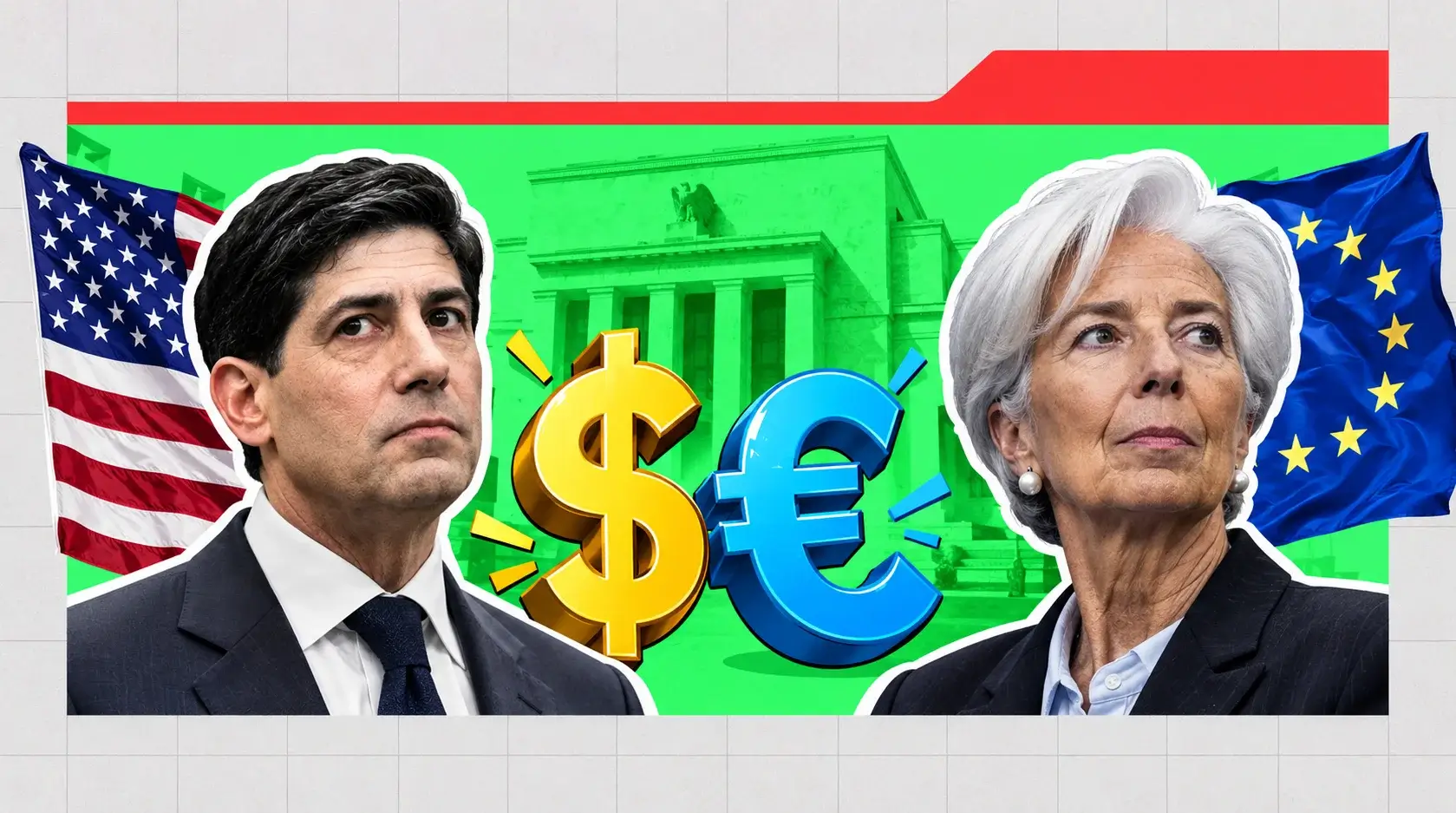
The essential dynamic shaping cable right now is the collision of two opposing monetary narratives, and understanding their interplay is the key to the entire forecast. On the dollar side, Kevin Warsh has taken office as chairman of the Federal Reserve, and the market is reading his arrival as decisively hawkish — a stance reinforced by US core PCE inflation surging to a three-year high of 3.3%, rising long-end Treasury yields, and the growing view among some analysts that the Fed's next move could even be a hike rather than a cut. This hawkish repricing has underpinned the dollar and is the primary force capping cable's upside, with one set of analysts warning that GBP/USD risks falling toward 1.3050 if the Fed rate-hike story gathers traction. On the sterling side, the picture has shifted in a way that undercuts the pound: recent UK data has pointed to a cooling labor market, softer-than-expected inflation, and signs of moderating economic activity, all of which have prompted investors to scale back their expectations for further Bank of England tightening. The combination is a double headwind for cable — a dollar firmed by hawkish Fed expectations meeting a pound softened by reduced BoE hike bets — and it explains why sterling has drifted to a monthly loss despite the broadly risk-on tone generated by the Iran ceasefire optimism. The forecast hinges on which of these forces proves more durable: if the Fed's hawkishness fades or UK data re-firms, cable can recover, but as long as the current configuration persists, the path of least resistance is sideways-to-lower.
UK Inflation Cools and Pares the Hike Bets
The most consequential recent development on the sterling side has been the unexpected cooling in UK inflation, which has materially altered the Bank of England outlook and removed a key prop from under the pound. UK Consumer Price Inflation slowed to a 2.8% year-over-year rate in April, down sharply from 3.3% in the previous month, an undershoot that surprised markets and prompted traders to push back their expectations for the likely timing of the next Bank of England rate hike. This matters enormously for cable because much of sterling's resilience through the early part of the year had rested on the assumption that the Iran-war energy shock would keep UK inflation elevated and force the BoE to maintain a hawkish, hike-leaning stance — an assumption that the softer April print has called into question. The decline in oil prices driven by the Iran ceasefire optimism has reinforced this dynamic, easing inflation concerns and giving the BoE more room to remain on hold or even consider easing later in the year rather than tightening further. The implication is that the interest-rate support that had been buoying the pound is weakening at the margin, and with inflation now approaching the 2% target far faster than feared, the market's repricing toward a more dovish BoE path has been a direct drag on cable. The key watch item going forward is whether subsequent UK inflation and wage data confirm the cooling trend, which would further undercut sterling, or whether a re-acceleration revives the hawkish BoE narrative that the pound needs to sustain a recovery.
The Bank of England's Delicate Balancing Act
The Bank of England sits at the heart of the sterling outlook, and its current posture reflects a delicate balancing act between competing pressures that has produced a cautious, divided Monetary Policy Committee. The BoE's Bank Rate stands at 3.75%, down from the cycle peak of 5.25% reached in the summer of 2023, with the Bank having cut steadily through 2024 and 2025 as inflation fell before holding at the current level in early 2026 while it assessed the inflation impact of the Middle East energy shocks. The committee has been notably split, with recent decisions featuring narrow vote divisions and guidance that markets have at times characterized as hawkish, reflecting genuine disagreement among policymakers about the appropriate path forward. The Bank's dilemma is acute: the Iran war and elevated energy prices had injected upside inflation risk that argued for keeping policy tight, but the recent cooling in inflation to 2.8% and the softening labor market now argue for the possibility of resuming cuts to support a weakening economy. This tension keeps the BoE on hold and the market guessing, which is itself a source of sterling volatility. For the forecast, the BoE's stance is pivotal because the pound's relative appeal depends heavily on whether the Bank maintains its rate advantage over a Fed that is itself stuck. A BoE that holds firm at 3.75% while signaling vigilance against inflation would support cable, while a clear shift toward resuming cuts in response to the cooling data would remove a key pillar of sterling support and tilt the balance toward the downside scenarios.
The Rate-Differential Engine
Beneath the headline noise sits the structural foundation of the cable trade, and it is the yield differential between UK and US government bonds that provides sterling with a meaningful source of background support. UK 10-year government bond yields have been trading around 4.75%, roughly 35 to 45 basis points above comparable US 10-year Treasuries, a positive spread that pulls fixed-income investors — pension funds, insurance companies and sovereign wealth funds — into gilts, and to buy gilts they must first buy sterling, creating constant background demand for the pound. This rate-differential engine is the core of the structural bull case for cable, and the direction of travel matters as much as the level: if the market's expectation that the Fed will eventually be forced to ease while the BoE holds plays out, the UK-US rate differential would widen further in sterling's favor, mechanically pulling cable higher over the medium term. The complication in the current environment is that the hawkish Warsh Fed has, at least temporarily, scrambled this thesis — rather than the Fed cutting and the differential widening for the pound, the hot PCE print and rising US yields have kept Treasury yields elevated and even narrowed the spread, removing some of the gilt-driven demand for sterling. The rate-differential framework therefore cuts both ways depending on the Fed's path: it remains a powerful structural support for cable if the Fed ultimately eases, but the near-term hawkish repricing has muted its effect, which is why the pound has struggled to capitalize on what should, in theory, be a favorable yield backdrop.
The Iran Ceasefire Cross-Currents
The tentative U.S.-Iran ceasefire is a significant but genuinely two-sided factor for cable, affecting the pair through multiple channels that partially offset one another. US and Iranian negotiators have reportedly agreed on a 60-day memorandum of understanding to extend the ceasefire and begin negotiations over Iran's nuclear program, though final approval from President Trump remains pending and geopolitical tensions persist, with continued US-Iran exchanges and renewed Israeli strikes on Hezbollah targets in Lebanon despite the fragile truce. The first channel is the dollar: ceasefire optimism reduces safe-haven demand for the greenback, which is sterling-positive and helps explain why cable has been able to hold above $1.34 rather than falling further. The second channel is oil and inflation: the ceasefire-driven decline in crude prices has eased UK inflation concerns, which is a mixed signal for the pound — lower inflation is good for UK consumers and growth but reduces the BoE's incentive to keep rates high, undercutting the rate support that sterling needs. The third channel is broad risk appetite: a confirmed peace deal would boost global risk sentiment, generally favoring risk-sensitive currencies like the pound over the safe-haven dollar. The net effect of these cross-currents is largely neutralizing, which is part of why cable has been range-bound — the ceasefire's dollar-weakening and risk-positive effects are roughly balanced by its inflation-lowering, BoE-dovish effects. For the forecast, the key is to watch which channel dominates: a signed deal that primarily weakens the dollar would lift cable, while one that primarily cools UK inflation and BoE expectations could weigh on it.
UK Political Risk Adds a Discount
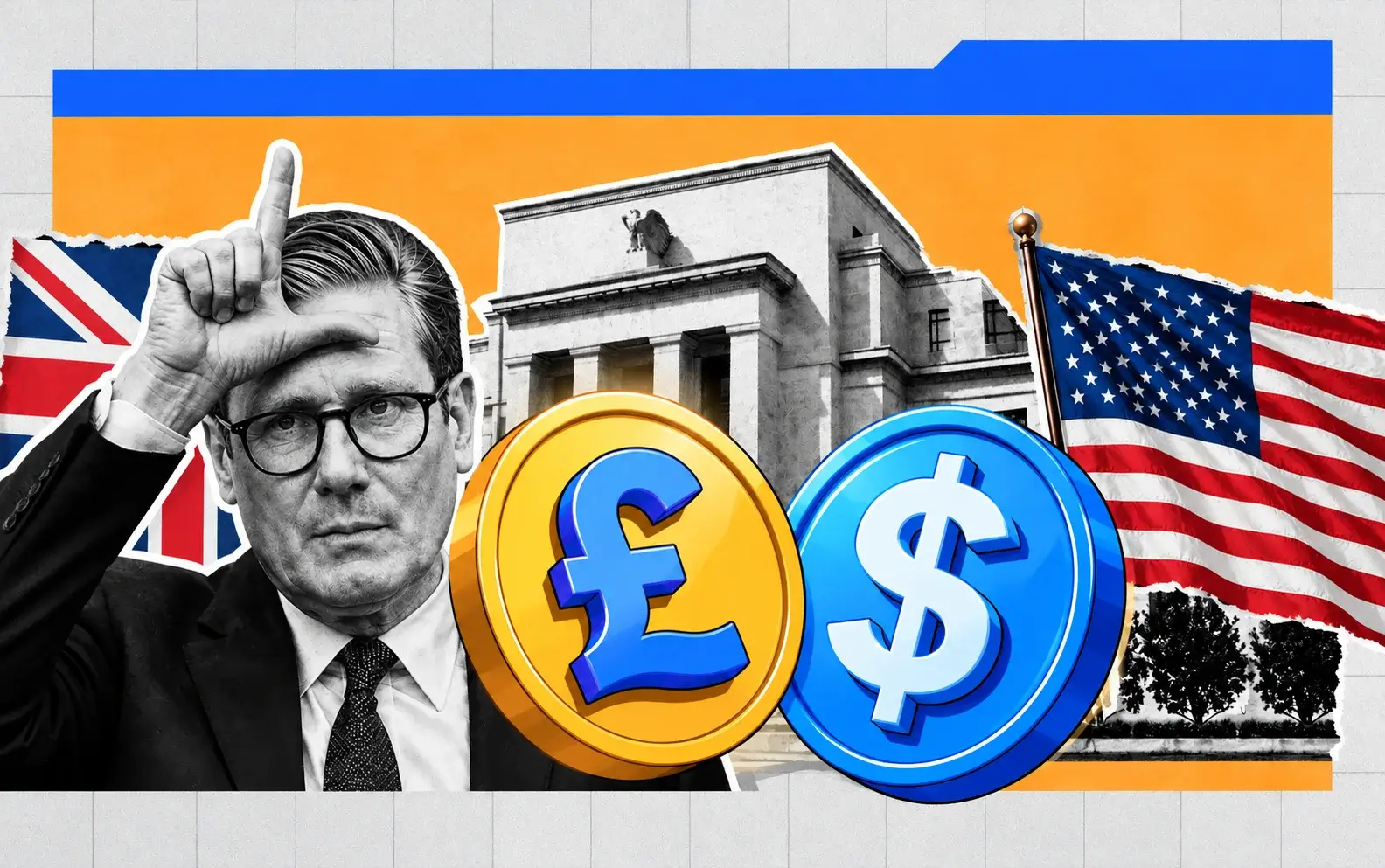
A distinctly British source of downside pressure that sets cable apart from other dollar pairs is the mounting political risk, which has injected an additional discount into the pound. UK political uncertainty has risen following Prime Minister Keir Starmer's Labour Party suffering a defeat in local elections, a setback that has fueled growing calls for the Prime Minister to step down and raised questions about the stability and direction of the government. Political instability is generally negative for a currency because it raises uncertainty about fiscal policy, economic management and the broader investment climate, and the threats to the Prime Minister's leadership warrant caution before positioning for any sustained appreciation in sterling. This political overhang is particularly relevant given the importance of the UK's fiscal trajectory — the Autumn Budget, typically delivered in late October or early November, will set out the government's fiscal plans and represents a significant scheduled risk event for the pound, with the potential for either reassurance or fresh concern depending on its content. The political dimension means that even if the monetary and rate-differential factors turn favorable for cable, the pound carries a persistent risk premium that could cap its upside or amplify its downside during bouts of political turmoil. For the forecast, UK political developments are a wildcard that traders cannot ignore, and any escalation in the leadership crisis or concerns about fiscal credibility would add to the bearish case for sterling regardless of the monetary backdrop.
The Dollar Side and the Fed Calendar
On the other side of the pair, the dollar's trajectory will be heavily influenced by the dense calendar of US events that lie ahead, with each carrying the potential to reset cable's direction. The Federal Reserve's meeting schedule includes its mid-June gathering — Warsh's first as chair, and one that includes a Summary of Economic Projections and the closely-watched dot plot — followed by meetings in late July, September, October and December. These meetings, particularly the ones with updated projections, will be critical for determining whether the hawkish repricing that has supported the dollar continues or fades. Between meetings, the monthly US nonfarm payrolls report, released on the first Friday of each month, stands as the single biggest scheduled dollar mover, with the next release due in early June, while US CPI mid-month ranks as the second most important data point. The internal dynamics of the Fed add intrigue, with the committee genuinely split — at the late-April meeting one official dissented in favor of an immediate cut while several regional presidents agreed to hold but opposed maintaining an easing bias — reflecting the same tension between cooling growth and sticky inflation that has paralyzed policy. For cable, the dollar side of the equation means that strong US data or hawkish Fed signaling would pressure the pound toward its support levels, while any sign that the Fed is bending toward cuts — whether due to softer data or political pressure for lower rates — would undermine the dollar and propel cable higher. The June FOMC and the payrolls reports are therefore the key catalysts to watch.
The Technical Map: $1.34 Pivot, $1.3050 Risk, $1.38 Target
The technical picture for cable reflects its fundamental indecision, with the pair consolidating around a well-defined set of levels that frame the near-term range. The current price near $1.3436 sits at the center of the action, with the pound having held firm around the $1.34 round figure despite the softer inflation data, supported by traders who had maintained expectations for BoE tightening. On the downside, the immediate support sits near the recent lows around $1.3385, with a more significant level at $1.3050 flagged as the risk should the Fed rate-hike narrative gather traction, and below that the psychologically important $1.30 handle that some forecasters warn cable could breach if UK economic recovery falters. On the upside, the resistance runs from the $1.35 region, through the recent daily closes near $1.3517, toward the $1.37 to $1.38 zone that represents both the top of the twelve-month range and the year-end target that bullish forecasters have set, with the 2025 multi-year high near $1.3789 standing as the major overhead barrier. The monthly timeframe has historically painted a more bullish picture for sterling, reflecting the longer-term uptrend, but the near-term structure is one of consolidation with a mild downward bias given the monthly loss. The actionable framework is to treat the $1.30 to $1.38 band as the broad range, with $1.3050 as the critical downside trigger and $1.35 as the immediate resistance that cable must clear to signal renewed upside momentum toward the Goldman target of $1.38.
The Data Calendar Decides the Range
The path for cable over the coming weeks runs through a cluster of high-impact data releases and events that will determine whether the pair breaks higher or lower from its current consolidation. On the US side, the early-June nonfarm payrolls report is the first major catalyst, with a strong print likely to reinforce the dollar's strength and pressure cable toward its support levels, while a weak number would feed the narrative of a cooling US economy and undermine the greenback. The mid-June FOMC meeting, with its dot plot, follows as the dominant US event risk. On the UK side, subsequent inflation and labor-market data will be scrutinized for confirmation of the cooling trend that has pared BoE hike bets — further softness would weigh on sterling, while a re-acceleration would revive its rate support. Looking further out, two significant wildcards loom over the second half of the year: the US midterm elections in early November, which affect the fiscal outlook and the dollar, and the UK Autumn Budget, which will set out the government's fiscal plans and represents a major sterling risk event. The density and two-sided nature of this calendar explain why cable is consolidating rather than trending — traders are reluctant to commit to a directional view ahead of so many binary catalysts. The practical implication is that GBP/USD is likely to remain range-bound and headline-driven until the June data and FOMC resolve the near-term direction, after which a clearer trend should emerge.
Read More
-
Yen Stalls at 160 Despite a 3% JGB and Tokyo Core CPI at 2.0% — Intervention Sits at 164, Friday's Payrolls Decide
02.09.2026 · TradingNEWS ArchiveEnergy
-
GLD ETF Sheds Value With Bullion as North American Funds Stay $7.7B in the Red
10.09.2026 · TradingNEWS ArchiveStocks
-
XRP ETF Flows: 7 Funds Split $1.682B With the Complex at Just 1.68% of Market Cap
10.09.2026 · TradingNEWS ArchiveCrypto
-
NG Breaks $2.90 With Production at 113 Bcf/d and LNG Feedgas Capped at 18.3 Bcf/d
10.09.2026 · TradingNEWS ArchiveCommodities
-
USD/JPY Holds Below the 157.23 Average as 2 Central Banks Tighten in 48 Hours
10.09.2026 · TradingNEWS ArchiveForex
The Bull Case for Sterling
The constructive scenario for cable rests on the structural rate-differential tailwind reasserting itself as the dollar's hawkish premium fades. In this view, the gilt-Treasury yield spread of 35 to 45 basis points in sterling's favor continues to pull fixed-income demand into the pound, and as the market eventually concludes that the Fed will be forced to ease in response to cooling US growth — even if the timing has been pushed back by the hot PCE print — the UK-US rate differential widens further in cable's favor, mechanically lifting the pair toward the Goldman year-end target of $1.38. The bull case is supported by the Iran ceasefire's dollar-weakening and risk-positive effects, which favor the risk-sensitive pound over the safe-haven greenback, and by the BoE's potential to hold its rate advantage if it maintains a cautious, vigilant stance rather than rushing to cut. The longer-term technical structure on the monthly timeframe remains bullish, reflecting the broad uptrend that carried sterling to multi-year highs, and the pound's relative cheapness against its long-run average provides scope for appreciation. The bullish trigger is a clean break above the $1.35 resistance and then the $1.37 region, which would signal that the rate-differential engine is overcoming the near-term headwinds and open a path toward the $1.3789 high and the $1.38 target. The bull case requires the Fed's hawkish premium to fade and the BoE to avoid aggressive easing, a combination that would let sterling's structural support shine through.
The Bear Case for Sterling
The bearish scenario takes the recent data deterioration and political risk at face value and argues that cable is vulnerable to a decline below $1.30. In this view, the cooling UK inflation to 2.8% and the softening labor market push the BoE toward resuming rate cuts to support a weakening economy, eroding the rate-differential support that has propped up the pound, while the hawkish Warsh Fed keeps US yields elevated and the dollar firm, narrowing the spread against sterling. The UK's weak economic backdrop — with downgraded GDP growth forecasts and fragile domestic demand — combined with the mounting political risk from the threats to the Prime Minister's leadership and concerns about fiscal credibility ahead of the Autumn Budget, adds a persistent discount to the pound that could amplify any decline. In this scenario, the Fed rate-hike story gathers traction and drives cable through the $1.3050 risk level toward the $1.30 handle, with a break below $1.30 possible if the UK economic recovery falters and the BoE turns decisively dovish. The bear case is reinforced by the pound's monthly loss and the broader analyst caution about positioning for further sterling appreciation given the political and economic uncertainties. The key bearish trigger is a sustained break below $1.3385 and then $1.3050, which would confirm that the dovish BoE repricing and dollar strength are overwhelming sterling's structural supports and shift the burden of proof onto the bulls.
Price Targets and the Final Read
Synthesizing the monetary, rate-differential, geopolitical and political factors, cable's roadmap is defined by a broad range with binary catalysts on the horizon and a genuine balance between opposing forces. The immediate picture has GBP/USD holding near $1.3436 with support at $1.3385 and then the critical $1.3050 risk level, and resistance at $1.35, $1.3517 and the $1.37 to $1.38 target zone. The broader range spans the JPMorgan-flagged $1.30 to $1.38 band, with Goldman targeting $1.38 by year-end on the rate-differential thesis and the bears warning of a break below $1.30 if UK growth falters. The defining tension is between sterling's structural rate-differential tailwind from the gilt-Treasury yield spread on one side, and the near-term drag from cooling UK inflation, reduced BoE hike bets, a hawkish Warsh Fed, and UK political risk on the other. The final read is that cable is likely to remain range-bound and headline-driven into the cluster of June catalysts — the early-month US payrolls, the mid-June FOMC, and the ongoing UK data flow — after which a clearer direction should emerge. For traders, this argues for respecting the $1.30 to $1.38 range and trading the boundaries rather than forcing a directional bet: the dollar's response to the Fed's path is the dominant variable, the gilt-Treasury spread provides a modest structural floor, and UK political developments are the wildcard that could tip the balance lower. The prudent posture is to treat the $1.3050 level as the critical downside line that separates consolidation from a deeper decline, while recognizing that a fading of the Fed's hawkish premium would let sterling's rate-differential support drive a recovery toward the $1.38 target.