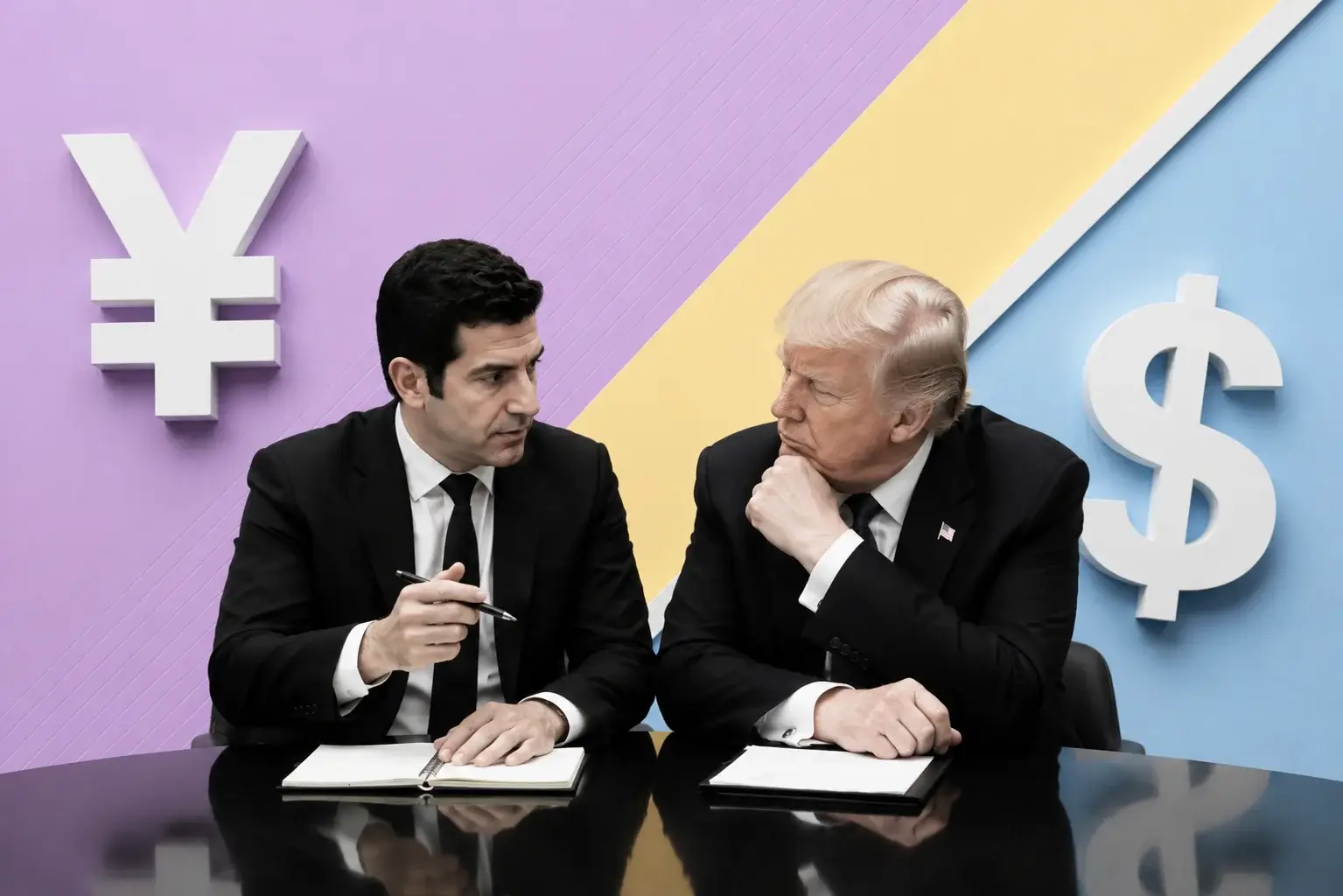

GBP/USD at 1.3454 Between a Stuck BoE and a Strong Dollar; June 18 Decision Looms — Bulls Eye 1.38, Bears 1.30
Sterling carries rate parity at 3.75% versus the Fed's 3.50–3.75%, but stuck UK inflation, fragile growth, and gilt-yield swings cap the pound | That's TradingNEWS
Key Points
- GBP/USD trades near 1.3454, its weakest since May 19, down 0.58% on the month and 0.47% on the year.
- The BoE holds Bank Rate at 3.75% with inflation stuck at 3.3% — a hawkish hold, not a hike; June 18 next.
- A firmer dollar near DXY 99 caps cable; support holds 1.3300, resistance sits at 1.3450, then 1.37.
Cable is stuck, and so is the central bank behind it. GBP/USD trades near 1.3454 on June 2, essentially flat on the session but sitting at its weakest level since May 19 after the pound slipped toward $1.34 on Middle East tensions and growing concerns over the UK's economic prospects. The pair has been chopping a tight 1.3300–1.3450 band for weeks, bouncing off six-week lows near 1.3300 and failing to hold above 1.3450 — a coiled range, not a trend.
Here's the thesis: the pound is trapped between a Bank of England that can't cut and can't hike, and a dollar that firmed to DXY 99 on sticky US inflation and an unsigned Iran ceasefire. UK inflation is stuck at 3.3%, too high to ease into, while growth is too fragile to tighten against — so the BoE delivers a hawkish hold that gives sterling rate parity with the Fed but no decisive edge. With neither central bank handing the pair a clean catalyst, GBP/USD trades on the dollar and on UK domestic risk: gilt-yield swings, political uncertainty, and fiscal fears. The range is 1.3300–1.3450 now, 1.33–1.41 for the year, and the binary that breaks it is the June 17 Fed and June 18 BoE double-header.
Where Cable Trades Right Now
The level is 1.3454, unchanged on June 2, down 0.58% over the past month and down 0.47% over the trailing 12 months — a pound that's gone nowhere on the year and drifted lower on the month as the dollar firmed. The recent action tells the range story: GBP/USD dipped to fresh six-week lows near 1.3300, then recovered as UK bond yields retreated and the dollar softened, rebounding off 1.3300 support but stalling under 1.3450 on firm US yields and renewed dollar demand. It's been anchored around 1.3400 throughout.
The reference point is May 19 — the pound is at its weakest since then, having given back most of the April rally that carried it to 1.3517 near a three-week high when the dollar index dropped about 4% on Iran-ceasefire optimism. That move reversed as the dollar recovered through May. So cable sits in the lower third of its 2026 range, pressed by a firmer greenback but cushioned by sterling's rate parity. The 1.3300 floor is the line that's held repeatedly; 1.3450 is the ceiling buyers can't crack.
The BoE Is Stuck
This is the core of the pound's problem. The Bank of England held Bank Rate at 3.75% on April 30 in an 8–1 vote, with a single member preferring a hike to 4% — a hawkish hold, not a pivot. The next decision lands June 18, the day after the Fed. The consensus, including the IMF, leans toward holds for the rest of the year with possible cuts later, rather than hikes — but with one dissenter already voting to tighten, the BoE is leaning hawkish even as it stands pat.
That leaves sterling in limbo. The Bank can't cut because inflation is stuck well above target, and it won't hike decisively because UK growth is fragile and demand is cooling. A central bank frozen between those two pressures gives its currency no momentum — the pound can't rally on a tightening cycle that isn't coming, and it doesn't collapse because the rate floor stays high. The 8–1 vote with a hawkish dissenter is the tell: the BoE is closer to hiking than cutting in the near term, which is unusual among major central banks and the main reason cable holds 1.3300 rather than breaking it. But "closer to hiking" isn't "hiking," and the market knows it.
UK Inflation at 3.3% Is the Trap
The reason the BoE can't ease is the price data. UK CPI came in at 3.3% in March, up from 3.0% in February, keeping inflation well above the 2% target. After the 2025 easing cycle — four BoE cuts last year, six since the August 2024 start, taking the rate to 3.75% — the disinflation stalled. Inflation that was supposed to glide toward 2.1% by mid-2026 instead re-accelerated, and the energy backdrop from the Iran oil shock isn't helping the case.
That stuck-at-3.3% reading is the trap. It removes the dovish path the pound bulls were counting on for a soft landing and forces the BoE into a defensive hold. For cable, sticky inflation cuts both ways: it keeps the rate floor high, which supports the pound's carry, but it also signals a UK economy stuck with above-target prices and weak growth — a stagflation-lite setup that caps how much the currency can rally. This week's and this month's UK data are the swing reads: cooler inflation reopens the cut debate and pressures the pound, while another hot print cements the hawkish hold and supports it.
The Dollar Firmed and Pinned the Pound
The other side of the pair did the damage. The dollar firmed through May rather than fading, with DXY trading near 99 in late May after recovering most of its early-May dip. The fuel was sticky US inflation and an unsigned US-Iran ceasefire that kept a risk premium under the greenback, with Kevin Warsh installed as Fed Chair and the market no longer confidently pricing the cuts it once expected. A firm dollar is a headwind for everything it's quoted against, and cable wears it directly.
That's why GBP/USD gave back the April rally. When DXY dropped 4% in April on ceasefire optimism, cable ran to 1.3517; when the dollar recovered to 99 in May, the pound slid back toward 1.34 and the six-week lows near 1.3300. The pair is now a function of which way the dollar breaks, and the dollar's near-term direction hinges on US inflation and the Iran ceasefire. Cambridge's base case has DXY trading 93–100 across the rest of 2026 — firm near term, softer later only if the ceasefire is signed and US inflation cools — which maps to a GBP/USD range of 1.33–1.41. The pound doesn't need to do anything for cable to move; the dollar will move it.
UK Political and Fiscal Risk
Sterling carries a domestic risk premium the dollar doesn't. The pound came under pressure at the start of recent weeks as investors reacted to rising UK political uncertainty — questions over the government's leadership and stability that flare on the wires and weigh on sentiment. Political noise is a recurring drag on cable that has no equivalent on the US side, and it's part of why the pound tested 1.3300 even with rate parity supporting it.
The fiscal angle is the slower-burning risk. The market is wary of UK fiscal fears returning to focus ahead of the next budget, a dynamic several strategists flag as the reason sterling strength is more likely in the first half of 2026 than the second — H2 underperformance becomes the central risk as budget worries resurface. For now it's a background weight rather than an active catalyst, but it caps the pound's upside and adds a tail risk that the dollar simply doesn't carry. Cable holders are long a currency with a political discount baked in.
Read More
-
PSI ETF at $152.85, Down 19.2% From $189.24, After Returning 102.37% in 2026 Against SMH's 66.2% — AUM Reaches $3.82B
23.07.2026 · TradingNEWS ArchiveStocks
-
XRPI Falls 2.48% and XRPR Drops 2.59%, Both Underperforming XRP's 1.73% Decline
23.07.2026 · TradingNEWS ArchiveCrypto
-
August Futures Hold $2.957 With Production at 110.9 Bcf/d and LNG Feedgas at 17.9 Bcf/d — Bulls Need $2.974 Before $3.121
23.07.2026 · TradingNEWS ArchiveCommodities
-
Dollar Holds 163.06 After the Yen's 40-Year Low at 163.24 as Oil Breaks $100 and Tokyo Warns of Decisive Action — Bulls Eye 164 and 165, Bears Need 162.00
23.07.2026 · TradingNEWS ArchiveForex
The Rate-Parity Math
The one thing keeping the pound off the floor is the rate differential, and it's neutral-to-slightly-favorable. UK Bank Rate at 3.75% sits at the top end of the Fed's 3.50–3.75% range, which means sterling carries at least rate parity with the dollar before any further move from either central bank. That parity is the structural support under 1.3300 — there's no yield reason to dump the pound for the dollar at current rates.
The asymmetry is in the guidance. A hawkish shift in BoE guidance — even without an actual hike — would widen the differential in sterling's favor and is the cleanest bullish catalyst cable has. The base case has been that a hawkish hold from the BoE while the Fed also holds could push GBP/USD toward 1.37 relatively quickly. The bearish mirror: if the Fed sounds firmer than the BoE, or if the BoE leans dovish on weak growth, the differential tilts to the dollar and cable breaks 1.3300. With both decisions landing back-to-back on June 17 and 18, the relative tone is everything — it's not about the rates, which are set, but about which side sounds more committed.
The Gilt-Yield Swing Factor
UK bond markets have been the day-to-day driver. The pound stabilized off its six-week lows specifically as UK gilt yields retreated and the dollar softened, and it's stayed sensitive to global bond-market volatility throughout. Rising UK and US yields have dominated the currency tape, with sterling holding firm at times on expectations of further BoE tightening later this year even after softer UK inflation prints.
That gilt sensitivity is a two-edged sword. When yields are stable or retreating in an orderly way, the pound finds footing — the recovery from 1.3300 came on exactly that. But the UK bond market carries its own fragility tied to the fiscal picture, and a disorderly spike in gilt yields would pressure the pound rather than support it, the way a fiscal-credibility scare does. Cable traders have to watch the gilt tape as closely as the dollar tape, because UK bond volatility can override the rate-parity support and drive the pair on its own.
The Technicals — EMAs and the Range
The chart is a range, not a trend. GBP/USD has been trading near its clustered 8-, 21-, 50-, and 100-day EMAs — a sign of a market with no directional conviction, oscillating around the moving-average stack rather than trending away from it. The pair recovered from a March 30 low of 1.3182, climbed about 1.84% off that base, then stalled, and has spent recent weeks boxed between 1.3300 support and 1.3450 resistance.
The structure says fade the extremes until a catalyst breaks the band. Bounces off 1.3300 have been buyable, rallies into 1.3450 sellable, and the pair keeps reverting to the 1.3400 anchor. There's no momentum signal pointing decisively either way — the technicals are waiting on the June central-bank double-header to pick a direction. Until then, 1.3300 and 1.3450 are the lines that matter, and a clean break of either is the trade.
The Support and Resistance Map
The levels are tight and well-defined. Immediate support is 1.3400, then the critical 1.3300 floor that's held on multiple tests of the six-week lows — that's the line that defines the whole range, backed by sterling's rate parity. Lose 1.3300 with conviction and the structure breaks, opening a path toward 1.30, the level JPMorgan flags as in play if the UK recovery disappoints. Below 1.30 there's little to lean on until lower fiscal-stress levels.
To the upside, the first job is clearing 1.3450, the ceiling buyers keep failing at. Above it, the pair targets the April 1.3517 high, and a break there opens the door toward 1.37–1.38 — the Goldman year-end target and the level a hawkish-hold BoE could trigger. The map is symmetrical: 1.3300 is the floor, 1.3450 is the near-term gate, 1.3517 is the April high to reclaim, and 1.37–1.38 is the bullish objective if the dollar softens and the BoE leans hawkish.
The Forecast — The June Double-Header and Beyond
Two scenarios, and the back-to-back June meetings decide. The base case is the range holds: the Fed holds June 17, the BoE holds June 18, neither shifts the rate differential decisively, and cable keeps chopping 1.3300–1.3450 through the month with the 1.3400 anchor intact. Most monthly models fit this, with June ranges centered in the mid-1.3s and the pair drifting on the dollar.
The bull path needs a dovish-dollar turn or a hawkish BoE. A soft US payrolls print Friday that cracks the Fed's firm stance, paired with a hawkish-hold BoE keeping its tightening bias visible, widens the differential in sterling's favor and lifts cable through 1.3450 toward 1.37–1.38. The institutional targets cluster there — Goldman at 1.38, UBS eyeing 1.40 by September, the broad bank consensus at 1.36–1.40 by year-end, all within a 1.33–1.41 range. The bear path is the mirror: a hot US jobs print firms DXY above 100, or a dovish BoE lean on weak UK growth, and cable breaks 1.3300 toward 1.30, with the UK fiscal risk amplifying any move in H2.
The Verdict
GBP/USD is a range trade powered by a stuck central bank and a firm dollar. The pound sits at 1.3454, its weakest since May 19, trapped between a BoE that can't cut because inflation is stuck at 3.3% and can't hike because growth is too fragile — a hawkish hold that hands sterling rate parity with the Fed but no decisive edge. With the differential neutral, cable trades on the dollar and on UK domestic risk: gilt-yield swings, political uncertainty, and the fiscal fears waiting in H2. The dollar near DXY 99 is the cap; the 3.75% rate floor is the support.
The line in the sand is 1.3300. Hold it and cable stays in its 2026 range, with the June 17 Fed and June 18 BoE the catalyst to reclaim 1.3450 and run at 1.37–1.38 if the BoE out-hawks a holding Fed. Lose 1.3300 and the structure breaks toward 1.30, especially if US payrolls run hot or the BoE leans dovish. The pound doesn't need its own story to move — it needs the dollar to soften or the BoE to sound more committed than the Fed at the June double-header. Get either, and 1.3450 gives way. Until then, this is a coiled 1.3300–1.3450 range with the dollar in control, and the back-to-back June meetings are the binary that tells you which way it breaks.