Gold Cracks $4,000 to 8-Month Low as Hawkish Fed and Firm Dollar Crush the Rally
XAU/USD trades near $4,025 after its steepest quarter since 2013; the Warsh Fed's rate-hike threat and fading safe-haven bid keep pressure on bullion | That's TradingNEWS
Key Points
- Gold slipped below $4,000 to an 8-month low near $4,025 after a 14% Q2 loss, its worst quarter since 2013 and fourth straight monthly decline.
- Hawkish Warsh Fed, ~65% September rate-hike odds, and a firm dollar crushed the non-yielding metal down ~28% from January's $5,602 record.
- Key support sits at $3,890 then $3,648; reclaiming $4,190 signals a bullish reversal toward the $4,320–$4,380 wall.
Gold (XAU/USD) opened the third quarter clawing to hold the line at $4,000, trading near $4,025 an ounce after slipping beneath the psychological floor to its lowest level in almost eight months. The metal caught a modest 0.44% bounce on the session, dragging itself back above $4,000 after an intraday dip to around $3,943, but the recovery does nothing to mask the wreckage of the past two months. Gold changed hands in a $3,943 to $4,063 band through the session, and every rally toward the highs got sold. This is a market that has completely lost the momentum that carried it to records earlier in the year. The near-term structure is broken. Gold trades well below its 50-day simple moving average near $4,384 and even further under the 200-day SMA around $4,585, a configuration that flips both key trend lines from support into overhead resistance. Momentum readings lean hard bearish, with the composite of technical signals tilting overwhelmingly to the sell side and the short-term rating pinned at Strong Sell. The metal that spent the first month of the year ripping to all-time highs is now grinding out fresh multi-month lows, and the reversal has been violent. The forces behind the collapse are the mirror image of everything that powered the rally. A hawkish new Fed regime, rising Treasury yields, a firmer dollar, and a fading geopolitical premium have combined to strip the safe-haven bid out of bullion and hand the advantage to yield-bearing assets. Gold pays no coupon, and in a world repricing toward higher-for-longer rates and even the threat of a hike, that's a fatal flaw. The $4,000 level is the immediate battle line — gold dipped below it, bounced back above, and now sits right on top of it, with the psychological weight of the round number amplifying every test. Hold it and the metal has a shot at stabilizing; lose it decisively and the next support levels come into view fast. Still up roughly 20% year over year, gold hasn't erased its longer-run gains, but the trend has turned, and the tape is behaving like a market in a downtrend punctuated by weak bounces. The setup into July is a metal pinned at $4,000, fighting a hostile macro backdrop, waiting on the jobs data to either deepen the pain or throw it a lifeline.
The Quarter That Broke the Rally
The second quarter of 2026 shattered gold's uptrend in spectacular fashion. Bullion fell roughly 14% over the three months, marking its first quarterly loss since 2024 and the steepest quarterly drop since the second quarter of 2013 — a decline that ranks among the worst in over a decade. That's not a routine pullback; it's a regime change. June alone saw gold shed around 10% to 11%, sealing a fourth consecutive monthly decline and cementing the downtrend that has defined the metal's spring and summer. The consistency of the selling tells the story. Four straight red months means this isn't a single shock that gold is digesting — it's a sustained repricing as the macro tailwinds that drove the rally reversed one by one. The rate-cut expectations that underpinned the bull case evaporated. The dollar firmed. The geopolitical premium that spiked on the Middle East conflict bled out as de-escalation took hold. Each of those pillars crumbled, and gold fell with them. The scale of the quarterly damage stands out against gold's recent history. The metal spent years as one of the best-performing major assets, riding central-bank buying, dollar-debasement fears, and safe-haven flows to record after record. The Q2 collapse reversed a chunk of that in a matter of weeks, and the speed caught the crowd leaning the wrong way. Positioning had grown heavily long into the highs, and the unwind of those crowded bets accelerated the decline as stops triggered and momentum funds flipped from buyers to sellers. The quarter closed with gold near its weakest level since November 2025, a stunning fall for an asset that printed all-time highs in late January. The broader context softens the blow only slightly. Gold remains up roughly 20% year over year, so the longer-run holders are still in profit, and the metal hasn't given back its entire multi-year advance. But the trend that matters for the near term has clearly turned, and the Q2 performance confirms it. A 14% quarterly loss doesn't happen in a healthy uptrend — it happens when the fundamental drivers flip and the crowd rushes for the exits at once. That's exactly what unfolded. The rally that looked unstoppable in January is now a memory, replaced by a grinding downtrend that has posted four losing months and the worst quarter since 2013. The question into the second half is whether this is a correction within a longer bull market or the start of something deeper, and the answer hinges on the macro forces that broke the rally in the first place.
From $5,600 to $4,000: The Great Unwind
To grasp how far gold has fallen, look at where it started the year. The metal ripped to an all-time high of roughly $5,602 an ounce on January 29, 2026, the culmination of a parabolic run fueled by geopolitical chaos, dollar-debasement fears, and relentless central-bank accumulation. From that peak to the current $4,025, gold has shed nearly 28% — a brutal drawdown that has wiped out months of gains and dropped the metal into bear-market territory from its highs. The unwind exposed just how much of the January spike was built on drivers that couldn't hold. The record run rested on a specific set of conditions: escalating Middle East tension that sent oil soaring and stoked inflation fears, a market convinced the Fed would cut rates, and a narrative that the dollar's purchasing power was eroding fast enough to make gold the only reliable store of value. Every one of those props got knocked out. The Middle East conflict moved toward de-escalation, draining the fear premium. The rate-cut thesis collapsed as strong data and a hawkish Fed pivot flipped expectations toward a hike. And the dollar firmed, killing the debasement trade that had been gold's most powerful tailwind. When the drivers reverse, a parabolic move retraces just as violently as it rose, and that's the mechanism behind the 28% fall from the peak. The speed of the January run made the unwind worse. Parabolic moves attract momentum money and crowded positioning, and when the trend breaks, those same flows reverse in a rush. The gold market that touched $5,602 was packed with latecomers chasing the record, and as price rolled over, their stops cascaded, accelerating the decline. The metal blew through support level after support level on the way down, with each break triggering another wave of selling. The all-time low from the distant past sits far below at levels irrelevant to today's market, but the relevant range now runs from the $5,595 peak down through the current $4,000 zone, and gold sits near the bottom of that band. The great unwind isn't necessarily over. With gold below both major moving averages and the macro backdrop still hostile, the path of least resistance points lower until something in the fundamental picture shifts. The 28% drawdown from the peak is severe, but it doesn't guarantee a bottom — bear markets can extend well beyond what looks oversold when the drivers stay negative. What the unwind does establish is that the January euphoria was a peak, not a base, and the market spent the following five months paying it back. Gold's fall from $5,600 to $4,000 is the defining move of its year, and where it stops depends on whether the reversed drivers reverse again.
The Warsh Regime Turns the Screws
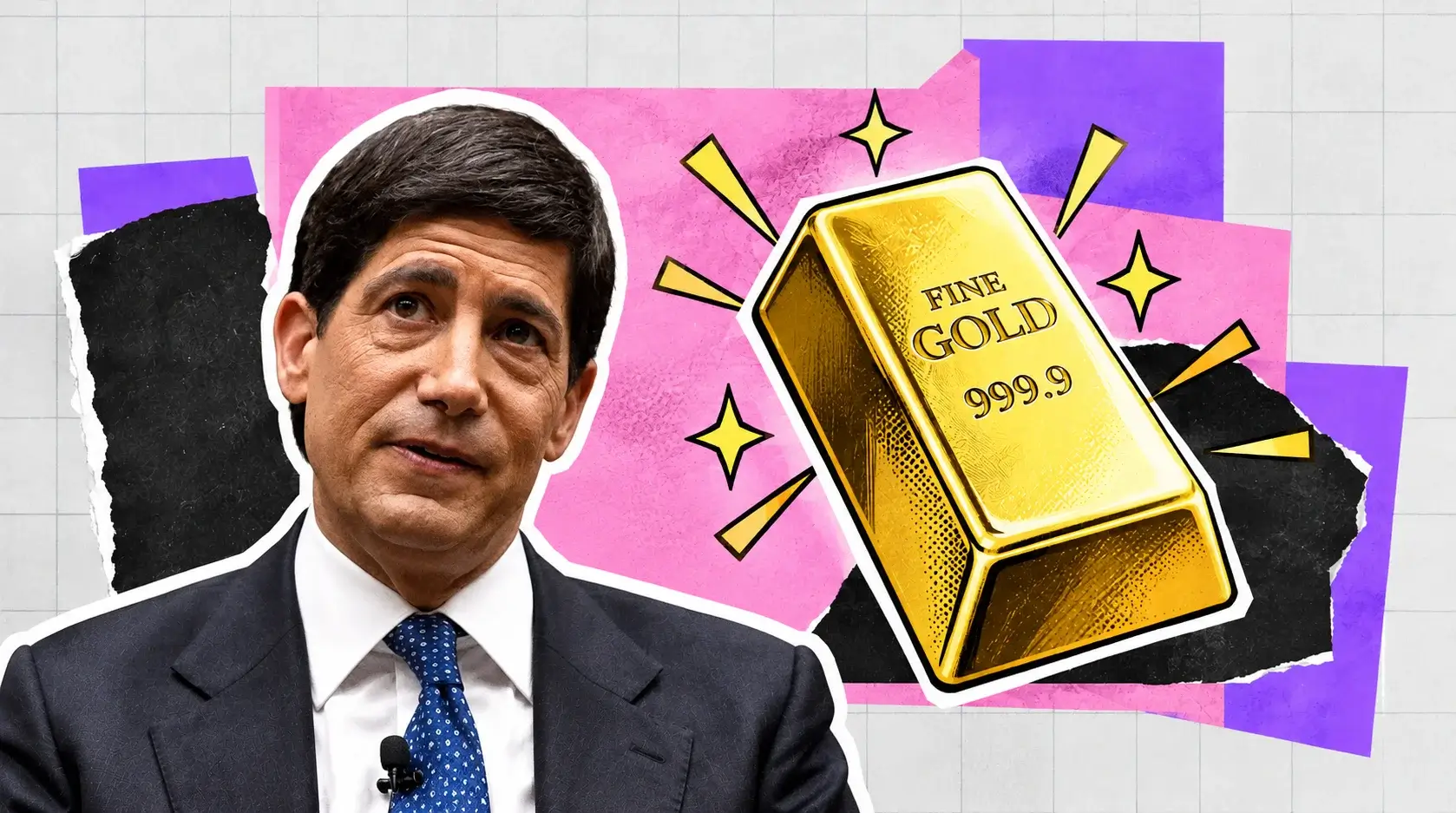
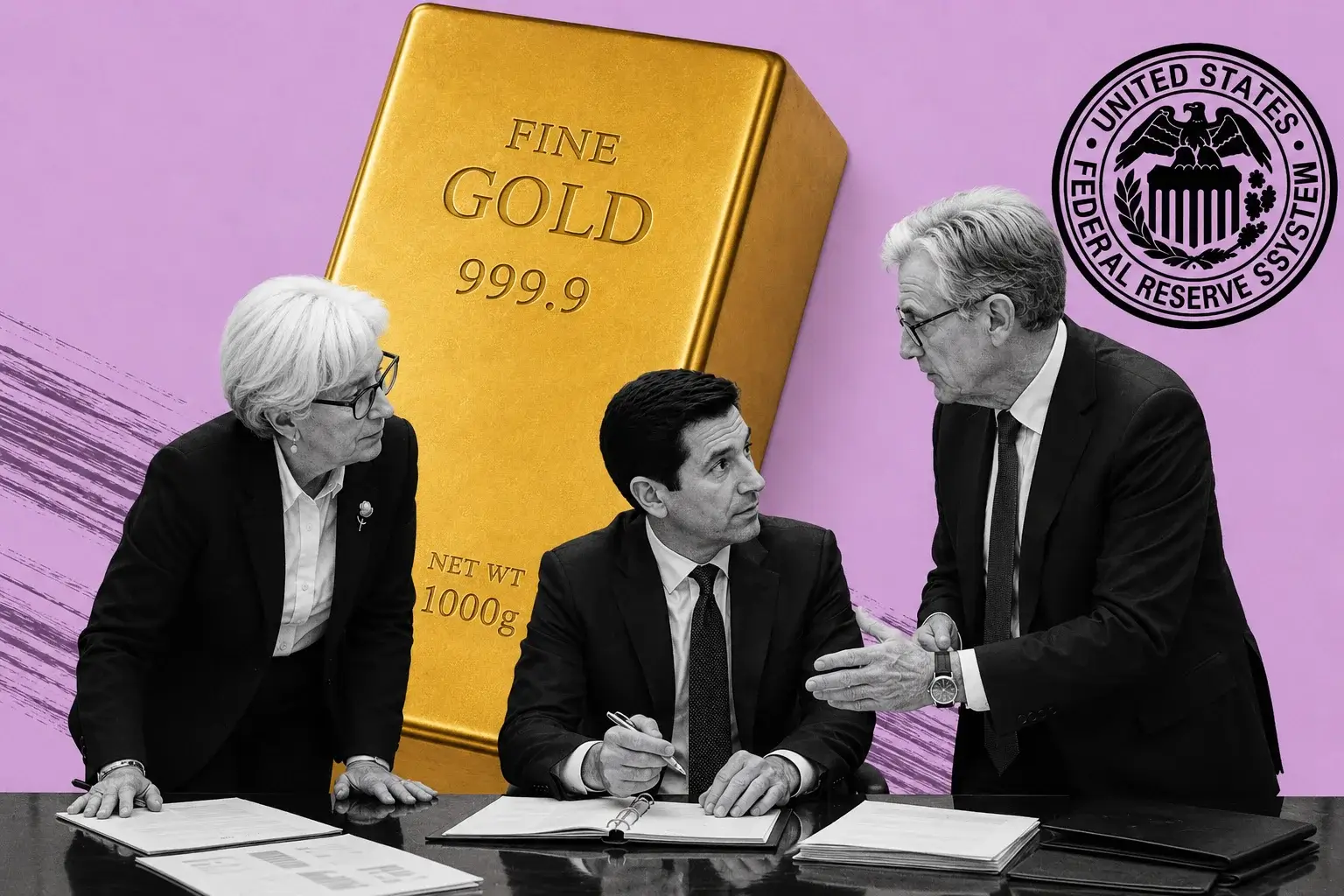
The single biggest force behind gold's collapse is the transformation of the Federal Reserve under its new chair, Kevin Warsh. His arrival ushered in a hawkish regime that has systematically dismantled the case for holding non-yielding bullion. Warsh has staked out a minimalist, data-dependent stance that shocked a market accustomed to dovish hand-holding, and the shift repriced everything rate-sensitive — gold included. Where the prior era leaned toward easing and balance-sheet expansion, the Warsh Fed points the other direction, and that pivot is poison for the metal. The most concrete signal came when Warsh announced the pending creation of task forces to evaluate the need for the central bank's large balance sheet, setting the stage for the bond-selling he has long championed. That's a move toward quantitative tightening — shrinking the Fed's holdings and draining liquidity from the system. For gold, balance-sheet reduction is a double blow: it pushes yields higher and signals a Fed determined to keep policy restrictive rather than flood the system with the easy money that historically lifts bullion. The task-force announcement told the market that the era of Fed accommodation is over, and gold sold off on the message. Warsh made his latest appearance at the European Central Bank's forum in Sintra, sharing the stage with global central-bank leaders, and offered no dovish comfort. His refusal to signal any softening reinforced the hawkish read and kept the pressure on rate-sensitive assets. The market now prices a real chance of a rate hike this year rather than the cuts it once expected, with the first potential move coming as early as September. That flip — from pricing cuts to pricing hikes — is the core of gold's problem. The metal thrives when real rates fall and the Fed eases; it withers when rates rise and the Fed tightens. The Warsh regime delivered the latter, and gold has paid the price across four straight losing months. The chair's campaign for bond-selling and a smaller balance sheet represents a structural headwind, not a passing mood. As long as the Fed points toward tighter policy, higher yields, and a leaner balance sheet, the opportunity cost of holding gold stays elevated. Every basis point of yield the market can earn elsewhere is a reason to shun the metal that pays nothing. The Warsh regime rewrote the rules that governed gold's bull market, and the metal is still adjusting to the new reality. Until the Fed's posture softens — which shows no sign of happening soon — the hawkish regime remains the dominant weight on the tape, turning the screws a little tighter with each data point that supports the restrictive case.
Rate-Hike Fears Crush the Non-Yielding Bid
Gold's fatal flaw in the current environment is simple: it pays no coupon. In a world where the market is pricing rate hikes rather than cuts, that flaw becomes a crushing disadvantage. The metal generates no income, so its appeal rests entirely on price appreciation and its role as a hedge. When Treasury yields climb and the Fed threatens to hike, the calculus flips hard against bullion. The aggressive pullback in gold aligned directly with elevated yields on Treasury notes and bonds, as money rotated toward coupon-bearing assets that actually pay to hold them. That rotation is the mechanical driver of the selloff. The odds of a September rate hike have climbed to around 65%, a dramatic shift from the rate-cut expectations that dominated earlier in the cycle. Market pricing now leans toward the Fed keeping rates at 3.50% to 3.75% in the near term — with a roughly 66% probability of no change in July — but with a hike firmly on the table for the fall. That hawkish tilt is the opposite of what gold needs. Bullion rallies when rates fall and real yields turn negative, because the opportunity cost of holding a non-yielding asset drops. It sells off when rates rise, because that opportunity cost balloons. The current setup is maximally hostile: rising nominal yields, the threat of a hike, and a Fed campaigning to keep policy restrictive. The energy shock earlier in the year set this dynamic in motion. Rising energy prices driven by the Middle East conflict erased expectations of Fed rate cuts, forcing the market to reprice toward tighter policy. Even as the geopolitical premium faded, the rate repricing stuck, because core inflation readings remained well above the Fed's 2% target, giving the hawks all the cover they needed. Sticky inflation plus a Fed determined to fight it equals higher rates for longer, and higher rates for longer equals a headwind gold can't overcome by leaning on its inflation-hedge reputation. That reputation is the cruel irony of the current tape. Gold is traditionally seen as an inflation hedge, yet it's falling even as inflation runs above target — because the rate response to that inflation matters more than the inflation itself. When the Fed hikes to fight rising prices, the higher rates weigh on the non-yielding metal more than the inflation supports it. That's the bind gold sits in now. The rate-hike fears aren't a side issue; they're the central force driving the metal lower. Until the market stops pricing hikes and starts pricing cuts again, the non-yielding bid stays under pressure, and gold struggles to mount any durable recovery. The coupon-bearing competition is simply too attractive when yields are climbing, and gold offers nothing to compete on that front except the hope of price gains in a downtrend.
The Dollar Debasement Trade Reverses
One of gold's most powerful tailwinds through its record run was the dollar-debasement trade — the conviction that the greenback's purchasing power was eroding fast enough to drive money into hard assets. That trade has now reversed, and the reversal is hammering the metal. A firmer dollar makes gold more expensive for holders in other currencies and undercuts the entire premise that bullion is the escape hatch from a depreciating dollar. The aggressive pullback in gold coincided with a reversal of the dollar-debasement narrative, as the currency firmed on the back of the hawkish Fed and strong economic data. The mechanism is straightforward. When the market believed the dollar was being debased — through easy Fed policy, ballooning deficits, and balance-sheet expansion — gold was the natural hedge, and money poured in. The Warsh regime flipped that story. A Fed moving toward tighter policy and a smaller balance sheet supports the dollar rather than debasing it, and as the currency firmed, the debasement thesis lost its foundation. The trade that drove billions into gold unwound, and that unwind is a direct source of selling pressure. The dollar's strength feeds on itself in this context. Higher U.S. yields attract capital from abroad, lifting the currency, which in turn pressures dollar-denominated gold. A stronger dollar and higher yields form a one-two punch that the metal can't easily withstand, and both are products of the same hawkish Fed pivot. The correlation is tight: as the dollar climbed through the spring, gold fell, and the two moved in near-perfect opposition. The reversal of the debasement trade also carries a sentiment dimension. The narrative that fiat currencies were being systematically devalued and that gold was the only sound money drove a lot of the retail and momentum flows into bullion. As the dollar firmed and the Fed turned hawkish, that narrative lost credibility, and the flows that chased it reversed. The crowd that bought gold as a debasement hedge is now selling it as the hedge proves unnecessary. That shift in psychology compounds the mechanical pressure from the stronger currency. For the metal to stabilize, the dollar would need to top out and the debasement narrative would need to regain some footing — both of which require the Fed to soften its stance. As long as the Warsh regime keeps the dollar bid, the debasement trade stays reversed, and gold stays under pressure. The firmer greenback is one of the clearest reasons the metal broke below $4,000, and it's one of the forces that has to turn before gold can find a durable floor. The dollar and gold are locked in their inverse dance, and right now the dollar is leading.
The Safe-Haven Premium Bleeds Out
Gold's other great pillar — its role as the ultimate safe haven — crumbled as the geopolitical fears that drove the January record faded. The de-escalation of the Middle East conflict has been steadily draining the fear premium out of bullion, and the process accelerated as peace efforts advanced. The U.S.-Iran diplomatic track, however halting, removed a chunk of the crisis premium that had lifted gold to its highs. The talks in Qatar carried real weight for the metal. Hopes for a lasting ceasefire agreement, even amid the back-and-forth over whether the two sides would meet directly, signaled that the acute geopolitical risk that spiked gold was easing. When the crisis that drives safe-haven buying starts to resolve, the premium that buying created bleeds out, and gold gives back the gains it made on fear. The metal's January surge was partly a fear trade, and as the fear subsided, so did the trade. The complications in the talks didn't rescue gold. Even as reports of direct talks got dismissed and the diplomatic path stayed uncertain, the broader direction pointed toward de-escalation rather than escalation, and that direction is gold-negative. The market treats a stumbling peace process as still better than an active, spiraling conflict, so the fear premium kept fading even on days the talks hit snags. Oil confirmed the read, sliding below $69 as the geopolitical risk eased, and falling oil relieves the inflation pressure that had been one of gold's supports. The safe-haven unwind interacts with the rate story in a way that's doubly damaging. The Middle East conflict had spiked energy prices and stoked inflation, which initially supported gold, but it also forced the Fed to abandon rate cuts, which hurt gold. As the conflict de-escalates, the inflation premium fades — removing a support — while the rate damage lingers, because the Fed stays hawkish on sticky core inflation. Gold loses the geopolitical bid without regaining the rate-cut tailwind, leaving it exposed on both fronts. That asymmetry is why the safe-haven bleed has been so punishing. The metal is losing its crisis premium faster than it's gaining any offsetting benefit from the calmer backdrop. A world moving toward peace and lower energy prices is a world with less need for the ultimate hedge, and gold is priced accordingly. For the safe-haven bid to return, the market would need a fresh crisis — a breakdown in the peace talks that reignites the conflict, or some new geopolitical shock. Absent that, the premium keeps bleeding out, and gold keeps grinding lower. The de-escalation that's good news for the world is bad news for the metal, and the tape reflects it.
The Data Wall: JOLTS, Jobs, and Inflation
The economic data has consistently undercut gold, and this week's slate kept the pressure on even as one print offered a sliver of relief. The JOLTS report showed job openings climbing to a two-year high, underscoring a labor market that refuses to crack and reinforcing the case for a Fed that stays restrictive. Strong labor data is gold-negative because it gives the hawks ammunition to hold rates high or hike, and the two-year high in openings did exactly that. The data wall standing in gold's path is built from these resilient economic prints. The ratio of job openings to unemployed workers sitting comfortably above 1, the openings hitting multi-year highs, and the broader signs of economic strength all point to a Fed with room to keep tightening. Every strong data point consolidates the hawkish view held by a large portion of Fed officials, and that hawkish consolidation is what's crushing bullion. A resilient economy doesn't need rate cuts, and without rate cuts, gold loses its most important potential catalyst. Inflation adds another brick to the wall. The latest core inflation readings remained well above the Fed's 2% target, and rather than helping gold through its inflation-hedge reputation, the sticky inflation hurts it by keeping the Fed hawkish. Above-target core prints mean the Fed can't declare victory and pivot to easing, so rates stay elevated and the non-yielding metal stays pressured. The inflation that theoretically supports gold is instead the reason the Fed keeps rates high enough to sink it. Wednesday brought one crosscurrent. The ADP report showed private payrolls grew just 98,000 in June, missing the 110,000 consensus and cooling from 122,000 in May. A softer labor print would normally give gold a lift by nudging the Fed toward patience, but the single miss wasn't enough to offset the broader strength signaled by JOLTS and the hawkish Fed posture. The metal's modest 0.44% bounce reflected that sliver of relief, but the recovery stayed capped near $4,025. The real test comes Thursday, when the June nonfarm payrolls report lands a day early because of the July 4 holiday. That print is the swing catalyst for gold. Analysts expect another solid month of payroll gains, and if the number comes in hot, it confirms the resilient-economy narrative, cements the rate-hike odds, and likely sends gold below $4,000 again toward the next support. A soft print — following Wednesday's ADP miss — would be the metal's best hope, easing the rate pressure and giving bullion room to bounce. The data wall has been gold's enemy all quarter, and Thursday's jobs number is the next and biggest brick. Until the data softens convincingly, the wall stands, and gold stays trapped beneath it.
The Technical Breakdown
The chart confirms what the fundamentals dictate: gold is in a clean technical downtrend. The metal trades below its 50-day simple moving average near $4,384 and below its 200-day SMA around $4,585, with both averages sloping lower. When price sits beneath both major moving averages and they're falling, the trend structure is unambiguously bearish, and every rally toward those lines gets sold as the averages act as overhead resistance. Gold would need to reclaim the 50-day near $4,384 just to neutralize the immediate downtrend, and it's trading nearly $360 below that level. That's a long way to climb. The technical ratings reflect the damage. The short-term outlook carries a Strong Sell rating, with the composite of indicators across oscillators and moving averages tilting heavily bearish — roughly 20 signals pointing down against just 6 pointing up on recent readings. The one-week technical outlook flashes sell, and while some longer-horizon models show a buy signal on the monthly timeframe, the near-term picture is dominated by the breakdown. That split — bearish short-term, tentatively constructive long-term — captures the tension between the ugly momentum and the possibility that the metal is getting oversold. The breakdown below $4,000 is the latest and most significant technical event. The round number carried psychological weight, and gold's slip beneath it to an eight-month low signaled that the selling pressure remains intact. The metal bounced back above $4,000 intraday, but the fact that it broke the level at all confirms the downtrend's strength. Prior support levels that gold blew through on the way down — the $4,320 to $4,380 zone that aligns with the 50% to 61.8% Fibonacci retracement of the latest bearish leg — now stand as formidable resistance. That Fibonacci region is a wall the metal failed to reclaim, and it caps any recovery attempt well below the moving averages. The descending trendline that has guided gold lower through the quarter reinforces the bearish structure, keeping price pinned beneath a series of lower highs. Each failed bounce prints another lower high, confirming the downtrend and discouraging fresh buying. Until gold breaks above the descending trendline and reclaims the moving averages, the technical picture stays negative, and rallies remain sell opportunities rather than reversals. The one glimmer for the bulls is the potential for an oversold bounce. Momentum this stretched can snap back sharply, and the monthly buy signal hints that longer-term models see value emerging at these levels. But a bounce within a downtrend is not a reversal, and the metal has to prove it can reclaim key levels before the technical case turns. For now, the breakdown is clean, the structure is bearish, and the charts point lower. The $4,000 level is the immediate pivot, and losing it opens the door to the next leg down.
The Support and Resistance Map
Navigating gold's next move means knowing the levels, and the map is dense on both sides. On the downside, $4,000 is the immediate psychological support — the round number gold just tested and is fighting to hold. Below it, the first real support sits at $3,980 to $3,960, a zone that has attracted buying on prior dips. Lose that, and $3,920 to $3,900 comes into view as the next line of defense. The most important downside level is $3,890, which stands as a key structural support — a break beneath it on volume would confirm the bearish continuation and open a deeper decline toward $3,648, a much lower level that represents the next major support if the current floor gives way. The cascade from $4,000 down through $3,890 to $3,648 maps the bear case, and each break would likely accelerate the selling as stops trigger. On the upside, the resistance is stacked and formidable. The first hurdle sits around $4,040, the level bulls need to reclaim to signal any near-term stabilization. Above it, $4,060 to $4,100 marks a zone likely to attract selling, as the crowd that got trapped at higher levels uses bounces to exit. The critical upside level is $4,190 — a settle above it on increased volume would mark a potential bullish reversal, the first genuine signal that the downtrend might be breaking. Beyond $4,190 looms the heavy resistance at $4,320 to $4,380, the Fibonacci retracement zone of the bearish leg where gold has repeatedly failed. Reclaiming that band would be a major technical victory, but it sits far above the current price and represents a wall the metal hasn't been able to breach. The 50-day moving average near $4,384 aligns with that resistance, reinforcing it. The map reveals the challenge gold faces. The downside levels are close and the path lower is clear if $4,000 and then $3,890 break, while the upside resistance is dense and distant, requiring a reclaim of $4,190 and then $4,320 to $4,380 just to neutralize the downtrend. That asymmetry — easy downside, hard upside — reflects the bearish structure. The metal can fall quickly through support but has to grind through layers of overhead supply to recover. For the near term, the $4,000 to $4,190 band defines the battle zone. Holding $4,000 keeps the base case of range-bound chop alive; reclaiming $4,190 opens the bull case toward $4,380; losing $3,890 confirms the bear case toward $3,648. Those are the three levels that matter most, and gold sits right in the middle of the range, pressed against $4,000 with the heavy resistance overhead and the support cascade below. The map is drawn, and the next move depends on which level breaks first.
Read More
-
Yen Stalls at 160 Despite a 3% JGB and Tokyo Core CPI at 2.0% — Intervention Sits at 164, Friday's Payrolls Decide
02.09.2026 · TradingNEWS ArchiveEnergy
-
Apple ($333.38) Loses $103B in Value as Memory Costs Squeeze Margins to 47–48%
09.10.2026 · TradingNEWS ArchiveStocks
-
XRP ($1.38) Slips Below Its 50-Day Average at $1.42 While Fund Buyers Keep Adding — 200-Day at $1.28 Is the Floor
09.10.2026 · TradingNEWS ArchiveCrypto
-
WTI ($91.63) Erases a 1.1% Loss on Gulf Shut-Ins, Brent Holds $100 After Iran Pledge — $104.26 in View Above $95.06
09.10.2026 · TradingNEWS ArchiveCommodities
-
S&P 500 +26 Points, Nasdaq +0.40%, Dow +0.34% as HUM Hits $433.77 and T Drops 6.81%
09.10.2026 · TradingNEWS ArchiveMarkets
-
Sterling Steady at 1.3240 After 5 Tests of 1.3182 as BoE Hike Bets Hit 85% — Budget on October 28 Decides the Break
09.10.2026 · TradingNEWS ArchiveForex
The Miners Take the Brunt
Gold's collapse hit the mining stocks even harder than the metal itself, because miners carry operational leverage that amplifies every move in the underlying. When gold falls, the miners' margins compress faster than the price declines, and their equities fall further as a result. The major producers — Newmont (NEM) and Barrick (GOLD, NYSE) — and the sector ETF that tracks the group (GDX) have all borne the brunt of the selloff, extending gold's roughly 28% peak-to-current decline into steeper drops for the equities. The leverage cuts both ways, and in a downtrend it cuts deep. The math behind the amplification is simple. A gold miner has largely fixed costs — labor, energy, extraction — so its profit is the spread between the gold price and those costs. When gold trades at $5,600, that spread is enormous and the miners print money. When gold falls to $4,000, the spread narrows sharply, and for higher-cost producers it can compress toward break-even. That margin compression hammers earnings expectations, and the equities reprice lower to reflect the diminished profitability. A 28% drop in gold can translate into a 40% or worse drop in the miners, depending on their cost structure and leverage. The sector ETF, which bundles the major producers, has tracked gold's decline with amplified losses, reflecting the group's operational and financial leverage. The physical-metal proxies — the bullion-backed funds like GLD and IAU — fell roughly in line with spot gold, since they hold the metal directly and don't carry operational leverage. But the miners, which hold operations rather than metal, magnified the move. That distinction matters for anyone positioning around gold. The bullion funds offer clean exposure to the metal's price, while the miners offer leveraged exposure that pays off in a rally and punishes in a decline. This quarter, the punishment has been severe. The miners' underperformance also signals something about market expectations. When the equities fall harder than the metal, it reflects a market pricing in not just the current gold price but the risk that prices fall further, squeezing margins even more. The miners are effectively a bet on the direction of gold, and their sharp declines say the market expects continued weakness. Should gold stabilize and reclaim key levels, the miners would rebound with amplified force — the same leverage that punished them on the way down would reward them on the way up. That's the setup for any recovery: the miners as the high-beta play on a gold bottom. But that bet requires gold to find a floor first, and until it does, the miners stay in the penalty box. The leverage that made them stars during the record run has made them the biggest casualties of the unwind, and NEM, GOLD, and the GDX complex have taken the brunt of gold's fall from $5,600.
The Bull Case Still Buried
For all the damage, a longer-term bull case for gold remains intact beneath the near-term wreckage, and it rests on forces that don't reverse because of one hawkish quarter. The most durable is central-bank demand. Central banks have been steadily building their gold reserves, driven by a de-globalization dynamic and a desire to diversify away from dollar-denominated assets, and that structural buying provides a floor of demand that persists regardless of the rate cycle. The de-globalization tailwind — nations reducing reliance on any single currency and hedging geopolitical risk with hard assets — remains a key long-term driver even as the near-term macro turns hostile. That accumulation doesn't chase price; it builds reserves on a multi-year horizon, and it doesn't stop because the Fed turned hawkish. The long-term trend forecasts still lean bullish despite the near-term collapse. Some analysts see gold recovering toward $4,409 by year-end even after the current weakness, and the more optimistic 2027 scenarios reach as high as $6,688 as central-bank buying and potential dollar weakness reassert themselves. Longer-term projections stretch well above current levels, reflecting a view that the structural case for gold — reserve diversification, geopolitical hedging, and the erosion of confidence in fiat over time — remains alive even as the cyclical forces press it lower now. The metal's roughly 20% year-over-year gain, despite the brutal quarter, shows the longer-run uptrend hasn't fully broken. The severity of the drawdown itself feeds the bull case. A 28% fall from the peak has pushed gold into oversold territory on longer timeframes, and the monthly technical rating flashing buy hints that value is emerging for patient holders. Markets that fall this far this fast often attract dip-buying from the structural allocators who view the weakness as an entry rather than an exit. The central banks accumulating reserves see lower prices as an opportunity to buy more, and their steady bid can eventually absorb the momentum-driven selling. A recession scenario also carries bullish potential. Should the resilient economy finally crack and the Fed be forced to reverse course toward easing, the rate headwind that's crushing gold would flip to a tailwind, and the metal could rally hard from oversold levels. The safe-haven bid could return in force if economic or geopolitical conditions deteriorate. The bull case, in short, is that the current weakness is a cyclical correction within a longer structural uptrend — driven by a temporary hawkish Fed and a fading geopolitical premium — rather than the end of gold's bull market. That case is buried under the near-term selling, but it's not dead. It requires the Fed to eventually soften, the dollar to top out, or a fresh crisis to revive the haven bid. None of those has happened yet, which is why the bull case stays buried. But the structural demand from central banks and the long-term diversification trend provide a foundation that could reassert itself once the cyclical pressure eases. For now, the bulls wait, and the metal grinds lower.
Scenarios Into July
Gold's path forward splits into three scenarios, each hinging on the $4,000 floor and the direction of the Fed and the data. The bear case is the most immediate. A decisive break below $4,000, followed by a loss of the $3,980 to $3,960 support and then the key $3,890 structural level, confirms the bearish continuation and opens a deeper decline toward $3,648. This scenario plays out if Thursday's jobs report comes in hot, cementing the September rate-hike odds and the resilient-economy narrative, while the dollar firms further and the safe-haven premium keeps bleeding out. The most pessimistic longer-term projections see gold sliding toward the $3,300 region in the third quarter and even toward $2,996 by year-end if the hawkish forces intensify. The technical breakdown and the macro headwinds make this a live risk, and losing $3,890 would accelerate the move. The base case is range-bound chop. Gold holds the $4,000 zone but fails to reclaim the heavy resistance overhead, grinding sideways in a $3,900 to $4,190 band as the market digests the hawkish Fed and waits for the next catalyst. In this scenario, the metal stabilizes near its eight-month lows without a decisive move in either direction, with the $4,000 psychological level acting as a magnet. The oversold condition attracts enough dip-buying to prevent a collapse, but the rate pressure and the technical resistance cap any recovery. This is a plausible near-term path if the data comes in mixed — like Wednesday's ADP miss against the strong JOLTS print — leaving the Fed's trajectory uncertain and gold suspended between the bull and bear cases. The bull case requires a genuine shift. Gold defends $4,000, catches a soft jobs print that eases the rate pressure, and grinds back through resistance — reclaiming $4,040, then the pivotal $4,190 level whose breach on volume would signal a bullish reversal, and eventually challenging the $4,320 to $4,380 Fibonacci and moving-average resistance. This scenario needs the macro to turn: a dovish surprise from the Fed, a topping dollar, or a fresh geopolitical shock that revives the haven bid. A settle above $4,190 would mark the first real evidence the downtrend is breaking, and reclaiming $4,380 would neutralize the bearish structure entirely. Central-bank buying and the oversold condition provide the potential fuel, but the trigger has to come from the macro. Into July, gold sits at the decision point, pressed against $4,000 with the data wall ahead and the hawkish Fed overhead. Thursday's payrolls print is the swing factor — hot sends the metal toward $3,890 and below, soft gives it room to bounce toward $4,190. The three scenarios are drawn, and the jobs number will tip the balance.
The Levels and Triggers That Matter Now
Cutting through the noise, a handful of levels and catalysts will dictate gold's next move. On the downside, $4,000 is the immediate psychological floor — the round number gold just broke and bounced back above. Below it, $3,980 to $3,960 is the first support, then the critical $3,890 structural level whose loss on volume opens the deeper decline toward $3,648. Those are the levels to watch for the bear case; each break would likely accelerate the selling. On the upside, $4,040 is the first hurdle, $4,060 to $4,100 the zone likely to attract selling, and $4,190 the pivotal level whose reclaim on increased volume would signal a genuine bullish reversal. Above that, the $4,320 to $4,380 Fibonacci and 50-day moving-average resistance stands as the wall the metal must breach to neutralize the downtrend. The macro triggers dominate the near-term picture. Thursday's June nonfarm payrolls report, pulled forward for the July 4 holiday, is the single biggest catalyst. A hot print confirms the resilient-economy narrative, cements the September rate-hike odds, and likely sends gold below $4,000 toward the next support. A soft number — building on Wednesday's ADP miss of 98,000 — eases the rate pressure and gives the metal room to bounce toward $4,190. The Fed's posture is the deeper driver. The Warsh regime's hawkish tilt, the campaign for balance-sheet reduction, and the roughly 65% odds of a September hike form the structural headwind, and any softening in that stance would be gold's most powerful potential catalyst. The dollar is the third key variable. As long as the greenback stays firm on the hawkish Fed and strong data, the debasement trade stays reversed and gold stays pressured. A dollar top would relieve that pressure and give the metal room to recover. The geopolitical track adds a wildcard — the Middle East de-escalation and the U.S.-Iran peace talks have bled the safe-haven premium, but any breakdown that reignites the conflict would revive the haven bid and lift gold sharply. The structural bid from central banks provides a longer-term floor of demand, and the oversold condition after the 28% peak-to-current drawdown creates the potential for a sharp bounce if the macro turns. Into July, gold sits pinned at $4,000, near an eight-month low, fighting a hawkish Fed, a firm dollar, and a fading fear premium, while central-bank demand and oversold technicals offer the only near-term support. The setup is a metal in a downtrend, waiting on the jobs data to either deepen the pain or spark a relief bounce. Hold $4,000 and reclaim $4,190, and the recovery has a chance. Lose $3,890, and $3,648 comes into view. The levels are set, the triggers are clear, and the Fed and the data will call it.