Bitcoin ETF Inflows Return: IBIT ETF Jumps 7.28% as Institutional Capital Reenters
Bitcoin (BTC-USD) stabilizes above $90,545 after four days of positive ETF inflows, with Fidelity and ARK absorbing IBIT outflows amid Vanguard’s $9.3T market shift | That's TradingNEWS
Bitcoin ETF Inflows Surge as Institutional Demand Returns and BlackRock’s IBIT (NASDAQ:IBIT) Leads the Rebound
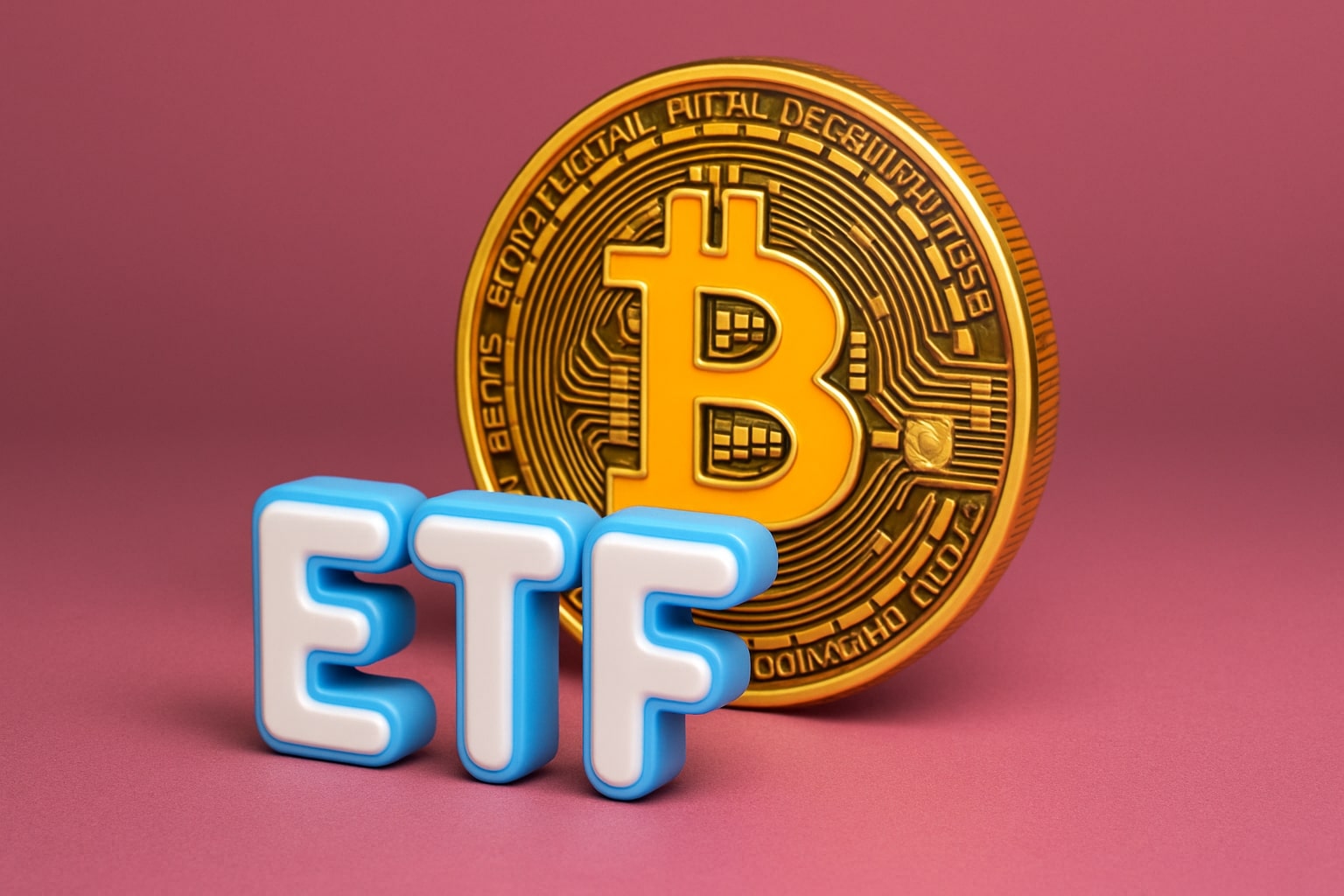
Bitcoin (BTC-USD) exchange-traded funds are witnessing renewed momentum after a volatile November, signaling a sharp institutional re-entry into digital assets. On December 2, 2025, net inflows across U.S. spot Bitcoin ETFs reached $370,000, marking the fourth consecutive day of positive fund movement, a notable reversal after a fortnight of redemptions. The iShares Bitcoin Trust (NASDAQ:IBIT), operated by BlackRock Inc., closed the session at $52.03, up 7.28%, recovering from last week’s low near $48.00. Despite recording $74.03 million in single-day outflows, IBIT still commands the largest liquidity share of all spot Bitcoin ETFs, with total assets exceeding $161 billion USD.
Selective Rotation Between Major Funds — Fidelity and ARK Absorb IBIT’s Capital Outflow
The aggregate picture across ETFs reflects a selective capital migration rather than broad withdrawal. Fidelity’s FBTC reported a $67.02 million inflow, while ARK Invest’s ARKB added $7.38 million, collectively offsetting the IBIT decline. These cross-flows illustrate strategic reallocations between issuers rather than risk aversion. Institutional desks continue to calibrate exposure across products with varying fee structures, tracking precision, and custodial frameworks. Market data shows that total Bitcoin ETF assets now exceed $120 billion, with IBIT alone representing more than one-third of that total.
Institutional Re-Entry Strengthens Bitcoin’s Price Base Above $90,000
As of early December, Bitcoin (BTC-USD) trades around $90,545, gaining over 6.8% in 24 hours, reinforcing its short-term floor near $89,000–$90,000. ETF inflows are directly feeding market liquidity, tightening spreads and stabilizing futures funding rates. Analysts point to ETF purchases as a critical factor behind the recent price rebound, noting that algorithmic rebalancing within institutional portfolios is actively “buying the dip” following Bitcoin’s 30% correction in November.
Vanguard’s $9.3 Trillion Pivot Unlocks a New Investor Base
A seismic shift occurred as Vanguard, managing $9.3 trillion in assets, reversed its long-standing exclusion of digital asset ETFs. The firm opened access to Bitcoin, Ethereum, Solana, and XRP ETFs across its self-directed brokerage platform, allowing retail and retirement clients to trade regulated crypto funds managed by BlackRock, Fidelity, and Bitwise. Even if only 0.2% of Vanguard’s brokerage assets allocate into crypto ETFs, this could represent $18 billion in new inflows, transforming the structural demand landscape. This development also creates a long-term stabilizing mechanism: passive index funds automatically rebalance into crypto exposure when prices fall, introducing consistent, price-agnostic demand into the system.
IBIT (NASDAQ:IBIT) as the Institutional Benchmark
BlackRock’s iShares Bitcoin Trust remains the barometer of professional crypto exposure. Trading volumes exceeded 69.9 million shares on December 2, indicating sustained participation from hedge funds, family offices, and RIA platforms. The fund’s year range spans $42.98–$71.82, reflecting extreme volatility but also unmatched resilience among spot Bitcoin products. Analysts cite IBIT’s low tracking error and robust custody via Coinbase Custody as primary reasons it continues to attract allocations even amid temporary outflows. With daily AUM fluctuations exceeding $2 billion, IBIT now mirrors Bitcoin’s liquidity cycles with institutional precision unmatched by any other ETF.
ETF Inflows and Bitcoin Market Microstructure
Total Bitcoin ETF inflows topped $180 million across all issuers in the last week of November, following two consecutive weeks of outflows exceeding $450 million. The pivot indicates growing conviction that the worst of macro-driven selling pressure may have passed. This resurgence has tightened ETF arbitrage spreads to below 0.1%, restoring efficient price discovery across exchanges. Importantly, the structure of ETF inflows — heavily weighted toward large custodial platforms — reduces slippage and mitigates systemic sell pressure typically seen during market corrections.
The Strategic Role of Bitcoin ETFs in 2026 Portfolio Allocation
Institutional portfolios are increasingly integrating Bitcoin exposure through ETFs as part of “60/40/1” portfolio construction — 60% equities, 40% bonds, 1% crypto. This framework creates an automatic counter-cyclical bid: when Bitcoin declines, the system purchases additional units to maintain weighting. In aggregate, this could introduce up to $30 billion annually in passive inflows once full adoption occurs across major U.S. pension and wealth managers. The move represents a structural demand shift that differs from the cyclical enthusiasm of retail investors during previous bull markets.
Emerging Cross-Asset Correlations Between Bitcoin ETFs and Equity Markets
The resurgence in Bitcoin ETF inflows coincides with an easing in Treasury yields and an improvement in risk sentiment across U.S. equities. The S&P 500 gained 0.8% over the same period, while the Nasdaq 100 rose 1.4%, suggesting institutional capital is rotating back into high-beta risk assets. Quantitative models indicate Bitcoin’s short-term correlation with the Nasdaq remains elevated at 0.73, confirming that ETF inflows are aligned with broader macro risk-on trends rather than isolated crypto speculation.
Read More
-
Amazon Gives Back the Entire $3T Breakout at $265.13
14.08.2026 · TradingNEWS ArchiveStocks
-
Bitcoin Slides to $62,603 As Spot ETFs Bleed $192M And MSCI Puts Strategy's $23.93B On The Chopping Block
14.08.2026 · TradingNEWS ArchiveCrypto
-
Gold Holds $4,370 After Failing Twice At $4,500 — Central Banks Bought 289 Tonnes Into a 22% Drawdown
14.08.2026 · TradingNEWS ArchiveCommodities
-
S&P 500 Holds 7,798.99 Record After Retail Sales Crater 0.6% — Rips 12%, Applied Materials Sinks to $508.30
14.08.2026 · TradingNEWS ArchiveMarkets
-
Euro Stalls at 1.1550 Despite 87% ECB Hike Pricing — 100-Day SMA at 1.1567 Caps the Rally
14.08.2026 · TradingNEWS ArchiveForex
Regulatory Evolution and the Next Phase of ETF Growth
The SEC’s 2024–2025 regulatory pivot eliminated most structural ambiguities around custody and surveillance-sharing requirements, paving the way for ETF issuers to launch compliant products across multiple jurisdictions. These frameworks are now being replicated globally, with European and Asian regulators preparing to authorize similar spot funds. In the United States, cumulative Bitcoin ETF assets under management exceed $120 billion, while Ethereum ETFs hold $20 billion, reinforcing that digital assets are no longer peripheral instruments but core components of diversified portfolios.
Market Psychology and the Shift in Capital Behavior
ETF inflows serve as a psychological anchor for market confidence. While daily flows like $370,000 may appear marginal, their cumulative signaling power is immense. Four straight days of inflows following multi-week redemptions mark a clear shift in investor psychology from caution to opportunistic accumulation. Unlike leveraged trading activity, ETF inflows are sticky — they represent cash-based allocations from institutions bound by compliance frameworks, reducing the likelihood of panic withdrawals.
Forecast and Strategic Outlook for Bitcoin ETFs Heading Into 2026
Looking ahead, analysts anticipate that Bitcoin ETF demand will continue accelerating into the first quarter of 2026, particularly as rate-cut expectations solidify. Assuming Bitcoin sustains levels above $90,000, ETF inflows could surpass $2.5 billion by March. BlackRock’s IBIT and Fidelity’s FBTC are expected to capture over 70% of that capital, consolidating dominance among Tier-1 issuers. As liquidity deepens, derivative markets are expected to stabilize funding rates, allowing ETF arbitrage strategies to operate more efficiently, further anchoring price stability.
Verdict: BUY (Bullish)
Based on current flow data, regulatory clarity, and macro alignment, the trajectory for Bitcoin ETFs — particularly IBIT (NASDAQ:IBIT) — remains decisively bullish. Short-term fluctuations in fund flows should not obscure the underlying structural transformation: Bitcoin exposure is becoming a standardized institutional asset class. With spot prices consolidating above $90,000 and cumulative ETF inflows turning positive, the market is positioned for sustained accumulation through 2026.