Meta Stock Price Forecast - META Stages Rebound to $614.92 After 10% Plunge on $145B AI CapEx Bombshell
Meta (NASDAQ:META) shares add $3.01 to $614.92 after Q1 revenue rocketed 33% to $56.31B and EPS hit $10.44 | That's TradingNEWS
Key Points
- Meta (NASDAQ:META) rebounds 0.49% to $614.92 after Q1 revenue jumped 33% to $56.31B beating consensus.
- EPS surges 62% to $10.44 on 19% ad impressions growth and 12% price-per-ad gains; operating margin at 41%.
- CapEx guide raised to $125B-$145B from $115B-$135B; forward P/E at 19.78x vs Mag 7 average of 27x.
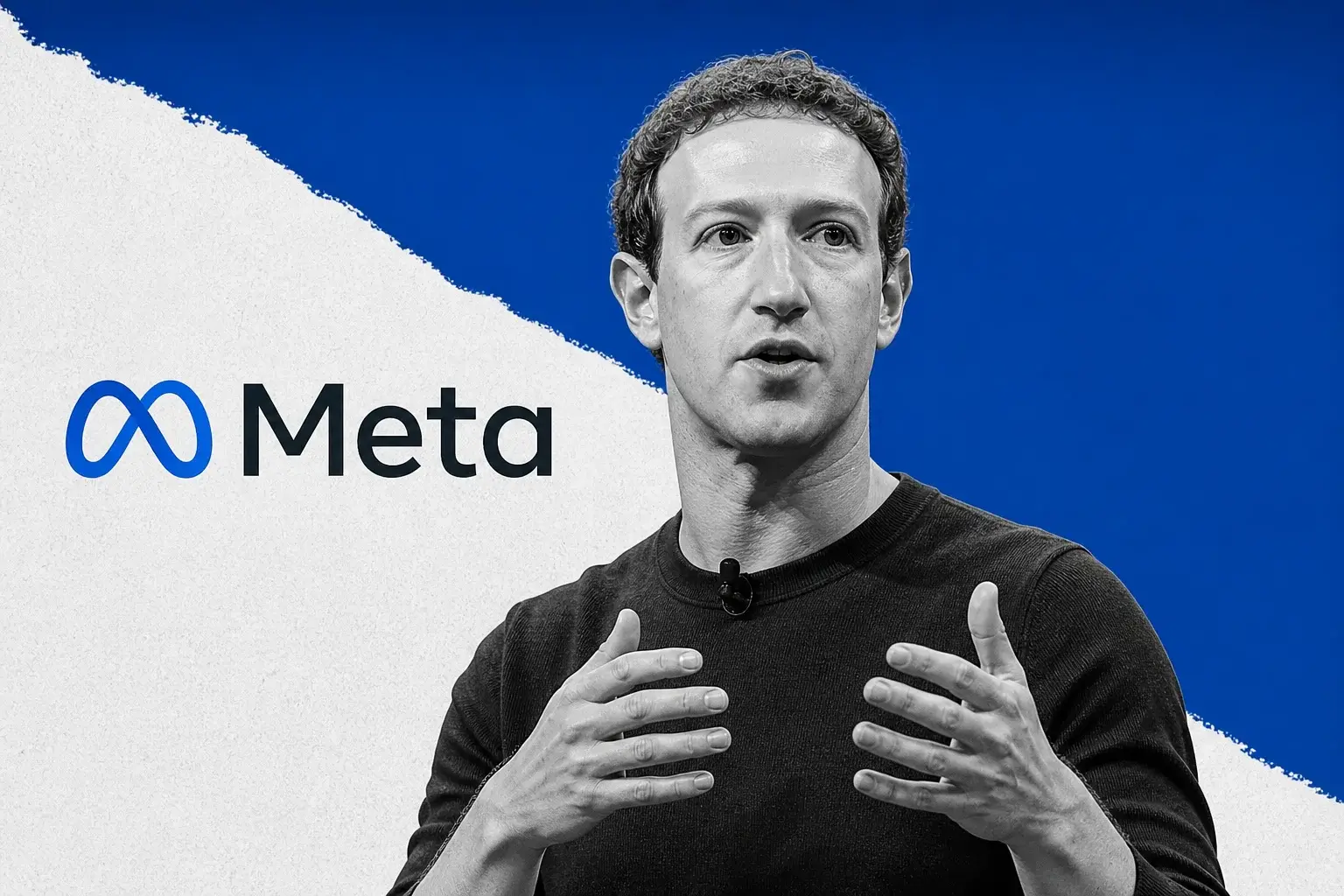
Friday's tape on Mark Zuckerberg's hyperscaler is delivering a fragile but real recovery bid following Wednesday's brutal post-earnings sell-off. Meta Platforms (NASDAQ:META) is changing hands at $614.92, up $3.01 or 0.49% on the session, with the day's range running from $606.11 to $618.88. The previous close was $611.91, and the stock is making a tentative attempt to rebuild after losing roughly 10% in pre-market trading following Wednesday evening's Q1 2026 earnings release. Market cap has rebuilt to $1.56 trillion, the P/E ratio is at 22.34 (a forward P/E of 19.78 is the more relevant institutional read), the dividend yield is 0.34%, and average daily volume is 16.32 million shares. The 52-week range tells the painful longer-frame story: $516.54 on the low end to $796.25 at the cycle peak — meaning META is trading roughly 22.7% below its all-time high despite delivering one of the strongest quarterly prints in megacap tech this earnings cycle. The dispersion between fundamental performance and stock price action is the cleanest setup for a contrarian long thesis right now, and Friday's modest bid is the first signal that institutional capital is starting to revisit the name after the panic-selling phase ran its course.
The Q1 2026 Numbers That Should Have Triggered a Different Reaction
The actual operating performance Meta delivered this quarter was extraordinary by any reasonable measure. Total revenue surged 33% year-over-year to $56.31 billion — a $760 million beat against the $55.5 billion analyst consensus and the fastest quarterly growth print from the social media giant in recent memory. For context, that growth rate is roughly double the company's 5-year average revenue growth of 17.89% and meaningfully above the trailing 12-month YoY growth of 26.18%. EPS came in at $10.44, blowing past the $6.66 consensus and growing 62% YoY from the $6.43 print in Q1 2025. Stripping out a one-time $8 billion tax benefit, adjusted EPS landed at $7.31 — still a clean beat. Operating income climbed to $22.9 billion, with the operating margin holding at 41% despite the aggressive AI investment ramp. Free cash flow was $12.4 billion, and the balance sheet shows $81.2 billion in cash and securities against $58.7 billion in debt — a net cash position of roughly $22.5 billion. Headcount sits at 77,900, down 1% from Q4. Other revenue, primarily WhatsApp monetization, surged 74% to $885 million. Reality Labs revenue was $402 million, down 2% YoY but with continued strong growth specifically in AI glasses. Daily Active People hit 3.56 billion, up modestly from 3.43 billion a year ago — although that number narrowly missed the 3.62 billion consensus, which the bears immediately latched onto.
The CapEx Bombshell That Triggered the Sell-Off
The single line item that crashed the stock 10% pre-market wasn't the operating performance — it was the FY 2026 CapEx guidance. Meta raised its capital expenditure forecast from a previous range of $115-$135 billion to a new range of $125-$145 billion. At the midpoint, that's an $10 billion increase, or roughly 8% above the prior guide. For context, Meta's FY 2025 CapEx was $72 billion, meaning the new midpoint of $135 billion represents an 87.5% year-over-year acceleration in capital spending. The hyperscaler complex collectively now exceeds $700 billion in 2026 estimated capital outlay, with META sitting closer to Amazon (AMZN)'s mark — a meaningful structural tell, since AMZN was the only Big Tech name that didn't raise its CapEx guide on the Q1 print. The market's reaction is mechanical and well-understood: in standard DCF modeling, free cash flow to the firm is operating cash flow minus CapEx, so when CapEx nearly equals trailing 12-month operating cash flow at $124 billion, the entire FCFF line gets compressed toward zero. Algorithmic and reactionary capital sells the headline. The math, however, is asymmetric — the market wiped roughly $150 billion in market capitalization in response to a $10 billion CapEx revision relative to prior guidance. That ratio is exactly the kind of overshoot that creates contrarian opportunities.
The Advertising Engine — Where the AI Monetization Lives
The most important structural read from the Q1 print is what's happening inside the core advertising business — and it's exactly what the AI bull thesis requires. Ad impressions across the Meta family of apps grew 19% YoY in Q1, with one source flagging total impressions growth of 17%. Average price per ad climbed 12% YoY simultaneously. That dual expansion — both volume and pricing rising in tandem — is the rarest configuration in digital advertising and signals not just a recovering market but a structurally improving competitive position. Pricing power in advertising historically reflects the value of the underlying targeting and recommendation engine, and Meta's ability to lift CPMs by 12% while expanding inventory by 17%-19% is a direct empirical confirmation that the AI-enhanced recommendation system is delivering measurable ROI to advertisers. The Family of Apps generated the bulk of the $56.31 billion top line, with the digital ad business serving as the cash engine that funds the AI infrastructure buildout. Without that monetization velocity, the CapEx ramp would be unsupportable. With it, the math on the AI investment thesis becomes increasingly clear.
Muse Spark and the Recommendation Engine Pivot
Meta's AI strategy has been characterized as misunderstood by parts of the market, and the post-earnings reaction reinforces that framing. The company recently launched the Muse family of AI models, with Muse Spark specifically deployed inside the recommendation engine for Facebook and Instagram. The CFO commented during the conference call that Muse Spark is being deployed in upcoming models "to improve our recommendation systems and core business in Facebook, develop a first principles understanding of what you care about and what each piece of content in our system is about." That's the heart of the AI monetization thesis — not building flashier large language models to compete with OpenAI or Anthropic in headline benchmarks, but using AI to dramatically improve the matching algorithm that determines which content and which ads users see. With 3.56 billion daily active users feeding behavioral signals into the system, the data flywheel is essentially impossible for any competitor to replicate. CEO Mark Zuckerberg has explicitly framed his AI vision as "amplifying people's ability" rather than replacing them — a positioning that aligns the technology investment with the consumer-facing application layer where Meta's entire moat lives.
The Naval Ravikant Framework — Why Meta Wins the AI Era
The most coherent intellectual framework for understanding why META sits at the heart of the AI winner's circle comes from venture capitalist Naval Ravikant, who has outlined five criteria for identifying companies poised to lead in the AI era. Distribution as the new moat — in a world where AI models are increasingly open-source and replicable, the company that owns the customer relationship wins. Meta's 3.56 billion DAU footprint is the widest distribution network in human history. Network effects compound — the social graph Meta has built over two decades is virtually impossible for a competitor to replicate. Data flywheel — proprietary, real-time behavioral data from billions of user interactions feeds the algorithms continuously, turning the AI stack into a self-reinforcing system. Hardware integration — Ray-Ban Meta smart glasses and the broader Reality Labs hardware roadmap give Meta physical surface area to capture the next generation of computing interactions away from smartphones, where Apple (AAPL) dominates with its 2.5 billion active iOS devices. Vertical depth — Meta has mastered digital advertising, and AI is supercharging that vertical with predictive targeting that may eventually anticipate consumer intent before the consumer is consciously aware of it. The framework matters because it reframes the CapEx debate. Spending $135 billion to secure all five of these moats simultaneously is rational. Spending nothing to defend them while competitors invest aggressively would be the actual disaster.
Read More
-
Yen Stalls at 160 Despite a 3% JGB and Tokyo Core CPI at 2.0% — Intervention Sits at 164, Friday's Payrolls Decide
02.09.2026 · TradingNEWS ArchiveEnergy
-
QQQ ETF ($739) Fades From an Early Tech Rally as a 77.9 ISM Prices Index Meets Micron's $61.5B Guide — $760 Record Test Ahead
01.10.2026 · TradingNEWS ArchiveStocks
-
XRPR and XRPI Follow XRP's $1.49 Test as Spot Funds Hold 1.16B XRP and a 1 Billion Token Escrow Release Lands — $1.70 in Play
01.10.2026 · TradingNEWS ArchiveCrypto
-
November NG Slips Below $3 as Decade-High Storage Meets Capped LNG Exports — $2.75 in Sight
01.10.2026 · TradingNEWS ArchiveCommodities
-
Dollar-Yen at 158 Presses Toward 160 as a 363 bp Carry Gap Meets Katayama-Bessent Intervention Risk — 159 in Sight
01.10.2026 · TradingNEWS ArchiveForex
The Custom Silicon Vector — Broadcom (AVGO) and the MTIA Roadmap
A development that has not gotten enough institutional airtime is the deepening partnership between Meta and Broadcom (AVGO) on custom AI silicon. Meta's MTIA program (Meta Training and Inference Accelerator) is now scaling with Broadcom's co-design support, starting at 1 GW of capacity with potential expansion into multi-GW over several years. That's the structural mechanism by which Meta reduces its dependency on Nvidia (NVDA) GPUs over the medium term and gains control over its own technology stack. Custom silicon at hyperscaler scale typically delivers 30%-50% cost-per-token improvements over off-the-shelf accelerators, which means the long-tail return on the CapEx investment is substantially higher than what the headline DCF math captures. The market is pricing the CapEx as pure cash burn — but a meaningful share of that $135 billion goes into infrastructure that becomes proprietary cost-advantage over five-to-seven year horizons. Meta is essentially building the same moat Amazon (AMZN) built with AWS and Trainium — except in the advertising vertical rather than in cloud compute.
The Reality Labs Read — AI Glasses Becoming Real
Reality Labs revenue at $402 million was down 2% YoY, but the strategic narrative is meaningfully more constructive than the headline suggests. CEO Zuckerberg specifically called out the success of Ray-Ban Meta smart glasses on the conference call, noting the personal AI agent embedded in the product can answer questions throughout the day. That's the proof point for the broader hardware-distribution thesis — Meta is building the consumer-facing surface area for ambient AI computing while Apple (AAPL) has largely sat out the AI CapEx race. If voice-and-vision AI assistants displace some meaningful fraction of smartphone interaction over the next 5-10 years, Meta is structurally ahead in that transition through both Ray-Ban Meta and the broader VR headset roadmap. The $402 million quarterly revenue print is small relative to the $56.31 billion top line, but the trajectory is the variable that matters — and the trajectory in AI glasses specifically is accelerating.
The Profitability Comparison — Meta vs. The Mag 7
Beyond the revenue and CapEx numbers, the profitability picture is the cleanest competitive read available. Meta's gross margin sits at 82% — the highest in the entire hyperscaler complex and earning an A+ profitability rating from institutional scoring frameworks. Operating margin at 41% is unmatched among the Mag 7 except for Microsoft (MSFT), which trades at a meaningfully richer multiple. The cash conversion is exceptional: Q1 operating cash flow at $12.4 billion supports the $135 billion midpoint CapEx run rate when combined with the $81.2 billion cash pile. EBIT margin at 41% provides the pricing power that allows the company to absorb input cost increases while maintaining premium positioning. The R&D spend on AI talent acquisition and the dedicated "Meta Superintelligence Lab" — over $1 billion in standalone investment — is funded entirely from operating cash flow without requiring any debt issuance. Compare that with Oracle (ORCL), which has carried $124.7 billion in debt to fund its AI infrastructure buildout, or CoreWeave (CRWV), which has structured an $8.5 billion GPU-backed term loan to scale capacity. Meta is funding its AI investment from a position of fortress balance sheet strength.
The Valuation Read — Why 19.78x Forward Looks Wrong
The valuation work cuts decisively in the bulls' favor. META at $614.92 trades at a forward P/E of 19.78x — materially below the Mag 7 average of approximately 27x. That 27% discount to peer multiple is the empirical consequence of the post-earnings panic, and it doesn't reflect underlying business quality. Forward revenue growth for 2026 is projected at 25.3%, with analysts modeling 13%-19% revenue growth continuing through 2031. That trajectory implies revenue doubling in five years from current levels — meaning by 2030 Meta could be generating roughly $500 billion in annual sales. EPS is expected to roughly double by 2030 as well, supported by the operating leverage embedded in the digital advertising business model. Forward PEG ratio sits at -15.61% relative to the IT sector mean — meaning the market is essentially pricing Meta as if its growth is being penalized rather than rewarded. Wall Street consensus is firmly Strong Buy with a 4.64 score, while Seeking Alpha analysts hold a Buy at 4.09. The Quant rating sits at Hold (3.41), but the divergence between Wall Street institutional positioning and the algorithmic Quant signal is itself informative — the buy-side conviction is real and strengthening.
The Cathie Wood Position and the Institutional Flow
Notably, Cathie Wood of ARK Invest has been actively buying META and Alphabet (GOOGL) shares while dumping AMD positions — a high-conviction institutional signal that the AI-infrastructure bull thesis is being repositioned around cash-generative platform names rather than pure semiconductor exposure. The post-earnings drawdown gave growth-focused institutional managers the entry point they had been waiting for since the early-April bottom in the mid-$500s. Several major institutional houses have been actively using the post-earnings panic to add exposure aggressively. The setup is a textbook contrarian configuration: retail and algorithmic capital sold the CapEx headline, while sophisticated long-duration capital is using the dip to add to high-conviction positions. The "Use the market's short-sighted panic to your advantage" framing captures the dynamic perfectly.
The Risks That Demand Respect
The bull thesis isn't without legitimate risk vectors. CapEx execution risk is real — $135 billion at the midpoint is a staggering figure, and if the AI infrastructure investments fail to generate the monetization that the advertising metrics are currently signaling, the FCF compression will be severe and prolonged. Macro slowdown risk — U.S. Q1 GDP at 2.0% (below the 2.3% consensus) raises concerns about ad spending elasticity, with discretionary ad budgets typically getting cut first when corporate cash flows tighten. Competition risk — TikTok continues to compete aggressively for younger user attention, and any meaningful share loss in the under-35 demographic would compress impressions growth. AI commoditization risk — if foundation models become genuinely commoditized, Meta's competitive edge collapses to distribution alone, and while distribution is powerful, it's not absolute protection. Regulatory risk — antitrust scrutiny of Big Tech remains live globally, and any forced divestiture of Instagram or WhatsApp would be catastrophic for the integrated ad-targeting model. Reality Labs cash burn — the segment continues to operate at a loss, and patience-of-investors risk could re-emerge if the AI glasses trajectory disappoints. Each of these risks is genuine, but each is also priced into the current 19.78x forward multiple.
The Technical Map — Where META Sits Now
The chart structure is constructive at current levels but still working out of a bear-cycle pullback. META at $614.92 is sitting between $606 support and $618 resistance on the intraday frame. The April low at the mid-$500s represents the structural floor that the previous cycle defended. The 52-week high at $796.25 is the longer-frame ceiling, and the path from $614 back to the cycle high implies roughly 29% upside. The post-earnings gap from $681 down to current levels created a meaningful technical hole that needs to fill before any sustained rally can develop, but the rapid stabilization and the Friday bid suggest sellers are exhausted. The relative-strength picture has stabilized after the panic-selling phase. Volume on the down day was elevated but not capitulation-grade, meaning the selling pressure is more positioning-driven than conviction-driven. A clean break above $620 with volume confirmation opens the path to $640, then $665, with the longer-frame target at $720 if the AI monetization thesis continues to validate over the next 1-2 quarters.
The Broader Mag 7 Context
The post-earnings dispersion across Big Tech tells an instructive story. Alphabet (GOOGL) ripped 10% on its earnings print Thursday, with cloud revenue growth at 18% of total Alphabet business. Microsoft (MSFT) delivered $82.9 billion in revenue with Azure growth hitting 40%. Amazon (AMZN) notably did not raise its CapEx guide, suggesting management is comfortable with current pacing. Apple (AAPL) has largely opted out of the AI CapEx race, betting instead that on-device intelligence and the iOS ecosystem provide sufficient competitive defense. Meta is the lone Mag 7 name that delivered a clean fundamental beat and got punished for capital allocation rather than rewarded — which is precisely why the contrarian setup is compelling. The Pentagon AI contracts announced Friday went to SpaceX, OpenAI, Alphabet (GOOGL), Nvidia (NVDA), Reflection, Microsoft (MSFT), and Amazon Web Services (AMZN) — notably excluding Meta, which doesn't operate in classified-network compute. That exclusion is structurally fine, since Meta's monetization vector is consumer-facing advertising rather than enterprise/government compute.
The Forecast Call — Where META Stock Goes From Here
The configuration on Meta Platforms (NASDAQ:META) is the cleanest contrarian long setup in megacap tech right now. The bullish stack is multi-pillared and concrete: 33% revenue growth at $56.31 billion (a $760 million beat), 62% EPS growth at $10.44 (well above the $6.66 consensus), operating margin holding at 41%, ad impressions up 17%-19% with average price per ad up 12% confirming the AI monetization thesis is real, $81.2 billion in cash against $58.7 billion in debt for a net cash position of $22.5 billion, gross margin at 82% (highest in the hyperscaler complex), forward P/E at 19.78x against a Mag 7 average of 27x (a 27% discount), Wall Street consensus at Strong Buy 4.64, the Naval Ravikant framework confirming Meta owns all five AI-era winning attributes (distribution, network effects, data flywheel, hardware integration, vertical depth), 3.56 billion daily active users feeding the AI flywheel, the Broadcom (AVGO) custom silicon partnership reducing Nvidia (NVDA) dependency over time, and a 25.3% forward revenue growth projection that implies revenue doubling by 2030. The bearish stack is real but manageable: $125-$145 billion CapEx guidance compresses near-term FCF, $10 billion midpoint guidance increase against $124 billion TTM operating cash flow leaves the FCFF line essentially zeroed for the year, daily active users at 3.56 billion missed the 3.62 billion consensus, Reality Labs revenue down 2% YoY, U.S. GDP at 2.0% raises ad-spending elasticity concerns, and the post-earnings 10% gap-down created technical damage that requires time to repair. The forecast call: META grades as a STRONG BUY on the post-earnings pullback, with a 12-month price target of $720 (17% upside from $614.92), a bull-case 12-month target of $796 (29% upside to retake the 52-week high), and a 4-year fundamental target of $1,000+ as the AI monetization compounds and EPS doubles by 2030. The asymmetric upside-to-downside ratio at $614 is roughly 4-to-1 in favor of the longs, with structural support at $580 and a worst-case retest of the April low in the mid-$500s representing the absolute floor. Buy on dips into the $590-$610 zone, accumulate aggressively below $585 if the market panics further, take partial profits in tranches at $720 and $760, and hold the core position through the FY 2026 CapEx cycle for the longer-term doubling thesis. The market spent Wednesday and Thursday pricing META as a CapEx-burdened legacy advertising company. Friday's modest bid is the first signal that sophisticated capital is starting to recognize what the actual print delivered: a 33%-growth, 41%-operating-margin, AI-monetizing hyperscaler trading at a 27% discount to its Mag 7 peers, with the most expensive distribution moat in human history and the cleanest data flywheel in the AI economy. Use the spreadsheet-driven panic to your advantage.