Oil Price Forecast: WTI (CL=F) Cracks $102 as Iran Routes Peace Proposal Through Pakistan
WTI Crude (CL=F) tumbles 3.04% to $101.90 and Brent slides 1.97% to $108.20 as Iran delivers fresh proposal to U.S. | That's TradingNEWS
Key Points
- WTI Crude (CL=F) crashes 3.04% to $101.90 as Iran sends new peace proposal through Pakistan to U.S.
- Brent (BZ=F) slides 1.97% to $108.20; ExxonMobil (XOM) beats Q1 with $1.16 EPS despite 15% Hormuz hit.
- Net supply loss hits 9M bpd; Iran warns of $140 oil; prediction markets price Brent at $90 by June 2026.
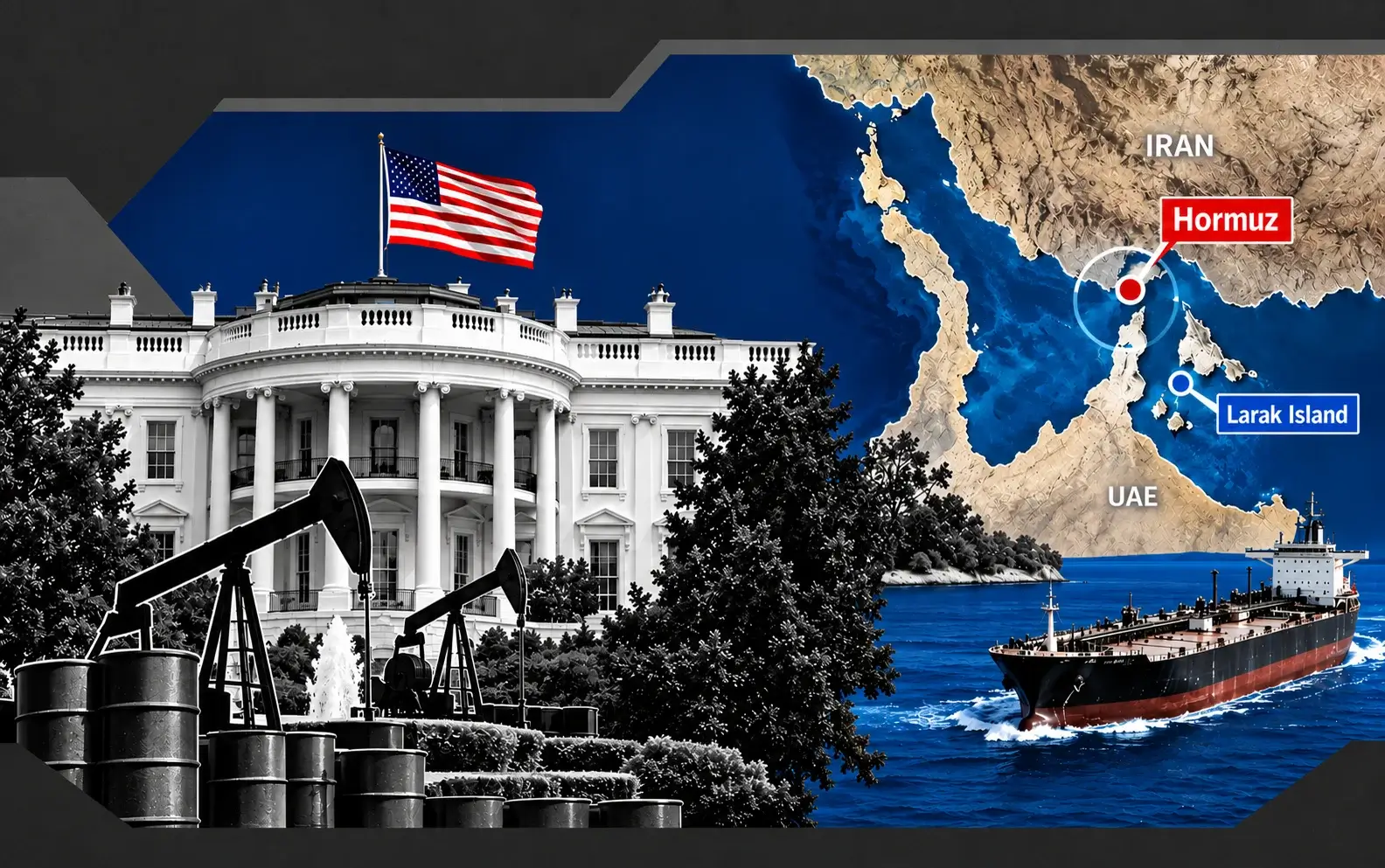
The selling in crude markets Friday is sharp and headline-driven, with WTI Crude (CL=F) changing hands at $101.90, down $3.19 or 3.04% on the session, while real-time data has the contract printing as low as $101.63 at -3.27%. Brent Crude (BZ=F) is trading at $108.20, off $2.17 or 1.97%, and slid to $108.86 in late London trade compared with $114.38 at Thursday's New York equity close. Murban Crude is down 3.70% to $104.00, WTI Midland is off 3.88% to $104.80, and gasoline futures are lower by 0.92% to $3.582 per gallon. The catalyst behind the sell-off is concrete: Iran has formally delivered a new proposal for peace talks to U.S. mediators through Pakistan, with the IRNA news agency confirming the text was handed to Islamabad on Thursday evening. The White House declined to comment specifically — deputy press secretary Anna Kelly stated only that the administration does not detail private diplomatic conversations and reiterated President Trump's hard line that Iran can never possess a nuclear weapon. The market read on the headline is unambiguous. CL=F is breaking below the $102 support zone for the first time since the war premium took hold, and the broader complex is positioning for the possibility — however slim — that the Strait of Hormuz blockade could begin unwinding within weeks rather than months.
The Year-Over-Year Damage and the Real Inflation Cost
Despite Friday's pullback, the longer-frame picture for crude is staggering. Brent at $116.10 per barrel as referenced earlier in the session is up $1.44 from yesterday's $114.66 print and roughly $53.46 higher than where the benchmark traded one year ago at $62.64 — an 85.34% year-over-year explosion that reflects the structural shift the Iran war has imposed on global energy markets. The one-month comparison shows oil up 3.50% from $112.17. The OPEC Basket is at $109.40, up 1.69%. The Indian Basket is at $116.50, up 3.27%. Heating Oil is down 2.17% to $3.992 per gallon. Natural Gas at $2.770 is essentially flat at +0.11%, decoupling temporarily from the crude tape on Friday's headline. The broader takeaway is that even with intraday weakness, oil prices are still trading in territory that delivers persistent inflationary pressure across the global economy — and the consumer impact is showing up in real time across multiple sectors.
The Iran Proposal — What's On The Table and What's Not
The mechanics of Iran's proposal matter for any trader trying to size a position right now. The negotiations between the two sides have been frozen despite a ceasefire that's been technically in place for several weeks, with Iran refusing to entertain reopening the Strait of Hormuz until the U.S. naval blockade of Iranian ports is lifted, while Trump's position has been the mirror image — the blockade stays in place until Tehran agrees to a nuclear deal that addresses U.S. concerns. The Strait of Hormuz blockade is now in its third month, and the U.S. has doubled down rather than backed off. Iran has separately warned of $140 oil if the situation drags on, with Trump openly weighing fresh military strikes against specific Iranian targets. The Pakistani-mediated proposal is the first concrete diplomatic movement in over a month. What the market is pricing right now is not a peace deal — it's the optionality that one might emerge before summer driving season explodes demand. CL=F dropping below $102 reflects roughly 30%-40% probability of a deal being struck in Q2 2026, with the residual ~60% probability still pricing the war premium that's been baked into spot since February.
The Supply Damage — 9 Million bpd of Lost Crude
The actual supply destruction from the conflict is the single most important fundamental data point in the energy market right now. Net crude supply loss has reached 9 million barrels per day despite a surge in Atlantic exports trying to fill the gap, according to Vortex tanker tracking. The Iran war has already destroyed 1.6 million barrels per day of demand globally as the price shock has crushed marginal industrial consumption. ExxonMobil (NYSE:XOM) Q1 production was hit by 15% specifically tied to the Strait of Hormuz closure, and the supermajor's Qatar and UAE operations remain severely impacted. Pakistan's PM has flagged that oil import costs are up 167% since the Iran war began. China's LNG imports collapsed to a six-year low as prices surged. EU officials are warning the energy crisis from the conflict could last years. The structural picture matters: even if Friday's headline produces a near-term sell-off in WTI and Brent, restoring 9 million barrels per day of lost supply does not happen overnight — and any path toward normalization will require months of staggered tanker movements and renewed insurance underwriting before flow returns to pre-war volumes.
ExxonMobil (XOM) Q1 — The Producer Read
ExxonMobil (NYSE:XOM) delivered Q1 results Friday morning that demonstrate exactly how high crude prices are translating into supermajor cash flow despite operational disruption. Adjusted Q1 earnings excluding identified items came in at $4.9 billion, or $1.16 per share — beating the $0.98 EPS consensus on the Wall Street Journal forecast. Total revenues and other income climbed to $85.14 billion from $83.13 billion in Q1 2025, blowing past the $82.18 billion analyst expectation. Identified items of $700 million during the quarter reflect losses on settled financial hedges that weren't offset by associated physical shipments due to Middle East supply disruptions. The company explicitly flagged that strong refining and trading drove the quarter-over-quarter earnings increase, partially offset by lower oil and gas production volumes due to scheduled maintenance and the Iran-related disruptions. Global oil-equivalent production was down 6% quarter-over-quarter, with net production at 4.6 million oil-equivalent barrels per day — but Guyana set a new quarterly production record of more than 900,000 gross barrels per day. The Permian and Guyana assets are doing the heavy lifting outside the Middle East.
Read More
-
Yen Stalls at 160 Despite a 3% JGB and Tokyo Core CPI at 2.0% — Intervention Sits at 164, Friday's Payrolls Decide
02.09.2026 · TradingNEWS ArchiveEnergy
-
CHAT Fund Holds $96.37 as Korean Memory and Chip Exposure Drive a 109.73% Year — Break of $98.02 Opens $105.20
18.09.2026 · TradingNEWS ArchiveStocks
-
First-Generation XRPR and XRPI Ride XRP's Rebound to $1.386 as Spot Funds Post First Outflow — Break of $1.40 Opens $1.54
18.09.2026 · TradingNEWS ArchiveCrypto
-
NG Holds $2.9255 as Storage Surplus Narrows From 5.5% to 3.7% in 3 Weeks — Break of $3.00 Opens $3.15
18.09.2026 · TradingNEWS ArchiveCommodities
-
Dollar Surges to 157.90 as BoJ's Divided Hike Fails to Lift the Yen — Break of 158.87 Opens 159
18.09.2026 · TradingNEWS ArchiveForex
Chevron (CVX) Q1 — Beat With a Refining Headache
Chevron (NYSE:CVX) earnings also topped estimates Friday, but with a meaningful asterisk on the refining segment. Adjusted EPS came in at $1.41, crushing the $0.95 consensus, with Q1 revenue at $48.61 billion — slightly below the $52.1 billion forecast. Net income fell 36% on a headline basis due to similar hedge-related noise to what Exxon flagged. The refining division swung to a loss in Q1 — a development that reflects the brutal margin compression refiners are experiencing as crack spreads collapse under the weight of crude input costs. Phillips 66 (PSX) beat Q1 estimates by $0.88 per share specifically because refining margins surged on tight Middle East product supply, while Sinopec profit jumped 28% in Q1 on higher oil prices. TotalEnergies (TTE) raised its dividend on the back of soaring oil trading profits and extended its fuel price cap in France as the Middle East crisis drags on. The dispersion across the energy complex is wide — pure-play upstream producers are minting cash, while integrated names with downstream exposure face mixed setups depending on refining utilization and hedge book composition.
The OPEC Fracture — UAE Departure Reshapes the Cartel
A structural development that shifts the multi-year framework for crude is the UAE's official exit from OPEC. The cartel, according to most desk reads, will survive the departure — but the medium-term supply threat is real. Russia has dismissed any concerns about a price war following the UAE's move. JP Morgan sees the UAE attracting more U.S. investment after the OPEC exit, while Barclays sees UAE oil supply growth accelerating post-OPEC. The risk for African crude exporters is asymmetric — low-cost UAE exports could undercut higher-cost African production once the UAE ramps independently of the OPEC quota framework. China's CNPC has pledged to ensure the country's oil and gas supply amid the Iran crisis, while the U.S. and Venezuela have entered talks that could boost supply and pressure crude prices in the medium term. U.S. oil and gas firms have signed deals to operate in Venezuela, opening a new vector of non-OPEC supply growth that could bend the price curve lower if the political situation stabilizes.
The Macro Read — PCE, Inflation, and the Oil Spillover
The inflationary impact of crude prices is showing up directly in the U.S. macro data. Personal Consumption Expenditures grew 5.7% year-over-year in March, accelerating from February's upwardly revised 5.6%. Personal income rose 0.6% month-over-month, beating the 0.5% consensus. The savings rate dropped 30 basis points to 3.6%, with consumers absorbing the shock from higher fuel costs. Non-discretionary expenditures grew 5.8% year-over-year in March, up from 4.9% in February, with transportation costs jumping 12.1% from 2.9% the previous month. Fuel costs surged 21.4% year-over-year, reversing February's 6.5% decline — that's the direct mechanical impact of higher WTI and Brent flowing through to retail. Core PCE hit 3.2% YoY, the highest since November 2023. Discretionary expenditures decelerated to 4.1% from 5.4%, with big-ticket durables falling 1.9% — consumers are tightening their belts on optional spending to absorb the fuel-cost shock. Softline spending held up better than expected at 6.5% YoY, but the decelerating trend across discretionary categories is a clear flag that household budgets are cracking.
The Pump-Price Reality and California's $6 Crisis
Where the wholesale crude price hits the consumer is at the gas station. Strait of Hormuz fears have sent California gas past $6 a gallon, an extraordinary print that captures how the regional refining infrastructure on the West Coast is uniquely exposed to Middle East flows. Higher fuel prices in March drove approximately 100 basis points of acceleration in non-discretionary goods spending nationally. Indian Oil has raised LPG and jet fuel prices on the back of the West Asia conflict. Pakistan, having just imported its first LNG cargo in weeks, is dealing with energy-cost pressure across every layer of its economy. Japan is weighing $3 billion in power subsidies as the LNG crunch bites. The retail-level damage is real and worsening — and unlike the wholesale market, which can rip in one direction overnight, retail prices typically lag declines and snap higher on increases (the "rockets and feathers" pattern), meaning the consumer-level pain will persist even if CL=F keeps grinding lower in coming weeks.
The Strategic Petroleum Reserve and the Trump Production Push
President Trump is openly eyeing more U.S. oil output as the Iran war squeezes supply, telegraphing additional executive action to lift production constraints across federal lands and offshore zones. The U.S. Strategic Petroleum Reserve remains a tool the administration could tap aggressively, although the SPR is structurally a temporary relief mechanism rather than a long-term answer to a 9-million-barrel-per-day supply destruction. The Trump administration's approach has been twofold: maintain the Hormuz blockade to choke Iranian exports while lifting domestic constraints to grow U.S. shale output and offset the global supply gap. The math doesn't fully balance — even the most aggressive U.S. shale ramp can add maybe 1-2 million barrels per day of new production over 12-24 months, which is meaningful but not sufficient to fill a 9 million bpd hole.
The Prediction Market Read — $90 Brent by June
The prediction market is pricing 100% probability that Brent hits $90 by the end of June 2026. That sounds bullish at first read, but it actually reflects a downside scenario relative to current spot — with Brent at $108-$113, a path to $90 implies a 17%-20% pullback over the next eight weeks. The framework underlying that pricing leans on geopolitical resolution and demand destruction — at $108 Brent, marginal industrial demand is already getting destroyed at 1.6 million bpd, and prediction-market participants are positioning for that demand-destruction dynamic to amplify and bring spot lower even without a peace deal materializing. WTI Crude oil prices in May 2026 prediction market is pricing 15% probability of specific elevated outcomes, while the U.S. invasion of Iran market is at 0% — meaning the market is dismissing a kinetic escalation scenario. The U.S.-Iran ceasefire market is at just 8%, signaling that participants don't see a durable peace deal landing in the immediate near term despite Friday's headline.
ECB Inflation Concerns and the Euro Energy Crisis
European Central Bank policymaker Madis Muller explicitly stated Friday that energy prices will remain elevated due to the Middle East conflict — a comment that prompted the ECB to revise upward Eurozone inflation forecasts for 2026 to 2.6%-3.1%. The ECB has held its deposit rate at 2.00% but explicitly hinted at potential rate hikes, with the Bundesbank's Joachim Nagel flagging the possibility of a June hike. Bundesbank watchers and the broader hawkish wing of the ECB are now openly preparing the market for tighter policy. The geopolitical disruption is structural for European energy markets — the continent remains heavily dependent on LNG imports, and the volatility has embedded into the energy supply chain. EU officials have urged Southeast Asia to diversify oil supply away from Russian sources, while Germany scrambles for a Polish oil route as Russia halts Druzhba flows. The structural read is that even if WTI and Brent moderate over the summer, the European inflation backdrop tied to energy will keep the ECB on a tightening path that supports the Euro and pressures dollar-denominated commodities.
Refining and Product Markets — Where the Real Pain Sits
The product market is delivering its own message. Heating Oil at $3.992 is off 2.17% Friday but remains structurally elevated. Gasoline at $3.582 is down 0.92%. The crack spreads — the difference between wholesale crude and refined product pricing — have been the saving grace for refining-heavy operators despite the upstream margin compression, but Chevron's Q1 refining loss is a flag that the spread dynamics are normalizing. Tankers have shifted from fuel to crude trade as the war upends flows. Woodside is struggling to secure buyers for U.S. LNG as pricing has backfired — meaning some pockets of LNG demand are already being priced out at current levels. China is allowing higher fuel exports in May, an incremental supply addition for the Asian product market.
The Technical Read — WTI's Critical Levels
Mapping the technical posture on CL=F, current support is the $100 psychological floor, with secondary support at $99.85 (the intraday low printed earlier in the session per parallel feeds). A confirmed close below $100 opens the path to $97, then $94, then $90 — exactly the prediction market's pricing zone. To the upside, immediate resistance is $104, with stiffer resistance at $108-$110 and the cycle high near $115. Brent (BZ=F) support is $107, then $103, with the four-year high above $126 acting as the structural resistance ceiling. The bond market correlation matters here — the U.S. 10-year Treasury yield at 4.379% is supporting a marginally weaker dollar, which provides a fractional tailwind for commodity prices. The Dollar Index (DXY) at 97.925 is essentially flat (+0.01%), removing one of the key currency-mechanical pressures on crude.
The Energy Equity Complex — Who Wins, Who Loses
The dispersion across the energy equity complex is the cleanest indicator of where the smart money is positioning. XOM is fractionally green, with the Q1 beat providing structural support. CVX is up about 1% pre-market on the EPS beat despite the refining drag. Phillips 66 (PSX) is benefiting from the refining margin surge. Sinopec's 28% profit jump confirms the pure-upstream-with-refining-exposure setup is working. TotalEnergies (TTE) raised its dividend on trading profits. The sector laggards remain the upstream-only names with heavy Middle East exposure that haven't yet translated the higher prices into hedge-free realized cash flows. Shell's $15 billion LNG Canada stake is being circled by Wall Street giants looking to take strategic positions in non-Middle East LNG infrastructure — that's the structural rotation theme that will define the next 12-18 months of energy capital flows.
The Forecast Call — Where Oil Goes From Here
The configuration on WTI Crude (CL=F) and Brent (BZ=F) is a high-volatility coiled setup with binary triggers in both directions. The bullish stack remains formidable: 9 million barrels per day of net supply destruction confirmed by Vortex, Iran's threat of $140 oil if Trump holds the Hormuz blockade, the structural inability of U.S. shale to fully offset Middle East loss in any short timeframe, ExxonMobil's Q1 production hit by 15% directly tied to Hormuz, persistent EU energy crisis warnings of multi-year duration, sustained product market pressure including California's $6 retail gas, and prediction market pricing that even a downside scenario only takes Brent to $90 — well above pre-war norms. The bearish stack is real but headline-dependent: Iran's fresh proposal through Pakistani mediators, Trump's openness to U.S. oil production growth, U.S.-Venezuela talks that could add supply, the UAE's OPEC exit potentially unlocking accelerated supply growth, demand destruction already at 1.6 million bpd that will worsen if prices stay elevated through the summer, and softening Asian LNG demand as China's imports collapse. The technical decision points are concrete. A confirmed close below $100 on CL=F opens the path to $97, $94, and the prediction market's $90 target by June. A failure of the diplomatic thaw and a re-escalation in the Iran theater snaps WTI back through $108, with potential to test the cycle high at $115 and Iran's threatened $140 level. The forecast call: WTI Crude (CL=F) and Brent (BZ=F) grade as a HOLD with a slight bearish tactical bias on the Iran proposal headline, but a structural BUY on dips into the $95-$98 zone for any positions targeting Q3-Q4 2026. The supply destruction is too severe and the demand-side adjustment too slow for a sustained collapse below $90. For energy equity exposure: ExxonMobil (XOM) grades as a BUY on the Q1 print, with Permian and Guyana production growth providing the cleanest non-Middle East cash flow leverage. Chevron (CVX) grades as a HOLD — the EPS beat is real, but the refining loss is a structural headwind requiring further visibility. Phillips 66 (PSX) grades as a BUY on the refining margin surge thesis. TotalEnergies (TTE) grades as a BUY on the dividend raise and trading profit acceleration. The disciplined posture for crude itself is to size positions tactically — long-bias on dips into the $95-$98 zone, profit-take on rallies into $112-$115 — and let the diplomatic process play out without front-running either resolution or escalation. Brent's path to the $90 prediction market target requires a meaningful diplomatic breakthrough that the 8% U.S.-Iran ceasefire prediction market pricing suggests is unlikely on a short timeframe — meaning the asymmetric setup still favors patient longs accumulating on weakness rather than chasing the Friday sell-off lower.