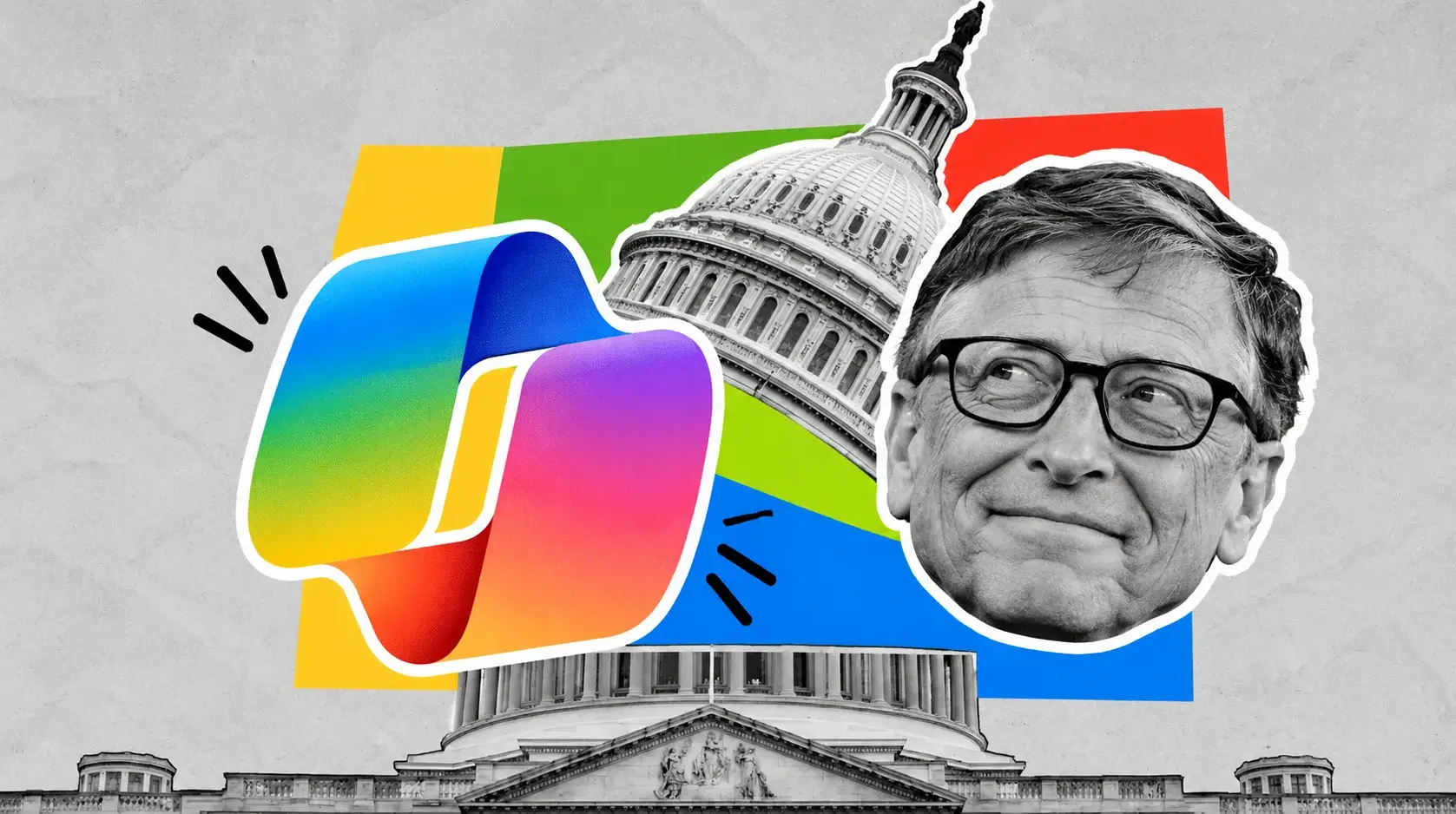
Microsoft Slides to $352 in Its Worst Month Since 2000 as AI Capex and the OpenAI Overhang Crush the Mag7 Leader
MSFT fell 3.45% to $352.83 near a $349.20 low, down 21% in June, as a $190B capex bill and OpenAI's IPO delay overshadowed 40% Azure growth, a $37B AI run rate, and a $627B backlog | That's TradingNEWS
Key Points
- Microsoft closed at $352.83, near a 52-week low, down 21% in June — its worst month since 2000.
- A $190B AI capex bill cut free cash flow to $15.8B and OpenAI's IPO delay hit the largest backer.
- At 21.8x earnings, its cheapest in three years; analysts hold a $561 target with earnings due July 28.
Microsoft is living through a historic rout. The stock closed at $352.83 on June 25, down 3.45%, and tagged a fresh 52-week low near $349.20 in volatile Friday trade as the broad tech selloff deepened. The damage in June has been staggering: shares are down more than 21% on the month, tracking toward Microsoft's worst month since 2000 — the dot-com crash. From the all-time closing high of $538.66 set on October 28, 2025, the stock has shed roughly 35%, and it's down about 24.5% year-to-date. This is not a pullback. It's a wholesale repricing of one of the most important companies on earth.
The thesis driving every tick is that the market isn't punishing the business — it's repricing the timing of the AI payoff, and Microsoft is the epicenter because it carries the heaviest exposure to the AI buildout plus a pile of company-specific overhangs no other megacap has. The fundamentals are firing: Azure grew 40% last quarter, AI revenue is running at a $37 billion annual clip, and total revenue climbed 18.3%. Yet the stock trades at roughly 21.8 times earnings — its lowest valuation in three years — because the crowd spent 2024-2025 pricing Microsoft as if the AI revenue would arrive immediately and cleanly, and is now repricing for the reality that this is a three-to-five-year infrastructure cycle with messy free cash flow in the middle. Layer the OpenAI overhang on top, and you get a stock in free fall despite a business that's growing faster than almost any company its size. The disconnect between the operating performance and the share price is the whole story.
The AI-Capex Repricing Hit MSFT Hardest
The number that triggered the collapse isn't a revenue miss — it's the capital spending. Microsoft's projected 2026 capital expenditure runs near $190 billion, part of an industry-wide AI buildout estimated at $725 billion to $805 billion. In a single quarter, CapEx hit $30.88 billion, up 84% year over year, and the consequence showed up where the crowd cared most: free cash flow fell to $15.8 billion from $20.3 billion a year earlier, against reported net income of $31.8 billion. That gap between accounting profit and actual cash generation is the core of what the market is wrestling with.
The mechanics are brutal and simple. Every dollar Microsoft spends on GPU clusters and data centers sits on the cash-flow statement as cash out today, but only returns as revenue over several years of depreciation. So the company is spending now and collecting later, and the crowd that owned Microsoft for its fortress-like free cash flow is, as one analyst put it, being asked to underwrite a capital-intensity cycle instead. That's a different kind of holder than Microsoft attracted for a decade, and the repricing reflects the shift. The memory-cost squeeze hammering Apple and the rest of tech compounds it — surging memory and storage prices make every data-center dollar buy less compute, pressuring the very returns the capex is meant to generate. Microsoft fell harder than its peers because it's spending more than almost anyone, and the market has decided to discount the cash-flow pain heavily while it waits for the payoff. The capex that was supposed to be the moat is, in the near term, the anchor.
The OpenAI Problem Nobody Else Has
What separates Microsoft's predicament from the rest of the Mag7 is OpenAI, and the timing couldn't be worse. The report that OpenAI is leaning toward delaying its IPO to 2027 — the headline that rattled the entire tape Friday — lands hardest on Microsoft, OpenAI's largest backer. Microsoft holds a 27% equity stake in OpenAI worth roughly $135 billion, retains royalty-free rights to OpenAI's IP, and has restructured the partnership to a non-exclusive arrangement through 2032. When OpenAI's listing slips and its economics come into question, Microsoft's balance sheet feels it directly.
The pain already shows up in the numbers. OpenAI investment losses ballooned to $3.1 billion in Q1 FY26, up from $523 million a year earlier, and those losses flow through Microsoft's books as a GAAP drag. So Microsoft isn't just exposed to OpenAI's upside — it's eating OpenAI's losses in real time as the startup burns cash on its own buildout. The IPO delay signals that the funding environment for the whole AI complex is tightening, and since Microsoft's fate is tied to OpenAI's through both the equity stake and the Azure commitments, the delay reads as a direct headwind. No other megacap has this kind of single-relationship dependency baked into its results. Apple doesn't owe its growth to one AI startup; Amazon's AWS serves thousands of customers. Microsoft's cloud growth and its income statement are both levered to OpenAI in a way that makes the stock uniquely sensitive to every wobble in the AI funding story. The OpenAI overhang is the MSFT-specific wildcard that turned a sector selloff into a 21% monthly rout.
The $627 Billion Backlog and the Concentration Risk
The bull case rests on a staggering number — and so does the bear case. Microsoft's commercial remaining performance obligation, its contracted backlog, sits at $627 billion, up 99% year over year. That's more than two full years of revenue already under contract, a multi-year floor that should give the crowd confidence the Azure growth is real and pre-funded. OpenAI alone has committed to roughly $250 billion of additional Azure spending, anchoring a chunk of that backlog.
But the same backlog contains the structural risk. Roughly 45% of the $627 billion is tied to OpenAI — a single customer that is actively diversifying its cloud footprint away from Azure. That concentration is the one thing worth watching most carefully, not because it's a 2026 crisis, but because a $627 billion backlog with nearly half tied to one customer that's spreading its spending elsewhere is a dependency that has to be resolved over time. The resolution could come through contract renewals, through Microsoft's own AI model development filling the gap, or through other enterprise demand picking up the slack. But until it's resolved, the backlog is both Microsoft's greatest asset and its most concentrated vulnerability. The bulls point to the backlog as proof the demand is contracted and the capex is justified. The bears point to the OpenAI concentration within it as a single point of failure. Both are right, and the tension between them is why the stock is so volatile. The $627 billion number is real, but its quality depends on a customer relationship that's evolving in real time.
Azure Is Still Ripping — That's the Disconnect
Here's the fact that makes the selloff so jarring: the business is performing exceptionally. The Q3 FY26 earnings that triggered the capex selloff were, by almost any other measure, among the strongest Microsoft has ever reported. Revenue came in at $82.89 billion, up 18.3% year over year. Azure grew 40%. Microsoft Cloud reached $54.5 billion. The AI business surpassed a $37 billion annual revenue run rate, up 123% year over year. EPS of $4.27 beat the $4.07 estimate. These are not the numbers of a company in decline.
That's the disconnect at the heart of the stock. The market is punishing a company whose cloud business is reaccelerating to 40% growth and whose AI revenue is more than doubling. The crowd spent two years pricing Microsoft as if the AI revenue would arrive immediately and cleanly, and is now repricing for the messy reality of the infrastructure cycle — but the underlying demand the capex is feeding is showing up exactly as promised. Azure at 40% growth is the engine that justifies the $190 billion spend, and AI at a $37 billion run rate is the proof the monetization is happening, just not fast enough to offset the cash-flow drag in the eyes of a nervous market. The disconnect between a stock at a three-year-low valuation and a business posting some of its strongest growth ever is precisely what the bulls are pointing to. If the operating performance holds, the repricing is an overshoot. If the growth decelerates, the bears are vindicated. Right now, the growth is firing and the stock is falling — a gap that can't persist indefinitely.
Xbox Is Bleeding
While the AI story dominates, a quieter problem is dragging on sentiment: the gaming division is in trouble. Xbox raised the prices of its consoles again — by $100 to $150 worldwide — citing the deepening global components crisis that has sent memory and storage costs soaring, the second hike in less than a year. The price increases came just hours after Apple raised its hardware prices, reinforcing the memory-squeeze narrative hammering the whole consumer-tech complex.
The price hikes are a symptom of a division in decline. Xbox hardware revenue plunged 33% year over year, and quarterly gaming revenue fell 7%, forcing management to plan roughly 1,000 layoffs across Xbox Game Studios, marketing, and hardware engineering. A gaming business that's shrinking, raising prices into weak demand, and cutting headcount is a margin drag that compounds the broader concerns. Gaming isn't the core of the Microsoft thesis — the company is about Azure, Copilot, and enterprise software — but a struggling Xbox division removes a growth lever and adds to the sense that Microsoft is fighting fires on multiple fronts. The Activision Blizzard acquisition was supposed to make gaming a pillar; instead, the division is now a source of layoffs and price hikes. For a stock already under pressure from the AI-capex repricing, the Xbox slump is one more weight, and the layoffs signal management itself sees the division as a cost problem rather than a growth opportunity. It's a small piece of the overall picture, but it cuts against the narrative at the worst time.
The Quantum Credibility Hit
Microsoft's long-term moonshot took a credibility blow this week, and the timing added to the selling. A critical commentary published in the journal Nature on June 24 challenged Microsoft's claimed quantum computing breakthroughs, with physicists questioning the robustness of the methodology used to detect energy gaps in wires — the foundation of the company's Majorana-based quantum roadmap. The critique reported that the conductive-wire gap Microsoft claimed appears inconsistent and misreported, with broader data showing noise and no clear evidence of the claimed gap.
The quantum hit matters less for near-term earnings and more for the long-term growth narrative. Microsoft has positioned its Majorana 2 chip and a 2029 target for scalable quantum computing as a pillar of its future, a differentiator that could open entirely new markets. A peer-reviewed challenge to the underlying science casts doubt on that roadmap and triggered a multi-percent decline in the stock as the crowd repriced the option value of the quantum bet. Quantum stocks across the board slid on the renewed skepticism. For a company already being questioned on its AI capex returns, a scientific challenge to its quantum claims feeds the broader narrative that Microsoft's ambitious bets may not pay off as cleanly as promised. The quantum program was always a long-dated, speculative piece of the thesis, but the Nature critique removed some of the benefit of the doubt at exactly the moment the stock could least afford it. It's another crack in the story, and the market is in no mood to give Microsoft's moonshots the benefit of the doubt.
Read More
-
Yen Stalls at 160 Despite a 3% JGB and Tokyo Core CPI at 2.0% — Intervention Sits at 164, Friday's Payrolls Decide
02.09.2026 · TradingNEWS ArchiveEnergy
-
QQQ ETF ($739) Fades From an Early Tech Rally as a 77.9 ISM Prices Index Meets Micron's $61.5B Guide — $760 Record Test Ahead
01.10.2026 · TradingNEWS ArchiveStocks
-
XRPR and XRPI Follow XRP's $1.49 Test as Spot Funds Hold 1.16B XRP and a 1 Billion Token Escrow Release Lands — $1.70 in Play
01.10.2026 · TradingNEWS ArchiveCrypto
-
November NG Slips Below $3 as Decade-High Storage Meets Capped LNG Exports — $2.75 in Sight
01.10.2026 · TradingNEWS ArchiveCommodities
-
Dollar-Yen at 158 Presses Toward 160 as a 363 bp Carry Gap Meets Katayama-Bessent Intervention Risk — 159 in Sight
01.10.2026 · TradingNEWS ArchiveForex
Microsoft is the epicenter of the AI-capex repricing — worst month since 2000 — and it carries an OpenAI problem no other megacap has. Here's the article and SEO package.
Microsoft Stock Price Forecast (June 26, 2026)
The Worst Month Since 2000
Microsoft is living through a historic rout. The stock closed at $352.83 on June 25, down 3.45%, and tagged a fresh 52-week low near $349.20 in volatile Friday trade as the broad tech selloff deepened. The damage in June has been staggering: shares are down more than 21% on the month, tracking toward Microsoft's worst month since 2000 — the dot-com crash. From the all-time closing high of $538.66 set on October 28, 2025, the stock has shed roughly 35%, and it's down about 24.5% year-to-date. This is not a pullback. It's a wholesale repricing of one of the most important companies on earth.
The thesis driving every tick is that the market isn't punishing the business — it's repricing the timing of the AI payoff, and Microsoft is the epicenter because it carries the heaviest exposure to the AI buildout plus a pile of company-specific overhangs no other megacap has. The fundamentals are firing: Azure grew 40% last quarter, AI revenue is running at a $37 billion annual clip, and total revenue climbed 18.3%. Yet the stock trades at roughly 21.8 times earnings — its lowest valuation in three years — because the crowd spent 2024-2025 pricing Microsoft as if the AI revenue would arrive immediately and cleanly, and is now repricing for the reality that this is a three-to-five-year infrastructure cycle with messy free cash flow in the middle. Layer the OpenAI overhang on top, and you get a stock in free fall despite a business that's growing faster than almost any company its size. The disconnect between the operating performance and the share price is the whole story.
The AI-Capex Repricing Hit MSFT Hardest
The number that triggered the collapse isn't a revenue miss — it's the capital spending. Microsoft's projected 2026 capital expenditure runs near $190 billion, part of an industry-wide AI buildout estimated at $725 billion to $805 billion. In a single quarter, CapEx hit $30.88 billion, up 84% year over year, and the consequence showed up where the crowd cared most: free cash flow fell to $15.8 billion from $20.3 billion a year earlier, against reported net income of $31.8 billion. That gap between accounting profit and actual cash generation is the core of what the market is wrestling with.
The mechanics are brutal and simple. Every dollar Microsoft spends on GPU clusters and data centers sits on the cash-flow statement as cash out today, but only returns as revenue over several years of depreciation. So the company is spending now and collecting later, and the crowd that owned Microsoft for its fortress-like free cash flow is, as one analyst put it, being asked to underwrite a capital-intensity cycle instead. That's a different kind of holder than Microsoft attracted for a decade, and the repricing reflects the shift. The memory-cost squeeze hammering Apple and the rest of tech compounds it — surging memory and storage prices make every data-center dollar buy less compute, pressuring the very returns the capex is meant to generate. Microsoft fell harder than its peers because it's spending more than almost anyone, and the market has decided to discount the cash-flow pain heavily while it waits for the payoff. The capex that was supposed to be the moat is, in the near term, the anchor.
The OpenAI Problem Nobody Else Has
What separates Microsoft's predicament from the rest of the Mag7 is OpenAI, and the timing couldn't be worse. The report that OpenAI is leaning toward delaying its IPO to 2027 — the headline that rattled the entire tape Friday — lands hardest on Microsoft, OpenAI's largest backer. Microsoft holds a 27% equity stake in OpenAI worth roughly $135 billion, retains royalty-free rights to OpenAI's IP, and has restructured the partnership to a non-exclusive arrangement through 2032. When OpenAI's listing slips and its economics come into question, Microsoft's balance sheet feels it directly.
The pain already shows up in the numbers. OpenAI investment losses ballooned to $3.1 billion in Q1 FY26, up from $523 million a year earlier, and those losses flow through Microsoft's books as a GAAP drag. So Microsoft isn't just exposed to OpenAI's upside — it's eating OpenAI's losses in real time as the startup burns cash on its own buildout. The IPO delay signals that the funding environment for the whole AI complex is tightening, and since Microsoft's fate is tied to OpenAI's through both the equity stake and the Azure commitments, the delay reads as a direct headwind. No other megacap has this kind of single-relationship dependency baked into its results. Apple doesn't owe its growth to one AI startup; Amazon's AWS serves thousands of customers. Microsoft's cloud growth and its income statement are both levered to OpenAI in a way that makes the stock uniquely sensitive to every wobble in the AI funding story. The OpenAI overhang is the MSFT-specific wildcard that turned a sector selloff into a 21% monthly rout.
The $627 Billion Backlog and the Concentration Risk
The bull case rests on a staggering number — and so does the bear case. Microsoft's commercial remaining performance obligation, its contracted backlog, sits at $627 billion, up 99% year over year. That's more than two full years of revenue already under contract, a multi-year floor that should give the crowd confidence the Azure growth is real and pre-funded. OpenAI alone has committed to roughly $250 billion of additional Azure spending, anchoring a chunk of that backlog.
But the same backlog contains the structural risk. Roughly 45% of the $627 billion is tied to OpenAI — a single customer that is actively diversifying its cloud footprint away from Azure. That concentration is the one thing worth watching most carefully, not because it's a 2026 crisis, but because a $627 billion backlog with nearly half tied to one customer that's spreading its spending elsewhere is a dependency that has to be resolved over time. The resolution could come through contract renewals, through Microsoft's own AI model development filling the gap, or through other enterprise demand picking up the slack. But until it's resolved, the backlog is both Microsoft's greatest asset and its most concentrated vulnerability. The bulls point to the backlog as proof the demand is contracted and the capex is justified. The bears point to the OpenAI concentration within it as a single point of failure. Both are right, and the tension between them is why the stock is so volatile. The $627 billion number is real, but its quality depends on a customer relationship that's evolving in real time.
Azure Is Still Ripping — That's the Disconnect
Here's the fact that makes the selloff so jarring: the business is performing exceptionally. The Q3 FY26 earnings that triggered the capex selloff were, by almost any other measure, among the strongest Microsoft has ever reported. Revenue came in at $82.89 billion, up 18.3% year over year. Azure grew 40%. Microsoft Cloud reached $54.5 billion. The AI business surpassed a $37 billion annual revenue run rate, up 123% year over year. EPS of $4.27 beat the $4.07 estimate. These are not the numbers of a company in decline.
That's the disconnect at the heart of the stock. The market is punishing a company whose cloud business is reaccelerating to 40% growth and whose AI revenue is more than doubling. The crowd spent two years pricing Microsoft as if the AI revenue would arrive immediately and cleanly, and is now repricing for the messy reality of the infrastructure cycle — but the underlying demand the capex is feeding is showing up exactly as promised. Azure at 40% growth is the engine that justifies the $190 billion spend, and AI at a $37 billion run rate is the proof the monetization is happening, just not fast enough to offset the cash-flow drag in the eyes of a nervous market. The disconnect between a stock at a three-year-low valuation and a business posting some of its strongest growth ever is precisely what the bulls are pointing to. If the operating performance holds, the repricing is an overshoot. If the growth decelerates, the bears are vindicated. Right now, the growth is firing and the stock is falling — a gap that can't persist indefinitely.
Xbox Is Bleeding
While the AI story dominates, a quieter problem is dragging on sentiment: the gaming division is in trouble. Xbox raised the prices of its consoles again — by $100 to $150 worldwide — citing the deepening global components crisis that has sent memory and storage costs soaring, the second hike in less than a year. The price increases came just hours after Apple raised its hardware prices, reinforcing the memory-squeeze narrative hammering the whole consumer-tech complex.
The price hikes are a symptom of a division in decline. Xbox hardware revenue plunged 33% year over year, and quarterly gaming revenue fell 7%, forcing management to plan roughly 1,000 layoffs across Xbox Game Studios, marketing, and hardware engineering. A gaming business that's shrinking, raising prices into weak demand, and cutting headcount is a margin drag that compounds the broader concerns. Gaming isn't the core of the Microsoft thesis — the company is about Azure, Copilot, and enterprise software — but a struggling Xbox division removes a growth lever and adds to the sense that Microsoft is fighting fires on multiple fronts. The Activision Blizzard acquisition was supposed to make gaming a pillar; instead, the division is now a source of layoffs and price hikes. For a stock already under pressure from the AI-capex repricing, the Xbox slump is one more weight, and the layoffs signal management itself sees the division as a cost problem rather than a growth opportunity. It's a small piece of the overall picture, but it cuts against the narrative at the worst time.
The Quantum Credibility Hit
Microsoft's long-term moonshot took a credibility blow this week, and the timing added to the selling. A critical commentary published in the journal Nature on June 24 challenged Microsoft's claimed quantum computing breakthroughs, with physicists questioning the robustness of the methodology used to detect energy gaps in wires — the foundation of the company's Majorana-based quantum roadmap. The critique reported that the conductive-wire gap Microsoft claimed appears inconsistent and misreported, with broader data showing noise and no clear evidence of the claimed gap.
The quantum hit matters less for near-term earnings and more for the long-term growth narrative. Microsoft has positioned its Majorana 2 chip and a 2029 target for scalable quantum computing as a pillar of its future, a differentiator that could open entirely new markets. A peer-reviewed challenge to the underlying science casts doubt on that roadmap and triggered a multi-percent decline in the stock as the crowd repriced the option value of the quantum bet. Quantum stocks across the board slid on the renewed skepticism. For a company already being questioned on its AI capex returns, a scientific challenge to its quantum claims feeds the broader narrative that Microsoft's ambitious bets may not pay off as cleanly as promised. The quantum program was always a long-dated, speculative piece of the thesis, but the Nature critique removed some of the benefit of the doubt at exactly the moment the stock could least afford it. It's another crack in the story, and the market is in no mood to give Microsoft's moonshots the benefit of the doubt.
The Legal and Regulatory Pile-On
Microsoft is facing a wall of legal and regulatory pressure, and the headlines create persistent noise. A securities class-action lawsuit, with multiple law firms filing on behalf of purchasers between May 2025 and January 2026, alleges Microsoft made materially misleading statements about Copilot adoption and Azure AI performance while concealing capacity constraints that led to a cloud-growth slowdown. The lead plaintiff deadline is August 11, and the ongoing headlines and legal costs create noise for the next 12 to 18 months, even though no judgment has been made.
The regulatory front is just as crowded. The European Commission moved to designate Azure a gatekeeper under the Digital Markets Act, alongside Amazon's AWS, which could subject the cloud business to costly operational requirements. Italy's antitrust authority opened an investigation into Microsoft over alleged unfair commercial practices linked to the Microsoft 365 price hike. And copyright litigation is mounting — The Times accused Microsoft of encouraging OpenAI to train on copyrighted articles, while a coalition of nearly 400 local and regional newspapers filed suit against both companies. None of these individually threatens the business, but collectively they form a regulatory and legal pile-on that weighs on sentiment and the multiple. The class action targets the credibility of management's Copilot and Azure claims, the DMA threatens the cloud economics, and the antitrust probes add cost and uncertainty. For a stock already repricing on capex, the legal overhang is one more reason for the crowd to discount the shares, and the headlines aren't going away soon.
The Chevron Deal and the Power Problem
A deal that should signal strength instead intensified the margin worries. In late June, Microsoft finalized a massive 20-year power agreement with Chevron to supply natural-gas-fired power for AI data centers, potentially supporting one of the largest AI data centers in the United States, in West Texas. The agreement underscores how seriously Microsoft is committing to the AI buildout — securing two decades of power is a generational bet on data-center demand.
But the crowd read it through the lens of cost. A 20-year power commitment is another enormous, long-dated capital obligation layered on top of the $190 billion annual capex, and it intensified analyst concerns about extreme capital expenditures and margin compression. The power problem is real and structural: AI data centers consume staggering amounts of electricity, and securing reliable power is becoming a binding constraint on the entire industry's buildout. Microsoft locking in two decades of natural-gas power solves a strategic problem while creating a financial one — more fixed cost, more capital tied up, more pressure on free cash flow before the AI revenue scales. The deal is a microcosm of the entire MSFT bind: every move that strengthens the long-term AI position deepens the near-term cash-flow drag the market is punishing. The Chevron agreement is a multi-decade bet that the AI demand will be there to justify the power, and the bulls see it as smart positioning while the bears see it as another commitment that pushes the payoff further out. Both readings hit the same stock at the same time.
Copilot's Adoption Question
The single most important unanswered question in the Microsoft thesis is whether Copilot becomes a habit or stays a pilot. Copilot — the AI assistant embedded across Microsoft 365 — sits at roughly 4.4% penetration of the commercial base today, which means it's mostly a pilot-program product rather than a mass-adopted tool. The entire premium AI-monetization case rests on that penetration climbing, and the crowd doesn't yet have proof it will.
The risk is specific and serious. If users don't develop the daily habit of using Copilot, or if a competing AI assistant from Google Workspace or an open-source alternative offers similar capabilities at lower cost, the Copilot revenue ramp flatlines. At 4.4% penetration, Copilot is still in the early-adopter phase, and the gap between a pilot product and a daily-use tool is where many enterprise software products stall. The bull case assumes Copilot follows the path of Microsoft's other enterprise products — gradual, durable adoption that compounds into a massive revenue stream. The bear case is that AI assistants become commoditized before Microsoft can lock in the premium pricing, leaving the Copilot investment stranded. The securities class action specifically targets Microsoft's statements about Copilot adoption, which raises the stakes on this metric. The next earnings report will be scrutinized for any sign of Copilot penetration accelerating beyond the early-adopter base. Until that acceleration is proven, the Copilot monetization story is an assumption rather than a fact, and the market is pricing the uncertainty.
Microsoft Is Building Its Own AI Stack
The strategic response to all of this is Microsoft's push to own more of its AI stack, reducing its dependence on OpenAI and Anthropic. At Build 2026, the company introduced seven new proprietary AI models under its MAI initiative, AI-native hardware including Project Solara and the Surface RTX Spark Dev Box, and the Microsoft Scout autonomous assistant across Microsoft 365. The company is developing its own Maia AI accelerators — custom silicon to reduce its reliance on external chip suppliers — and pursuing the Majorana quantum roadmap despite the recent scrutiny.
The vertical-integration strategy is the long-term answer to the OpenAI concentration risk. By building its own models, silicon, cloud, and PCs, Microsoft aims to control more of the economics and depend less on any single partner. The restructured OpenAI partnership — non-exclusive through 2032, with revenue-share payments to Microsoft capped at a reported $38 billion through 2030 — already reflects this shift toward clearer, more independent economics. If the MAI models and Maia silicon succeed, Microsoft reduces its exposure to OpenAI's volatility and captures more of the AI value chain directly. That's the strategic logic the bulls are betting on: a company committing heavily to owning its AI stack end to end, locking in clearer partnership economics, and positioning to fill any gap left by OpenAI's diversification with its own demand. The execution risk is real — building competitive in-house models is hard, and Microsoft is going up against the very partners it relied on. But the direction is clear, and it's the answer to the concentration risk that the market is worried about. The question is whether it pays off before the capex cycle exhausts the crowd's patience.
Technical Map: Testing Multi-Year Support
The chart has broken down to levels that haven't been tested in years, and that's both a warning and an opportunity. The stock sliced to a fresh 52-week low near $349.20, with the 52-week range now spanning $349.20 to $555.45 — Microsoft has given back nearly all of a year's gains. The decline has taken the stock toward its 200-week exponential moving average, a long-term trend line that last came into play at the 2022 low near $222, a test that subsequently produced a roughly 102% return before the next consolidation.
That historical parallel is what the bulls are leaning on. The 200-week EMA has historically marked major long-term support for Microsoft, and the stock testing it for the first time since 2022 sets up a potential generational entry point — if history rhymes. The stock has a beta of 1.31 and runs about 3.87% daily volatility, so it moves more than the market in both directions, amplifying the slide now and any recovery later. On the downside, the $349 area is the immediate floor, with the round $350 level as psychological support. On the upside, the stock would need to reclaim the levels it sliced through this month to repair the structure, with the $400 area — where Stifel just set its lowered price target — as the first meaningful resistance. The technical message is a stock deeply oversold, testing multi-year support, inside a violent downtrend. The 200-week EMA test is the level that historically marks bottoms for Microsoft, but a falling knife can stay falling, and the fundamental overhangs have to stop getting worse before the technical support can hold.
The Cheapest MSFT in Three Years
The valuation case is the crux of the bull argument, and the numbers are striking. Microsoft trades at roughly 21.8 times earnings — its lowest forward valuation in three years, and the first time in fifteen years the stock has traded back to its long-run average multiple. For a company growing revenue 18%, Azure 40%, and AI revenue 123%, with a 33% return on equity, a $627 billion backlog, one of the few AAA credit ratings, and over $100 billion in annual net income, that's a multiple that prices in significant pessimism. The market is valuing one of the strongest businesses in the world as if its growth is about to stall.
The analyst community sees the gap. Across 56 analysts, the average rating is Strong Buy, with a 12-month price target of $561.11 — implying roughly 59% upside from the $352.83 close. The ratings skew overwhelmingly positive: one tally shows 52 Buy, 3 Hold, and zero Sell. Goldman Sachs reiterated its Buy rating, citing "limitless" AI tailwinds for Azure. Even the bearish scenarios in most models imply double-digit gains, with bear cases landing in the $436-$459 range — still above the current price. The disconnect between a $561 average target and a $352 stock is the largest in years, and it reflects analysts modeling the multi-year cash flows while the daily tape prices the near-term capex pain. The crowd selling the stock is processing the messy free cash flow; the analysts buying the dip are looking past it to the $627 billion backlog and 40% Azure growth. At 21.8 times earnings, Microsoft is cheaper than its growth profile has been in a decade and a half, and that valuation is the foundation of the asymmetric-upside case.
The Bull and Bear Cases
The two sides of the Microsoft debate come down to a single question: does the AI revenue catch up to the AI spending before the crowd loses patience. The bull case rests on Azure holding 30%-plus growth into FY27, Copilot monetization accelerating beyond its 4.4% base, and the $627 billion backlog converting into the revenue that justifies the $190 billion capex. Microsoft has consistently grown into its infrastructure investments before, and the doubling of the backlog suggests much of the demand is already contracted. If that pattern holds, the current valuation is a gift, and the bull scenarios point toward $560-$600, a 60%-plus return.
The bear case hinges on the AI capex cycle peaking before monetization catches up — spending outrunning revenue for another two years, OpenAI losses continuing to drag GAAP earnings, and the OpenAI concentration within the backlog proving fragile as the customer diversifies. If AI return on investment disappoints, multiple compression follows, and even the bear scenarios that land around $436-$459 assume the business holds up. Prediction markets lean skeptical in the near term, and insiders have been net sellers, disposing of $94 million more than they bought over the past year. The realistic read is that both cases are live: Microsoft is a fortress business going through a painful but probably temporary repricing, and the resolution depends on the pace of AI monetization and how quickly OpenAI's economics flow back to the bottom line. The asymmetry, with the stock at a three-year-low multiple and analysts at a $561 target, tilts toward the upside for the patient holder — but the near-term tape is a falling knife, and patience is exactly what the market is short of right now.
Forecast Into July 28 Earnings and Beyond
The catalyst that breaks the trend is on the calendar: Microsoft reports fiscal Q4 2026 earnings on July 28. That print is where the capex-versus-monetization debate gets adjudicated, with Azure's growth rate the single most important number, followed by free-cash-flow guidance, any read on Copilot penetration, and commentary on the OpenAI relationship. A clean Azure beat above 40% with stabilizing free cash flow would validate the bulls and could spark a sharp recovery from oversold levels; a deceleration in Azure or a deeper cash-flow squeeze would confirm the bears and pressure the $349 support.
The forecast follows the thesis: Microsoft's collapse to $352.83 is a timing repricing, not a business failure, and the stock stays under pressure until the AI monetization clarifies and the OpenAI overhang resolves. The base case into the weekend and through July is choppy, oversold action near the multi-year support around $349-$350, with the 200-week EMA test offering a historical floor and the AI-capex anxiety capping any bounce. The stock is 35% off its high, at its cheapest valuation in three years, testing support that produced a 102% rally the last time it was reached, with analysts at a $561 target implying 59% upside. The setup favors the patient holder who can look past the messy free cash flow to the $627 billion backlog and 40% Azure growth. But the near-term tape is hostage to the worst monthly rout since 2000, the OpenAI dependency, and a pile of legal and regulatory overhangs. July 28 is when the argument gets settled — until then, Microsoft trades as the epicenter of the AI-capex repricing, a fortress business priced for a stall it hasn't shown, with the burden of proof sitting on management to demonstrate the spend is bending revenue, not just cash flow.