Microsoft Stock Price Forecast – MSFT Near $460 Below $555 High as AI Cloud Backlog Builds
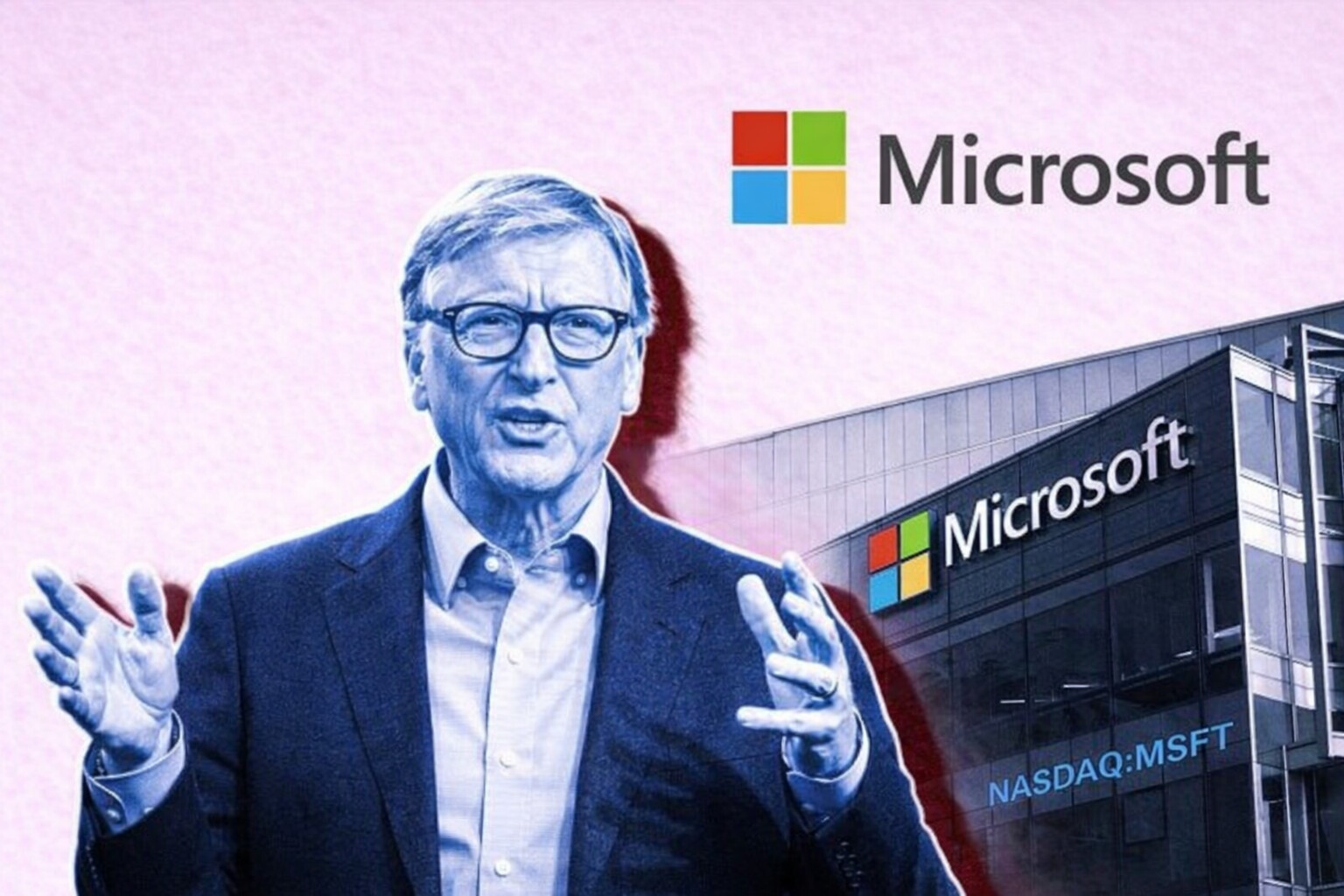
Microsoft (NASDAQ:MSFT) hovers around $459.86 with a $3.4T valuation, $392B in commercial RPO, a $250B OpenAI Azure deal and heavy $80B+ AI capex aimed at driving revenue toward $500B by 2030 | That's TradingNEWS
Microsoft (NASDAQ:MSFT) – AI Buildout, Cloud Backlog And Valuation Around $460
Share price, range and multiples for NASDAQ:MSFT
NASDAQ:MSFT is trading around $459.86, up $3.20 on the last session, with after-hours levels near $460.70. The session range ran between roughly $456.48 and $463.19, versus a 52-week range of $344.79–$555.45, so the stock sits well below the $555.45 high but far above the $344.79 floor. At this price, the market is valuing Microsoft at about $3.42 trillion with a trailing P/E of 32.72x and a cash dividend yield close to 0.79%. On a cash-flow basis, trailing operating cash flow is roughly $147.0 billion, CapEx stands near $69.0 billion, leaving free cash flow at about $78.0 billion; on a forward free cash-flow assumption of around $85.8 billion (roughly 10% growth), the stock trades in the high-30s to low-40s on P/FCF and EV/FCF, which is a premium that assumes double-digit compounding continues.
Revenue growth, earnings trajectory and margin structure at NASDAQ:MSFT
For the latest full year, Microsoft’s revenue reached roughly $281.7 billion, up about 15% year-on-year, while operating income climbed around 17% to $128.5 billion. Net margin has expanded to the mid-30s, around 35–36%, versus low-20s a decade ago, confirming that scale is still driving operating leverage despite heavier AI spend. The most recent quarter printed about $77.7 billion of revenue, an 18.4% increase year-on-year, beating expectations by roughly $2.28 billion, with non-GAAP EPS of around $4.13, roughly $0.47 above consensus. Operating expenses only grew about 5% against high-teens revenue growth, so incremental dollars are still coming through at attractive drop-through rates. Management’s guidance for the upcoming quarter calls for revenue between roughly $79.5–$80.6 billion, which annualises above $300 billion and keeps the company on a path consistent with the longer-term ambition to reach roughly $500 billion in annual revenue by 2030.
Cloud engine and Azure backlog underpinning NASDAQ:MSFT
Cloud is the core driver of the NASDAQ:MSFT equity story. Microsoft Cloud revenue has reached roughly $49.1 billion per quarter, growing about 26% year-on-year. Azure alone has moved past approximately $75 billion in annual revenue with growth around 34%, and the latest quarter showed Azure and related services growing near 39–40%, ahead of internal guidance. Importantly, management is explicit that this growth rate is constrained by supply, not by demand. Commercial remaining performance obligations are around $392 billion, up 51% year-on-year and nearly doubled over two years, with a weighted average duration of about two years. Commercial bookings have jumped roughly 111%, which means the pipeline is not a theoretical ten-year backlog; it is booked consumption expected to come through within a two-year window. On top of this, OpenAI has committed roughly $250 billion of additional Azure spend over the coming years, so AI workloads alone represent a substantial portion of future utilisation. The bottleneck is physical: GPUs, high-bandwidth memory, networking fabric and access to power. As Microsoft brings additional capacity online through the second half of calendar 2026 and into FY2027, a sizeable portion of that $392B+ backlog and OpenAI commitment is positioned to convert directly into Azure and AI revenue without needing a new demand cycle.
AI, Copilot and enterprise monetization dynamics at NASDAQ:MSFT
AI is already a live usage story for NASDAQ:MSFT, not a slideware projection. Copilot has crossed 150 million monthly active users, up from around 100 million only a quarter earlier, while total AI interactions across Microsoft products are close to 900 million users. Within Microsoft 365, Copilot Chat is growing more than 50% quarter-on-quarter. Large enterprises such as PwC and Lloyds Banking together account for over 230,000 Copilot seats, and those deployments are still early relative to the total addressable 365 base. Despite this ramp, the Productivity & Business Processes segment has expanded its margins by roughly 3 percentage points year-on-year, signalling that AI usage costs are being offset by productivity gains and pricing. Company-level operating expenses grew only about 5% while revenue grew roughly 18%, confirming that AI is not crushing profitability at this stage. Strategically, Microsoft is moving from “seat-based” pricing towards more “outcome-based” and, over time, token-based tiers, where enterprises pay for the volume of automated work rather than just licences. That shift decouples revenue from pure headcount growth and ties it to AI workload intensity, which is exactly where demand is building. The monetization curve will likely lag adoption—ARPU uplift will follow penetration—but the usage data and early margin resilience validate the path.
CapEx surge, asset life and free cash flow leverage for NASDAQ:MSFT
The AI and cloud scale-up shows up very clearly in the CapEx profile of NASDAQ:MSFT. Over three fiscal years, capital expenditure has risen from roughly $28.1 billion to $44.5 billion and then $64.6 billion. In Q1 FY2026 alone, CapEx hit around $34.9 billion, a 74% year-on-year increase, which annualises above $80 billion. Roughly half of this spend is going into short-life compute assets—GPUs and CPUs—while the rest funds long-life infrastructure like buildings, power and network, with 15–20-year useful lives. That mix is important because the two-year average duration of the $392 billion commercial RPO aligns reasonably well with the depreciation horizon of those AI compute assets: much of the booked backlog is timed to pay for the GPUs and CPUs being installed today. Even at this investment peak, free cash flow remains around $78.0 billion and can move toward $85–90 billion if FCF grows around 10% over the next year. When FCF accelerates faster than market cap and enterprise value, P/FCF and EV/FCF compress organically, so the premium multiple is being worked off by cash generation rather than by a falling share price. That is exactly what you want to see in a premium compounder.
Read More
-
Yen Stalls at 160 Despite a 3% JGB and Tokyo Core CPI at 2.0% — Intervention Sits at 164, Friday's Payrolls Decide
02.09.2026 · TradingNEWS ArchiveEnergy
-
QQQI ($53.80) Turns Nasdaq Volatility Into a 14.2% Monthly Yield as Assets Top $15B — Big Tech Earnings Set November
27.10.2026 · TradingNEWS ArchiveStocks
-
IBIT ETF Captures 100% of $110.3M as Spot Funds Snap Outflow Streak, but October Stays $202M Negative Ahead of the Fed
27.10.2026 · TradingNEWS ArchiveCrypto
-
NG($3.002) Takes the Front Month Near a Multi-Month Low as Record Production Meets Mild Weather — Break of $2.945 Opens $2.80
27.10.2026 · TradingNEWS ArchiveCommodities
-
USD/JPY (157.86) Squeezed Between a 2.8-Point Carry Edge and Tokyo’s 160 Line — BoJ Hawkish Hold Friday Sets the Break
27.10.2026 · TradingNEWS ArchiveForex
OpenAI stake, model strategy and competitive posture of NASDAQ:MSFT
OpenAI is a large but controlled risk exposure for NASDAQ:MSFT. Microsoft owns about 27% of OpenAI, a stake that has been valued in the area of $135 billion, and has secured access to OpenAI IP until around 2032. In exchange, OpenAI is contractually committed to spending roughly $250 billion on Azure over the coming years, giving Microsoft a substantial, anchored AI workload on its infrastructure. The downside is the P&L noise: OpenAI’s burn rate of about $12 billion per quarter translates into a roughly $3.1 billion non-cash drag on Microsoft’s GAAP earnings through equity accounting. There is also competitive friction: OpenAI sells ChatGPT Enterprise into the same corporate budgets that Microsoft targets with Copilot and has diversified its cloud infrastructure onto other providers. Microsoft’s response has been to de-risk the model layer by going multi-model. It is already serving alternatives like Claude 4 inside Microsoft 365 and Azure, showing that the platform is not locked to a single lab. The enduring moat sits in distribution—Office, Windows, GitHub, security, Dynamics—and in Azure’s global footprint, not in exclusive access to one frontier model. OpenAI remains a strategic hedge and a large capacity anchor, but the business architecture is already designed to be model-agnostic.
2030 revenue path, returns on capital and upside range for NASDAQ:MSFT
Management’s internal goal to reach about $500 billion in annual revenue by 2030 is the correct way to frame the long-term upside in NASDAQ:MSFT. From the current $281.7 billion base, that target implies a revenue CAGR of roughly 12.2%, slightly below the recent three-year revenue CAGR of 13.10% and net income CAGR of 14.55%, so it is demanding but realistic at current scale. Holding net margin broadly where it is now, around 35–36%, and assuming a 30x earnings multiple by 2030, that revenue level would support a market value near $5.4 trillion. That scenario does not rely on every segment firing equally; it assumes Azure and AI-driven services continue growing north of 30% for several years, Copilot and agentic AI steadily lift ARPU in the installed base, and slower pieces like legacy Windows and consumer PC revenue grow modestly or flat. The return metrics justify continued reinvestment: gross margin near 68.76%, net margin around 35.7%, return on equity around 31.5%, and return on capital employed about 27.1%. Those numbers are closer to a capital-light software platform than to a traditional infrastructure player, even while CapEx is running near $80 billion annually, which is why the market is comfortable granting a premium valuation.
Key risks and execution tests for NASDAQ:MSFT
There are clear failure points that investors in NASDAQ:MSFT need to track. The first is the duration of the capacity squeeze. If GPUs, high-bandwidth memory and power constraints persist deep into FY2027, Azure growth will stay capped below underlying demand longer than expected, delaying the revenue and EPS re-acceleration narrative around 2026 that is partially embedded in today’s price. The second is AI monetization timing. Copilot has 150M+ monthly active users and over 230K enterprise seats, but if enterprises slow seat upgrades or resist higher pricing, the ARPU and margin uplift from AI agents will slide further out, even if engagement remains high. The third is the risk of prolonged high capital intensity. CapEx above $80 billion per year will weigh on free cash flow if AI-related revenue growth flattens or the OpenAI-linked workload underperforms. There is also governance and regulatory risk: the OpenAI stake adds GAAP volatility, and global regulators are increasingly focused on AI, cloud dominance and bundling across operating systems and productivity software. Finally, at a $3.42T market cap and a 32.72x P/E, the margin of safety is narrower than in earlier cycles; any visible slowdown in RPO growth, Azure demand, Copilot adoption or margin stability will pressure the multiple.
Positioning view and role of NASDAQ:MSFT in an equity portfolio
At roughly $459.86 per share, with after-hours action around $460.70, NASDAQ:MSFT sits at a point where valuation is clearly rich but supported by a $392B two-year-weighted RPO base, an additional $250B of committed AI workloads, mid-teens revenue growth, high-teens operating income growth and free cash flow near $78B despite record CapEx. Forward EPS projections near $18.28 for FY2027 and a reasonable forward multiple around 29x imply a value zone around $540–$550, close to the prior high of $555.45, with further room if management executes toward the $500B revenue target for 2030. Tracking insider behaviour and ownership changes via the MSFT stock profile and detailed MSFT insider transactions gives an extra layer on capital allocation and confidence, but on fundamentals alone the setup justifies a Buy stance with a clearly bullish multi-year view. The rational strategy is to treat volatility into the $450 area as an accumulation opportunity for core positions, not as a trigger to exit, as long as Azure growth, RPO duration, Copilot adoption and margin resilience continue to confirm the 2026–2030 earnings and cash-flow expansion path for NASDAQ:MSFT.