NVIDIA Stock Price Forecast - NVDA Holds Around $187 As $500B Backlog Anchor The Next Leg Higher
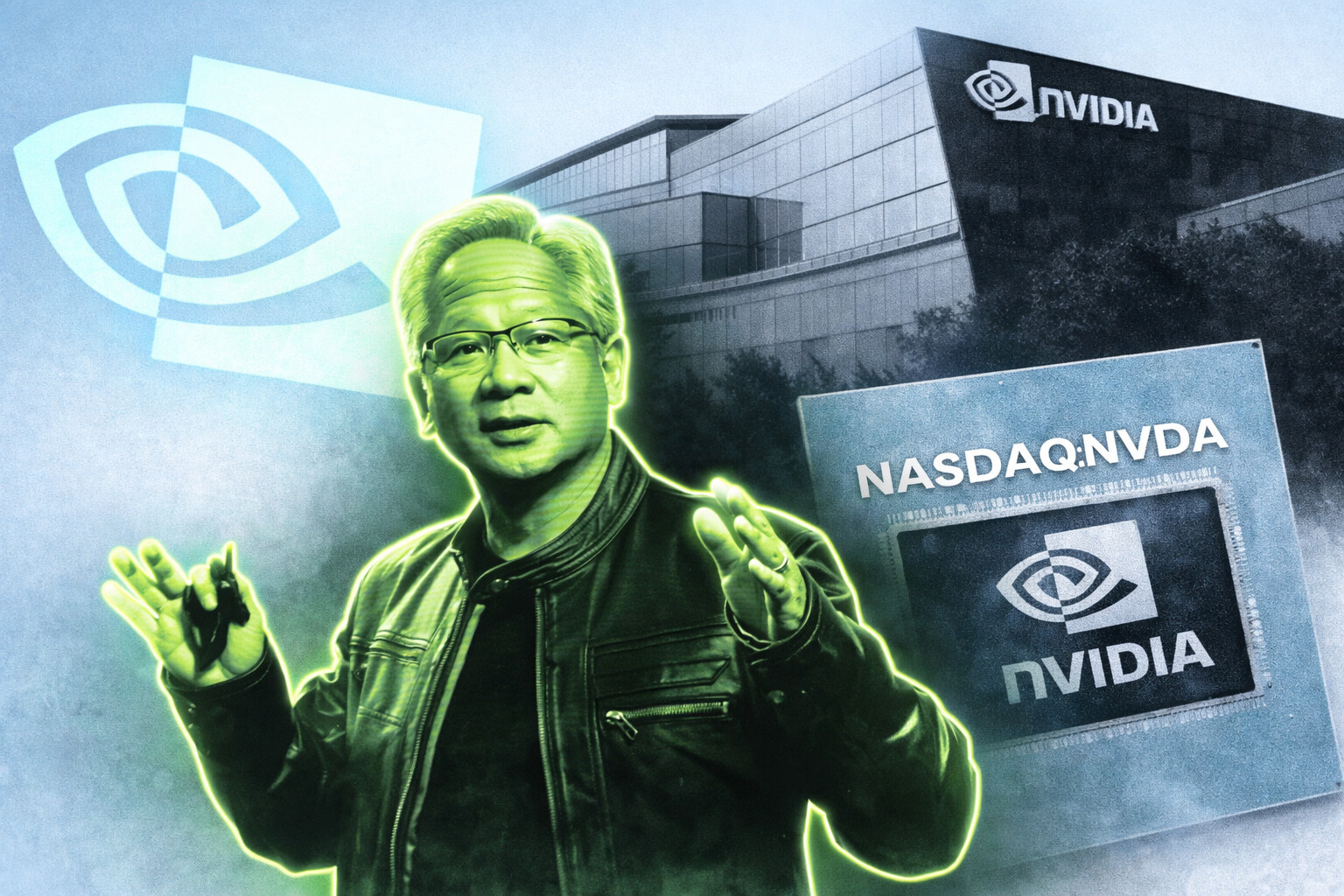
With NASDAQ:NVDA consolidating above $170–$175 support and below $205–$210 resistance, Rubin’s 5x inference gains, 73–75% margins, $34.8B cash and half-trillion AI order visibility keep the stock positioned for a potential move toward $250 | That's TradingNEWS
NASDAQ:NVDA Price Zone, Trading Range And Market Posture
NASDAQ:NVDA currently trades in the high-$180s, roughly $185–$187, sitting about 13% below the recent peak near $210 but still well above the key demand band around $170–$175. That $170–$175 region has acted as a firm floor where buyers repeatedly stepped in after pullbacks, while the $205–$210 area remains the immediate supply wall that rejected the last leg higher. Price stays comfortably above the 200-day moving average near $162.9, which keeps the long-term uptrend intact despite the sideways action. Shorter moving averages clustered around $185–$187 have flattened, confirming consolidation rather than a trend break. The RSI sitting in the low-50s shows neither overbought nor oversold conditions, and volumes are normal, which tells you the market is digesting the AI melt-up and waiting for fresh catalysts from Rubin and the next earnings prints before repricing NASDAQ:NVDA again.
Rubin Cycle Pulls NASDAQ:NVDA Into Full AI Systems Mode
Rubin is the pivot that changes how NASDAQ:NVDA competes. Instead of being just a GPU vendor, Nvidia is moving into full data-center architecture. The Vera Rubin platform combines an 88-core Vera CPU with Rubin GPUs in a six-chip configuration, delivered as a rack-scale system rather than as individual accelerators. Performance is not incremental: management is guiding to roughly 5x inference throughput and over 3x training performance compared with Blackwell. Those gains shift the economics of AI workloads, especially when you translate them into cost per token and throughput per rack. The commercial shift is as important as the technical one. Customers are not assembling their own bundles anymore; they are buying a predefined, tightly integrated Rubin architecture. That bundles compute, interconnect, memory, power and software into one system and sharply raises the switching cost for anyone trying to insert an alternative chip into the same infrastructure.
Inference Economics, Groq Talent And Cost-Per-Token Moat Around NASDAQ:NVDA
The Groq transaction fits directly into this evolution. Instead of a full acquisition that would trigger regulatory noise, NASDAQ:NVDA structured a licensing-style deal that effectively brought in top-tier inference engineering talent and intellectual property. The focus is no longer just on raw FLOPs; it is on latency, tokens-per-second and dollars-per-million-tokens served in production. Rubin plus this Groq know-how is aimed at squeezing maximum inference efficiency out of the stack, from trained model to live deployment. With management talking about up to 10x cuts in inference cost for certain workloads, large operators like OpenAI or Meta have little economic incentive to abandon that improvement curve. The moat shifts from “fastest chip” to “cheapest and most efficient end-to-end AI platform,” and Nvidia is deliberately building that around NASDAQ:NVDA before any rival software ecosystem reaches similar depth.
Backlog, Hyperscaler Deals And Revenue Visibility For NASDAQ:NVDA
On the financial side, NASDAQ:NVDA has visibility that is unusual in semis. The latest quarter delivered about $35.1 billion in revenue, up roughly 94% year-on-year, with the data center segment driving the move. Gross margin has been sitting in the 73–75% range and is guided around 75% for the upcoming quarter. Management is calling for roughly $65 billion of revenue in that next quarter, implying around 14% sequential growth on top of the prior surge. Behind those quarterly figures sits a forward book the company quantifies at about $500 billion in combined Blackwell and Rubin visibility through fiscal 2026. That backlog is tied to concrete deployments: a data-center build-out with OpenAI approaching 10 gigawatts of capacity, a one-gigawatt commitment with Anthropic, and up to 150,000 accelerators deployed across AWS and HUMAIN. These are not option-like pilots; they are infrastructure programs sized in gigawatts and tens of thousands of GPUs, locking in multi-year utilization and anchoring the long-term earnings power of NASDAQ:NVDA.
China Data Center Revenue Written To Zero And TAM Compression For NASDAQ:NVDA
The cleanest downside disclosure from management is China. For advanced data-center compute, NASDAQ:NVDA is now guiding to zero near-term China revenue. H2O sales in China were only around $50 million in the last reported quarter as larger orders failed to materialize amid export restrictions and intensifying domestic competition. The CFO has stated that data-center compute revenue from China is assumed at zero for Q4, and the CEO has reinforced that by flagging China sales as “zero for the next quarter, zero for the quarter after that.” At the same time, U.S. policy discussions around allowing limited H200 shipments into China come with heavy conditions, including a proposed 25% levy and tight approval processes. Chinese regulators are pushing in the opposite direction with rules that force new capacity to use at least 50% locally manufactured equipment. The net outcome is straightforward: a region that was once a major growth driver is effectively removed from the forward data-center revenue base of NASDAQ:NVDA, reducing the total addressable market and giving Chinese accelerators a protected sandbox to grow without competing head-on with Rubin or Blackwell.
Geographic Concentration, Sovereign AI And Physical AI Offsets For NASDAQ:NVDA
Cutting China out of the near-term plan concentrates risk. Growth for NASDAQ:NVDA now leans more heavily on U.S. and allied hyperscalers, plus sovereign and corporate AI programs. Sovereign AI is a critical offset: Gulf states such as Saudi Arabia and the UAE are committing over $100 billion in aggregate to build their own national AI stacks over multiple years, and Nvidia’s platform sits at the center of those plans. These are multi-year infrastructure programs rather than quarter-to-quarter experiments. On top of that, physical AI – AI embedded into machines and vehicles – creates a second vector. The partnership with Mercedes-Benz is a clear case: the Alpamayo model is expected to act as a reasoning engine in the 2026 CLA Class, turning Nvidia from a one-off automotive chip supplier into a long-term software and services partner that can collect recurring revenue over a vehicle’s life. That diversification away from pure cloud compute gives NASDAQ:NVDA another growth pillar that compounds alongside data-center deployments.
Margins, Cash Pile And Funding Capacity At NASDAQ:NVDA
The financial profile of NASDAQ:NVDA looks more like a dominant software platform than a traditional chip vendor. With gross margins holding between 73% and 75% even as volumes explode, the company is monetizing its technology and ecosystem with very little discounting. The last reported revenue of $35.1 billion and the guided $65 billion quarter on top of that generate massive operating leverage and cash flow. On the balance sheet, Nvidia is sitting on approximately $34.8 billion in cash and equivalents, giving it the firepower to fund Rubin’s ramp, Sovereign AI partnerships and strategic deals similar to the Groq transaction without taking on heavy debt. That liquidity also acts as a shock absorber if certain geographies, such as shipments taxed at 25% into China, require margin concessions at the edge while the core franchise continues to carry premium pricing.
Valuation Frame: PEG, Forward P/E And $250 Baseline For NASDAQ:NVDA
Valuation has to be read against that growth profile. Around $185–$187 per share, NASDAQ:NVDA trades on a forward P/E of roughly 24x, with the PEG ratio in a band between about 0.72 and 1.07 depending on which growth line you use. Using an illustrative forward EPS of roughly $6.40 for fiscal 2027 and assigning a 40x multiple – justified by 70%+ gross margins, near-triple-digit revenue growth and $500 billion of contracted visibility – you land near $256 per share of value. A $250 base target is therefore realistic rather than aggressive, already incorporating China headwinds, potential export surcharges and the risk that hyperscaler CapEx growth normalizes later in the decade. From a starting point around $185–$187, that implies in the region of 30% upside on a medium-term view, provided the Rubin cycle executes as guided and margins remain anchored in the mid-70s rather than collapsing into the 60s.
Competitive Pressures: AMD, China’s Accelerators And CUDA Lock-In For NASDAQ:NVDA
Competition is real and must be quantified. AMD’s new M1455X, with 432GB of memory, demonstrates that rival hardware is no longer an afterthought. At the same time, Chinese accelerators are being built behind export walls, with domestic champions protected on home turf while NASDAQ:NVDA is restricted. However, hardware specifications alone do not determine share. CUDA and Nvidia’s software stack remain deeply embedded across production AI workloads. Rewriting major codebases to run on a different architecture is expensive, risky and slow, especially at hyperscale. As Rubin shifts customers from buying chips to buying full rack-scale systems, Nvidia increases that lock-in further. The realistic scenario is not that Nvidia suddenly loses half its share in the next year; it is that competitors gradually chip away at specific workloads and well-defined customer segments while NASDAQ:NVDA still holds the bulk of high-value deployments. The impact is a moderated growth curve, not an immediate collapse.
Read More
-
Yen Stalls at 160 Despite a 3% JGB and Tokyo Core CPI at 2.0% — Intervention Sits at 164, Friday's Payrolls Decide
02.09.2026 · TradingNEWS ArchiveEnergy
-
QQQI ($53.80) Turns Nasdaq Volatility Into a 14.2% Monthly Yield as Assets Top $15B — Big Tech Earnings Set November
27.10.2026 · TradingNEWS ArchiveStocks
-
IBIT ETF Captures 100% of $110.3M as Spot Funds Snap Outflow Streak, but October Stays $202M Negative Ahead of the Fed
27.10.2026 · TradingNEWS ArchiveCrypto
-
NG($3.002) Takes the Front Month Near a Multi-Month Low as Record Production Meets Mild Weather — Break of $2.945 Opens $2.80
27.10.2026 · TradingNEWS ArchiveCommodities
-
USD/JPY (157.86) Squeezed Between a 2.8-Point Carry Edge and Tokyo’s 160 Line — BoJ Hawkish Hold Friday Sets the Break
27.10.2026 · TradingNEWS ArchiveForex
Technical Setup: Support, Resistance And Trigger Levels On NASDAQ:NVDA
The technical structure around NASDAQ:NVDA is clean. On the daily chart, a horizontal range has formed with a strong demand zone in the $170–$175 region and a clear resistance band between $205 and $210. The 200-day moving average at roughly $162.9 underpins the long-term uptrend; as long as price holds above that line, the broader bull structure remains intact even if volatility increases. Shorter moving averages in the mid-$180s have flattened, signalling that momentum is paused and the stock is building a base. RSI in the low-50s is neutral, confirming that there is no immediate exhaustion on either side. A decisive break above $210 on convincing volume opens the path toward the $250 area as the market re-rates Rubin and Sovereign AI. Conversely, a downside break that cuts through $170–$175 and then the 200-day near $163 would be the first serious technical warning that the AI leg is being repriced lower and that the risk/reward has shifted.
Risk Map: CapEx Fatigue, Policy Friction And Multiple Compression For NASDAQ:NVDA
There are clear, quantifiable risks that can derail the current path for NASDAQ:NVDA. The main one is AI CapEx fatigue. If over the next few years Microsoft, Meta and other heavy spenders conclude that returns on their AI infrastructure – measured in incremental profit, not marketing narrative – are below target, they will slow spending. Given how dependent Nvidia’s growth is on these hyperscalers, that would translate directly into lower revenue growth and weaker upside surprise potential. Policy friction is the second pillar: export restrictions into China, potential 25% surcharges on certain chips and domestic content rules in foreign markets can all squeeze margins and limit where Rubin and Blackwell can be sold. The third risk is competition running just fast enough to nibble away at new business, particularly in markets where CUDA penetration is lower or new systems are greenfield. Finally, there is valuation itself; even with a PEG in the 0.7–1.0 area, a forward P/E in the mid-20s can compress quickly if growth estimates are revised down. None of this is hypothetical, but all of it is currently balanced by the strength of the backlog, the Rubin performance step and the emergence of Sovereign and physical AI demand.
Buy, Sell Or Hold – Clear Stance On NASDAQ:NVDA
Putting everything together – price around $185–$187, support anchored at $170–$175, 200-day moving average at roughly $162.9, resistance at $205–$210, last quarter revenue of $35.1 billion up about 94% year-on-year, near-term revenue guide near $65 billion with ~75% gross margins, around $34.8 billion of cash, roughly $500 billion in contracted visibility from Blackwell and Rubin, China data-center revenue written to zero but offset by U.S. hyperscalers, Sovereign AI commitments above $100 billion and physical AI partnerships such as Mercedes-Benz, Rubin delivering around 5x inference and 3x training gains, and cost-per-token economics reinforced by the Groq deal – the conclusion is direct. NASDAQ:NVDA is a Buy, not a trade. Dips toward $170–$175 are attractive accumulation zones as long as fundamentals stay intact and the 200-day holds. A medium-term target around $250 is justified by forward EPS near $6.40 and a 40x multiple supported by 70%+ margins and the backlog. The risk is real, but so is the earnings power. For a long-term investor, the stock remains a core AI infrastructure position to hold through volatility rather than something to scalp for a few dollars around headlines.