Oil Price Forecast — Brent ($97) and WTI ($90) Bounce as Renewed Iran Hostilities Reignite the Risk Premium
Crude rebounds from Wednesday's slide after U.S. forces strike near the Strait of Hormuz | That's TradingNEWS
Key Points
- Brent rebounds toward $97 and WTI near $90 on fresh Hormuz strikes, but crude stays down for the week on deal hopes.
- A record 8.5M bpd Q2 inventory draw and the UAE's OPEC exit tighten supply; both benchmarks are up ~45–50% since Feb 28.
- A deal reopening Hormuz points to $79–$89 by 2027; prolonged closure risks a retest of April's ~$138 Brent high.
Brent crude (BRN) climbed toward $97 a barrel on Thursday, rebounding from the previous session's steep losses as renewed hostilities between the United States and Iran weakened expectations for a near-term peace agreement, while U.S. West Texas Intermediate (CL) recovered toward the $90–$92 zone after sinking 5.55% to settle near $88.68 on Wednesday. The catalyst for the bounce was a flurry of overnight military developments: U.S. forces reportedly struck an Iranian military site believed to threaten American troops and commercial shipping through the Strait of Hormuz, also intercepting several attack drones near the chokepoint, while Kuwait reported shooting down a missile and Iran's Revolutionary Guard claimed to have targeted a U.S. airbase. The Guard further warned that it would respond forcefully to any disruption in Hormuz and said several ships attempting unauthorized entry into the Persian Gulf had been forced to turn back. Despite the rebound, crude remains sharply lower for both the week and the month, as the market continues to price in meaningful odds that Washington and Tehran eventually strike a deal to reopen the strait. This tension — a powerful geopolitical risk premium battling against persistent peace-deal optimism — has produced some of the wildest price swings in the history of the oil market, and Thursday's recovery is merely the latest oscillation in an extraordinarily volatile trading environment.
The Conflict That Reshaped the Oil Market
To understand today's price action, it is essential to grasp the magnitude of the shock that has gripped the oil market since the U.S. and Israeli-led war against Iran began in late February. Since the conflict's outbreak on February 28, both Brent and WTI have surged more than 45% to 50%, a rally driven by the effective closure of the Strait of Hormuz and the resulting tightening of global supply. The price action has been nothing short of dramatic: Brent spot prices spiked to as high as $138 a barrel on April 7, with the April monthly average reaching $117 — the highest since June 2022, in the aftermath of Russia's invasion of Ukraine. The international North Sea Dated benchmark traded in an unprecedented range of nearly $50 a barrel in April alone, swinging from a high around $144 down below $100 before rebounding again, a testament to the violent uncertainty surrounding the conflict's trajectory. Energy infrastructure across nine nations has sustained damage to dozens of assets since hostilities commenced, and the disruption has been severe enough that one major energy agency compared the current crisis to both 1970s oil shocks occurring simultaneously. This is the backdrop against which every daily move must be understood: a market that has been fundamentally repriced by a major geopolitical conflict and that now trades on every incremental headline about war and peace.
The Strait of Hormuz: The World's Most Critical Chokepoint
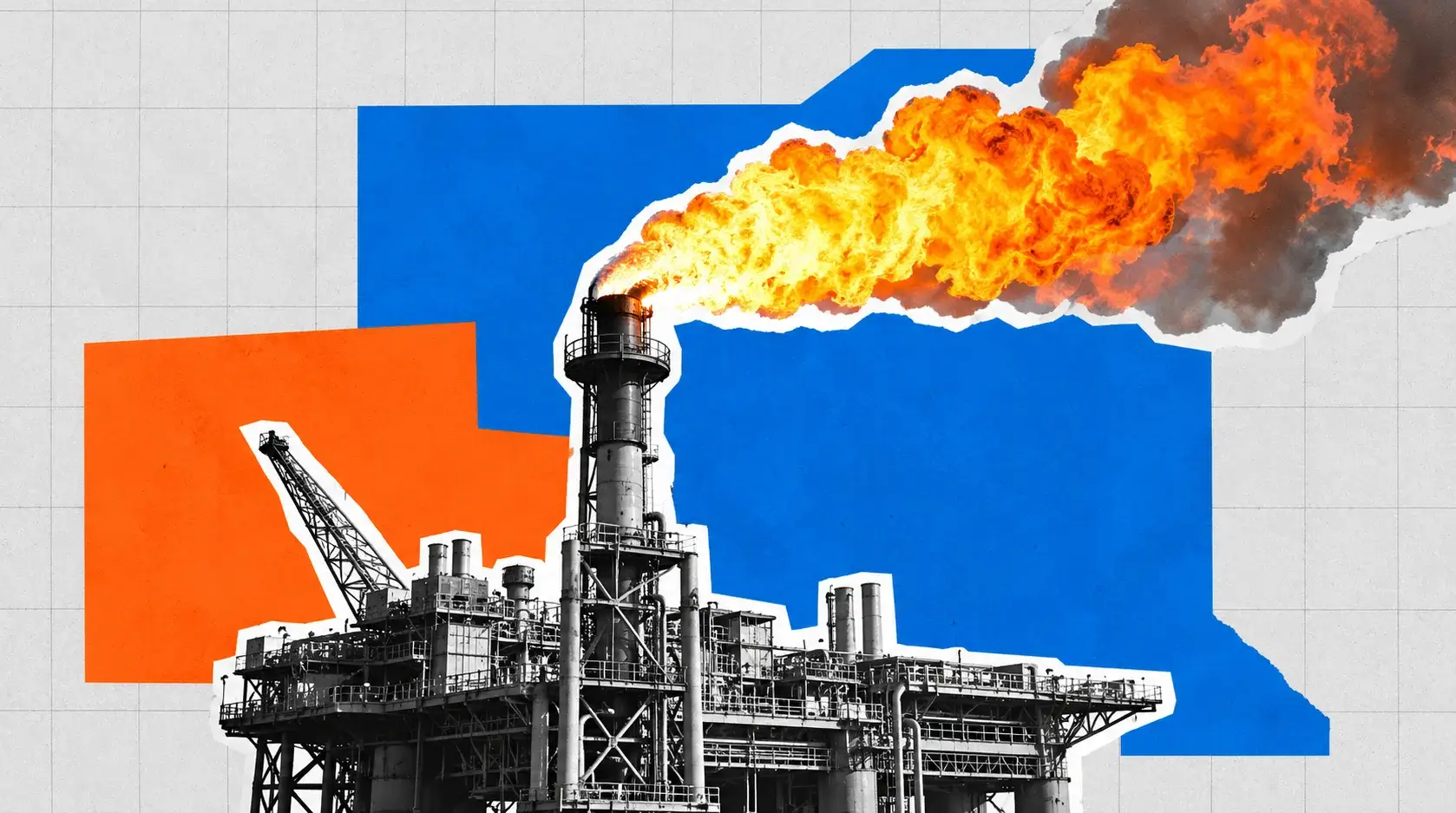
At the epicenter of the crisis lies the Strait of Hormuz, the narrow waterway linking the Persian Gulf to global oil markets and the single most important chokepoint in the world's energy supply chain. Traffic through the strait has been largely at a standstill, both because of the risk of attacks on oil tankers and because of a U.S. naval blockade against Iranian oil shipments through the passage. The de facto closure has dramatically reduced the availability of oil supplies to global markets, with cascading effects rippling across the entire supply chain as cargoes are rerouted, insurance costs soar, and shipping becomes hazardous. The strategic calculus around reopening the strait is daunting: military analysts have suggested that forcibly reopening Hormuz would require significant naval resources, ground troops, and could cost on the order of a billion dollars a week, underscoring why a negotiated solution remains the market's preferred path. The strait's importance cannot be overstated, as a substantial share of the world's seaborne crude transits these waters, and any prolonged disruption forces the global market to scramble for alternative supplies that simply cannot fully replace the lost volumes. The repeated skirmishes near the strait, including Thursday's drone interceptions and the Revolutionary Guard's warnings, keep the market acutely focused on whether the passage will reopen in weeks or remain blocked for far longer, a binary outcome that carries enormous price implications.
The Peace-Deal Tug-of-War
The dominant variable swinging oil prices day to day is the on-again, off-again prospect of a peace agreement between the United States and Iran, with negotiations remaining genuinely difficult and the outcome highly uncertain. The core sticking points are formidable: Iran insists on maintaining control of the Strait of Hormuz and preserving its nuclear program, while the U.S. administration has rejected what it considers inadequate proposals, with the President describing Iran's latest response as unacceptable and refusing to ease sanctions despite Tehran's demands for financial relief. Earlier in the week, optimism had surged on reports that a memorandum of understanding had been largely negotiated and would reopen the strait, sending oil tumbling, only for those hopes to be dashed by the renewed military action and the persistent disagreements over fundamental terms. This whipsaw dynamic — peace optimism crushing prices one day, conflict escalation reviving the risk premium the next — explains the extraordinary volatility and the market's inability to establish a stable trading range. The diplomatic complexity is compounded by the involvement of other powers, with speculation that Washington might enlist Beijing's help in pressuring Tehran to accept U.S. terms. Until the negotiations produce a definitive resolution one way or the other, the oil market will remain hostage to headlines, with each statement from Washington or Tehran capable of triggering multi-dollar swings in the benchmarks. The base case embedded in most forecasts assumes an eventual deal, but the path there is anything but smooth.
A Market in Deep Supply Deficit
Beneath the geopolitical drama lies a stark physical reality: the global oil market is in a severe supply deficit, with inventories drawing down at a record pace that provides fundamental support for elevated prices. More than ten weeks after the war began, mounting supply losses from the Strait of Hormuz have been depleting global oil inventories at an unprecedented clip, with one agency estimating that global stocks would fall by an average of 8.5 million barrels per day in the second quarter of 2026. This is a staggering rate of inventory depletion that, in a normal market, would send prices soaring far higher, and it is only the persistent expectation of an eventual deal that has kept prices from spiraling out of control. The latest weekly data reinforced the tightening, with U.S. crude inventories falling by 2.8 million barrels according to industry figures, adding to the bullish supply picture. The deficit is expected to persist until the final quarter of the year, even under the assumption that a deal allows Hormuz flows to gradually resume from the third quarter, because supply will be slow to recover even after the conflict ends. With global inventories already drawing at a record clip and the peak summer demand period approaching, the physical market remains structurally tight, and any further supply disruption or delay in reopening the strait would intensify the deficit and pressure prices upward. This underlying tightness is the bedrock beneath the volatile headline-driven trading.
OPEC+ Dynamics and a Shifting Cartel
The supply picture has been further complicated by significant shifts within OPEC and its allies, adding another layer to the already complex market dynamics. OPEC+ crude oil production fell by around 1.74 million barrels per day in April alone, a substantial reduction that reflects the conflict's disruption to regional output and trade flows. Compounding the supply concerns, the cartel cut its 2026 global demand growth forecast to 1.17 million barrels per day, down from a previous estimate of 1.38 million, citing the conflict's impact on trade flows and economic activity. A structurally important development was the UAE's announcement of its departure from OPEC, effective May 1, 2026, a move that carries meaningful implications for the cartel's spare capacity and cohesion. Because the UAE held significant spare crude production capacity, its exit reduces OPEC's effective buffer, with one agency now expecting the cartel's spare capacity to average just 2.5 million barrels per day in 2027, down sharply from a previous forecast of 3.8 million. This erosion of spare capacity is critical because it diminishes the market's safety valve — the cushion of readily available production that can be brought online to offset supply shocks. With less spare capacity and ongoing conflict-related output losses, the market's ability to absorb further disruptions has weakened considerably, leaving prices more sensitive to any incremental supply shock and reinforcing the bullish structural backdrop even amid the peace-deal optimism.
The Brent-WTI Spread Tells a Story
A revealing technical feature of the current market is the behavior of the spread between Brent and WTI, which has widened significantly and reflects the specific dynamics of the Hormuz disruption. The Brent-WTI spread widened to an average of around $12 a barrel in March, driven by the Hormuz-related shipping disruptions that have disproportionately affected the international Brent benchmark while elevated U.S. inventory levels have capped WTI's gains relative to its global counterpart. This widening spread illustrates how the crisis has primarily struck seaborne international supply, where Hormuz transit is critical, while the more landlocked U.S. market has been somewhat insulated by domestic production and inventory buffers. The dynamic explains why WTI, trading near $90, sits meaningfully below Brent near $97, a gap that reflects the geographic concentration of the supply shock. For traders, the spread offers a window into the relative tightness of the international versus domestic markets, and its movements can signal shifts in how the crisis is propagating through the global supply chain. A narrowing of the spread would suggest either an easing of the Hormuz disruption or a tightening of U.S. supply, while further widening would indicate intensifying international stress. The elevated spread is yet another manifestation of how thoroughly the Hormuz crisis has reshaped the structure of the global oil market beyond just the headline price levels.
Volatility at Generational Extremes
One of the most striking features of the current oil market is the extraordinary level of price volatility, which has reached generational extremes amid the conflict and the uncertainty surrounding its resolution. Recent Brent crude implied volatility has been the highest it has been since the onset of the COVID-19 pandemic in early 2020, a remarkable statement given the relative calm that prevailed for much of the period between, when implied volatility generally ran below 30%. The wild swings — Brent oscillating between $138 highs and sub-$100 lows, the North Sea Dated benchmark traversing a $50 range in a single month — reflect a market struggling to price an inherently binary geopolitical outcome. This elevated volatility has profound implications for all market participants: producers and consumers face enormous uncertainty in planning, traders confront amplified risk, and the broader economy must contend with unpredictable energy costs that feed directly into inflation. The volatility itself becomes a self-reinforcing factor, as the wide price ranges trigger technical trading, options-related hedging, and momentum-driven moves that amplify the underlying fundamental swings. For the foreseeable future, until the conflict reaches a definitive resolution, this heightened volatility appears likely to persist, particularly as the market approaches the peak summer demand period when any supply disruption would have an outsized impact. Traders navigating this environment must respect the potential for violent moves in either direction on any significant headline.
What the Major Forecasts Say
The professional forecasting community has scrambled to revise its oil projections sharply higher in response to the conflict, though the estimates vary considerably based on assumptions about the duration of the Hormuz disruption. The U.S. Energy Information Administration dramatically raised its full-year 2026 Brent spot price forecast to $96 a barrel in its April outlook, up from $78.84 in the prior month, while lifting its WTI forecast to $87.41 from $73.61, attributing the upgrade to the effective closure of the strait. In subsequent updates, the agency projected Brent would average around $106 a barrel in May and June amid the record inventory draws, before falling to an average of $89 in the fourth quarter and $79 in 2027 as Middle East production gradually recovers. Goldman Sachs has similarly raised its projections, lifting its fourth-quarter 2026 Brent forecast to $90 and WTI to $83, after an earlier upward revision of its 2026 Brent estimate. The common thread is an expectation that prices remain elevated through the deficit period of 2026 before easing as supply normalizes, though the timing hinges entirely on when and whether the strait reopens. Notably, the agencies warn that if the disruption extends beyond their base-case assumptions, prices could run more than $20 a barrel above current forecasts in the near term, underscoring the substantial upside risk that remains embedded in the market should the conflict drag on longer than anticipated.
The Demand Side and the Path to Normalization
While supply dominates the current narrative, the demand side of the equation carries important implications for the medium-term outlook, particularly as elevated prices begin to weigh on consumption. The downward revision to OPEC's 2026 demand growth forecast, to 1.17 million barrels per day from 1.38 million, reflects the reality that high prices and the economic uncertainty stemming from the conflict are dampening oil demand growth. This demand erosion provides a counterweight to the supply deficit, helping explain why prices have not spiraled even higher despite the record inventory draws. The critical question for the market is the timeline to normalization, and here the forecasts are sobering. Even if a deal to end the war is agreed that allows flows through the Strait of Hormuz to gradually resume from the third quarter, supply will likely be slower to recover than demand, keeping the market in deficit until the final quarter of the year. One major producer's chief executive warned that the oil market would take until 2027 to fully normalize if the strait remains blocked beyond mid-June, highlighting the long tail of disruption even after a resolution. The interplay between price-sensitive demand destruction and the slow recovery of supply means the market faces a prolonged adjustment period, with the peak summer demand season representing a particularly vulnerable window where any supply shortfall could send prices sharply higher before the eventual normalization takes hold.
The Bull Case: Escalation and a Prolonged Blockade
The bullish scenario for oil rests on the possibility that the conflict escalates or that the Strait of Hormuz remains blocked for far longer than the market currently anticipates, a path that would intensify the already severe supply deficit. The most immediate bullish catalyst would be a complete breakdown in U.S.-Iran negotiations followed by further military escalation, which would extend the Hormuz closure and deepen the record inventory draws already underway. Should the strait remain blocked beyond mid-June, the market normalization timeline would stretch into 2027, and prices could surge well above current levels, with agency warnings suggesting upside of more than $20 a barrel beyond base-case forecasts in such a scenario. The structural backdrop strongly favors the bulls in this case: global inventories are drawing at a record 8.5 million barrels per day in the second quarter, OPEC's spare capacity has been eroded by the UAE's departure to just 2.5 million barrels per day, and the peak summer demand period is approaching when any supply shortfall would have maximum impact. The elevated risk premium reflected in Thursday's rebound toward $97 demonstrates how quickly the market reprices higher on any escalation. For bulls, the combination of a record supply deficit, diminished spare capacity, generational volatility, and the ever-present risk of conflict escalation creates a powerful case that oil could retest its April highs near $138 if the geopolitical situation deteriorates, making any dip toward the lower end of the range a potential buying opportunity.
Read More
-
Yen Stalls at 160 Despite a 3% JGB and Tokyo Core CPI at 2.0% — Intervention Sits at 164, Friday's Payrolls Decide
02.09.2026 · TradingNEWS ArchiveEnergy
-
FDVV ETF ($61.42) Balances Nvidia, Apple and Microsoft Against Rate-Sensitive Income Holdings — $64.54 High in Reach if Yields Ease
19.10.2026 · TradingNEWS ArchiveStocks
-
XRPI ($6.98) and XRPR ($10.61) Trade 56% and 52% Below Their Highs as First-Mover Funds Lose the Fee Battle to 0.19% Spot Products
19.10.2026 · TradingNEWS ArchiveCrypto
-
NG Holds Its $3.00–$3.30 Range as Light Storage Builds Meet Record 112.2 Bcf/d Output — $3.50 Above $3.26
19.10.2026 · TradingNEWS ArchiveCommodities
-
Dollar-Yen (158.43) Stuck in a 1.39-Yen Box as Carry Meets the Intervention Line — 156.65 Below 157.55, Tokyo Waits at 160
19.10.2026 · TradingNEWS ArchiveForex
The Bear Case: A Deal Reopens the Strait
The bearish scenario, conversely, hinges on the successful conclusion of a peace agreement that reopens the Strait of Hormuz and allows the massive pent-up supply to flow back into the market, a path that would deflate the risk premium and send prices sharply lower. The fact that crude remains substantially lower for the week and month, even after Thursday's rebound, reveals that the market is already pricing in meaningful odds of such a resolution. Should Washington and Tehran reach a deal allowing Hormuz flows to gradually resume from the third quarter, the agency forecasts point to Brent falling toward $89 in the fourth quarter and $79 in 2027 as Middle East production recovers and the deficit closes. The bearish case is reinforced by the demand-side erosion, with high prices and economic uncertainty already dampening consumption growth, and by the strategic stock releases that authorities have deployed to cushion the supply shock. Additionally, the eventual recovery of the roughly 1.74 million barrels per day of lost OPEC+ output, combined with non-OPEC supply growth, would add substantial volumes once the conflict resolves. For bears, the peace-deal optimism that has repeatedly crushed prices this week — including Wednesday's 5.55% WTI plunge — demonstrates how violently oil can fall when diplomatic progress emerges, and a definitive agreement would likely trigger a sustained downtrend toward the $79 to $89 range that the forecasts envision for the post-conflict period.
Forecast Verdict: Volatile and Headline-Driven, With Two-Way Risk
Synthesizing the analysis, the oil market enters the end of May in an extraordinarily volatile, headline-driven state, caught between a severe physical supply deficit and the persistent prospect of a peace deal that would unleash pent-up supply. The actionable framework recognizes that the near-term price is hostage to the U.S.-Iran negotiations and the status of the Strait of Hormuz: any escalation reignites the risk premium and pushes Brent back toward and potentially beyond $100, while any genuine diplomatic breakthrough would trigger a sharp decline toward the $79 to $89 range that the major forecasts envision for the post-conflict period. With Brent rebounding toward $97 and WTI near $90 on Thursday's fresh strikes, the immediate bias reflects the renewed conflict premium, but the fact that prices remain down for the week and month signals the market's underlying expectation of an eventual resolution. The structural backdrop — record inventory draws of 8.5 million barrels per day, eroded OPEC spare capacity after the UAE's exit, generational volatility, and the approaching summer demand peak — keeps substantial upside risk alive should the conflict drag on. The key variables to monitor are the diplomatic headlines, the physical status of Hormuz transit, weekly inventory data, and the pace of any production recovery. The base case embedded in most forecasts assumes an eventual deal that gradually normalizes the market by late 2026 into 2027, but the path there will be marked by violent two-way swings, and traders must respect the potential for multi-dollar moves in either direction on any significant development out of the Persian Gulf.