Oil Price Forecast: Brent Surges Back to $104 as Iran Fires New Missiles and Denies Trump Talks — Goldman Sees $115
With the Strait of Hormuz Still Closed, Russia's Budget Saved by a 70% Revenue Jump, the EU's Russian Oil Ban Officially Postponed, and Oil Up 43% in 30 Days From $71.58 to $104, the Case for Oil Above $100 Is Structural | That's TradingNEWS
Key Points
- Iran Denied the Talks, Fired More Missiles, and Oil Went Back to $104 — Brent collapsed 8% Monday from $112 to $99 on Trump's Truth Social ceasefire claim, then recovered to $104 Tuesday after Iran called the talks claim "an attempt to manipulate markets,"
- Russia's Fiscal Crisis Disappeared Overnight — 70% Revenue Jump Coming in April — Russia's oil and gas revenues had fallen nearly 50% year-on-year through February with a $42B budget deficit, forcing consideration of 10% spending cuts
- The EU Can't Even Propose a Russian Oil Ban Anymore — The European Commission removed the April 15 date for its permanent Russian oil import ban with no replacement scheduled, as $100+ Brent makes any additional supply restriction politically impossible
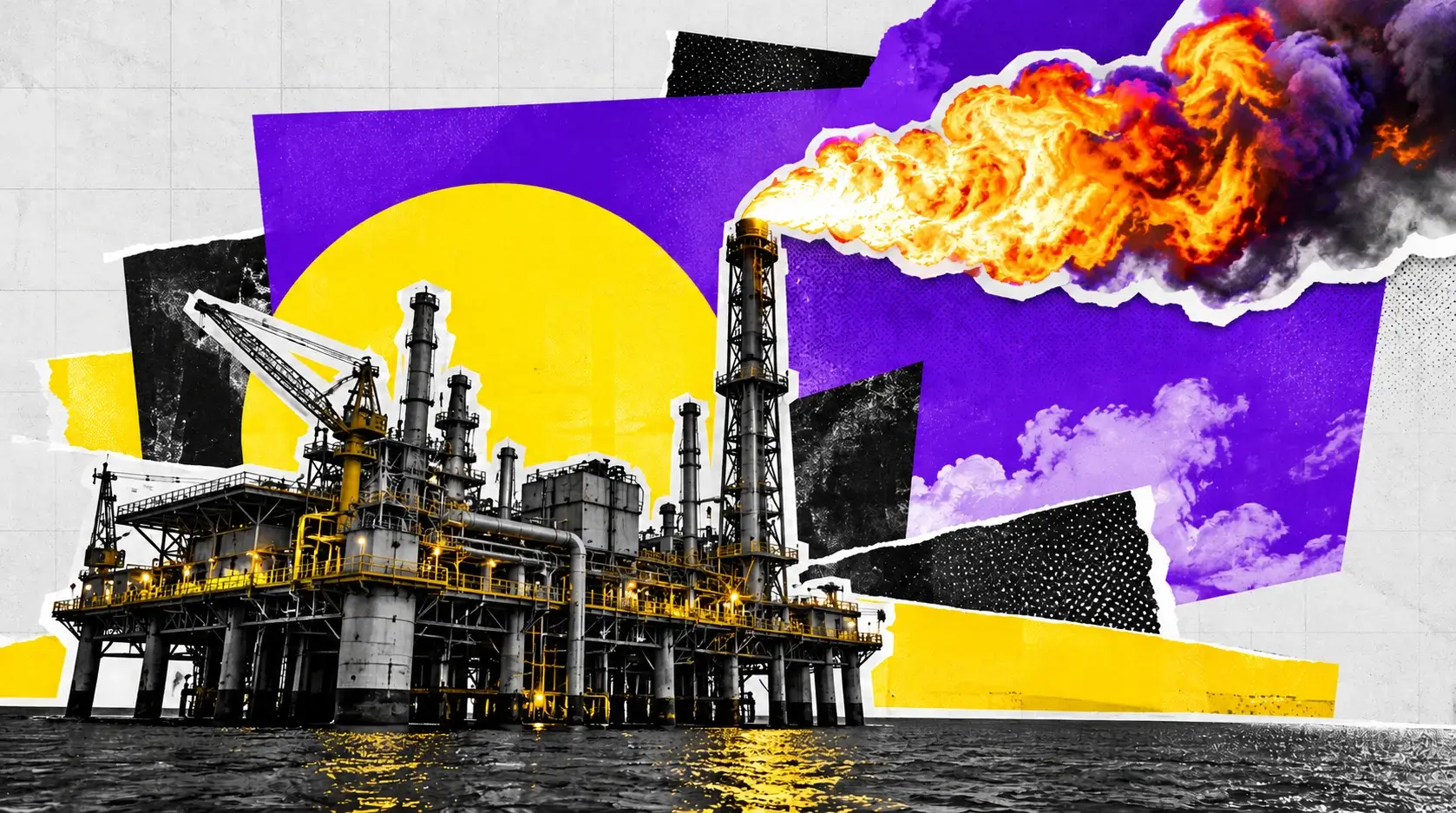
Brent crude (BZ=F) is trading at $104 per barrel on Tuesday, March 24, 2026 — up 43.15% from one month ago when it was at $71.58, and up 40.31% from one year ago when the global benchmark sat at $73.03. West Texas Intermediate (CL=F) has tracked nearly identically, with the gap between the two benchmarks remaining tight as the supply shock hitting both is the same: the Strait of Hormuz, through which approximately 20% of the world's daily oil and liquefied natural gas supply normally passes, has been effectively closed since the U.S.-Israeli strikes on Iran began on February 28. The most important number in oil markets right now is not the current price of $104 — it is the range that Brent has traded across in the past 72 hours alone: from a peak of $113 per barrel on Saturday when Trump threatened to "obliterate" Iranian power plants if Hormuz was not reopened, to a crash below $100 on Monday when Trump claimed "productive conversations" with Tehran, to a recovery back to $104 on Tuesday after Iran flatly denied any talks had occurred and fired a new wave of missiles at Israeli targets. That $13 per barrel intraday range — from $112 to below $100 and back to $104 — in a single 24-hour window is not normal oil market behavior. It is a market being held hostage to a single variable — U.S.-Iran diplomacy — that is simultaneously the most important and least predictable force in global commodities right now.
As of 8:15 AM Eastern on Tuesday, Brent was trading at $102.47 — up $1.03 from Monday morning's $101.44. That price represents a 43.15% increase from one month ago and a 40.31% increase from one year ago. Every percentage point of that increase is a direct tax on every economy in the world that imports oil — which is most of them — and a direct transfer of wealth to every economy that exports it — which includes the United States, Russia, Saudi Arabia, and a handful of others whose strategic positions in this conflict are therefore fundamentally different from the consuming nations absorbing the shock.
Trump's Truth Social Post Moved $113 Oil to $99 in Hours — Then Iran Denied It and Oil Went Back to $104
The sequence of events that produced Monday's extraordinary oil price collapse and Tuesday's reversal is worth examining in granular detail because it illustrates precisely how fragile the de-escalation thesis is and why any analysis of oil prices that does not treat the conflict as the primary variable is analytically incomplete. On Saturday, Trump issued an ultimatum: reopen the Strait of Hormuz within 48 hours or face U.S. strikes on Iranian power plants and energy infrastructure. Iran responded by threatening to target key infrastructure across the Gulf region in retaliation — a threat that pushed Brent crude to $113 per barrel as energy traders priced in the worst-case scenario of both sides escalating simultaneously.
Then on Monday morning, Trump posted on Truth Social claiming the U.S. and Iran had held "COMPLETE AND TOTAL" resolution discussions over the weekend — language that was extraordinary in its specificity and optimism. Oil collapsed. Brent fell more than 8% from $112 to around $99 per barrel in a matter of hours — one of the largest single-session percentage declines for crude in recent history. The S&P 500 (^GSPC) simultaneously ripped higher by 1.4%. The relief trade was instantaneous and enormous in scale.
By Monday afternoon, Tehran's response was unequivocal. Iran's government dismissed Trump's claims as "an attempt to manipulate markets." Iran's foreign ministry stated categorically that no direct or indirect communications had occurred with Washington. The Fars news agency — Iran's semi-official news outlet — confirmed there were no negotiations. By Tuesday morning, Brent was recovering toward $104 and WTI was back above $91. The Philippines declared a national energy emergency, citing "imminent danger" to its energy supplies from the conflict. Iran fired a new wave of missiles after denying the Trump talks claim. The Strait of Hormuz remained effectively closed. The oil price that resulted from factoring all of that in — $104 for Brent — is a more accurate reflection of the market's actual assessment of the geopolitical situation than the Monday low of $99, which was based on a Trump social media post that the counterparty denied within hours.
The One-Month Price History That Captures the Full Scale of the Shock: +43% From $71.58 to $102.47
The one-month oil price chart is the most damning piece of evidence that the Iran war represents a genuinely historic energy shock rather than a temporary geopolitical premium that will quickly fade. One month ago, Brent was trading at $71.58 per barrel. Tuesday's $102.47 represents a 43.15% increase in 30 days. For context, a 10% rise in oil prices historically reduces global GDP growth by 0.1% to 0.2%, according to BP's chief economist Gareth Ramsay. The market is currently absorbing a 40%+ increase — which, by Ramsay's own scaling, implies a reduction in global economic growth of approximately 1% — what he described at CERAWeek as a "significant global slowdown." That assessment is not alarmist. It is arithmetic applied to a supply shock of a scale that, as BP's chief economist also noted, has "no comparison" in the history of modern oil markets.
The U.S. Strategic Petroleum Reserve — designed specifically for this type of supply emergency — has been deployed, but the International Energy Agency's record release of strategic crude has been insufficient to meaningfully offset the closure of the Strait of Hormuz, which carries 15 to 16 million barrels per day of oil flow that simply no longer reaches global markets. The U.S. has also temporarily waived sanctions on Russian and Iranian oil already at sea in an attempt to ease shortages — a decision that has prompted significant outrage among European allies who have spent years building a sanctions regime specifically designed to prevent that outcome.
UK businesses reported their biggest monthly rise in input costs since 1992, according to the S&P Global PMI data released Tuesday. That is not a coincidence of timing — the last time UK input costs rose this sharply in a single month was during a period of significant energy disruption in the early 1990s. The current shock is already producing cost transmission into the real economy at a speed that matches the most severe prior oil shock in living memory for most business operators currently running companies in Britain.
China, which is one of the world's largest oil importers and therefore one of the economies most exposed to the Hormuz closure, dialed back planned fuel price hikes on Tuesday specifically to "reduce the burden" on drivers and industrial users. That policy response — absorbing the cost at the national level rather than passing it through to consumers immediately — is sustainable only as long as China's fiscal resources allow. It is not a solution to the oil shock; it is a delay of the shock's full transmission into the Chinese economy.
Russia's Budget Rule Crisis That Brent at $104 Just Solved — And What It Means for the Duration of the War
One of the most underappreciated second-order consequences of the oil price surge driven by the Iran war is what it has done to Russia's fiscal position — and by extension, what it suggests about Moscow's interest in seeing the conflict resolved quickly. Russia's oil and gas revenues fell nearly 50% year-on-year in January and February 2026. The federal budget deficit widened to 3.45 trillion rubles — approximately $42 billion — or 1.5% of GDP, against a full-year target of 3.8 trillion rubles. Officials were actively weighing a 10% cut in non-military and non-social spending, and the Finance Ministry was preparing to revise the fiscal rule — specifically to lower the oil cut-off price that determines when excess oil revenues flow into Russia's National Wealth Fund — from $59 per barrel toward $55 per barrel by 2030. At the start of 2026, analysts were warning that the NWF's liquid assets, which stood at $52 billion as of March 1, could be depleted within a year at the spending rate Moscow was running.
Then the Iran war started, and Brent went from $73 to $104. Russia's budget problem evaporated overnight. Deputy Finance Minister Vladimir Kolychev confirmed to Reuters on Tuesday: "The issue is not being discussed for the current year. The Ministry of Finance has no such proposals." The cut-off price remains at $59 per barrel — well below current market levels of approximately $100 — meaning the NWF is being replenished without any policy changes whatsoever. Preliminary calculations show Russia's oil and gas revenues could jump approximately 70% in April from March levels as higher global prices feed through to export receipts, reaching their highest monthly level since October 2025. Russia also shelved the previously considered spending cuts, with Kolychev ruling out budget reductions for the current year.
The geopolitical implication of this fiscal windfall is uncomfortable but necessary to state directly: Russia has no financial incentive to see the Iran war end quickly. Every month that Brent trades above $80 — let alone above $100 — is a month that Russia's fiscal position improves relative to where it was heading in early 2026. The U.S. sanctions waiver on Russian oil already at sea has further benefited Moscow financially by allowing stranded cargoes to reach buyers without confiscation risk. Moscow's public position — that "only diplomacy can resolve the Middle East war" — is correct in its substance but convenient in its timing. A diplomatically resolved Iran war that returns Brent to $73 would cost Russia approximately $42 billion annually in oil export revenue. That financial reality shapes every Russian policy calculation related to the conflict.
Finance Minister Anton Siluanov had said on February 25 — three days before the war started — that changes to the budget rule would be announced within two weeks. Instead, the war started, oil surged 40%, and those changes have now been deferred indefinitely. Putin has called for a "balanced approach" to using additional oil revenues. Central Bank Governor Elvira Nabiullina has urged caution in setting long-term oil price assumptions — the appropriate response of a policymaker who understands that a war-driven oil premium is temporary even if its duration is uncertain. But the near-term fiscal reality for Moscow is one of unexpected abundance, and abundance does not create urgency for resolution.
Read More
-
Yen Stalls at 160 Despite a 3% JGB and Tokyo Core CPI at 2.0% — Intervention Sits at 164, Friday's Payrolls Decide
02.09.2026 · TradingNEWS ArchiveEnergy
-
QQQ ETF ($706.22) Slides 7.4% Below Its High as the Market Reprices the AI Capex Bill — $686.57 Target if $700 Breaks
22.10.2026 · TradingNEWS ArchiveStocks
-
XRPI ($7.00) and XRPR ($10.74) Slide Toward 52-Week Lows as Spot XRP ETF Flows Stall at $708,510
22.10.2026 · TradingNEWS ArchiveCrypto
-
NG ($2.775) Decoupled From Europe’s €88 Gas Crisis as LNG Feedgas Hits 18.9 Bcf/d — $3.30 Upside on Cold Weather
22.10.2026 · TradingNEWS ArchiveCommodities
-
Dollar-Yen (157.35) Loses 157.65 as the Yen Rallies on Haven Demand — 155 Target if 156 Breaks
22.10.2026 · TradingNEWS ArchiveForex
The EU's Russian Oil Ban Is Officially on Hold — And the Druzhba Pipeline Is Adding a Political Crisis on Top of an Energy Crisis
The European Commission has delayed the presentation of its proposed permanent ban on Russian oil imports — legislation that was tentatively scheduled to be unveiled on April 15 and has now been removed from the calendar entirely, with no new date provided. The Commission's spokesperson Anna-Kaisa Itkonen told reporters Tuesday: "I do not have a new date to give." The delay is directly attributable to the Iran war driving Brent above $100 and making any legislative action that would further reduce Europe's oil supply options politically and practically untenable. The EU is already absorbing the worst energy shock in decades — adding a permanent Russian oil ban to that backdrop would be the energy policy equivalent of self-inflicted injury at the worst possible moment.
The legislative complexity is compounded by a simultaneous political crisis over the Soviet-era Druzhba pipeline — the aging infrastructure that carries Russian crude through Ukrainian territory to Hungary and Slovakia, the only two EU member states that still legally purchase Russian oil under an open-ended derogation to the existing sanctions regime. Kyiv says the Druzhba pipeline was severely damaged by Russian strikes in late January and requires repairs before transit can resume. Budapest and Bratislava contest this, arguing the pipeline is being deliberately kept shut for "political reasons" ahead of Hungary's April 12 elections — an accusation that has created a bilateral standoff that has, in turn, paralyzed a €90 billion loan package for Ukraine. That €90 billion figure is not a marginal diplomatic dispute — it is existential funding for Ukraine's war effort, held hostage by an argument over whether a pipeline is physically broken or politically blocked.
The proposed permanent Russian oil ban uses energy rather than foreign policy legislation, meaning it requires only a qualified majority rather than unanimity to pass — specifically designed to prevent Hungary and Slovakia from vetoing it, as they have repeatedly threatened to do. Both countries have launched legal action against the already-enacted gas ban and have threatened identical action if the oil proposal moves forward. The Commission's position — that the delay represents no change in policy intention — is technically accurate but practically irrelevant. A policy that cannot be introduced when oil is at $100 because the energy shock is too severe, and cannot be introduced when oil is lower because the political urgency has faded, may not be introduced at all within a politically useful timeframe.
The U.S. sanctions waiver on Russian oil — announced as a crisis management tool to ease global oil shortages — has produced what European Commission President Ursula von der Leyen described as the exact scenario she warned against: a "strategic blunder" of returning to Russian fossil fuels after years of explicit policy designed to eliminate that dependency. The irony is that the blunder was committed by Washington, not Brussels, but Europe absorbs the political and strategic consequences just the same.
Asian Markets, FTSE 100, DAX — How the World's Equity Markets Are Processing $104 Oil
The divergence in how different regional equity markets are absorbing the oil shock reflects the underlying asymmetry in who benefits and who suffers from $104 Brent crude. Asian markets were relatively stable on Tuesday, with Japan's Nikkei 225 up 0.8%, Hong Kong's Hang Seng gaining 1.6%, and South Korea's Kospi rising 2.2% — a recovery from the sharp declines on Monday when the sudden drop in oil prices actually rattled Asian markets because the region is so heavily dependent on oil imports that the Monday price collapse had raised fears of financial market volatility rather than providing relief. The counterintuitive reaction — Asian markets falling when oil fell on Monday — reflects the degree to which the Iran war's outcome uncertainty is more destabilizing than any specific oil price level.
Europe's reaction was more muted. The UK's FTSE 100 fell 0.3% in early trading before recovering ground by midday. Germany's DAX fell 0.9% in early trading before recovering. The PMI data released Tuesday — showing UK businesses reporting their biggest monthly input cost rise since 1992 — provides the fundamental context for why European equity markets are under persistent pressure. The stagflation dynamic — rising costs colliding with slowing activity — is exactly the environment that corporate margins cannot absorb without eventual earnings downgrades, and the market is beginning to price that reality in.
The U.S. S&P 500 (^GSPC) opened down 0.8% in early Tuesday trading before recovering — the same whipsaw pattern that has characterized every session since the war began. The market opens lower as the previous day's geopolitical optimism fades overnight, recovers as U.S. session buyers step in, and closes somewhere between the two extremes depending on whatever the latest Iran headline produces in the final hour of trading. This is not a market with fundamental conviction in either direction — it is a market lurching from headline to headline in a conflict that has no visible endpoint.
The Oil Price Verdict: Structurally Above $100 With $115 Upside Risk and No Clear Floor Until Hormuz Reopens
Brent crude (BZ=F) remains a buy on any dip toward $95–$100 until the Strait of Hormuz demonstrably reopens. WTI (CL=F) similarly — buy dips to $87–$90. The risk-reward on the long side remains highly favorable until a verified, sustained ceasefire produces observable Hormuz traffic restoration.
Goldman Sachs, which reiterated its oil forecast in a note late Monday, now sees Brent hitting $115 per barrel in April. Oxford Economics expects energy disruptions to persist for the remainder of 2026. Citi's bull case sits at $150 per barrel if neither military action nor diplomacy resolves the Hormuz closure and damage to regional energy infrastructure extends into mid-year or beyond. Those targets are not consensus — but they are directionally consistent with the fundamental supply-demand arithmetic: 15 to 16 million barrels per day of daily supply removed from the market by a closed Strait, with no quick replacement available because Saudi Arabia — the country most capable of rapidly increasing production — sits on the wrong side of Hormuz. Russia's fiscal windfall removes any Moscow incentive to mediate a quick resolution. The EU cannot even propose a Russian oil ban without triggering a political crisis. Iran is firing new waves of missiles after denying diplomatic talks. Every structural force in this market points in the same direction: higher for longer, with the downside risk being a single diplomatic development that, on the evidence of the past 48 hours, has proven impossible to achieve even when the President of the United States claims it has already happened.