Oil Price Forecast: Brent Holds $107, WTI at $102 as Hormuz Closure Drains Inventories at Record 8.5M bpd Pace
The IEA flags a 1.78 million barrel-per-day deficit for 2026 as Gulf output runs 14.4M bpd below pre-war levels | That's TradingNEWS
Key Points
- Brent (BZ=F) trades at $107 and WTI (CL=F) at $102 as Hormuz losses hit 14.4M bpd.
- IEA forecasts a 1.78M bpd 2026 deficit; global stocks drew 250M barrels in March-April.
- JPMorgan targets Brent at $96 in 2026 and $75 in 2027; jet fuel cracks hit $80-$100/bbl.
Brent crude (BZ=F) is trading at $106.60 to $107.50 per barrel on Wednesday, May 13, 2026, with West Texas Intermediate (CL=F) sitting between $101.67 and $102.30 per barrel. Spot Brent prints have run as high as $110.87 on the Fortune Wednesday 9 a.m. Eastern read, with the intraday move tracking a modest 0.39% gain against yesterday's $110.43 close. The OPEC basket sits at $115.10, up 6.90% on the day, while the Indian basket prints $109.10, up 6.37%. Murban crude trades at $105.20, down 0.80%. Natural gas sits at $2.879, up 1.27%. Gasoline futures trade at $3.648, down 1.34%, while heating oil prints $4.005, down 3.70%. WTI Midland sits at $104.90, up 0.49%. The trailing performance tells the story of how aggressively this market has repriced — Brent is up 5.42% over the trailing month, up roughly $44 per barrel or 65.37% from where it traded one year ago at $67.04. The cumulative gain from the pre-war January base has been historically unprecedented, with North Sea Dated trading in a $50-per-barrel range during April alone — from a peak of $144 to lows under $100 — before settling at the current $110 area. The April monthly average for North Sea Dated printed at $120.36, up roughly $16.50 month-over-month, while Dated's premium to ICE Brent futures spiked to a record $35 per barrel in mid-April before compressing back to $3 per barrel by early May. The volatility regime currently active in the oil complex is structurally different from anything traded since modern futures markets began in the 1980s, and that is the most important context for everything that follows.
The Unprecedented Supply Shock Tearing Through The Market
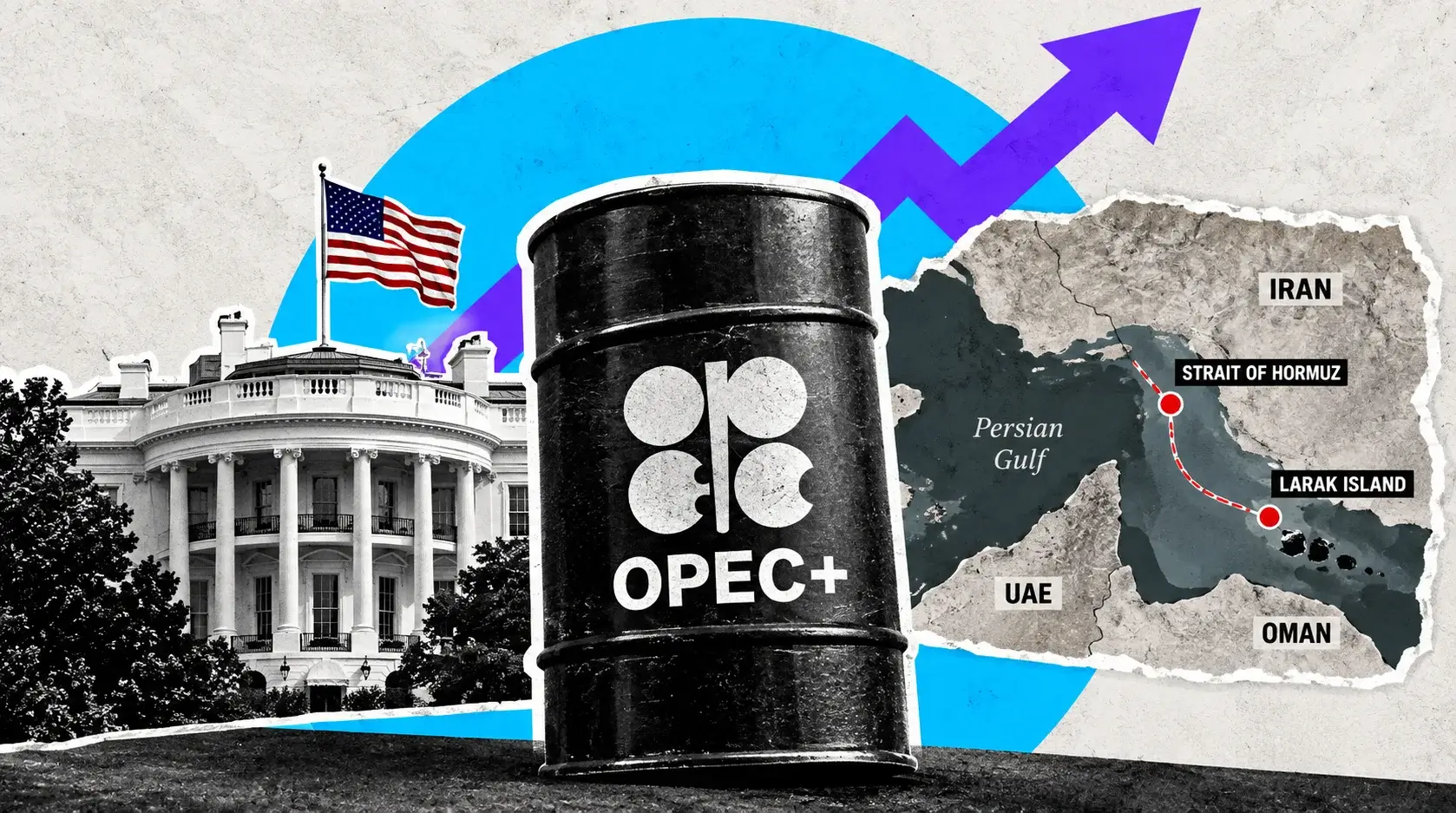
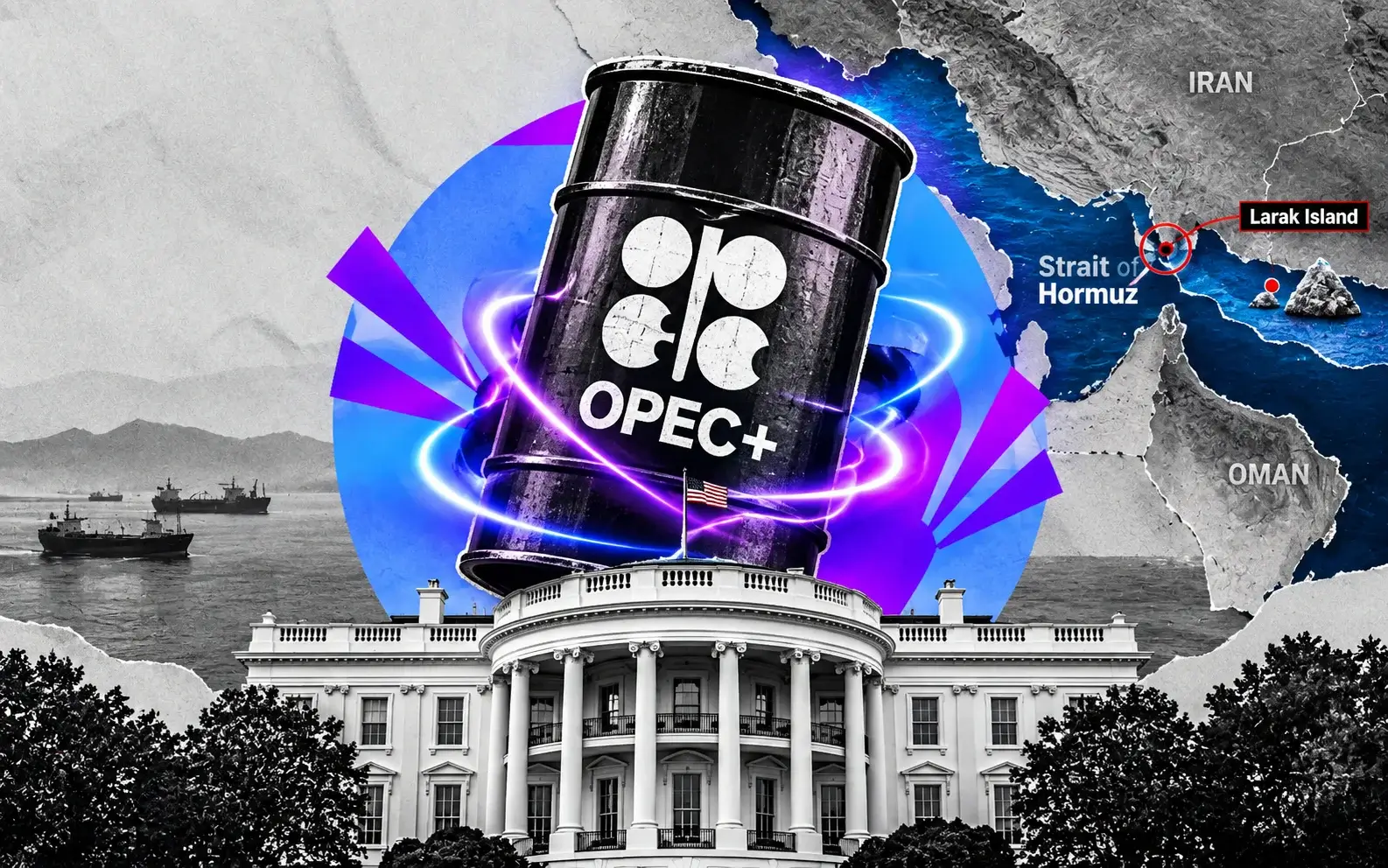
The single most important fact governing oil prices right now is the scale of the supply disruption. The International Energy Agency's May 2026 Oil Market Report — released Wednesday — confirmed that global oil supply declined by a further 1.8 million barrels per day in April to 95.1 million barrels per day, bringing total supply losses since the war began on February 28 to 12.8 million barrels per day. The Gulf countries affected by the closure of the Strait of Hormuz are producing 14.4 million barrels per day below pre-war levels. Cumulative supply losses already exceed 1 billion barrels, with more than 14 million barrels per day of oil currently shut in. Saudi Aramco CEO Amin Nasser and IEA chief Fatih Birol have both described this as the largest oil supply disruption in the history of the oil market — language that is neither hyperbolic nor disputed by serious analysts. Morgan Stanley's Martijn Rats has separately confirmed that framing, forecasting an additional billion barrels lost over the course of 2026 due to the time required to restart oilfields, repair refineries, and reposition the tanker fleet. The market has never absorbed a shock of this magnitude — the closest historical analogues would be the 1956 Suez Crisis or earlier geopolitical supply shocks that predate modern futures markets entirely. Across more than a millennium of recorded history — from medieval spice and silk routes through Gulf commerce, Baluchi piracy, and even the eight-year Iran-Iraq War when hundreds of tankers were attacked — the Strait was repeatedly threatened but never effectively closed. Since March 2, vessel transit through the Strait has slowed to a near standstill, marking the first near-complete halt in its recorded history.
The IEA's Revised Demand And Supply Map
The May Oil Market Report has materially repriced the entire balance sheet. Global oil demand is now forecast to contract by 420,000 barrels per day year-on-year in 2026, falling to 104 million barrels per day — a downward revision of 1.3 million barrels per day from the pre-war forecast. The steepest contraction lands in Q2 2026, where demand is expected to fall by 2.45 million barrels per day, with OECD accounting for 930,000 barrels per day of that decline and the non-OECD accounting for the remaining 1.5 million barrels per day. The petrochemical and aviation sectors are absorbing the most damage so far, but higher prices, a deteriorating economic environment, and demand-saving measures will progressively impact broader fuel use. Assuming flows through the Strait gradually resume from June, global oil supply is projected to average 102.2 million barrels per day across 2026 — a decline of 3.9 million barrels per day on an annual basis. Refinery crude throughputs are forecast to plunge by 4.5 million barrels per day in Q2 2026 to 78.7 million barrels per day, and by 1.6 million barrels per day to 82.3 million barrels per day for 2026 as a whole. Despite the historic demand destruction, the market remains in deficit by 1.78 million barrels per day for the year, with the steepest inventory draws projected in May and June. Global oil inventories are expected to fall by an average of 8.5 million barrels per day during Q2 2026.
Inventory Drawdown At A Record Pace
The inventory tape is the cleanest evidence that the market is not in a transient phase. Global observed oil inventories drew by 129 million barrels in March and a further 117 million barrels in April per preliminary data — a cumulative 250 million barrel draw across two months, or roughly 4 million barrels per day. The composition of the April draw is revealing: on-land stocks dropped 170 million barrels, equivalent to 5.7 million barrels per day, while oil on water rebounded by 53 million barrels as tankers were rerouted around the Strait choke point. OECD on-land stocks collapsed by 146 million barrels, or 4.9 million barrels per day, while visible non-OECD stocks fell 24 million barrels. The IEA has explicitly warned that OECD commercial inventories are on track to approach operational stress levels by early June — the kind of threshold that historically forces violent price action because operational floors leave no margin for further drawdown. The 32 IEA member countries have released a combined 400 million barrels from commercial and government strategic storage to offset some of the losses, but the math is unforgiving. Even with that strategic petroleum reserve drawdown, the market will face a significant deficit through year-end that keeps prices structurally elevated. The U.S. Strategic Petroleum Reserve is functioning exactly as designed during a crisis of this magnitude, but it cannot bridge a 10-plus-million-barrel-per-day supply gap indefinitely.
JPMorgan's First Oil Price Forecast In Two Months
JPMorgan's commodities strategy team, led by Natasha Kaneva, published its first formal oil price forecast in two months on Monday. Brent is now projected to average $96 per barrel in 2026 and $75 per barrel in 2027. WTI is projected to average $89 per barrel this year and $70 per barrel next year. Kaneva's team explicitly explained why they refrained from publishing price targets for two months — in an environment where information moves fast but is often unreliable, point forecasts risk producing classic garbage-in, garbage-out outcomes. There is no true analogue in the modern oil futures market for a disruption of this magnitude, and applying standard models to the current environment risks extrapolating from a dataset that simply does not contain this kind of shock. When the JPMorgan model was forced to generate an explicit price path in early March, it implied Brent would average around $100 across March, April, and May — a number that initially appeared implausibly low given the scale of the disruption. Directionally, the framework was correct — Brent averaged $99 in March and $102 in April. Kaneva's framework identifies four key mechanisms shaping current price formation. First, the starting point matters more than the shock size — entering 2026 with swollen inventories and an estimated fair value near $60 reduced the price response relative to the 2022 Russia-Ukraine setup that started near $90 fair value. Second, duration dominates scale — the market is less concerned with disruption size in isolation than with how long it persists. Third, the nature of the shock matters — this is not a conventional price-led adjustment because the scale and location imply demand is removed through availability constraints rather than price. Fourth, the adjustment is shifting down the barrel — a larger share of dislocation is showing up in refined product cracks rather than flat crude prices, redistributing the price signal along the value chain and allowing crude benchmarks to remain lower than the supply shock would otherwise imply.
The Refined Products Crisis That Is Becoming The Real Story
The most acute pressure point in the entire oil complex right now is not crude — it is refined products. Jet fuel prices have nearly doubled across Asia, Europe, and the United States, with jet cracks widening to an extraordinary $80 to $100 per barrel over crude. Crack spreads are the market's way of telling refiners what to maximize, and the current signal is unambiguous: produce as much jet fuel as possible. JPMorgan's analysts explicitly argue that crude could plausibly stabilize around $100 even as product cracks widen sharply, with the next phase of the shock looking less like a classic crude spike and more like a refining and end-user fuel crunch. S&P Global Energy's Fuels and Refining team has framed this with even sharper language — refined product markets have crossed a critical threshold where a historic supply disruption is evolving into an outright demand crisis. S&P now expects global refinery runs to decline 5.2 million barrels per day in Q2 2026 and 2.7 million barrels per day in Q3 2026 on a year-on-year basis, with global crude runs falling 1.9 million barrels per day on an annual average basis. The magnitude of losses in refinery runs will be largely mirrored in refined product demand reductions, with year-on-year declines of 4.4 million barrels per day in Q2 and 2.2 million barrels per day in Q3, producing an annual decline of 1.8 million barrels per day. The Q2 demand decline is more than twice the magnitude experienced during the weakest quarter of the 2008-2009 Great Recession — still trailing the supply loss with inventory draws making up the balance. Daniel Evans, Vice President and Global Head of Fuels and Refining Research at S&P Global Energy, has framed the moment as crossing the Rubicon — given the lags between any potential restart of Hormuz flows and meaningful relief reaching product supply, the market equation cannot be solved without demand acting as the balancer.
OPEC+ Output Adjustments And The UAE Departure
The cartel side of the supply equation has gone through structural change. OPEC+ agreed to a 188,000 barrel per day output increase for June at its May 3 meeting, slightly less than the 206,000 barrel per day hike for May. The June figure excludes the United Arab Emirates share of output — the UAE officially departed OPEC on May 1, marking the first major member exit from the cartel in over a decade. The seven remaining members covered by the agreement are Saudi Arabia, Russia, Iraq, Kuwait, Kazakhstan, Algeria, and Oman. The granular IEA data shows the magnitude of the disruption inside OPEC itself. Saudi Arabia produced 6.98 million barrels per day in April, running 3.18 million barrels per day below target against sustainable capacity of 12.11 million barrels per day. Iraq printed 1.35 million barrels per day, running 2.85 million barrels per day below its 4.20 million barrels per day implied target. Kuwait produced 0.57 million barrels per day, sitting 2.02 million barrels per day below target. The UAE's last reported figure was 2.44 million barrels per day, 0.94 million barrels per day below target. Total OPEC-9 production printed at 14.33 million barrels per day in April, running 9.03 million barrels per day below the 23.36 million barrels per day implied target. Total OPEC including Iran, Libya, and Venezuela came in at 20.18 million barrels per day. Russia produced 8.83 million barrels per day, running 0.81 million barrels per day below target against 9.40 million barrels per day capacity. Kazakhstan printed 1.86 million barrels per day. Total OPEC+ across all 18 nations in the original November 2022 deal produced 26.9 million barrels per day in April, running 9.25 million barrels per day below combined targets against a 36.15 million barrels per day allocation and 40.43 million barrels per day total sustainable capacity.
Read More
-
Yen Stalls at 160 Despite a 3% JGB and Tokyo Core CPI at 2.0% — Intervention Sits at 164, Friday's Payrolls Decide
02.09.2026 · TradingNEWS ArchiveEnergy
-
Dell Rebounds to $565.86 as a $95 Billion AI Backlog Meets 22x Forward Earnings — $595 High in Sight
25.09.2026 · TradingNEWS ArchiveStocks
-
XRP-USD ($1.53) Outperforms as ETF Inflows Return, but August Buyers Guard $1.60 — $1.70 Upside vs. $1.25 Floor
25.09.2026 · TradingNEWS ArchiveCrypto
-
Brent Holds $105 While WTI Heads for a 7% Weekly Loss as a 3M-Barrel Build and a Diesel Ban Threat Split the Market
25.09.2026 · TradingNEWS ArchiveCommodities
-
S&P 500 Gains 0.22%, Nasdaq Tops 27,000, Dow Up 0.40% on MSFT Launch and AKAM Deal
25.09.2026 · TradingNEWS ArchiveMarkets
-
Sterling Slides to 1.3216 as a Divided Bank of England Trails the Fed — 1.3424 Upside vs. 1.3000 Risk
25.09.2026 · TradingNEWS ArchiveForex
The Atlantic Basin Response And U.S. Production Surge
The supply response from non-Middle Eastern producers has been substantial but insufficient to plug the gap. The IEA has revised 2026 supply growth expectations from the Americas higher by more than 600,000 barrels per day since the start of the year, to an average of 1.5 million barrels per day for the full year. Atlantic Basin crude oil exports have increased by 3.5 million barrels per day since February, primarily heading to hard-hit East of Suez markets, with notable gains from the United States, Brazil, Canada, Kazakhstan, and Venezuela. Russia's crude oil exports have also risen as repeated attacks on its refineries have cut domestic use and pushed more barrels into the export market — the United States has temporarily waived sanctions on Russian oil on water specifically to keep those barrels flowing into the global system. Saudi Arabia and the UAE have successfully redirected some exports to terminals loading outside of the Strait of Hormuz, partially compensating for the lost Gulf-routed flows. Higher production and exports from the Atlantic Basin are providing meaningful relief, but the structural reality is that no combination of non-Middle Eastern producers can replace the 14.4 million barrels per day deficit the Gulf has dropped into the system.
The Asian Demand Collapse
The demand-side response has been most visible in the major Asian importing economies. Chinese seaborne crude imports fell by 3.6 million barrels per day from February to April per Kpler data — an extraordinary contraction by historical standards. Japan reduced imports by 1.9 million barrels per day over the same window, South Korea cut imports by 1 million barrels per day, and India reduced imports by 760,000 barrels per day. The combination of those four Asian importing nations represents a 7.26 million barrels per day reduction in crude purchases across two months. Japan's refinery utilization has dropped to 73% as the country drains strategic oil stocks to compensate for the import collapse. Brazil's oil exports to China have doubled as the war upends traditional crude flows. China's teapot refiners have slashed output as the Hormuz crisis has crushed refining margins. Chinese car sales are slumping as gasoline demand craters under the weight of higher pump prices. India's Prime Minister Modi has urged citizens to conserve fuel as the oil shock spreads, and has ordered a 50% reduction in motorcade size specifically to save fuel — a politically symbolic move that signals how serious the supply situation has become. India's state retailers are paying billions to maintain Modi's fuel price freeze. India has separately rejected Russian LNG under sanctions, complicating its energy diversification strategy. China's LNG imports have rebounded from an eight-year low but remain depressed relative to historical norms.
The European And Industrial Demand Picture
European demand has held up relatively better than Asia but is showing genuine stress. Europe's chemicals sector has received a brief reprieve from the worst of the input-cost surge, but the structural pressure remains intact. Europe's renewable-plus-battery market is set to quintuple by 2030 as the continent accelerates its move away from oil-dependent infrastructure. Europe's dependence on U.S. LNG is set to surge as alternative supply sources fail. Europe's gas industry is seeking relief from storage mandates as the crisis stretches into a third month. Shell is moving to exit the French fuel retail market in a strategic pivot that reflects the changing economics of the downstream sector. Eni is looking to cash in on the LNG boom with a Floating LNG fund deal. The petrochemical sector globally is bearing the steepest losses because feedstock availability is becoming increasingly constrained. Aviation activity is running well below normal levels, which has helped ease some pressure on jet fuel prices, but the IEA still expects higher prices, a deteriorating economic environment, and demand-saving measures to further weigh on global oil consumption through year-end.
Strategic Reserve Activity And Government Releases
The 32 IEA member countries have collectively released 400 million barrels from commercial and government strategic storage to offset some of the supply losses — the largest coordinated strategic petroleum release in history. The drawdowns are providing temporary buffers but cannot indefinitely bridge a 10-plus-million-barrel-per-day supply gap. The U.S. Strategic Petroleum Reserve, originally established to safeguard energy security during disasters, sanctions events, or war, is now operating exactly as designed. The IEA has explicitly warned that even with strategic releases continuing, the market will face a significant deficit that could keep prices high through year-end. JPMorgan's framework points specifically to OECD commercial inventories approaching operational stress levels by early June — the kind of threshold that historically forces violent price action because below operational floors, the system cannot continue functioning without rationing. Rationing can extend the runway, potentially pushing the inventory draw toward June 30, but at the cost of reduced consumption, lower refinery runs, and a broader economic slowdown.
JPMorgan's Strait Reopening Base Case
JPMorgan's analysis points to the Strait reopening anchored simplistically on June 1, with the market requiring a clear, credible announcement ratified and confirmed by both sides — such as a statement from the United Nations Security Council. The Hormuz blockade has now run for more than ten weeks, and the analytical framework has shifted away from headline-driven expectations about reopening and toward the underlying physical dynamics of the market. The conclusion is that one way or another, the Strait reopens in June, because the pace of inventory depletion will force the system toward resolution. Going into 2026, JPMorgan's base case treated a large-scale military attack on Iran as a very low-probability event precisely because of the cascading consequences that are now playing out. The unprecedented has occurred. The Strait of Hormuz has been effectively closed for the first time in recorded history, marking a clean break from more than a millennium of geopolitical precedent. The market is being asked to absorb a shock that has no historical comparison in the modern futures era.
Cross-Asset Repricing And Inflation Pass-Through
The inflation backdrop from the oil shock is genuinely transforming the entire macroeconomic landscape. The April Consumer Price Index print released Tuesday accelerated to 3.8% year-on-year from 3.3% in March — the highest annual reading since May 2023, driven directly by energy costs. The April Producer Price Index released Wednesday jumped 1.4% month-on-month against a 0.5% consensus, the largest monthly wholesale inflation gain since March 2022, with annual PPI hitting 6%. The 10-year Treasury yield has punched to 4.48%, a ten-month high. China's CPI has jumped as the Middle East crisis pushes energy costs higher. Global coal demand is surging as the Middle East energy crisis deepens — Japan and South Korea have turned to coal to backfill the LNG supply shortfall. The Federal Reserve chair transition arrives Friday, May 15, when Jerome Powell hands the gavel to Kevin Warsh. The Trump-Xi Beijing summit is currently underway, with crude markets watching closely for any sign of diplomatic progress that could pressure Iran toward a settlement. Brent crude has not yet reached its full upside potential per JPMorgan's analysis, and neither has the U.S. dollar. The U.S. EIA projects a 2.6 million barrels per day reduction in global oil stockpiles by 2026 assuming the Strait reopens by the end of May — significantly higher than the previous 300,000 barrels per day forecast.
Russia, Iraq, And The Sanctions Landscape
Russia's oil revenues have surged $6.3 billion as high prices offset production losses — a structural shift in the energy market geopolitics that benefits Russia even as broader supply disruption persists. A Reuters survey shows OPEC oil output at a 26-year low amid the Iran war. The U.S. has temporarily waived sanctions on Russian oil on water specifically to keep barrels flowing through the disrupted system. Iraq has denied U.S. claims that its Deputy Minister helped Iran's oil sales, but the diplomatic tension remains active. The first Mexican fuel oil cargo in nine months has arrived in Asia, providing a marginal additional supply source. The U.S. has hit Iran-flagged oil tankers even while peace talks continue, signaling that the military pressure campaign remains active in parallel with diplomatic efforts. Iran has seized a tanker carrying its own oil in a peculiar incident that highlights the breakdown of normal commercial shipping operations. Kuwait has declared force majeure as U.S. seizure of Iranian ships has escalated tensions. The first LNG tanker has broken the Hormuz blockade, and Chinese oil tankers are testing safe passage through the Strait — early signals that physical flows could resume sooner than the JPMorgan June 1 base case if the diplomatic and security situation evolves favorably.
The Bull Case For Oil Prices
The bull case for crude rests on a stack of specific quantitative drivers. Cumulative supply losses already exceed 1 billion barrels with more than 14 million barrels per day shut in. The IEA forecasts a 1.78 million barrels per day deficit for 2026 even with demand contraction of 420,000 barrels per day. OECD commercial inventories are on track to approach operational stress levels by early June. The market is drawing inventories at an average of 8.5 million barrels per day in Q2 2026. Refinery runs are crashing 5.2 million barrels per day year-on-year in Q2 and 2.7 million barrels per day year-on-year in Q3. Jet fuel cracks have spiked to $80 to $100 per barrel — an extraordinary refining margin that signals genuine supply scarcity. OPEC+ is producing 9.25 million barrels per day below combined targets. The Strait of Hormuz has experienced its first near-complete halt in recorded history. JPMorgan's 2026 Brent average forecast at $96 per barrel is roughly 10% below current spot — an unusually conservative number that reflects model limitations rather than structural bearishness. Morgan Stanley expects another billion barrels of supply losses over the course of 2026 due to restart timing. Russia, Saudi Arabia, and Atlantic Basin producers cannot mechanically replace the Gulf supply deficit.
The Bear Case For Oil Prices
The bear case is structurally specific. The 420,000 barrels per day demand contraction is the cleanest historical evidence of significant demand destruction occurring at current price levels — the actual realized demand response is far larger than typically modeled. The S&P Global framework specifically argues that Q2 demand decline is more than twice the magnitude experienced during the 2008-2009 Great Recession's weakest quarter, signaling that price-driven destruction is genuinely capping the upside in flat crude. JPMorgan's analytical framework shows that crude can stabilize around $100 even as refined product cracks widen sharply — the adjustment is shifting down the barrel rather than appearing in flat crude prices. The 400 million barrel coordinated strategic petroleum release is providing meaningful supply offset. OPEC+ has agreed to 188,000 barrels per day of additional June output. Atlantic Basin exports have surged 3.5 million barrels per day since February. Chinese oil tankers are already testing safe passage through Hormuz, and the first LNG tanker has broken the blockade — early operational signals that flows could resume sooner than the June 1 base case. JPMorgan's 2027 forecast at $75 Brent and $70 WTI explicitly signals that the analyst consensus expects significant retracement once the disruption resolves. Higher prices, deteriorating economic conditions, and demand-saving measures are progressively reducing the supply-demand gap that supports current price levels.
The Strategic Read On The Setup
The decision framework for crude oil at $107 Brent and $102 WTI sits squarely between two specific scenarios with binary outcomes. The bullish scenario assumes the Strait of Hormuz remains effectively closed through June and beyond, OECD commercial inventories breach operational stress levels in early June, refined product cracks continue widening to extreme levels, and crude prices spike toward $144 per barrel or higher as physical scarcity forces price-driven rationing. The bearish scenario assumes the JPMorgan June 1 reopening base case plays out, supply gradually resumes through Q3, demand destruction continues compressing the supply-demand gap, and prices retrace toward the JPMorgan $96 Brent and $89 WTI averages for 2026. The asymmetry between the two scenarios is genuinely binary — the next four to six weeks of headlines from the diplomatic track, the Bessent-Iran negotiations, the UN Security Council, and the physical tanker traffic data will determine which path the market takes. Position sizing should account for the fact that the next decisive move is likely to be at least 10% to 20% in either direction given the volatility regime already present on the chart, combined with the inventory deadline approaching in early June.
The Trade
The honest read on crude at $107 Brent (BZ=F) and $102 WTI (CL=F) is that the path of least resistance over the next four weeks is to the upside until either the Strait of Hormuz physically reopens or OECD commercial inventories breach operational stress levels and force a violent demand-rationing event. The asymmetry favors the bullish side over the near term because the inventory drawdown at 8.5 million barrels per day in Q2 is mechanically unsustainable, the 14.4 million barrels per day Gulf supply deficit cannot be replaced by alternative producers, the refined product crisis is widening rather than narrowing, and the JPMorgan inventory framework points to early June as the structural decision point. The medium-term thesis tilts bearish if the JPMorgan June 1 Strait reopening base case plays out, with $96 Brent and $89 WTI as the consensus 2026 average targets and $75 Brent and $70 WTI as the 2027 targets. The recommendation reads buy or hold for participants already long with conviction on the near-term inventory tightness through end-of-June, with the option of reducing exposure into any decisive diplomatic catalyst that signals genuine Strait reopening. The recommendation for participants without exposure reads cautious buy on dips toward the $100 Brent level, with stop-loss management beneath $95 to protect against a sudden ceasefire announcement. The position bias on Brent (BZ=F) reads cautiously bullish in the near term with a price target of $120 to $130 if the inventory stress scenario materializes, neutral on the medium-term horizon contingent on the Strait reopening timeline, and bearish on the longer-term outlook with a $75 to $96 target range as the JPMorgan consensus path. The position bias on WTI (CL=F) reads the same directional sequence with proportionally lower price targets of $115 to $125 near-term and $70 to $89 longer-term. The trade for active participants reads long crude with a 6-week tactical horizon and managed risk through the early-June inventory deadline, with the strategic exit trigger being either a UN Security Council statement confirming Strait reopening or a decisive break beneath $95 Brent that signals the demand-destruction mechanism has fully balanced the supply shock.