Oil Price Forecast - Fed Outlook Shape Oil’s Path to $70 as Oil Hold Above $60
Crude oil steadies near $60–$64, supported by Black Sea disruptions, U.S. rig expansion, and OPEC+ supply discipline | That's TradingNEWS
Oil Market Forecast: WTI (CL=F) and Brent (BZ=F) Face Crosscurrents as Geopolitical Risk Clashes With Weak Fundamentals
WTI and Brent Hold Above $60 Amid Supply Shifts and Geopolitical Volatility
WTI Crude (CL=F) traded near $60.08, up 0.69%, while Brent (BZ=F) settled around $63.75, rising 0.77%, as investors weighed conflicting forces between geopolitical instability and weakening demand indicators. The market remains pinned near a key breakout range between $59–$63, signaling hesitation ahead of the FOMC decision and potential policy recalibration. Ongoing tensions in the Black Sea, where a sanctioned Chinese-owned tanker was struck by Ukrainian naval drones, reignited supply-chain risk. The Kairos tanker, damaged near Bulgaria’s coast, underscores how fragile maritime routes have become, especially for Russian-linked crude flows.
U.S. Inventories, Sanctions, and FOMC Sentiment Shape Short-Term Price Dynamics
U.S. crude stockpiles reversed from a draw of –3.4 million barrels to a build of +2.8 million, pushing total inventories to 426.9 million barrels. The uptick came even as production held near 13.81 million barrels per day, the highest since mid-2023. Despite the supply rise, traders remain cautious, as Fed rate cut expectations continue to buoy risk appetite across commodities. The potential for two rate cuts in early 2026 is reinforcing a near-term floor for crude, helping prices stabilize around $60. However, weaker U.S. fuel demand and easing sanctions on Lukoil threaten to offset that optimism, keeping the WTI trend in a neutral-to-bullish hold.
Brent Price Channel and Technical Pressure Zones
Brent (BZ=F) continues to track within a two-year descending channel, with prices oscillating around the midpoint near $63–$64. A decisive weekly close above $66.40 would open the path toward $70, aligning with the upper boundary of its six-month resistance channel. Below $60, the trendline support near $57.70 becomes critical, while extended losses could send Brent to $52, mirroring the structural weakness seen in USOIL near $49. Despite the bearish macro backdrop, momentum oscillators signal potential bottom formation, supported by strong bids from refiners in India and China, who continue expanding crude purchases under fresh import quotas.
OPEC+ Output Strategy and Heavy Crude Market Disruption
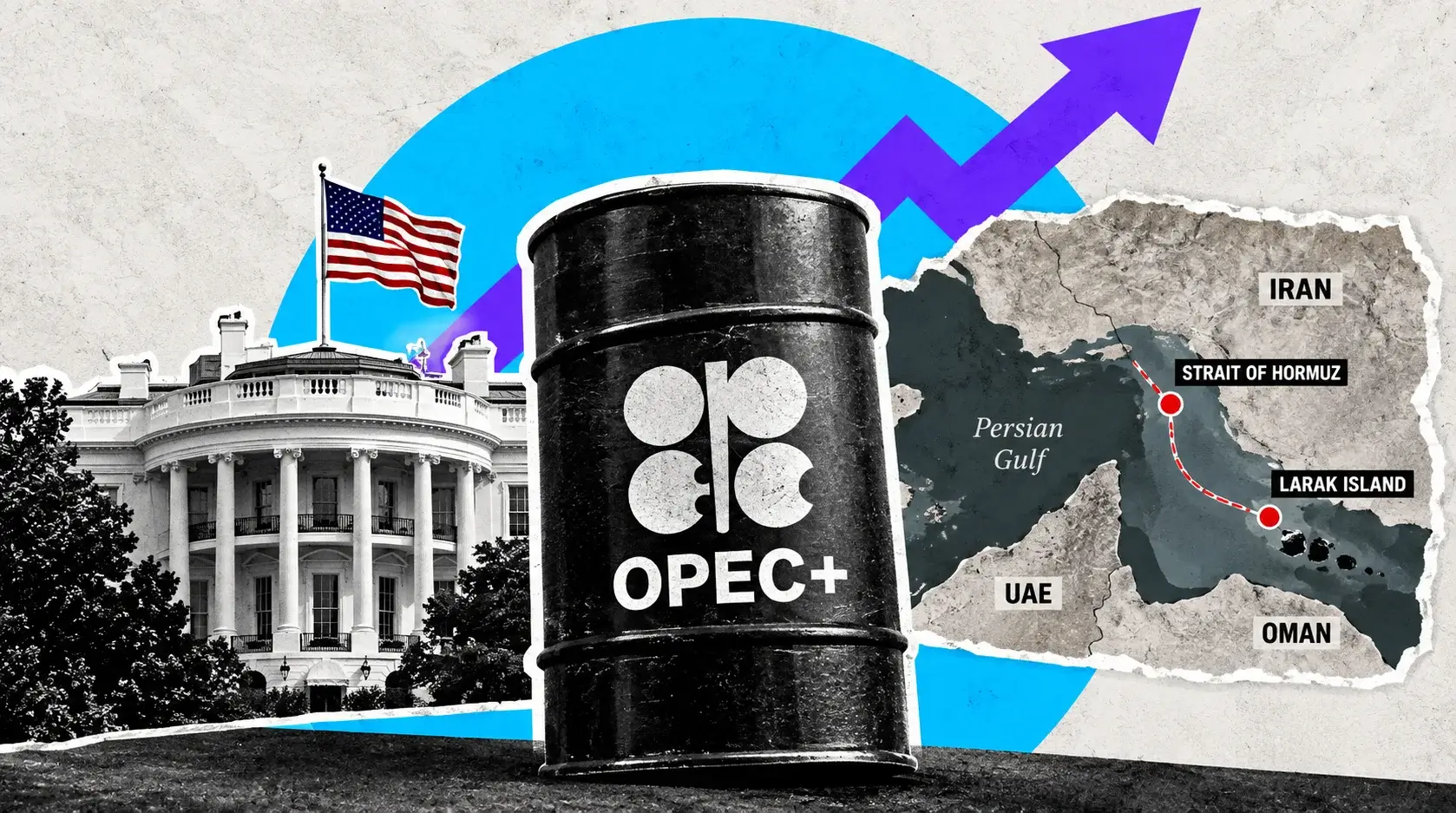
OPEC’s upcoming Q1 2026 meeting remains pivotal. The group is expected to maintain its current output ceiling, balancing fiscal demands with market stabilization efforts. Heavy crude prices have already reacted: Mars US fell 1.35% to $70.36, while Bonny Light slipped nearly 2.84% to $78.62, pressured by oversupply from West Africa and discounted Russian barrels entering Asia. Conversely, Murban Crude gained 0.80% to $65.60, benefiting from Middle Eastern demand resilience. Analysts anticipate OPEC+ may signal a gradual tightening by mid-2026 if Brent fails to hold $63, given persistent fiscal pressures in Saudi Arabia and Iraq.
Black Sea and West African Flows Add Complexity to Supply Outlook
Disruptions in the Black Sea continue to weigh on Russian export routes, with Novorossiysk shipments declining following drone attacks and severe weather. Meanwhile, West African crude flows, assessed by S&P Global Platts, remain stable around 4.5 million barrels per day, with Nigeria and Angola contributing nearly 4.0 million bpd combined. However, oversupply fears persist as China’s petrochemical surge raises the risk of refined product saturation across Asia. Despite low sulfur and high demand for light sweet grades like Qua Iboe and Bonny Light, premiums have narrowed as European buyers turn to cheaper Middle Eastern cargoes.
U.S. Shale and Rig Count Trends Signal Controlled Expansion
The U.S. oil rig count rose by 6 units for the week ending December 5, totaling 505 active rigs, though still down 69 rigs year-over-year. This marks a cautious return to drilling, indicating that producers are maintaining discipline amid uncertain price direction. The rig additions were concentrated in the Permian Basin, where breakeven levels remain near $48–$52 per barrel. Despite production efficiency improvements, the industry faces pressure from rising service costs and limited access to credit as rates remain elevated.
Europe’s Energy Policy and Sanctions Undermine Oil Stability
Europe’s evolving energy strategy continues to distort oil flows. Hungary’s challenge to the EU’s Russian energy phase-out and the UK’s $11 billion clean energy plan highlight diverging priorities. Meanwhile, the German offshore wind auction failure has forced policymakers to reassess renewable spending, while oil demand remains supported by winter heating needs. The U.S. waiver allowing Lukoil stations abroad to continue operations adds complexity, keeping Russian supply partially integrated into global trade, despite formal sanctions.
Technical Outlook for WTI (CL=F) and Brent (BZ=F)
From a technical lens, WTI (CL=F) is attempting to hold above the $60 breakout level, a critical zone separating short-term bullish potential from renewed downside risk. Resistance lies at $62.60, followed by $66.40 and $70, while support remains at $56.00 and $55.00, with long-term support near $49.00. For Brent (BZ=F), resistance at $66.40–$70.00 aligns with the September highs, and sustained closes above that range could confirm a mid-cycle reversal. Momentum remains neutral-to-bullish, with the RSI hovering near 54, reflecting market indecision as traders await the FOMC outcome and new OPEC+ guidance.
Macro and Risk Scenarios Into Early 2026
Key risks include prolonged U.S.–Venezuela tensions, potential disruptions from Yemen’s Red Sea corridor, and renewed attacks on Russian energy infrastructure. Conversely, positive catalysts such as Fed rate cuts, winter demand in Asia, and strong Indian crude intake could sustain prices above $60–$62. If macro stabilization coincides with geopolitical escalation, WTI could rally toward $70, while downside risk remains anchored around $55. The macro landscape suggests 2026 will be defined by energy bifurcation: weaker U.S. demand balanced by surging Asian consumption.
Read More
-
Yen Stalls at 160 Despite a 3% JGB and Tokyo Core CPI at 2.0% — Intervention Sits at 164, Friday's Payrolls Decide
02.09.2026 · TradingNEWS ArchiveEnergy
-
Dell Rebounds to $565.86 as a $95 Billion AI Backlog Meets 22x Forward Earnings — $595 High in Sight
25.09.2026 · TradingNEWS ArchiveStocks
-
XRP-USD ($1.53) Outperforms as ETF Inflows Return, but August Buyers Guard $1.60 — $1.70 Upside vs. $1.25 Floor
25.09.2026 · TradingNEWS ArchiveCrypto
-
Brent Holds $105 While WTI Heads for a 7% Weekly Loss as a 3M-Barrel Build and a Diesel Ban Threat Split the Market
25.09.2026 · TradingNEWS ArchiveCommodities
-
S&P 500 Gains 0.22%, Nasdaq Tops 27,000, Dow Up 0.40% on MSFT Launch and AKAM Deal
25.09.2026 · TradingNEWS ArchiveMarkets
-
Sterling Slides to 1.3216 as a Divided Bank of England Trails the Fed — 1.3424 Upside vs. 1.3000 Risk
25.09.2026 · TradingNEWS ArchiveForex
Market Verdict and Strategic Positioning
Based on current structural analysis, WTI (CL=F) and Brent (BZ=F) remain in a Buy-on-Dips zone, with upside capped near $70–$72 and downside limited by fundamental support at $55–$56. The risk-reward ratio favors accumulation at current levels, particularly for traders positioning ahead of expected OPEC+ tightening and Fed easing. Despite elevated inventory builds, the combination of geopolitical volatility, reduced refining margins, and steady Asian demand supports a controlled bullish bias heading into Q1 2026.
Verdict: BUY — Crude oil remains positioned for a medium-term rebound, with WTI targeting $70 and Brent $72 as supply disruptions and policy easing reinforce support across global benchmarks.