Oil Price Forecast: Why WTI Near $59 Faces A $50–$70 Tug Of War
With WTI around $59, Brent near $64, the EIA pointing to low-$50 averages, Bakken cuts, China stockpiling and extreme speculative shorts, the next big move in CL=F and BZ=F could break this range fast |
OIL (WTI CL=F, BRENT BZ=F) – 2026–2027 PRICE MAP
Spot Structure: WTI Around $59.50, Brent Near $64.00
Front-month WTI (CL=F) is trading around $59.53 per barrel, up 0.15% on the day, while Brent (BZ=F) sits near $64.12, fractionally lower at -0.02%. That keeps the Brent–WTI spread in a modest $4–5 range, consistent with a market that is tight enough to reward seaborne barrels but nowhere near crisis levels. U.S. natural gas is the outlier, at $3.68 with an 18.69% daily jump, confirming that weather and European gas flows are driving a separate volatility regime on the gas side, while oil grinds in a range.
Official Baseline: EIA Pushes WTI Into Low-$50s
The EIA STEO base case is structurally bearish versus history. It projects WTI at an average of $52.21 in 2026 and $50.36 in 2027, down from an already subdued $65.40 average in 2025. The quarterly path is front-loaded and then fades: roughly $54.93 in Q1-2026, $52.67 in Q2, $52.03 in Q3, and $49.34 in Q4. For 2027, the curve flattens near $49.00 in Q1, $50.66–50.68 in Q2–Q3, and $51.00 in Q4. In other words, the official U.S. baseline prices WTI a few dollars below today’s strip for most of the next two years, assuming comfortable balances and no sustained geopolitical shock.
Sell-Side Scenarios: BMI And J.P. Morgan Mark A Higher Range
Private forecasters are less pessimistic. BMI (Fitch) pins front-month WTI around $64 in 2026 and $68 in 2027, effectively adding $12–18 on top of the EIA track and implying tighter balances or stronger demand than Washington assumes. J.P. Morgan takes a middle line: it sees $54 in 2026 and $53 in 2027, with a quarterly glide from $56 in Q1-2026 to $55 in Q2, $52 in Q3, and $51 in Q4, then $51 again in Q1-2027 before creeping back to $53–55 into late 2027. That cluster around the low-$50s to high-$60s tells you the consensus is for “cheap but not broken” oil, with the EIA at the low end and BMI at the high end of the defensible range.
Dallas Fed Survey: Industry Executives Cluster Around $62
The Dallas Fed Energy Survey gives the insider check. Executives from 128 oil and gas firms put WTI at an average of $62.41 per barrel by the end of 2026, with a low call of $50 and a high of $82.30. On a shorter horizon, 116 executives see $59 in six months, $63 in one year, $69 in two years, and $75 in five years. That forward curve from the industry’s own decision-makers is significantly above the EIA’s low-$50s baseline and more aligned with the BMI view. For capital allocation, this matters: managements sanctioning projects are implicitly underwriting something closer to $60–70 than to $50 flat.
Short-Term Technicals: $59–63 Pivot Zone For CL=F And BZ=F
Technically, WTI (CL=F) has been grinding in a tight band and is sitting right under a well-defined resistance cluster. Recent price action shows WTI ending a week at $58.78, up from $57.33, and now oscillating around $59–60. For Brent (BZ=F), the equivalent cap is around $63. Saxo’s Ole Hansen correctly pointed at resistance “just below $59 in WTI and $63 in Brent” – those levels have now been tested multiple times. A clear daily and weekly close above $61.5 in CL=F and $64–65 in BZ=F would open room into the mid-$60s. Failure here keeps crude locked in a mid-$50s to low-$60s mean-reversion channel.
Curve Structure And Decade VWAP: Long-Term Fair Value Near $67.76
On the term structure, the WTI futures curve shows mild near-term backwardation but peaks only in the low-$60s around 2031–2032, then drifts back toward the high-$50s into the late 2030s. Against that strip, the 10-year VWAP for CL=F sits at roughly $67.76. Today’s $59–60 spot price is therefore about 10–12% below the decade average, but still far above stress levels around $40–45. Technicians watching long-term value marks are flagging the $46.50–50.00 region as a deep value “absolute buy” zone if politics or tariffs trigger a washout; as long as prices trade well above that band, the market is signalling “cheap relative to history, not distressed”.
Bakken Shock: Harold Hamm’s Rig Shutdown And Shale Margins
The decision by Harold Hamm to stop drilling in the Bakken, “for the first time in more than three decades”, is a direct margin signal for U.S. shale. A 4% reduction in drilling activity in that basin is estimated to translate into a 16–17% hit to Bakken production, because the newest, highest-productivity rigs are the ones being idled. That move tells you $59–60 WTI with current service costs is barely economic for parts of North American shale. If similar decisions spill into the Permian or Eagle Ford, U.S. liquids output – already around 13.83 million barrels per day – would face real downside risk, pushing the medium-term balance sheet tighter than the EIA’s low-50s deck implies.
Supermajors Pivot: Green Write-Downs, Back To Upstream Cash Machines
On the corporate side, BP, Shell, and Equinor are writing down multi-billion-dollar “green” projects and pivoting fresh capital back into upstream. BP has already swung back toward exploration and production with at least six new drilling projects since October. At a 5.5% dividend yield for names like BP, equity markets are being paid to wait while these companies re-anchor portfolios in legacy oil and gas. For the physical crude balance, these shifts are neutral in the very near term – barrels do not appear overnight – but structurally they extend the life of conventional supply and reinforce the idea that managements expect sustained $60+ pricing to monetise those investments.
China Inventories: Building A Strategic Buffer Above 1.12 Billion Barrels
Chinese commercial and strategic inventories tell their own story. Stock data show 2026 crude holdings running materially above the 2020–2025 range and the historical average, with volumes north of 1.12 billion barrels. That pace of inventory build is not a marginal optimization; it looks like deliberate strategic buffering against a “tier-1 global risk event” – whether financial, geopolitical, or both. For WTI (CL=F) and Brent (BZ=F), this means two things: downside is cushioned on big dips by opportunistic Chinese buying, but upside can be capped mid-term if Beijing chooses to run inventories down instead of bidding aggressively in any shock.
Tariff War And Greenland: Macro Overhang On Demand And Spreads
On the macro front, oil is now trading inside another tariff cycle. The White House is threatening or imposing 10% tariffs, rising to 25% by June, on goods from eight European countries – including Germany, France, the Netherlands, and the UK – tied to the confrontation over Greenland. Europe has already cancelled a major trade deal in response. The first-order effect on crude demand is limited in the very short term, but the directional impact is clear: increased risk of slower growth and more volatile cross-Atlantic trade flows. Historically, these episodes push WTI down faster than Brent, widening the Brent/WTI spread as U.S. inland barrels underperform seaborne grades.
Read More
-
Yen Stalls at 160 Despite a 3% JGB and Tokyo Core CPI at 2.0% — Intervention Sits at 164, Friday's Payrolls Decide
02.09.2026 · TradingNEWS ArchiveEnergy
-
LLY Reclaims $1,200 as Mounjaro and Zepbound Deliver $14.9B a Quarter — Buy Rating, $1,292 High in Sight
07.10.2026 · TradingNEWS ArchiveStocks
-
XRP-USD ($1.42) Underperforms Bitcoin as Weekly ETF Inflows Fade to $4.74M — Hold, Buy Zone at $1.37 to $1.40
07.10.2026 · TradingNEWS ArchiveCrypto
-
Brent $101 and WTI $89 Split on War Risk and Recovering Supply — EIA Sees $105, Support at $88
07.10.2026 · TradingNEWS ArchiveCommodities
-
Dow Sheds 539 Points, S&P 500 Back Under 7,800, Nasdaq Off 0.75% as Yields Reach 2002 Highs; PENG +17%
07.10.2026 · TradingNEWS ArchiveMarkets
-
Pound Retreats From 1.3284 Trendline as U.S. Yields Hit 2002 Highs — Sell Rallies to 1.3303, Downside to 1.3139
07.10.2026 · TradingNEWS ArchiveForex
Iranian Risk And Middle East Premium: Volatility Without Full Rerating
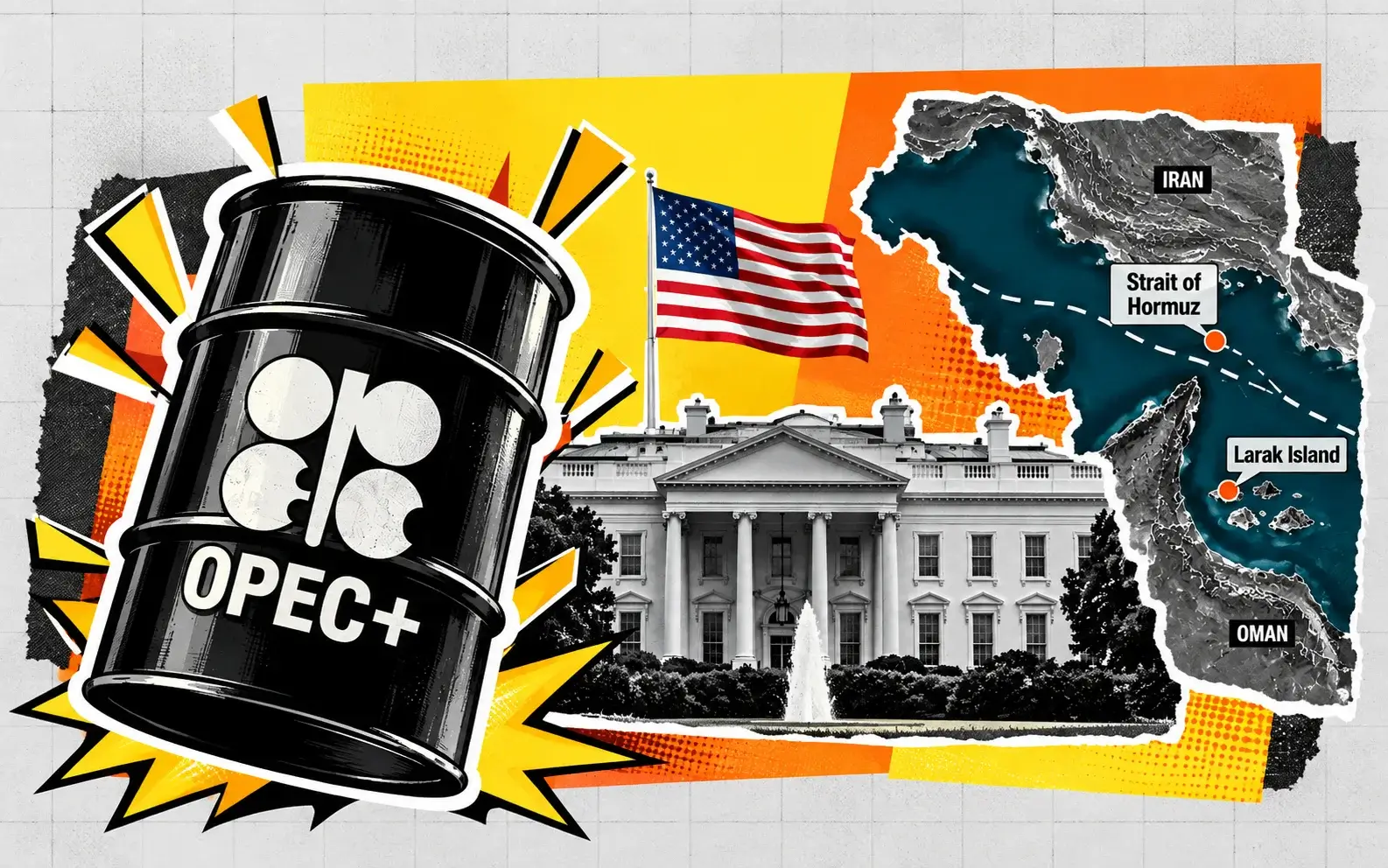
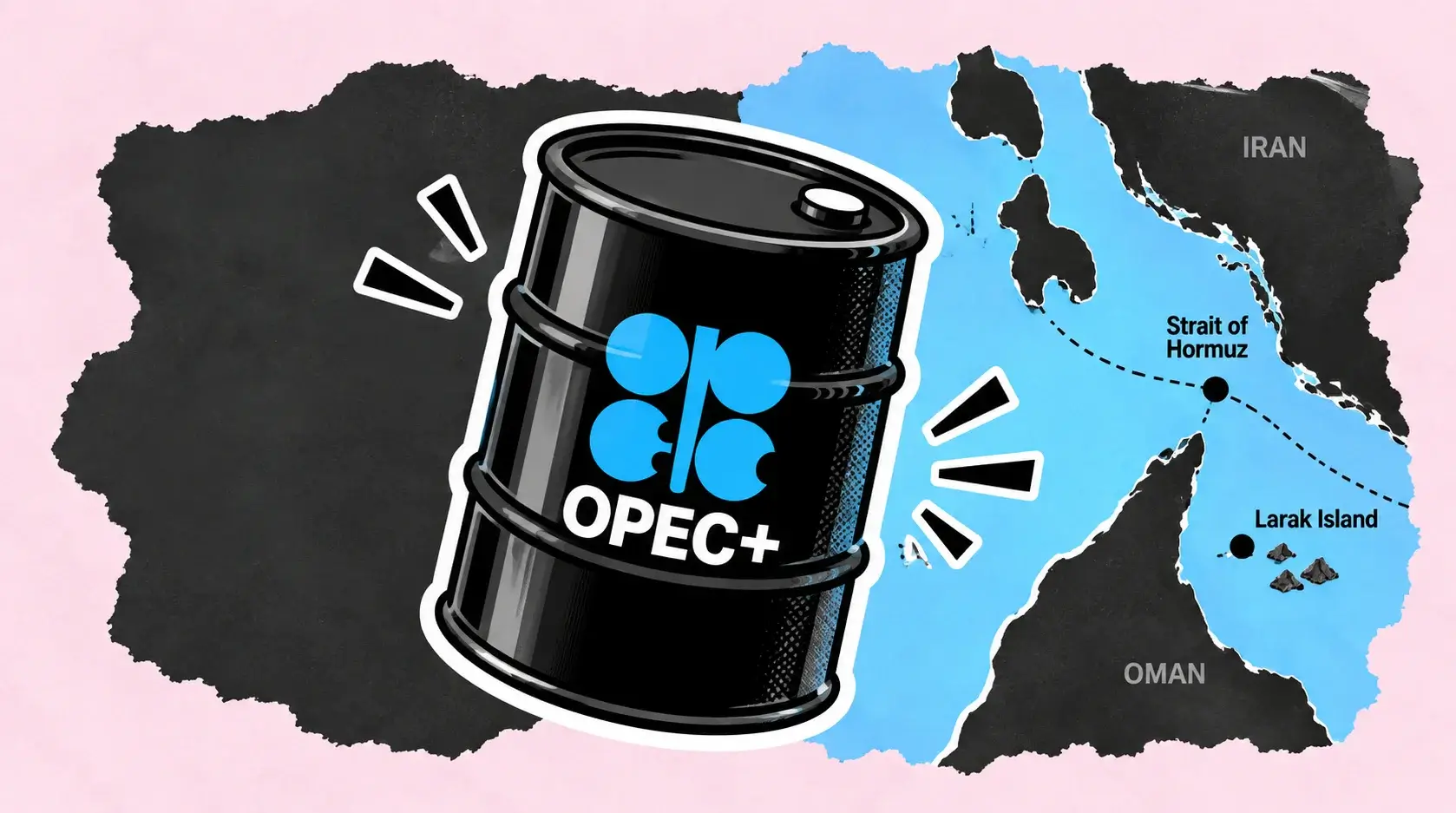
Geopolitically, Iran’s Revolutionary Guard has increased missile stockpiles and declared the “highest readiness” since the June 2025 conflict. That headline risk adds a layered premium across CL=F and BZ=F, especially for prompt spreads and options skew. However, pricing action over the last two weeks shows that the recent $4 rally off the lows is not purely a “war premium”; it coincided with positioning extremes and U.S. shale stress. The market is assigning some probability to a Gulf supply disruption, but not enough to reprice crude into a sustained $80+ regime. For now, risk is expressed through fat tails and wider intraday ranges rather than a new structural level.
COT Structure: Specs At 98th Percentile Short, Commercials Rebuild Length
The CFTC Commitment of Traders report is the clearest contrarian signal on the board. Total open interest in WTI stands just above 2.0 million contracts, with:
Commercial longs at about 855,313 contracts, up more than 25,000 on the week.
Commercial shorts at around 920,763, up about 20,000.
Non-commercial (spec) longs at roughly 286,136, up 27,180.
Non-commercial shorts at roughly 228,008, up 26,404.
Speculative shorts are now back near the 98th percentile of observations since 1986, after the market moved roughly $4 – about 8.3% – against them. Two years ago, longs were at the 1st percentile; they have recovered to only the low-20s, while shorts sit near extremes. Commercial net exposure is the lightest since 2012, but commercial longs are back to 2018–2019 levels. That regime shift – producers cautiously rebuilding length while funds pile into shorts – sets the stage for a violent short-covering squeeze if any macro or geopolitical surprise hits.
Volatility Regime: ATR And Margin Risk For CL=F
From a trading-desk perspective, a sudden contraction in North American output or a mispriced escalation around Iran or Greenland would push front-month CL=F average true range significantly higher from current levels. As ATR lifts, risk models force managed futures books to cut position size, and exchanges can respond with higher margin requirements. That dynamic steepens the front of the curve into contango during a panic (as liquidity demands force selling in nearby contracts) even if the medium-term balance is bullish. For futures strategies, that means the asymmetry is skewed: a breakout above $62 with ATR expansion can accelerate vertically as shorts are forced out, while a slow drip lower into the low-50s will be more orderly.
Natural Gas And TTF: European Gas Spike As The Parallel Energy Story
While crude grinds, European TTF gas has rallied about 29% in five sessions, driven by renewed concerns over U.S.–EU energy links and weather. Equities like NRT have tracked that move, breaking out from multi-year bases as TTF spikes. This matters for BZ=F and CL=F because Europe has replaced Russian pipeline gas with U.S. LNG, creating a structural dependence on U.S. energy flows. Any tariff or military escalation that threatens U.S.–EU logistics will hit European gas first, but the second-order effect is a higher floor for Brent vs WTI, as Europe bids up seaborne barrels while U.S. inland crude is trapped behind political friction.
Synthesis: Fundamental Range Versus Positioning Skew For 2026–2027
Put the pieces together and the fundamental range for WTI (CL=F) over 2026–2027 looks anchored in the low-$50s to mid-$60s:
EIA sees $50–52.
J.P. Morgan sees $53–54.
BMI sees $64–68.
Dallas Fed executives see $62.41 at end-2026, with upside tails toward $82.
Overlay that with a decade VWAP at $67.76, current spot around $59–60, Bakken drilling being shut because “margins are basically gone”, Chinese inventories well above 1.12 billion barrels, and specs at a 98th percentile short, and the message is clear: the official baseline is conservative, positioning is crowded to the downside, and economically sensitive supply is already flashing stress at these prices.
Trading Verdict On WTI (CL=F) And Brent (BZ=F): BUY DIPS, BULLISH MEDIUM TERM
For WTI (CL=F) and Brent (BZ=F), the risk-reward into 2026–2027 tilts bullish, with a BUY-on-dips bias rather than a chase-the-breakout approach. Around $59–60 CL=F and $64 BZ=F, crude is trading below decade fair value, against a backdrop where:
U.S. shale (Bakken) is already cutting rigs.
Specs are heavily short near historical extremes.
Corporate capital is rotating back into upstream.
China is stockpiling barrels.
Even the EIA’s low case still sits only a few dollars below today’s strip.
My stance: WTI (CL=F) – BUY on pullbacks into the low-$50s, HOLD above $60, medium-term bullish, targeting a $60–70 trading band with upside spikes if geopolitical risk materializes. Brent (BZ=F) – BUY on dips into the high-$50s to low-$60s, HOLD around mid-$60s, with a structural premium over WTI as Europe’s energy security risk stays elevated.