Oil Price Forecast: WTI Crashes to $93.70 and Brent Slides to $104.60 as Iran's Foreign Minister Heads to Islamabad for Peace Talks
JPMorgan flags the market is still short 2M bpd after record inventory drawdowns | That's TradingNEWS
Key Points
- WTI slides 2.24% to $93.70 and Brent hits $104.60 as Araghchi heads to Islamabad for second round of US-Iran talks
- JPMorgan flags 13.7M bpd supply gap with inventories falling 7.1M bpd in April as market still short 2M bpd at current prices
- Dated Brent trades $25 over front-month futures as Goldman pegs Gulf output 57% below pre-war level and gasoline hits $4.048/gal
The crude complex is delivering one of the most volatile trading sessions of the entire quarter, with WTI Crude (June 2026) futures cratering to $93.70 per barrel — down $2.15 or 2.24% intraday — after Reuters sources confirmed that Iranian Foreign Minister Abbas Araghchi is expected to land in Islamabad Friday evening for a second round of peace talks with the United States. Brent Crude is off 0.47% to $104.60, having retreated from the $107.48 intraday peak touched earlier in the trading week. The OPEC Basket is bucking the broader trend entirely, up 3.12% to $106.30 on its own supply mechanics, while the Indian Basket sits at $108.60, reflecting the severe import pricing pressure Asian refiners are absorbing. Natural gas is cratering 3.29% to $2.528 per mmBtu. Gasoline is off 0.84% to $3.433. Heating oil is down 2.67% to $3.882. WTI Midland is holding relatively firmer at $98.65, down 1% on the session. Murban Crude is printing $104.10, off 1.74%. The tape is whiplashing violently between a genuine diplomatic catalyst that could unwind the entire Iran premium and a supply picture that — according to Goldman Sachs, JPMorgan, and the International Energy Agency — remains structurally broken at a scale the global oil market has never faced in its modern history. Traders are now staring down a binary scenario map where the next Islamabad headline can plausibly move WTI by five to ten dollars in either direction within a single session. Position sizing discipline has rarely mattered more than it does right now.
The Full Oil Price Architecture — $93.70 WTI, $104.60 Brent, and a Year-Over-Year Move of 59%
The full spot pricing picture as of mid-session Friday is worth walking through level by level, because the relationships between the different benchmarks are themselves carrying information. WTI Crude printed at $93.70 after trading as high as $95.73 earlier in the session, capping a brutal reversal from the $97.50 zone that held firm for most of the week. Brent Crude at $104.60 is sitting 70% higher year-to-date on Friday's trading, with Fortune's own pricing data capturing Brent at $106.01 earlier in the morning session — up $2.34 from yesterday's $103.67 print — illustrating how rapidly the tape reversed once the Islamabad news hit the wires. One month ago Brent traded at $111.49, making current levels roughly 4.91% lower on the month. One year ago Brent was at $66.64, putting the twelve-month gain at a staggering 59.07%. The month-over-month compression captures the partial normalization attempt following the original ceasefire framework announced in early April. The year-over-year gain reflects the raw structural damage inflicted by the Iran war on global energy flows.
The prediction market signals are flashing outright bearish on any imminent parabolic breakout in the near term. The probability of crude oil reaching an all-time high by April 30 currently sits at just 1.4% YES, down from 2% yesterday, as traders price in meaningfully reduced disruption risk following the Islamabad diplomatic headlines. The April 30 all-time high market has traded roughly $100,828 in face value, with actual USDC traded around $2,513 and a cost of approximately $695 to move the price by five points. A YES share at 14¢ currently pays $1 if crude hits a record by April 30 — a 7.14x return profile that requires rapid diplomatic collapse, renewed escalation, or a major new supply shock within six days to resolve in the money. That pricing tells you traders view the tail risk of a renewed spike as real but low-probability on the immediate calendar horizon.
The JPMorgan Research That Reframes the Entire Bullish Case Despite Demand Destruction
JPMorgan's Natasha Kaneva published what is arguably the single most important piece of sell-side research on the energy shock this week, and the conclusions are genuinely uncomfortable for anyone assuming the worst of the rally is already in the rearview mirror. Global oil supply disruptions reached 9.1 million barrels per day in March and climbed to a staggering 13.7 million barrels per day in April. The first mechanical relief valve that markets typically rely on during supply shocks — spare production capacity from core OPEC members — has failed entirely during this crisis. Supply from Saudi Arabia and the United Arab Emirates remains cut off from global markets, meaning the traditional shock absorber is simply not available this cycle.
The market has responded by burning through inventories at unprecedented rates. JPMorgan estimates global stocks fell by 4 million barrels per day in March and by a further 7.1 million barrels per day in April — drawdown rates that cannot continue for more than a few additional months before strategic reserve levels reach structural floors. Demand has also collapsed hard to help balance the equation. Global demand is down 2.8 million barrels per day in March and 4.3 million barrels per day so far in April. That April demand decline is nearly double the magnitude of the demand drop recorded during the 2008 global financial crisis — a historical comparison that ought to be sobering on its own.
JPMorgan's demand destruction is concentrated heavily in specific regions that have minimal capacity to absorb the damage. The Middle East, Asian frontier economies, and Africa account for approximately 87% of the estimated April demand loss. Those are markets with limited ability to pay elevated prices, minimal inventory protection, and thin financial buffers. The physical shortage is forcing consumption out of those markets through pure price pressure rather than through any orderly rebalancing mechanism.
The mechanical implication buried inside the JPMorgan work is genuinely critical for anyone positioning around the trade. Even after the heavy inventory drawdowns of 8 million barrels per day, the market is still structurally short approximately 2 million barrels per day. Prices have not yet cleared enough demand off the books. JPMorgan's clean conclusion is that Europe and the United States will likely need to absorb more of the demand adjustment through higher prices because the other regions have already been squeezed as hard as they can be. That means the recent pullback to $93.70 WTI may be a tactical buying opportunity rather than a structural top, because the physics of the supply-demand imbalance have not yet resolved.
Goldman's 57% Gulf Supply Collapse and the Empty Tanker Logistics Problem
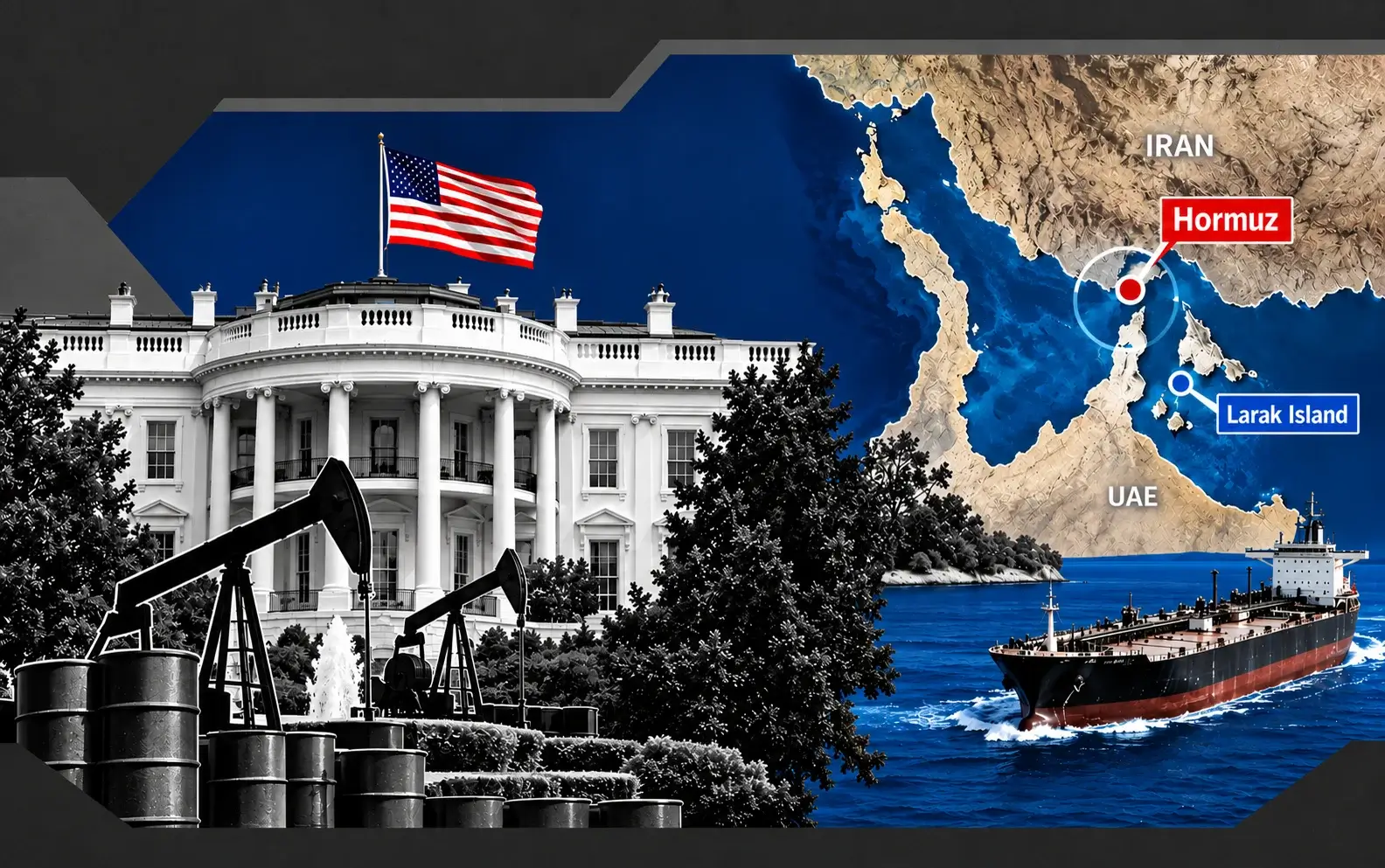
Goldman Sachs has produced the cleanest supply-loss estimate currently circulating across institutional desks, and the magnitude remains staggering even weeks into the crisis. Persian Gulf oil output is down 57%, or 14.5 million barrels per day, from pre-war levels. Available empty tanker capacity in the Gulf has approximately halved since the conflict began, which means even a full and clean reopening of the Strait of Hormuz would face a serious logistics bottleneck before supply could physically normalize. Hapag-Lloyd has successfully moved only one container ship through Hormuz this week, with four additional vessels and roughly 100 crew members still trapped in the Gulf. For context, approximately 20 million barrels of oil and petroleum products moved through the Strait daily before the war began. That flow is now intermittent at best and blockaded at worst.
IEA Executive Director Fatih Birol went on CNBC Thursday and described the situation in terms that carry real weight given his institutional position. Global markets have already lost 13 million barrels per day of oil production, and Birol explicitly called this "the biggest energy security threat in history." The comparison matters because Birol has been through multiple major energy shocks in his career — the 2008 spike, the 2020 COVID collapse, the 2022 Russian invasion of Ukraine — and he is ranking the current crisis above all of them in structural severity. For perspective, global oil demand sits around 100 million barrels per day, meaning the current supply disruption represents roughly 13-14% of global daily consumption. That scale has no historical precedent. Even the 1973 Arab oil embargo, which is the traditional comparison for shocks of this kind, knocked roughly 5% of global supply out of circulation. The current shock is approximately 2.6 times larger in percentage terms.
The $25 Brent Backwardation That the Curve Structure Is Screaming About
One of the most technically fascinating dislocations inside the entire energy complex right now sits in the Brent price structure itself, and it carries forward-looking information that the headline spot prints do not. The Dated Brent spot price has climbed to a premium of more than $25 per barrel compared with the front-month Brent futures contract. Under normal market conditions, this spread is narrow and mildly positive — a modest backwardation reflecting the time value of having a physical barrel today versus a barrel delivered in two months. A $25 backwardation is the kind of reading that flags extreme near-term physical tightness and is historically rare even during major shocks.
The mechanism driving it is direct. Buyers are scrambling to secure physical volumes to replace obstructed shipments that would normally come through Hormuz, and that urgency is showing up in spot prices far more aggressively than in futures contracts priced for later delivery. The Brent benchmark itself is a basket of North Sea crude grades — Brent, Forties, Oseberg, Ekofisk, and Troll (BFOET) — with West Texas Intermediate priced at Midland incorporated into the basket since 2023 due to the steady decline in North Sea physical production. The extreme backwardation is the physical market's way of signaling that the front of the curve is fundamentally broken. Under stress conditions like the ones currently in play, the spot market disconnects from the futures strip because financial positioning cannot fully arbitrage physical scarcity away. When Dated Brent trades $25 above the front-month contract, the physical market is saying something the futures market cannot fully express — and that something is that there is not enough oil available today to meet immediate demand, full stop.
Commonwealth Bank's Game-Theory Read on Who Blinks First
Commonwealth Bank of Australia published the cleanest strategic analysis on the Hormuz standoff Friday, and the framework is worth internalizing for anyone positioning around the trade. The bank's note states plainly: "The longer the strait remains closed, the greater the economic costs — raising the likelihood that one side will be forced to back down." The bank's base case is that the U.S. backs down first due to mounting political and economic costs at home. Gasoline prices at the pump are biting into consumer spending. Consumer sentiment has collapsed to a 50-year low of 49.8 per the University of Michigan survey. Fed policy flexibility is constrained by the inflation overlay from the energy shock. The 2026 midterm calendar looms over every political calculation in Washington. Those are the forces that CBA believes will pressure the U.S. to move toward a deal before Iran does.
But the tail risk is what matters for positioning. The bank explicitly flags that "there remains a risk of major military escalation that would significantly push up the U.S. dollar." For anyone building energy exposure, that implies asymmetric upside on prices if escalation occurs and a gradual normalization if diplomacy advances. The base case is that neither side yields quickly, which means the range-bound chop between diplomatic headlines and escalation fears continues for weeks.
Traders placed an extraordinary $430 million in bets minutes before President Trump extended the Iran ceasefire earlier this week — a flow that has prompted open questions about informational asymmetry and whether non-public information was circulating ahead of the announcement. The United States has separately extended the Jones Act shipping waiver through August, allowing foreign-flagged vessels to move U.S. crude domestically to ease logistical bottlenecks. Phillips 66 became the first major refiner to take advantage of the waiver for U.S. crude transportation, and Trump is now weighing further extensions to provide additional fuel market relief.
The Retail Pump Pain That Is Forcing the Political Calculus
The transmission from Brent to retail gasoline is where politics enters the equation, and the numbers are becoming increasingly uncomfortable for the administration. U.S. gasoline averaged $4.048 per gallon as of April 23 per GasBuddy data, up from approximately $2.884 before the Iran war began — a 40%-plus increase that is now visibly destroying driving demand and weighing on domestic flight bookings. The classic "rockets and feathers" dynamic is fully active in the retail tape: gasoline climbed rapidly on the crude spike but is lagging the recent pullback in futures meaningfully, because retailers pass through cost increases faster than they pass through cost decreases.
The U.S. Strategic Petroleum Reserve has been deployed to soften the immediate shock, but every analyst across the sell-side community agrees that's a temporary bandage rather than a structural fix. The SPR's primary design purpose is energy security during disaster — sanctions episodes, severe storm damage, or wartime — but it can also be used to soften crippling price spikes during supply crises. The SPR cannot solve a long-term structural deficit of 13 million barrels per day. Lufthansa has already canceled unprofitable European summer routes to save jet fuel, a concrete behavioral change rippling through the transportation sector. Long-haul flight fares have soared across multiple carriers as jet fuel costs compound. Trump is weighing further extensions of the Jones Act waiver — a clear signal the administration is tracking the domestic pain closely.
The 30-Nation Military Coalition and the Global Supply Chain Responses
The international coordination around the crisis is intensifying materially. The UK and France are now leading a 30-nation military push to reopen the Strait of Hormuz through coordinated naval operations, which introduces a new variable into the strategic calculus. Japan has formally asked Saudi Arabia for increased oil supply as it hunts for alternative sources, while JERA has canceled a long-term LNG deal with Commonwealth in response to the new market reality. Canada has approved Enbridge's $4 billion Sunrise gas expansion and pledged 23.6 million barrels of oil toward the global supply picture, though market analysis suggests the pledge is already priced into the current tape and won't provide incremental support at current levels.
India — one of the world's largest crude importers — is pushing refiners to boost LPG output to help reduce kerosene and diesel import dependence. HSBC has downgraded Indian equities again as the oil shock deepens its economic damage, with the top Indian refiner facing profit hits from the price surge. Russia is keeping oil flowing at near-capacity levels but has brought no new plan to OPEC+, meaning traditional coordination mechanisms are effectively broken. The Druzhba pipeline has resumed flowing Russian oil to Slovakia after a three-month halt, providing a small measure of European supply relief. Pakistan — now positioned at the center of U.S.-Iran diplomacy hosting the Islamabad talks — has simultaneously turned to Russia and Venezuela for crude as Middle East supplies shrink. Qatar's $20 billion LNG blackout has forced Pakistan back to the spot market. Brazil's trade surplus surged to a record $14.2 billion on elevated oil prices, flipping the country into an unexpected net beneficiary of the crisis. Norway is pumping near capacity with its spare output buffer essentially disappearing, meaning North Sea supply has no further upside. Eni missed Q1 earnings but simultaneously lifted its share buyback program to €2.8 billion, signaling management confidence in cash flow despite the earnings miss.
Iran's Covert Oil Trade and the Chinese Tanker Question
Despite the active U.S. naval blockade, Iran's covert oil trade persists through elaborate sanctions-evasion networks. Chinese oil tankers have been actively attempting to exit the Strait of Hormuz to move Iranian crude to buyers. Iraq has begun exporting crude using tanker trucks through Syria — a logistically inefficient but politically useful route — with Iraqi oil ministry officials reporting that oil revenue dropped more than 70% compared with February as a result of the overall disruption. Kuwait has declared force majeure as the U.S. seizure of Iranian ships escalates regional tensions. The Iranian oil export machine, which has historically operated under an elaborate sanctions-evasion architecture including ship-to-ship transfers, flag changes, and concealed bills of lading, is now operating under a true active naval blockade — the kind of physical interdiction that has no precedent in the post-1973 energy cycle.
Trump's position has remained consistently hawkish throughout the crisis. He ordered the U.S. Navy to "shoot and kill" any boat laying mines in the Strait of Hormuz. He declared publicly via Truth Social: "I have all the time in the World, but Iran doesn't — The clock is ticking." Trump's allies privately argue the blockade will force Iran to begin shutting down domestic crude production — its primary source of foreign-exchange earnings — within approximately two weeks. JPMorgan analysts take a more measured view, projecting that it may take closer to a month for Washington to achieve the desired economic chokehold. Either timeline puts the crisis squarely in the short-term tactical window for traders positioning around Iran's capitulation point.
Natural Gas, Refined Products, and the Second-Order Energy Damage
The cascade effects on other parts of the energy stack are severe and deserve explicit walkthrough. Natural gas prices fell 3.29% to $2.528 today but remain significantly elevated year-to-date on the Hormuz dynamic. Europe's rooftop solar orders have tripled as gas prices surge — a structural demand destruction signal that will persist long after oil prices normalize because installed solar capacity represents decades-long contracts. Chevron has restarted its Wheatstone LNG facility amid global gas shortages to help ease the supply picture. The fundamental shift that IEA Executive Director Birol has been flagging since the war began — that the damage to fossil fuel demand psychology is permanent and will structurally accelerate the global shift toward renewables and nuclear — is now becoming visible in the order books across the European and Asian industrial sectors. That is a long-term bearish signal for fossil fuels that runs counter to the current bullish price signal, creating a complex compound positioning environment.
Gasoline at $3.433 and heating oil at $3.882 reflect partial pass-through of crude pricing into refined products, with crack spreads remaining elevated across most U.S. refining benchmarks. Refiner margins are historically wide at current levels, which makes refining equities like Phillips 66, Valero, and Marathon Petroleum structurally interesting exposures even as integrated producers become harder to value amid the headline volatility. The Panama Canal is experiencing surge pricing as high as $4 million per transit with Hormuz still closed — a secondary logistics premium that ripples through global shipping costs on almost every commodity category.
Global Inventories at Record Lows and the China Stockpile Question
Global oil inventories are drifting toward record lows according to recent industry data. U.S. crude oil and oil product inventories came crashing down in the most recent EIA report, confirming the JPMorgan estimates of the drawdown pace. China's oil giants have begun selling crude as domestic refinery cuts deepen — a flow that adds marginal supply to global markets but also signals weakening Chinese industrial demand. Meanwhile, Chinese state strategic stockpile buying is set to return after a meaningful drawdown period, which could absorb meaningful supply over the coming weeks.
The Chinese inventory dynamic is perhaps the single most underappreciated variable in the entire setup. If Beijing returns to aggressive strategic buying at current prices — treating the sub-$95 WTI levels as an opportunity to rebuild stockpiles — the demand floor underneath the market reinforces meaningfully. If China continues drawing down domestic stocks to meet refinery demand, the short-term price support weakens. Japex is quadrupling oil and gas production with eyes on U.S. expansion, a corporate response that takes years to materialize but signals where capital is flowing. Baker Hughes reported Q1 revenue that beat estimates by $260 million as LNG orders surged — a direct read on how the gas shortage is driving equipment demand across the services sector.
Read More
-
Yen Stalls at 160 Despite a 3% JGB and Tokyo Core CPI at 2.0% — Intervention Sits at 164, Friday's Payrolls Decide
02.09.2026 · TradingNEWS ArchiveEnergy
-
CHAT Fund Holds $96.37 as Korean Memory and Chip Exposure Drive a 109.73% Year — Break of $98.02 Opens $105.20
18.09.2026 · TradingNEWS ArchiveStocks
-
First-Generation XRPR and XRPI Ride XRP's Rebound to $1.386 as Spot Funds Post First Outflow — Break of $1.40 Opens $1.54
18.09.2026 · TradingNEWS ArchiveCrypto
-
NG Holds $2.9255 as Storage Surplus Narrows From 5.5% to 3.7% in 3 Weeks — Break of $3.00 Opens $3.15
18.09.2026 · TradingNEWS ArchiveCommodities
-
Dollar Surges to 157.90 as BoJ's Divided Hike Fails to Lift the Yen — Break of 158.87 Opens 159
18.09.2026 · TradingNEWS ArchiveForex
California's Perfect Storm and the Regional Supply Chain Stress
One regional story worth highlighting is California's petroleum market, which is getting slammed by a perfect storm of unfortunate timing. The state's oil and jet fuel supply is under acute pressure from the combination of the global Iran shock, ongoing refinery maintenance cycles, and the state's unique fuel blending requirements. California's First Gasoline Pipeline Moving Forward with Phillips 66 and Kinder Morgan collaboration represents a structural response to long-term supply constraints, but the project timeline is multi-year and does nothing to address the immediate crisis. The Jones Act waiver extension by the Trump administration is aimed partly at easing the California-specific logistics bottleneck, though the underlying issue of refined product supply remains structural.
Historical Context — Oil Has Survived Shocks Before But Nothing at This Scale
Oil's historical volatility pattern provides useful perspective for the current crisis, and the comparison helps calibrate what kind of move is actually plausible. The 1973 Yom Kippur War produced the first major modern oil shock, with Middle Eastern exporters cutting supply and embargoing the United States. Prices collapsed in the mid-1980s on reduced demand and non-OPEC supply expansion. The 2008 commodity spike saw Brent above $140 before the global financial crisis vaporized demand and sent prices to the mid-$30s within six months. COVID-19 in 2020 drove prices below $20 momentarily, with a brief surreal period where WTI went outright negative for the first time in history as storage capacity ran out.
Against that entire history, the current 13.7 million barrels per day disruption is the largest absolute supply loss ever recorded in a single crisis. Goldman Sachs research suggests a rapid oil output recovery is mechanically possible if the Iran war ends — within a few months of reopening the Strait under optimistic assumptions. But Goldman also explicitly flags "significant risks" that the final leg of recovery could take materially longer than markets are pricing, especially if Hormuz remains closed for weeks or if the coalition military intervention produces collateral damage to energy infrastructure. The tail risk in the recovery scenario is real and carries implications for how fast prices mean-revert even after a peace deal.
The Three-Scenario Map for Oil Over the Next Week
The entire setup distills into three tactical scenarios with distinct trigger conditions and price targets. Scenario One — Diplomatic Breakthrough: Araghchi arrives in Islamabad on schedule, talks produce a substantive framework that reopens Hormuz to controlled commercial transit within days, WTI collapses toward $75-80 and Brent drops to $85-90 as the war risk premium evaporates aggressively. The prediction markets are priced for this outcome at relatively low probability, but the selloff in spot prices to $93.70 today reflects partial positioning for it. This scenario would produce the kind of violent mean reversion that separates disciplined traders from those caught in stale longs. Scenario Two — Continued Stalemate: Talks stall or produce no meaningful breakthrough, Hormuz stays largely closed, inventories continue to drain at roughly 7 million barrels per day, and the structural tightness JPMorgan is flagging forces prices higher through pure physical scarcity. This is the base case for most sell-side desks, and Brent returning above $110 becomes likely within two to three weeks. The WTI-Brent spread remains elevated as U.S. production becomes more strategically important. Scenario Three — Military Escalation: The blockade transitions into an active kinetic conflict involving the 30-nation coalition, Iran responds by targeting additional tankers or Gulf energy infrastructure, Brent spikes toward $130 or higher and potentially retests the $119.50 early-March cycle high or exceeds it materially. This is the tail scenario that justifies holding energy exposure as a geopolitical hedge even after the recent pullback. It also justifies having options exposure rather than pure directional positions because the convexity of the upside move would be extreme.
Directional Call on Oil — Hold Core Long Exposure With Aggressive Trim Rules Above $110 Brent
Rating: Hold core exposure with tactical buy on pullbacks below $90 WTI. The fundamental case is genuinely unambiguous when the data is laid out in full. JPMorgan's research shows the market is still short approximately 2 million barrels per day after record inventory drawdowns. Goldman Sachs pegs the Persian Gulf supply collapse at 57% or 14.5 million barrels per day below pre-war levels. The $25 Brent backwardation premium reflects extreme physical tightness that is rare in any historical context. Global inventories are drifting toward record lows across both OECD and non-OECD measures. The 13 million barrels per day production loss flagged by IEA represents roughly 13-14% of global daily consumption. All of those data points point to structurally higher prices over any multi-month horizon. The demand destruction argument is real and deserves weight, but JPMorgan's clean conclusion — that current prices are not yet high enough to force sufficient demand off the market — means WTI pullbacks toward $90-$93 represent tactical buying opportunities rather than structural sell signals.
The tactical playbook breaks down cleanly. Hold core long exposure in integrated energy majors — ExxonMobil (NYSE:XOM), Chevron (NYSE:CVX), and ConocoPhillips (NYSE:COP) — while WTI holds above $90 and Brent holds above $100. Trim aggressively on any Brent move above $110 because the speed of the fade from $107.48 to $105 on a single Islamabad headline demonstrates clearly how fast this trade can reverse on peace signals. For new entries, waiting for WTI to test the $88-$90 zone before adding exposure offers the cleanest risk-reward profile given the asymmetric upside from any escalation scenario. Refiners currently offer marginally cleaner risk-reward than integrated producers because crack spreads remain meaningfully elevated and refiner margins are at historical extremes. Downside stops for tactical positions should sit below $85 WTI on the futures curve, which would signal a genuine diplomatic breakthrough has priced through the tape and invalidated the structural long thesis. Upside targets at $110-$115 WTI and $120-plus Brent remain realistic in the escalation scenario and should serve as profit-taking levels for anyone holding from lower cost basis.
The binary setup here is genuinely exceptional. The next $10 of price movement in either direction will likely dictate the next $30 of trend, because the Hormuz story is at a true inflection point. Respect the technical levels, respect the leverage dynamics, and remember that the fundamental imbalance between 13.7 million barrels per day of supply disruption and only partially cleared demand means the path of least resistance remains higher until either Hormuz reopens at scale or genuine demand destruction materializes in the U.S. and European consumption data. Options strategies — specifically out-of-the-money call spreads targeting $115-$125 Brent — offer particularly attractive convexity at current implied volatility levels and should be considered as complementary positions to core directional exposure. For producers and energy equities, the cleanest approach is to focus on companies with the lowest break-even production costs and the strongest balance sheets, because those names will benefit disproportionately if the shock persists and will be more resilient if prices normalize. Trade the range, watch the Islamabad flight manifests, monitor the 30-nation coalition's operational posture, and let the strategic reality — not the tactical headlines — drive the core position sizing decisions. The edge here sits with patient capital that respects the geopolitical volatility and takes advantage of the dislocations when the tape overshoots in either direction.